“What will I actually see from this apartment?”
This is one of the most common and critical questions asked in any real estate sales conversation. While printed brochures, 2D floor plans, and standard architectural renders provide excellent technical details about a building’s design, they often struggle to answer this specific question. A static image cannot easily convey how the view changes from the 5th floor compared to the 15th floor, or what a specific window looks out onto.
How can digital property views help buyers evaluate a real estate property? By providing interactive, 3D visual context, digital property views allow buyers to explore the exact direction, floor height, landscape, and skyline visible from a specific unit. This technology helps buyers evaluate the property’s relationship with open spaces, surrounding buildings, roads, amenities, and the natural environment, making comparisons easier and supporting a more informed decision-making process.
Why Property Views Matter to Buyers
For many buyers, what is outside the window is just as important as the interior layout. Views are a key component of how a buyer evaluates a property because they directly impact the daily living experience.
A buyer will often evaluate a property based on its perceived openness and privacy. An apartment facing a dense cluster of other buildings offers a very different living experience than one facing a natural landscape, a central courtyard, or an open urban skyline. Furthermore, buyers care about orientation and floor level. They want to know if their balcony overlooks the internal amenities, if the lower floors have road visibility that might imply noise, or if higher floors offer unobstructed sightlines. Providing clarity on these aspects can help buyers evaluate whether the property aligns with their lifestyle expectations.
What Are Digital Property Views?
Digital property views are interactive 3D visualisations and digital environments designed to help users see the exterior surroundings, orientation, and potential sightlines associated with a specific real estate property.
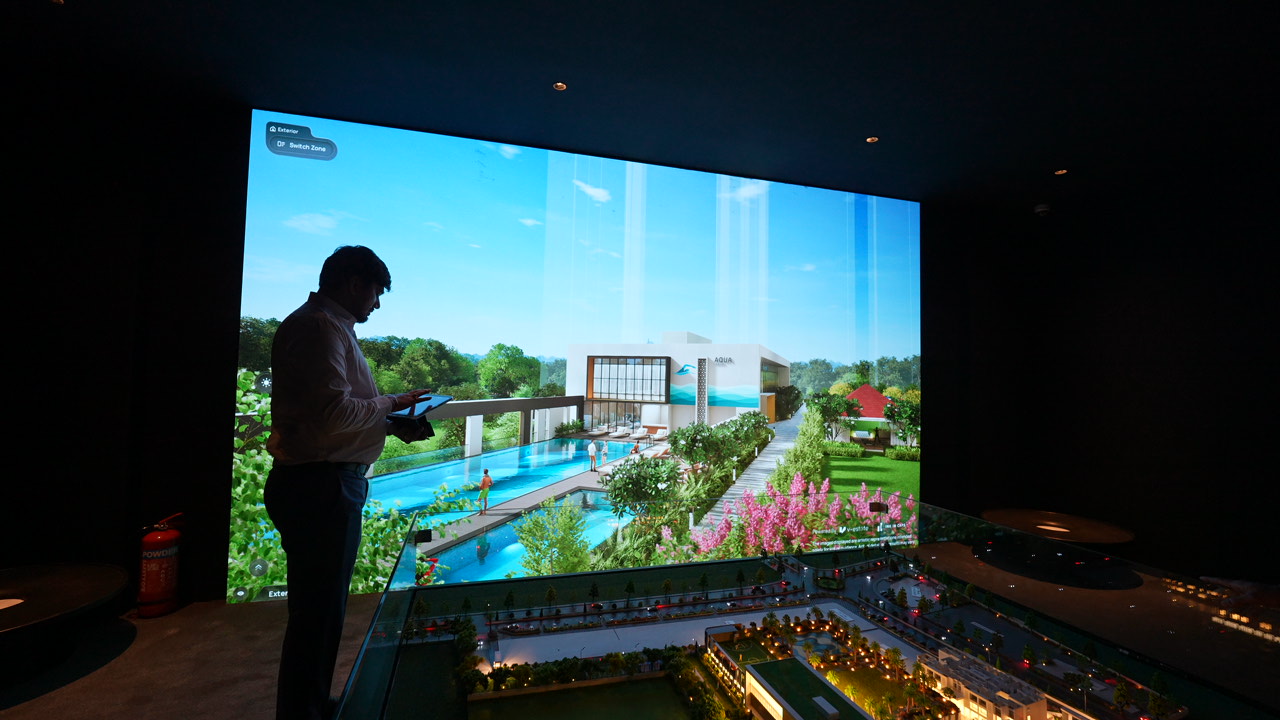
There is a significant difference between a static render and an interactive digital view. A static render is a single, fixed image chosen by the developer to showcase the best possible angle of the project. An interactive digital view, however, is a dynamic environment. It allows the user to actively pan, tilt, zoom, and navigate the spatial context of the property, providing a comprehensive understanding of what can actually be seen from various vantage points.
Exploring Views From Different Floors and Directions

One of the most practical applications of interactive systems is giving buyers the ability to explore how views change depending on the specific location within the project.
During a sales conversation, a salesperson can guide a buyer through a logical sequence: Tower → Floor → Apartment → Window → View.
Buyers can select different towers to see how their position affects the view of the central amenities. They can switch between different floors to understand how height changes their perspective of the surrounding neighborhood. By exploring different apartment orientations and different window directions, buyers can accurately gauge whether they prefer a north-facing view of the city or a south-facing view of the landscaped gardens. This level of exploration supports a highly detailed, personalized sales conversation.
Understanding the Surroundings Beyond the Apartment
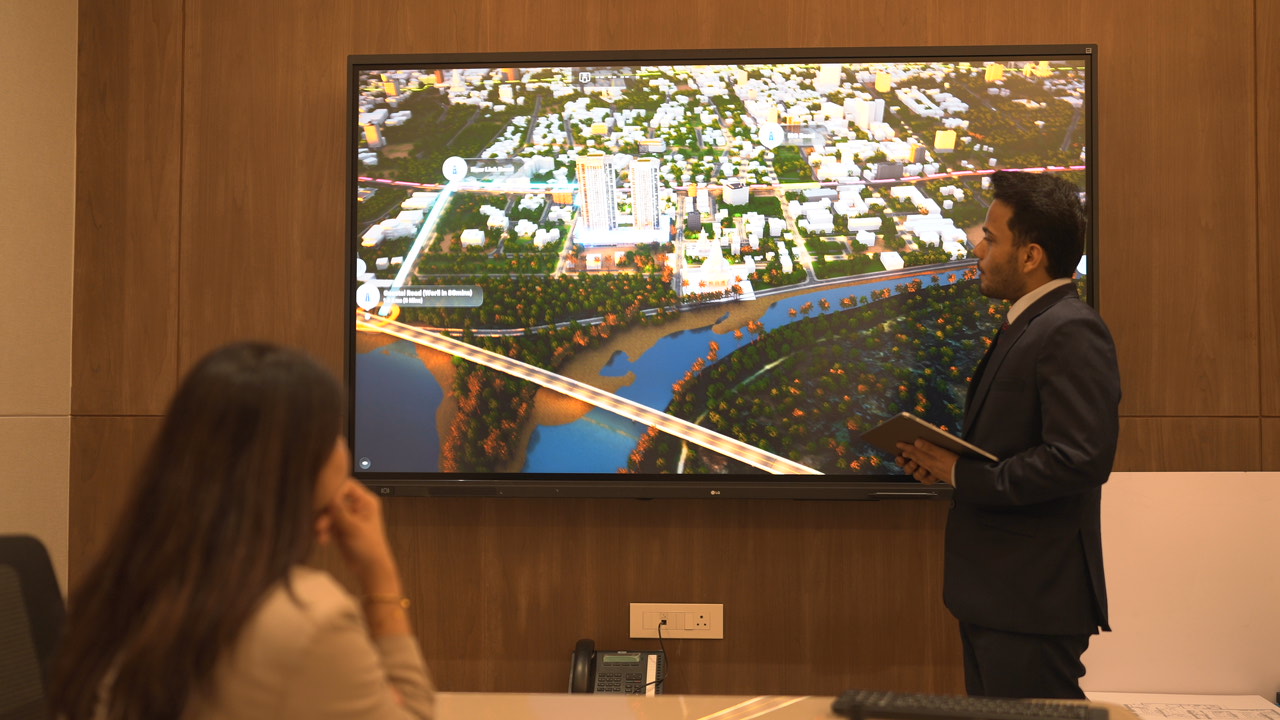
A property does not exist in isolation, and evaluating a home requires understanding its wider context. Digital views can expand the visual experience far beyond the apartment window to include the broader neighborhood.
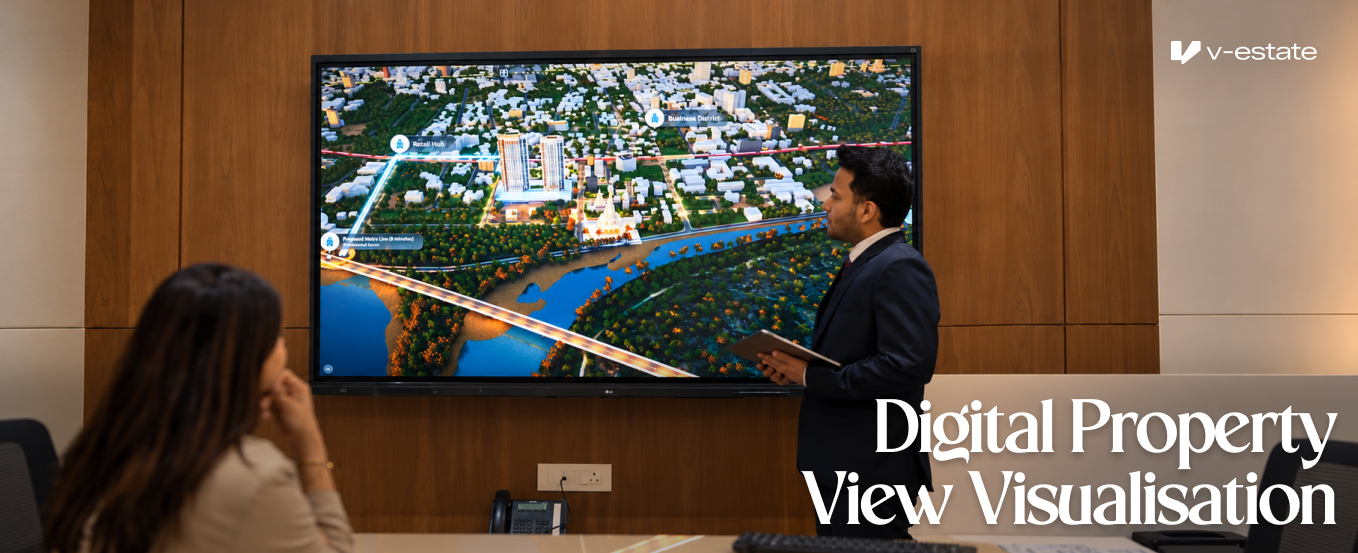
Interactive digital environments can provide context on nearby roads, public transport links, and existing infrastructure. Buyers can evaluate the property's proximity to schools, hospitals, offices, retail centers, and open spaces. By visualizing nearby developments and major landmarks alongside the project, digital views help buyers evaluate the location as a whole. Understanding this macro-environment is often crucial for buyers trying to determine how the property fits into their daily commute and lifestyle needs.
Showing Different Times and Conditions
The visual experience of a property changes drastically throughout the day. Digital visualisation can potentially represent these shifts, allowing buyers to see how an apartment and its surroundings might look during the morning, afternoon, evening, and night.
Sales teams can use these digital environments to demonstrate lighting changes, such as how natural sunlight interacts with a specific balcony at sunset, or how the internal amenities are illuminated after dark. Some systems can even simulate different weather conditions. While it is important to communicate that digital simulation cannot perfectly predict exact real-world conditions, these dynamic representations can help buyers understand the general atmosphere and environmental changes they might experience living there.
Digital Views for Under-Construction and New Projects

The biggest hurdle in pre-launch projects, under-construction towers, and future developments is the physical absence of the final product. Buyers are asked to commit to a property where they cannot physically walk to the window and look outside. This is especially challenging in large townships or entirely new neighborhoods where the surrounding environment is also undergoing massive change.
Digital visualisation addresses this by providing a highly detailed representation of the planned environment. It allows buyers to digitally stand in an unbuilt apartment and look out over unbuilt surroundings. It is vital, however, that developers design these digital views responsibly. Visualisations should be strictly based on available project and planning information, serving as a helpful guide rather than a guaranteed, legally binding representation of the future.
Helping Buyers Compare Property Options
When faced with a large inventory of units, buyers can easily suffer from decision fatigue. Digital views can support the comparison process by providing clear visual data for different options.
If a buyer is torn between a 10th-floor apartment facing the street and an 8th-floor apartment facing the courtyard, digital views allow them to digitally stand in both spaces back-to-back. They can compare different towers, different floors, different orientations, and different surroundings instantly. The focus of this technology is not to dictate or tell buyers which property they should choose, but rather to help them understand their options clearly so they can make a confident evaluation.
Using Digital Views in Real Estate Experience Centres
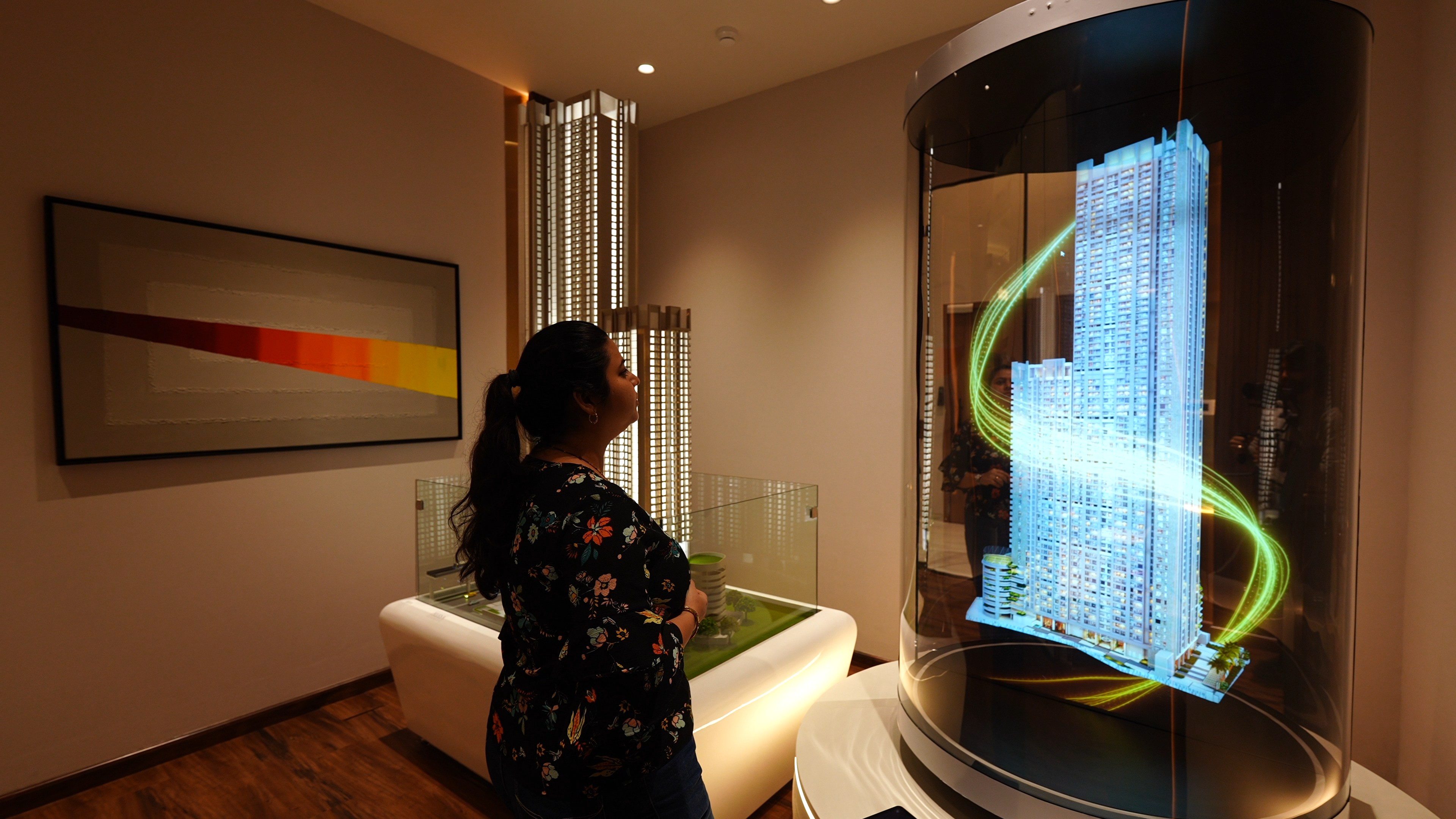
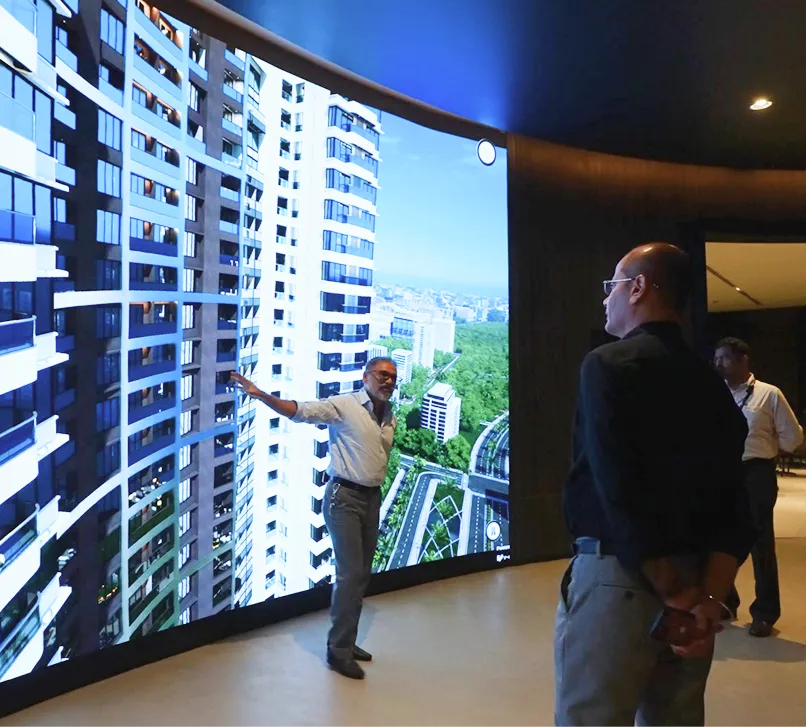
To maximize their impact, digital views are often integrated directly into the physical sales environment. Real estate developers utilize experience centres equipped with interactive displays, large touchscreens, and immersive LED environments to showcase 3D property models and digital twins.
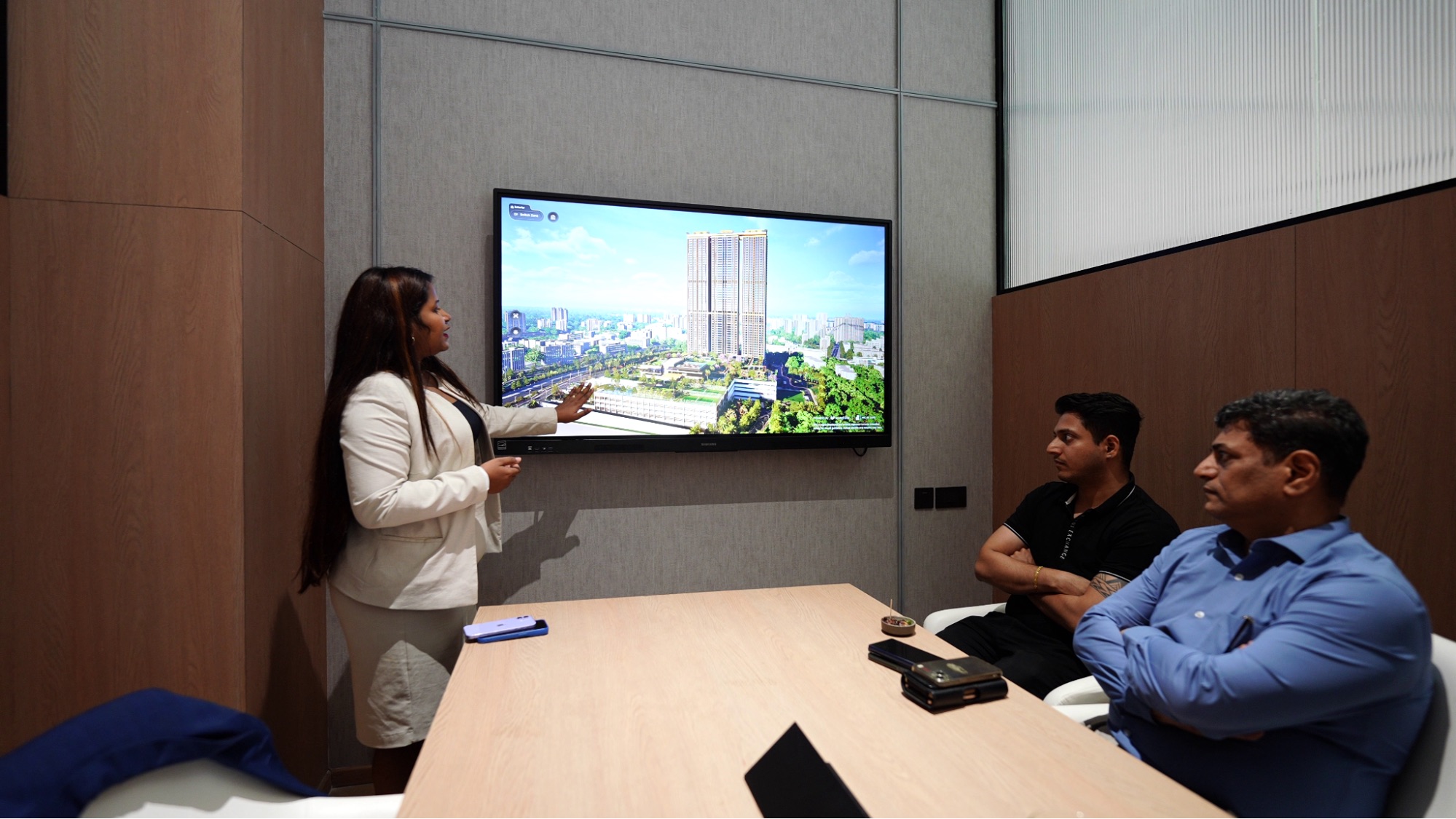
In this setting, the digital view becomes a collaborative tool. Rather than the buyer struggling to navigate a complex interface alone, the salesperson acts as a guide. During sales demonstrations, the sales professional can seamlessly transition the screen from a macro view of the city skyline to the exact micro view from a specific apartment's balcony, answering questions visually in real-time.
Designing Accurate and Useful Digital Views
For digital views to be a valuable asset in the sales process, they must be designed with integrity. The primary objective is to improve the buyer's understanding, not to create unrealistic expectations.
Developers must ensure that the digital environment relies on correct project information, accurate architectural orientation, and realistic surroundings. If a neighboring building partially blocks a view, the digital model should reflect that reality. Clear disclaimers should be used where required, especially concerning future external developments that are out of the developer's control. By prioritizing updated development information, consistent visual representation, and easy navigation, developers build trust with their buyers.
How V-estate Supports Interactive Property Views
V-estate provides real estate developers with the digital infrastructure required to create accurate, interactive 3D property views. We design digital environments that allow buyers to visually evaluate unbuilt properties with confidence.
Our technology supports seamless tower and apartment exploration, exact window-view visualisation, and comprehensive exterior and vicinity exploration. By incorporating dynamic weather and lighting into interactive experience-centre environments, V-estate ensures that your sales teams have the visual tools they need to provide buyers with clear, spatial context for every property in your inventory.
.jpeg)
.jpg)
%20(1).jpg)