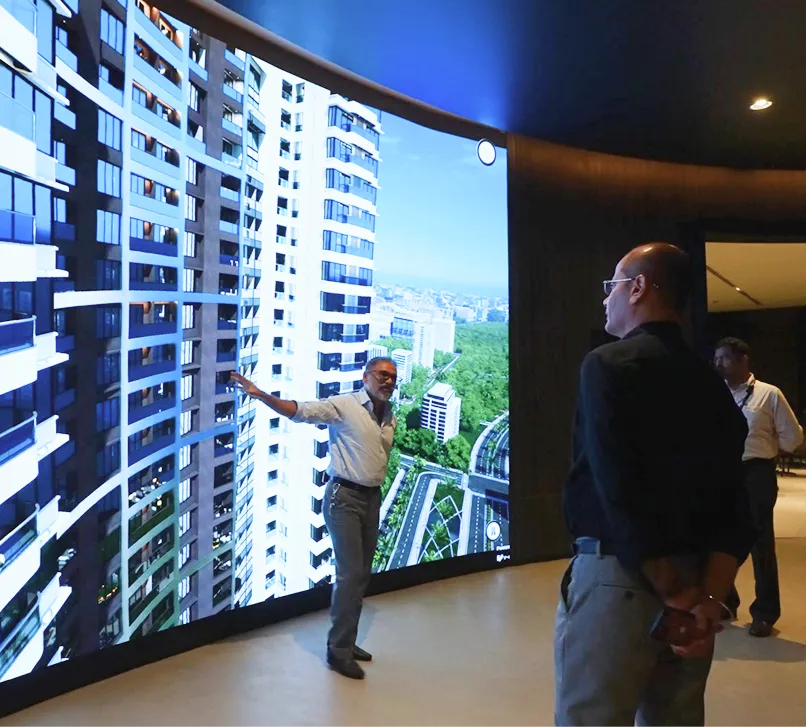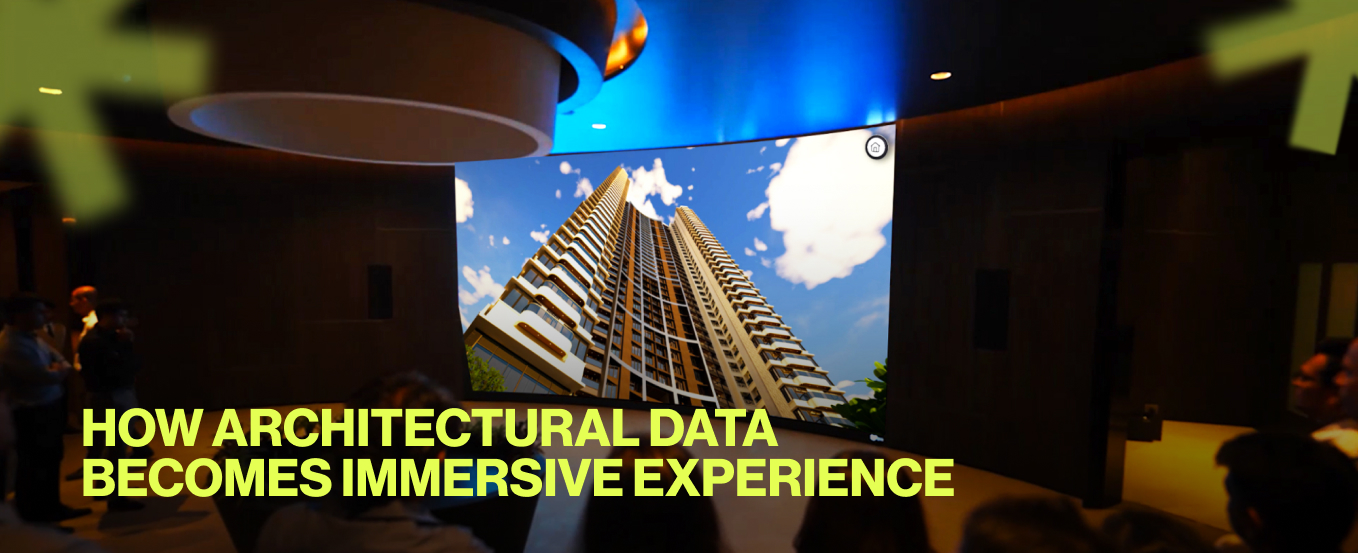
Buyers no longer trust blueprints. They never did.
A floor plan tells a developer everything. It tells a buyer almost nothing. Measurements don't communicate light. Elevations don't show the evening view. Static renders don't answer the question every buyer silently asks: "Can I actually live here?"
That gap — between architectural data and buyer conviction — is where deals stall. Marketing heads know it. Sales reps live it. And it costs more than just time.
The Invisible Wall Between Data and Decision
Every real estate project sits on an enormous base of structured data. Floor plans. Elevation drawings. Material schedules. View corridors. Amenity layouts. Sun path analyses. Infrastructure timelines.
This data is precise. It is rarely useful to a buyer.
Converting raw architectural data into something a buyer can feel — not just read — is the actual challenge. Not design. Not branding. The translation layer between technical accuracy and human perception.
Most developers solve this with physical show flats. The costs are significant. The scale is impossible. One unit. One configuration. Fixed finishes. And the moment the project changes, the show flat becomes a liability.
The problem isn't awareness. It's activation.
What Immersive Activation Actually Requires
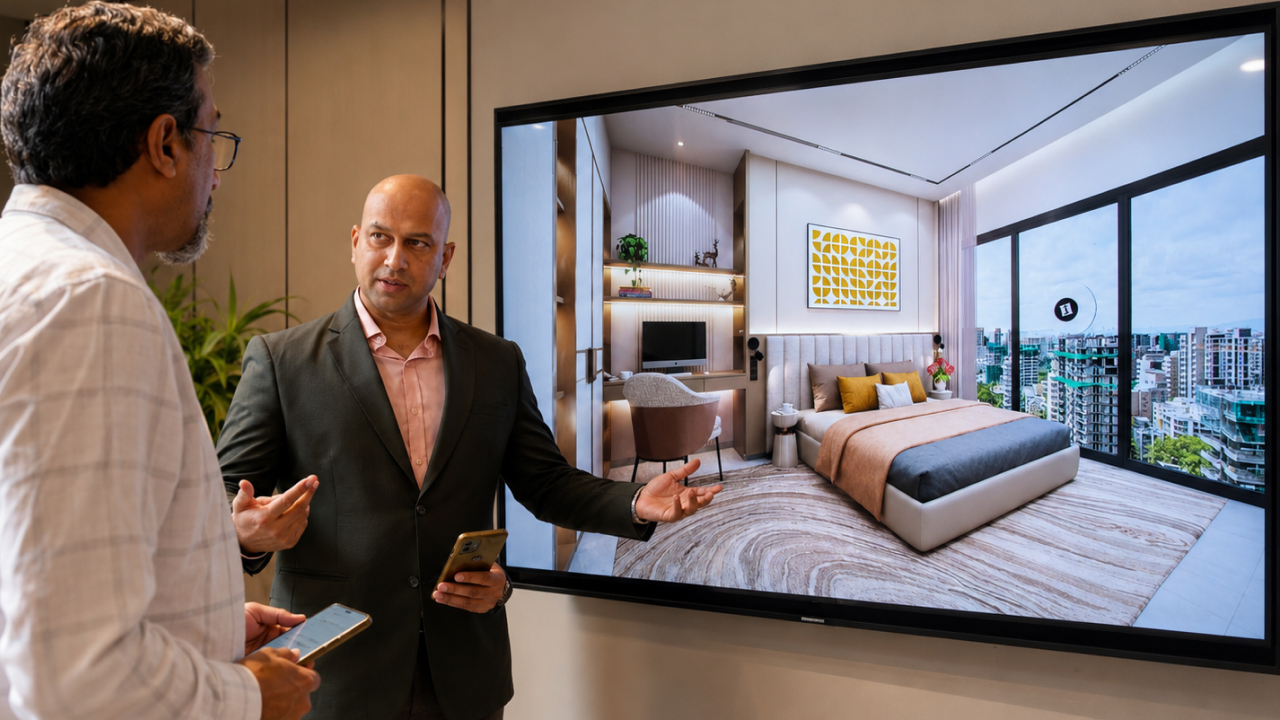
Immersive property experiences aren't about technology. They are about precision.
Three things must align:
First — spatial accuracy. The virtual representation must match the actual unit. Wrong ceiling heights, shifted columns, or inaccurate window placements destroy trust the moment a buyer notices.
Second — material fidelity. Buyers inspect. They zoom into cabinet grain, light reflections off tap fittings, the texture of a countertop edge. Photorealistic rendering at this level isn't aesthetic — it's functional. It closes questions before they become objections.
Third — contextual completeness. A unit exists inside a building, inside a neighbourhood, inside a lifestyle. Buyers don't just buy square footage. They buy proximity to schools, commute routes, the view from the balcony on a rainy morning. Show them all of it.
When these three elements are present, buyer behaviour changes. Decisions that previously took multiple site visits compress into a single session.
Offline Activation Changes the Sales Equation
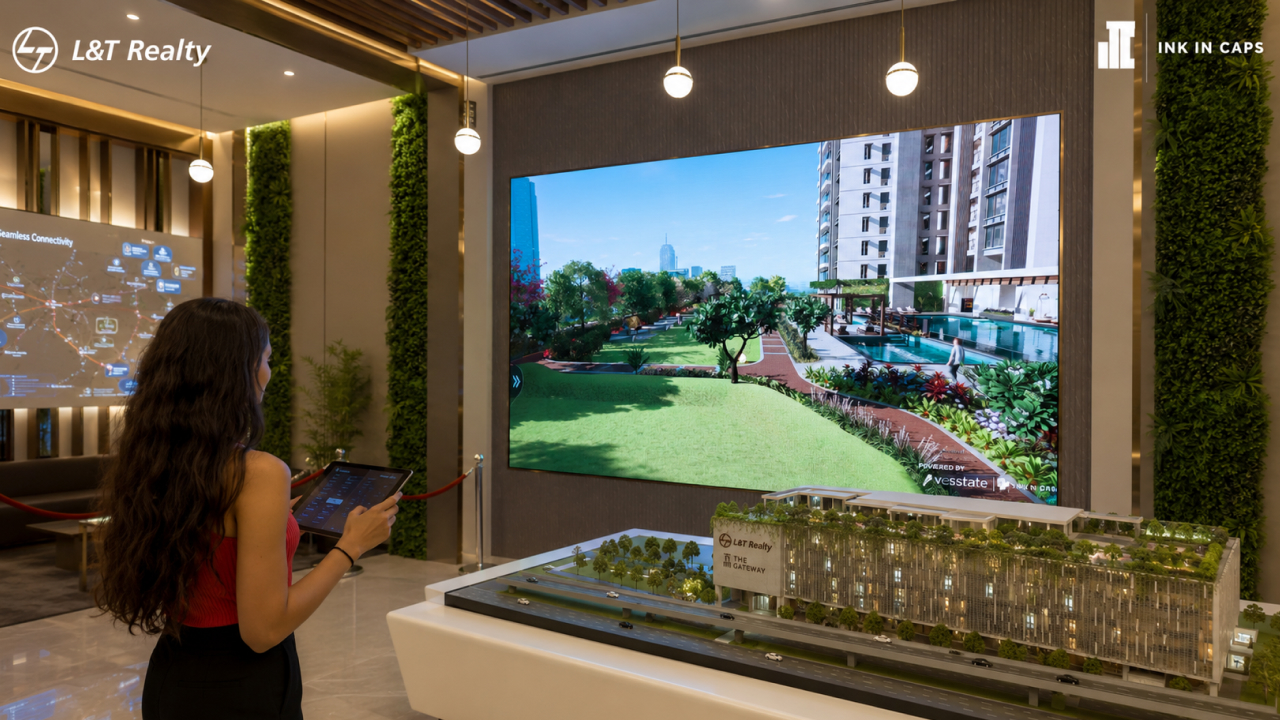
Here is a detail most platforms miss: connectivity is not guaranteed at the point of sale.
Trade shows. Client offices. Project site visits. On-location meetings with HNI buyers. These environments don't always have reliable internet. Cloud-dependent platforms stall. Demos break. Sales reps apologise. Momentum disappears.
Offline activation solves this completely.
When project data loads locally — on a laptop, on a tablet, via USB or hard drive — the demo runs regardless of network conditions. The experience is the same in a five-star hotel boardroom or a construction site trailer.
This isn't a minor technical distinction. It restructures how sales teams operate. No pre-demo IT checks. No backup hotspots. No waiting. The rep controls the entire experience.
Photorealistic 3D Virtual Show Flats at Scale
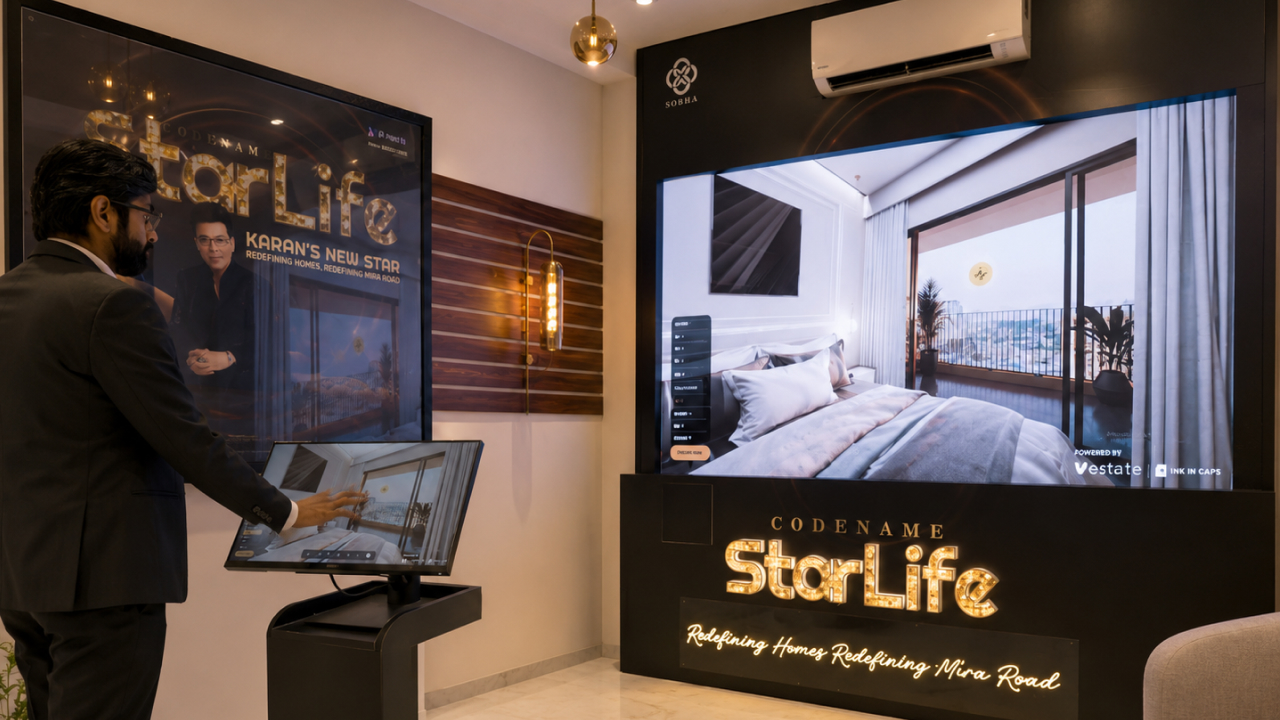
Physical show flats serve one unit at a time. A photorealistic 3D virtual show flat serves every unit, every configuration, every finish option — simultaneously.
Import floor plans and elevation data directly. The model builds from actual architectural drawings, not approximations. Textures apply to walls, floors, counters, and fixtures. Buyers zoom in. They see what they are actually buying.
Dynamic lighting controls shift the unit from morning to noon to dusk. Buyers see how natural light moves across rooms. Shadow angles are accurate to the building's orientation. Weather simulations add rain, overcast skies, clear afternoon sun. The view outside the window updates in real time.
A buyer sitting virtually in the living room, watching the horizon during evening light — that moment converts.
It cannot be replicated with a floor plan brochure. It cannot be approximated with a static render. It requires spatial immersion with accurate data underneath it.
Amenity Mapping and Lifestyle Connectivity
The unit is not the product. The lifestyle is.
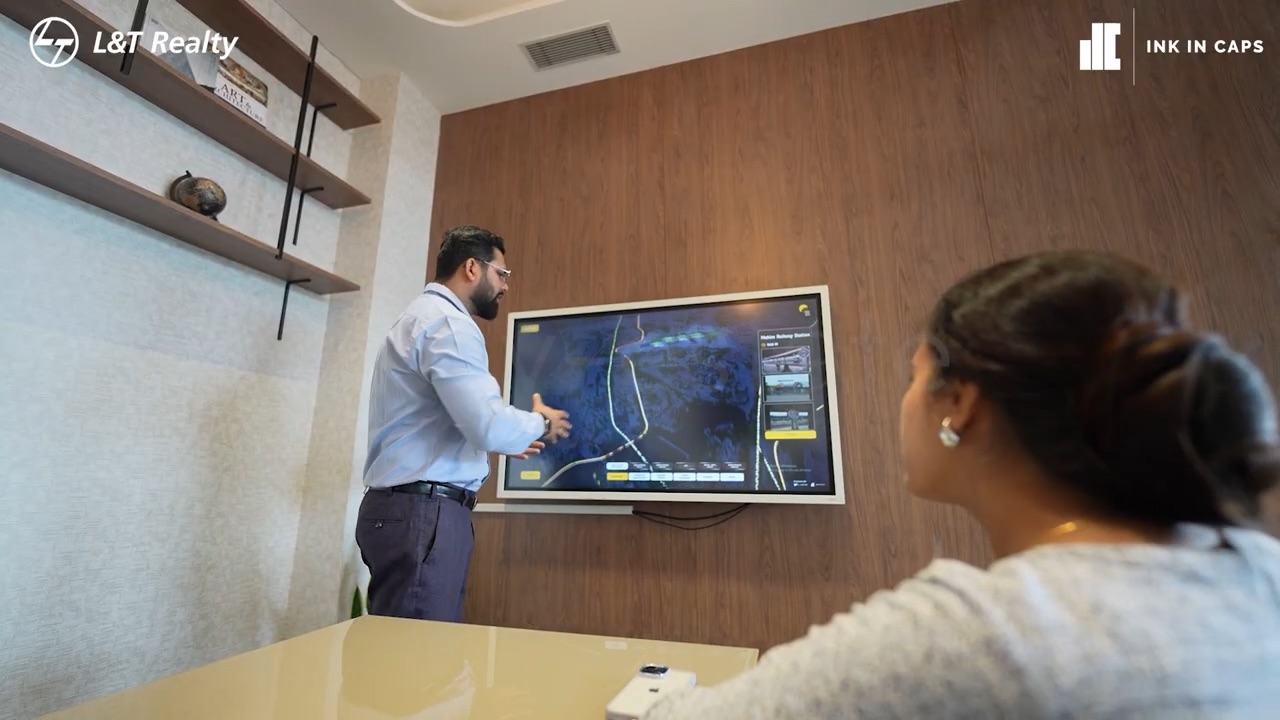
Buyers evaluate proximity. Distance to the metro. Schools within two kilometres. Hospitals, parks, markets, commute time. These factors often carry more weight than the finishes.
Geo-mapped amenity showcases layer this data directly into the experience. Current infrastructure appears alongside upcoming projects. Timeline sliders allow buyers to see the neighbourhood at completion — not just today. Dashed overlays mark planned roads, metro extensions, commercial development zones.
Buyers stop asking "what's nearby?" because the answer is already in front of them.
This connectivity data, loaded offline and pre-rendered, ensures the demo runs without live map API dependencies. Sales reps present complete lifestyle context on any device, anywhere.
Real-Time Customisation Closes Faster
Buyer hesitation often isn't about price. It's about uncertainty.
"I'm not sure which paint will work." "I don't know if our sofa will fit." "I can't tell how dark that bedroom gets in winter."
Real-time customisation eliminates these objections at the point of contact.
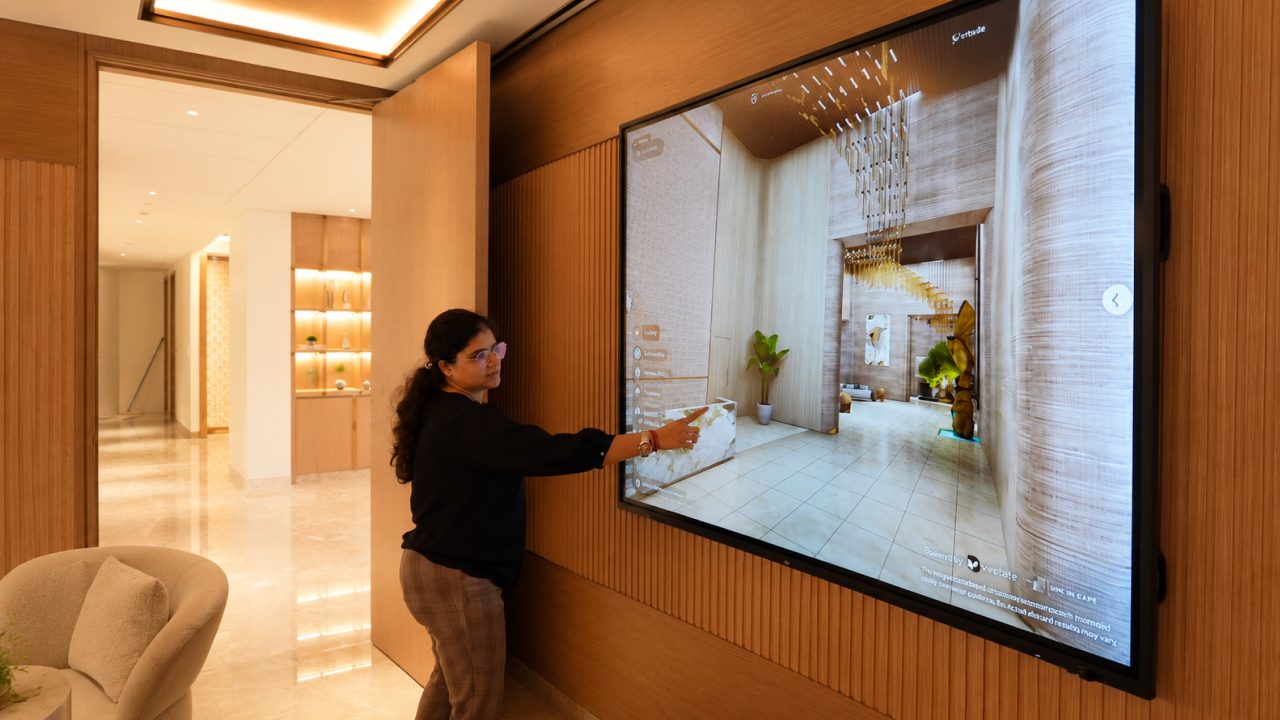
Wall paint previews update instantly. Buyers cycle through palettes. They see the actual room change. Furniture placement tools let them test scale — no mismatch surprises post-possession. Window views adjust by floor level and unit orientation.
Day-night cycles and seasonal weather controls answer lighting questions before they become post-sale complaints. Offline customisation runs entirely device-local. No render queues. No cloud lag. Changes appear immediately.
When buyers control the experience, their confidence grows. Decisions firm faster.
The Business Case for Developers
Immersive offline activation is a capital allocation decision, not a technology experiment.
Physical show flat costs are fixed and limited. Virtual show flats scale across the entire project without rebuild costs. Configuration changes update in software. No demolition. No rebuild.
Sales cycles shorten when buyers arrive informed and leave decided. Lead quality improves when surface-level queries are answered before they reach the sales team. Conversion rates increase when immersion replaces uncertainty.
Marketing heads gain measurable data: which units buyers gravitate toward, which finishes generate the most engagement, which amenities drive session time. Interaction heatmaps refine pitches in real time.
Final Point for Decision-Makers
The gap between architectural data and buyer conviction is a solved problem. The solution is not more brochures. It is not a better website.
It is a device-local, photorealistic, spatially accurate, fully customisable immersive experience that a sales rep can run anywhere — offline, on-demand, without compromise.
That is V-estate. That is what offline activation looks like in practice.
Integrate it into your sales pipeline. Measure the difference in your next launch cycle.