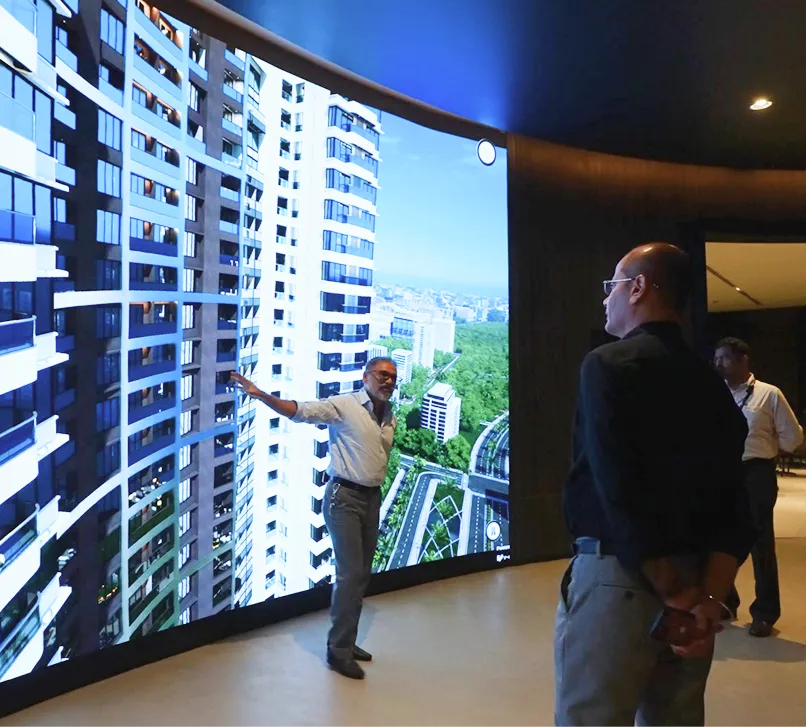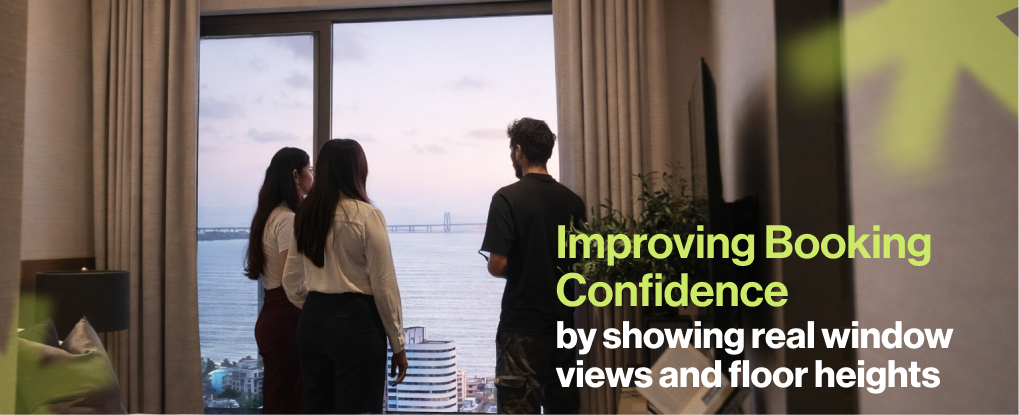
Property bookings stall when buyers cannot verify what they see from their window or judge their actual floor height. Vague renders and disconnected marketing materials leave decision-makers uncertain. This uncertainty translates directly into delayed closures, increased sales cycle costs, and post-handover disputes that damage developer reputation.
Buyer uncertainty creates measurable revenue loss
Buyers cannot reliably judge external views from floor plans. Traditional brochures fail to communicate vertical scale or window sightlines. Generic CGI creates mismatched expectations that surface only at handover.
The financial impact is immediate. Conversion rates drop when prospects doubt the view quality. Sales teams spend excessive time answering repetitive questions about orientation and visibility. Drop rates climb when customers discover reality does not match promotional imagery.
This problem compounds across high-rise and urban projects where external context determines unit value.
Standard marketing tools fail at scale
Floor plans show spatial layout but ignore external perspective. Static renders cannot adapt to different floor levels or surrounding development changes. Site visits require scheduling, transportation, and weather cooperation.
Field visits cost time and money. Each physical tour ties up sales personnel and slows decision velocity. Photography captures single moments, not the range of lighting and seasonal variation buyers need to evaluate comfort.
Developers need a verification system that works before the first payment milestone.
Verified window views and floor height mapping solve the core gap
V-estate removes visual ambiguity through verified external imagery and accurate vertical positioning. Photorealistic 3D showflats integrate real-world window views matched to precise GPS coordinates and floor elevations.
This is not a web-based product tour. V-estate operates as an offline activation inside sales galleries and experience centres, giving developers full control over presentation quality, loading speed, and guided interaction.
Buyers see exactly what they will experience after possession. Expectations align with reality before contracts are signed.
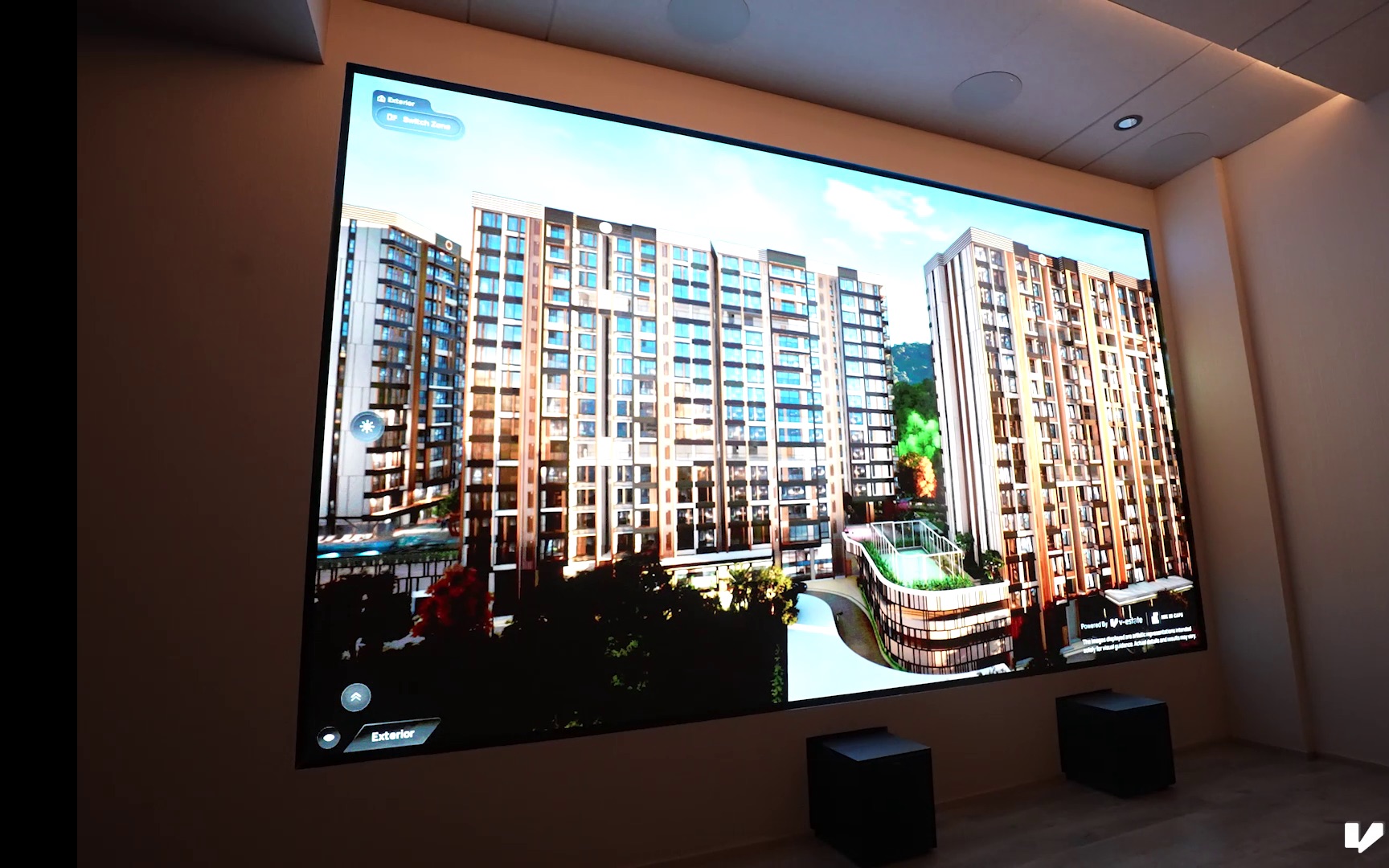
Core technical capabilities that drive booking confidence
Verified external imagery
Drone photography and street-level captures tie directly to unit coordinates. Each window view reflects actual surrounding buildings, green spaces, and infrastructure. No artistic interpretation distorts reality.
Accurate vertical mapping
True floor height data feeds into the virtual environment. Prospects understand the perceived elevation and sightline angle from their specific unit. This eliminates the guesswork inherent in static elevation drawings.
Dynamic sightline simulation
Parallax modeling shows what a seated or standing person sees through each window. Buyers can test furniture placement against window placement to judge natural light penetration and view obstruction.
Time-of-day and weather controls
Prospects toggle between morning, afternoon, and evening lighting. Seasonal weather variations demonstrate year-round visibility and ambient conditions. This prevents surprise when occupants move in during different months.
Nearby context overlays
Distance markers highlight proximity to schools, hospitals, transport hubs, and retail zones. Future developments appear on the map so buyers understand upcoming neighborhood changes that affect long-term value.
%20(1).jpg)
Offline experience centre deployment ensures sales control
V-estate runs locally in sales galleries without dependency on external internet connections. Developers avoid slow loading, connectivity failures, and security risks associated with cloud-based demos.
Sales teams control pacing and narrative. Interactive kiosks let prospects explore independently while staff guide interpretation. The offline setup ensures consistent performance regardless of network conditions.
This eliminates the friction of remote demos where technical glitches disrupt closing momentum.
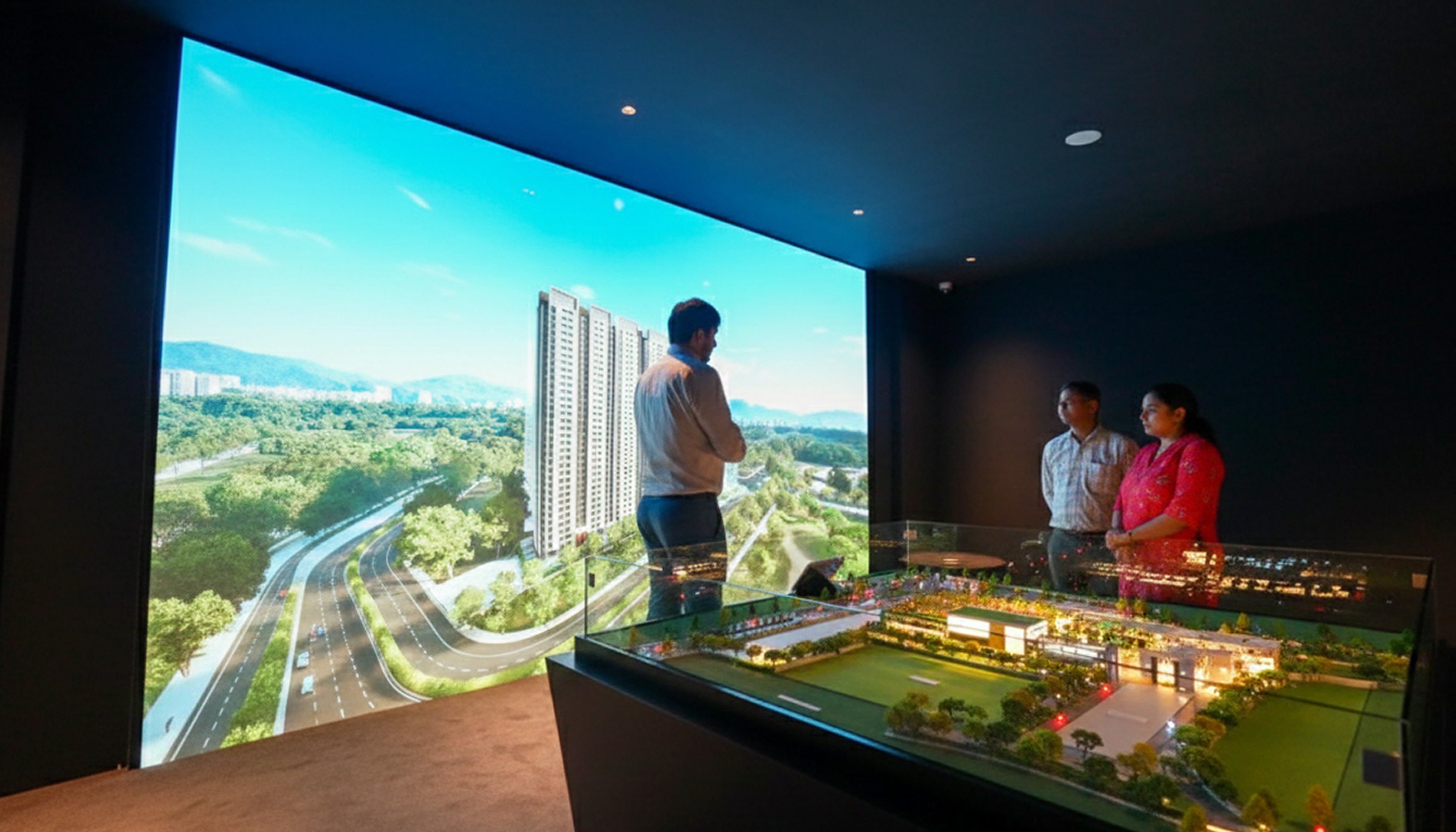
Operational integration for marketing and sales teams
Sales script alignment
Conversations shift from feature lists to validated visual proof. Teams demonstrate verified views instead of defending generic marketing claims.
Training modules
Staff learn to interpret sightline data and answer comparative questions across floor levels. Role-play scenarios prepare teams for objection handling tied to visual evidence.
Analytics tracking
Dashboards capture which views convert fastest, which floors generate most interest, and where prospects spend exploration time. Marketing heads use this data to optimize pricing and promotional focus.
Collateral preparation
Side-by-side comparisons between virtual sightlines and actual site photography set correct expectations immediately. Buyers gain confidence when digital previews match physical evidence.
Measurable outcomes that justify implementation
Booking conversion rates increase when visual uncertainty is removed. Prospects who verify their view inside the experience centre close faster than those relying on imagination.
Average days to booking decrease because fewer clarification cycles and site visit requests extend timelines. Sales efficiency improves when each conversation moves toward closure instead of circling unresolved doubts.
Post-handover complaints drop when delivered views match pre-booking expectations. Developers protect reputation and reduce refund exposure by aligning perception with reality upfront.
Site visit frequency per closed sale declines, cutting transportation costs and freeing sales bandwidth for higher-quality interactions.
.jpg)
Project types that benefit most from sightline verification
High-rise developments
Vertical positioning determines value perception. Buyers pay premiums for height but need proof of actual elevation impact on views and privacy.
Urban infill projects
Surrounding development density creates visibility concerns. Verified imagery shows exactly what adjacent buildings obscure or reveal.
Pre-launch sales
Physical access restrictions prevent traditional site tours. V-estate provides verifiable alternatives when construction has not begun.
Mixed-use developments
Proximity to amenities and future infrastructure projects influences purchase decisions. Context overlays demonstrate connectivity and lifestyle benefits.
Implementation checklist for deployment readiness
Map each unit to precise GPS coordinates and floor level data. Capture window-facing imagery at multiple times of day across different seasons. Build photorealistic interiors that match actual finishes and fixture specifications.
Deploy local demo infrastructure inside experience centres. Ensure offline capability eliminates external dependencies. Train sales staff to use visualization as a decision tool, not a passive feature showcase.
Set conversion KPIs before launch. Measure booking rates, time-to-close, site visit frequency, and post-handover dispute rates. Run a pilot block to validate results before portfolio-wide rollout.
Common deployment mistakes to avoid
Generic renders that overpromise create credibility gaps. Use verified imagery and transparent context overlays instead of aspirational CGI.
Heavy reliance on online demos introduces connectivity risk. Offline-capable kiosks deliver consistent performance inside galleries.
Untrained sales staff treat tools as gimmicks. Build conversion-focused scripts and role-play scenarios tied to measurable outcomes.
Moving from uncertainty to verified confidence
Buyers make decisions when they can picture life inside the property. Verified window views and accurate floor height mapping remove the largest barrier to booking confidence.
V-estate delivers this capability through offline experience centre activation. Developers gain faster closures, reduced sales friction, and stronger alignment between marketing promises and delivered reality.
Schedule a technical demonstration inside your sales gallery. Test sightline verification with your current inventory. Measure conversion impact before full deployment. Contact your product specialist to arrange a pilot session and validate results with your own buyers.
Clear visualization drives confident decisions. Confident decisions close faster.