The real estate industry faces a persistent challenge: helping potential buyers truly understand and connect with properties that exist only on paper. Traditional blueprints and floor plans often leave customers struggling to visualize their future home, leading to hesitation, delayed decisions, and lost sales. This visualization gap has plagued developers for decades, but modern technology offers a compelling solution.
Understanding Architectural Visualization
Architectural visualization represents a revolutionary approach to presenting unbuilt properties. This sophisticated process transforms technical drawings into lifelike three-dimensional representations that anyone can understand. Unlike flat sketches or complex blueprints, these digital creations showcase exactly how spaces will look, feel, and function once completed.
The technology encompasses various formats designed to meet different needs. Photorealistic renderings capture stunning still images that rival professional photography. Interactive walkthroughs allow viewers to explore spaces naturally, moving from room to room at their own pace. Virtual reality experiences create fully immersive environments where potential buyers can practically step inside their future homes.
These visualizations accurately represent every detail that matters to buyers. Lighting conditions change throughout the day, showing how natural sunlight flows through windows during morning coffee or evening relaxation. Material textures appear authentic, from polished marble countertops to warm hardwood floors. Even views from windows reflect actual surroundings, helping buyers understand their future neighborhood perspective.
How Architectural Visualization Has Evolved
Architectural visualization has moved well beyond static CGI renders. Earlier property presentations mainly relied on fixed exterior and interior images created from architectural drawings. These helped buyers see the design, but they still limited the property to a few selected viewpoints.
Today, real-time 3D environments can let buyers move through a project, explore different floors, understand layouts, compare views and see how lighting changes throughout the day. Digital twins, interactive walkthroughs and real-time rendering have therefore expanded architectural visualization from a marketing asset into a practical property-presentation tool.
Then use:
From Static Renders to Interactive 3D
Static renders are useful for showing a specific design, material or viewpoint. Interactive 3D visualization adds another layer by allowing buyers and sales teams to control what they explore instead of following a fixed sequence.
Real-Time Visualization and Digital Twins
Real-time digital twins can combine architecture, interiors, amenities, views and surrounding context within the same environment. This makes it easier to move from the overall project to a specific residence during a sales discussion.
V-Estate’s current Spaci platform follows this model, combining real-time digital twins with exteriors, interiors, views, lighting and vicinity exploration.
Why Developers Struggle Without Proper Visualization
Real estate developers consistently face the same fundamental problem: communicating design intent effectively. Technical drawings speak to architects and engineers, but they confuse the very people developers need to convince – potential buyers and investors.
This communication breakdown creates multiple challenges. Buyers hesitate when they cannot visualize themselves in a space, extending sales cycles and increasing marketing costs. Investors struggle to understand project value when presentations rely on technical documentation. Even when properties eventually sell, mismatched expectations often lead to dissatisfied customers and potential legal issues.
Geographic limitations compound these problems. Developers working on projects in different cities or countries cannot easily bring every potential buyer to construction sites. International investors, a crucial market segment for many developers, rarely have opportunities to visit properties in person during decision-making processes.
How Architectural Visualization Transforms Real Estate Sales
Modern visualization technology directly addresses these challenges while creating new opportunities for growth. Enhanced communication becomes possible when complex architectural concepts transform into easily understood visual experiences. Buyers immediately grasp spatial relationships, appreciate design choices, and understand how different areas connect and flow together.
Emotional connections develop naturally when people can virtually experience their future homes. Walking through a digital representation of their potential living room, seeing how their furniture might arrange, or watching sunset light stream through bedroom windows creates powerful psychological bonds that motivate purchasing decisions.
Pre-construction sales become viable strategies when developers can showcase completed properties before breaking ground. This approach generates early revenue, validates market demand, and builds excitement around upcoming projects. Buyers gain confidence investing in properties they can thoroughly explore, even when construction hasn't begun.
Global accessibility expands market reach significantly. International buyers can take comprehensive property tours without traveling, opening new demographic segments previously difficult to reach. Remote viewing capabilities became especially valuable during global events that restricted physical property visits.
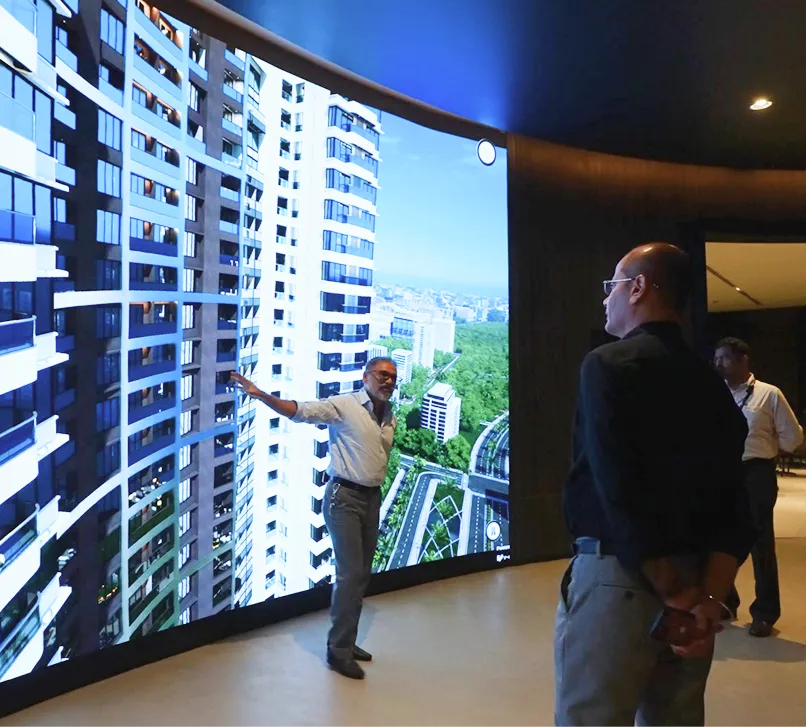
A practical example can be seen at Mehta Marquina 1978 in Goregaon, where V-Estate created a real-time architectural visualization ecosystem for a mixed-use development comprising a 38-floor commercial tower and premium residences. Buyers and channel partners could explore the architecture, circulation, amenities, connectivity and views within the same sales environment. The experience also included an interactive discussion room where sales teams could move between architecture, layouts, amenities and location information during buyer conversations.
Competitive Advantages for Forward-Thinking Developers
Developers embracing advanced visualization technology gain substantial marketing differentiation. While competitors rely on static images and floor plans, innovative developers offer immersive experiences that capture attention and generate genuine interest.
Customization capabilities address individual buyer preferences effectively. Modern platforms allow potential customers to experiment with different finishes, furniture arrangements, and design options, creating personalized experiences that feel tailored to their specific needs and tastes.
Time and cost savings accumulate throughout sales processes. Virtual tours reduce needs for multiple site visits, physical model units, and extensive sales team time. Marketing materials become more effective, generating higher-quality leads that convert more efficiently.
Implementation Considerations for Real Estate Professionals
Successful visualization implementation requires strategic thinking about user experience design. The most effective platforms provide intuitive interfaces that don't overwhelm users while offering comprehensive property exploration capabilities.
Technical quality significantly impacts viewer engagement and credibility. Photorealistic renderings must meet high standards to create convincing experiences, while interactive elements need responsive performance across different devices and internet connections.
Integration with existing sales processes ensures visualization tools enhance rather than complicate established workflows. Sales teams need training and support to maximize technology benefits while maintaining personal relationships crucial to real estate success.
Measuring results helps developers understand return on investment and optimize strategies. Tracking metrics like engagement time, conversion rates, and customer satisfaction provides valuable insights for continuous improvement.
Architectural visualization represents more than technological advancement – it's a fundamental shift toward customer-centered real estate marketing. Developers who embrace these tools create competitive advantages while solving real problems that have limited industry growth for years. As buyer expectations continue evolving, visualization technology becomes essential for sustained success in modern real estate markets.