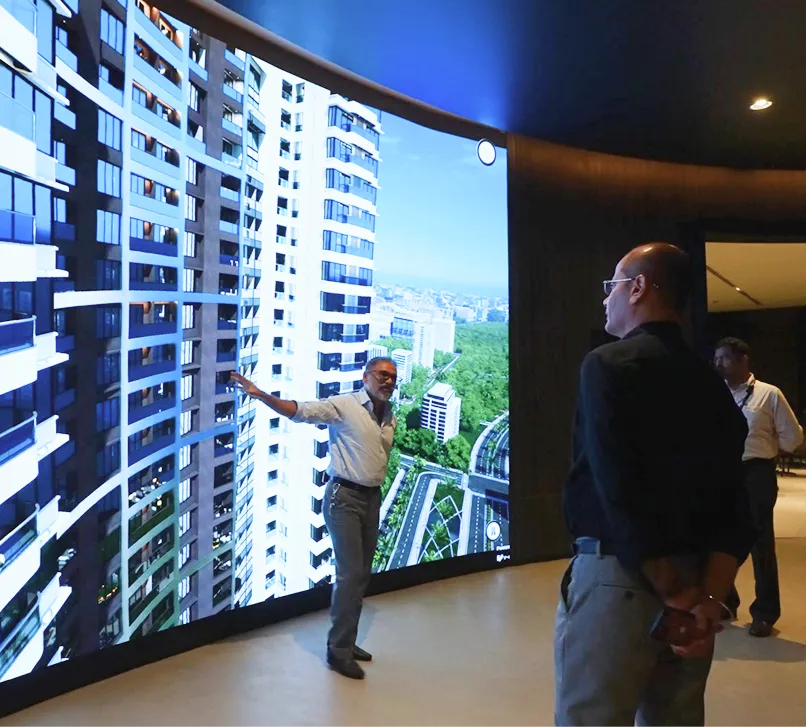
Buyers walk into your sales office with detailed questions. They've researched online. They've compared multiple projects. And they expect answers immediately—not vague promises or static renderings.
The traditional sales toolkit isn't built for this reality.
Floor plans confuse. Brochures oversimplify. Physical show flats lock you into one configuration. Buyers leave without clarity. Sales cycles stretch. Follow-ups multiply.
Real estate developers need precision tools that match buyer expectations.
This is where interactive virtual property tours change the equation—not as marketing gimmicks, but as core sales infrastructure for experience centers and sales offices.
Current Buyer Behavior Demands Better Sales Tools
Buyers today operate differently than they did five years ago.
Families arrive with specific layout concerns. Investors compare three projects simultaneously. Overseas buyers cannot rely on site visits alone.
The fundamental problem remains consistent across segments: most buyers cannot mentally convert 2D plans into lived spaces.
This cognitive gap delays decisions. It creates doubt. It forces sales teams into repetitive explanations that still fail to build confidence.
Interactive property visualization solves this disconnect directly inside the sales environment.
Physical Show Flats Have Fixed Limitations
Constructing show flats delivers realism. But the constraints are significant.
You build one unit type. One layout. One design scheme. Any modification requires physical reconstruction. Costs multiply with every unit variation you need to display.
For large developments or phased townships, building multiple show flats becomes financially impractical.
Architectural renders offer scale but lack depth. They're static. They don't respond to questions. They can't show movement, environmental context, or personalized configurations.
Buyers viewing renders still struggle to understand spatial relationships and real-world conditions.
Offline Interactive Property Tours for Assisted Selling
Interactive virtual property tours operate inside controlled sales environments—not online platforms.
This is guided selling with digital precision.
The critical difference: buyers control the experience themselves. They navigate rooms. They change layouts. They test configurations. They see views from specific windows.
Sales conversations shift from explanation to consultation. Teams guide instead of push. Buyers engage with the product directly.
This changes decision-making psychology fundamentally.
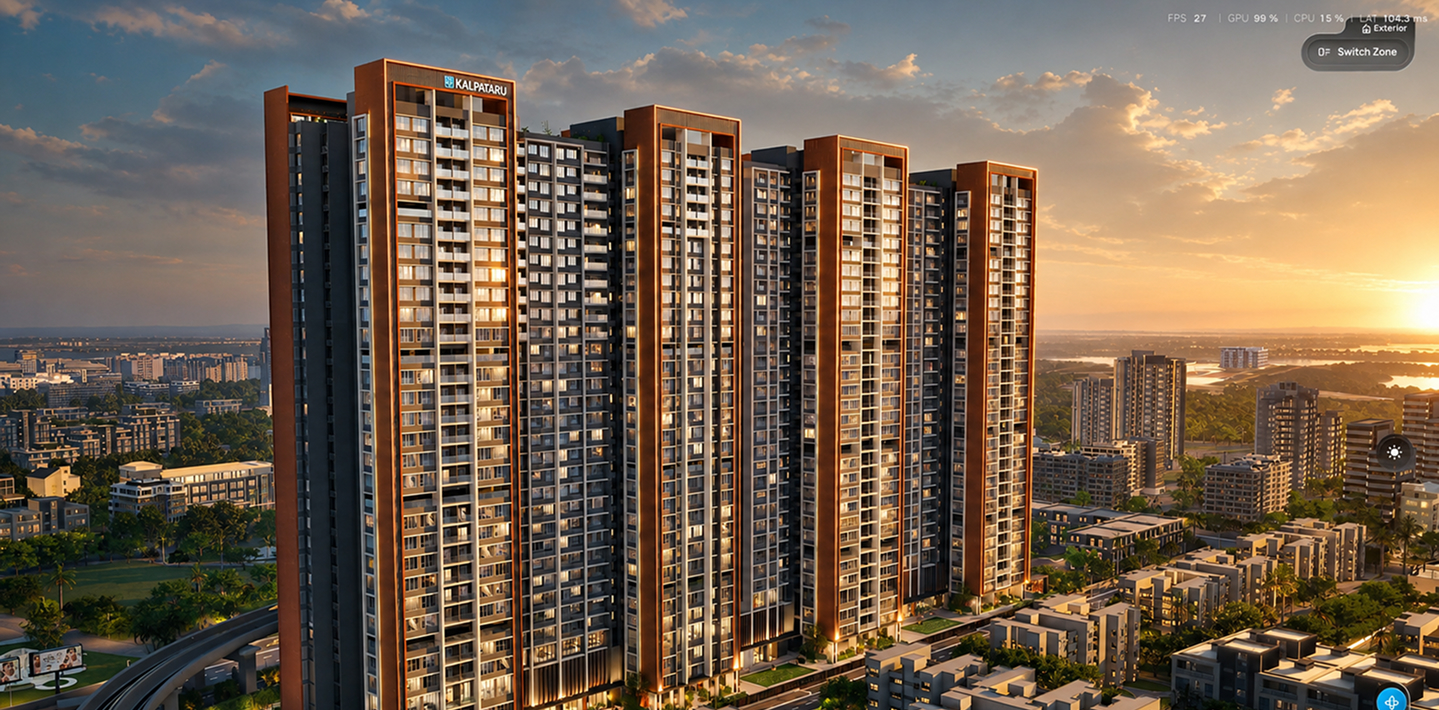
Photorealistic 3D Visualization with Spatial Accuracy
V-estate creates detailed 3D property representations with architectural precision.
Accurate dimensions. True-to-life materials. Real lighting behavior. Correct sightlines from every position.
Buyers walk through living rooms virtually. They move to balconies. They stand at windows. They see views exactly as they would appear from that specific height and orientation.
This spatial accuracy builds trust early. It removes guesswork from the buying equation.
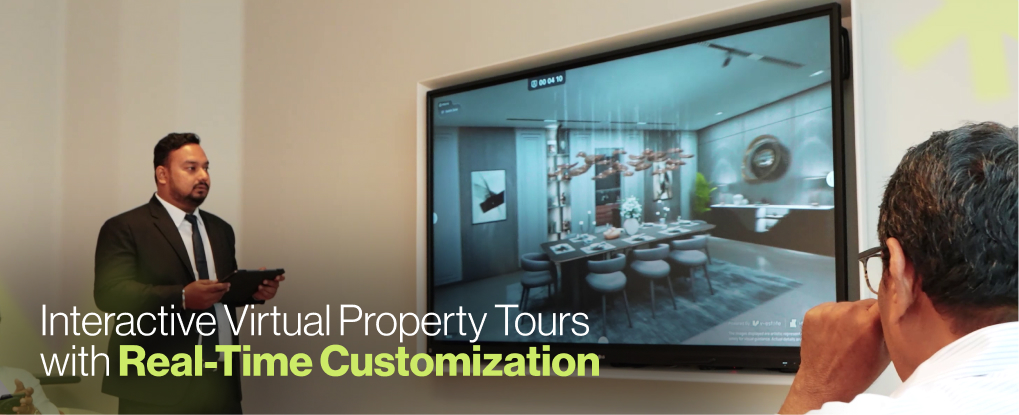
Real-Time Customization During Sales Discussions
Static visualization fails when buyer questions begin.
V-estate responds immediately with live customization:
Wall finishes change instantly
Furniture configurations update in real time
Flooring materials switch seamlessly
Color schemes adjust without system reloading
Buyers stop imagining. They start evaluating. Sales teams spend less time explaining hypotheticals. Conversations focus on alignment and decision-making.
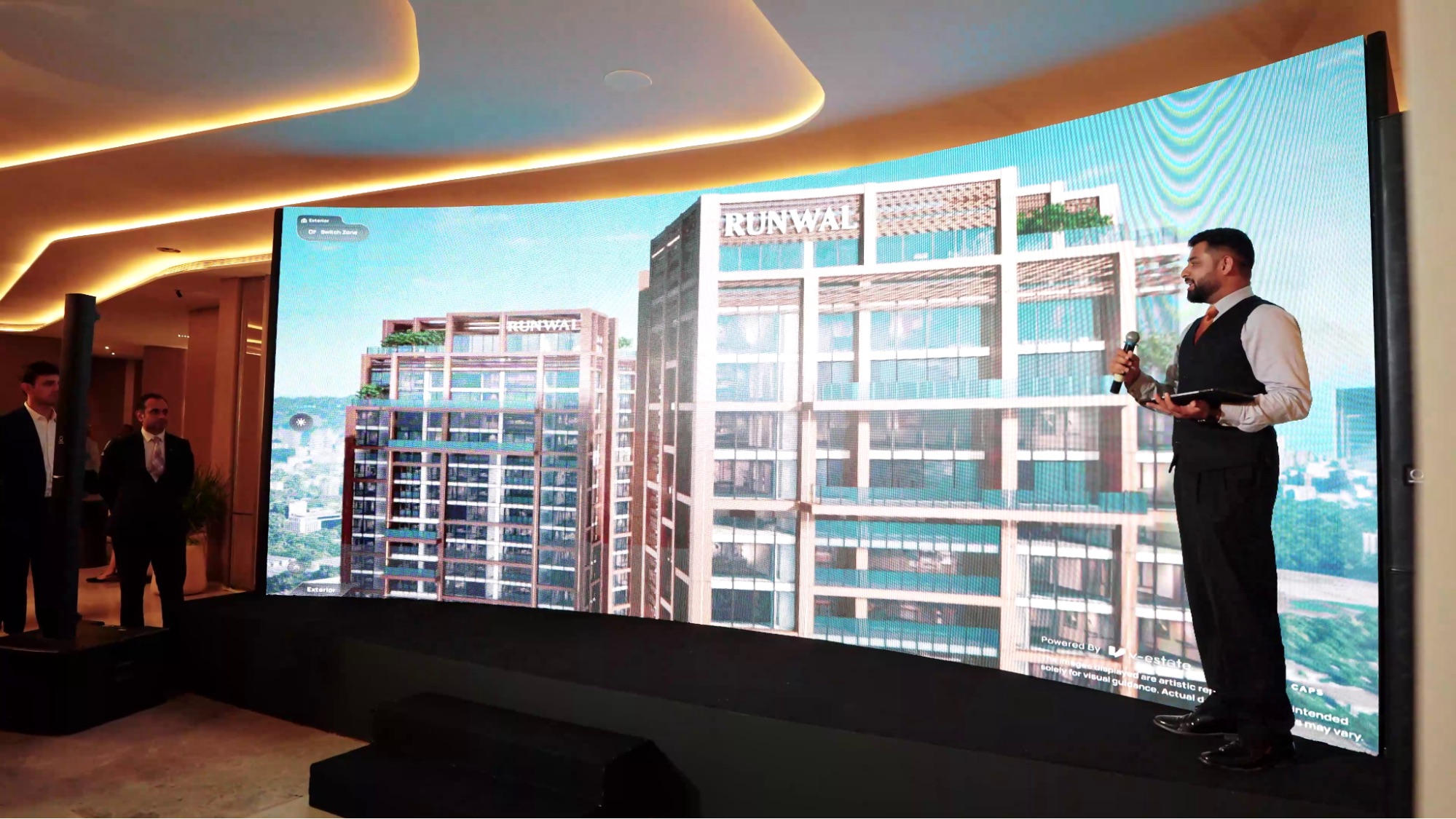
Window Views and Floor-Specific Perspectives
View quality determines buying decisions more than most developers acknowledge.
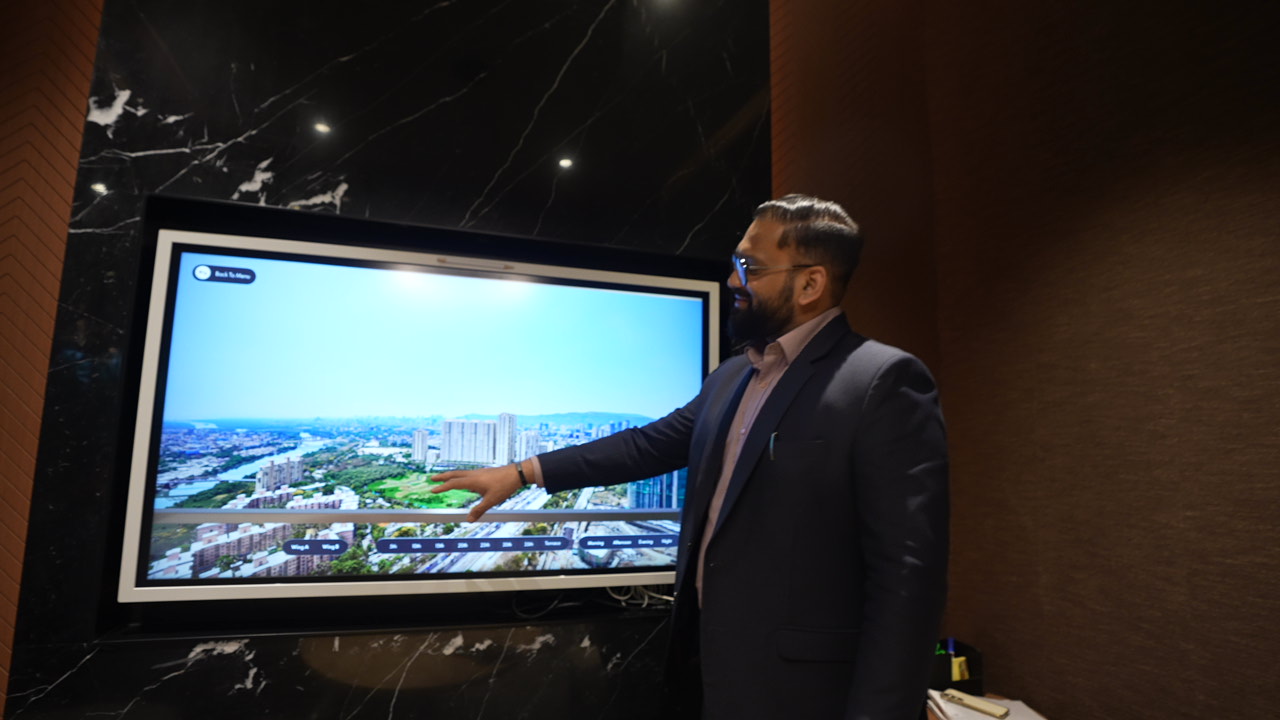
V-estate includes accurate window perspectives at every floor level. Buyers see orientation-based sunlight impact. They understand morning versus evening conditions.
This eliminates post-purchase dissatisfaction from expectation mismatches. Buyers know exactly what they're getting before commitment.
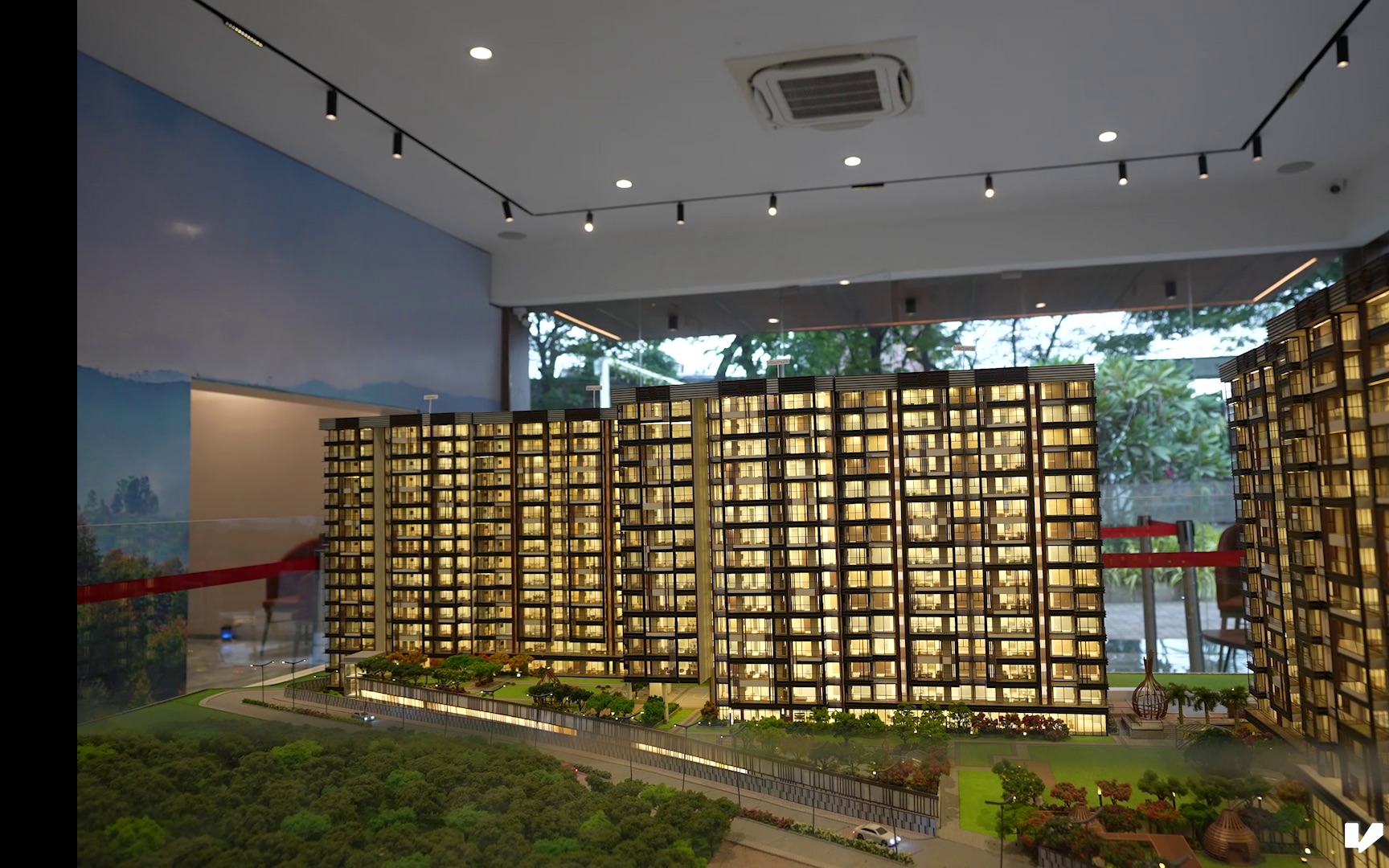
Amenity Mapping and Connectivity Visualization
Modern projects sell lifestyle infrastructure, not just units.
V-estate extends beyond interiors:
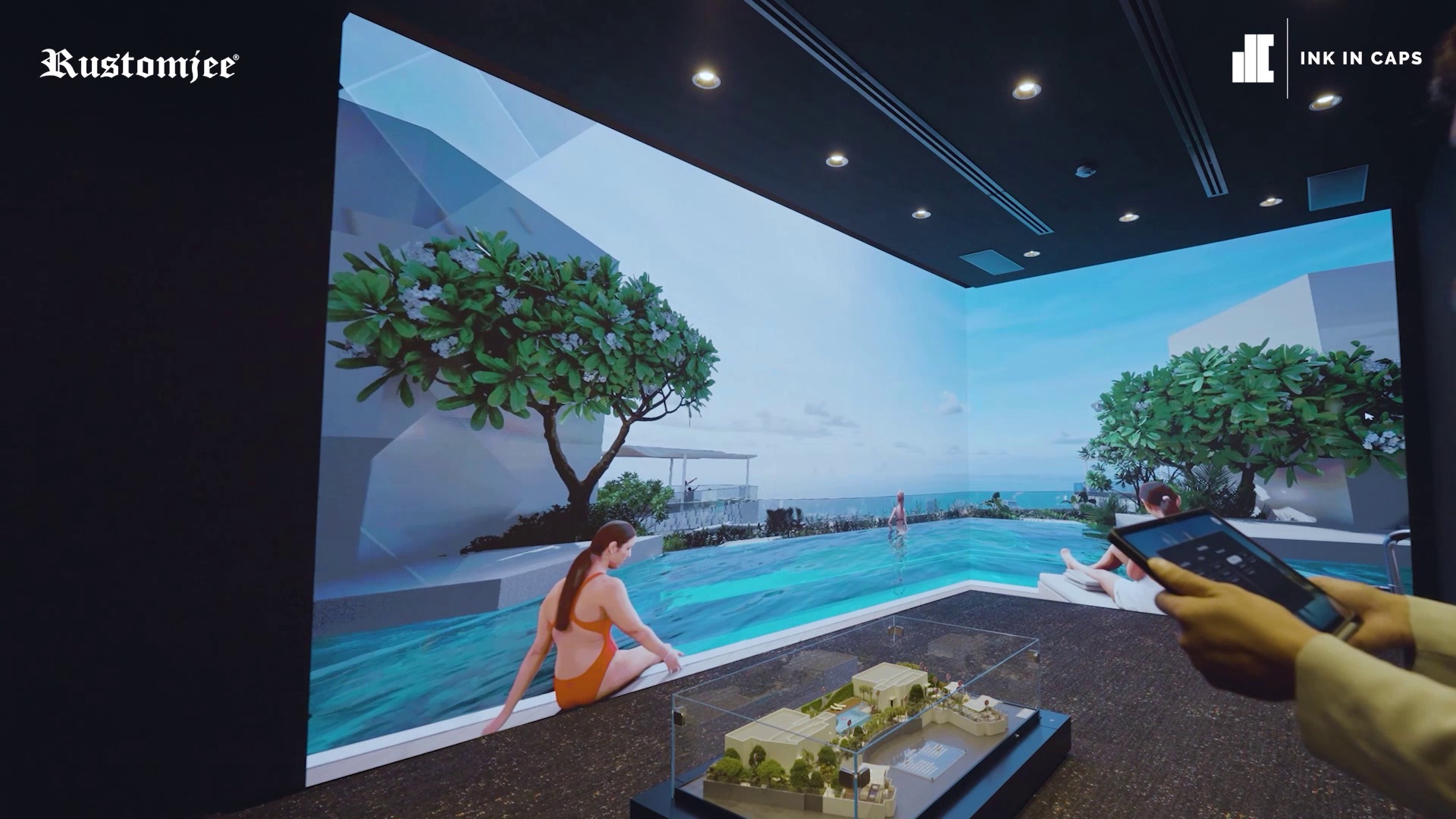
Amenity walkthroughs (clubhouse, recreational zones, open spaces)
Surrounding infrastructure mapping (existing and upcoming connectivity)
Nearby facilities (schools, hospitals, commercial hubs)
This contextual information supports long-term decision-making. Buyers evaluate complete lifestyle propositions, not isolated units.
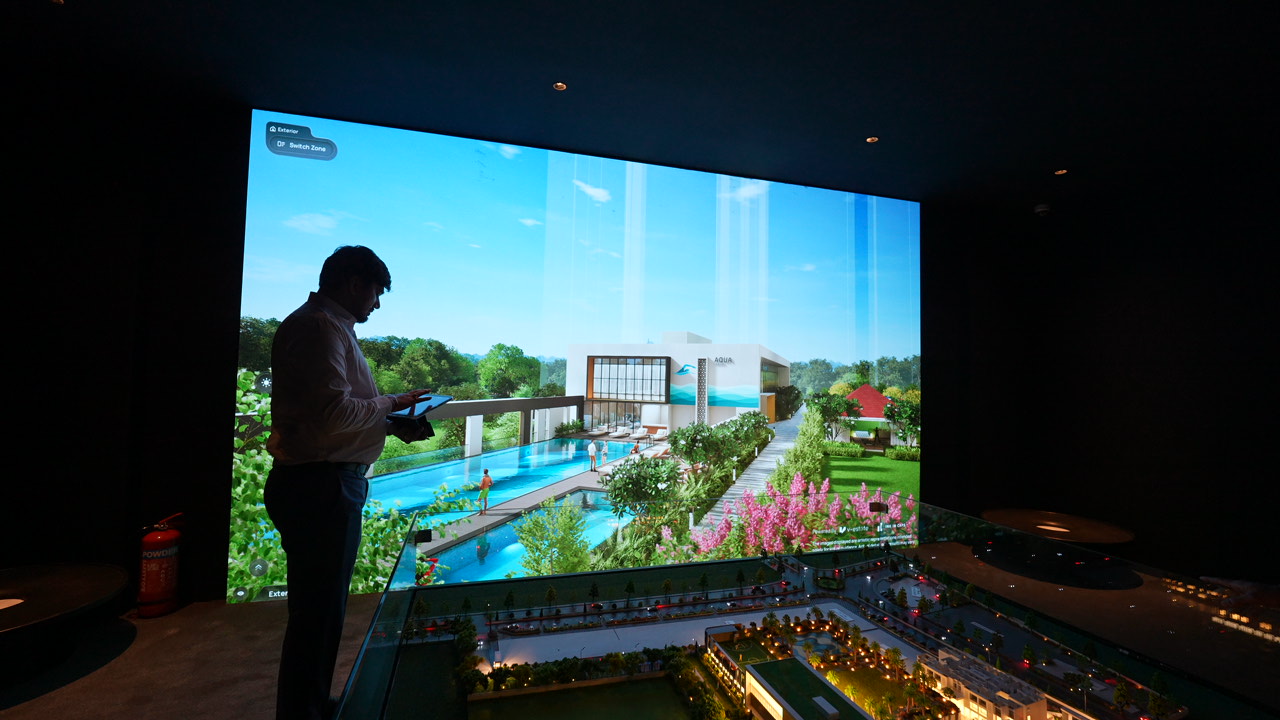
Dynamic Lighting and Environmental Simulation
Environmental realism influences comfort perception.
V-estate simulates:
Morning, afternoon, and evening natural light
Seasonal sun path variations
Overcast and bright weather conditions
Buyers understand how spaces perform throughout the day. They see ventilation and natural brightness patterns clearly.
Physical show flats rarely offer this temporal depth.
Control Shift from Sales Team to Buyer
The most significant operational change: buyers navigate independently.
They choose which rooms to explore. They test layout options. They experiment with configurations.
Sales teams become consultants, not presenters. This approach reduces buyer resistance. It builds confidence naturally. It improves close quality measurably.
Operational Impact on Sales Performance
V-estate influences internal efficiency directly:
Reduced dependency on multiple physical show flats
Faster qualification of serious buyers
Clear documentation of buyer preferences
Shorter follow-up cycles
Sales managers gain consistency. Marketing teams control message quality. Developers gain sales predictability.
Cost Rationalization for Large Developments
Large projects face escalating pre-sales costs.
Interactive systems consolidate resources effectively:
One experience center serves multiple unit types. No reconstruction for design revisions. Updates deploy digitally. Maintenance overhead drops significantly.
This scalability supports phased launches and extended selling periods efficiently.
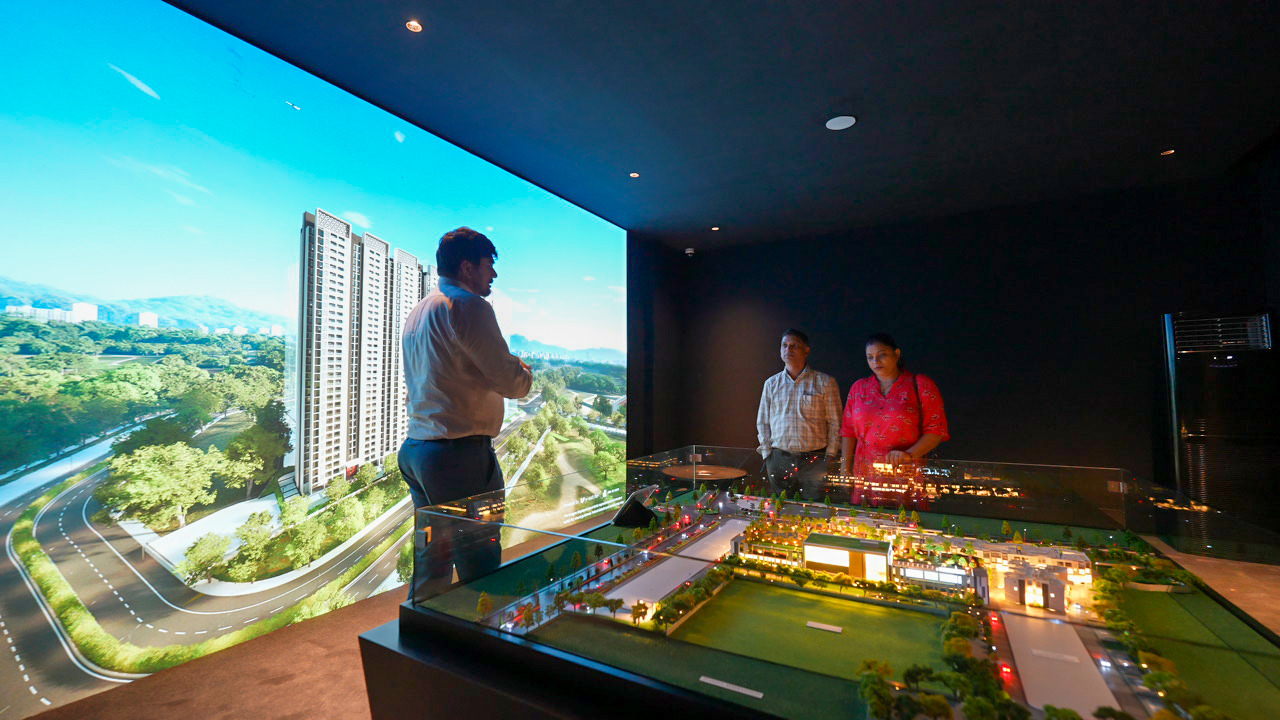
Strategic Value for Marketing Leadership
Marketing heads gain critical advantages:
Brand narrative remains consistent across touchpoints
Visual quality stays controlled
Buyer experience becomes measurable
Development teams improve coordination:
Fewer design misunderstandings
Reduced rework during execution phase
Better expectation setting from initial engagement
The system functions as a shared reference point across departments.
Application Across Project Types
V-estate applies across multiple formats:
Residential towers. Integrated townships. Luxury villas. Mixed-use developments.
Particularly effective for:
Pre-launch sales campaigns
Remote buyer engagement within sales offices
High-involvement decision cycles with multiple stakeholders
Next Step for Real Estate Developers
Real estate selling depends on clarity. Tools that deliver clarity are evolving rapidly.
Interactive virtual property tours with real-time customization address a fundamental need: letting buyers see, understand, and decide with confidence.
For developers focused on efficiency, accuracy, and buyer satisfaction, V-estate strengthens the entire sales ecosystem from first inquiry to final close.
Seamless experiences reduce friction. Clarity shortens sales timelines. Control builds buyer trust.
%20(1).jpg)