Luxury buyers ask the same question repeatedly: "How do I know this building is actually well-built?"
Brochures don't answer it. Walkthroughs don't answer it. A salesperson listing specifications doesn't answer it either.
This gap between what developers build and what buyers actually understand has quietly been one of the most expensive problems in luxury real estate sales. High-value buyers today are informed. They want proof, not promises.
The Real Problem in Luxury Real Estate Sales Centres
Most experience centres look impressive. Large screens. Scale models. Mood lighting.
But the conversation still falls flat the moment a buyer asks about waterproofing systems, fire-rated shafts, or structural load management.
Sales executives struggle to explain invisible engineering. Buyers leave without conviction. Follow-ups stretch longer than they should.
The product is strong. The communication is weak.
This is not a sales training problem. It is a product communication infrastructure problem.
The Gap Between Engineering Quality and Buyer Perception
Construction quality is largely invisible. A buyer can see a marble countertop. They cannot see:
Anti-capillary waterproofing layers
FRLS wiring systems
Earthquake-compliant structural reinforcement
Wind-tunnel validated facades
These are real differentiators. They cost money to build right. And they go completely unnoticed in traditional sales processes.
When buyers cannot see the value, they negotiate on price.
That is the core challenge luxury developers face today.
What Godrej Trilogy, Worli Built Instead
For their Worli project, Godrej Properties redesigned the sales journey from the ground up.
The objective was straightforward: make invisible engineering visible.
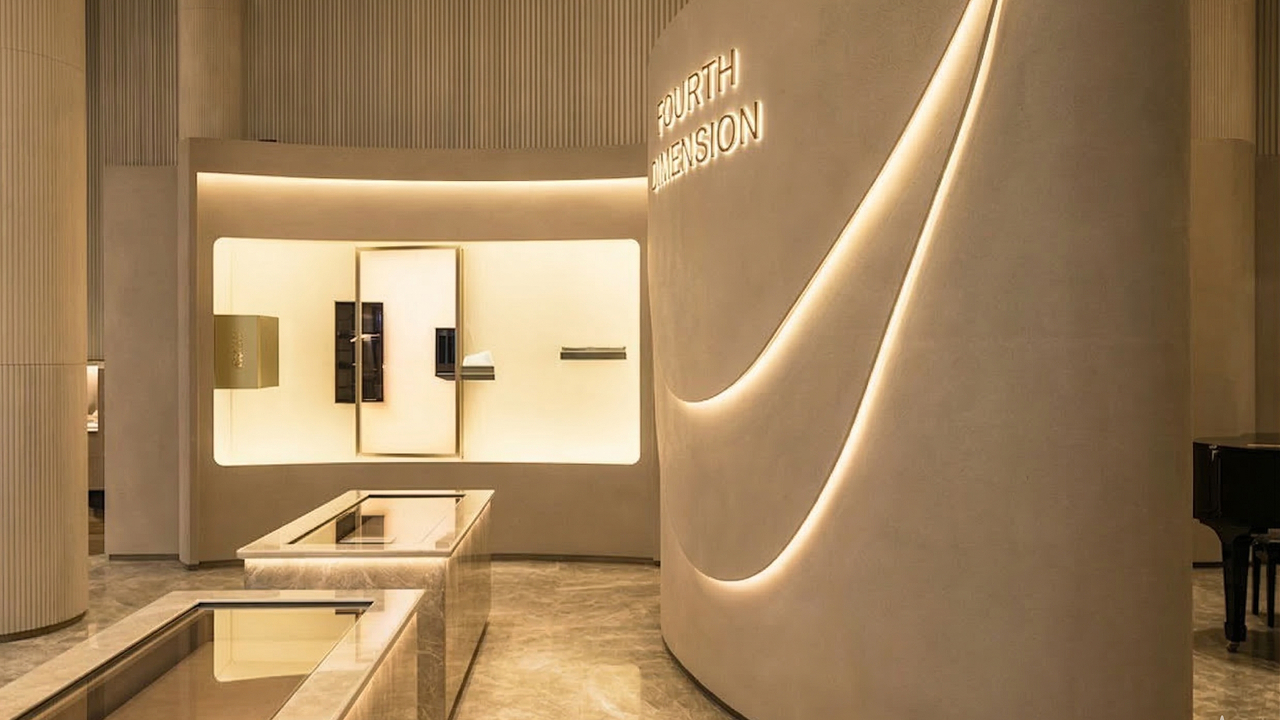
The solution was a dedicated Fourth Dimension Experience Centre — structured as a single S-shaped walkthrough across two connected zones. Buyers moved through the space sequentially, building understanding at each step before any pricing discussion began.
Two specific installations carried the entire weight of product communication.
Curved Rotoscopic Wall — Engineering Made Visible
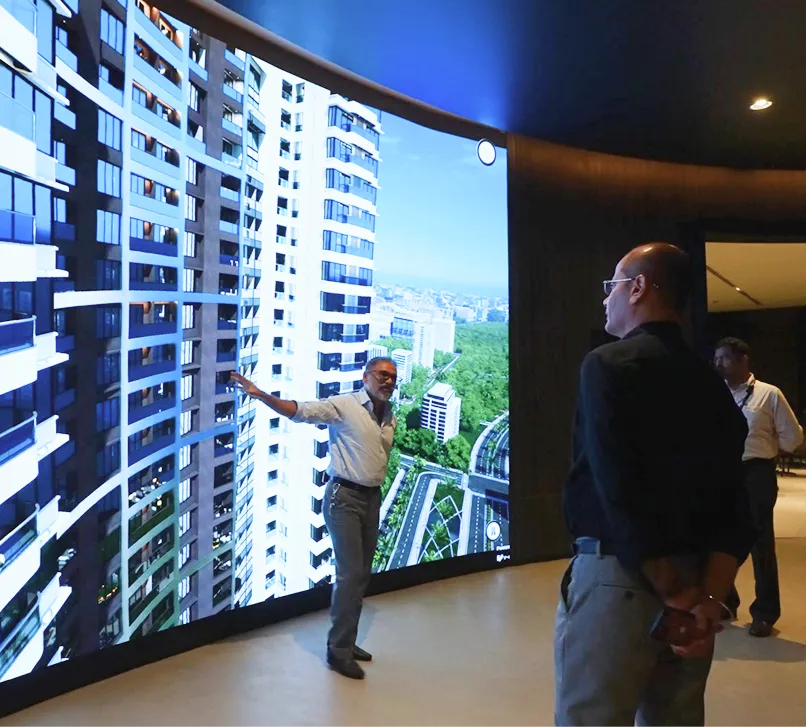
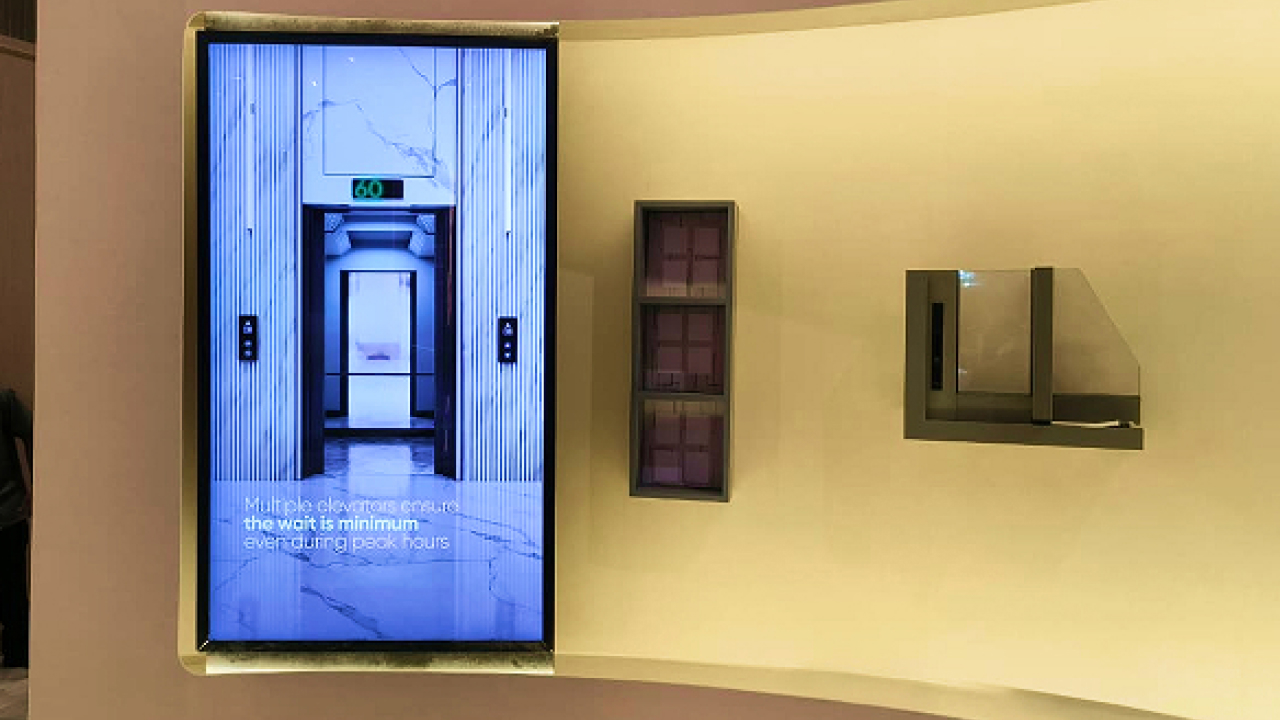
The first zone featured a 10-foot curved rotoscopic wall using sensor-triggered motion animation.
When a buyer walked past, the wall responded. Animated sequences broke down each construction feature — not through technical jargon, but through clean, intuitive visual storytelling built directly into the architecture of the space.
Key engineering narratives communicated through this installation:
Dual-layer waterproofing with reinforced RCC seepage-prevention systems
High-speed elevator engineering optimised for luxury high-rise wait times
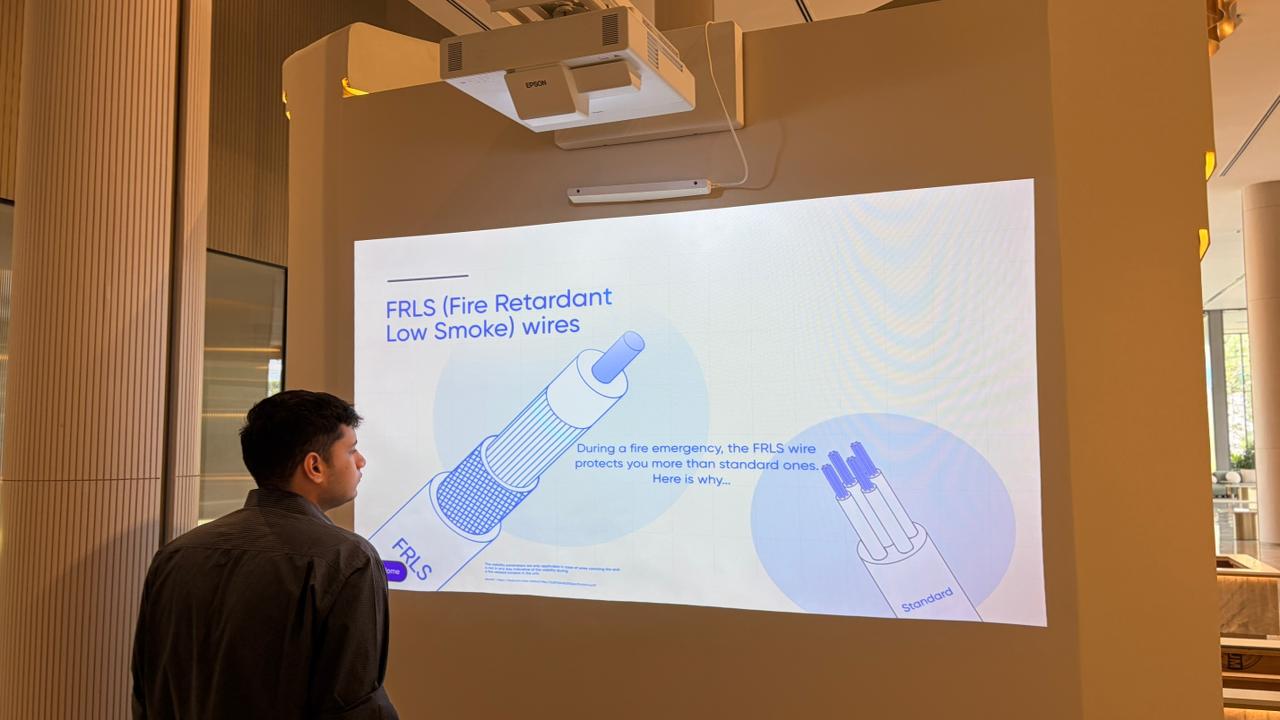
Fire-rated shafts and FRLS wiring for structural fire safety compliance
Double-glazed coastal windows tested for wind resistance and noise reduction
Average buyer engagement at this wall: 15 minutes per visit.
Buyers were not just watching. They were asking questions. Pointing at specific details. Having real technical conversations — often for the first time in a real estate sales centre.
That shift in conversation quality is what changes closing timelines.
Interactive Touchscreen Wall — Depth Without Overwhelm
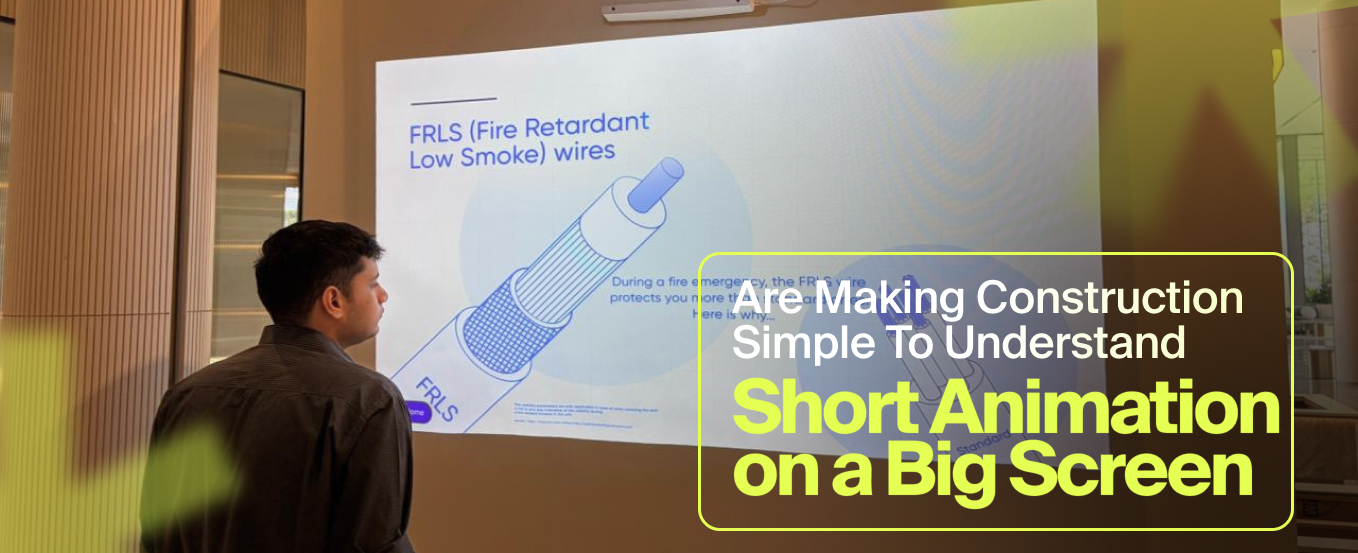
The second zone introduced an 86-inch Samsung interactive touchscreen, positioned to allow buyers to explore construction systems at their own pace.
Each module ran 30 to 50 seconds. Short enough to hold attention. Detailed enough to build conviction.
Sales executives guided buyers through the interface, using it as a visual reference during conversations rather than relying on verbal explanations alone.
Build assurances covered through the interactive wall:
Anti-capillary waterproofing treatments preventing lateral seepage migration
Earthquake-compliant structural reinforcement and load distribution engineering
CPVC plumbing systems engineered for long-term durability and leakage resistance
PU foam crack-prevention technology addressing structural stress points
Wind-tunnel structural validation conducted by international engineering consultants
Average engagement per buyer at this station: 5 minutes of focused interaction.
The content architecture was modular — meaning updates to engineering specifications or new project features could be added without replacing hardware.
The Sales Journey That Followed
The experience centre was not a standalone installation. It was integrated into a structured five-step sales journey:
Orientation briefing on the experience format
Rotoscopic wall walkthrough covering product USPs
Touchscreen deep-dive into build quality assurances
Guided Q&A with visual proof points already established
Unit and pricing discussions after full engineering clarity
Pricing conversations happened after conviction, not before.
That sequencing change alone restructures buyer psychology significantly.
Results That Shifted the Sales Conversation
Buyer engagement time increased by approximately 20 minutes per visit
Technical questions increased — indicating higher product conviction, not confusion
Sales executives adopted both installations as primary presentation tools, reducing dependence on verbal pitching
The format became a replicable model for future Godrej luxury project launches
What Real Estate Developers Can Take From This
If your sales centre is still built around passive AV presentations and printed brochures, you are losing conviction at the most critical stage of the buyer journey.
Buyers do not need to be entertained. They need to be convinced.
Short animations, sensor-triggered visuals, and interactive build-quality modules are not novelty features. They are sales infrastructure — the kind that reduces objections, shortens follow-up cycles, and moves buyers from interest to commitment faster.
The technology exists. The content framework exists. What most developers are missing is the decision to treat product communication as seriously as product construction.
That decision starts at the experience centre.
.jpg)