When it comes to property marketing, it is important to keep up with the latest technology, especially for the tools that you use. However, you also need to implement it in a way that not only showcases your project but also makes it stand out in comparison to what's already out there. This is where 3D visualization comes in.
3D Visualization is an impactful innovation in real estate because it affects both designers and marketers. Be it making detailed photorealistic renders, interactive walkthroughs, or virtual tours, it changes the game for both developers and buyers. For developers, the renders save them expensive rework as they can play with a unit's design before the construction even starts. Meanwhile, buyers no longer need to rely solely on static images or physical site visits to understand the developer's vision for the property.
So, as 3D visualization has several advantages, today it is no longer something optional; instead, it is a technology that you need to use.
What is 3D Visualization in Real Estate?

3D Visualization is the process that designers use to create 3D or 3-dimensional digital representations of properties using computer-generated imagery (CGI), animations, or rendering software. The goal is to make it as detailed as possible so that it mirrors the real project, while also ensuring that it doesn't face performance issues. These usually consist of:
3D Floor Plan: It is a virtual 3D representation of the building's floor plan in a top-down or bird's-eye view. It usually shows the structure of the floor, all of the walls, and how the different rooms, windows, and doorways are connected to each other.
Photorealistic 3D Renders: These are very detailed usually still images of any part or whole of the project, like interiors, exteriors, amenities, building structure, vicinity, etc., to help the buyer see what the final product should look like once the project is ready.
Virtual Property Tours and Walkthroughs: These could either be video tours or immersive walkthroughs where the buyer gets to explore a unit flat at their own pace.
Augmented Reality (AR) Experiences: This blends in digital objects with our reality, as via using a phone, you could place virtual objects in real locations on a flat. For example, you could use AR to see where to place a vase, TV, or anything else in your future room.
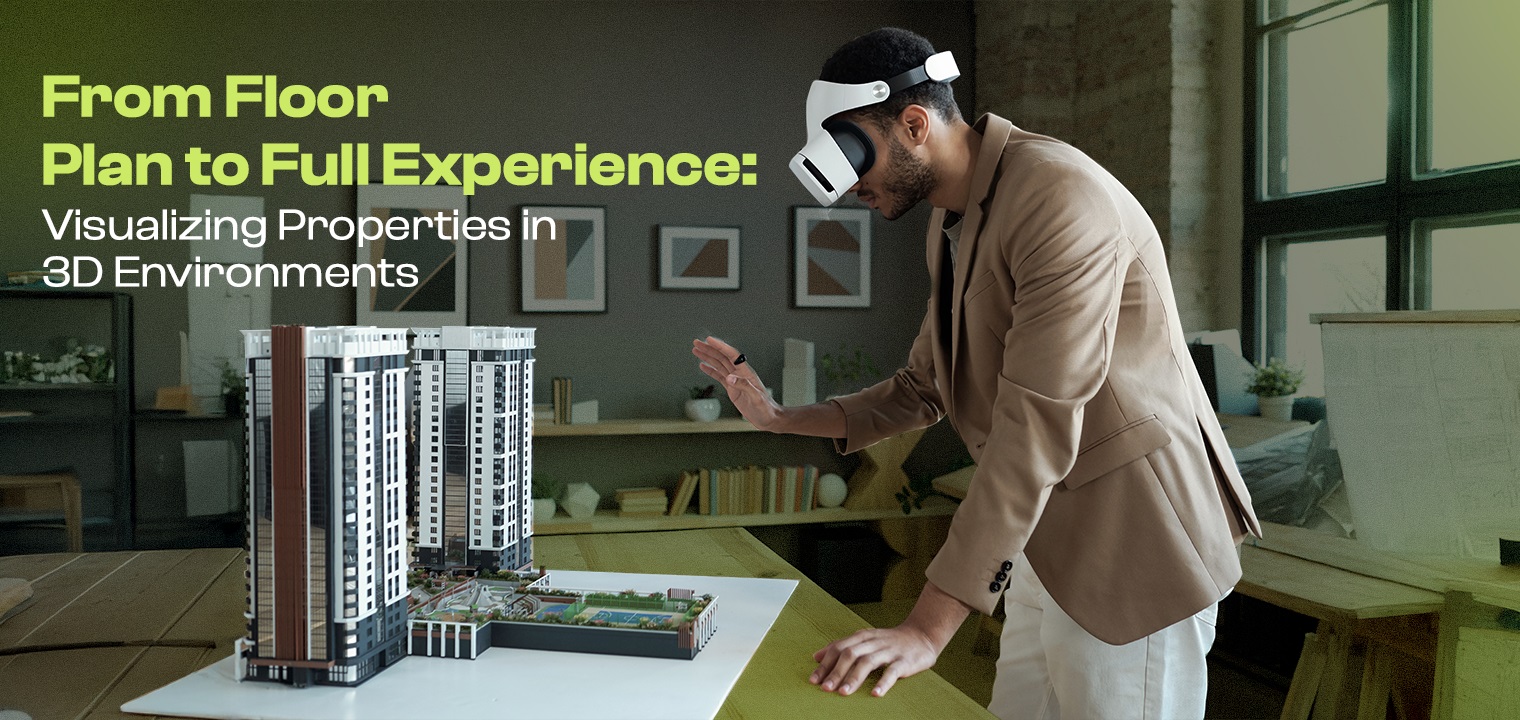
Virtual Reality (VR) Experiences: Similar to AR, VR could also be used for personalized experiences where, either through a headset or using software, you could virtually explore the space and customize it as per your choices.
Why 3D Visualization is Important in Real Estate
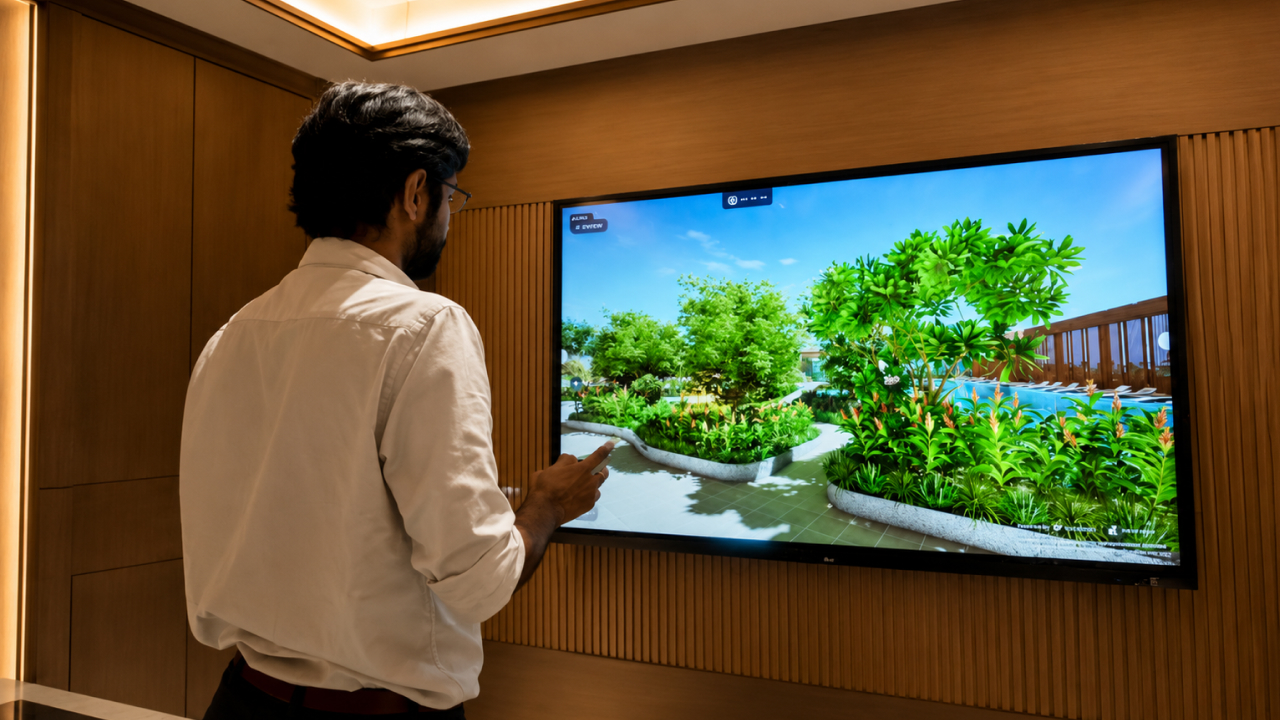
3D Visualization is important not only for buyers but also for developers and property marketers. This is because, for buyers, it gives them a clear idea of what to expect from the project; meanwhile, developers have detailed designs to work with. As for the real estate agents, 3D visualization tools can help them sell properties better as they have more options at their disposal instead of just showcasing brochures.
Buyers Get a Clear Picture
Through 3D Visualization, developers give buyers a better idea of their vision for the project, even if it is still under development. For example, they could use a 3D floor plan to showcase the dollhouse view of their future home.
This makes it easy for the buyer to check the different rooms, washrooms, kitchen, wardrobe, etc., in a flat. With a window view, they can even check out what their balcony view would look like in different weather conditions or times of the day.
Developers have Designs to Work with
As mentioned before, 3D Visualization tools are capable of making some highly detailed renders. These can then be given to developers as a reference to work with.
The reason these renders are useful is because it saves them both time and resources, as when you have a finalized design to work on, it is less likely to undergo changes. Additionally, even if changes do arrive, they shouldn't be as costly or difficult to implement.
Helps Agents Sell Better
One of the biggest challenges when selling property is that you have to rely on the knowledge and expertise of your salespeople. As such, when they themselves aren't sure about any query of the buyer, they fail to convince them to buy, which leads to poor sales conversion.
However, when 3D visualization tools come into play, the buyers take the lead and get to explore at their own pace. This then leads to fewer questions, and your sales team doesn't have to repeatedly answer the same question each time.
What is Next for 3D Visualization in Real Estate
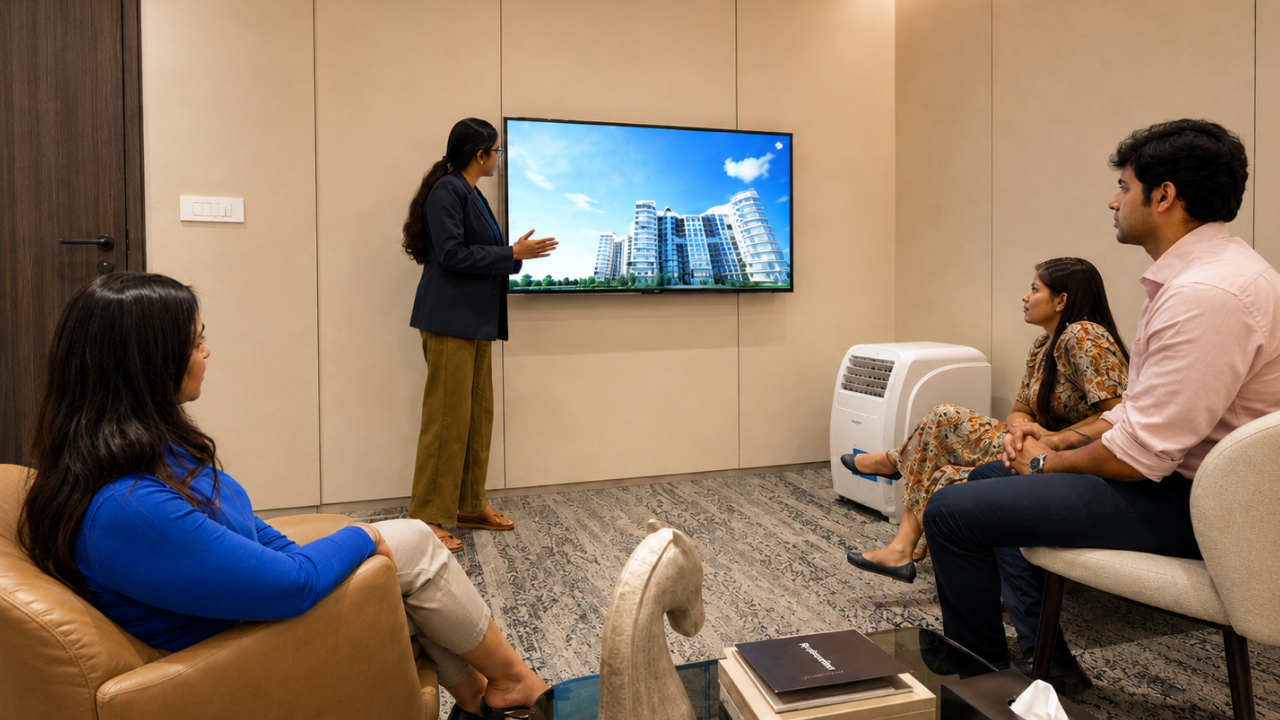
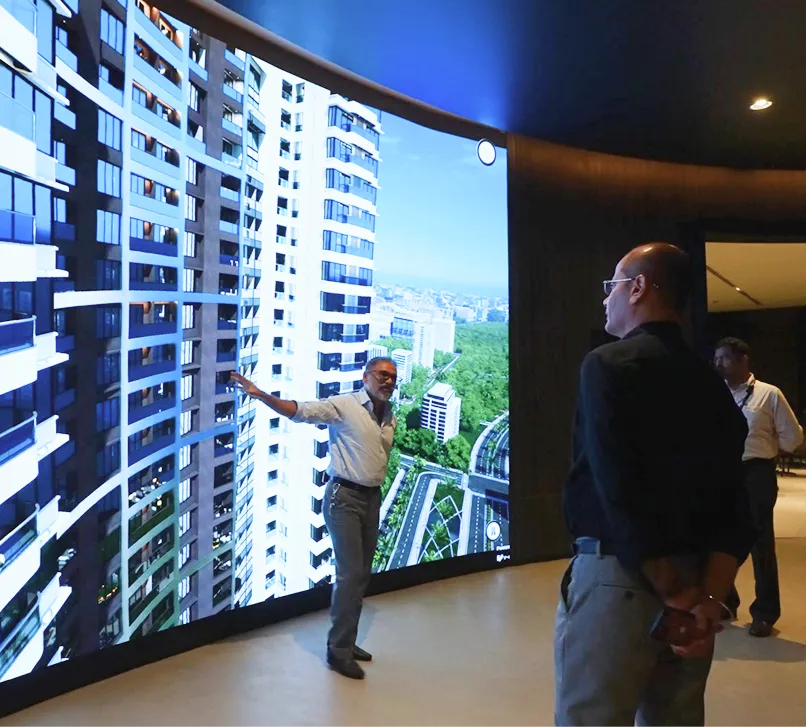
It is no surprise that technology will just improve with time. The biggest change we can expect to see in the real estate industry is the normalization of 3D Visualization tools. Several big realtors are already using 3D Floor plans, interactive virtual experience centers, etc, and more of this technology is being preferred by sales teams over static images and brochures.
For 3D Visualization tools, we can expect more advancements with the integration of AI that could store user preferences or create faster renders in real time. This could make showcasing weather simulations, day-night cycles, and other concerns of buyers easier.
At the end of the day, the end goal of every realty is to sell their flats. For buyers, it is only natural to want to see the project and its scope before they make such a big investment. With these tools, you clear all of their doubts and also help yourself.
So, if you want to get started but aren't sure how, our team of experts at V-Estate has got you covered. Book a demo with us and we can create something that you and your buyers need!