Real estate sales slow down when buyers are forced to imagine instead of understand.
Layouts remain abstract. Views remain assumed. Amenities are described but never experienced. For under-construction projects, this gap widens further. For international and NRI buyers, it often becomes a deal-breaker. Across markets, the outcome is consistent: longer sales cycles, repeated clarifications, and delayed decisions.
Immersive proptech visualization has emerged as a structural response to this problem. Not as a visual enhancement, but as a sales-enablement system that replaces explanation with clarity and speculation with verification.
Across experience centers delivered by V-Estate, immersive visualization has reshaped how buyers engage with property—and how confidently they commit.
The Structural Gaps in Traditional Property Presentation
Most real estate sales environments still rely on fragmented tools.
Brochures list features. Floor plans explain dimensions. Scale models communicate massing. Sales executives attempt to connect these elements verbally. Buyers are left to assemble the full picture mentally.
This approach consistently breaks down:
Square footage does not translate into lived space
Off-plan projects demand trust without proof
Site visits become logistical bottlenecks
International buyers disengage early
At premium price points, these gaps do not reduce interest. They delay conviction—and that delay shows up directly in sales velocity.
Interactive Property Walkthroughs Restructure the Buyer Journey
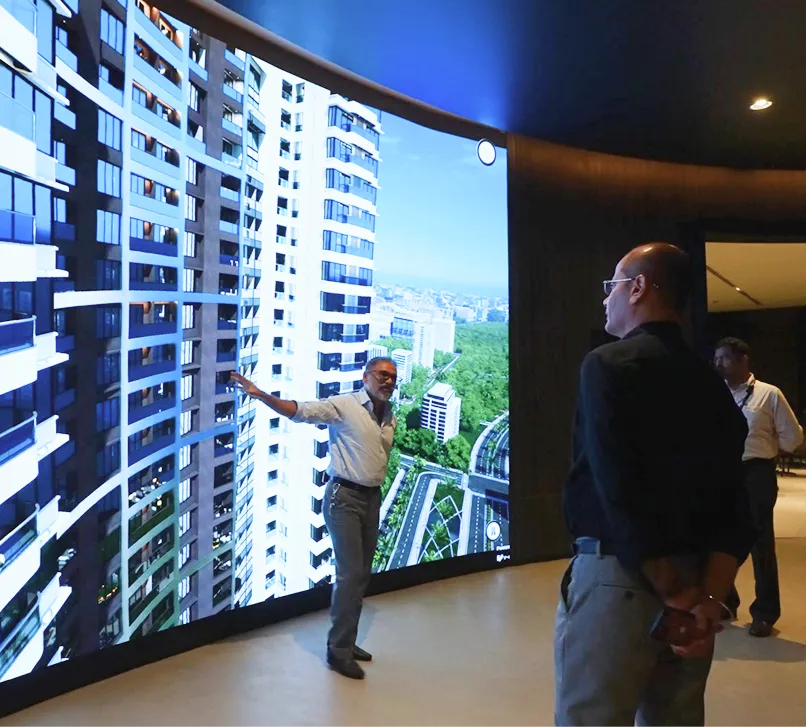
3D interactive walkthroughs change the role of the experience center itself.
Instead of functioning as a presentation room, it becomes a decision environment—one where buyers can see, test, and evaluate the product with minimal interpretation.
Across all deployments, our technology capabilities consistently reshape buyer behavior and sales outcomes.
Spatial Accuracy That Removes Guesswork
Buyers move faster when spatial questions are resolved early.
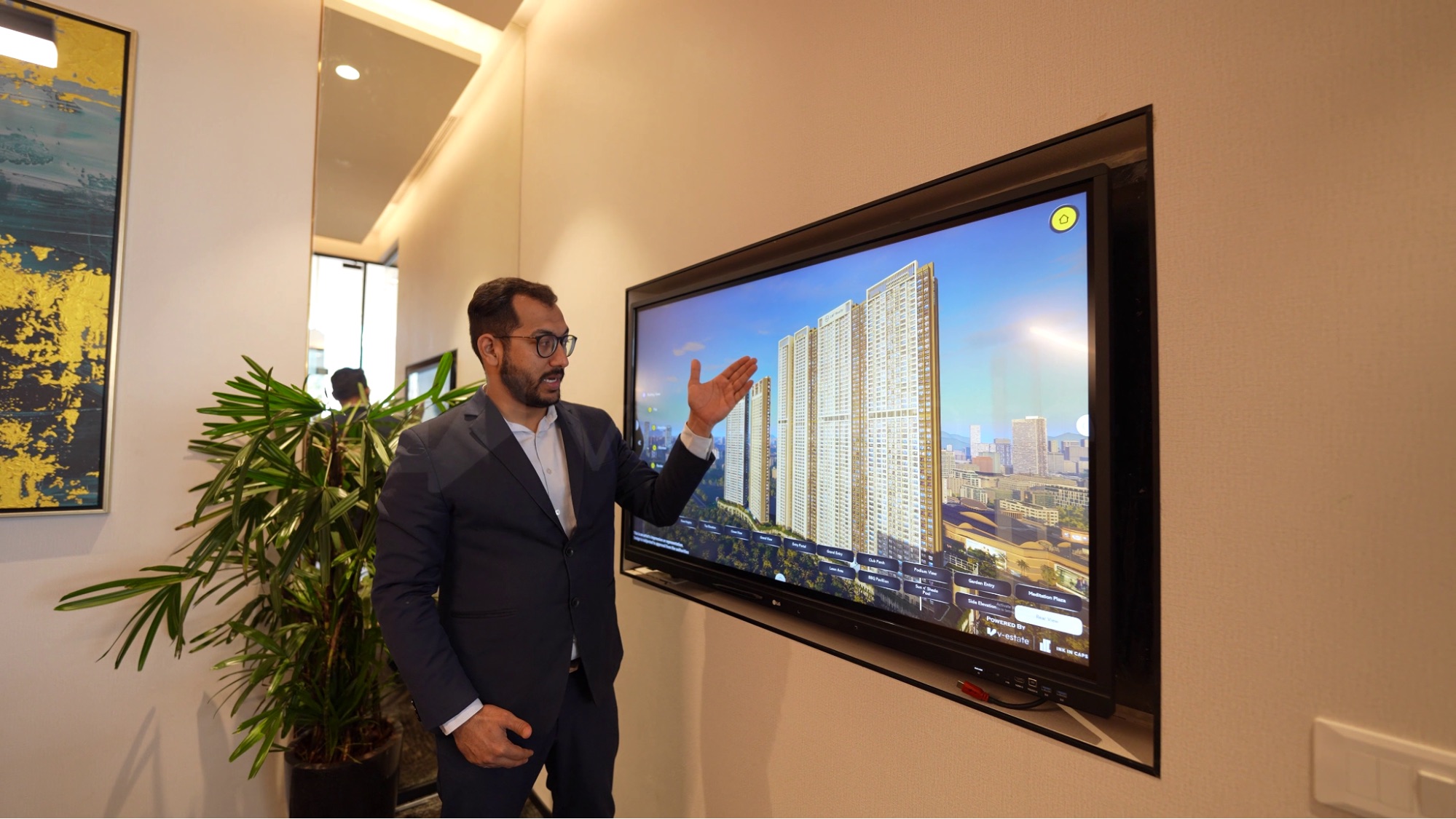
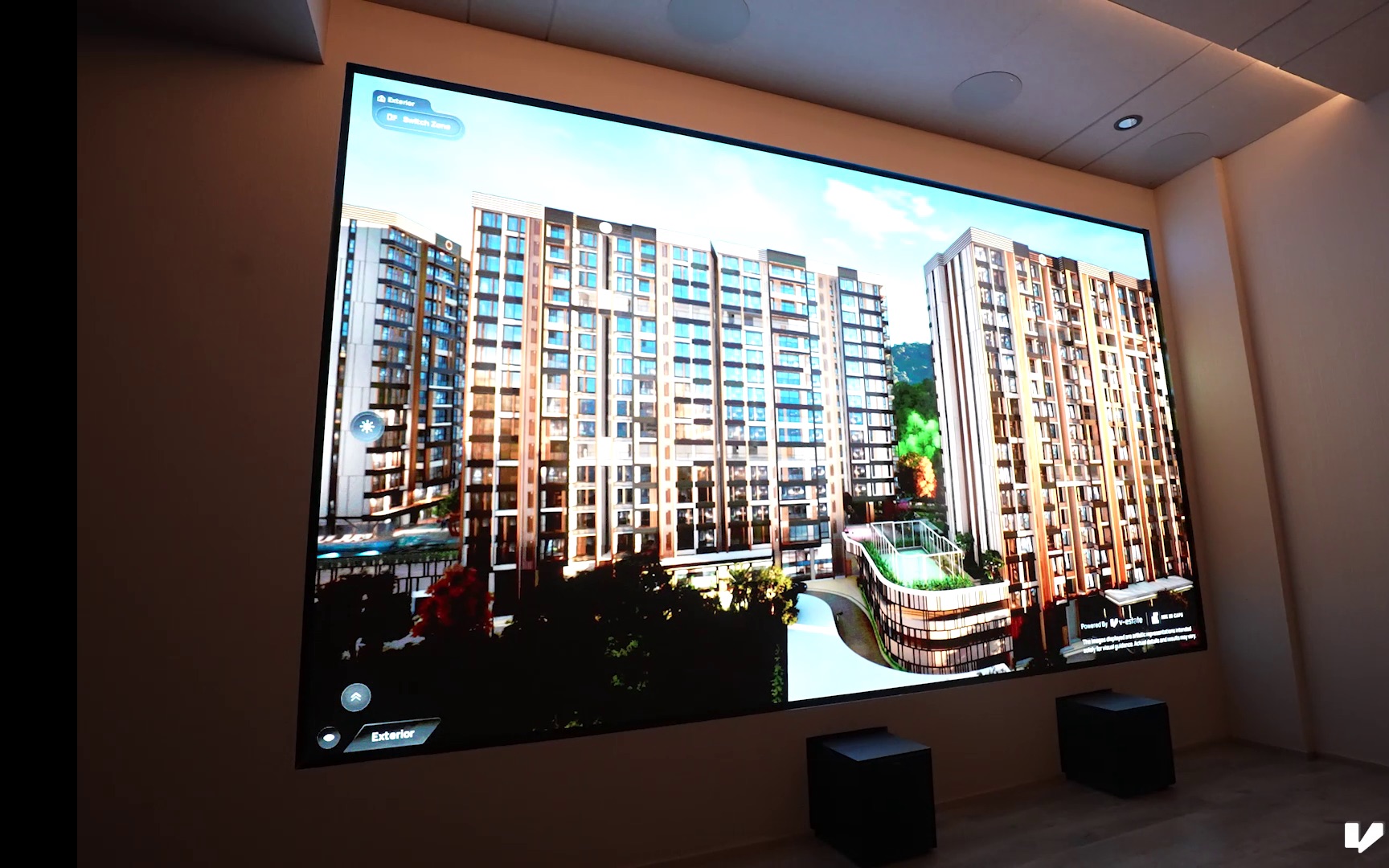
At Kalpataru Worli One, buyers were able to understand unit proportions, circulation, and openness through real-time digital twins rather than static floor plans.
Large-format interactive displays and synchronized scale models allowed instant comprehension of tower layout, podium positioning, and vertical relationships.
Observed outcomes across similar deployments
Early-stage clarification time reduced by 60–70%
Fewer repetitive questions during walkthroughs
Faster transition from overview to evaluation
When spatial accuracy is established upfront, sales conversations stop circling basics and start focusing on preference and value.
Verified Views and Light Behaviour That Build Trust
Views remain one of the most sensitive decision variables in real estate.
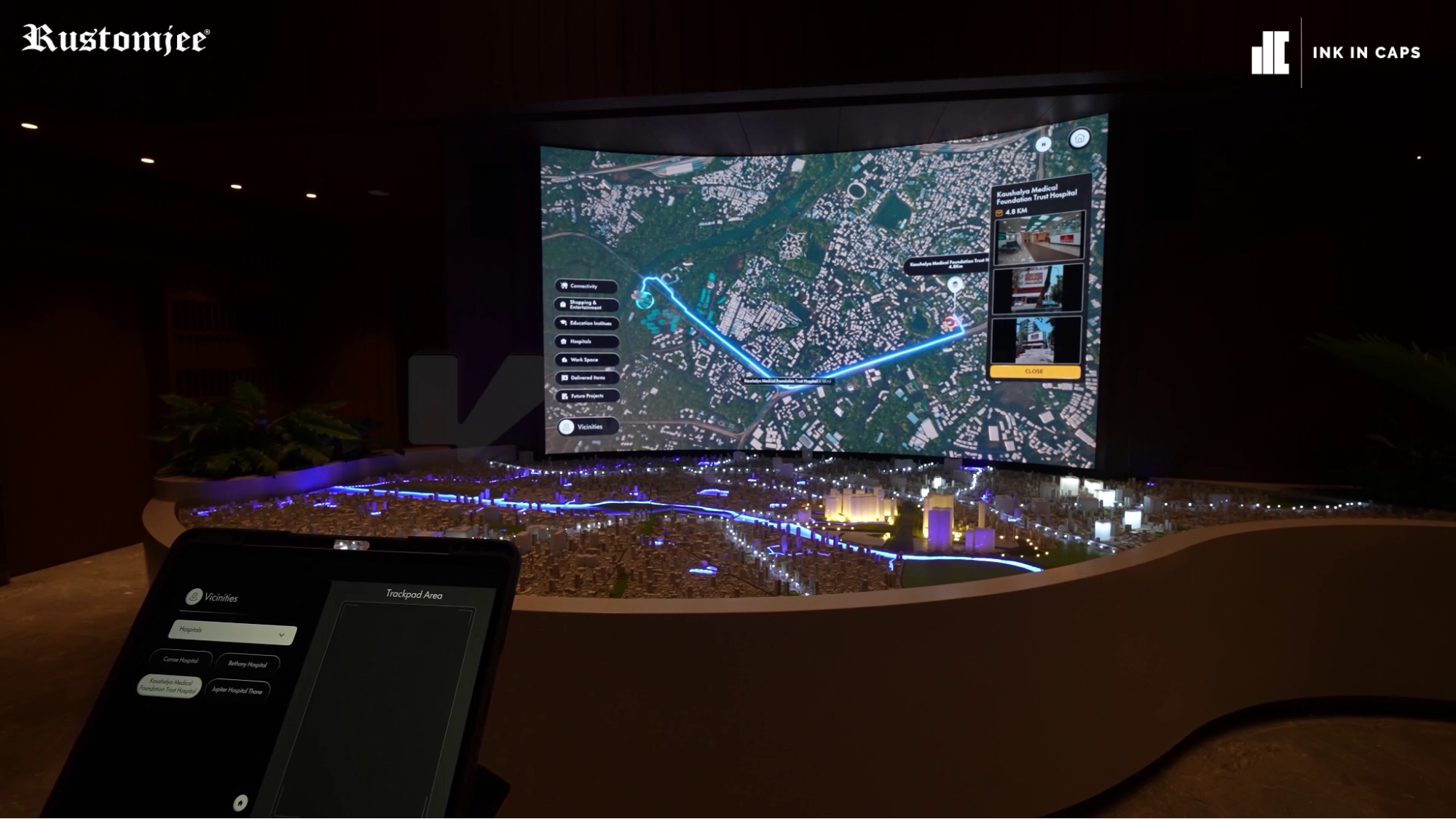
At Rustomjee Matunga, immersive visualization replaced artistic assumptions with verified understanding. Buyers explored
real window views,
floor-specific perspectives, and
dynamic daylight behavior
through interactive systems integrated into the experience center.
This clarity produced measurable engagement shifts:
Average buyer engagement time increased from ~20 minutes to over 50 minutes
Buyers spent longer evaluating layouts instead of seeking reassurance
Late-stage objections related to views reduced significantly
Trust formed earlier, and discussions moved forward without repeated validation.
Amenity Experiences That Translate Lifestyle Value
Amenities often represent 30–40% of total project investment in premium developments. Yet static images fail to communicate how these spaces will actually function.
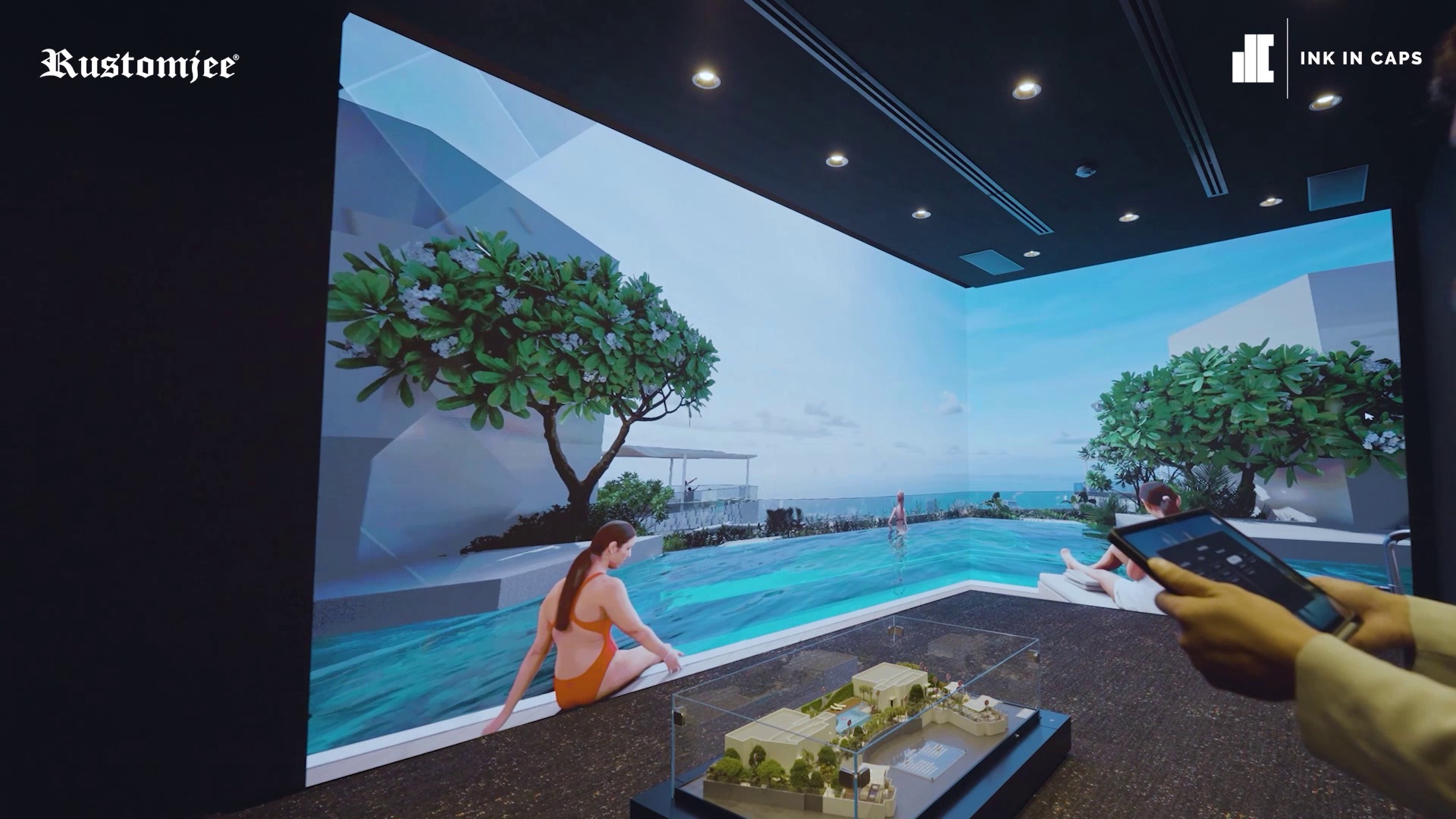
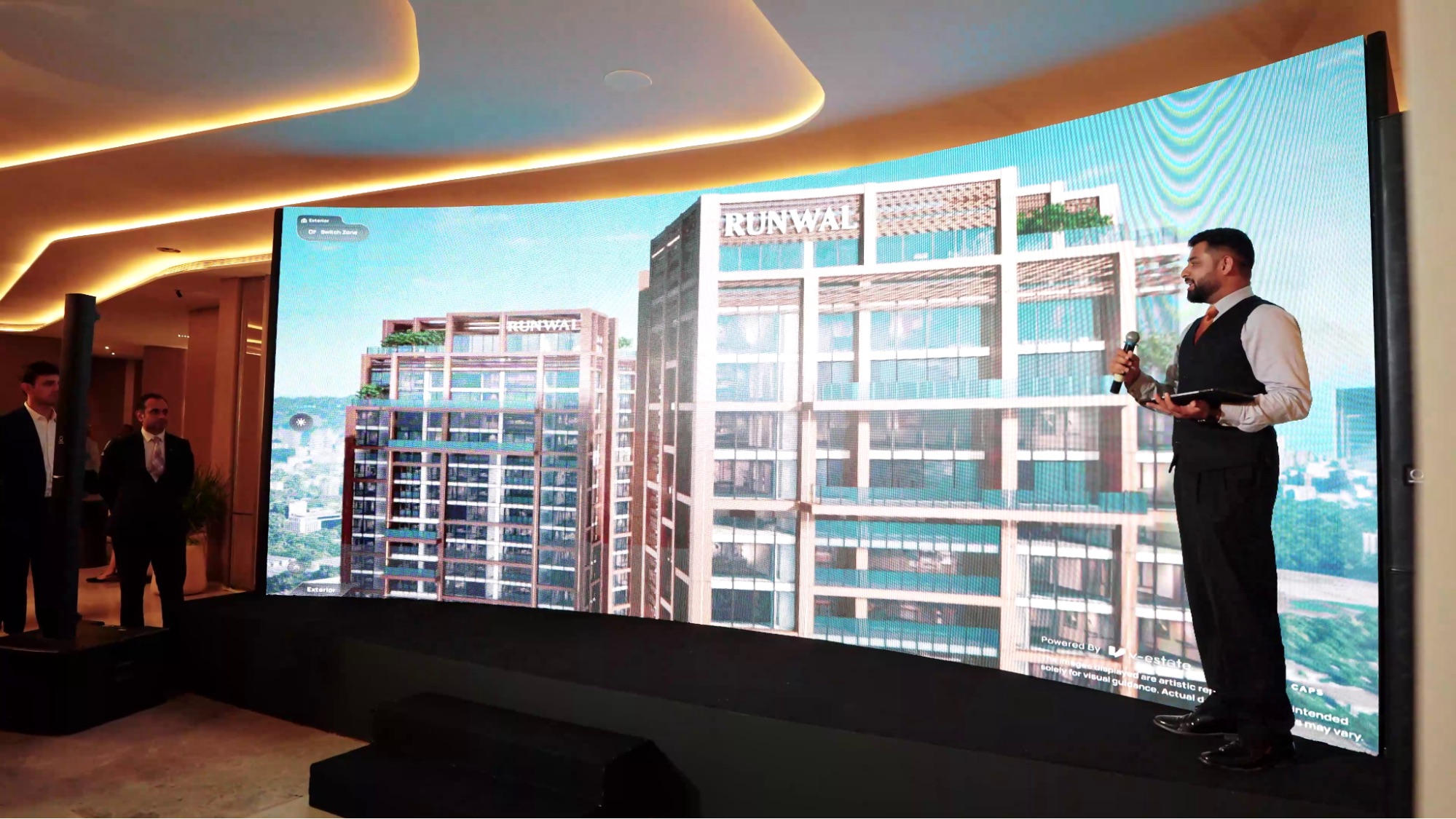
At Runwal Raaya, immersive visualization was used to communicate landscape intent, circulation, and experiential variation across podium levels. Buyers explored wellness zones, open spaces, and social areas through real-time walkthroughs rather than descriptive panels.
Sales-side impact
Higher dwell time within amenity environments
Stronger recall of lifestyle features post-visit
Clear differentiation during price and value comparisons
Amenities stopped being listed features and started functioning as decision drivers.
Contextual Understanding That Anchors Lifestyle Fit
Buyer hesitation often emerges when amenities are evaluated in isolation.
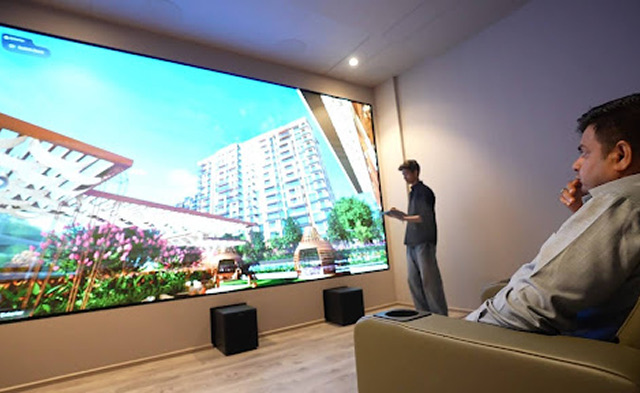
At Chandivali Valley by Nahar Realty, immersive visualization integrated architecture, amenities, terrain, and surrounding nature into a single narrative. Buyers understood how homes related to the Miyawaki forest, podium spaces, and elevation changes—without needing multiple explanations.
Operational impact
100% consistency in how lifestyle USPs were communicated
Reduced follow-up visits for clarification
Faster buyer alignment within a single visit
When context is clear, hesitation has little room to grow.
Buyer-Controlled Exploration That Accelerates Decisions
Immersive visualization changes who controls the journey.
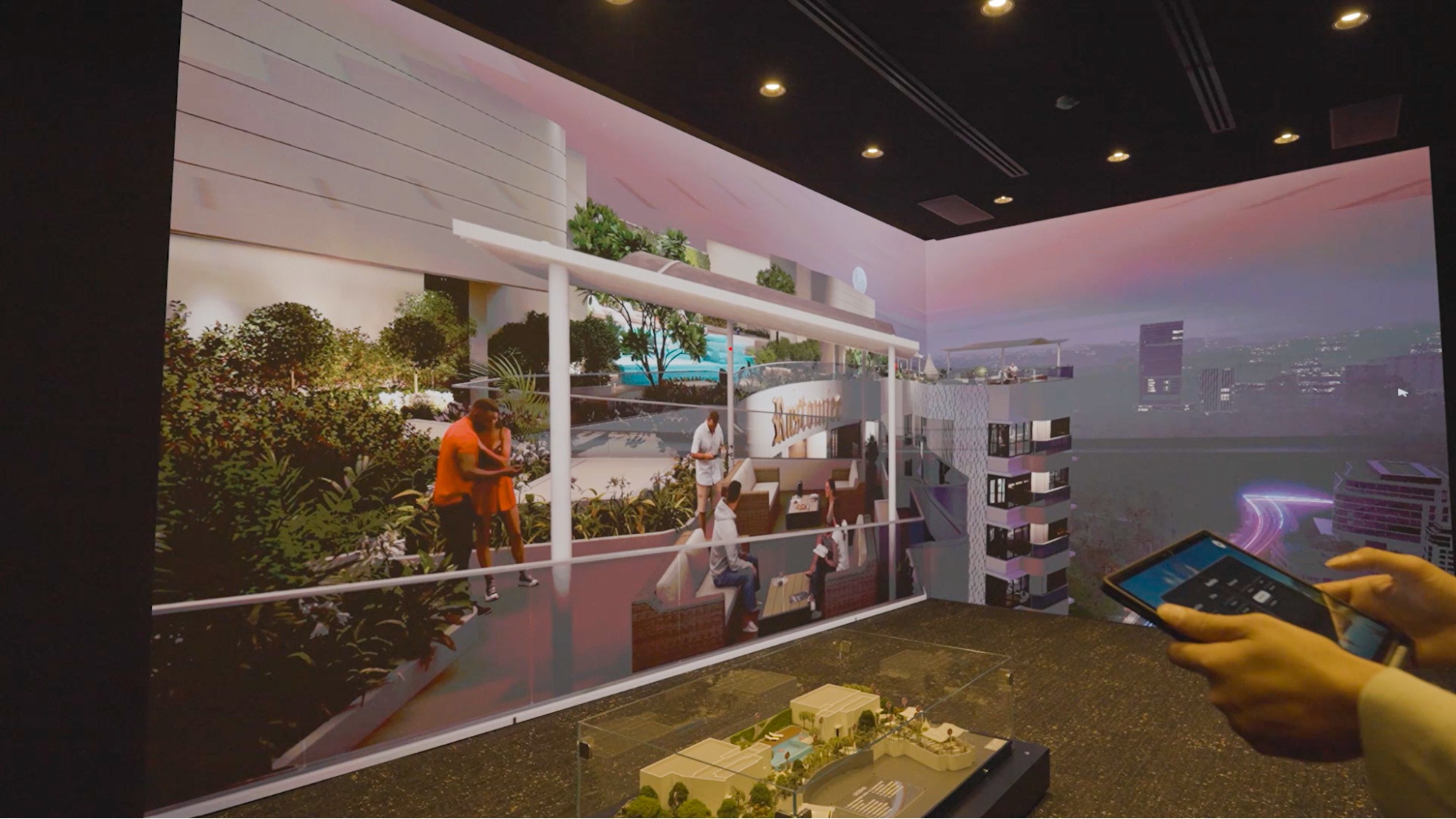
Instead of passively consuming information, buyers actively explore:
Units, amenities, and layouts at their own pace
Multiple configurations without restarting the experience
Areas of personal relevance without sales pressure
Across V-Estate experience centers, this shift delivered:
Higher intent quality entering commercial discussions
Shorter overall sales cycles
Near-100% adoption of immersive tools by sales teams
Sales executives consistently moved away from brochures and static presentations because interactive systems made conversations sharper and more productive.
Operational Gains Inside Experience Centers
The benefits extend beyond buyer experience.
Sales efficiency
Fewer low-intent site visits
Faster decision readiness among qualified prospects
Cost-effectiveness
Reduced reliance on physical show flats
Digital assets reused across sales galleries, launches, and web platforms
Scalability
Standardized narratives independent of individual presenters
Predictable buyer journeys across teams and locations
Experience centers began delivering consistent performance—not dependent on individual excellence.
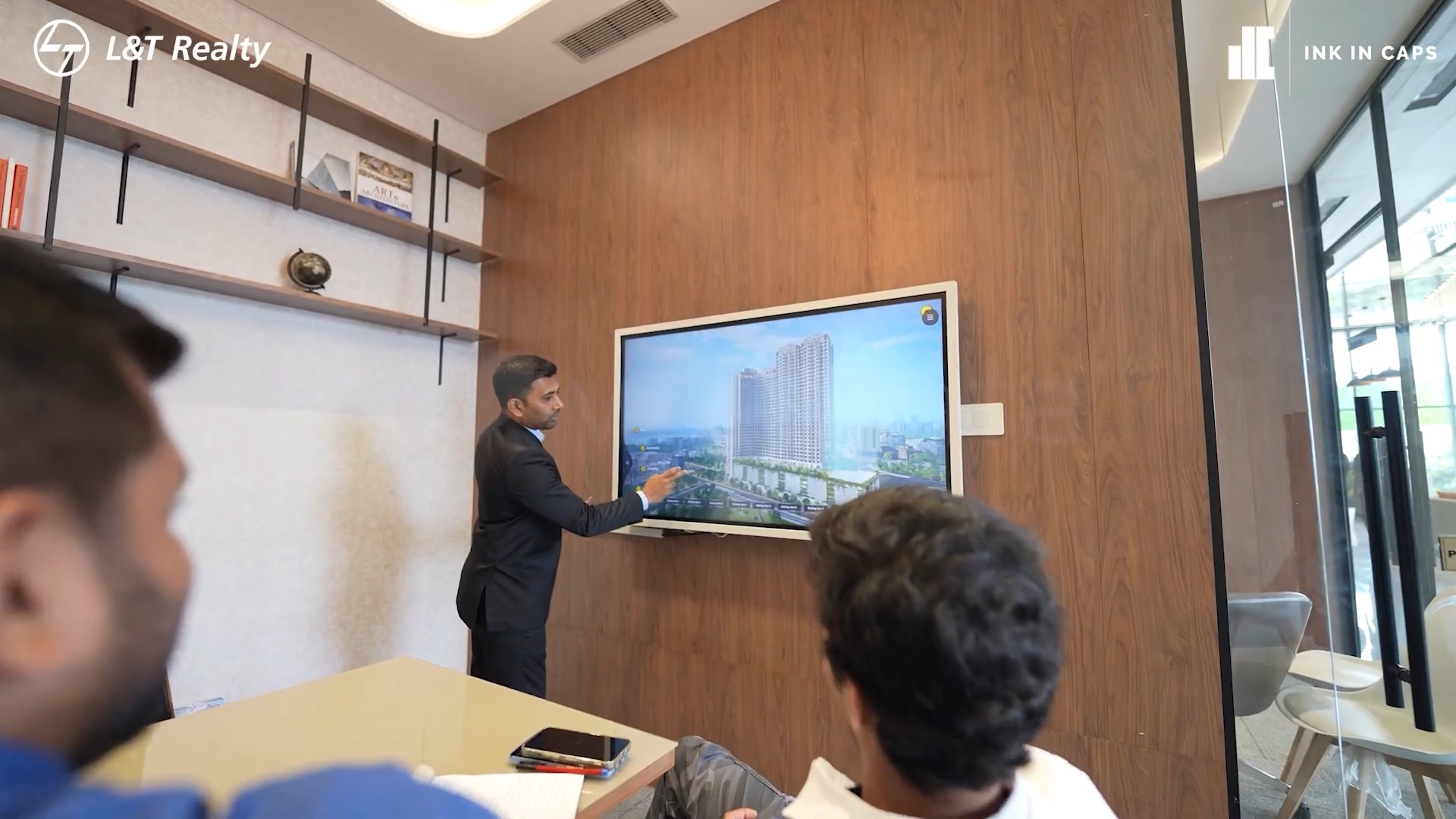
Deployments Through Real Estate Technology Solutions
Across projects such as Kalpataru Worli One, Rustomjee Matunga, Runwal Raaya, Nahar Chandivali Valley, and L&T Thane, V-Estate deployments typically included:
Real-time digital twins built for daily sales use
Large-format interactive displays and touch interfaces
Tablet-controlled navigation for guided and independent exploration
Web-enabled extensions for remote and international buyers
The experiential technology stayed in the background. The clarity it delivered stayed with the buyer.
The Business Outcome: Better Understanding, Faster Commitment
Immersive proptech visualization works because it addresses specific sales bottlenecks:
It reduces uncertainty in off-plan evaluation
It enables global buyer participation without compromise
It shortens time-to-decision through verified understanding
It improves conversion quality, not just volume
Developers using these systems are not experimenting. They are building structural advantages in how projects are understood and sold.
The Bottom Line
Buyers decide faster when they understand clearly.
If your sales journey still relies on imagination, narration, or fragmented tools, hesitation will continue to show up as delay.
V-Estate builds immersive sales systems that replace interpretation with understanding—inside experience centers and beyond.
Let’s talk to build an interactive experience that helps buyers understand the lifestyle clearly and move forward with conviction.