.jpg)
The Sales Gallery Is No Longer a Display Space. It Is a Decision System.
For decades, sales galleries were designed to impress. Marble finishes. Mood lighting. Aspirational sample flats.
Today, that model is quietly breaking down.
Across large residential portfolios in India, developers are observing a consistent pattern:
Buyer engagement plateaus at 20 to 25 minutes
Sales cycles extend despite higher footfalls
Post booking clarifications increase instead of reducing
Expectation gaps surface closer to possession, not at decision time
The issue is decision friction.
As buyer behaviour becomes more analytical and risk aware, developers are realising that traditional sales galleries are optimised for emotion, not certainty. That is why leading brands are now rethinking the role of the sales gallery itself.
What Changed in the Buyer Mindset
The modern homebuyer is not short on aspiration. They are short on trustable information.
Three behavioural shifts are driving this change:
Buyers compare projects digitally before visiting physically
They ask unit specific questions early in the journey
They expect visual proof, not verbal reassurance
This has fundamentally altered what a sales gallery needs to do.
It is no longer meant to create desire alone. It must resolve doubt at speed.
Why Traditional Sales Galleries Are Falling Short
Most sales galleries today still rely on static storytelling:
One idealised sample flat representing multiple unit types
Generic 3D renders disconnected from orientation and views
Heavy dependence on sales narration to bridge information gaps
From a leadership perspective, this creates three risks:
Inconsistent sales narratives across teams
Longer decision cycles despite higher engagement
Buyer disappointment caused by imagination led expectations
In other words, the gallery works hard upfront and the brand pays for it later.
The Shift From Sales Gallery to Experience Centre
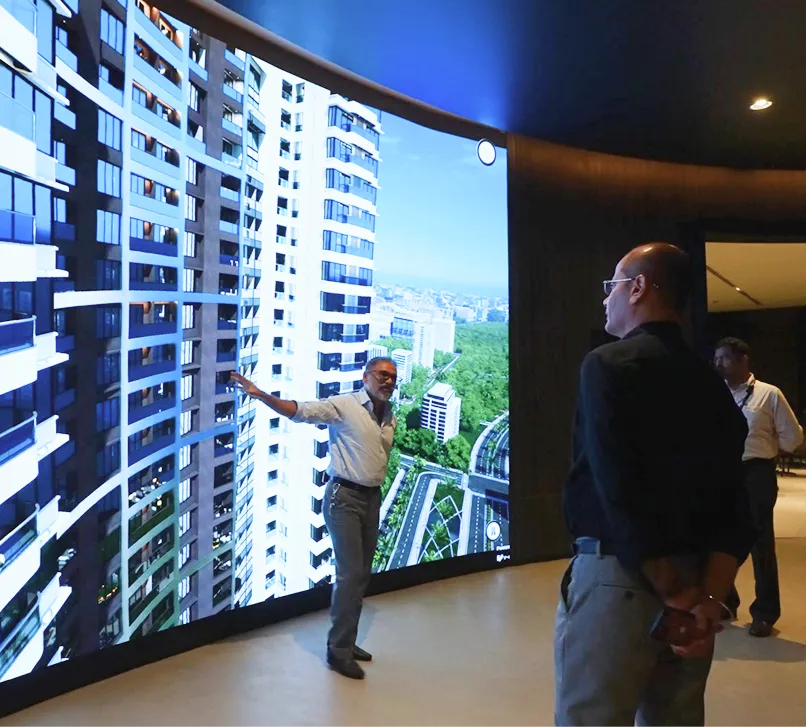
Progressive developers are now moving toward experience centres that operate as structured decision environments.
These are not cosmetic upgrades. They represent a strategic shift in how sales velocity is engineered.
Modern experience centres integrate:
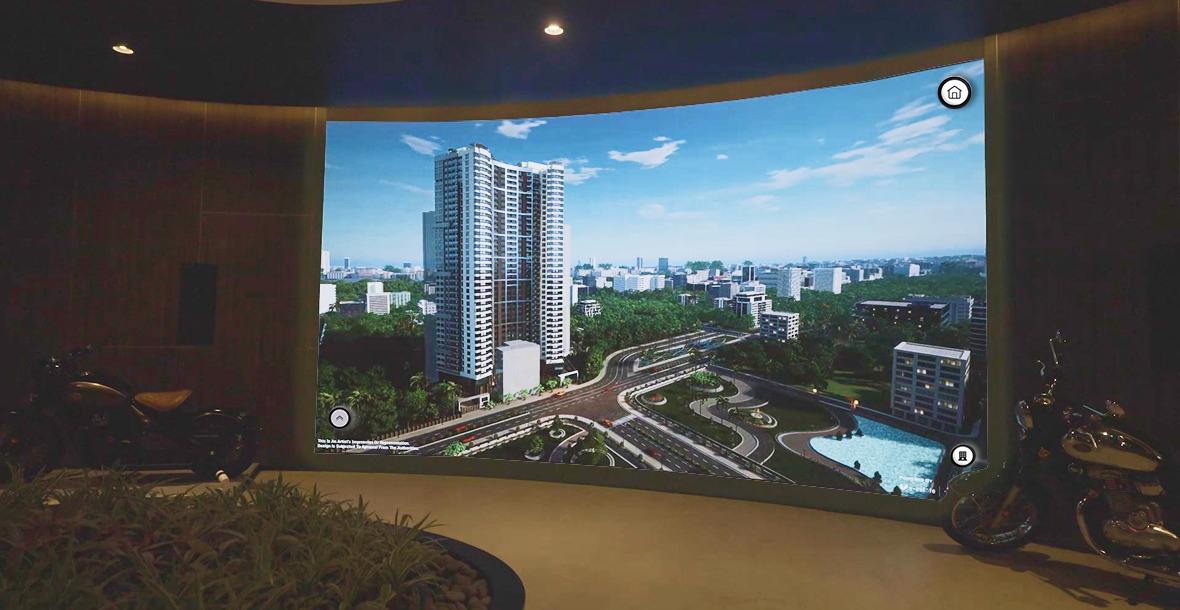
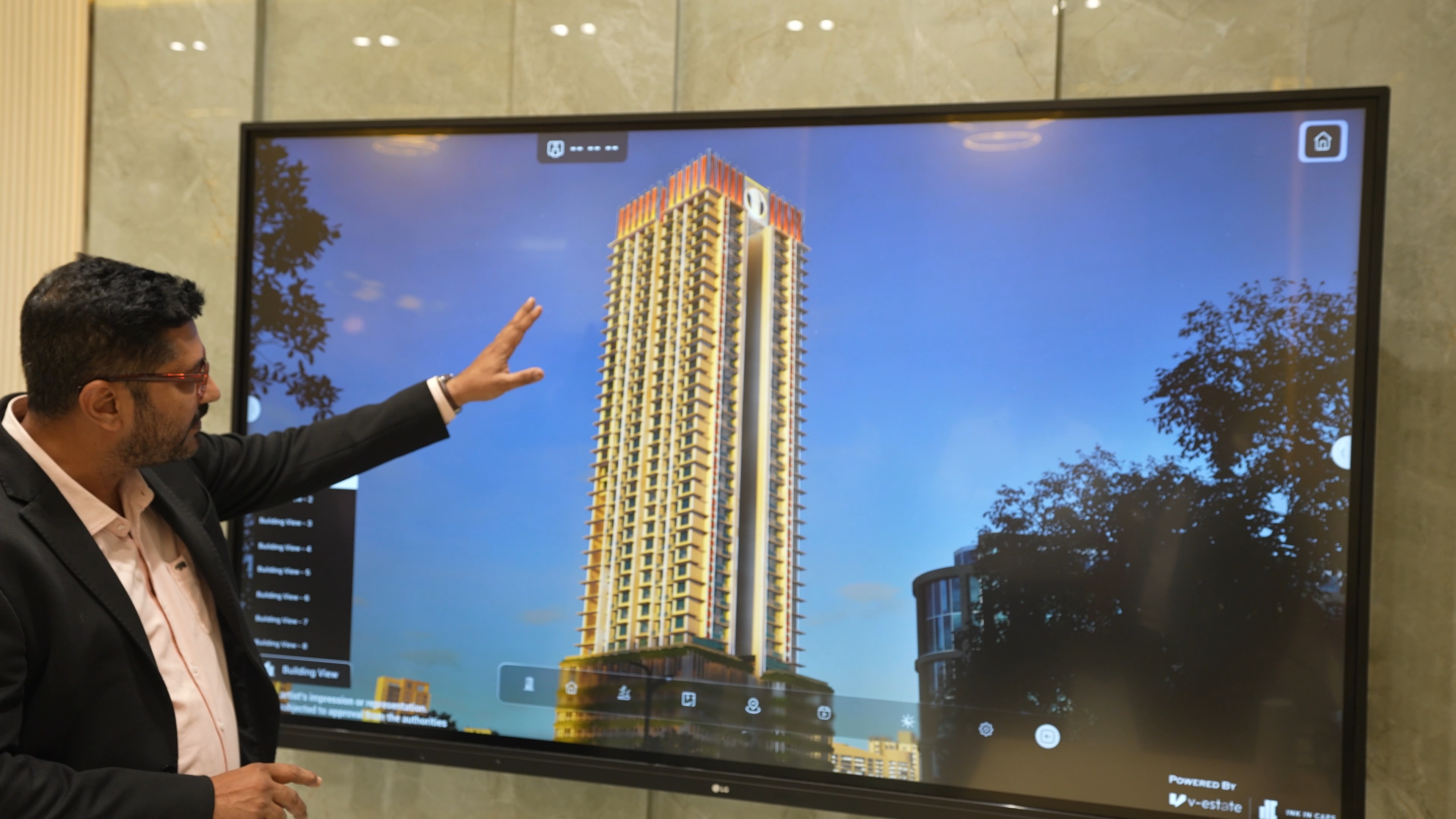
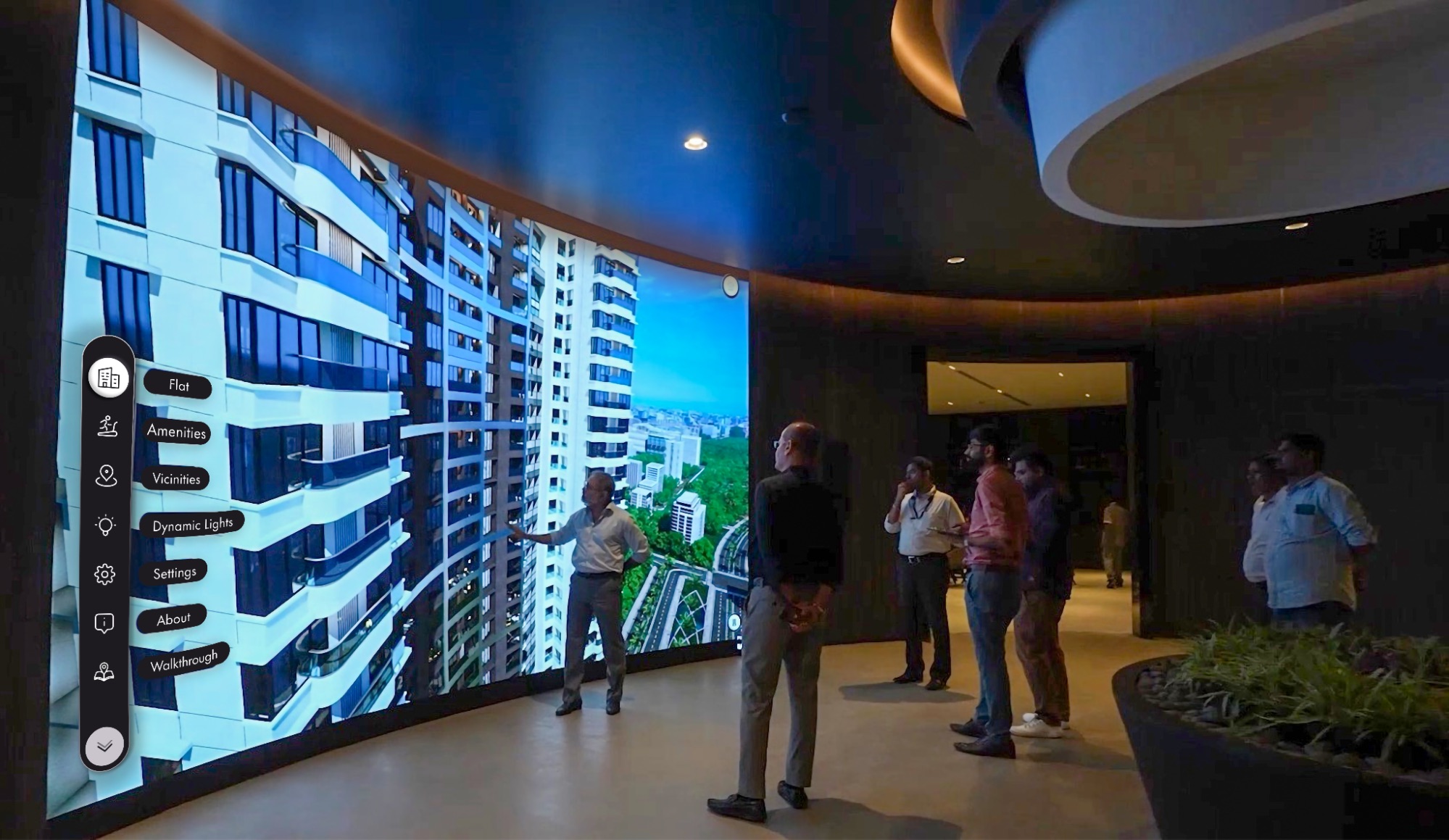
Interactive property walkthroughs
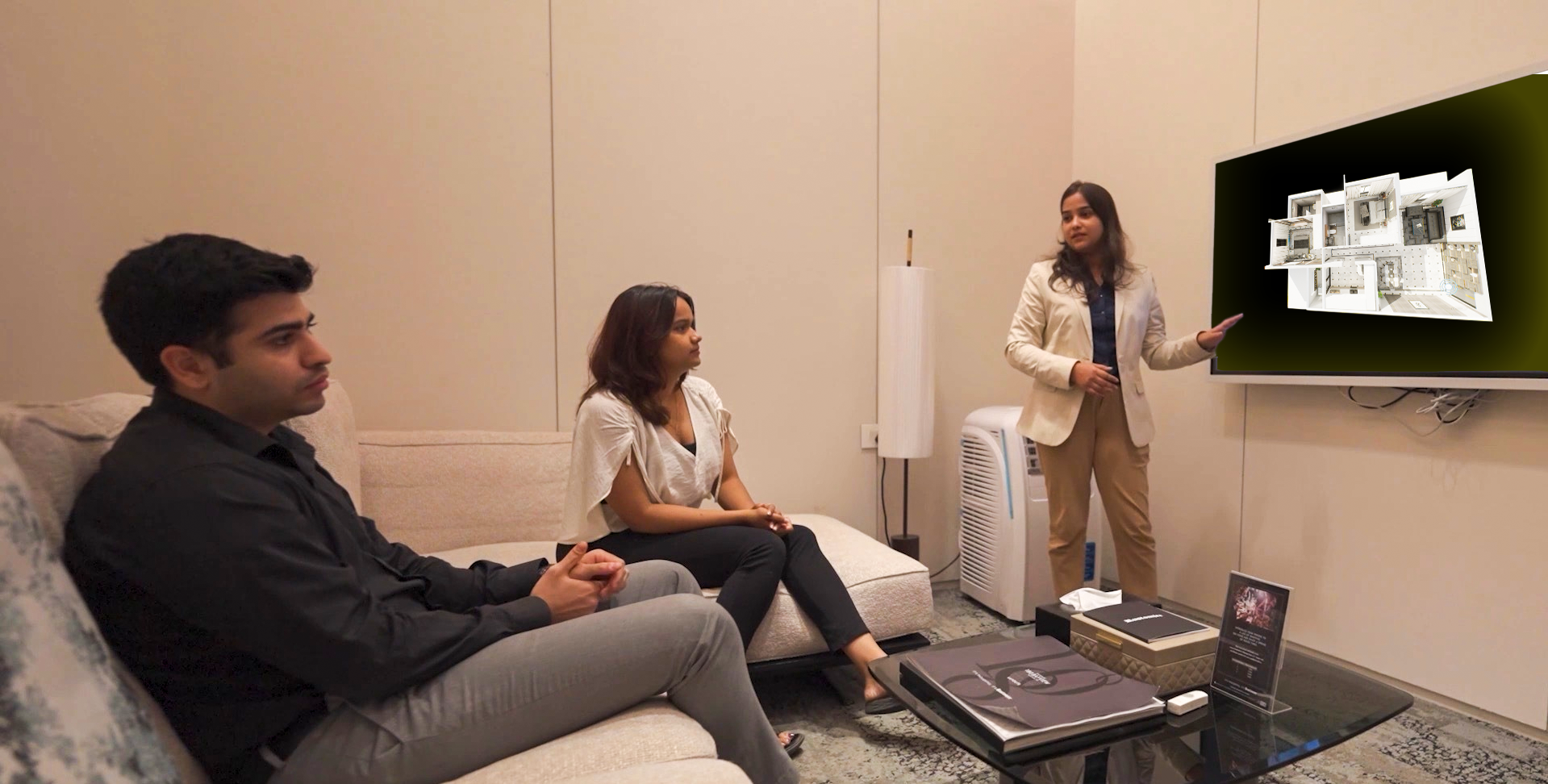
Unit level visualisation instead of representative views
Real time 3D renders instead of static brochures
Technology led storytelling that reduces explanation time
The objective is clear Help buyers see clearly so they can decide confidently.
How Interactive Proptech Is Changing Sales Outcomes
When experiential technology in real estate is deployed correctly, it changes the sales equation in measurable ways.
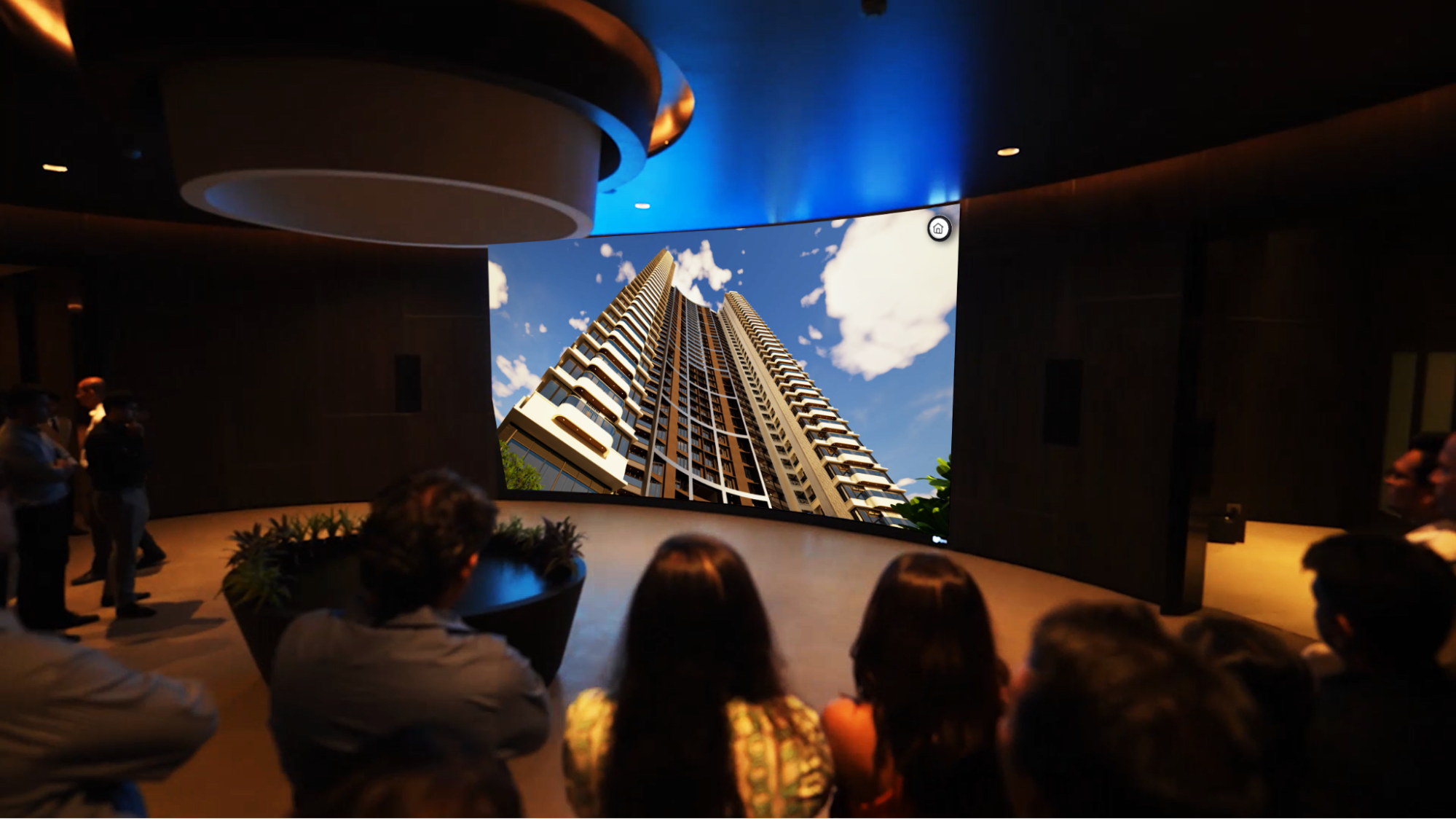
Across V-Estate powered experience centres, developers have observed:
Engagement time increasing from 20 minutes to over 50 minutes
Faster buyer comprehension of layouts, views, and amenities
Reduced dependency on physical sample flats
Higher quality conversations focused on selection rather than validation
This is not about adding screens. It is about standardising certainty.
Case Insight: Suraj Park View, Dadar
Using Precision to Elevate Compact Living
In a dense, emotionally charged market like Dadar, buyers evaluate homes through a mix of logic, legacy, and lifestyle.
Suraj Tower’s experience centre was designed to address this directly.
Instead of generic luxury storytelling, buyers could explore:
Actual unit views of Shivaji Park and the Arabian Sea
Realistic interior and exterior walkthroughs before construction
Amenities contextualised within compact yet premium living
The result was early buyer confidence and a clear shift in conversation. From questioning the size to understanding the value.
This is where experience centres stop selling space and start selling fit.
Case Insight: Rustomjee Bay-View, Matunga
When Experience Centres Become Sales Infrastructure
Rustomjee faced a classic scale challenge. High footfalls. Multiple unit variants. Limited physical inventory.
The solution was a multi zone experience centre designed to standardise the buyer journey.
Key outcomes included:
Over 700 demos in the first month
Engagement time increasing to 50 plus minutes
All premium inventory sold using a single physical sample flat
Significant reduction in printed marketing material
Digital assets reused across marketing and sales channels
For leadership teams, the real impact was predictability. Every buyer experienced the same narrative, the same clarity, and the same level of transparency.
Case Insight: Nahar Group, Chandivali
Building Trust in a Complex Masterplan
Chandivali Valley is defined by terrain complexity, forest integration, and scale. Static media could not communicate this effectively.
The experience centre became the mandatory first touchpoint for every visitor.
Buyers explored:
The complete masterplan through a real time digital twin
Actual sightlines and forest proximity
Amenity scale and orientation without interpretation
This eliminated ambiguity early in the journey.
Sales conversations moved faster. Buyer confidence increased. Decision cycles shortened.
This is interactive proptech operating as a trust engine.
.jpg)
What High Performance Experience Centres Deliver
Across markets and project typologies, experience centres are now delivering consistent leadership level value:
Faster sales cycles
Higher quality buyer engagement
Reduced post booking clarification
Lower expectation mismatch at possession
Stronger brand credibility over time
Most importantly, they turn sales galleries into repeatable systems, not one time showcases.
Why Developers Are Rethinking Now
This shift is not driven by trend. It is driven by accountability.
As margins tighten and buyers become more informed, developers can no longer afford sales environments that sell emotion today and manage disappointment tomorrow.
Experience centres anchored in clarity, accuracy, and interaction protect both conversion velocity and brand equity.
That is why the rethink is already underway.
Closing Perspective
The future of real estate sales is not louder storytelling. It is clearer decision making.
Sales galleries that evolve into experience centres do not just improve engagement. They align promise with delivery and expectation with reality.
And in today’s market, that alignment is the strongest differentiator a developer can build.
If your sales gallery is still designed to impress rather than help buyers decide, it may be time to rethink its role. At V-Estate, we partner with developers to build experience centres that replace assumption with clarity, shorten decision cycles, and align sales promises with delivery reality. If your next project demands faster conviction and stronger buyer trust, this is a conversation worth having with us.