Real estate has always been physical. Decisions around it are no longer made that way.
Buyers today evaluate homes before construction begins. Developers launch projects on empty land. Sales teams are expected to deliver clarity instantly without brochures, without lengthy explanations, and without room for misinterpretation.
This shift has forced the industry to confront a new reality.
Technology is no longer supporting real estate. It is restructuring how properties are understood, evaluated, and sold.
That shift is proptech.
Proptech, Defined by the Problems It Solves
"Proptech" refers to the ecosystem of technologies designed to modernize how real estate is developed, marketed, sold, and managed. But its real value is not in the tools themselves—it is in what they remove.
Across live project deployments, proptech consistently addresses the same structural frictions:
Delayed decisions caused by incomplete understanding
Overreliance on explanation instead of verification
Fragmented buyer journeys across sales touchpoints
High drop-offs at the evaluation stage
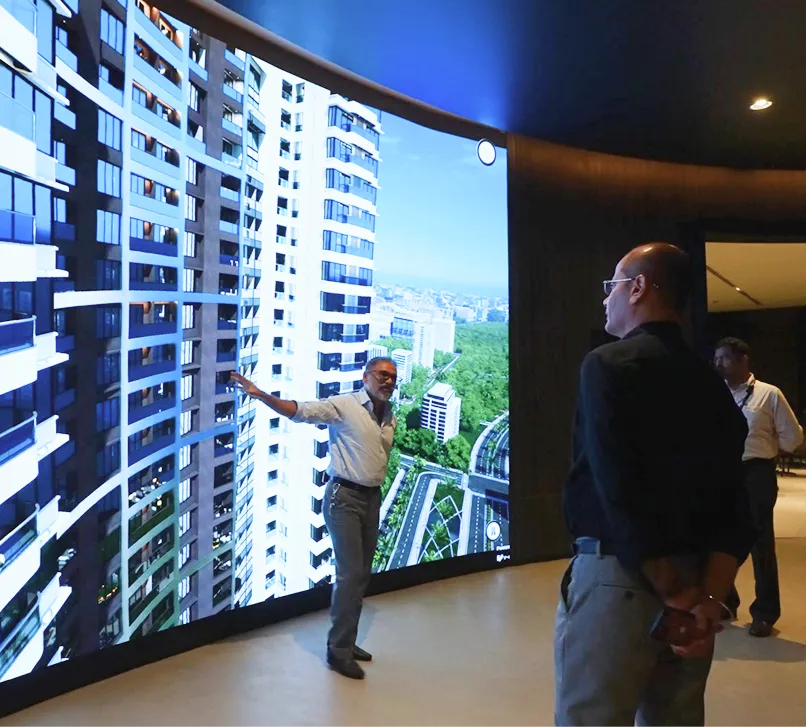
At Rustomjee Urban Woods, buyers were asked to commit to a project on empty land with footfalls exceeding 200 families a day. Traditional sales tools failed immediately. Interactive proptech systems replaced imagination with visibility, allowing buyers to reach informed decisions faster and with fewer follow-ups.
That is proptech in execution, not theory.
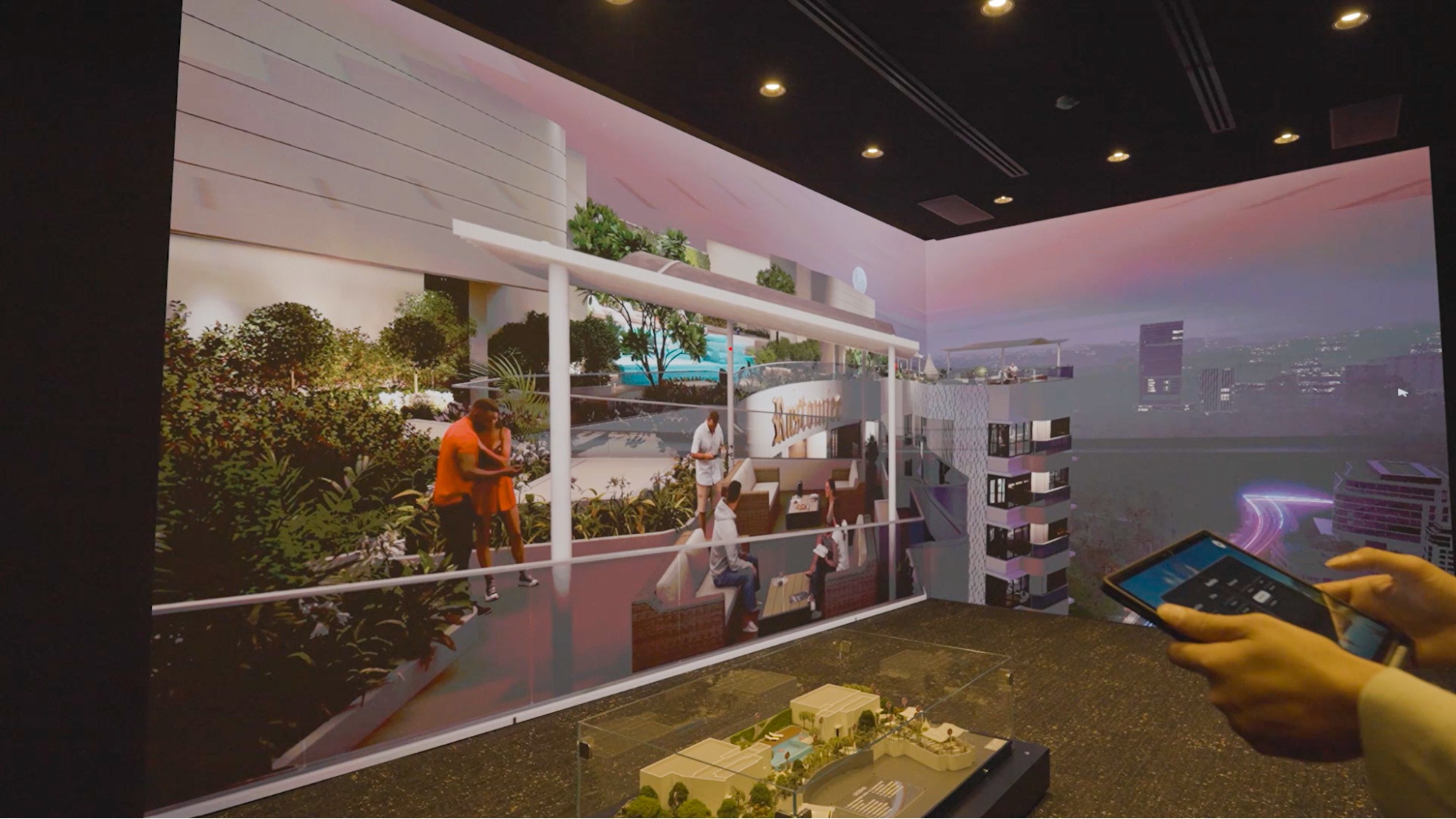
The Functional Layers of the Proptech Ecosystem
Proptech spans the entire real estate lifecycle, but its impact is most visible where legacy systems fail.
Immersive Visualization and Buyer-Led Exploration
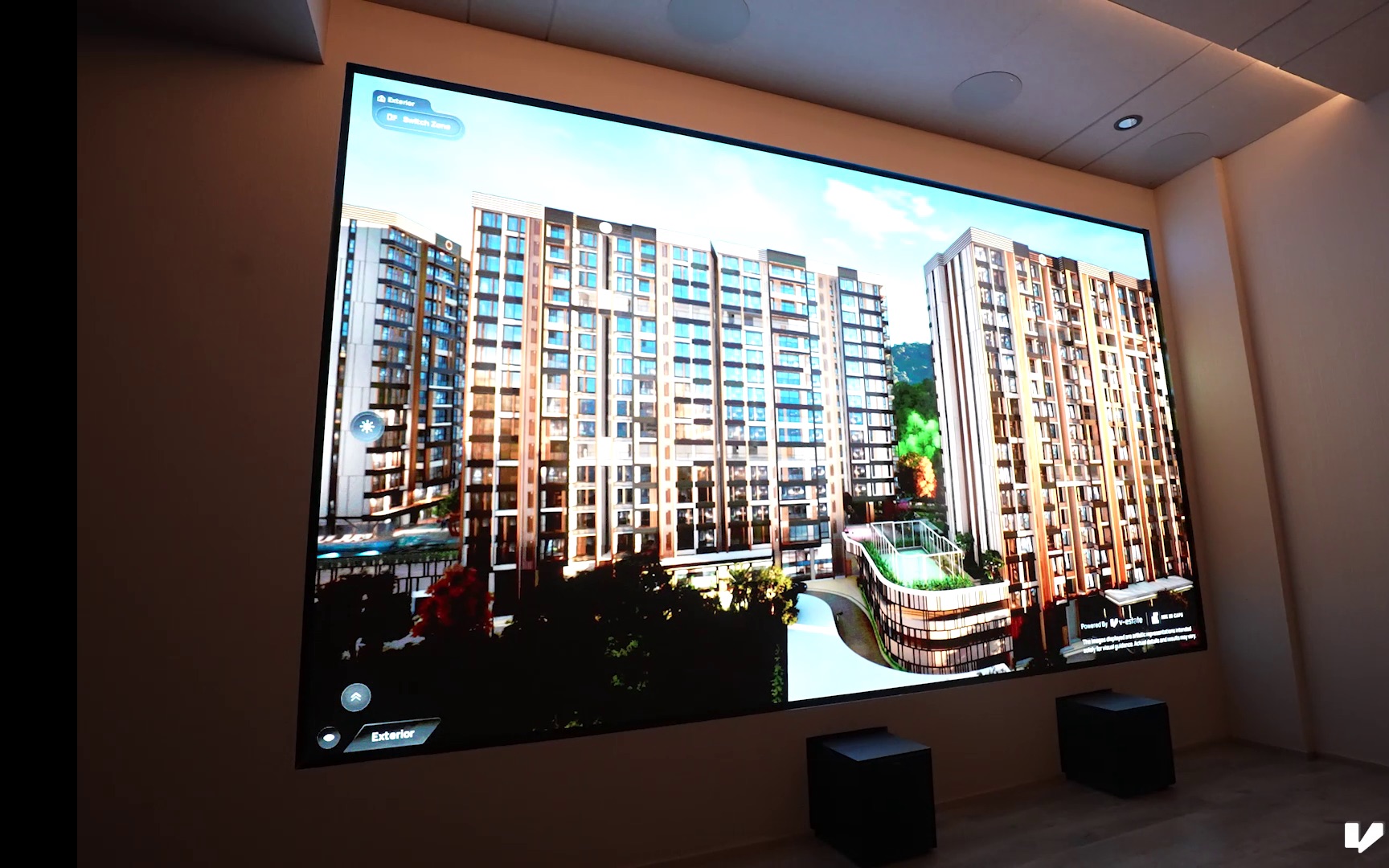
Virtual walkthroughs, digital twins, and interactive floor plans allow buyers to evaluate spaces before they exist.
At Runwal Raaya, immersive visualization enabled buyers to explore:
Tower orientation and spatial separation
Podium landscapes and circulation flow
Sea-facing decks and landmark sightlines
This removed early-stage ambiguity and shifted sales conversations from persuasion to evaluation.
Customization and Design Validation
Customization is often promised in premium real estate. Rarely is it proven.
At Kalpataru Worli One, proptech moved beyond visualization into live design interaction through V-Estate’s Build Your Dream Home software.
Buyers could:
Move or remove internal walls and furniture in real time
Adjust room proportions instantly
See lighting and spatial flow update dynamically
Save custom configurations during the same session
What typically requires weeks of coordination with architects happened inside a single sales interaction. Customization became a decision enabler, not a post-sale assurance.
Location Intelligence and Context Mapping
Location value is one of the most influential yet poorly communicated aspects of real estate sales.
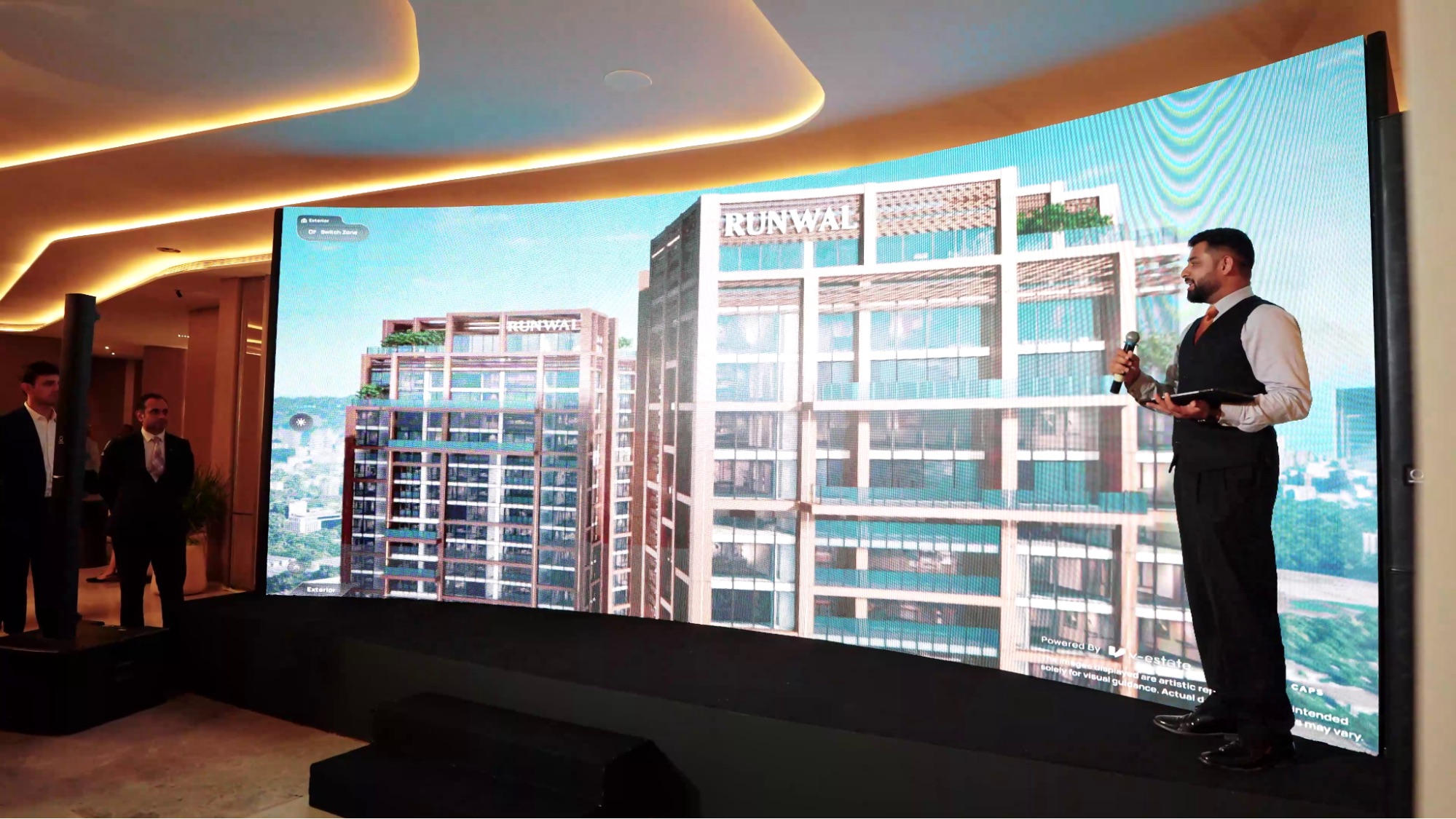
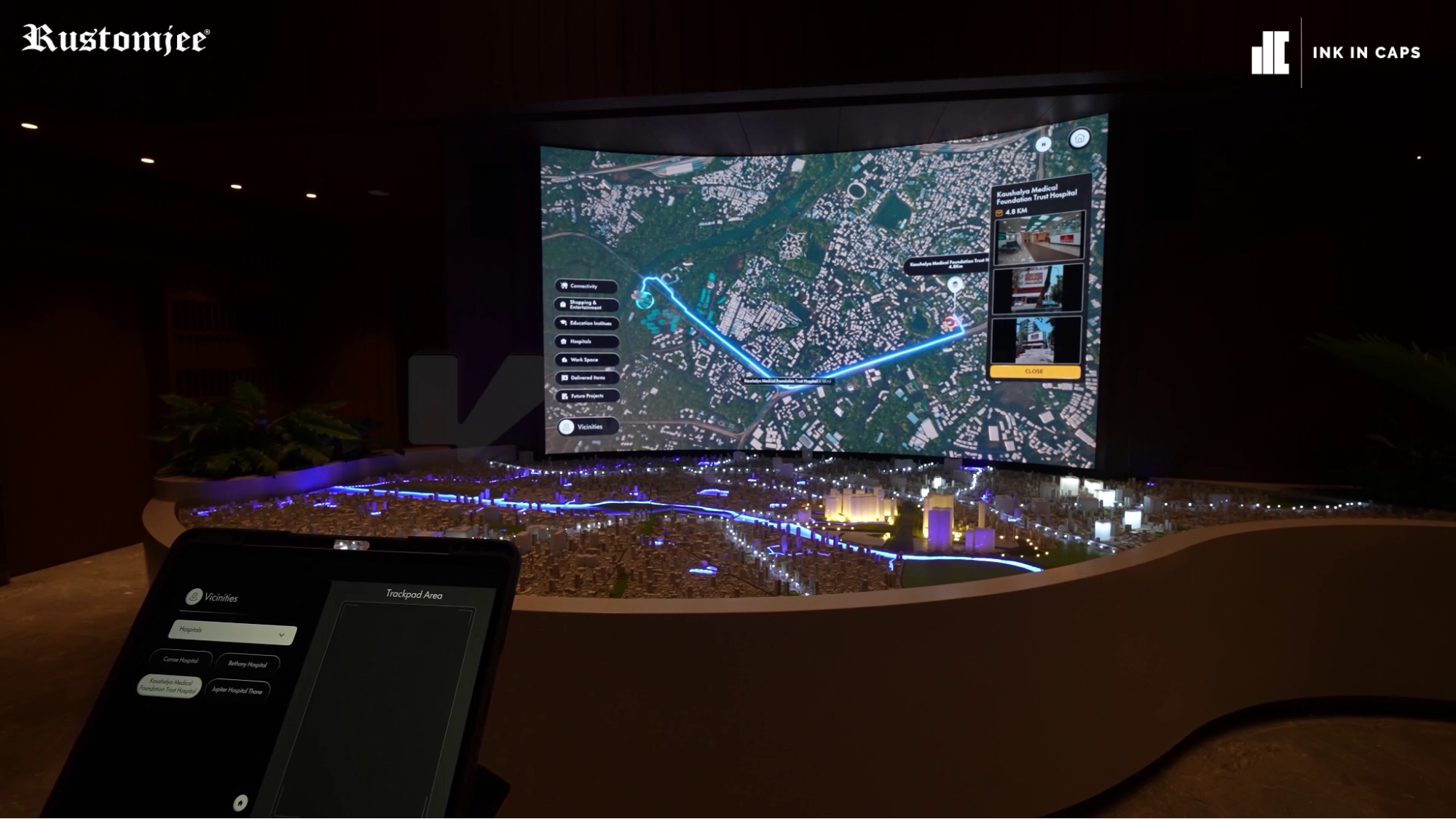
At Rustomjee Verdant Vista, interactive vicinity mapping allowed buyers to understand:
A 25-kilometre catchment area visually
Commute routes with distance and time logic
Proximity to landmarks, transit nodes, and daily infrastructure
Instead of hearing about connectivity, buyers could see how it worked for their routines.
Smart Systems and Operational Intelligence
Beyond sales, proptech also transforms building performance and asset management.
Modern proptech systems enable:
Real-time monitoring of energy consumption
Predictive maintenance instead of reactive repairs
Centralized control of security and access systems
Data-backed optimization of operational costs
These capabilities are rapidly becoming baseline expectations for large-scale developments.
Why Proptech Is Reshaping Real Estate Now
Proptech is not expanding because it is innovative. It is expanding because the industry’s complexity has outgrown traditional tools.
Buyer Expectations Have Permanently Shifted
Modern buyers expect:
Control over how they explore properties
Immediate access to accurate, detailed information
Transparency before committing financially
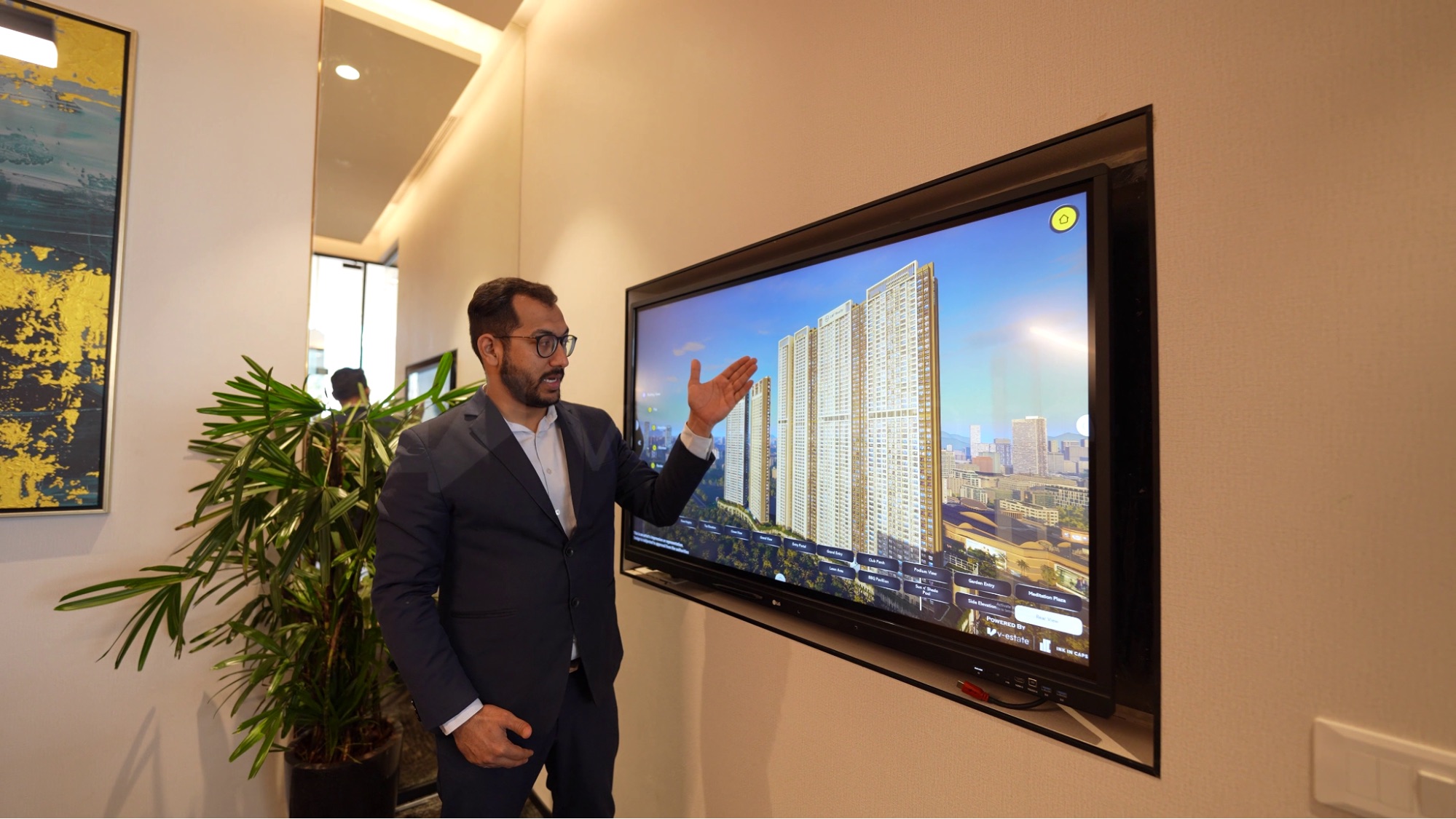
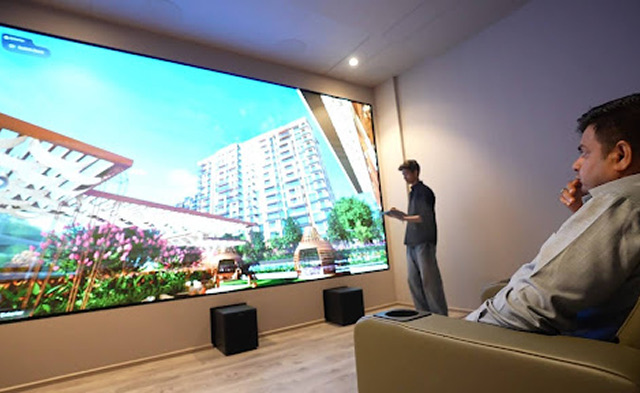
At L&T Mahim, interactive sales systems allowed buyers—both on-site and remote—to explore exteriors, interiors, amenities, and surroundings without dependence on verbal explanation. Sales cycles compressed without increasing pressure.
Efficiency and Scale Demand Automation
Manual, paper-heavy processes introduce inconsistency and cost.
Across multiple V-Estate deployments, interactive systems achieved the following:
100% sales-team adoption
Elimination of printed collateral
Faster, more consistent sales conversations
Efficiency is no longer operational hygiene. It is a competitive advantage.
Sustainability Is Becoming Measurable
Smart building technologies now allow developers to:
Track energy usage in real time
Optimize consumption patterns
Reduce long-term operational costs
Sustainability is shifting from narrative to performance—driven by data, not declarations.
Geography Has Lost Its Power
Remote evaluation is now standard behavior.
Web-enabled interactive sales tools at projects like Rustomjee’s Urban Woods and Verdant Vista allowed NRI and out-of-station buyers to evaluate projects without physical presence—without compromising clarity or trust.
Proptech has collapsed distance while preserving conviction.
Where the Industry Is Headed
The future of real estate is not digital-only. It is experience-led, data-anchored, and interaction-driven.
Across advanced developments, we are already seeing:
Sales environments prioritizing exploration over explanation
Buyers reaching decisions earlier in the journey
Technology becoming invisible but indispensable
Real estate shifting from brochure-led to system-led selling
Early adopters are not experimenting. They are building structural advantages.
The Takeaway
Proptech is no longer an add-on. It is the infrastructure through which real estate is evaluated today.
Across projects ranging from affordable housing to ultra-luxury, one pattern is consistent: when buyers can see clearly, they decide sooner and with conviction.
The industry is moving from paper to platforms, from explanation to experience, and from assumption to proof.
Reach out to us at vestate.io to build proptech-driven experiences that replace ambiguity with clarity and enable informed, convinced real estate decisions—at scale.