Pre-launch revenue gaps destroy developer margins. Most projects bleed marketing spend while leads stall in indecision. The root cause isn't budget or location—it's buyer hesitation driven by incomplete visualization.
Developers lose control during the pre-launch window. Prospects can't translate floor plans into liveable space. Static renders fail to communicate scale, light, or view quality. Sales teams compensate with multiple site visits, extended timelines, and discounting pressure.
This isn't a brand problem. It's an information problem. Buyers need concrete proof before committing capital. When that proof is missing, sales forecasts collapse.
Pre-Launch Sales Challenges Developers Face Daily
Uncertain demand metrics prevent accurate forecasting. Marketing generates foot traffic, but conversion stays unpredictable. Leads arrive interested but uncommitted. Follow-up cycles stretch across weeks without clear progression signals.
Buyer confidence remains fragile during early inventory release. Prospects question design choices, view angles, and finish quality. Objections multiply because visualization tools provide insufficient detail.
Cost per qualified buyer climbs steadily. Sales teams repeat property tours for the same leads. Site visits consume developer resources without guaranteeing commitment. The gap between interest and contract signature widens.
Lead-to-contract conversion rates underperform targets. Even warm prospects delay decisions when spatial understanding remains abstract. Developers carry inventory risk longer than planned.
These friction points compound. Revenue timelines shift. Cash flow projections miss targets. Construction phasing becomes reactive instead of strategic.
Offline Activation Approach for Controlled Sales Engagement
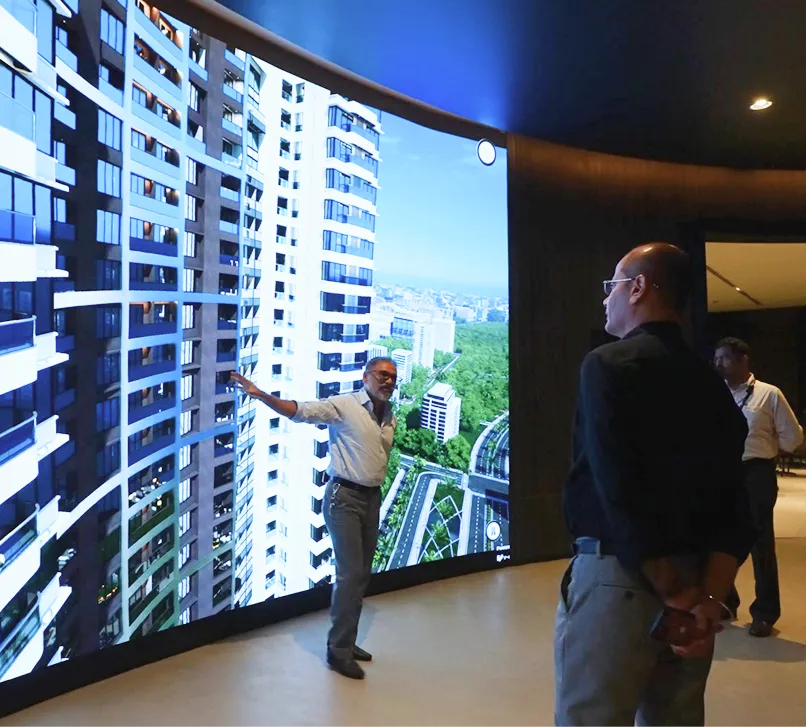
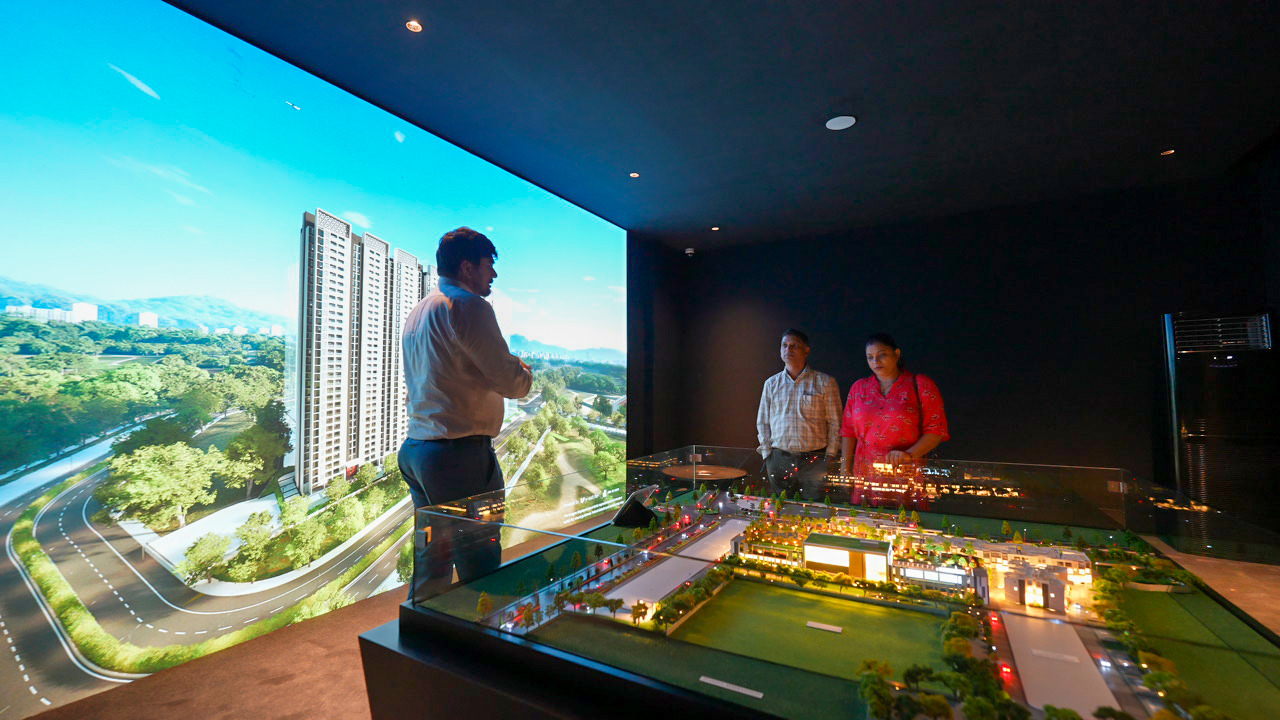
V-estate delivers an offline activation model built for sales centers and temporary pop-up spaces. This isn't online browsing. It's a structured, staff-guided interaction designed to accelerate buyer decisions.
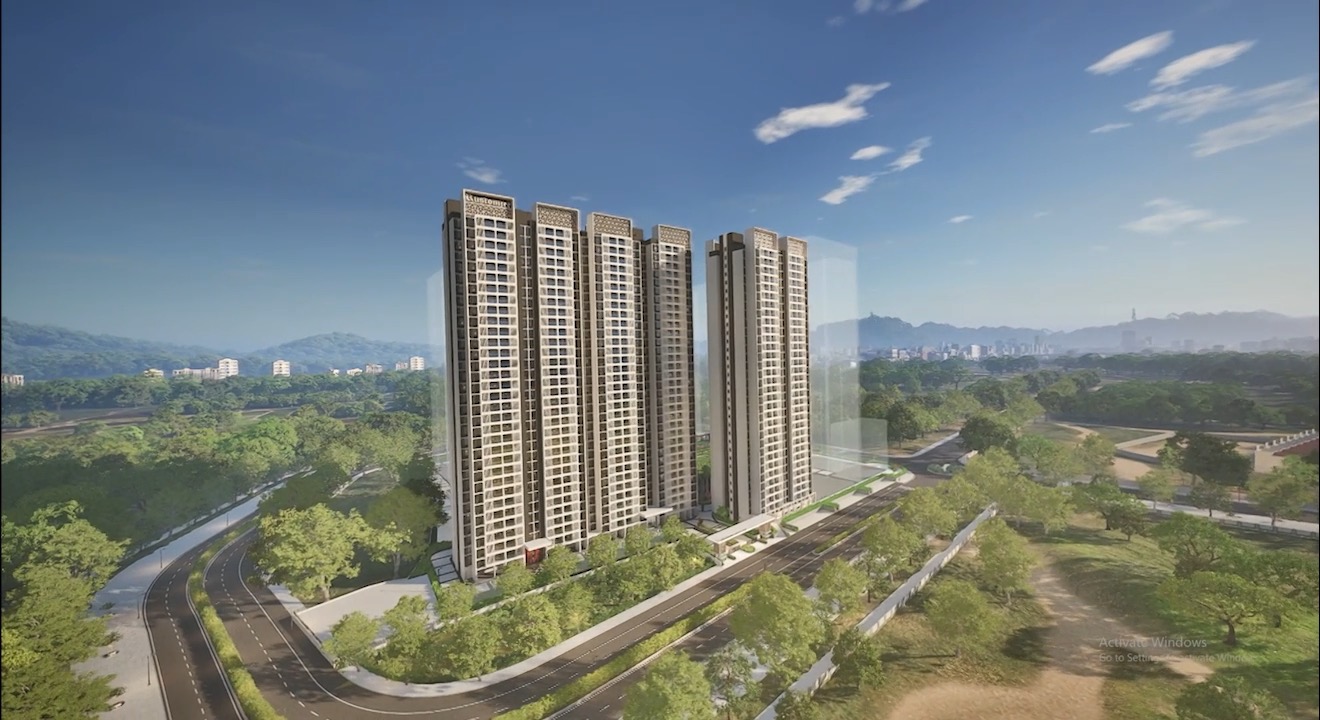
The experience runs onsite under sales team supervision. Prospects engage with photorealistic 3D environments that replicate exact unit specifications. Every finish, sightline, and material detail matches the delivered product.
Buyers control customization variables in real time. Paint selection, furniture layouts, and fixture choices happen instantly. This transforms vague objections into actionable preferences.
Dynamic environmental controls remove guesswork. Prospects adjust lighting conditions—morning sun, evening ambiance, seasonal weather. Window views display actual surrounding geography and infrastructure.
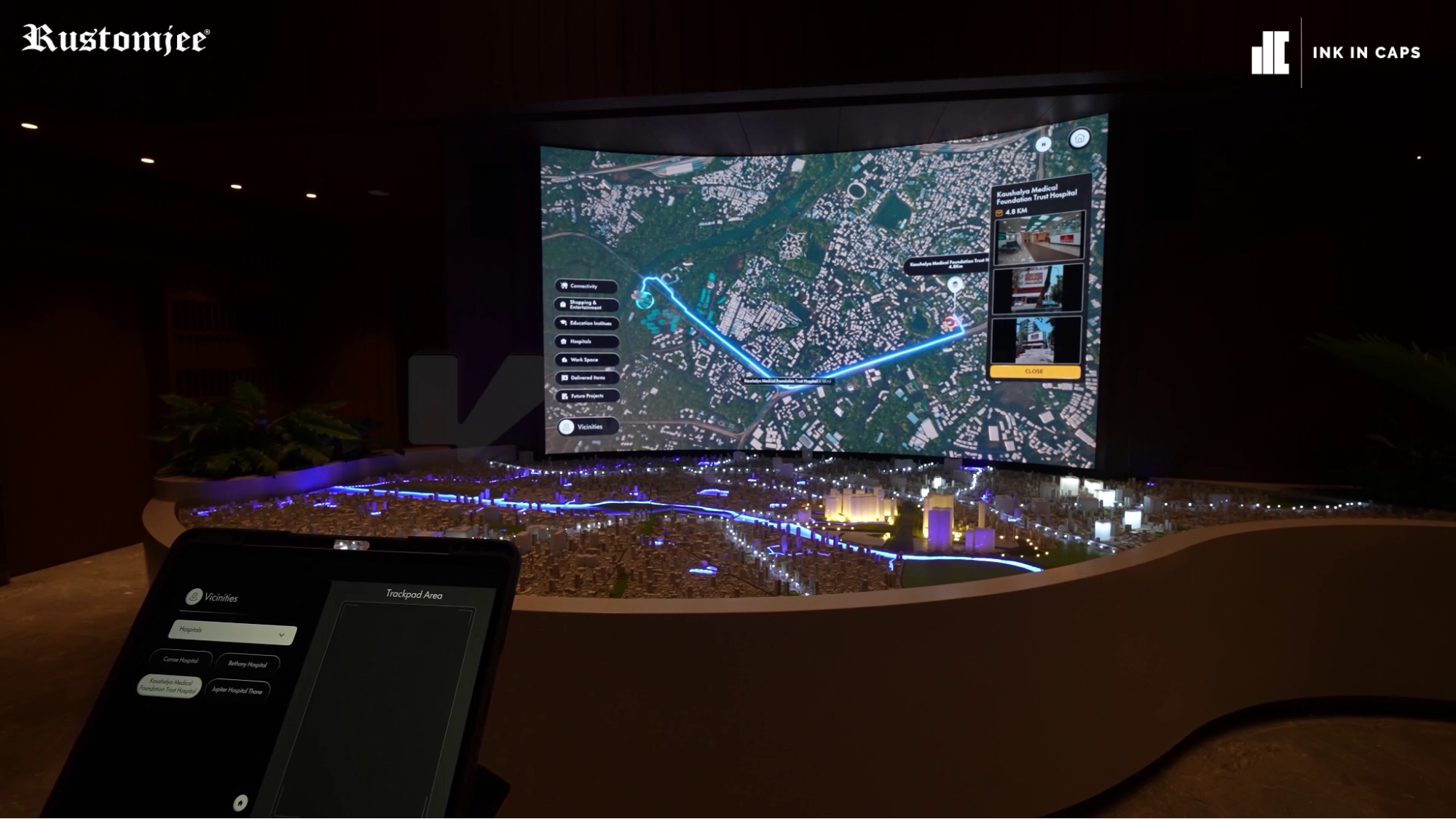
Amenity mapping clarifies lifestyle value beyond unit specifications. Transport links, schools, retail clusters, and upcoming development projects appear on interactive overlays. Buyers assess connectivity and convenience with precision.
The activation structure keeps engagement focused. Sales teams guide navigation, capture behavioral signals, and answer technical questions immediately. No distributed digital experience. No uncontrolled browsing. Just measurable, supervised interaction that drives commitments.
Data Capture Drives Lead Scoring and Sales Intelligence
Every V-estate activation session generates behavioral data. Session duration, feature interaction frequency, and customization choices feed directly into CRM systems.
Sales teams prioritize follow-ups based on engagement depth—not subjective assessment. Prospects who spend extended time configuring specific units signal higher purchase intent. Those who repeatedly explore amenity connections demonstrate lifestyle-driven motivation.
Marketing teams refine messaging using concrete evidence. If balcony orientation and natural light dominate user attention, campaigns shift emphasis accordingly. Inventory release sequences align with demonstrated buyer priorities.
Product and development teams receive early preference signals. Finish selections, layout modifications, and amenity interest inform value-engineering decisions. This reduces post-handover disputes and supports profitable unit mix planning.
Revenue forecasting transitions from estimation to probability modeling. Data-backed lead scoring replaces anecdote-driven pipeline management.

Commercial Impact on Pre-Launch Revenue Performance
V-estate activations compress sales cycles measurably. Decisions that previously required weeks resolve in days. Buyers arrive at contract-ready conviction faster because visualization eliminates spatial uncertainty.
Qualified lead conversion rates improve across project phases. Immersive experiences separate serious prospects from casual browsers early. Sales teams invest effort in high-probability opportunities.
Cost per closed transaction decreases through operational efficiency. Fewer repeat site visits. Reduced reliance on physical show flats. Lower dependency on discount-driven urgency tactics.
Customer retention strengthens post-sale. Clear pre-purchase expectations reduce cancellation rates and modification requests. Buyers commit with accurate understanding of delivered specifications.
These gains stabilize pre-launch cash flow. Construction financing becomes more predictable. Phased development planning relies on confirmed buyer pipelines instead of speculative demand assumptions.
How to Use Visual Experiences Across the Pre-Launch Sales Timeline
Early Buyer Interest and Project Exploration
At the early-interest stage, interactive 3D visuals can help buyers understand the master plan, architecture, amenities, surrounding infrastructure and available configurations before a physical property exists.
EOI and Shortlisting Stage
As buyer interest becomes more serious, sales teams can use the same visual environment to compare towers, floors, layouts, orientations and views. This helps buyers narrow their options before submitting an expression of interest.
Token Collection and Unit Confirmation
Before token collection, buyers can revisit the selected unit, understand its exact position, check the layout and views, and clarify remaining questions with the sales team. The visual experience becomes a verification tool rather than another presentation.
Post-Token Follow-Up and Buyer Communication
After a token is collected, saved unit preferences and visual references can support more consistent follow-up conversations as the buyer moves toward booking and documentation.
Implementation Priorities for Marketing and Sales Leadership
Fidelity determines trust and conversion outcomes. V-estate models must mirror architectural accuracy, material textures, and environmental context. Discrepancies between virtual experience and actual delivery destroy credibility permanently.
Controlled activation environments maintain sales discipline. Staff-guided sessions ensure proper feature demonstration and objection handling. Prospects receive expert navigation rather than unsupported exploration.
Measurement infrastructure closes the feedback loop. Behavioral data integrates with existing CRM platforms. Sales managers track which units, finishes, and amenities drive highest engagement.
Start with pilot deployment in one high-traffic sales center. Measure qualified leads per activation, demo-to-site-visit conversion, and average time-to-contract. Use pilot results to validate ROI before scaling across multiple projects.
Budget for iterative content refinement. Early user sessions reveal which customization options matter most. Adjust activation configurations based on observed behavior patterns.
V-estate Capabilities Built for Developer Requirements
Photorealistic 3D virtual show flats replicate exact unit specifications with architectural precision.
Real-time customization controls for paint, furniture, and finish selections.
Dynamic lighting and weather simulation showing properties across times and seasons.
Amenity and connectivity mapping displaying transport, schools, retail, and infrastructure projects.
Offline activation delivery through sales centers with staff-guided experiences.
Behavioral data capture and CRM integration enabling data-driven lead prioritization.
Revenue Certainty Starts with Measurable Engagement
Pre-launch sales volatility isn't inevitable. Developers who replace abstract marketing with concrete visualization gain predictable revenue pipelines.
V-estate activations convert buyer hesitation into documented preferences. Sales teams operate from behavioral evidence instead of subjective intuition. Marketing spend ties directly to qualified conversion metrics.
Evaluate one pilot activation for your next pre-launch phase. Measure lead quality improvement, conversion uplift, and timeline compression. Use those results to build repeatable processes across your development portfolio.
Predictable pre-launch sales require measurable buyer engagement. V-estate delivers that engagement through offline activations designed specifically for real estate sales environments.
.jpeg)
%20(1).jpg)