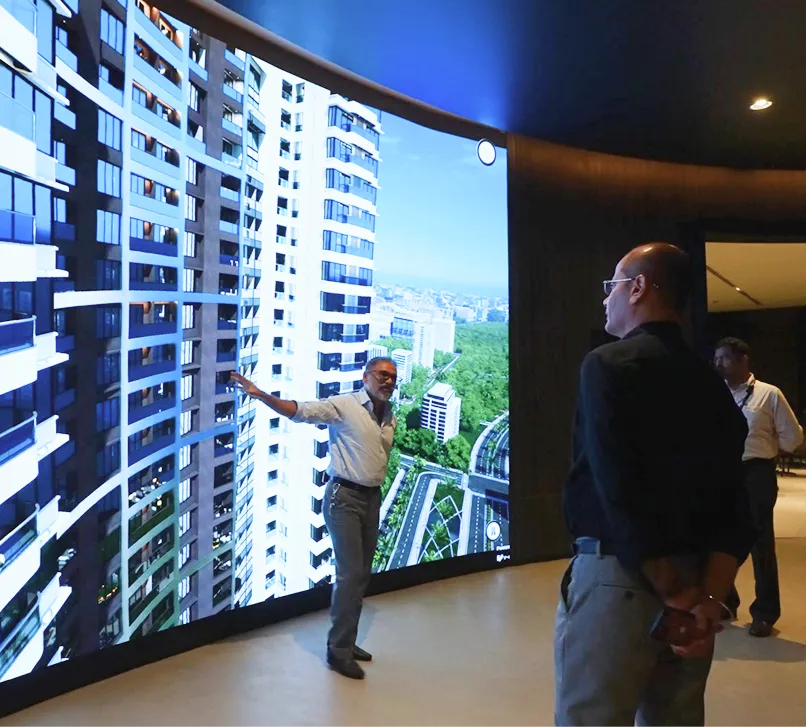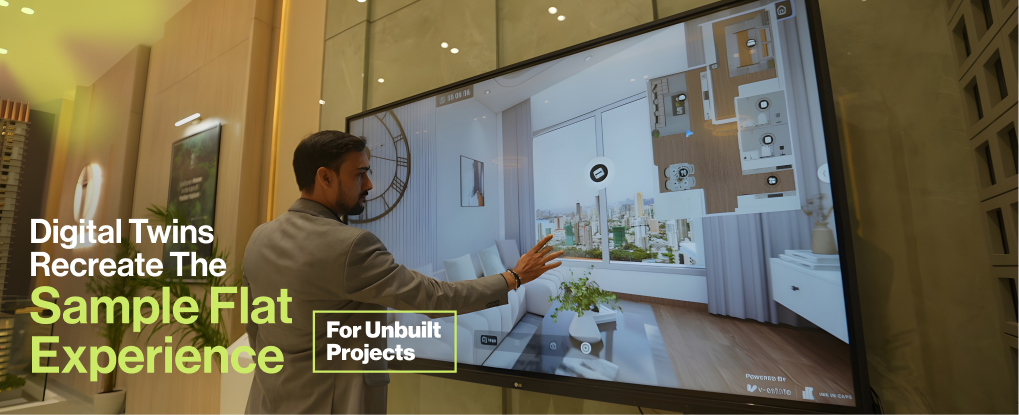
Pre-sales conversions drop when buyers can't see what they're paying for. Floor plans confuse. Renders lack depth. Site visits waste time.
Real estate developers face a critical gap. Projects sell two to three years before possession. Buyers hesitate. Sales cycles stretch. Marketing spend increases without proportional returns.
The core issue isn't low demand. It's high uncertainty.
The Pre-Sales Conversion Problem
Developers invest heavily in brochures, CGI renders, and offline displays. None of these tools replicate the experience of walking through a sample flat.
Buyers struggle to translate 2D drawings into lived reality. They can't gauge room proportions. They miss how natural light enters. They fail to visualize furniture placement or balcony views.
This uncertainty stalls decisions.
Repeated site visits burden sales teams. Long sales cycles tie up capital. Lower conversion rates force aggressive discounting or extended marketing campaigns.
The offline activation gap remains unaddressed. Digital ads and online tours don't solve the problem for developers running experience centers, sales offices, or property expos.
Photorealistic Virtual Show Flats as Decision Tools
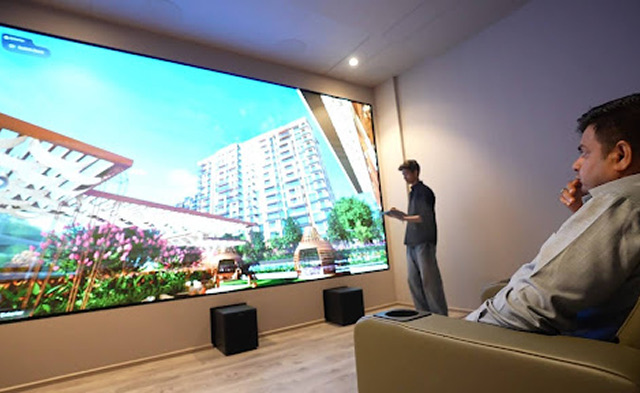
V-estate delivers an offline, immersive property exploration experience that functions without internet dependency. It recreates the sample flat digitally with architectural precision and material accuracy.
This isn't a marketing gimmick. It's a sales enablement tool built for developers who need measurable conversion improvements.
The platform merges architectural BIM models, PBR-textured finishes, and real-world context into a single interface. Prospects explore layouts, customize interiors, test lighting conditions, and validate views—all before construction completes.
Buyers gain spatial clarity. Developers gain faster closures.
Core Features That Drive Sales Outcomes
Architectural Fidelity
V-estate sources data from final BIM or detailed CAD files. Dimensions match approved plans. Room proportions reflect actual construction specs.
This accuracy eliminates the gap between expectation and delivery. Buyers trust what they see. Disputes at possession drop.
Material Realism
Finishes appear as they will in reality. Flooring, wall textures, countertops, and fixtures use photographed or scanned materials converted into photorealistic textures.
Prospects validate choices visually. Doubts about premium finishes reduce. Upsells become tangible decisions rather than abstract upgrades.
Dynamic Lighting and Weather Simulation
Morning sun. Evening glow. Monsoon skies. Night ambiance.
Buyers test how their unit performs across times and seasons. They see shadow patterns, natural light penetration, and balcony usability under different conditions.
This temporal testing builds confidence.
Real-World Context and Views
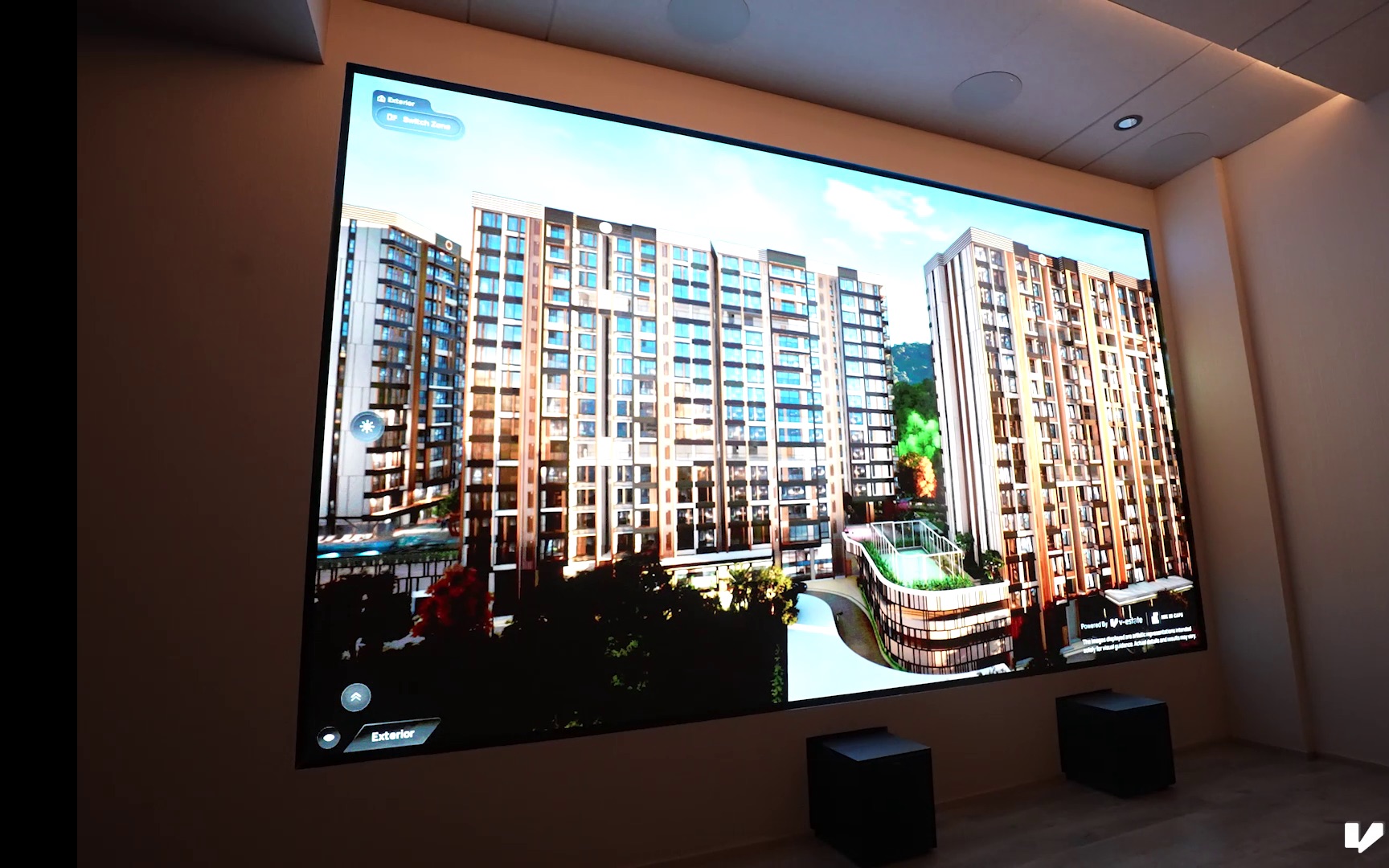
Window views replicate actual sight lines based on unit orientation and elevation. Nearby amenities, current infrastructure, and upcoming developments appear on an integrated map.
Buyers understand connectivity and lifestyle context. They assess the property within its real environment, not in isolation.
Customization Controls
Paint colors. Furniture layouts. Finish selections.
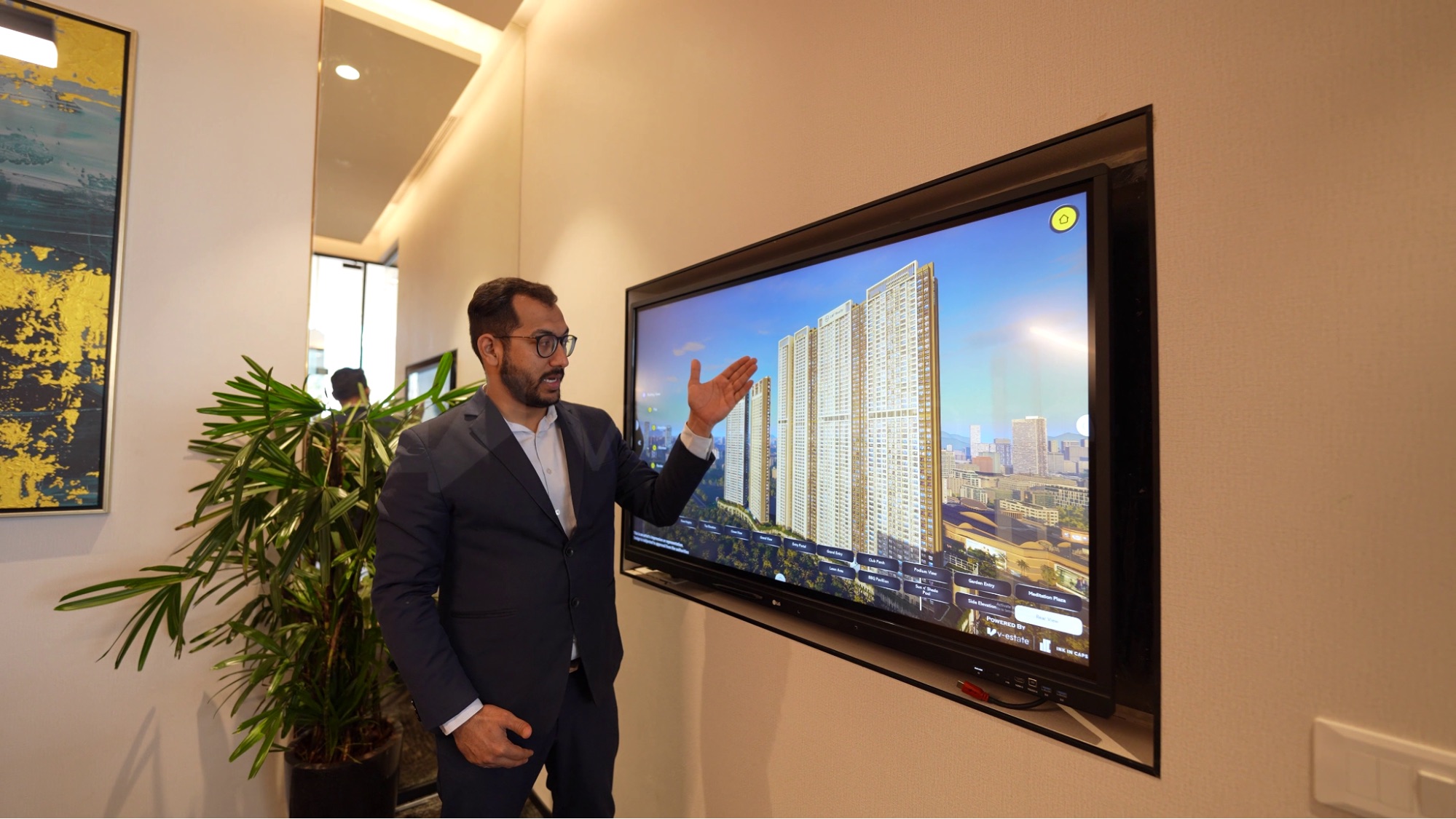
Prospects configure their unit in real time. They see choices reflected instantly. Emotional ownership increases. Conversion intent strengthens.
This customization layer transforms passive viewing into active decision-making.
Offline-First Architecture
V-estate runs locally in sales suites, experience centers, and event kiosks. No internet required.
This matters during property expos, remote office operations, and areas with unreliable connectivity. The experience remains consistent regardless of location.
Deployment Blueprint for Developers
Implementation follows a structured approach.
Step 1: Source accurate architectural models. Use finalized BIM files or detailed CAD drawings.
Step 2: Capture material finishes. Photograph samples or scan textures for realism.
Step 3: Integrate viewport data. Map real-world vistas and street context to match unit orientation.
Step 4: Package for offline use. Build the experience into a local application or kiosk mode.
Step 5: Design intuitive interactions. Simple navigation, curated options, guided exploration paths.
Step 6: Train sales teams. Equip staff with scenario flows and objection-handling scripts.
Step 7: Track engagement metrics. Monitor session time, configurations viewed, and conversion signals.
Business Impact and Measurable KPIs
V-estate delivers quantifiable results across the sales funnel.
Higher lead conversion rates. Immersive validation reduces hesitation and objections.
Shorter sales cycles. Buyers commit faster when uncertainty drops.
Increased average order value. Premium finishes and upgrades convert when prospects visualize them in context.
Reduced site visit costs. Fewer physical tours lower operational burden.
Lower post-possession disputes. Accurate expectations minimize change requests and complaints.
Track these KPIs: pre-sales conversion rate, average session length, lead-to-deal time, configuration-to-purchase ratio, event-to-lead ratio.
Sales and Marketing Alignment
V-estate functions across multiple touchpoints.
Use the same visual assets in digital ads, brochures, and offline activations. Consistency builds trust and reinforces messaging.
Segment experiences for different buyer personas. Investors need ROI data and rental yield projections. End-users prioritize lifestyle and space utility. NRIs require virtual walkthroughs from abroad.
Deploy V-estate at property expos and high-footfall events. It serves as both demo and lead capture mechanism.
Use the platform to onboard new sales staff. Standardize pitch quality and product knowledge across teams.
Implementation Considerations
Data governance matters. Store buyer interactions securely. Map choices to CRM fields for follow-up.
Version control is critical. Sync the platform with design changes and approvals. Prevent discrepancies between the digital twin and official plans.
Hardware selection depends on venue. Touch screens for sales offices. VR headsets for immersive demos. Projection mapping for large events.
Optimize for local performance. Compress textures and pre-bake lighting to maintain smooth operation offline.
Ensure accessibility. Navigation should be intuitive for non-technical users and sales partners.
Avoiding Common Mistakes
Don't over-feature the interface. Complexity reduces adoption in offline environments.
Never disconnect renders from approved architectural plans. Regulatory compliance and customer trust depend on accuracy.
Don't assume constant internet access. Offline readiness is non-negotiable for events and remote offices.
Train sales teams thoroughly. A powerful tool still requires informed human guidance to close deals.
Next Steps for Real Estate Developers
Start with a minimum viable deployment. Select one unit type. Run it at your next sales activation or experience center launch.
Measure configurations, session times, and conversion rates. Scale based on data, not assumptions.
Focus on three elements: architectural accuracy, offline reliability, and measurable intent signals.
This approach shortens sales cycles and raises pre-sales conversion with predictable ROI. The sample flat experience moves from physical constraint to digital advantage.