The Problem No One in Real Estate Talks About Openly
Site visits were supposed to be the moment of truth.
The buyer drives an hour. Sees a muddy plot. Gets a printed brochure. Hears the sales rep describe what the view will look like. Then goes home. And think about it. For weeks.
That is not a sales experience. That is a leap of faith.
And most buyers today are not willing to leap.
What Actually Happens During a Traditional Site Visit
You bring a serious buyer to your project. The construction is at slab level. The amenities are marked with wooden stakes. The model flat looks nothing like the actual unit they are buying. And the brochure? It is doing all the heavy lifting.
The buyer nods politely. Asks a few questions. Says they will discuss it with the family. And then the follow-up calls begin.
This is the reality of property sales in most markets today. The experience gap between what you are selling and what the buyer can actually see is enormous.
Why the Visualization Gap Costs You Conversions
Research in buyer psychology is clear. People do not buy what they cannot imagine. The harder it is to visualize a finished product, the longer the decision takes.
In real estate, that delay is expensive.
Every extra week in the sales cycle adds cost. Follow-up resources. Channel partner commissions stretched over time. Inventory carrying costs. And the risk of the buyer reconsidering entirely.
The problem is not that buyers are indecisive. The problem is that developers are handing them an incomplete picture and asking them to commit anyway.
How Rustomjee Approached This Problem
Rustomjee, one of Mumbai's most respected developers, understood that their buyers needed more than a site tour. They needed to experience the finished property — before a single wall was painted.
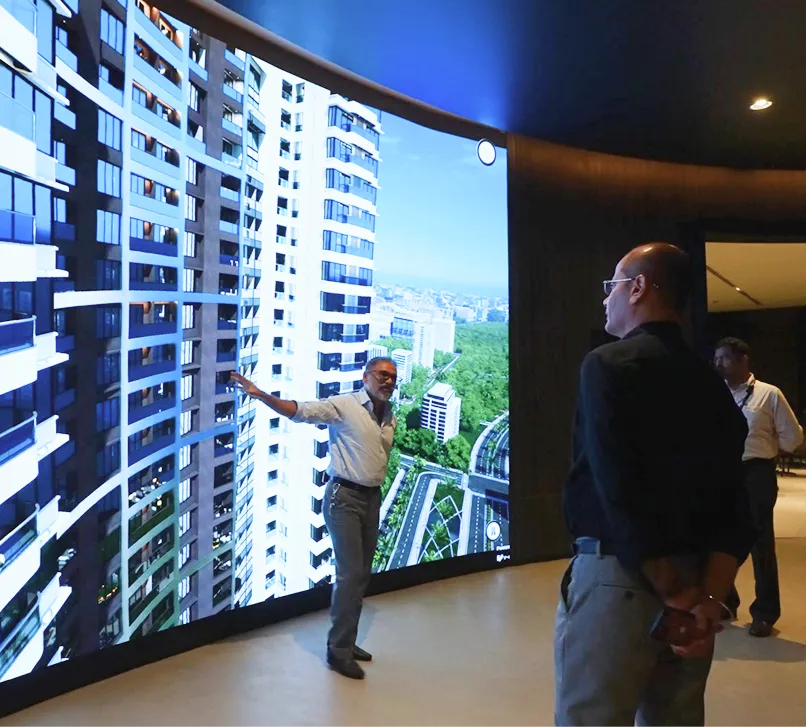
By integrating V-estate's immersive 3D interactive sales tool into their physical experience center, Rustomjee gave buyers the ability to walk through photorealistic representations of their units. Not renders on a screen. An actual walkthrough — navigating room by room, switching wall finishes, checking the window view from the master bedroom at 6 PM on a winter evening.
This is not a digital upgrade. This is a fundamental shift in how the sales conversation happens.
What an Interactive Property Experience Actually Changes
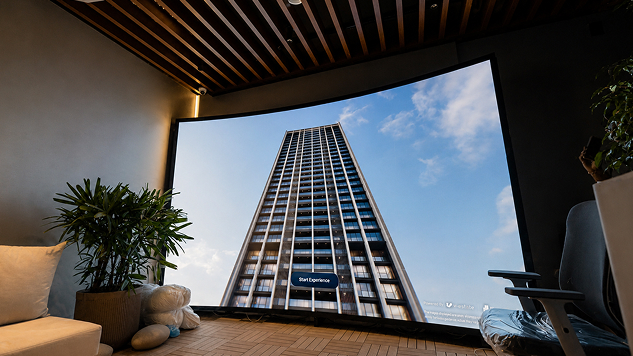
When buyers can see their future home in detail, three things happen immediately.
First, the emotional connection forms faster. The buyer stops evaluating and starts imagining. They move from "is this a good investment" to "where will my sofa go." That is a significant psychological shift.
Second, objections reduce. Most buyer objections are rooted in uncertainty. When uncertainty shrinks, objections shrink with it. The sales team spends less time defending and more time closing.
Third, the site visit becomes a confirmation rather than a discovery. Buyers who have already explored the property virtually arrive at the site visit already half-decided. The physical visit just reinforces what they already know.
The Offline Advantage Most Developers Overlook
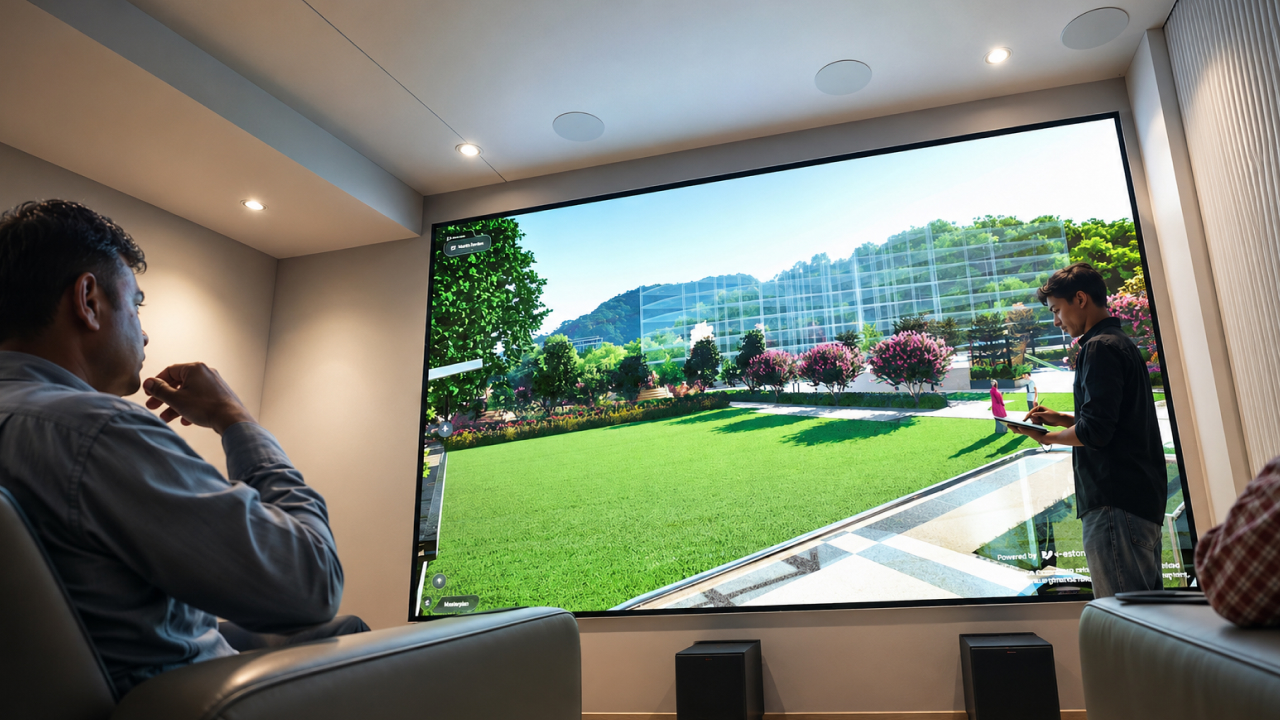
V-estate is not an online platform. It is an offline activation tool — built for experience centers, sales offices, trade shows, and events. This is important.
The sales conversation in real estate happens face to face. It always has. The best use of technology is not to replace that conversation but to arm it.
When your sales rep is walking a buyer through a V-estate experience, they control the narrative. They can pull up specific views, switch configurations, showcase amenities on demand. The technology supports the human relationship, not the other way around.
What Your Site Visit Is Actually Competing Against
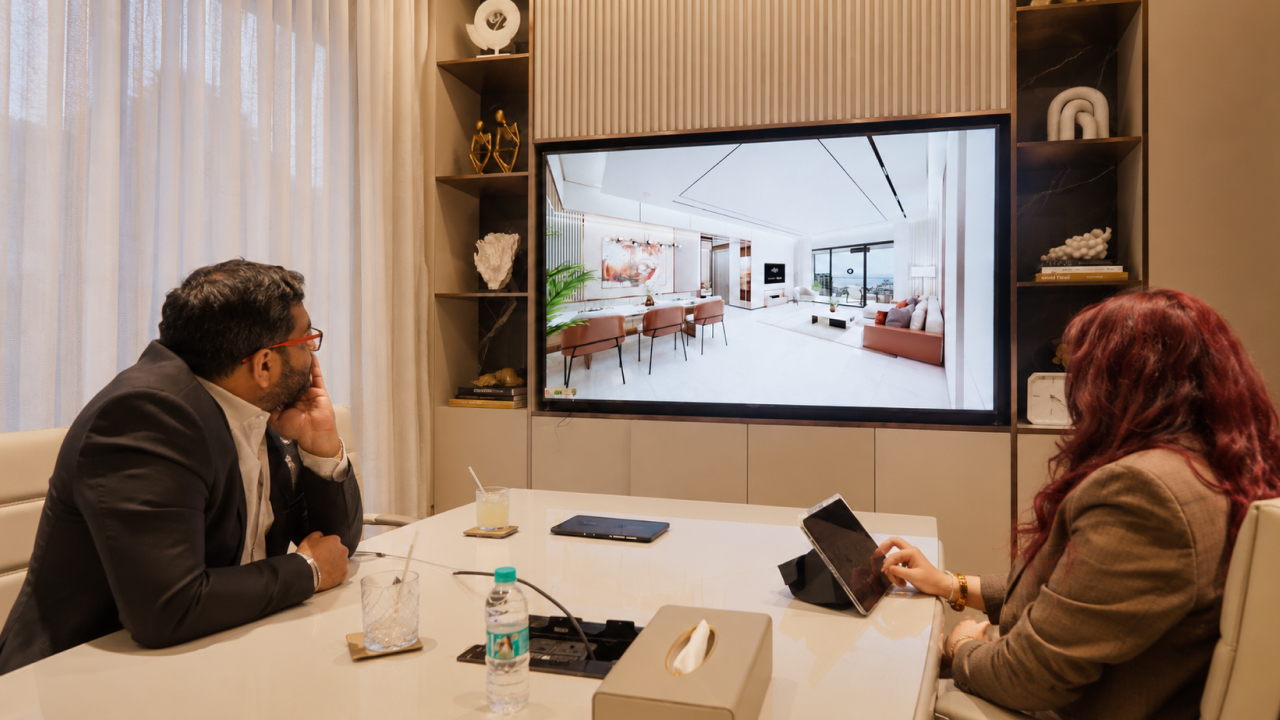
Buyers today have seen photorealistic ads, 3D renders in Instagram reels, and competitor projects with full model flats. Their benchmark for "convincing" has risen sharply.
If your site visit experience is still dependent on printed floor plans and a verbal description of "how it will look when it's done," you are losing ground to every competitor who has invested in visual storytelling.
The developers who close faster are the ones who remove the imagination burden from the buyer.
The Numbers That Make This Concrete
Karrim Chhamadia, Sales Head at Fortune Group — a V-estate client — shared that after deploying V-estate, they observed a reduction in the sales cycle by approximately 30%. Buyers who previously took weeks to decide were making informed decisions within days.
That is not a marginal improvement. That is a structural change in how sales converts.
What This Means for Your Sales Strategy
If your site visits are generating interest but not decisions, the issue is almost certainly the experience gap. Buyers are interested. They just cannot see enough to commit.
The fix is not more follow-up calls. It is a better presentation at the moment of highest intent — which is when the buyer is standing in your experience center or sales office, engaged and open.
That is exactly where an interactive property experience delivers its highest value.
Ready to Close Faster at the Site Stage?
If your team is losing deals between site visit and decision, V-estate can help you fix that gap. Book a demo at V-Estate and see how India's leading developers are turning site visits into signed agreements.
.jpg)
%20(1).jpg)