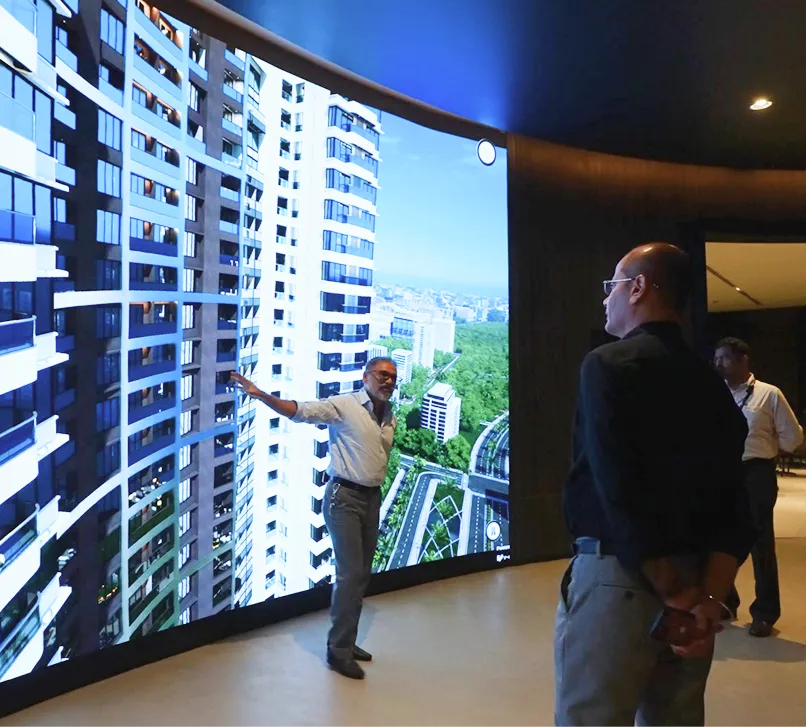
Rustomjee Urban Woods launched in Dombivli with a clear challenge: managing 200+ daily walk-ins while maintaining control of the sales narrative.
The site was undeveloped. Multiple competing projects were launching simultaneously. Customers arrived asking advanced questions before understanding basic project structure. Different sales executives delivered different introductions, creating confusion and inefficiency.
An 8-minute mandatory AV introduction before entering the main experience center. This single component transformed operations.
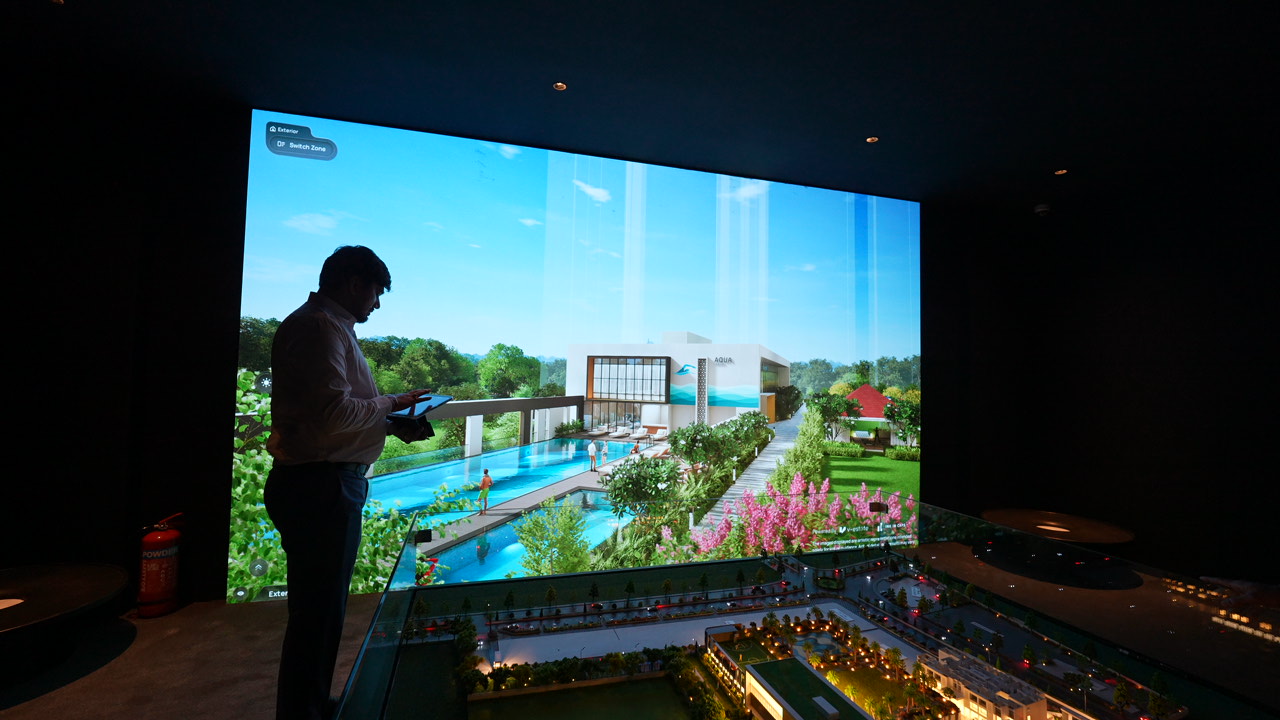
The Critical Role of the Introduction
1. The Site Offered No Physical Context Flat, undeveloped land meant buyers couldn't grasp scale, connectivity, tower positioning, or amenity placement. Every conversation started from zero.
2. High Footfall Created Bottlenecks Peak hours meant crowding, outnumbered staff, and frustrated visitors. Without structure, the center operated reactively.
3. Sales Teams Delivered Inconsistent Narratives Some focused on connectivity, others emphasized amenities, and a few jumped to pricing. No unified story around location, positioning, or structure. A critical flaw in competitive markets.
4. Customers Asked Wrong Questions at Wrong Times Visitors asked about pricing, views, or availability before understanding context. The sales teams spent valuable time answering questions that required foundational knowledge.
The 8-Minute Introduction's Impact
The AV functioned as a precision business tool where every minute directly influenced buyer decisions.
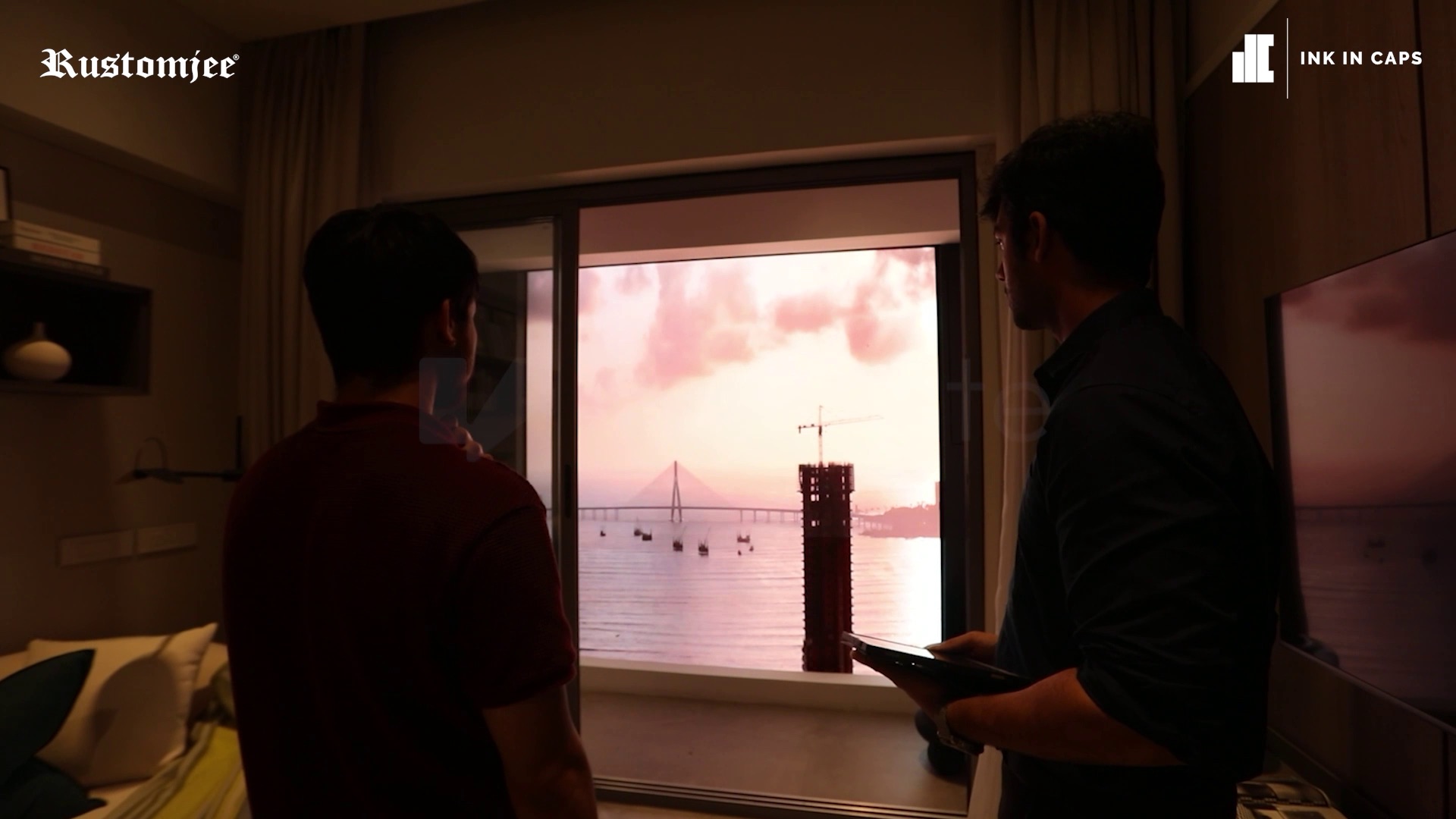
1. It Created Narrative Consistency Across 200+ Daily Interactions Every customer received identical structured content before meeting sales executives. This eliminated variability that naturally occurs with multiple team members. The project story became standardized in messaging, sequence, and depth.
Every customer received complete information without gaps. Sales teams maintained realistic expectations without exaggeration. Messaging remained consistent across all interactions.
2. It Established Mental Anchors That Accelerated Conversations The video built a reference framework—location context, connectivity, and project scale—before any face-to-face interaction. Sales executives spent less time explaining "where" and "what" and more time addressing "why this matters for you."
Conversations shifted from explanatory to consultative. Questions became specific, and the engagement improved.
3. It Transformed Visitors Into Informed Evaluators Before the introduction, customers had fragmented understanding. After eight minutes, they had sufficient context to evaluate what they were about to see.
This changed buyer behavior. They asked informed questions, compared features against actual priorities, and connected configurations to views, amenities to lifestyle needs, and pricing to value. The learning curve collapsed.
The Content Structure
1. Two Minutes: Location and Connectivity Distance to Dombivli Station, access to highways, and key roads. This eliminated "how far is what?" questions and established mobility understanding.
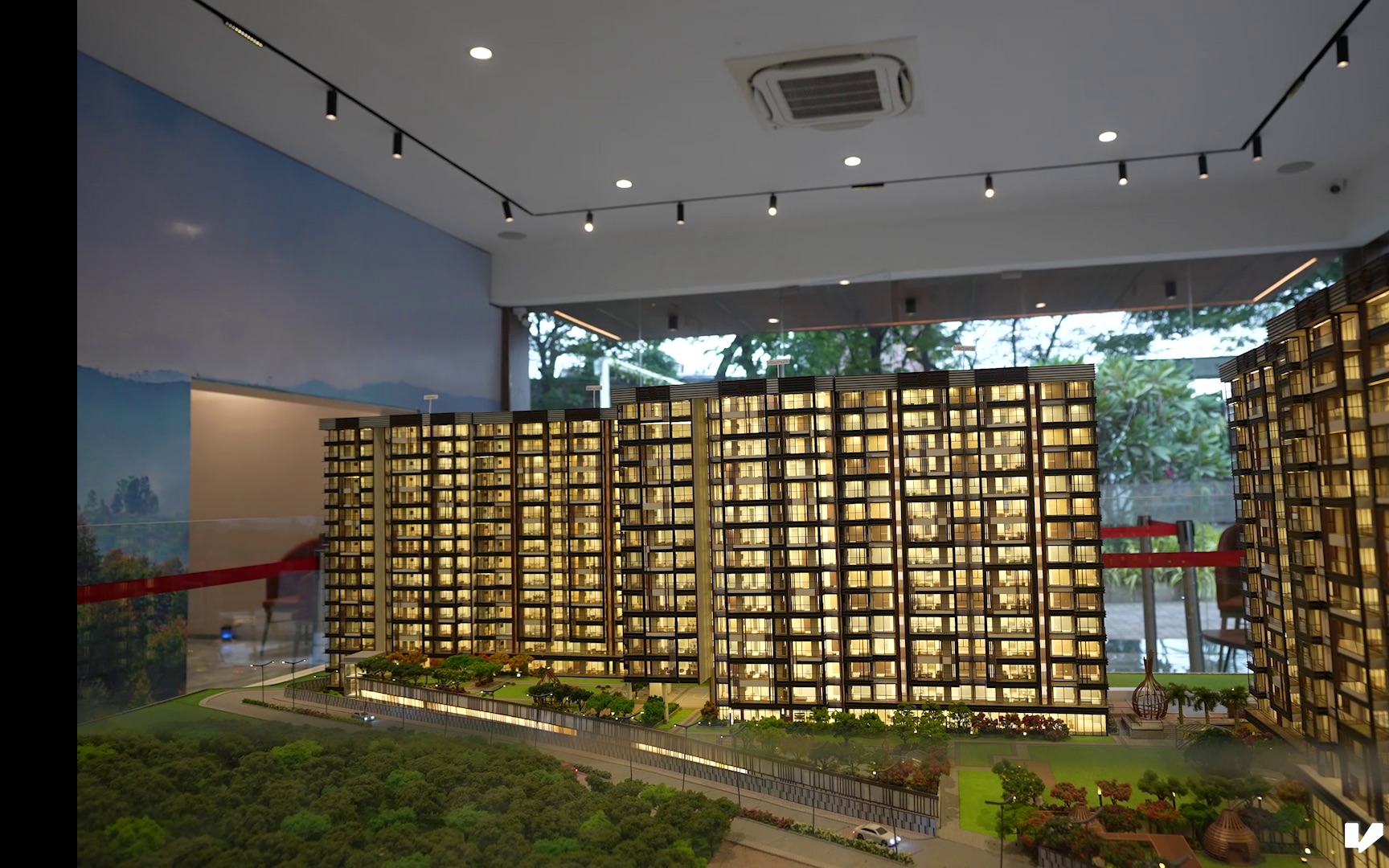
2. Three Minutes: Project Walkthrough Master plan, tower positioning, podium areas, amenity distribution, and land scale. Since the site was undeveloped, this visual map provided essential spatial clarity.
3. Three Minutes: Amenity Overview Range and placement without excessive detail. Neutral pacing, simple language, and clear diagrams. Accessible to all buyer types.
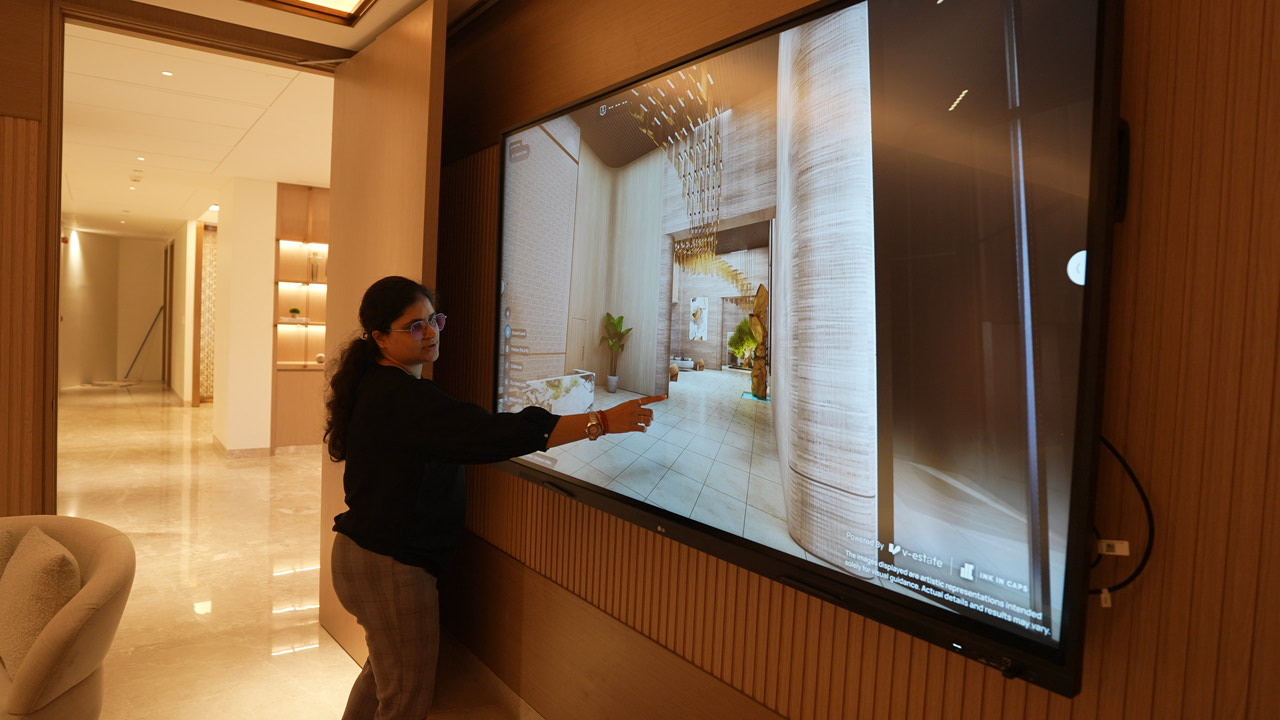
The AV Room's Impact on Flow Management
The introduction created predictable time blocks that synchronized movement between zones.
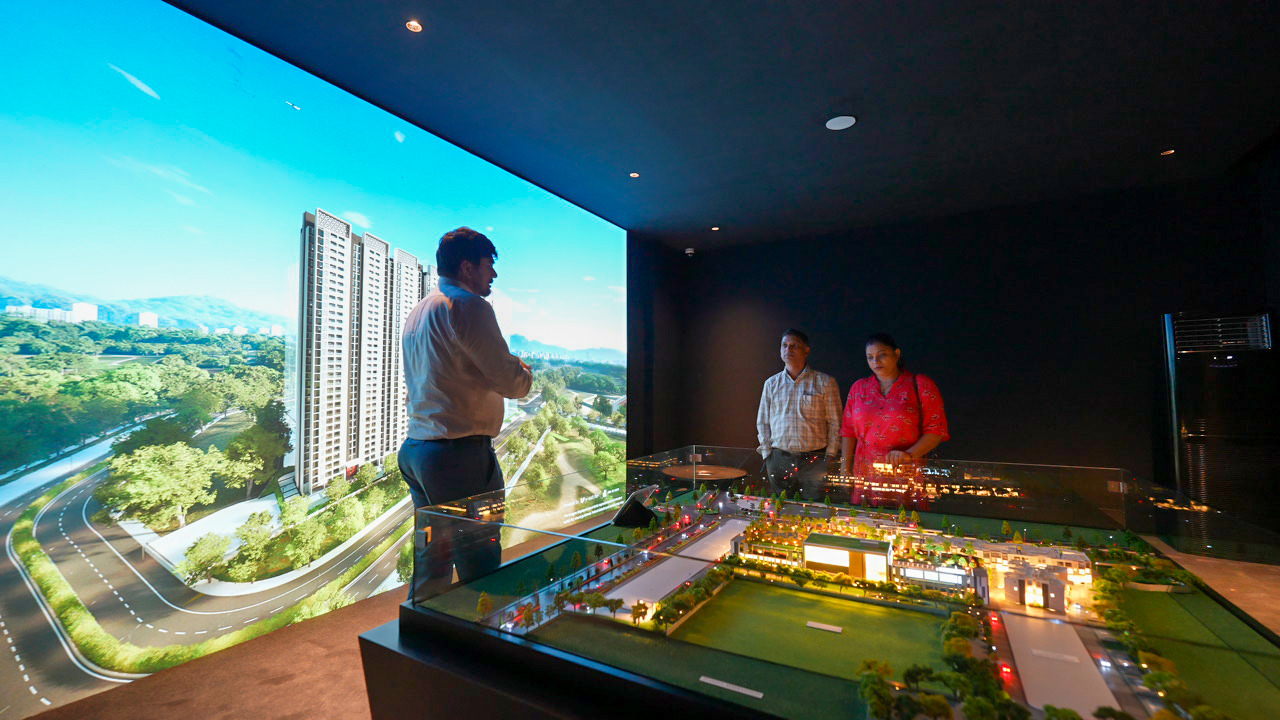
1. Prevented Entry Bottlenecks Customers directed to the AV room first created a controlled staging area. The 8-minute window batched customers in groups, creating breathing room between clusters.
2. Enabled Precise Scheduling The sales teams calculated capacity based on 8-minute intervals and predicted exactly when customers would move to the next zone. The center operated as a controlled flow system.
3. It Made High-Volume Operations Feasible
The team managed 190–210 families per day without losing control of customer experience. The introduction created order that made scale possible.
The Differentiating Factors
1. No Sales Pitch Content excluded pricing, inventory, closing hooks, or promotional language. It only established clarity. Sales discussions were reserved for the final touchpoint.
2. Non-Technical Presentation Simple language, clear diagrams, and neutral tone which required no real estate expertise.
3. Context Over Features The introduction prioritized spatial understanding over feature lists. Foundational questions were answered before customers asked them. Cognitive load reduced, comprehension accelerated.
Key Lessons for Developers
1. Structured Introductions Eliminate Inconsistency Large teams interacting with high volumes need narrative control. Standardized introductions position brands uniformly and protect messaging. This is Critical in volume markets with shortened training windows.
2. Short AV Rooms Create Flow Discipline High footfall requires micro-time management. Eight-minute introductions synchronize this movement, improve flow through predictable intervals, and reduce overlap.
3. Context Must Come Before Details Customers can't process complex information without frameworks. Introduction-first approaches reduce redundant queries, improve comprehension, speed discussions, and shorten sales cycles.
4. Undeveloped Sites Need Structured Visualization When nothing exists physically, the introduction becomes the foundation for understanding scale, spatial logic, and positioning. This directly impacts buyer confidence.
5. Simplified Staff Training Fixed introductions mean executives don't explain basics repeatedly. Conversations start informally, performance becomes consistent, and new members integrate faster.
6. Protected Project Narrative Large teams risk message dilution. Controlled introductions ensure no over-promising, no missed information, and no deviation from approved content.
The First Eight Minutes Determined Everything
A structured introduction determines how customers perceive your project, how efficiently teams manage footfall, how quickly buyers understand value, and how consistently brand messages are delivered.
This 8-minute AV introduction at Rustomjee Urban Woods was an operational necessity that solved flow management, narrative control, and customer clarity.
Transform Your Experience Center Operations
Managing high footfall while maintaining narrative control is the difference between converting visitors and losing them to confusion. If you're launching on an undeveloped site, struggling with inconsistent messaging, or finding customers ask wrong questions at wrong times, a structured introduction solves these challenges. The Rustomjee approach proves eight focused minutes transform operations, accelerate conversations, and create control that high-volume projects demand. Let's discuss how this strategy addresses your specific challenges and delivers measurable results.
Schedule a Consultation | View Case Studies
.jpg)
%20(1).jpg)