.jpg)
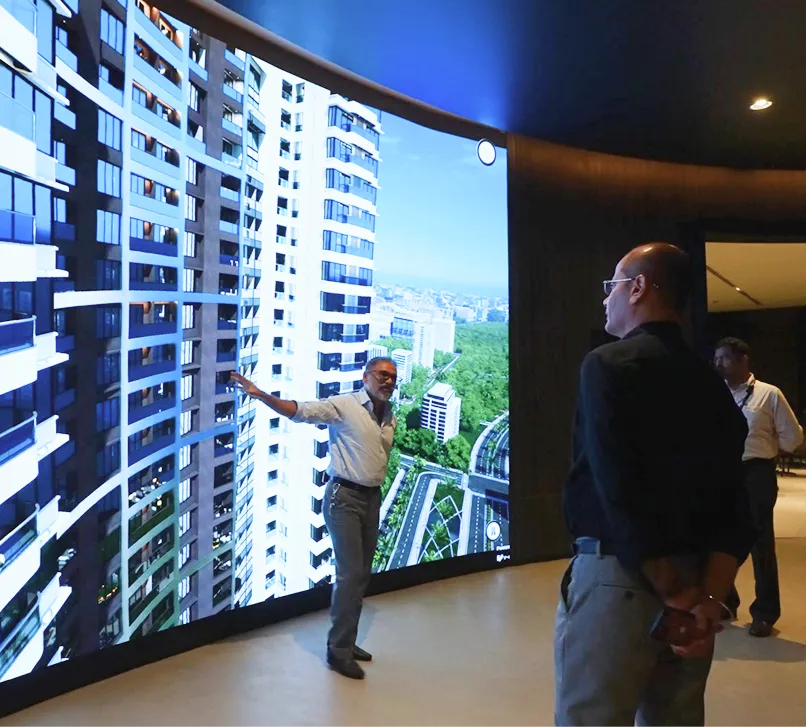
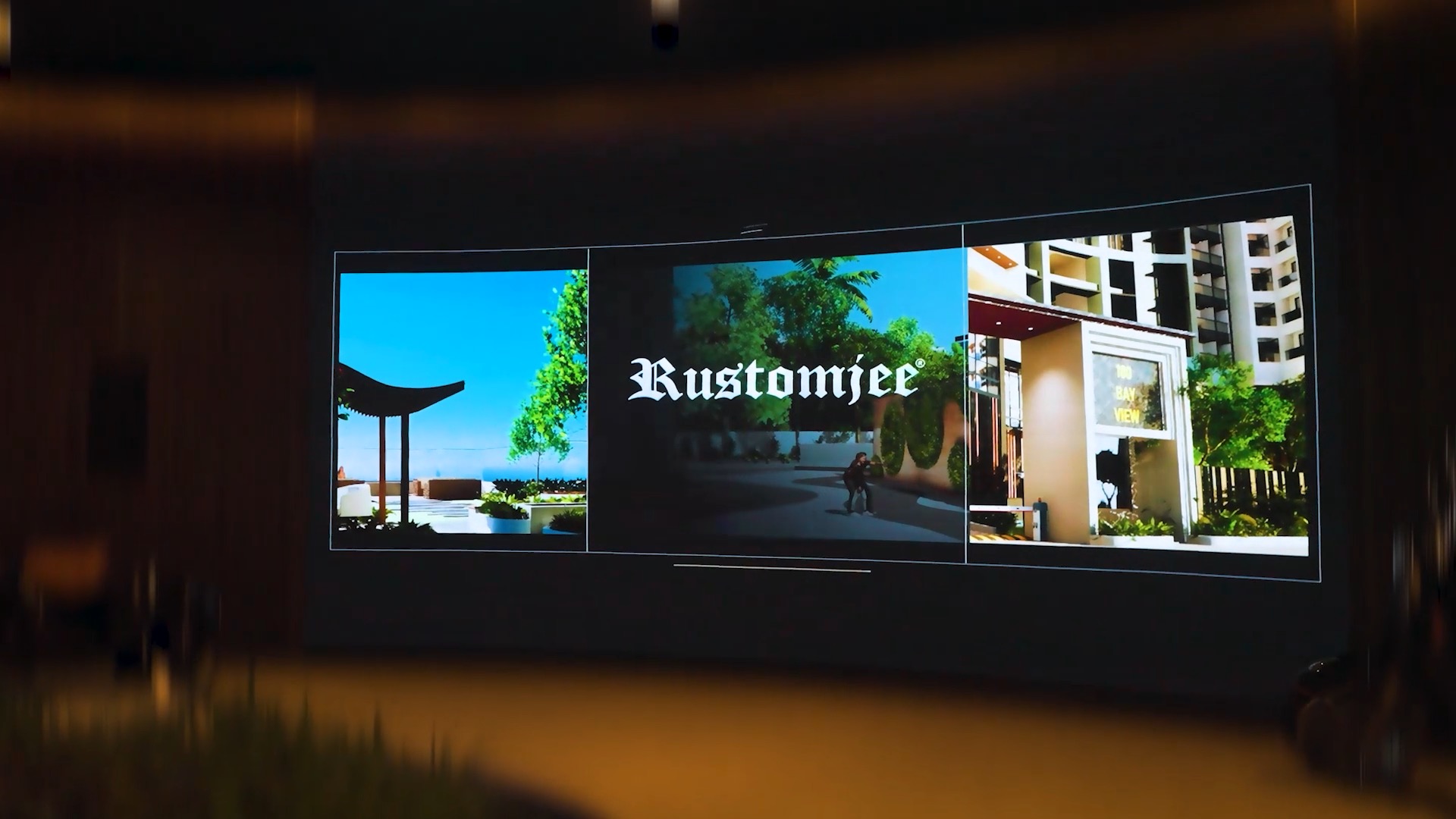
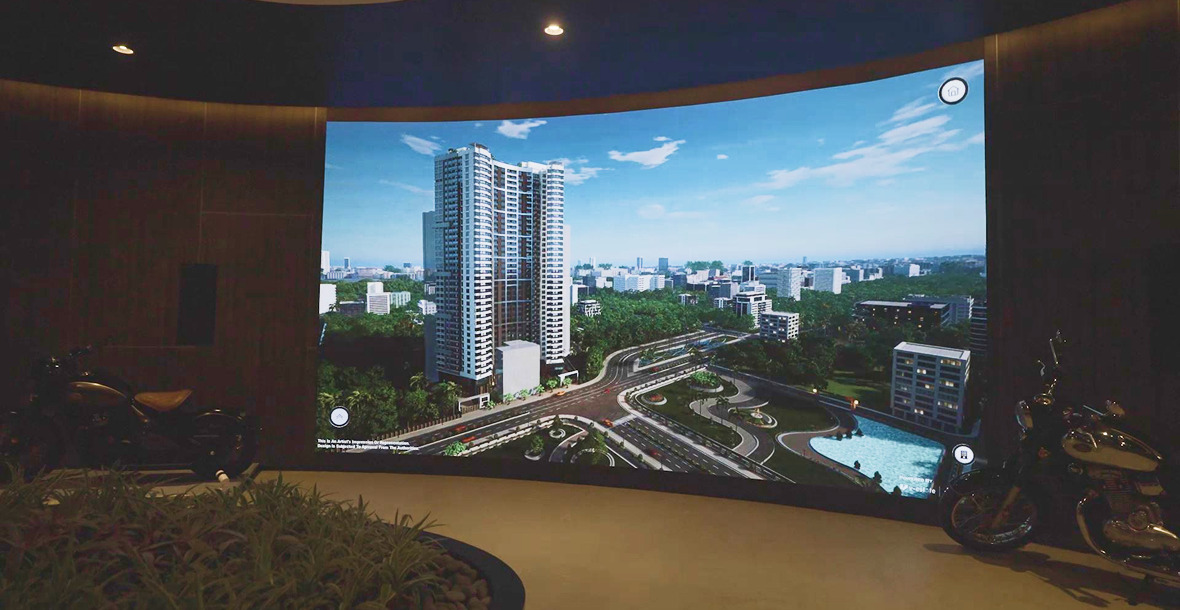
Rustomjee’s Matunga experience centre rewired the way prospective buyers perceive a home. Rather than handing over floor plans and hope, the sales gallery offered a guided, sensory loop: lifelike visualisation, immediate choices, and context around lifestyle and connectivity. The result is not just better tours — it's fewer misunderstandings, faster decisions, and a stronger alignment between buyer expectations and developer delivery.
This post examines the centre through the lens of practical problem solving for real estate developers and marketing heads, and shows how V‑estate — an offline, interactive sales tool — played a central role in turning model views into commitments.
The problem developers face: perception, time, and cost
Selling homes has always been partly emotional and partly logistical. Developers routinely wrestle with several recurring issues:
Expectations versus reality: Buyers struggle to imagine how scaled drawings translate into lived experience — light, view, furniture scale and finishes are difficult to communicate.
Inefficient sales cycles: Multiple site visits, long explanations by sales teams, and repeated clarifications prolong the sales cycle and inflate cost per lead.
Inventory constraints: Building and maintaining multiple physical show flats is expensive and time-consuming.
Fragmented context: Buyers want to understand more than a flat — they want connectivity, amenities, neighbourhood trajectory and what life will feel like.
Rustomjee’s Matunga centre confronted these pain points head on by replacing abstraction with an immersive, customer‑led exploration.
The solution: an immersive, offline activation powered by V‑estate
At the heart of the experience is V‑estate — a purpose-built, offline activation tool for real estate sales galleries that turns static marketing into a living, interactive journey. Key capabilities that made the difference at Matunga are:
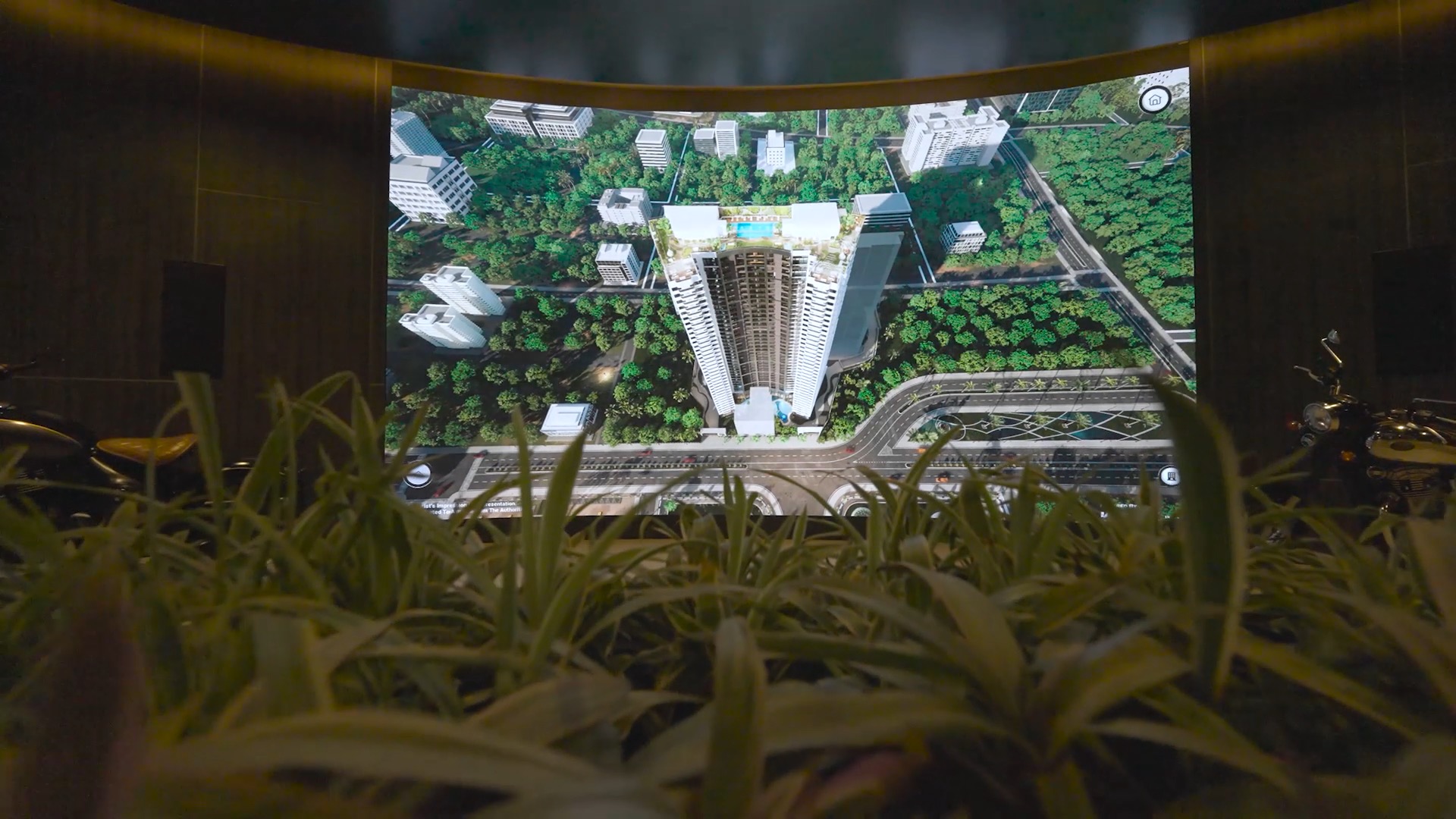
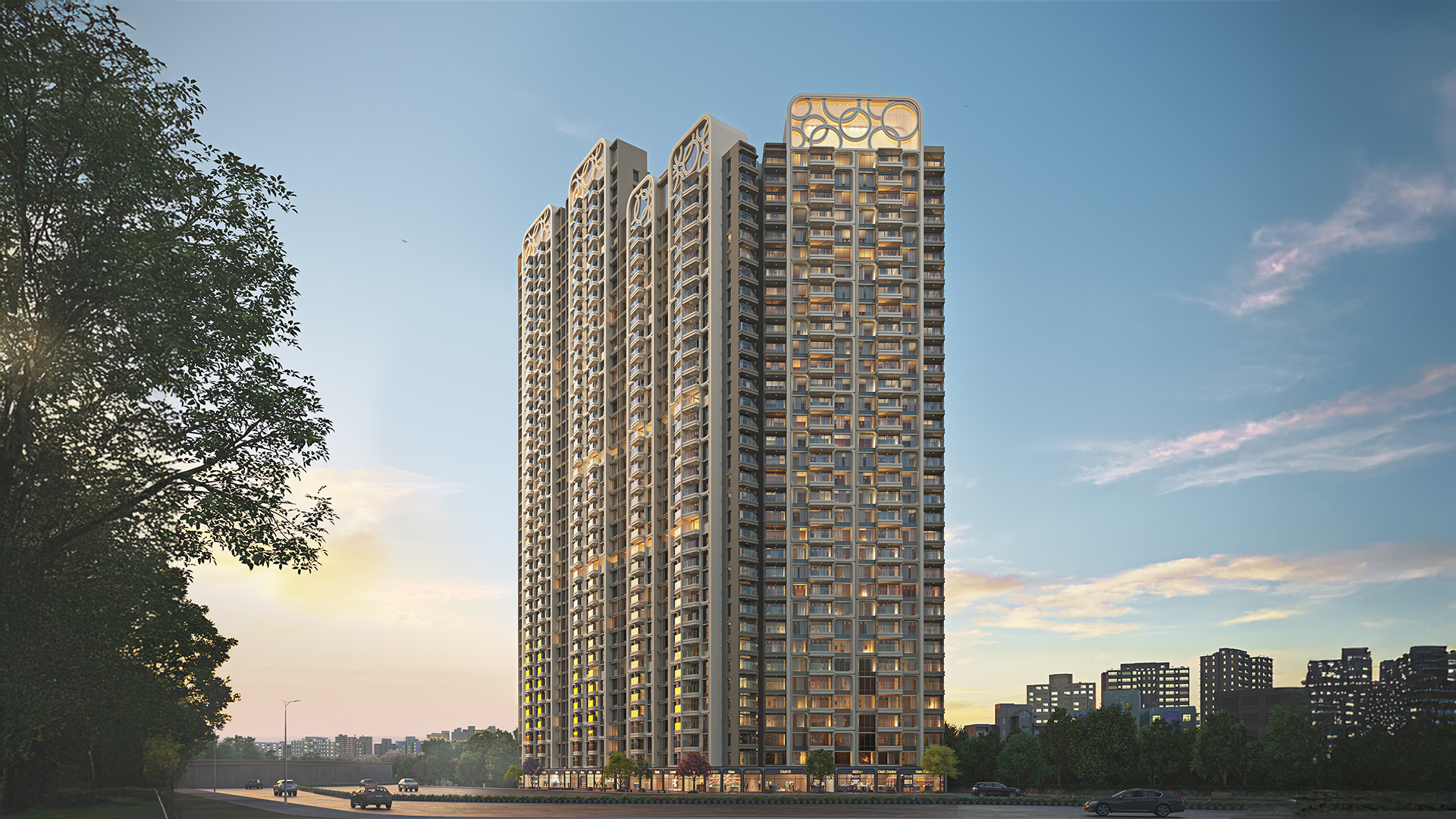
Photorealistic 3D virtual show flats: High‑fidelity renderings that cover every visible detail — finishes, furniture, sightlines — so a buyer can feel the scale and texture before construction completes.
Remote control of the exploration: The customer leads the experience. They select areas to examine, request alternate finishes, and visualise different furniture arrangements in real time.
Amenity and neighbourhood map: A consolidated view of nearby facilities and upcoming projects gives buyers context about connectivity, convenience and lifestyle — all essential for purchase decisions.
Customisation and choice visualised: From paint to sofa, the buyer can test options instantly, removing guesswork and accelerating commitment.
Dynamic lighting and weather controls: Buyers can see how a flat looks at sunrise, sunset or on an overcast afternoon — which dramatically reduces disappointment when the property is handed over.
Crucially, V‑estate operates as an offline activation — it is designed to work inside a sales gallery without relying on continuous online access, making the experience reliable, repeatable, and suited for high‑footfall environments.
How the experience centre was structured (practical flow)
The Matunga set‑up followed a simple, repeatable flow that sales teams and marketing heads can adapt:
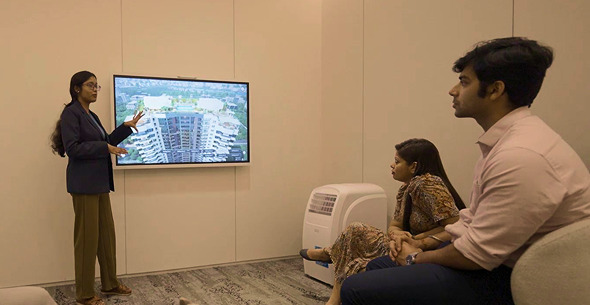
Welcome and context: A short orientation explains what the buyer will see and how they can control the tour — making the experience collaborative from the first minute.
Guided discovery: Sales staff use the 3D show flat to highlight unique selling points and answer immediate questions with visuals rather than descriptions.
Self‑directed exploration: Prospects take control, changing finishes, viewing neighbour sightlines, and toggling lighting — this stage converts curiosity into clarity.
Amenities and connectivity tour: The mapping module presents nearby schools, transport nodes, and planned infrastructure to give a full picture of lifestyle value.
Decision support: After the tour, customers receive clear follow‑ups — snapshot visuals of selected configurations, FAQs answered during the tour, and next steps for site visits or booking.
This flow keeps the customer engaged, reduces cognitive load, and shortens the time from first interest to purchase intent.
Why this approach solves developer problems
From a marketing and operational standpoint, the Matunga experience centre addresses developer priorities directly.
Reduce time and cost per lead
When buyers can see and customise instantly, fewer follow‑up visits are needed. That lowers the human hours spent per sale and reduces running costs tied to multiple physical show flats.
Improve lead qualification
A prospect who actively configures finishes, toggles light scenarios and explores neighbourhoods is more likely to be a qualified lead. Sales teams can prioritise effort on high‑intent visitors rather than broad outreach.
Align expectations with delivery
Photorealistic visualisation reduces the gap between what is promised and what is handed over — fewer complaints, fewer renegotiations, and stronger handovers.
Scale without adding physical inventory
Digital show flats allow a developer to showcase multiple units, layouts and towers without recreating each one physically. This is a practical win for projects with many typologies.
Create a better sales narrative
An immersive tour replaces technical jargon with sensory evidence. Buyers stop being told ‘how’ and start understanding ‘what’. That change in narrative improves conversion.
Design and content considerations for marketing heads
To maximise impact, the experience centre should be treated as a product in itself. Key principles:
Prioritise realism over spectacle: Photorealistic materials, true proportions, and honest lighting matter more than gimmicks.
Lead with decision moments: Place customisation and view checks where they matter most — living rooms, master bedrooms, and balcony sightlines.
Contextualise the neighbourhood: Don’t limit the experience to the flat. Show commuting routes, schools, healthcare, and upcoming developments that affect value.
Make it collaborative: Design the UI and the staff script so prospects feel in control. The sales role shifts from rehearsed pitch to trusted guide.
Prepare visual takeaways: Every tour should finish with a small visual packet the prospect can keep — images of their selected configuration, a summary of key specs and a clear next step.
Operational playbook for sales teams
Adopting V‑estate in a sales gallery needs simple operational changes:
Train on scenarios, not scripts: Teach the team how to respond visually — show, don’t tell.
Use the tool to prioritise leads: Track which configurations prospects spend time on and follow up accordingly.
Keep tech frictionless: Because V‑estate is designed for offline activation, ensure devices are charged, screens are clean, and control devices are intuitive.
Capture customer choices: Log the finishes and configurations a prospect explores — this becomes input for personalised follow‑up and quicker closing.
Integrate with CRM: Capture the snapshot of each tour into the lead record so sales conversations stay relevant.
KPIs and measurement
For developers and marketing heads looking to evaluate impact, the following metrics offer clear signals:
Conversion rate in gallery vs. prior baseline: Compare closed sales from walk‑in traffic before and after activation.
Average time to decision: Measure how many days or visits it takes from first tour to booking.
Lead quality score: Track the ratio of site visits to bookings to estimate qualification improvements.
Customer satisfaction at handover: Use post‑handover surveys to detect alignment between expectation and delivery.
Cost per lead/sale: Combine running costs of the experience centre with closed deals to compute ROI.
Even without exact numbers, these KPIs frame meaningful experiments: run a test for 60–90 days and compare the before/after performance.
Common pitfalls and how to avoid them
Overcomplicating the experience: Keep the interface simple. Buyers appreciate control, not complexity.
Treating the tool as marketing collateral: The centre is a sales instrument; build processes around it rather than using it as a standalone showpiece.
Neglecting staff coaching: The technology amplifies staff capability — don’t skip training on how to guide a visual conversation.
Failing to capture data: If a prospect configures a 3‑bed with a specific finish and view, record it. That information shortens future touchpoints and reduces friction in negotiations.
Practical recommendations for other projects
If you are a marketing head or developer planning an experience centre, consider these steps:
Start with core use cases: Identify the three most common questions your buyers ask and design the experience to answer them visually.
Choose realism over novelty: Invest in accurate lighting, materials and sightlines — these build trust.
Design for repeatability: The solution should be reliable every hour of the day — and operate offline when needed.
Operate like a retail product: Map the customer journey, train staff, and run daily checks to ensure consistency.
Measure and iterate: Begin with a short pilot, track the KPIs above, and refine based on what prospects actually do during tours.
Conclusion: measurable empathy wins sales
Rustomjee’s Matunga experience centre demonstrates that the path to more effective sales is not more persuasion, but less uncertainty. When prospective buyers can see, adapt and test their future home in a photorealistic, controlled environment, decisions become easier and trust grows.
V‑estate’s approach — an offline, immersive property tour with photorealistic show flats, amenity mapping, dynamic lighting and customer-led controls — reframes the sales gallery from a stage for presentation into a platform for decision making. For developers and marketing heads focused on reducing cycle time, improving lead quality and enhancing handover satisfaction, a well‑designed experience centre is a proven, practical tool.
If you are building or upgrading a sales gallery, think of the experience as a service: what decisions does it remove friction from? Answer that, and you