Your project has good inventory. Your location is defensible. Your pricing is competitive. Your conversion numbers are still disappointing.
This is one of the most common — and most frustrating — positions a real estate developer or marketing head can be in. The instinct is to increase ad spend, rework the broker incentive structure, or cut the price. Most of the time, none of these fix the actual problem.
Conversion failure in real estate is almost always downstream of a gap in the buyer's experience — not a gap in the product itself.
The Real Reason Buyers Are Not Deciding
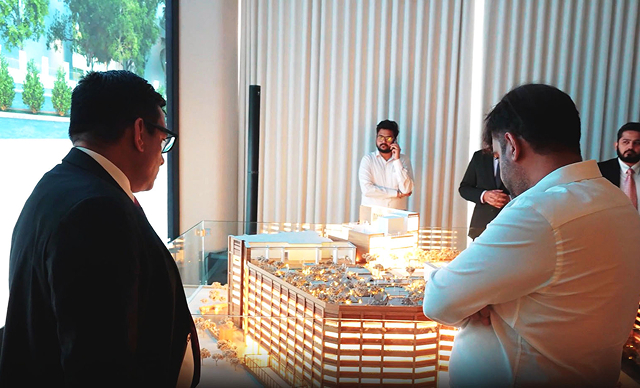
Buyers who visit your project and do not book are not all price-sensitive. Some of them wanted to book. They just could not get there.
They had questions that were not answered clearly. They could not visualise the finished product. They could not connect the price to the experience they would actually have living there. They left with doubt still in their heads — and doubt, once they are back in their car, becomes a reason not to decide.
Conversion failure is usually a clarity failure. And clarity failures are fixable.
Footfall Without Conversion: Diagnosing the Gap
High footfall with low conversion is a specific diagnostic signal. It means your marketing is working but your sales environment is not.
Buyers are interested enough to visit. They are not convinced enough to commit. The gap between those two states — interest and commitment — is where most real estate marketing budgets are being silently destroyed.
That gap lives inside your site office, your sample flat, and your sales conversation.
Brochure-Led Sales in a Visual-Decision Category
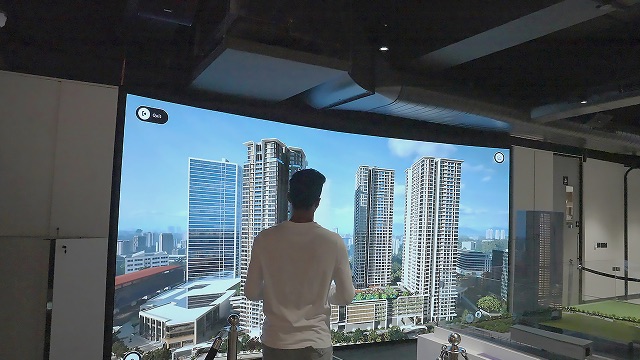
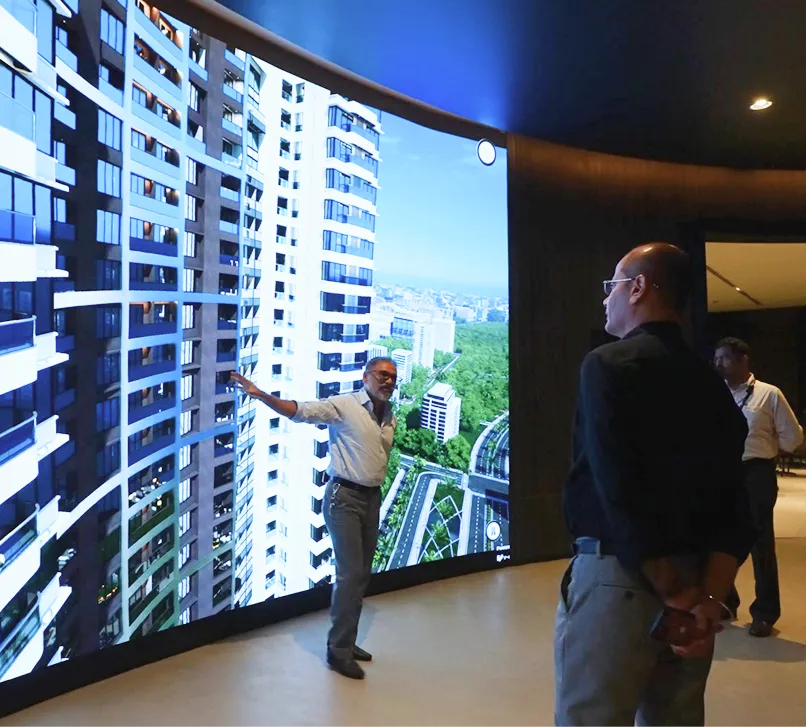
Property is one of the most visual purchase decisions a person makes. Buyers are making emotional judgments about a space they will live in for years. They need to see, feel, and experience — not read and imagine.
Brochures, even well-designed ones, ask buyers to do too much cognitive work. They must interpret floor plans, mentally furnish spaces, extrapolate from rendered images, and project themselves into a lifestyle they cannot yet see.
Every additional cognitive step is a point of dropout. The sales tools that reduce cognitive load convert better. The ones that increase it lose buyers to competitors with better presentation — even if those competitors have inferior products.
Sample Flats Showing the Wrong Unit
A sample flat locked into one configuration cannot close a buyer considering a different unit. This is a structural conversion problem that most developers have accepted as unavoidable.
It is not unavoidable. It is a presentation infrastructure problem with a direct solution.
When buyers can experience their specific unit — their floor, their facing, their configuration — with photorealistic accuracy, they are no longer bridging a gap between what they see and what they will receive. The gap disappears. And with the gap goes the hesitation.
Location Objections That Are Not Being Handled
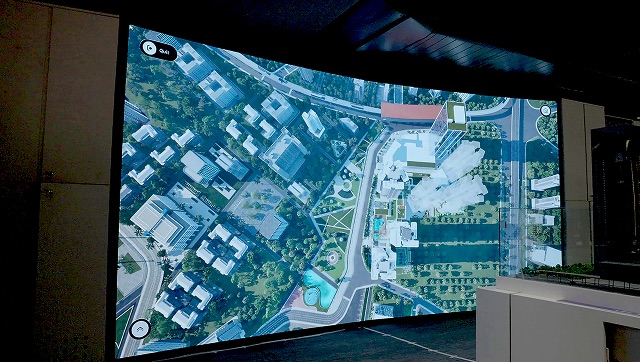
Location objections — too far, too early-stage, too uncertain — are among the most common conversion killers, particularly for projects in emerging micro-markets or peripheral zones.
Most sales teams handle location objections verbally. They explain the metro line coming in three years. They reference the commercial zone under development. They describe the schools and hospitals planned nearby.
Verbal explanation of future infrastructure does not convert. Visual, mapped, specific presentation of both current and upcoming neighbourhood reality does.
Buyers who can see the connectivity story — not hear it, but see it — make faster, more confident decisions.
The Trust Deficit in Under-Construction Sales
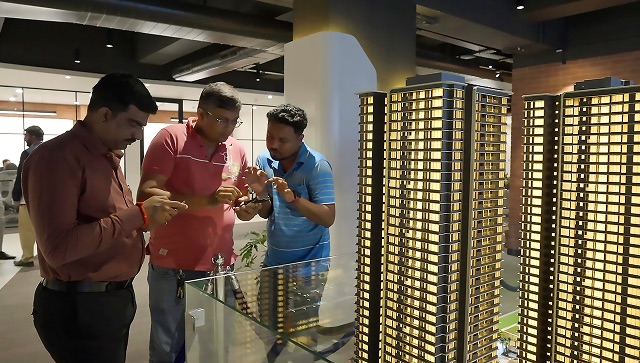
Under-construction projects carry an inherent trust deficit. Buyers are paying for a promise. In a market with documented instances of developer default and delayed possession, that deficit is rational.
Developers who do not actively address it lose buyers to ready-possession alternatives — even when the under-construction product is objectively better value.
The solution is not more reassurance. It is more transparency. Buyers who can experience the product with accuracy — who can see the finished unit, the actual view, the amenity ecosystem, the neighbourhood context — are buying with significantly more information than the average under-construction buyer.
More information reduces fear. Reduced fear converts.
A Functional Sales Environment That Converts
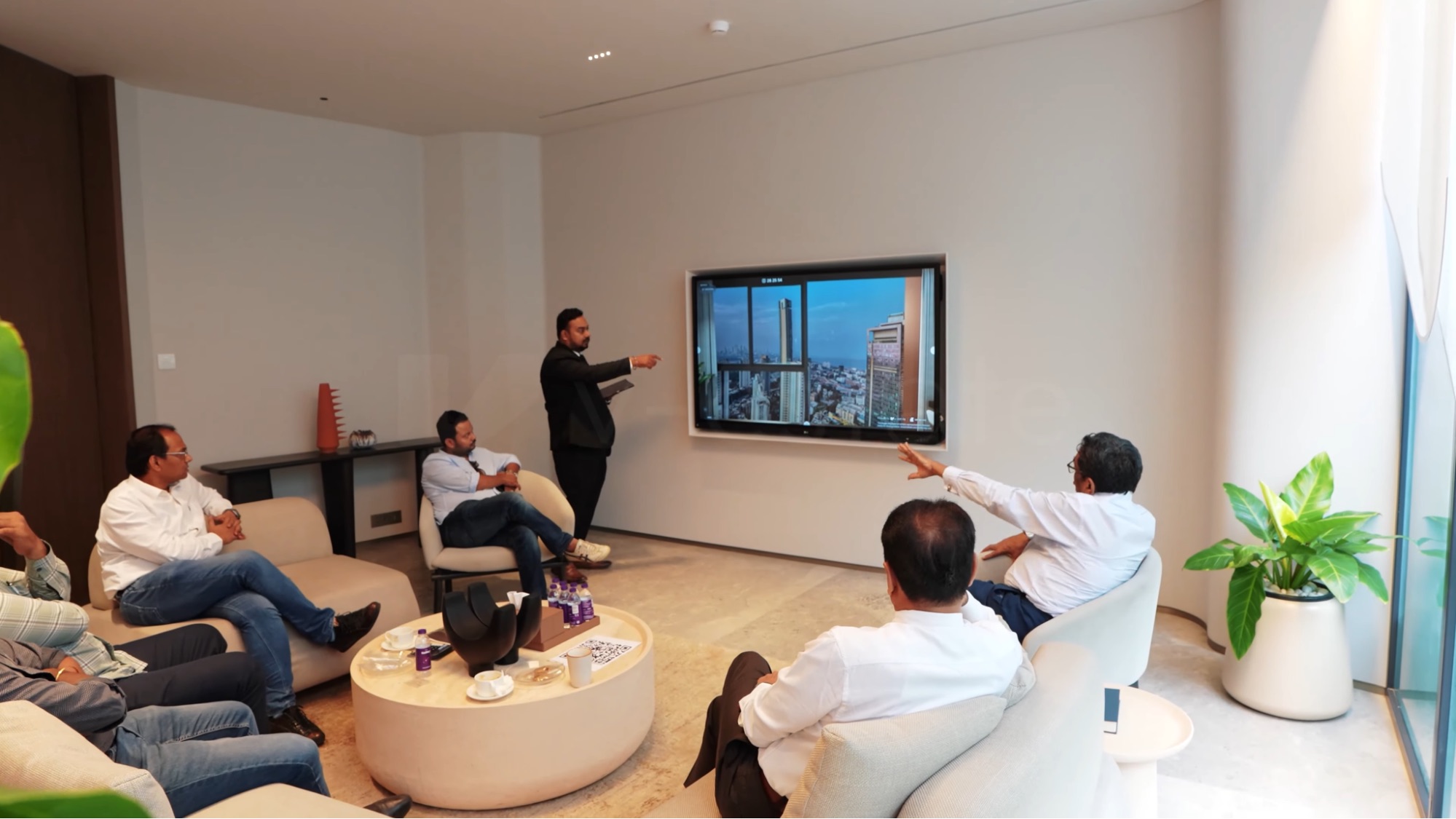
A sales environment that converts reliably does the following:
Presents the specific unit under consideration — not a generic approximation.
Answers visual questions before they become verbal objections — light, view, space, proportion.
Demonstrates location confidence — current infrastructure and future development, mapped and specific.
Enables buyer personalisation — finishes, furniture, fixtures — creating mental ownership before financial commitment.
Gives the sales team tools for a consultative conversation — not a pitch, a guided exploration.
V-estate delivers all of this as an offline, in-centre experience — purpose-built for the physical sales environment, for the moment when a buyer is in front of your team and a decision is within reach.
Fixing Conversion Without Fixing Price
Developers who address the experience gap consistently report the same outcomes: conversion rates improve, sales cycles shorten, and discount dependency decreases — without any change to the underlying pricing.
This is not a coincidence. It is the commercial logic of reducing doubt.
When buyers leave the experience center with fewer unresolved questions, they make faster decisions. When decisions happen faster, price comparison with competing projects has less time to become the deciding factor. When price comparison is not the deciding factor, margin is protected.
The fix for conversion failure is not always a price adjustment. Often it is an experience upgrade.
.jpg)
.jpg)