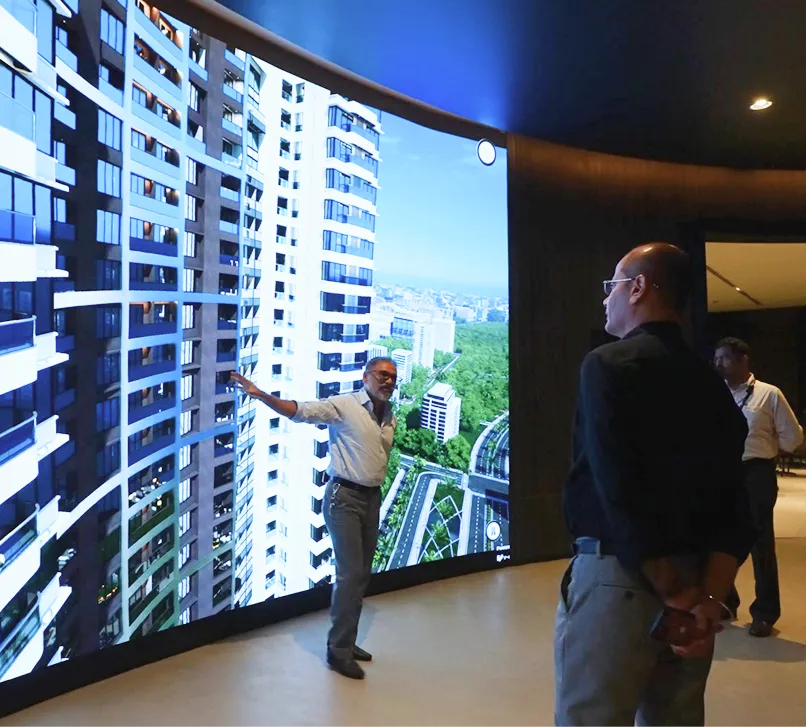
In the ₹10 to ₹50 crore luxury segment, buyer hesitation is rarely about affordability. It is about certainty. At this level, buyers are investing in elevation, views, orientation, and the way a home feels across time. A sea-facing living room that looks expansive in daylight but flat at dusk creates doubt. A skyline view that feels impressive at noon but overwhelming at night slows commitment.
Most real estate experience centers fail at this exact point. They present luxury homes in a single, idealized daylight moment. But buyers at this level do not evaluate homes as still images.
They evaluate how views behave in the morning, how light moves through spaces during the day, and how the home transitions into evening and night. When experience centers cannot answer these questions visually, buyers are forced to imagine. Imagination slows decisions.
Day-to-night simulation inside immersive experience centers removes this friction. It introduces time as a verifiable dimension of evaluation. When buyers can see how a luxury home lives across hours rather than guessing, clarity replaces assumption and decisions move faster.
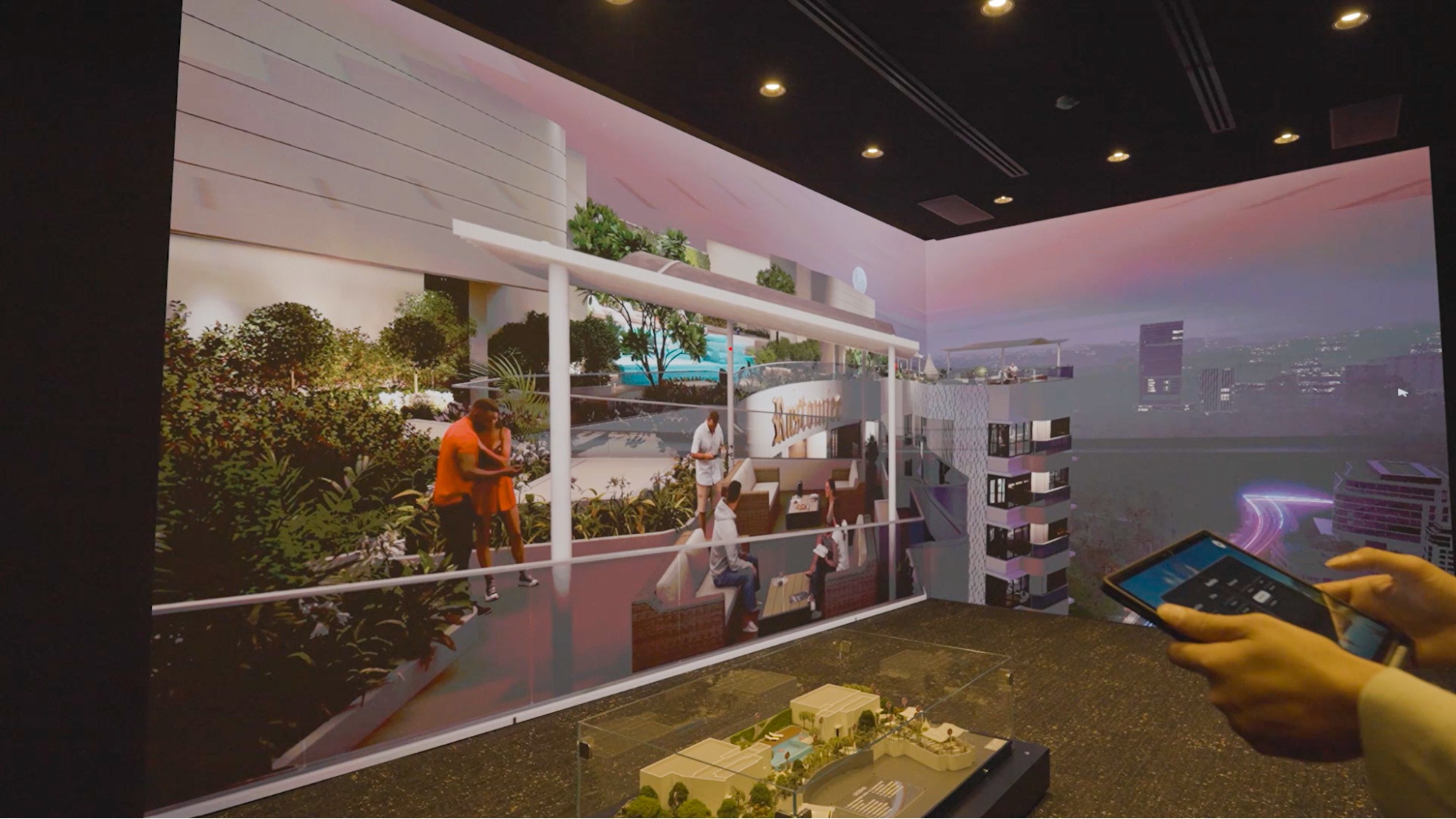
Why Static Real Estate Experience Centers Create Friction
Traditional real estate experience centers rely on fixed lighting, static walkthroughs, and verbal explanation. This approach increases cognitive effort for buyers, especially when views and orientation are central to the purchase decision.
Common friction points include: • Natural light behavior left to imagination • Views shown only in ideal conditions • Night ambience never experienced • Sales teams compensating with explanation instead of validation
At higher ticket sizes, this friction becomes expensive. Buyers pause not because they are unconvinced, but because they are not convinced enough.
Interactive Property Walkthroughs That Introduce Time as a Decision Layer
Interactive property walkthroughs fundamentally change buyer behavior when time becomes navigable. Instead of seeing a home at one fixed moment, buyers experience how it behaves across real conditions.
Day-to-night walkthroughs allow buyers to: • Observe morning light entry and afternoon shading • Understand glare and warmth inside living spaces • Experience sunrise and sunset views • Evaluate interior and exterior lighting balance
This is not a visual enhancement. It is a structural improvement in how buyers evaluate value.
Real Estate Experiential Technology That Mirrors Reality
Real estate experiential technology succeeds only when realism is accurate, continuous, and controllable. Day-to-night simulation must feel natural, not theatrical.
Effective systems are built on three foundations: • Time-based lighting accuracy aligned to real conditions • Continuity across apartments, amenities, and surroundings • Buyer-controlled interaction rather than scripted playback
When these principles are followed, experience centers shift from presentation spaces to evaluation environments.
Interactive Real Estate in Practice Through Day-to-Night Immersion
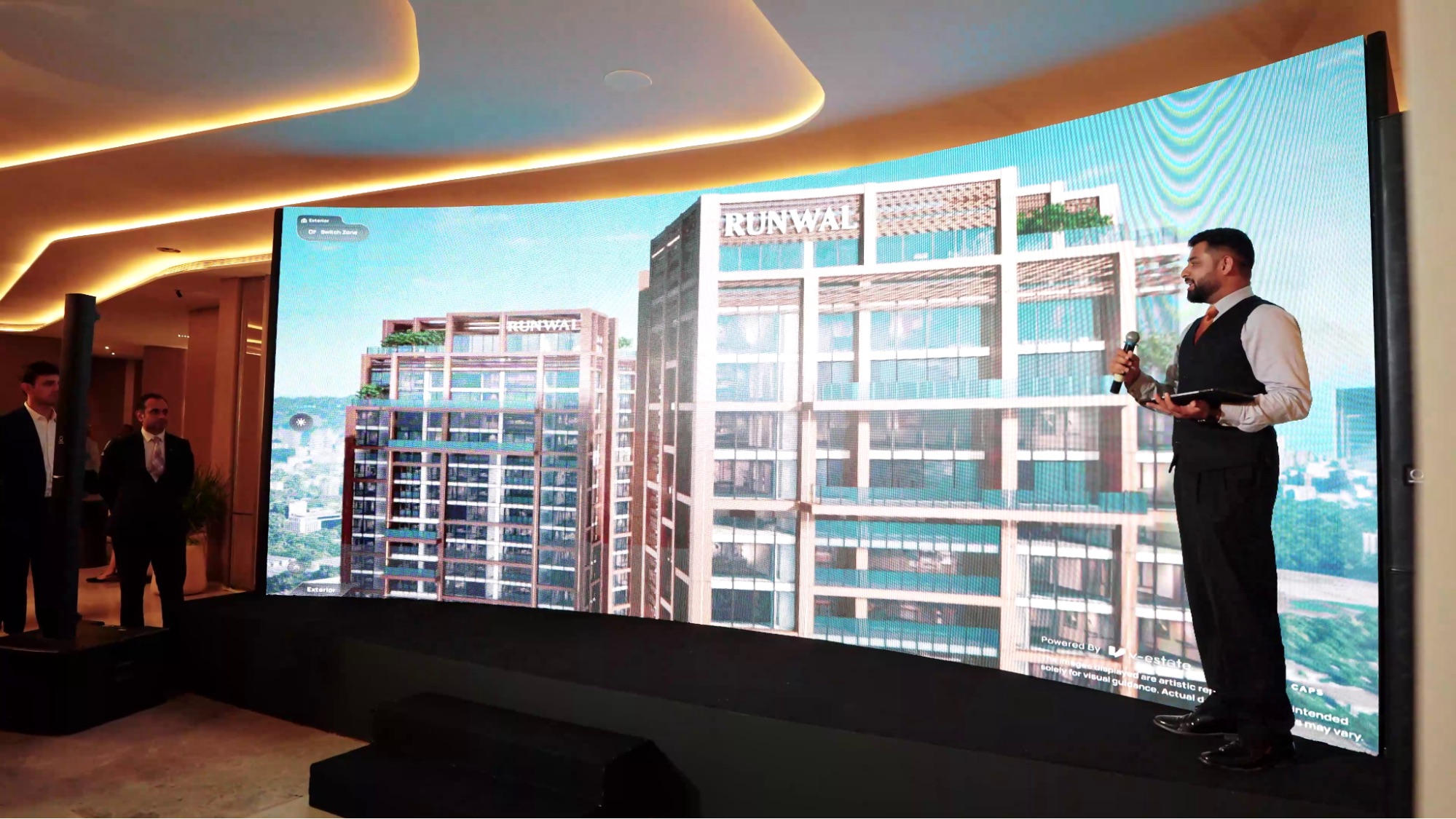
Example: Runwal Raaya
At Runwal Raaya, day-to-night transitions were integrated into interactive real estate walkthroughs to help buyers evaluate sea-facing decks, living rooms, and interior lighting behavior across different hours.
What changed inside the experience center: • Buyers understood orientation without verbal explanation • View related questions reduced early in the journey • Emotional alignment formed before pricing discussions
Time-based immersion turned views from a selling point into a verified reality.
Experience Centers 2025-26 Built Around Buyer Control
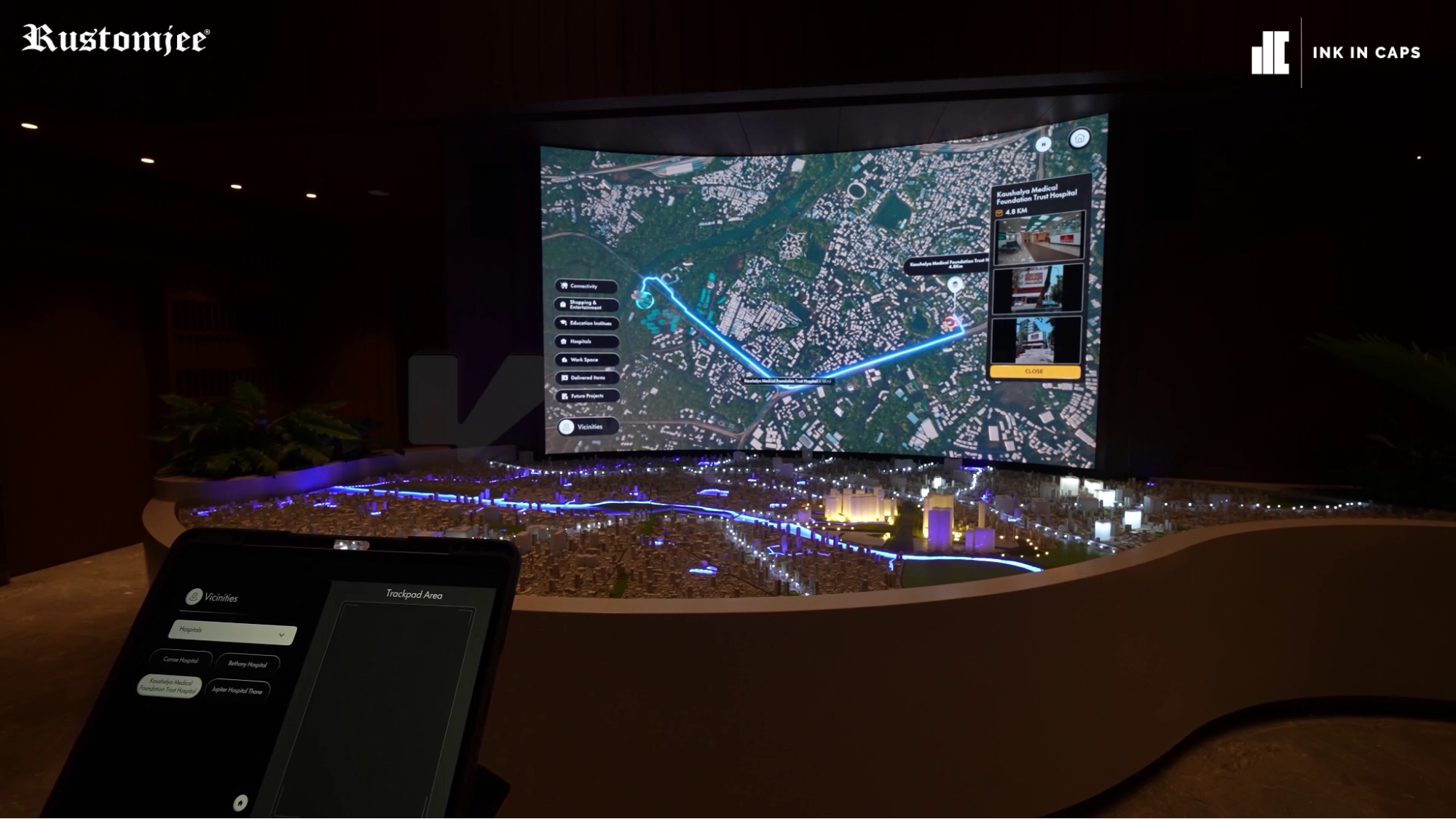
Experience centers in 2025-26 are no longer judged by how impressive they look. They are judged by how quickly they help buyers reach certainty.
In advanced experience centers: • Buyers control time-of-day transitions themselves • Lighting changes happen instantly and intuitively • Evaluation becomes self-directed rather than sales-led.
When buyers control time, confidence builds naturally.
Interactive Property Walkthroughs at Scale Without Performance Loss
One common misconception is that day-to-night realism compromises performance. That only happens when systems are not engineered for scale.
Advanced experiential technology enables: • Smooth real-time lighting transitions • Stable performance on large-format displays • Lag-free interaction across multiple touchpoints
When performance is invisible, realism becomes believable.
Interactive Real Estate Applied to Complex Environments
Example: Chandivali Valley
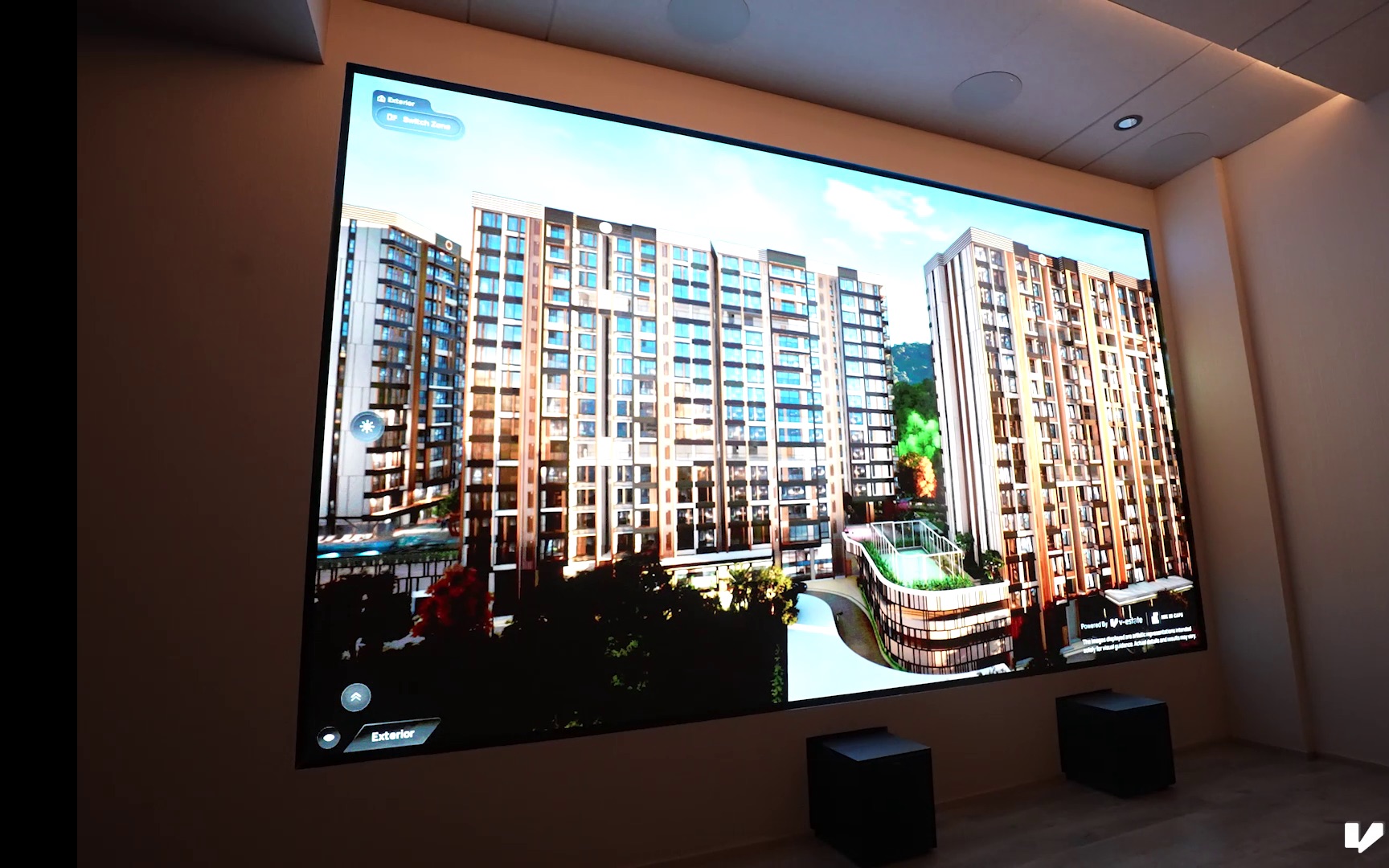
At Chandivali Valley, immersive walkthroughs with time-based transitions helped buyers understand elevation changes, forest proximity, and podium usage across different parts of the day.
What changed: • Complex terrain became intuitive • Landscape value was understood spatially and temporally • Buyers grasped lifestyle flow without explanation
Time-based immersion converted complexity into clarity.
Why Experience Centers That Mirror Reality Outperform Static Galleries
Experience centers that mirror real-world conditions consistently deliver: • Faster buyer comprehension • Fewer clarification loops • Stronger post-visit recall • More confident closing-stage conversations
Buyers leave having evaluated the property rather than imagined it.
The New Role of the Real Estate Experience Center
The real estate experience center is no longer a marketing layer. It is sales infrastructure.
In 2025, effective experience centers: • Replace explanation with experience • Replace imagination with verification • Replace persuasion with clarity
Day-to-night simulation is now foundational to this shift.
Designing Experience Centers Around How Buyers Decide
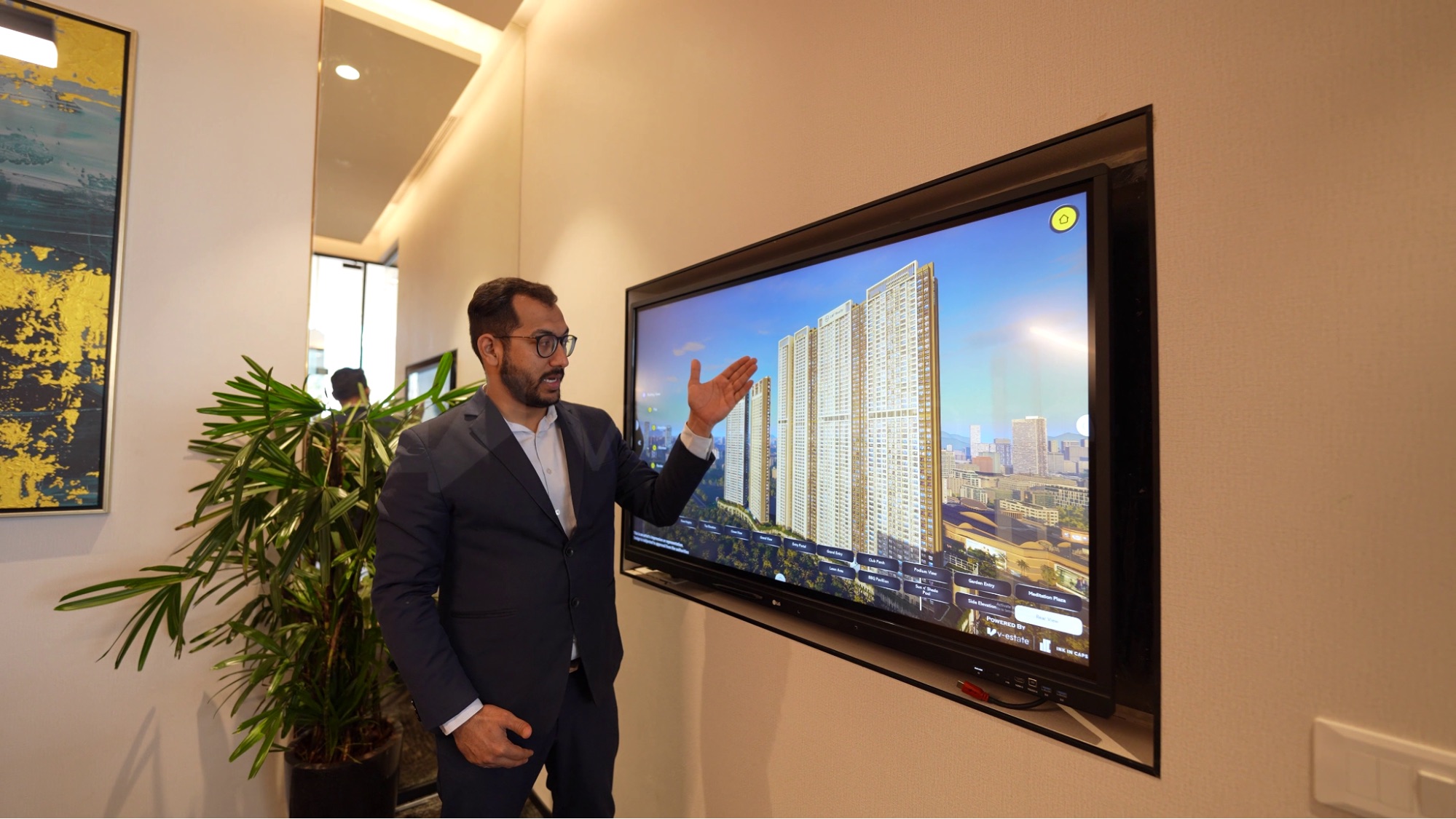
Luxury buyers decide through observation, control, and validation. When experience centers mirror the real world across time, light, and atmosphere, hesitation disappears.
Interactive real estate experiences do not push buyers to decide. They guide buyers to certainty.
That distinction defines the next generation of real estate experiential technology.
Get in touch with us to design experience centers that mirror real-world living, help buyers evaluate with clarity, and take more informed and convinced decisions.