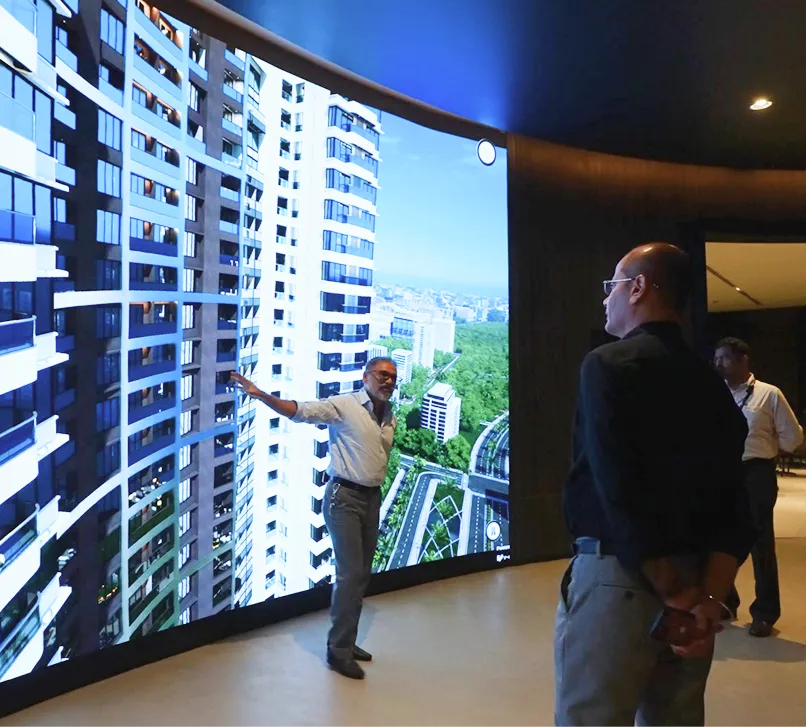
An experience center that goes dark during peak launch weekend isn't a minor inconvenience. It's lost footfall, lost sales conversations, and in some cases, a lost weekend of momentum that a developer spent months building toward. For a developer running one gallery in one city, this risk is manageable. For a developer — or a PropTech partner — running dozens of galleries across multiple cities simultaneously, it becomes an operational discipline in its own right.
V-Estate currently supports 53+ experience centers across a footprint that spans Mumbai, Bangalore, and Navi Mumbai, with over 2,000 daily demos running across these locations. Keeping that scale of deployment reliable requires a very different operating model than a single, well-supported installation.
Why scale changes the problem
A single experience center can often be kept running through reactive troubleshooting — someone on-site notices an issue and fixes it. That approach breaks down almost immediately at multi-city scale, for three reasons.
Simultaneous peak load. Launch weekends across different projects don't happen on a convenient schedule. Multiple experience centers can hit maximum footfall on the same Saturday, meaning support resources have to be distributed, not concentrated.
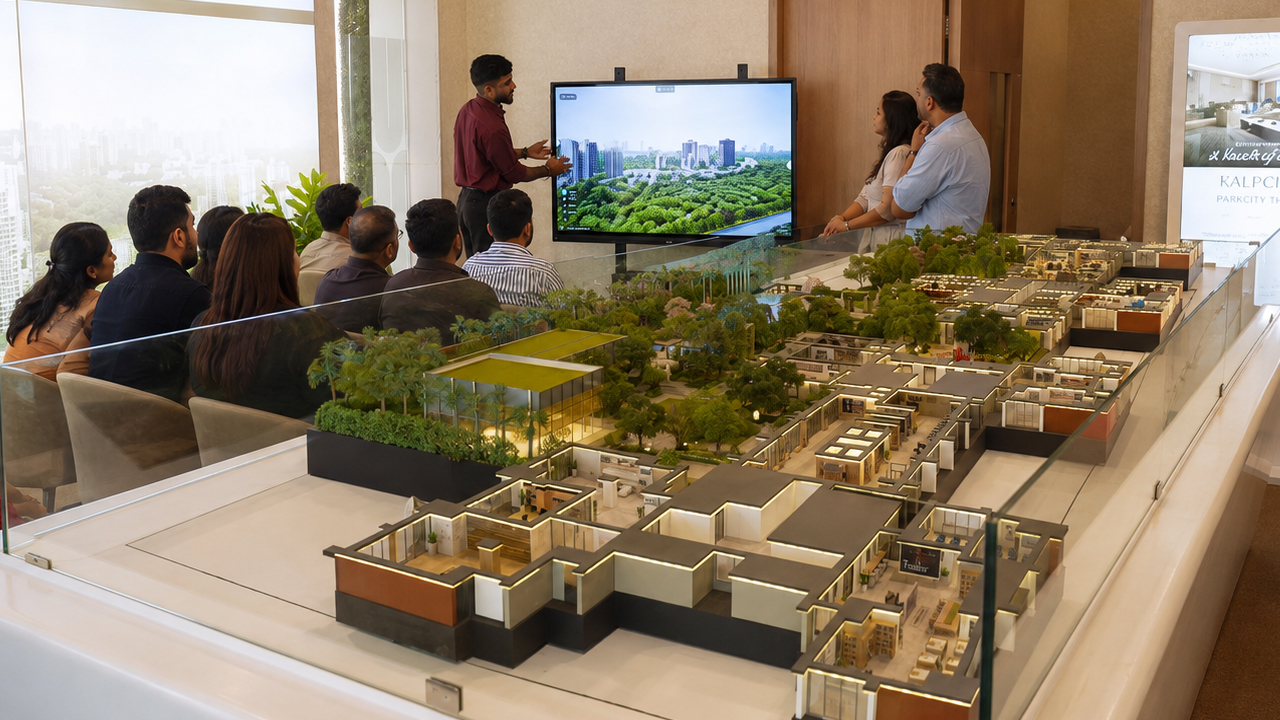
Hardware diversity. Different galleries run different combinations of technology — anamorphic LED displays in one, curved screens and IoT scale models in another, rotoscopic interactive walls in a third. A support model built around one hardware configuration doesn't scale to a portfolio of different builds.
Distance from a central team. A software glitch that would take five minutes to fix in person can take considerably longer if the nearest engineer is in a different city.
The operating model that solves for this
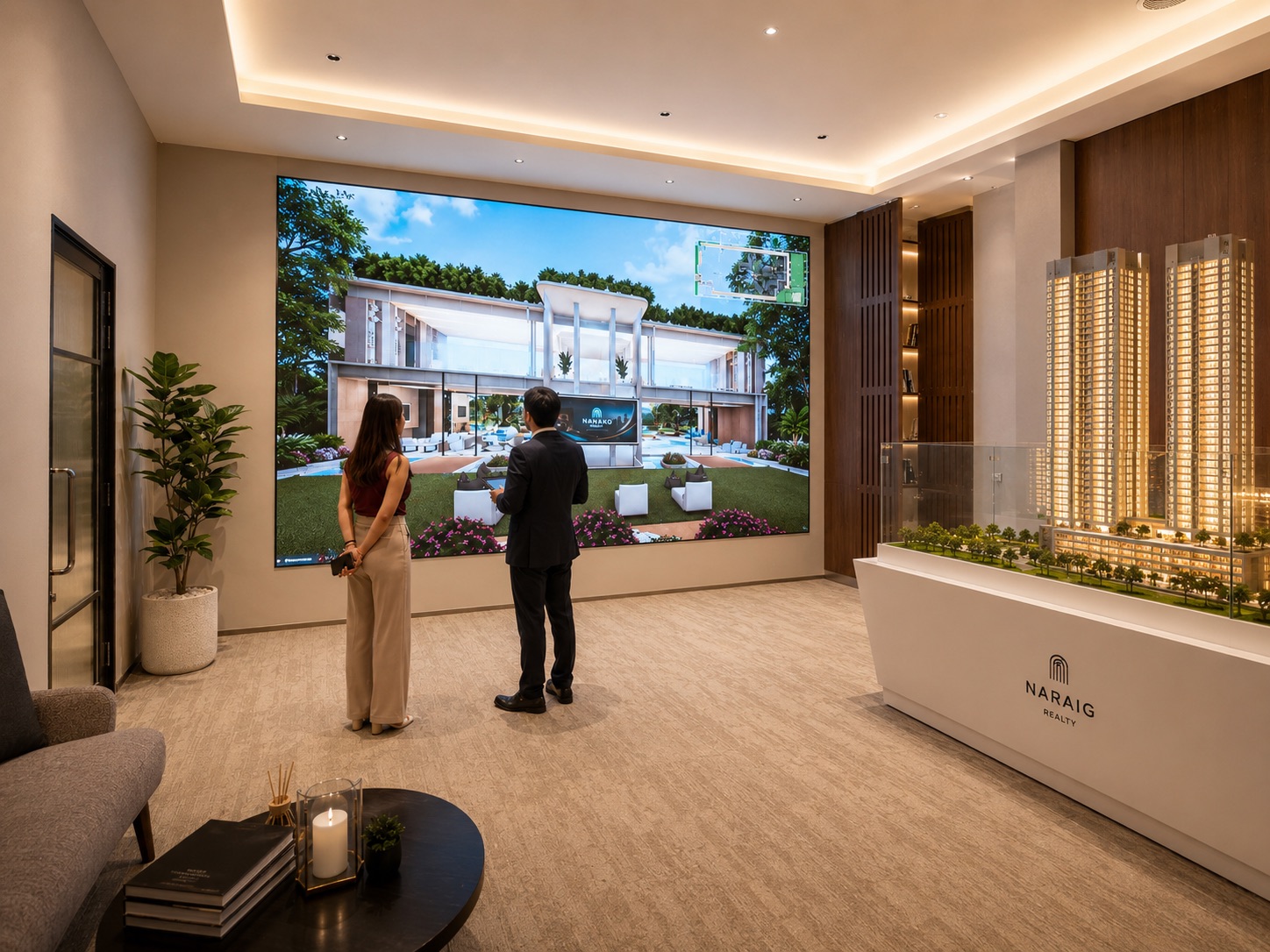
V-Estate's approach to multi-city reliability rests on three structural decisions.
Full-time on-site support. Rather than dispatching engineers reactively, experience centers running at high traffic volumes are staffed with dedicated, full-time on-site personnel who can catch and resolve issues before they affect a buyer's visit.
Remote AMC (Annual Maintenance Contract) via encrypted cloud access. Software-level issues — a lagging render, a sync failure between the physical scale model and the digital display — can often be diagnosed and resolved remotely, without waiting for a technician to travel on-site.
Direct onsite engineering presence during launch phases. High-traffic windows, such as a project launch weekend, get dedicated engineering coverage specifically to manage hardware-software calibration and eliminate latency at the exact moment footfall is highest.
This combination is what allows a portfolio of 53+ experience centers, running technology as demanding as Unreal Engine-based 4K digital twins and IoT-synchronised physical models, to maintain consistent uptime across cities.
What this means for developers
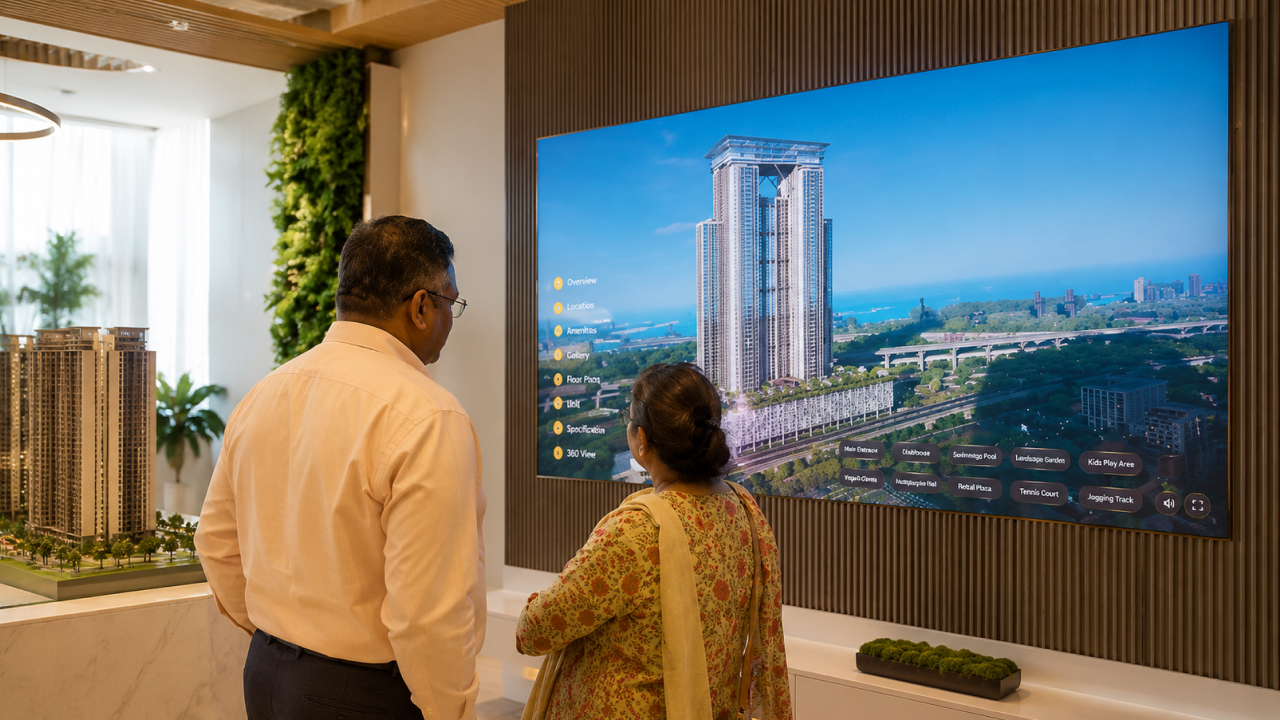
For a developer evaluating a PropTech partner, uptime reliability is not a minor operational detail — it's a direct extension of return on investment. An experience center is typically the single most expensive piece of a project's sales infrastructure. If it goes down during a weekend when a developer has invested in marketing spend to drive footfall, the cost isn't just the repair. It's the buyers who walked in, saw a broken display, and walked out with a weaker impression of the project than they arrived with.
Developers like Godrej Properties, Rustomjee, and L&T Realty, running experience centers across multiple cities and multiple projects simultaneously, need a partner whose support model is built for that scale from the outset — not one that improvises support as deployments grow.
Building for the next phase of scale
As more developers move toward multi-project, multi-city PropTech deployments, the operational bar keeps rising. Consistency between cities matters as much as reliability within a single city — a buyer visiting a Bangalore experience center should get the same quality of digital twin, the same responsiveness, and the same visual fidelity as one visiting in Mumbai. That consistency is a direct result of standardising the deployment engine, not just the technology stack.
If you're planning a multi-city launch and need a PropTech partner built for scale, request a technical brief from V-Estate to understand how deployment and support would work for your project.
.jpg)
.jpg)