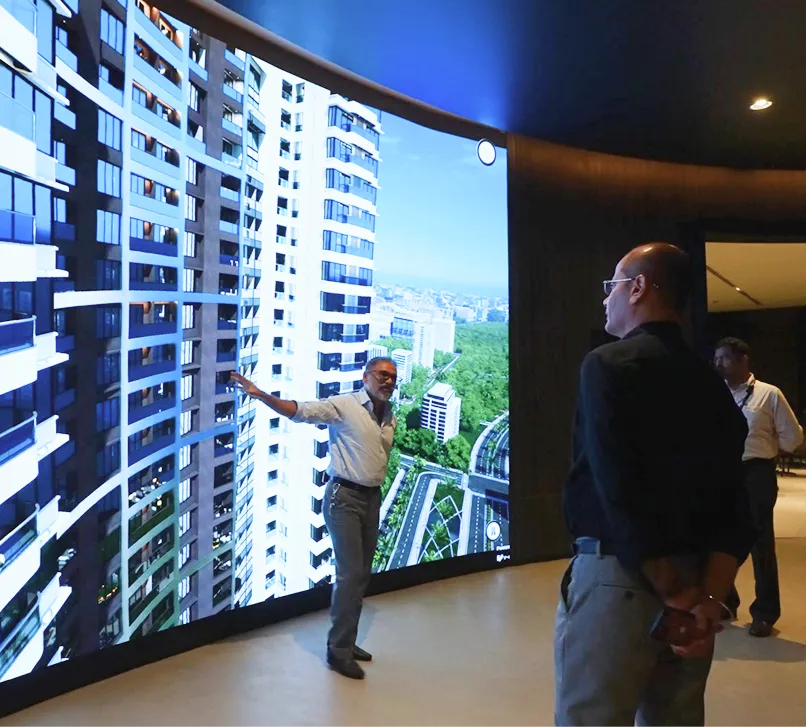
Luxury buyers demand clarity before commitment. They need to judge scale, finishes, views, and spatial accuracy in minutes. Experience centres that remove ambiguity accelerate decisions and reduce sales friction. The Runwal Raaya activation proved how a structured offline environment converts serious enquiries into signed agreements.
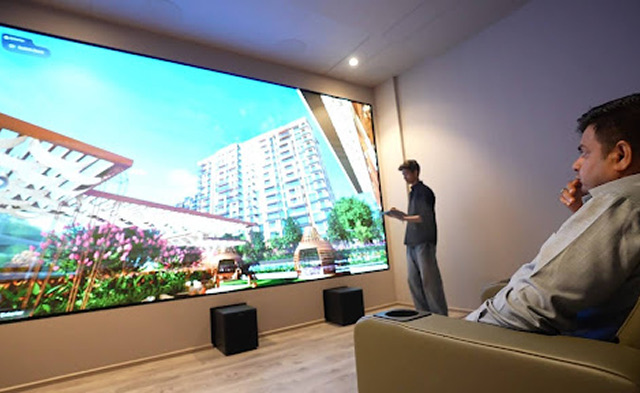
The Core Problem
High-value buyers postpone decisions when spatial details remain unclear. Floor plans and brochures create gaps. Buyers cannot assess proportion, material quality, or contextual fit from static images. This uncertainty stretches sales cycles and raises drop-off rates. Experience centres solve this by replacing approximation with tangible proof.
Entry Design and Visitor Orientation
The problem: Buyers lose confidence when entry zones feel chaotic or confusing.
The fix: Design a reception that routes visitors efficiently. Use clear directional signage and a brief orientation script that explains the journey. Avoid clutter. First contact should feel calm and purposeful.
Buyer impact: Trust builds in the first sixty seconds. A clean entry removes hesitation and sets a professional tone for the entire visit.
Full-Scale Spatial Models and Accurate Views
The problem: Scaled-down models fail to communicate real size, ceiling height, and window perspectives.
The fix: Build full-scale mockups or large-format spatial models. Install fixed sightline stations calibrated to match actual building orientation. Show the real skyline, neighboring buildings, and terrace perspectives.
Critical feature: Position viewing stations to replicate what buyers will see from their unit.
Buyer impact: Buyers judge luxury homes on views, natural light, and proportion. Sightline accuracy removes the largest objection before possession. Runwal Raaya used precise spatial modeling to replicate on-site conditions and eliminate guesswork.
Genuine Material Displays in Context
Dynamic Lighting and Time-of-Day Simulation
The problem: Static lighting fails to show how spaces change across morning, afternoon, evening, and night.
The fix: Use programmable lighting rigs to simulate different times of day. Include adjustable blinds and layered lighting presets. Run short demos that toggle between dawn, noon, dusk, and nighttime conditions.
Critical feature: Allow buyers to see how natural and artificial light interact in the same space.
Buyer impact: Lighting changes mood, perception of space, and livability. Time-of-day simulation reduces post-possession surprises and builds buyer confidence. The Runwal Raaya setup demonstrated changing light conditions to show city views at different hours.
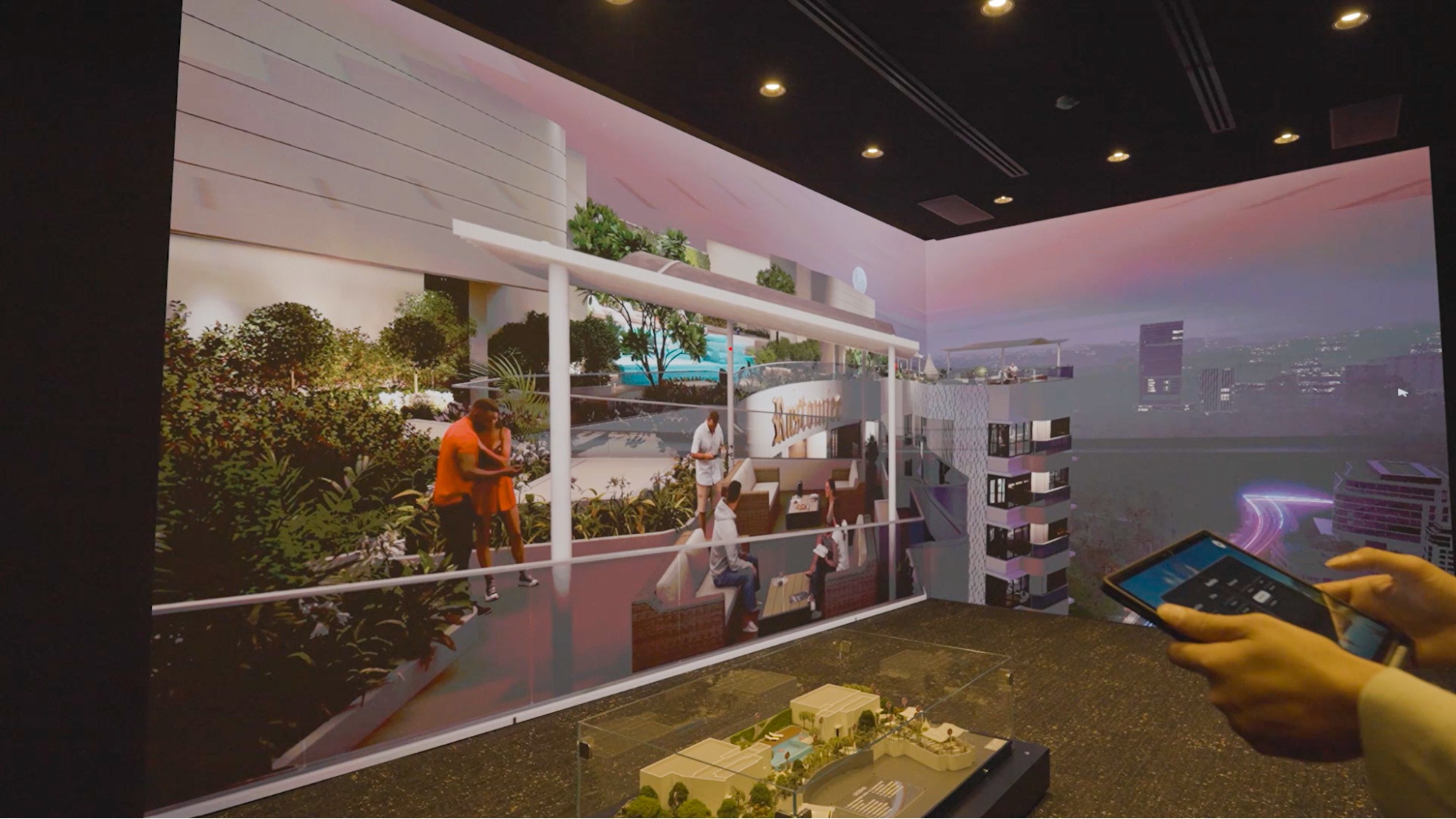
Amenity Mapping and Connectivity Intelligence
The problem: Buyers lack verified information about neighborhood infrastructure, commute times, and lifestyle access.
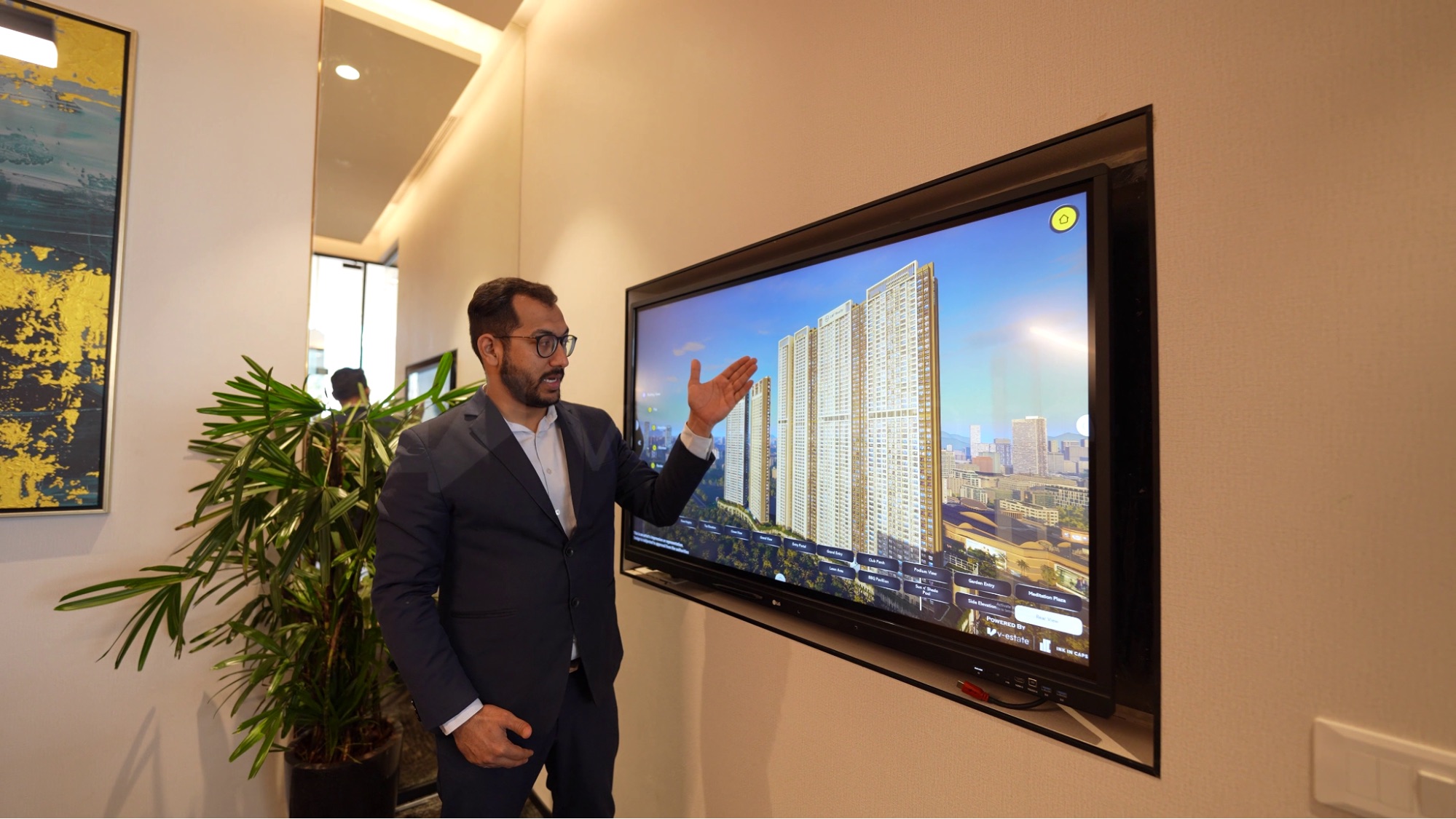
The fix: Display concise amenity maps showing current and upcoming developments. Include factual overlays for distances, travel modes, and planned metro lines or road expansions. Avoid speculation. Present only confirmed data.
Buyer impact: High-net-worth buyers evaluate neighborhoods as carefully as units. Clear connectivity details reduce research burden and justify pricing. Accurate maps answer location questions immediately.
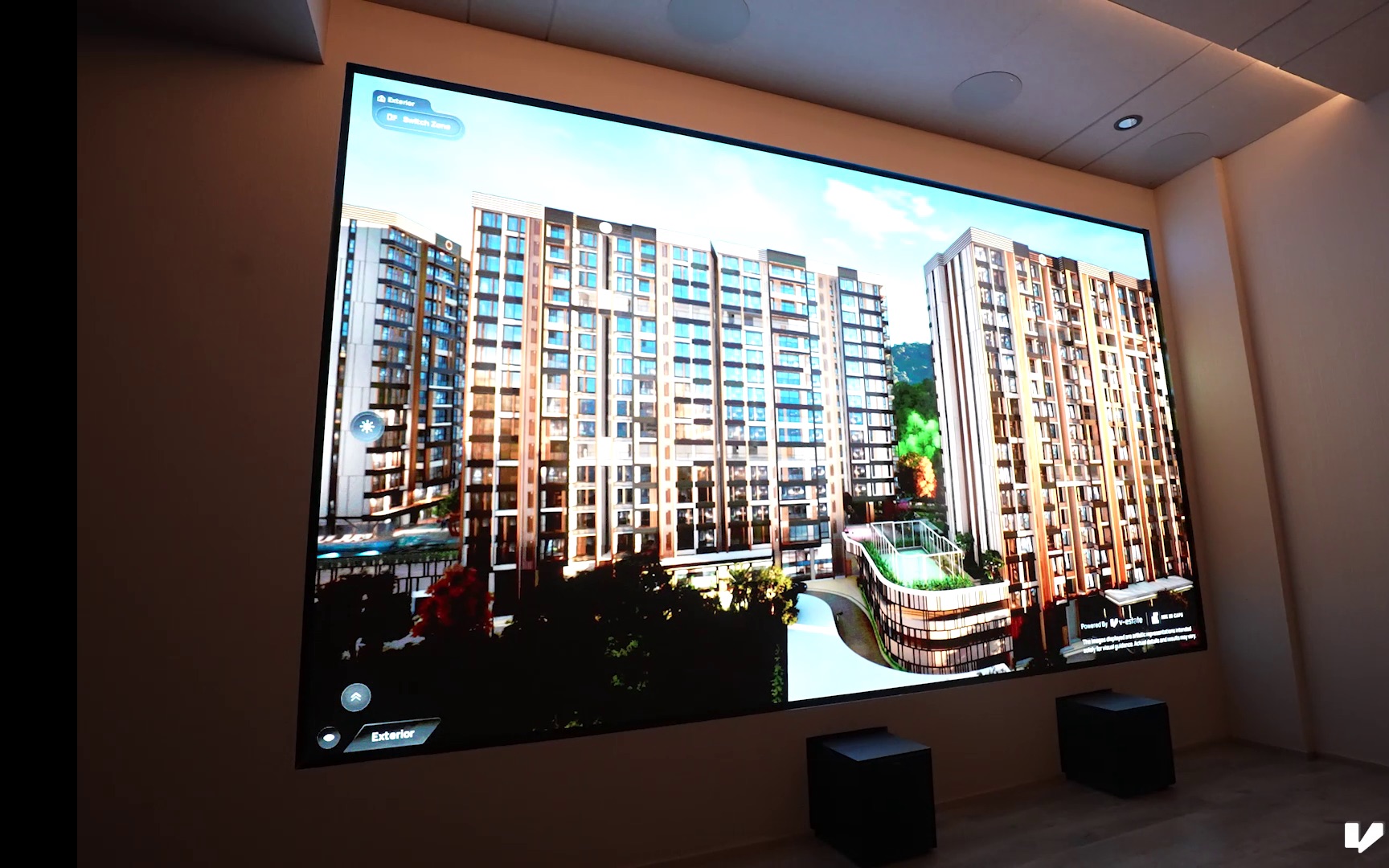
Real-Time Configurability Without Technical Barriers
The problem: Static mockups limit buyer imagination and increase follow-up churn.
The fix: Provide guided configurators that change finishes, furniture layouts, and minor plan variations in real time. Keep interfaces simple. Use offline tablets or kiosks that do not require internet connectivity. Offer pre-set combinations that reflect realistic procurement options.
Critical feature: Allow buyers to test finish and layout permutations during the visit, not after.
Buyer impact: Configurability lets buyers visualize preferences immediately. This reduces decision fatigue and accelerates final selections. V-estate's offline configurability tools enable buyers to explore finish options and furniture arrangements in a controlled, immersive setup without technical delays.
.jpg)
Decision Support Hub for Closing Steps
The problem: Administrative friction kills momentum after site visits. Buyers leave without clear next steps.
The fix: Build a compact decision zone staffed with trained advisors. Provide finance estimators, legal documentation support, and a concise checklist for closing. Present only essential options. Keep the tone factual and calm.
Buyer impact: Buyers need an immediate path from interest to commitment. A well-staffed decision hub converts intent into signed agreements by removing logistical confusion.
.jpg)
Implementation Priorities for Developers
Start with these actions:
Standardize entry flow and signage
Install calibrated sightline stations
Use full-size material applications
Implement time-of-day lighting demos
Publish verified amenity and connectivity maps
Deploy simple, offline configurators
Staff a decision hub with clear closing protocols
Commercial Value for Marketing and Sales Teams
These seven touchpoints reduce buyer uncertainty and compress sales cycles. They create a repeatable, measurable experience that aligns sales teams around clarity and speed. The Runwal Raaya experience centre demonstrated how disciplined offline activation translates serious enquiries into closed deals for ultra-luxury inventory.
Developers should treat experience centres as precision decision environments, not traditional showrooms. Each touchpoint addresses a specific friction point in the buyer journey. When combined, they create a seamless path from curiosity to commitment.
Next Steps for Your Team
Begin with one touchpoint from the checklist. Measure its impact on buyer clarity, follow-up rates, and conversion velocity. Iterate quickly. If you need a diagnostic framework or a buyer flow outline, request a practical template tailored to luxury projects.
V-estate provides offline immersive sales tools that deliver photorealistic 3D virtual show flats, amenity mapping, finish customization, and dynamic lighting controls. These tools streamline the property buying experience into a single controlled journey. Buyers get remote control of exploration, visualizing details from window views to furniture layouts. This approach enhances lead conversions, reduces decision time, and increases customer retention.