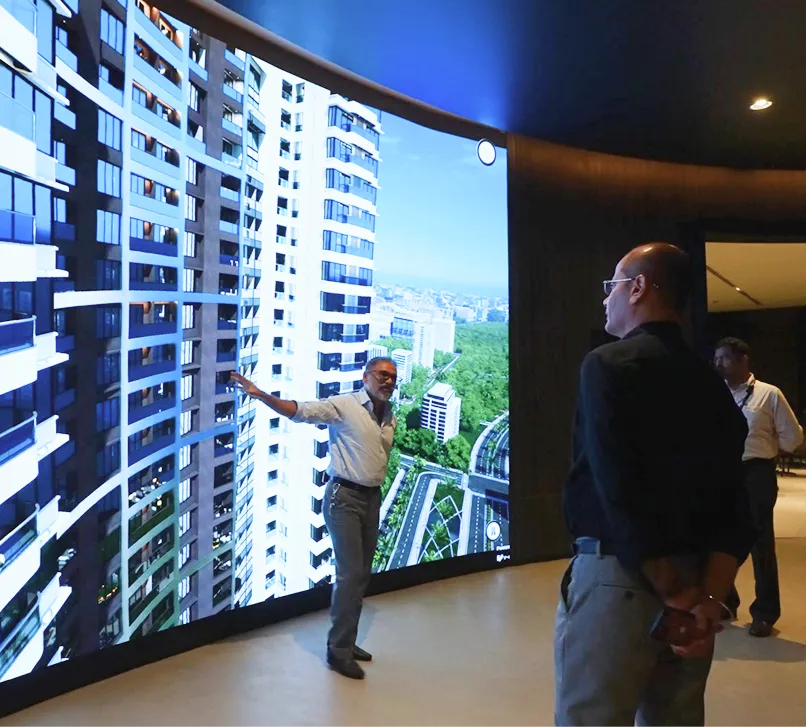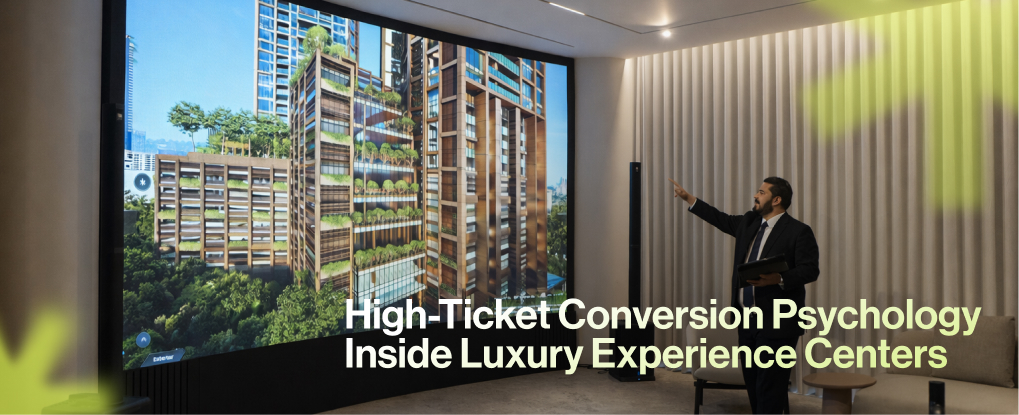
High-value buyers don't buy homes. They buy certainty.
When decision-makers walk into a luxury sales environment, they're testing one thing: Can I see myself here? If that answer takes too long, the sale stalls. Doubt creeps in. Questions multiply. Price becomes the only negotiating point left.
This isn't a design problem. It's a conversion problem.
Experience centres exist to collapse uncertainty. The best ones hand control to the buyer, show measurable proof, and remove the mental friction that kills momentum. The result? Shorter sales cycles. Higher intent. Protected margins.
The Real Barrier to Conversion
Buyers hesitate when they can't mentally place themselves in the space.
Uncertain sight lines. They can't picture the view from their living room.
Ambiguous scale. Floor plans don't translate to real spatial understanding.
Untested lifestyle variables. Morning light. Evening ambience. Monsoon views. All theoretical until proven.
These gaps force buyers into speculation. Speculation breeds endless questions. Questions delay decisions. Delays push buyers toward competitive offers or price-based negotiations.
The experience centre's job is to remove speculation entirely.
Conversion Follows a Pattern
High-ticket buyers move from hesitation to commitment when two conditions are met:
Reduced mental effort. The space makes sense immediately. No guesswork required.
Increased control. The buyer tests, customizes, and validates on their own terms.
This isn't abstract psychology. It's observable behavior. Buyers who can validate layout, views, and finishes in real time move faster. They ask fewer questions. They anchor on value instead of price.
The centre becomes a conversion engine, not a showpiece.
Design That Removes Friction
Clear Spatial Hierarchy
Present the floor plan first. Then show the same view in physical form—scale model or photorealistic rendering.
One consistent line of sight. No cognitive switching between abstract and real.
Layered Proof
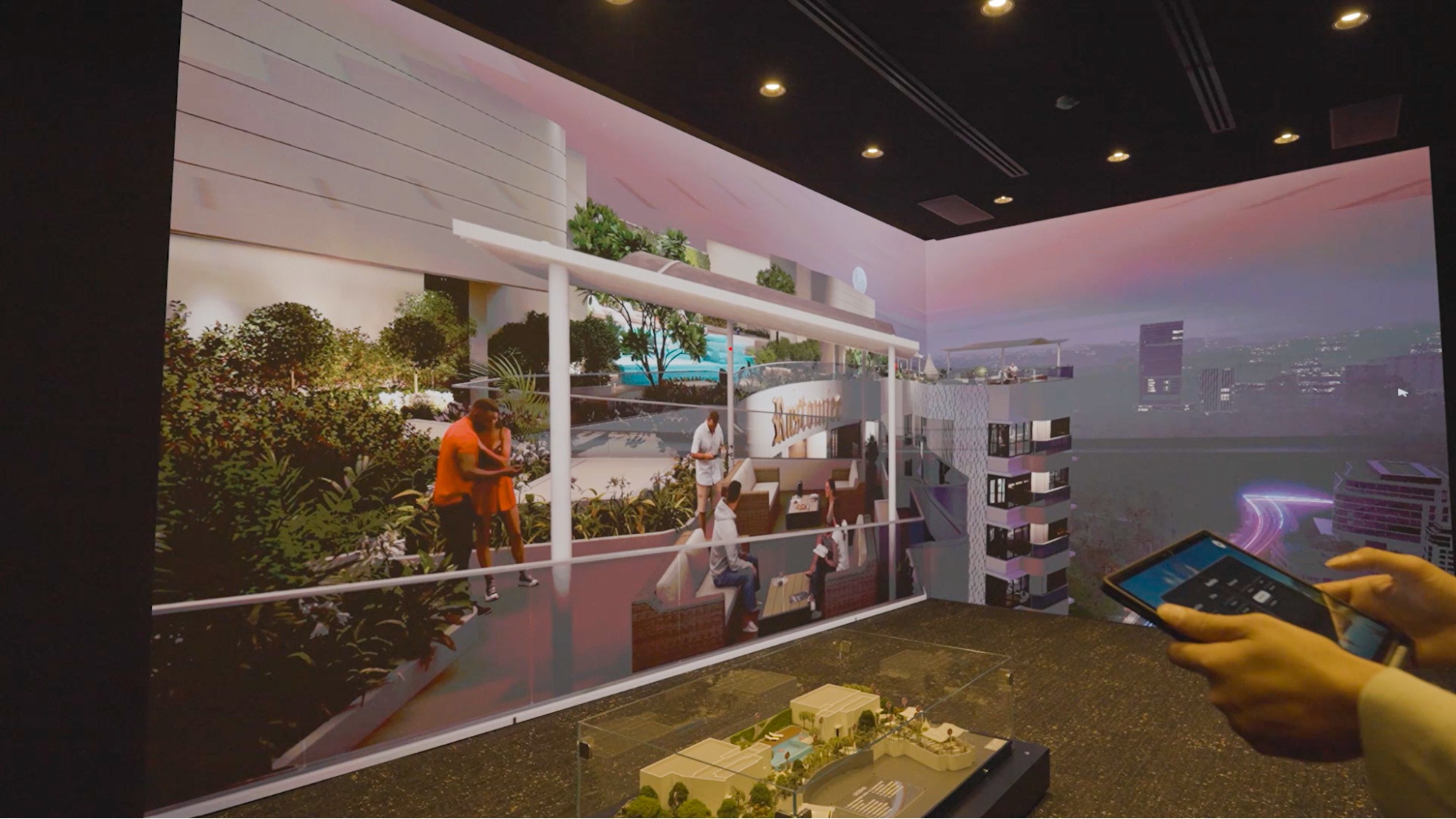
Combine tangible models with accurate renderings and contextual maps.
Scale model for spatial understanding. Photorealistic visuals for finish validation. Connectivity map for lifestyle context.
The combination closes the gap between imagination and reality.
Controlled Variability
Let buyers change one variable at a time. Paint color. Furniture layout. Lighting condition.
Isolating choices speeds decisions. Too many options at once trigger analysis paralysis.
Sensory Validation Drives Confidence
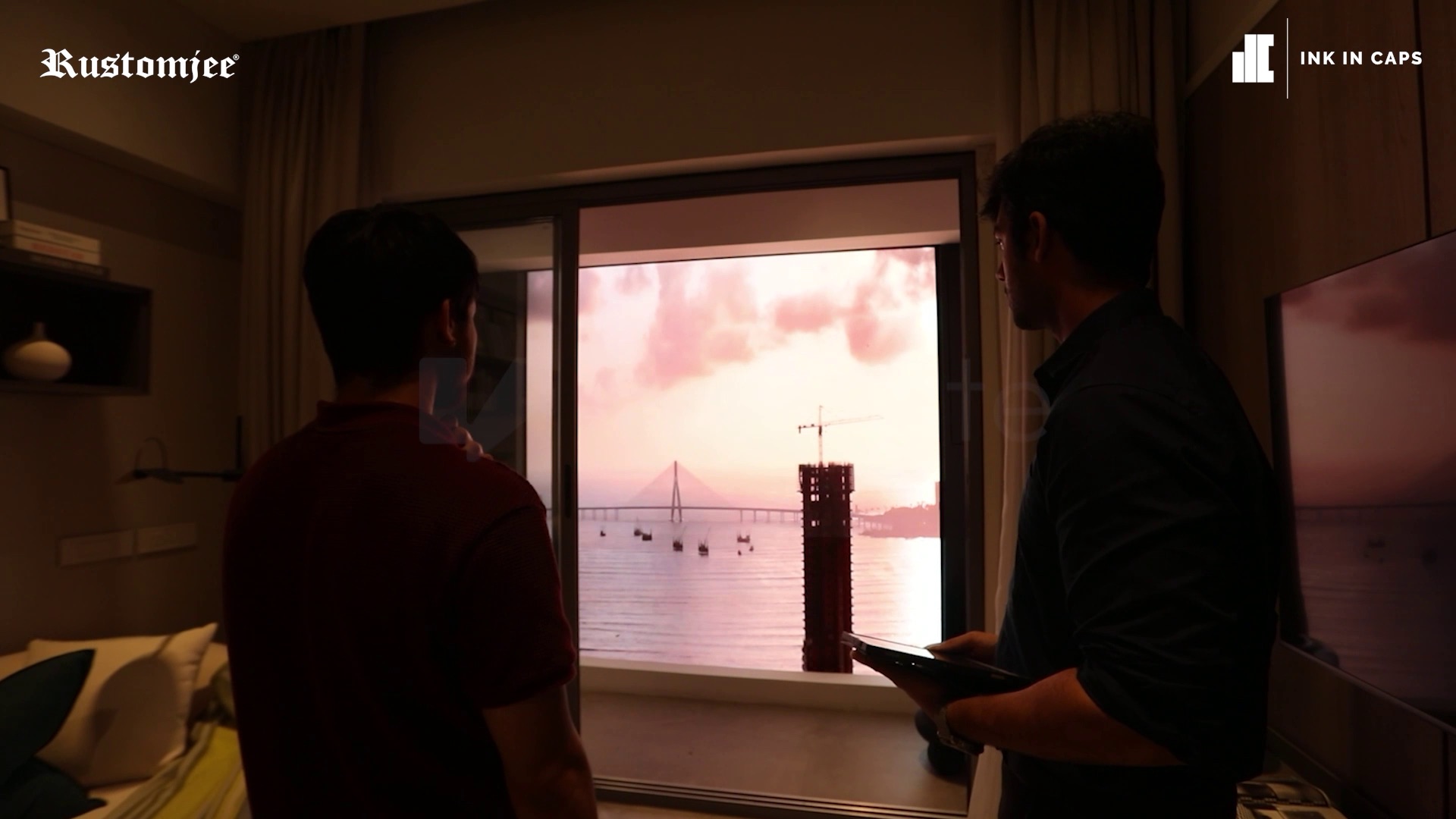
Window-Accurate Views
Buyers need to see the exact external view from the seat they'll occupy.
Not generic skyline renders. The specific angle from their balcony. At their floor height. Facing their direction.
This detail matters more than most developers realize.
Dynamic Lighting and Weather
Morning sun. Evening glow. Monsoon clouds.
V-estate's platform lets buyers test these conditions in real time. No seasonal guesswork. No "imagine how this will look."
When buyers can validate how their space performs across conditions, objections vanish.
Amenity Mapping
Show proximate conveniences. Upcoming infrastructure projects. Transit access.
This shifts the conversation from "if" to "how" they'll use the space.
Lifestyle expectations get anchored early. Questions about commute, schools, and retail fade into background noise.
Technology as an Offline Activation Tool
Experience centres fail when technology becomes a gimmick.
V-estate operates differently. It's an offline activation platform designed to support human conversation, not replace it.
The platform hands control to the buyer while keeping sales consultants in the loop. Buyers explore freely. Consultants guide when needed. Data gets captured automatically.
Practical Implementations
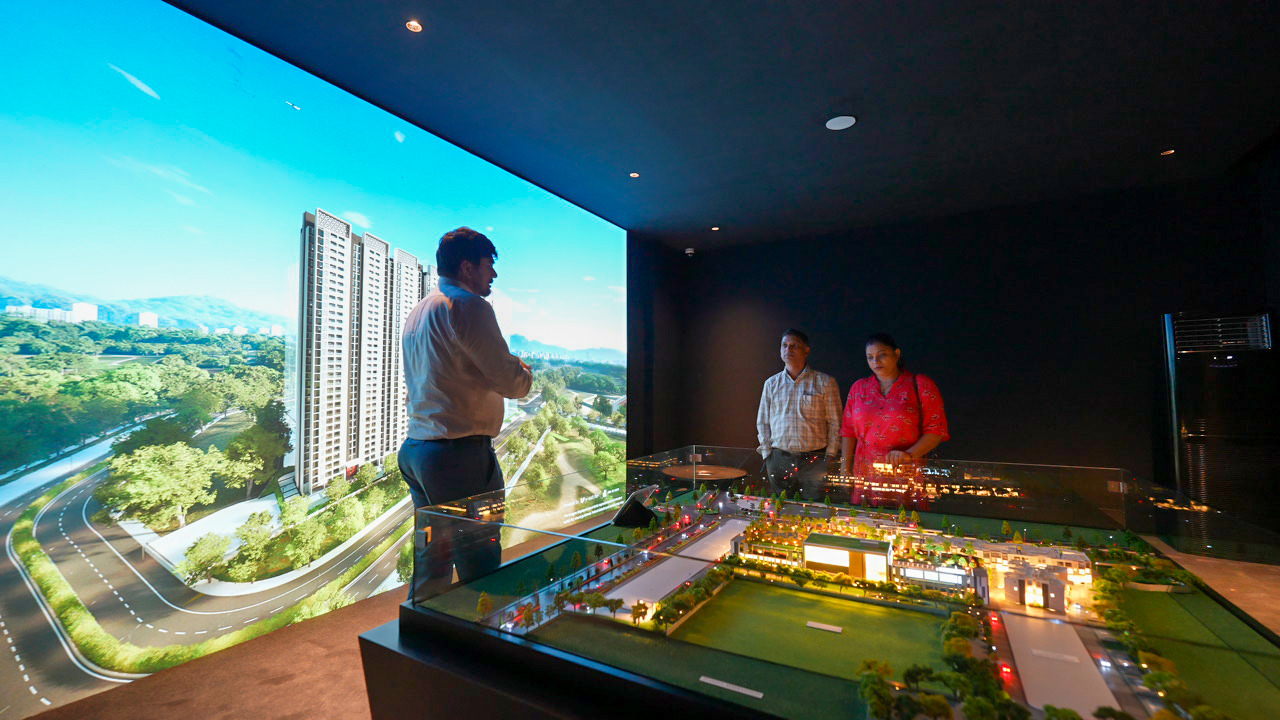
IoT-enabled scale models link physical interaction with digital displays. Tap a unit on the model. See photorealistic renders on the screen. Check amenities. Adjust finishes.
Tactile appeal meets data accuracy.
Photorealistic show flats that match available inventory. Not aspirational CGI. Actual paint colors. Real fixture options. Visual parity removes fit-and-finish objections.
Connectivity overlays that present current and planned infrastructure. Roads. Metro lines. Commercial zones.
Buyers validate commute logic immediately. One less follow-up call.
Operational Playbook for Marketing and Development Teams
Set a Single Buyer Journey Per Visit
Limit options during first interaction. Too many paths create confusion.
Guide buyers from spatial validation to lifestyle validation to commercial discussion in one structured session.
Train Sales to Facilitate, Not Present
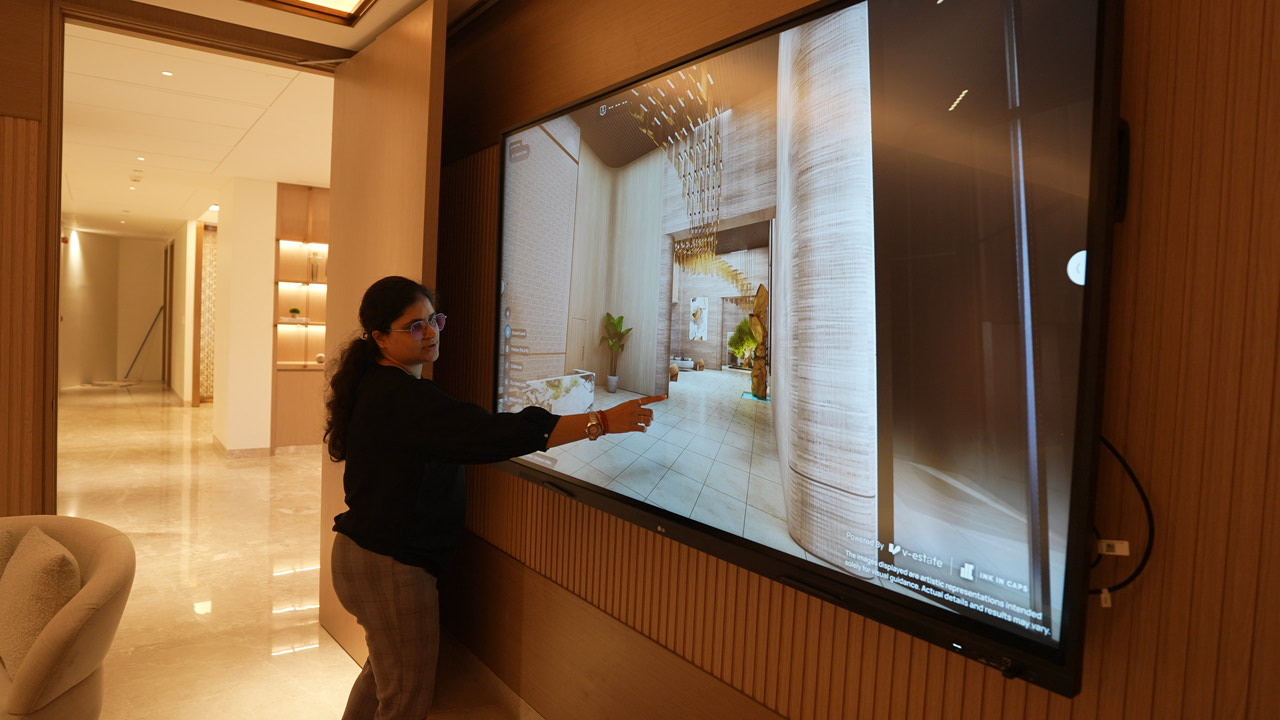
Sales consultants should enable exploration. Let the buyer control the screen. Adjust views. Test finishes. Compare layouts.
This transfers ownership. Ownership accelerates commitment.
Log Buyer Interactions
Capture screen sequence. Time spent per section. Selected configurations.
Use this data to tailor follow-ups. Address specific objections before the buyer raises them.
V-estate's backend exports buyer choices directly into CRM with recommended next actions.
Timebox Decision Steps
Structure visits to maintain momentum. Don't let buyers wander aimlessly.
Move them through validation checkpoints with clear outcomes at each stage.
Expected Outcomes
Shorter Sales Cycles
Centres that present layered proof and hand control to buyers reduce follow-up queries.
Runwal Raaya's experience centre reported measurable cycle reduction after deploying V-estate's platform.
Buyers leave with clarity. Fewer return visits needed. Faster move to documentation.
Higher Lead Quality
Buyers who spend time customizing and testing are further along the funnel when they exit.
They've already validated spatial logic. Tested finishes. Confirmed lifestyle fit.
These leads convert at higher rates.
Lower Merchandising Costs
Fewer repeat showings. Clearer expectations. Less reliance on physical sample flats.
The centre does the heavy lifting. Sales teams close instead of re-explain.
Features to Prioritize in Your Brief
Exact line-of-sight rendering. Not generic views. Specific window angles at specific floor heights.
Single-purpose interactive stations. One task per station. View validation. Finish selection. Amenity mapping. Pricing discussion.
Data capture and follow-up automation. Export buyer choices into CRM with tagged next steps.
Relevance to Decision-Makers
For marketing heads and development leads, the experience centre isn't decoration.
It's a conversion asset.
The right mix of tactile proof, accurate rendering, and structured process shortens cycles and protects price integrity.
V-estate delivers this mix as an offline activation platform designed specifically for luxury real estate sales environments.
Next Step
Map one conversion scenario end-to-end. Buyer arrival to signed intent.
Prioritize line-of-sight proof. Single-variable control. Data capture.
Test the model in one week of live tours. Measure time to decision. Track objection reduction. Compare cycle length against baseline.
If results validate, scale the approach across your pipeline.
For teams ready to deploy this model, V-estate provides the platform and operational support to activate experience centres as true conversion engines.