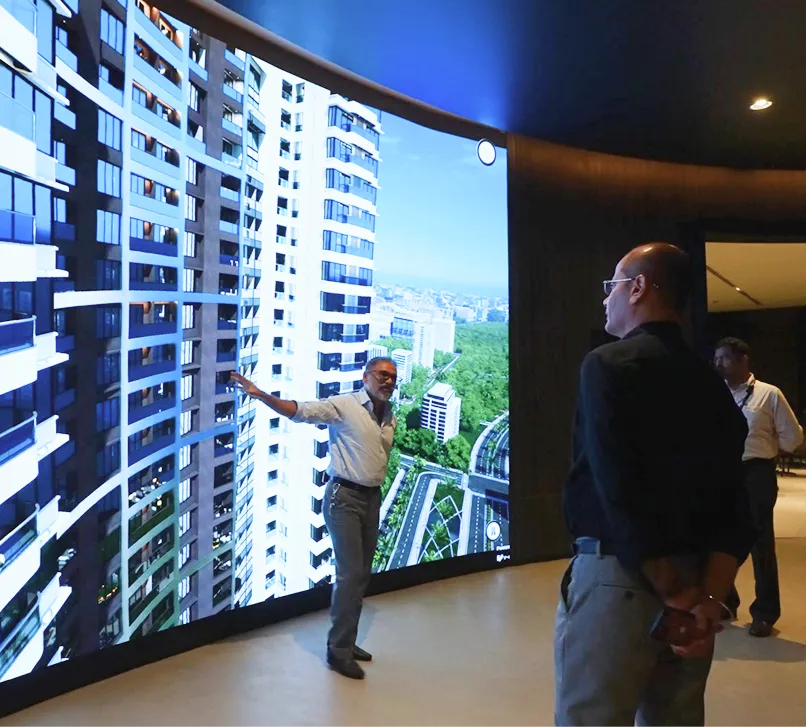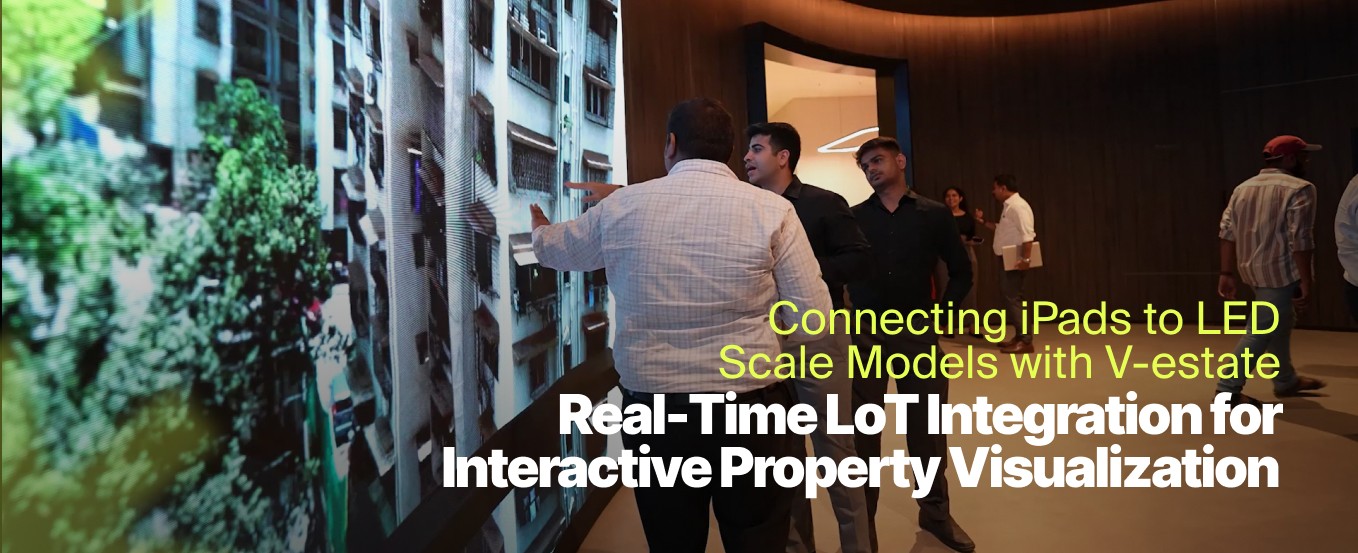
Scale models cost significant capital. Developers commission detailed physical installations showing complete township layouts. These models take months to fabricate. They occupy premium floor space in experience centers.
Yet most function as decorative props rather than functional sales tools.
Sales executives stand around models pointing at sections verbally. Buyers lean forward trying to identify which tower is being discussed. During weekend footfall, three different conversations happen simultaneously around the same installation. Nobody can track which explanation applies to which section.
The model shows buildings but cannot explain which phase they belong to. It displays clusters but cannot identify which contains available inventory. It illustrates the masterplan but cannot highlight access routes dynamically.
Buyers leave consultations unable to recall which tower was discussed or where specific amenities sit relative to residential blocks. Sales teams repeat the same spatial explanations during follow-up visits.
Static models create spatial confusion rather than spatial clarity.
Rustomjee Urban Woods needed to convert their scale model investment into a precision communication tool that eliminates pointing ambiguity and connects physical visualization with structured information.
The solution was IoT connectivity linking tablets to LED-embedded models for synchronized real-time navigation.
What Fails with Traditional Static Scale Models
Physical Models Cannot Explain Multi-Phase Complexity
Large townships develop in phases over years. Static models show final buildout but cannot differentiate which towers belong to current phases versus future stages.
Buyers cannot identify which sections are available for booking now. They don't understand delivery timelines for different clusters. They cannot assess proximity relationships between early and later phases.
This temporal information remains abstract without dynamic visualization.
Tower and Cluster Differentiation Becomes Verbal
Models display dozens of identical-looking towers. Sales teams describe differences verbally: "This tower has sea-facing units. That cluster includes duplex configurations. These buildings offer commercial spaces on ground floors."
Buyers cannot track these distinctions while looking at uniform model elements. They forget which tower was which within minutes of explanation.
Without visual differentiation, complex township layouts overwhelm comprehension.
Manual Pointing Creates Inconsistent Communication
Sales staff use fingers or pointers to indicate model sections during explanations. One executive points at the northern cluster. Another highlights the southern zone. A third emphasizes central amenity areas.
These manual methods lack precision. Buyers see approximate gestures, not exact boundaries. They cannot determine where one cluster ends and another begins.
During simultaneous consultations, multiple staff members point at different sections. Buyers standing nearby get confused about which conversation applies to which area.
Lighting Controls Remain Limited or Broken
Some scale models include basic lighting systems operated by switches or remotes. These systems typically offer whole-model illumination or fixed zone lighting.
They cannot highlight specific towers on demand. They cannot show circulation paths dynamically. They cannot adapt to different explanation sequences.
Switch-based systems break frequently. Remotes get misplaced. Bulbs burn out. Maintenance becomes ongoing overhead.
Buyers Cannot Revisit Information Independently
After initial walkthroughs, buyers discussing options in separate rooms cannot reference the scale model easily. They rely on memory or request sales staff to repeat entire explanations.
This creates inefficiency. It extends consultation time unnecessarily.
What IoT-Connected Scale Models Accomplish
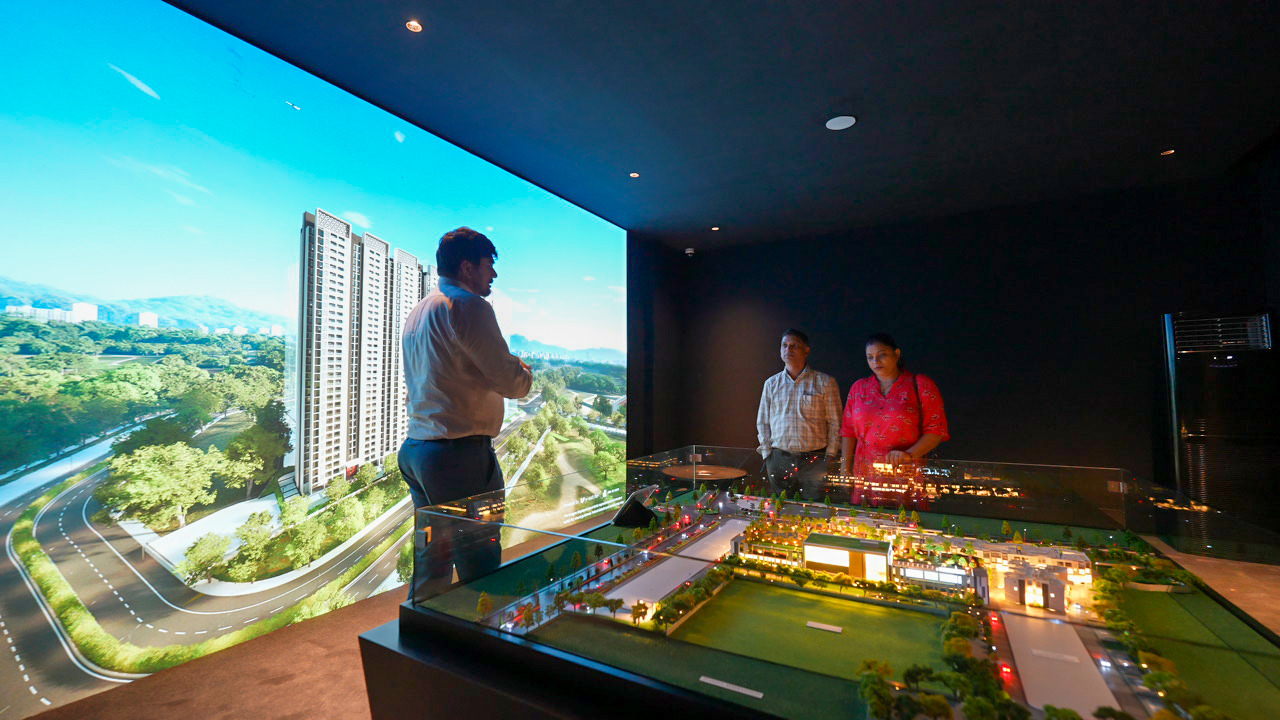
The solution integrates tablets with LED-embedded scale models through real-time IoT systems. Sales teams select project elements on tablets. The corresponding physical sections illuminate instantly on the model. Digital details appear simultaneously on the tablet screen.
It Creates Real-Time Physical-Digital Synchronization
When sales staff select a tower on the tablet, that exact tower lights up on the model immediately. The lighting precision reaches cluster, tower, and wing levels.
Response time is near-instant. No visible delay exists between tablet input and LED response.
This synchronization eliminates interpretation gaps. Buyers see exactly which physical element corresponds to digital information.
It Enables Two-Way Interaction Mapping
The system supports bidirectional communication:
Tablet selections illuminate physical model components
Model touchpoints highlight corresponding digital information on tablets
Visitors see physical location and detailed explanation simultaneously. This dual-channel communication improves comprehension significantly.
It Organizes Multi-Phase Township Complexity
Projects developing in phases require structured information architecture. The integration organizes data into phases, sectors, clusters, towers, amenity zones, and circulation routes.
Buyers navigate complex layouts without confusion. They understand which sections are available now versus later. They assess proximity relationships between phases accurately.
It Provides Precise LED Lighting Logic
The lighting system operates with multiple intensity levels:
Soft glow for masterplan-level highlights
Focused illumination for specific buildings
Zone grouping for phased planning explanations
Ambient cueing for movement between sections
These LED patterns guide visitors visually. They reduce verbal explanation requirements. They create memorable spatial associations.
It Supports Multiple Simultaneous Users
Multiple sales representatives operate multiple tablets without session interference. Each device maintains independent visualization control.
During high-footfall periods, different staff members guide different buyer groups around the same model. Each conversation proceeds independently without conflict.
This scalability is essential for township projects managing weekend crowds.
How IoT Integration Handles Operational Requirements
Unified Backend Prevents Information Mismatches
All data—images, layouts, planning details, cluster information—comes from one backend. This ensures no discrepancies between digital content and physical model representation.
Updates propagate globally with single deployments. New tower additions reflect across all tablets immediately. Phase changes update automatically.
Sales teams always work with current information. Version control becomes automatic.
Zero Manual Hardware Management
The system eliminates physical controls at the model:
No switches to operate
No LED panels to adjust manually
No remote controls to manage
No bulb replacements during operations
Sales teams simply use tablet interfaces. The IoT layer handles all hardware communication automatically.
Maintenance overhead decreases dramatically. Reliability increases.
Remote Diagnostics Enable Preventive Support
The IoT architecture supports remote monitoring. Technical teams can diagnose LED failures, connectivity issues, or performance degradation without on-site inspection.
This prevents operational disruptions during critical sales periods. It enables preventive maintenance before failures occur.
Discussion Room Continuity
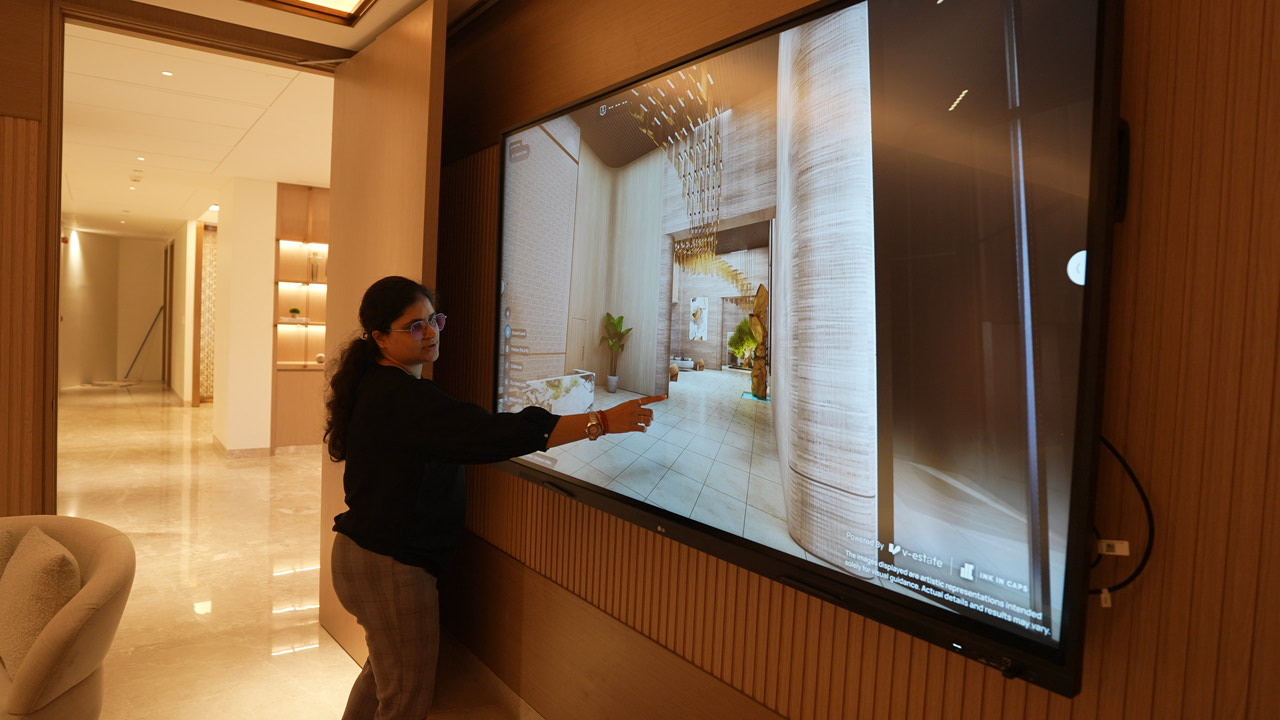
After initial walkthroughs, buyers move to discussion rooms for detailed consultations. Sales staff continue using tablets to reference model information.
Unit location, tower position, amenity access, and circulation paths remain visually accessible through digital representations.
The model conversation continues without requiring buyers to return to the physical installation.
Why Township Developers Need IoT-Connected Models
Large Projects Require Scale-Based Clarity
Townships spanning multiple acres with dozens of towers need guided spatial communication. Buyers cannot visualize distances, hierarchies, or relationships accurately from static displays.
IoT-powered interaction converts scale models into functional explanation tools rather than decorative installations.
It Reduces Buyer Cognitive Load
Visitors struggle to process large masterplans holistically. Highlighting only relevant sections at appropriate times reduces complexity.
Progressive disclosure—showing information in structured sequences—improves decision-making quality.
It Standardizes Communication Across Teams
Different sales staff naturally explain projects differently. IoT systems ensure identical visuals, lighting patterns, mapping logic, and information sequences across all consultations.
This uniformity strengthens brand credibility. It prevents confusion when buyers revisit with family members who hear consistent narratives.
It Improves High-Footfall Efficiency
Experience centers operating at volume face time pressure during weekends and campaigns. IoT syncing accelerates discussions by eliminating manual pointing and verbal approximations.
Throughput efficiency increases. More buyers receive quality consultations within compressed timeframes.
It Enables Decision Support During Final Stages
Buyers comparing multiple options need to reference spatial relationships repeatedly. IoT-connected tablets allow sales teams to revisit model information instantly during discussion room conversations.
This eliminates back-and-forth trips to the physical model. It keeps decision conversations focused and efficient.
It Creates Future-Proof Infrastructure
IoT integrations scale easily. New towers or phases integrate with minimal adjustments. LEDs, controls, and firmware update over networks without hardware modifications.
This infrastructure investment serves multiple project phases without requiring replacement.
What Developers Should Evaluate in Scale Model Investments
If you're building or upgrading a township experience center with physical scale models, assess your current setup:
Can your scale model communicate phase-wise complexity clearly? Static displays fail to differentiate temporal development stages.
Does your lighting system provide precise tower-level highlighting? Whole-model illumination or fixed zones lack explanation flexibility.
How do sales teams indicate specific model sections? Manual pointing creates interpretation gaps and communication inconsistency.
Can multiple staff members use the model simultaneously? High footfall requires concurrent consultation capability.
Does model information stay synchronized with project updates? Outdated physical displays damage credibility.
Can buyers reference model details during discussion room conversations? Static models lose relevance after initial walkthroughs.
How much maintenance overhead does your lighting system require? Switch-based controls and replaceable bulbs create ongoing operational burden.
The Infrastructure Requirement for Township Scale Models
Township developers invest significantly in physical scale models expecting them to function as communication tools. Traditional static installations with manual pointing and basic lighting fail to deliver adequate information precision during high-volume sales operations.
IoT-connected systems transform scale models into interactive navigation platforms. Real-time synchronization between tablets and LED-embedded models creates precise visual communication. Multiple users operate independently. Information stays current automatically. Maintenance overhead decreases.
At Rustomjee Urban Woods, IoT integration allowed sales teams to guide buyers through complex township layouts with visual precision. Buyers identified specific towers instantly. They understood phase relationships clearly. Sales staff delivered consistent explanations across all consultations.
For developers building township experience centers with significant scale model investments, the requirement is architectural: IoT connectivity that converts physical displays into functional information systems rather than decorative installations.
The integration functions as operational infrastructure—not technical enhancement. It transforms how scale models support spatial communication and how teams manage high-volume township sales consultations.
Developers investing in scale models should evaluate whether IoT integration provides the precision, scalability, and consistency their township sales operations require.