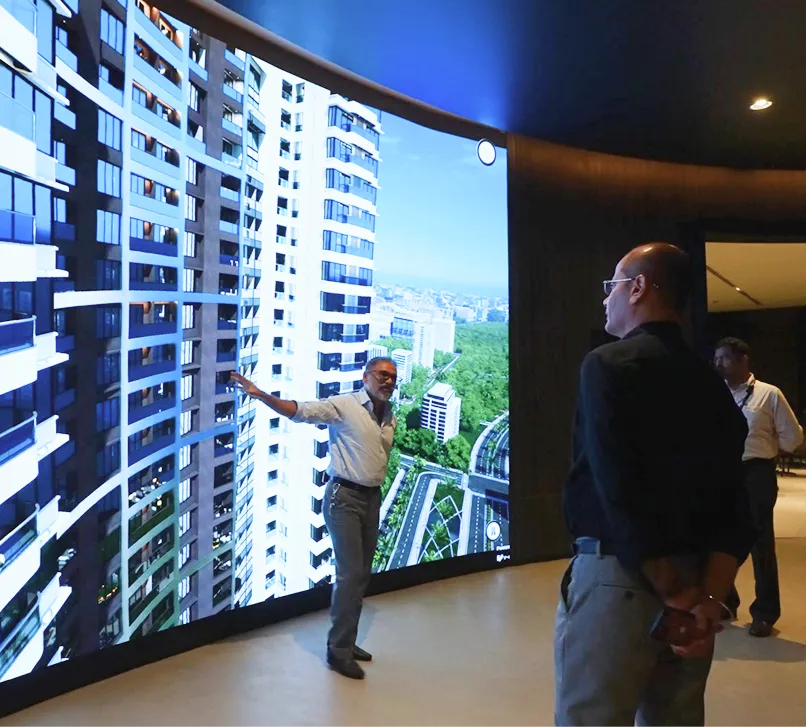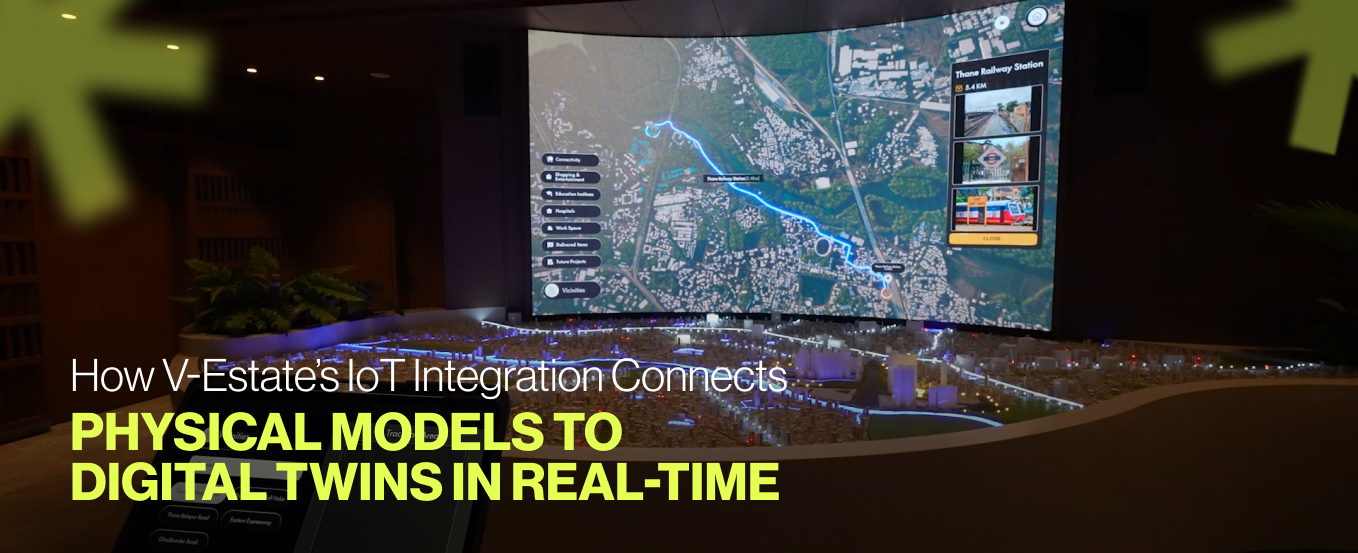
Real estate showrooms are losing deals silently. Buyers walk in, touch a scale model, stare at static finishes, and leave unconvinced. The physical model gives them dimension. It gives them nothing else. No lighting context. No view clarity. No finish customization. That gap — between what a buyer imagines and what a developer can show — is where conversions collapse.
V-Estate's IoT integration closes that gap. Physical scale models connect directly to digital twins. Changes happen in real-time. Everything runs offline.
Scale Models Alone Cannot Close the Deal
Physical models serve one purpose well: spatial understanding. Buyers grasp floor plate sizes. They feel room proportions. That part works.
Everything beyond that breaks down.
Static models cannot show:
How natural light enters at 6 PM
What the view looks like from the master bedroom window
Whether a dark paint choice works with the floor tile
How the living room feels with different furniture layouts
Buyers fill these gaps with assumptions. Assumptions create hesitation. Hesitation stalls decisions.
Sales teams compensate with verbal explanations, printed brochures, and separate digital screens. None of it integrates. None of it feels real. The buyer experience fragments at exactly the moment it needs to be seamless.
IoT Sensors Turn Physical Models Into Interactive Decision Tools
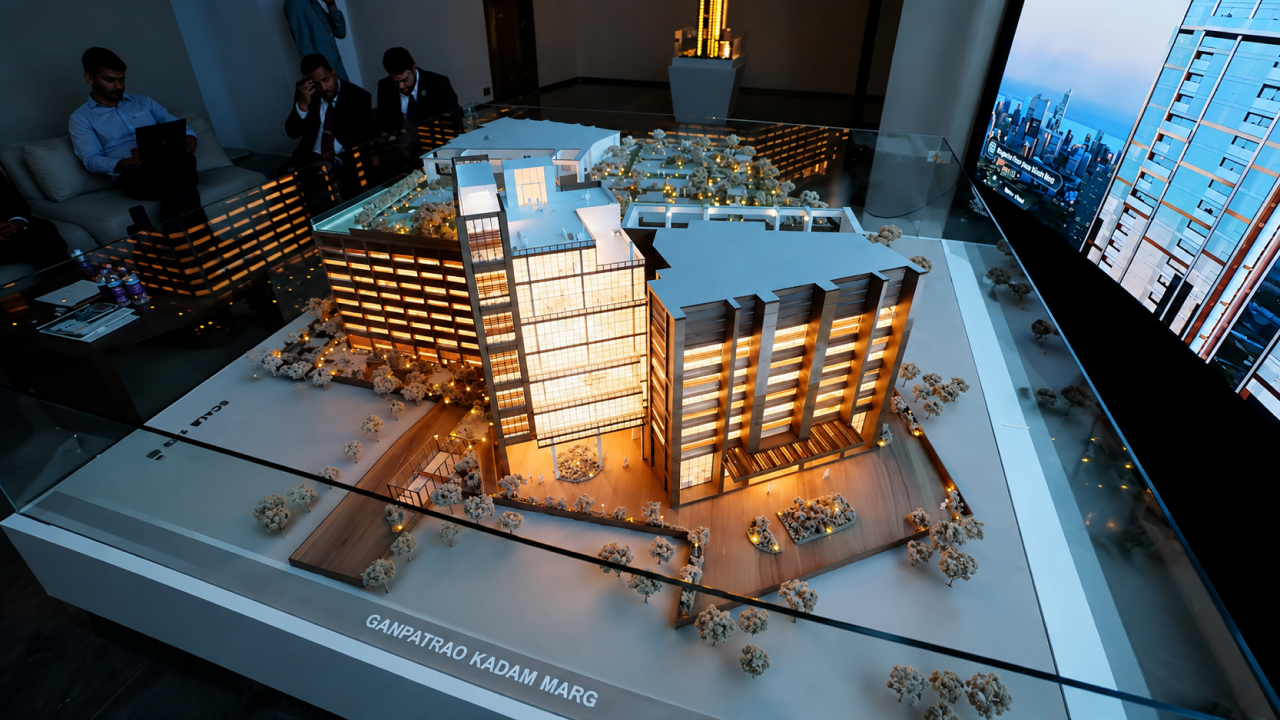
V-Estate embeds IoT sensors directly into physical scale models. Each sensor connects to a digital twin displayed on an adjacent screen. The model and the twin operate in sync — offline, through local hardware processing.
No internet dependency. No cloud latency. No signal failure on a remote project site.
A buyer presses a button on the physical model wall. The digital twin updates paint colour instantly. They rotate a dial. The lighting shifts from afternoon sun to evening dusk. They tap a window module. The view outside adjusts — morning skyline, rain, clear night.
Every interaction reflects a real buyer decision. Every change happens in seconds.
This is not a demo workaround. This is a fully integrated, hardware-backed sales tool.
Digital Twin Precision Solves the Visualization Problem
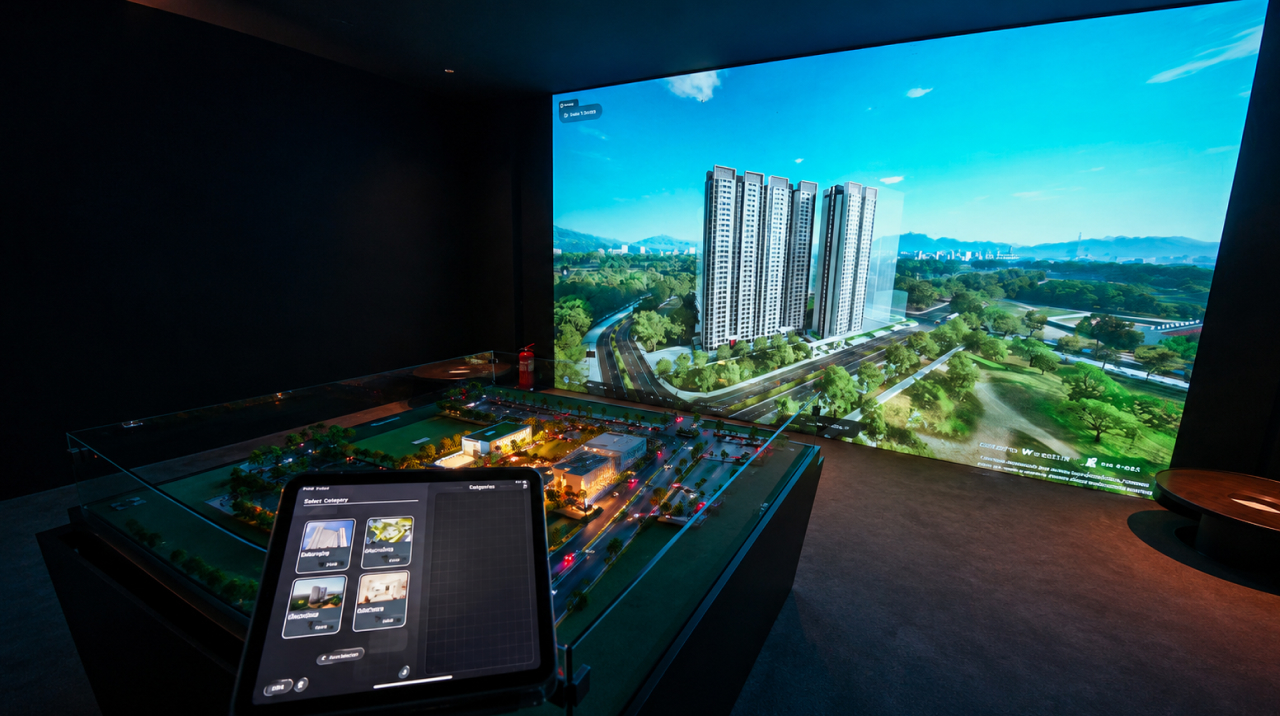
Photorealistic 3D rendering inside V-Estate's digital twin shows what printed renders and static screens cannot. The view from a 14th floor unit looks different at 7 AM than at 7 PM. A north-facing room behaves differently in winter light. Buyers know this. They ask about it. Traditional setups cannot answer it live.
V-Estate's dynamic controls address this directly:
Time-of-day lighting — Cycle through dawn, noon, dusk, and night across any unit
Weather simulation — Show the property under clear skies, overcast conditions, or monsoon rain
View customization — Adjust the window perspective based on floor level and unit orientation
Furniture and finish layers — Swap sofa sets, change wall colours, test tile combinations in real scale
Amenity mapping — Plot nearby schools, transport links, current infrastructure, and upcoming projects on an integrated visual
Each feature removes a buyer objection. Each interaction builds confidence in the purchase decision.
Offline Activation Solves the Field Deployment Problem
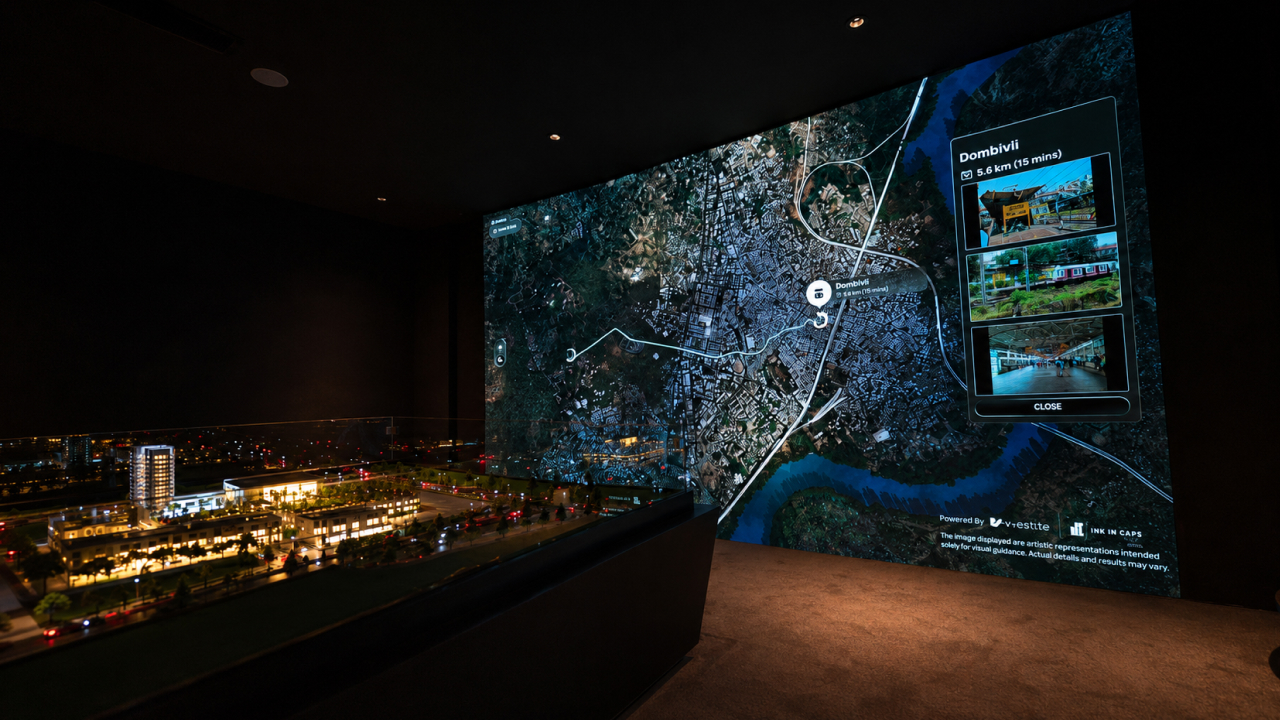
Most digital sales tools assume stable internet. That assumption fails constantly.
Mumbai traffic delays connectivity. Tier-2 and Tier-3 city sites have unreliable networks. International buyer events run in venues with saturated bandwidth. Sales teams set up equipment, demos crash, and credibility drops with them.
V-Estate runs entirely offline. Local hardware processes all interactions. Plug in the setup. Activate. Run the full demonstration without a single connectivity dependency.
This matters operationally. Sales managers do not manage Wi-Fi troubleshooting during buyer walkthroughs. They manage the conversation.
Lead Data Captures While the Buyer Engages
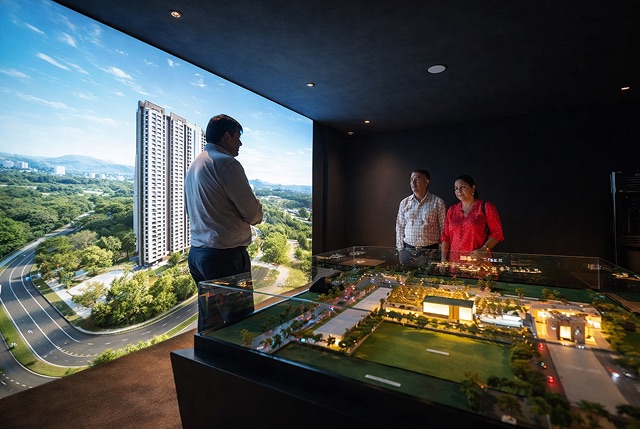
Every customization a buyer makes during the V-Estate walkthrough records a preference. Paint choices. Furniture decisions. Floor level selections. View preferences.
That data feeds directly into CRM workflows.
Marketing heads gain visibility into which configurations attract the most engagement. Developers understand which unit types generate the strongest interest before construction finalizes. Sales teams enter follow-up conversations knowing exactly what the buyer visualized.
This closes the loop between showroom interaction and post-visit nurturing. Generic follow-up calls become specific conversations about the buyer's actual choices.
Immersive Show Flats Without the Construction Cost
Full-scale show flats carry significant cost. Construction, furnishing, maintenance, and eventual demolition represent capital spent with no recoverable value.
V-Estate replaces that overhead with a photorealistic virtual show flat. Every finish detail renders at scale. Door swing clearances, window sill depths, ceiling heights — all visible, all accurate, all adjustable based on buyer preference.
Developers test multiple unit configurations without building each one. Marketing teams showcase every variant in a single setup.
Relevance for Developers and Marketing Decision-Makers
The real estate sales cycle has a precision problem. Buyers make high-value decisions on incomplete visual information. Developers invest in physical infrastructure that cannot adapt to individual buyer preferences in real time.
V-Estate's IoT-integrated physical-to-digital twin framework addresses both sides of that problem.
Conversion rates improve when buyers leave a showroom having seen their exact preferences reflected back at them. Retention improves when the follow-up conversation references real choices, not generic unit specifications.
For developers managing multiple projects, for marketing heads tracking cost-per-conversion, and for sales teams closing on-site — this integration shifts the outcome.
Connect your physical models to a digital twin setup that works anywhere, adapts to every buyer, and captures every preference. Request a V-Estate site audit for your next project launch.