Introduction
Selling off-plan real estate has always required prospective buyers to make high-value financial commitments based on trust and abstract architectural drawings. For decades, property developers relied on two-dimensional floor plans, printed brochures, and static scale models to communicate complex design concepts.
Today, that approach creates significant friction in the sales process. Modern homebuyers and commercial property investors expect clarity, transparency, and instant verification before committing capital. When potential buyers walk into a traditional sales gallery, they often struggle to visualize spatial proportions, sunlight orientation, window views, and room dimensions from paper layouts alone.
This gap between architectural drawings and customer understanding leads to hesitation, extended sales cycles, and lost revenue. Developers are recognizing that static sales tools can no longer compete in a market where customer experience directly drives conversion rates.
To solve this challenge, leading real estate brands are replacing conventional sales galleries with interactive experience centers. By utilizing immersive visualization technology directly within their physical sales offices, developers transform abstract floor plans into tangible experiences that build immediate buyer confidence.
The Evolution of the Real Estate Sales Gallery
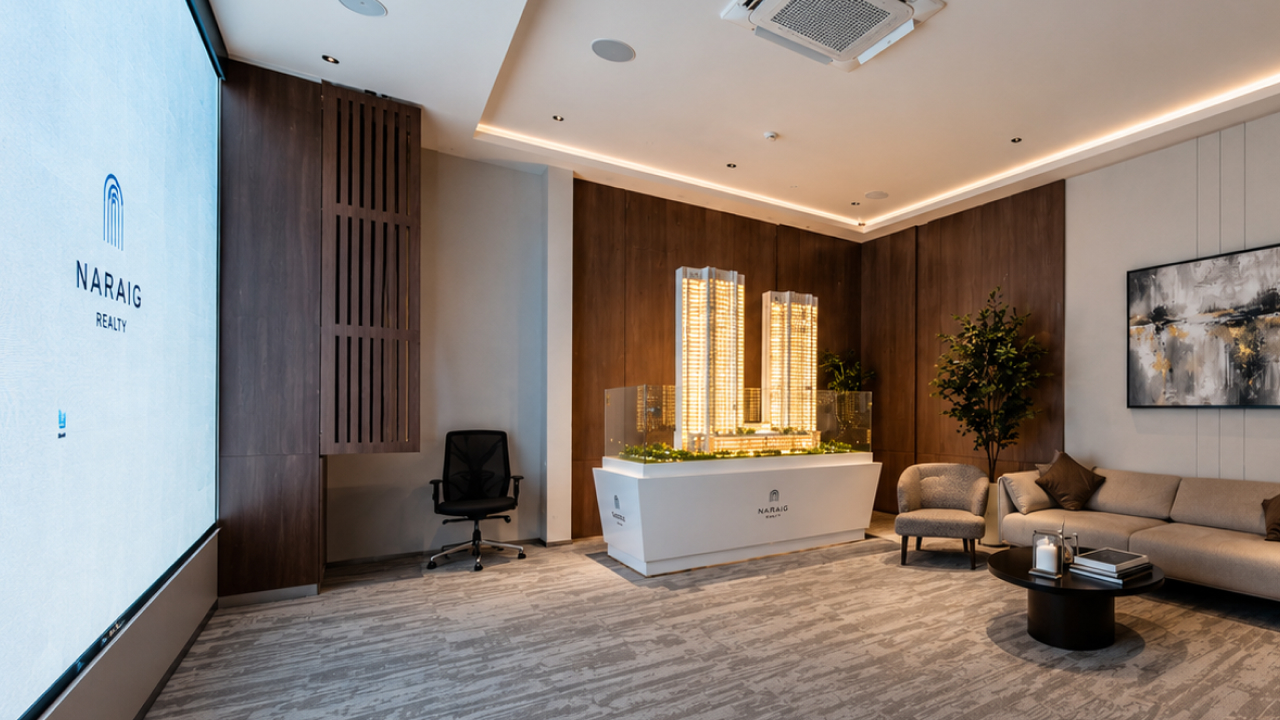
The property sales office serves as the primary touchpoint between a developer's brand and potential buyers. Historically, these offices were designed around passive presentations where sales managers led the conversation while buyers observed static displays.
Why Conventional Brochures and Floor Plans Create Friction
Printed brochures and static floor plans ask buyers to perform complex mental calculations. Most homebuyers lack the architectural training required to convert a technical drawing into a realistic mental image of a living space. Line drawings fail to communicate how furniture fits within a room or how natural light moves across an apartment.
- Abstract Dimensions: Two-dimensional measurements do not convey ceiling height or spatial volume.
- Static Rendering Limitations: Marketing renders show only a single, pre-selected angle under idealized artificial lighting.
- Information Overload: Buyers leave with printed brochures that fail to answer their specific spatial and environmental questions.
The Disconnect Between Architectural Drawings and Buyer Understanding
When a sales executive uses static collateral, the sales conversation often becomes defensive. Buyers ask clarifying questions about balcony sightlines, structural columns, or amenity proximity that sales teams cannot prove visually. This lack of verification extends the decision-making process. When buyers leave the sales office with lingering doubts, the probability of a timely conversion drops significantly.
What Defines a Modern Interactive Experience Center?
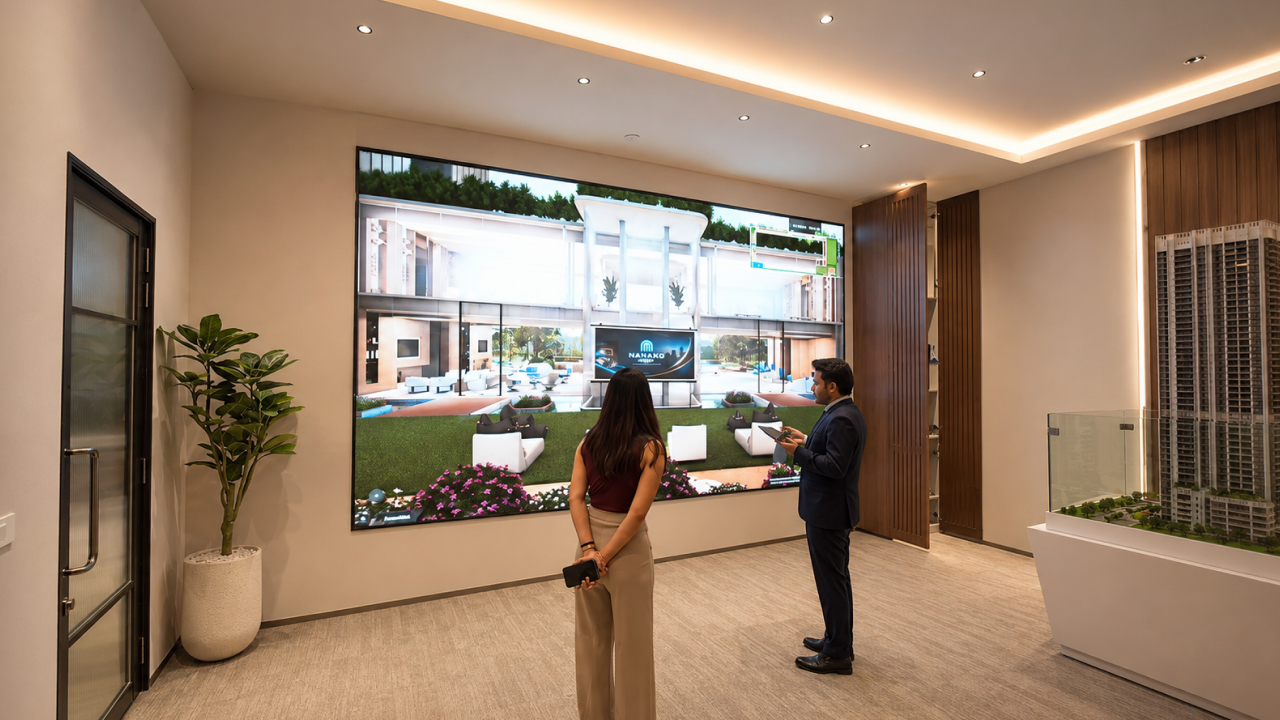
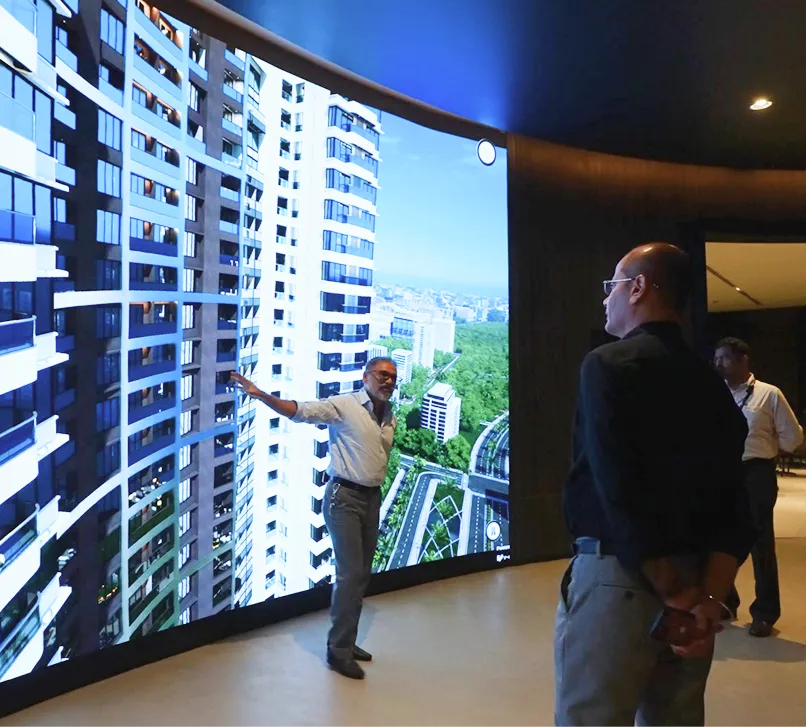
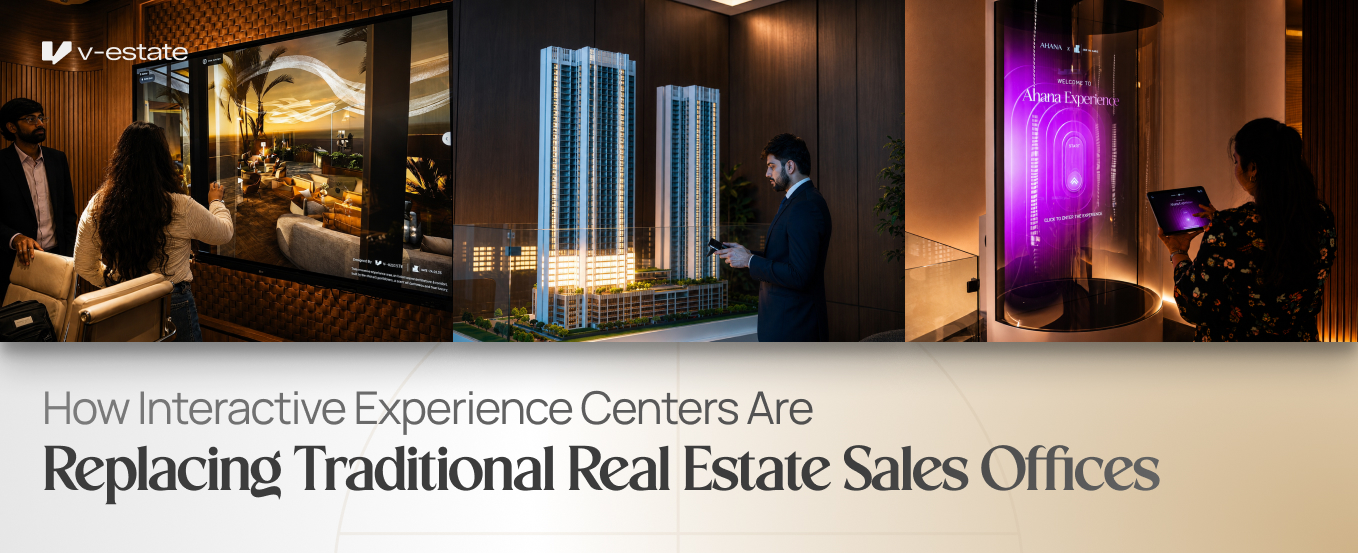
An interactive experience center replaces passive observation with active exploration. Instead of looking at a static scale model or printed booklet, buyers use large-format touchscreens, immersive video walls, and tablet-controlled displays to navigate a property autonomously.
Core Technologies Driving Interactive Property Presentations
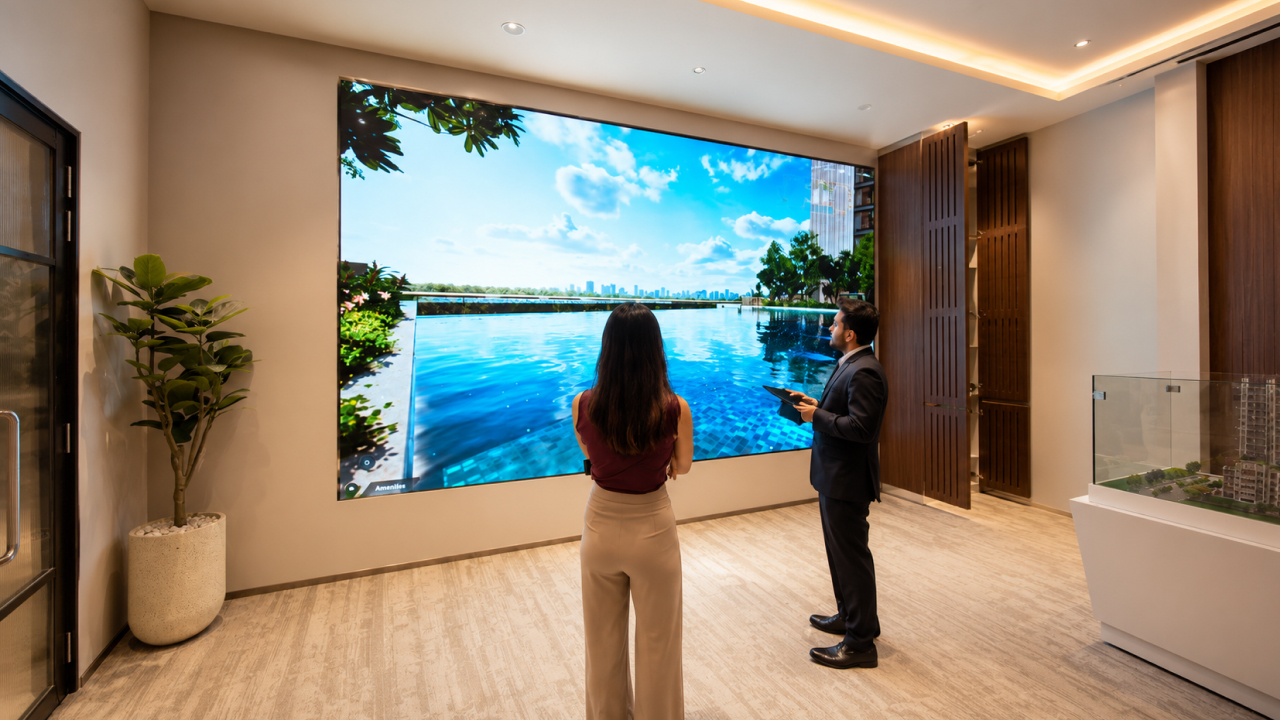
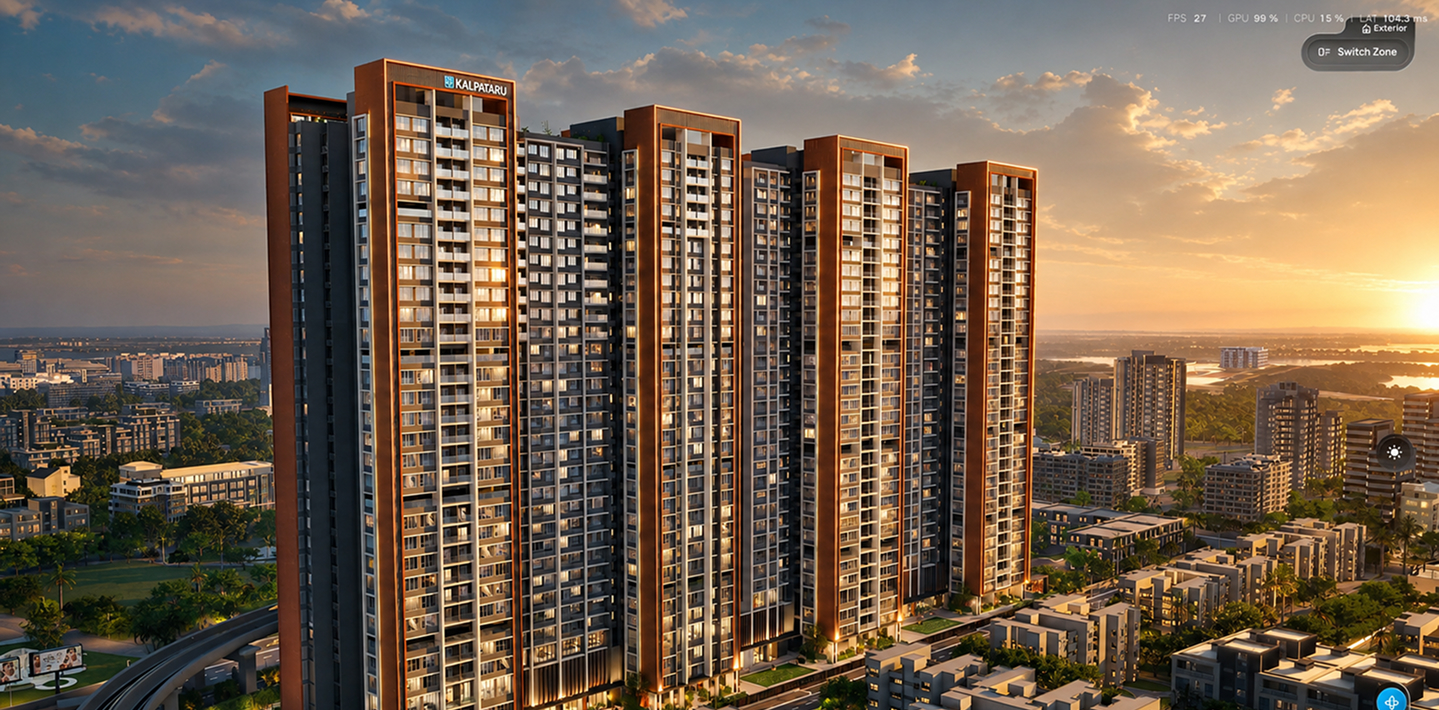
High-performance rendering engines now allow developers to run photorealistic 3D virtual show flats directly inside their physical sales galleries. Unlike standard pre-recorded videos, these real-time systems allow users to control their own movement through the property.
- Interactive Property Walkthroughs: Buyers move freely from room to room, inspecting ceiling heights, finishes, and layout transitions.
- Amenity Showcase: Buyers explore clubhouses, swimming pools, fitness centers, and landscaped gardens as if walking through them in person.
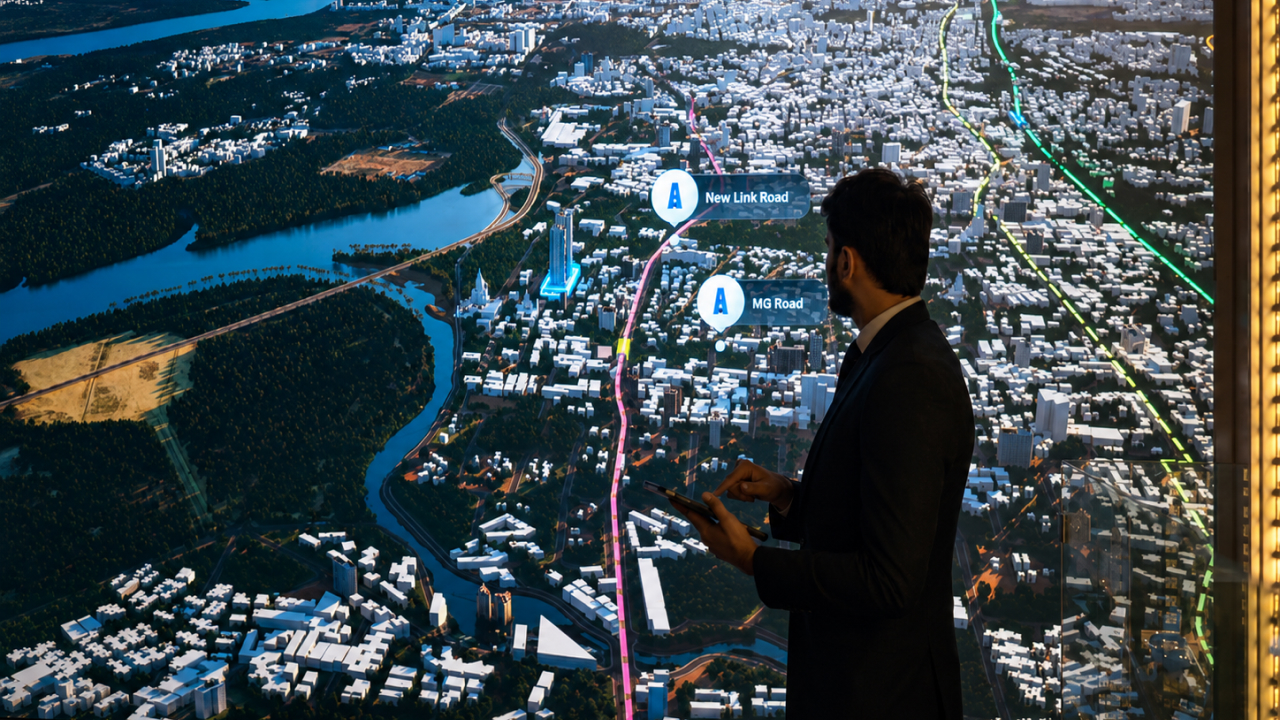
- Vicinity Mapping: Interactive maps display connecting roads, transit hubs, schools, hospitals, and business districts with exact travel distances.
- Infrastructure Visualization: Clear visual overlays highlight existing municipal connectivity alongside upcoming infrastructure projects.
Shifting Buyer Psychology Through Active Exploration
When buyers control the journey, their psychological stance shifts from passive evaluation to active ownership. Exploring a digital show flat triggers the same sense of familiarization as visiting a completed physical building.
By removing ambiguity, developers reduce perceived financial risk. A buyer who has examined the actual window view from a 14th-floor apartment is significantly more confident than one looking at a generic floor plate drawing.
Overcoming Off-Plan Hesitation Through Real-Time Customization
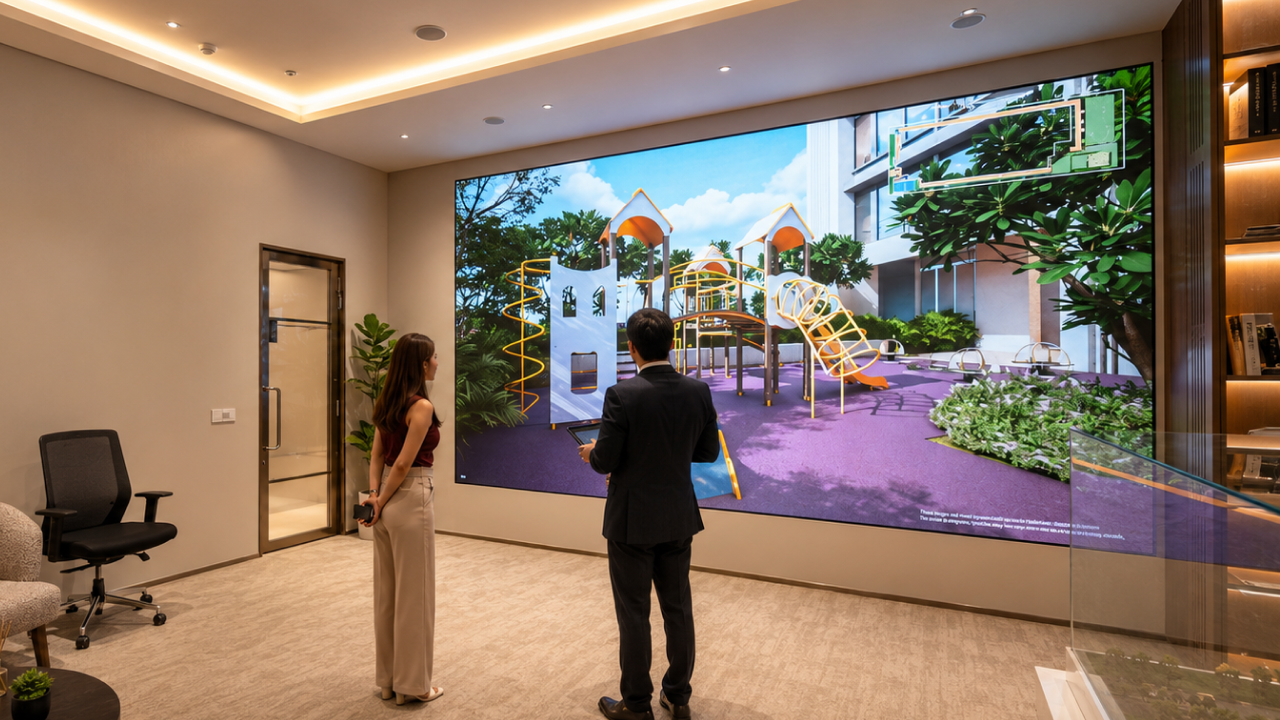
One of the most effective ways to close an off-plan property sale is to help the buyer personalize the space during their office visit. Traditional sample flats force buyers to accept a single interior design style that may not match their personal taste.
Tailoring Interiors, Wall Paint, and Layout Finishes Live
Modern interactive systems allow sales executives to modify finishes in real time during a client presentation. This flexibility removes design-related objections before they stall a transaction.
- Wall Paint Customization: Buyers toggle between warm neutrals, accent walls, and cool tones to see how light reflects across the living space.
- Furniture Customization: Sales teams can switch between contemporary, classic, or minimal furniture layouts to demonstrate room versatility.
- Interior Finishes: Flooring materials, kitchen countertops, and cabinetry styles can be swapped instantly to match buyer preferences.
Simulating Dynamic Day & Night Lighting and Weather
Natural lighting is a primary consideration for real estate buyers. Interactive visualization tools simulate sun paths and environmental variations with mathematical accuracy.
- Dynamic Day & Night Lighting: Buyers can adjust the time of day to view morning sunlight in the kitchen or twilight ambiance from the balcony.
- Seasonal Weather Controls: Developers can demonstrate how the property looks during summer sunshine, monsoon rains, or crisp winter afternoons.
- Realistic Window Views: By integrating drone-captured surround photography, the platform shows actual eye-level views from any specific floor or balcony.
Practical Applications Across Diverse Asset Classes
Interactive visualization is not limited to a single real estate category. Developers use these offline platforms across diverse property developments to address specific sales challenges and streamline customer acquisition.
Township Developments and Infrastructure Visualization
Master-planned townships span hundreds of acres, making it impossible for a buyer to understand the scale from a paper map. An interactive vicinity and infrastructure map lets buyers explore distances between residential towers, retail plazas, schools, and entry gates with touch controls.
Showing upcoming municipal infrastructure overlays helps investors visualize future connectivity. This visual transparency reinforces long-term capital appreciation potential and justifies pricing in developing corridors.
High-Rise Residential and Luxury Apartment Projects
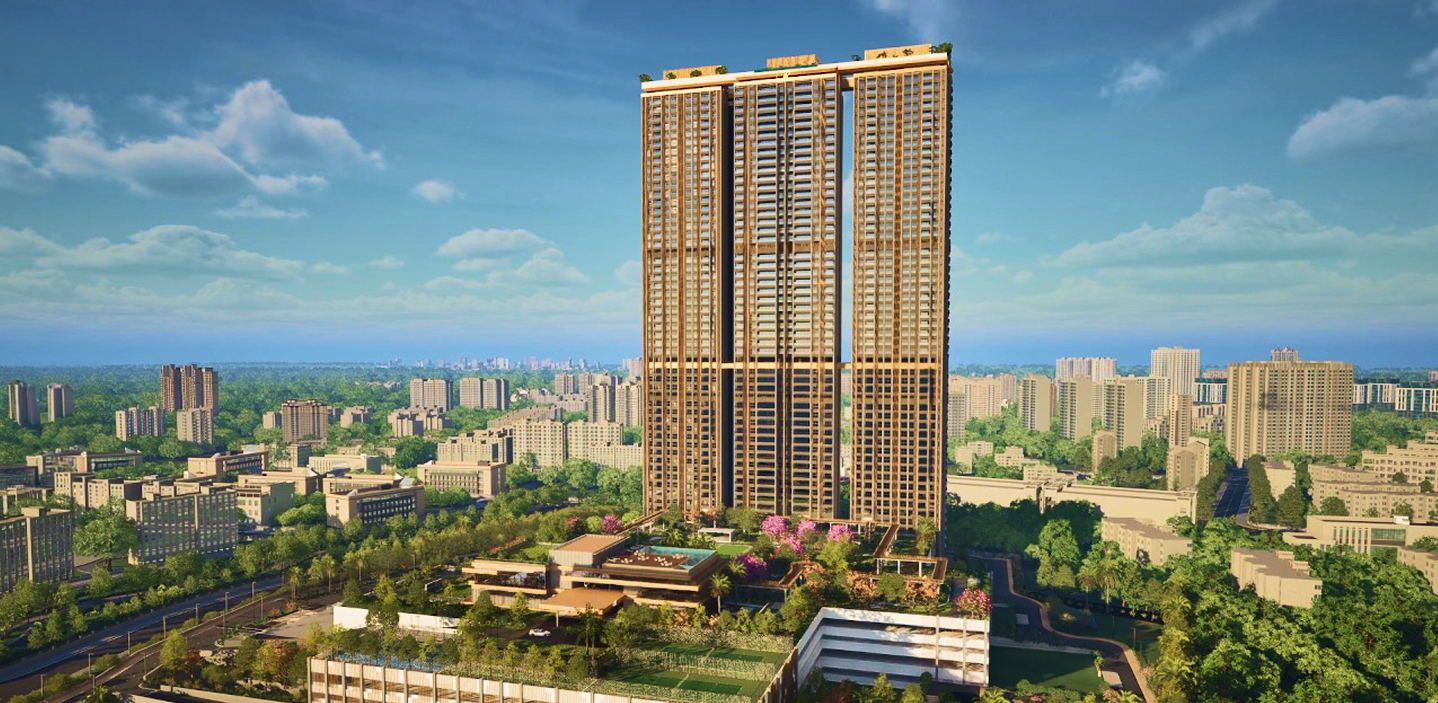
In premium vertical residential sales, architectural details drive decisions. High-net-worth buyers expect absolute clarity regarding finishes, privacy, tower separation, and outdoor views.
Interactive showrooms allow luxury developers to showcase penthouse floor plates and high-end material specifications without building multiple physical sample flats. Buyers can inspect balcony sightlines and floor-by-floor inventory availability instantly.
Empowering Offline Sales Environments with V-Estate
A practical example of this transformation is V-Estate. Designed specifically for property developers and builders, V-Estate is an offline interactive real estate sales solution engineered for physical sales environments.
Unlike online property portals or web-based virtual tours, V-Estate operates directly inside physical sales infrastructure. It delivers zero-latency, high-reliability offline performance in sales experience centers, builder offices, project launch events, property exhibitions, and investor presentations.
The platform integrates photorealistic 3D virtual show flats, a complete amenity showcase, interactive vicinity mapping, and infrastructure visualization into a single offline interface. By featuring dynamic day and night lighting, seasonal weather controls, realistic window views, and interactive interior customization, V-Estate equips sales teams to conduct consultative, data-driven meetings.
This approach transforms the traditional sales gallery into an engaging exploration hub. Developers benefit from higher lead conversion, reduced sales cycles, better customer engagement, and improved customer satisfaction without relying on internet connectivity during critical sales moments.
Conclusion
The shift from traditional real estate sales offices to interactive experience centers reflects a broader evolution in consumer expectations. Modern property buyers demand transparency, architectural clarity, and verifiable information before committing to off-plan investments.
Static printed brochures, rigid scale models, and passive sales pitches create unnecessary hesitation. By introducing real-time interactive visualization into physical sales environments, developers empower buyers to explore, customize, and validate properties on their own terms.
Investing in immersive offline sales tools improves sales efficiency, reduces physical show-flat expenditures, and significantly shortens the sales cycle. Developers looking to modernize their offline property sales experience must evaluate how interactive experience centers turn conventional sales galleries into high-converting, customer-centric environments.