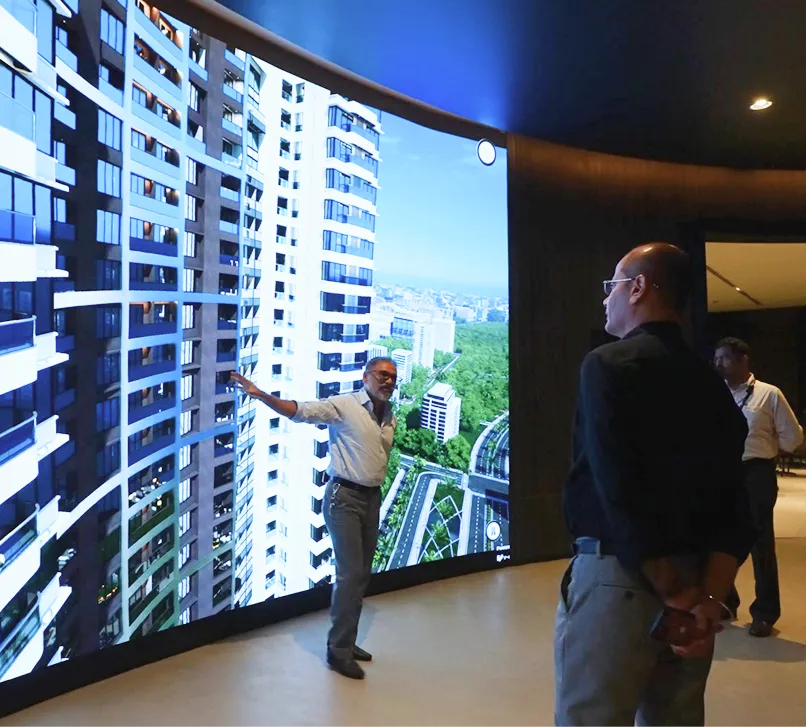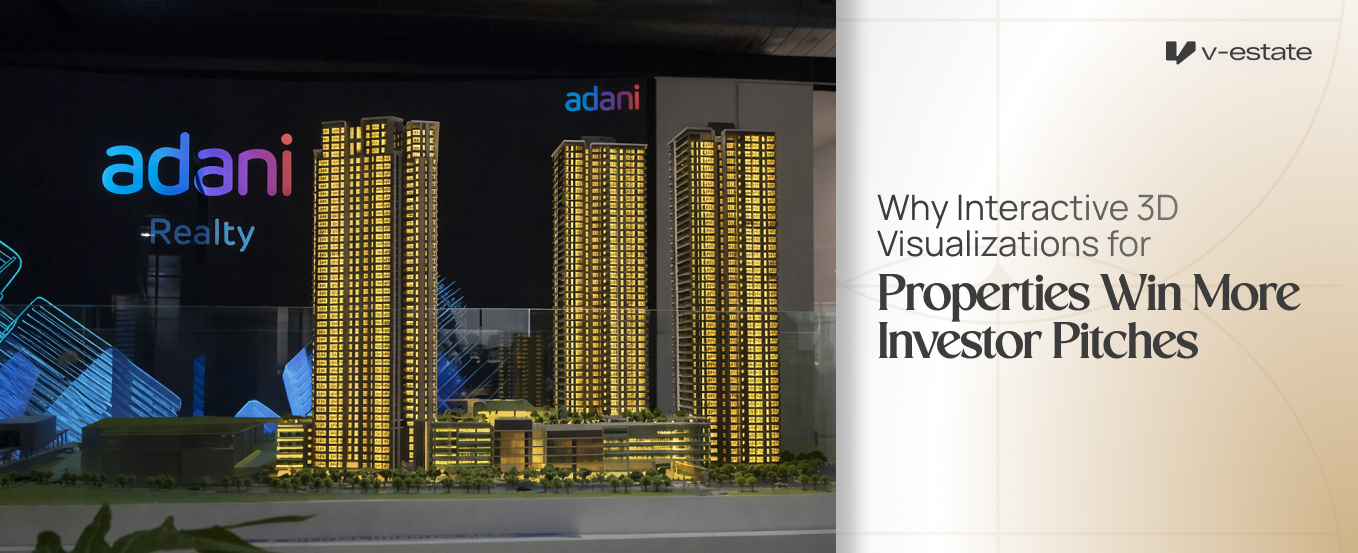
Securing capital for large-scale real estate developments is a high-stakes process. Institutional investors, private equity firms, and high-net-worth individuals evaluate projects based on risk mitigation and projected returns. While financial models and spreadsheets dictate the numbers, securing final commitment requires investors to truly understand and believe in the physical asset.
Historically, developers relied on static pitch decks, 2D architectural renderings, and physical scale models to present their vision. Today, these legacy tools introduce unnecessary friction into the boardroom. They fail to convey the true scale, contextual environment, or operational reality of a future development, leaving critical spatial questions unanswered.
When investors are forced to bridge the gap between a 2D floor plan and a finished multi-million-dollar project using only their imagination, perceived risk increases. To secure funding in a highly competitive market, developers must eliminate this ambiguity. Implementing advanced 3D visualizations for properties transforms a standard funding pitch into a tangible, risk-adjusted experience, accelerating investor conviction and closing deals faster.
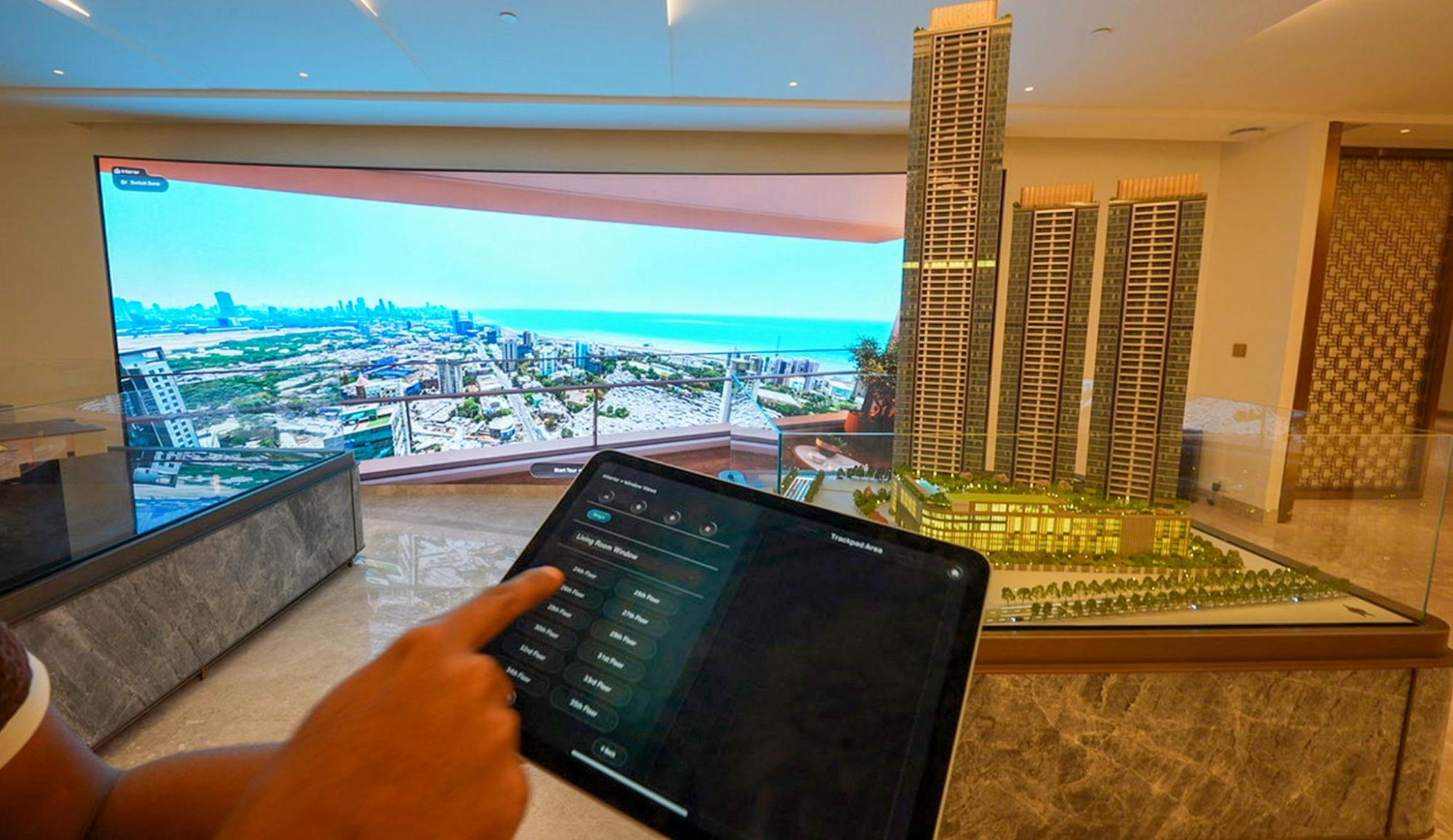
The Core Challenge of Real Estate Investor Presentations
Investors evaluate real estate opportunities by analyzing location, market demand, and execution feasibility. During a pitch, developers must prove that their proposed design maximizes these three variables.
Physical scale models and static renders have severe limitations in this context. A scale model shows the geometry of a building, but it cannot demonstrate how the lobby connects to upcoming municipal infrastructure. A static render shows a polished interior, but it cannot prove that the floor plate is highly efficient for future commercial tenants.
When developers cannot visually prove the contextual value of their project, investors remain skeptical. They ask complex logistical questions that printed collateral simply cannot answer on the spot. This forces developers into prolonged cycles of follow-up meetings, slowing down the funding process and risking capital deployment elsewhere.
How Immersive Visualization Shifts Investor Psychology
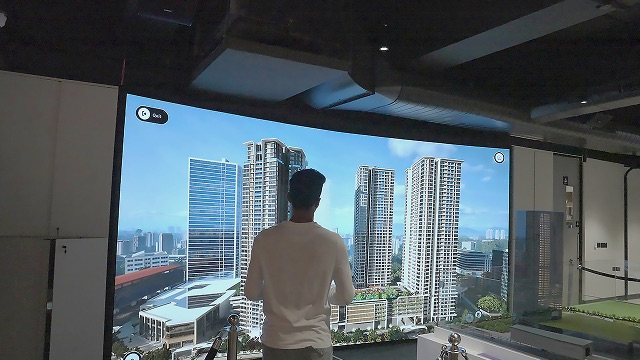
To win funding, developers must reduce the perceived risk in the investor's mind. Property 3D visualization achieves this by replacing abstract promises with concrete, interactive data.
When an investor can navigate a high-fidelity digital twin of a proposed development, their psychology shifts from skeptical analysis to active engagement. They are no longer analyzing a concept; they are evaluating a tangible asset. This immediate visual validation answers their logistical questions instantly.
The business benefits of this shift are highly measurable for developers:
- Faster Capital Approval: Investors commit quicker when they can visually verify the asset's viability.
- Stronger Valuation Justification: High-quality visualization justifies premium projected yields.
- Reduced Friction: Interactive tools answer spatial and contextual questions in real-time, preventing stalled negotiations.
- Competitive Differentiation: Pitching with advanced technology positions the developer as a forward-thinking, reliable partner.
Moving Beyond Static: The Rise of the Offline Experience Centre
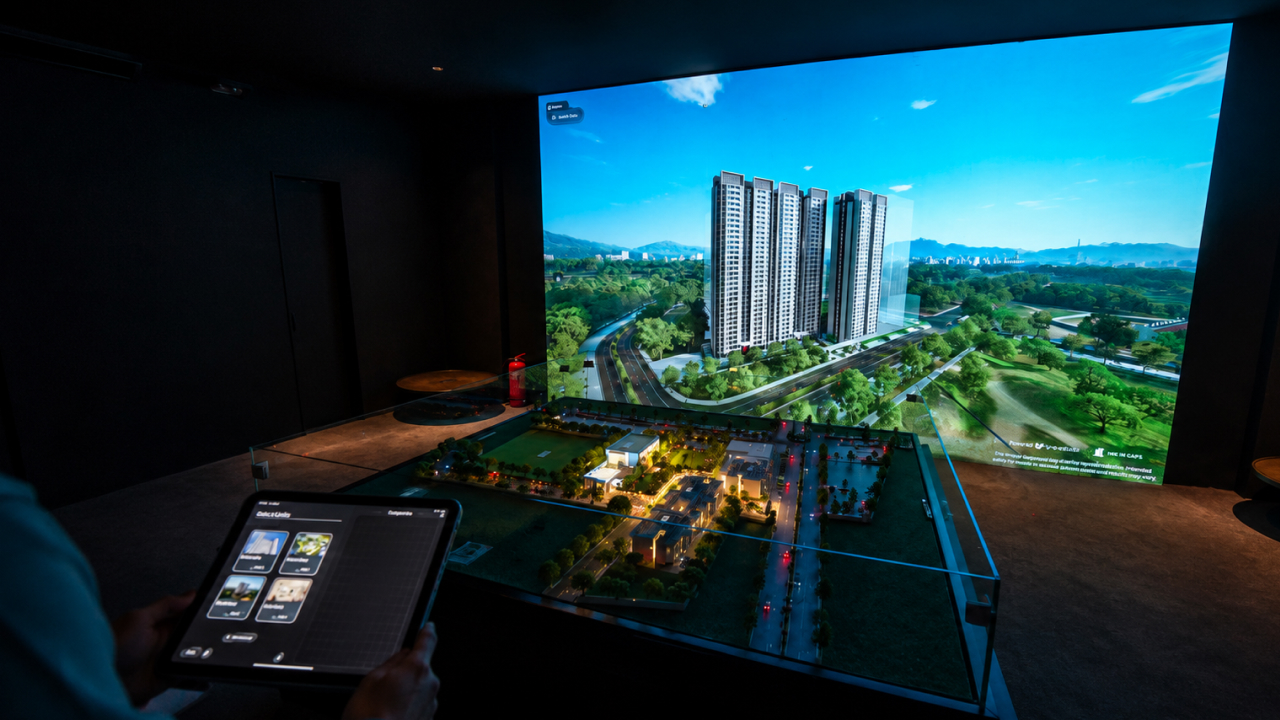
Pitching a massive commercial or residential project is not done over a laggy web browser. High-value investor presentations require a controlled, zero-latency environment where the developer dictates the narrative.
This necessity is driving the evolution of the offline Experience Centre and the modernized boardroom. Developers are upgrading their physical sales galleries and corporate offices with dedicated presentation pods, interactive touchscreens, and immersive projection rooms.
Offline 3D visualization solutions for property developers ensure that the presentation runs flawlessly, without reliance on internet bandwidth. It allows the presenter to read the room, pivot the demonstration based on investor questions, and maintain absolute control over the high-fidelity visual experience.
Activating the Pitch: A Practical Approach
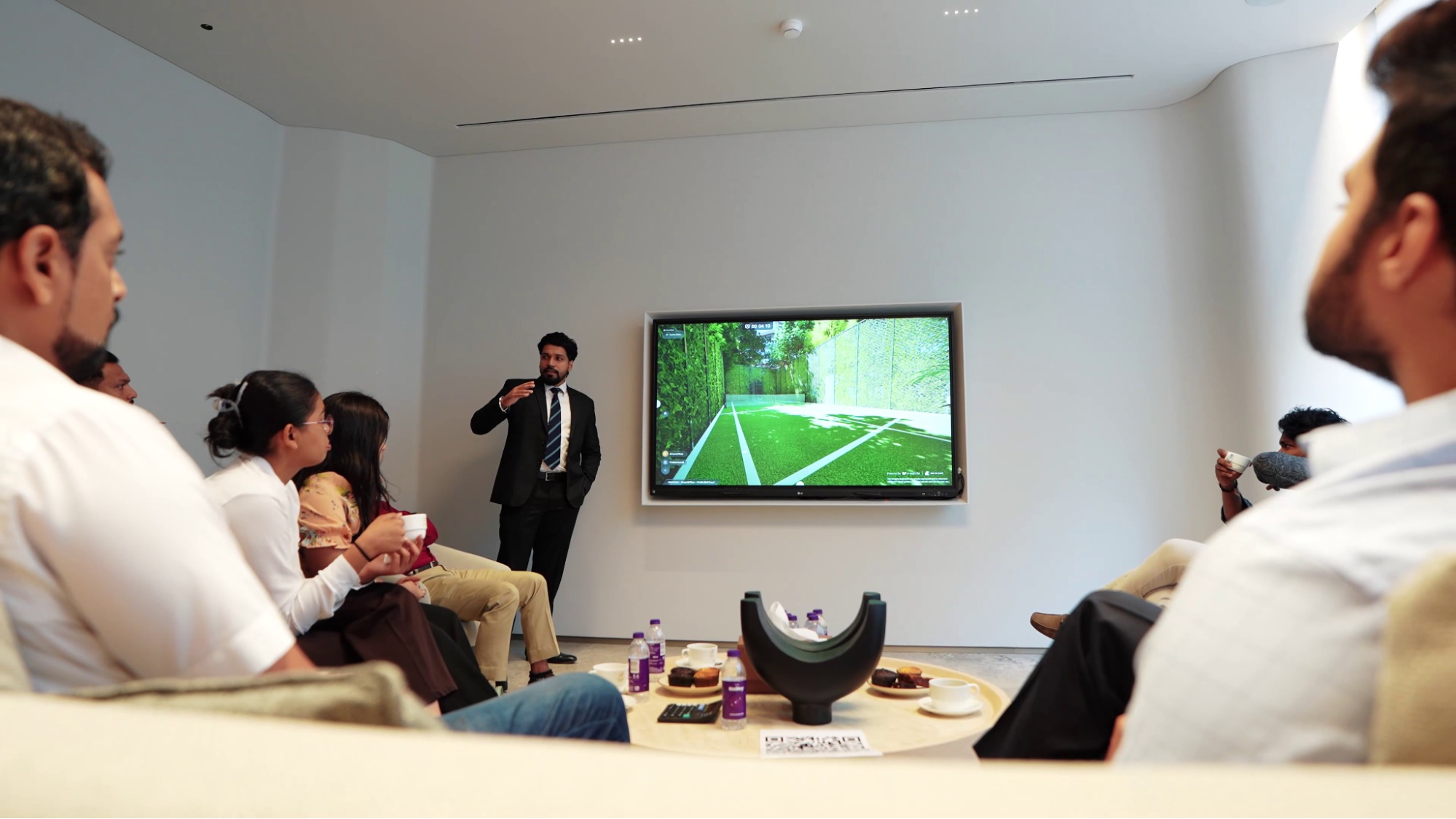
Building a high-performing offline presentation environment requires enterprise-grade software capable of rendering complex architectural data in real-time. One practical example of this approach is V-Estate.
V-Estate is an offline interactive real estate sales solution engineered specifically for property developers and builders. It is deployed directly inside builder offices, investor presentation rooms, and project launch events to transform traditional pitches into interactive experiences.
By integrating V-Estate into their pitch strategy, developers leverage powerful offline activation capabilities:
- Interactive Property Walkthroughs: Allowing investors to explore exact floor plates and spatial flow in real-time.
- Vicinity Mapping: Showcasing current and upcoming neighborhood infrastructure to prove location value and future appreciation.
- Photorealistic 3D Virtual Show Flats: Proving the quality of finish and lifestyle appeal to secure high-end residential funding.
- Dynamic Environments: Demonstrating realistic window views and natural lighting at different times of the day.
- Customization: Allowing investors to see different layout configurations or interior setups instantly.
Practical Use Cases for Developer Pitches
Integrating a real estate 3D visualization platform into an investor pitch strategy yields high returns across multiple real estate asset classes.
- Mixed-Use Townships: For sprawling master plans, physical models fail to convey ground-level operational flow. Interactive walkthroughs allow investors to navigate from residential blocks to commercial zones, proving the integration of the master plan.
- Commercial Real Estate: Institutional investors require hard data on floor plate efficiency. 3D visualization allows them to evaluate core-to-window depths, tenant layout flexibility, and lobby grandeur before construction.
- Luxury Residential: Private equity looking to fund luxury developments demands perfection. Virtual show flats allow them to inspect premium finishes and verify exact sightlines that justify high price-per-square-foot projections.
- Infrastructure-Driven Projects: Projects relying on upcoming transit hubs or highways benefit immensely from vicinity mapping. Showing the exact proximity of future infrastructure secures investor confidence in long-term yields.
- Property Exhibitions & Roadshows: Offline activation platforms can be deployed at international property exhibitions, providing a striking, interactive visual centerpiece to attract foreign direct investment.
Conclusion
Securing capital in the 2026 real estate market requires absolute clarity, precision, and the ability to mitigate investor risk instantly. Developers who continue to rely on static pitch decks and inflexible scale models will struggle to secure funding against competitors who provide interactive, data-rich presentations. Implementing advanced 3D visualization solutions is a proven strategy to eliminate boardroom friction and build immediate investor trust.
By upgrading from traditional collateral to immersive offline environments, developers can present a compelling, risk-adjusted narrative for every project. Providing investors with the ability to physically explore an unbuilt asset transforms abstract financial projections into a highly convincing reality. Developers looking to elevate their investor presentations should consider integrating robust, high-fidelity offline platforms to turn ambitious blueprints into fully funded realities.
.jpg)