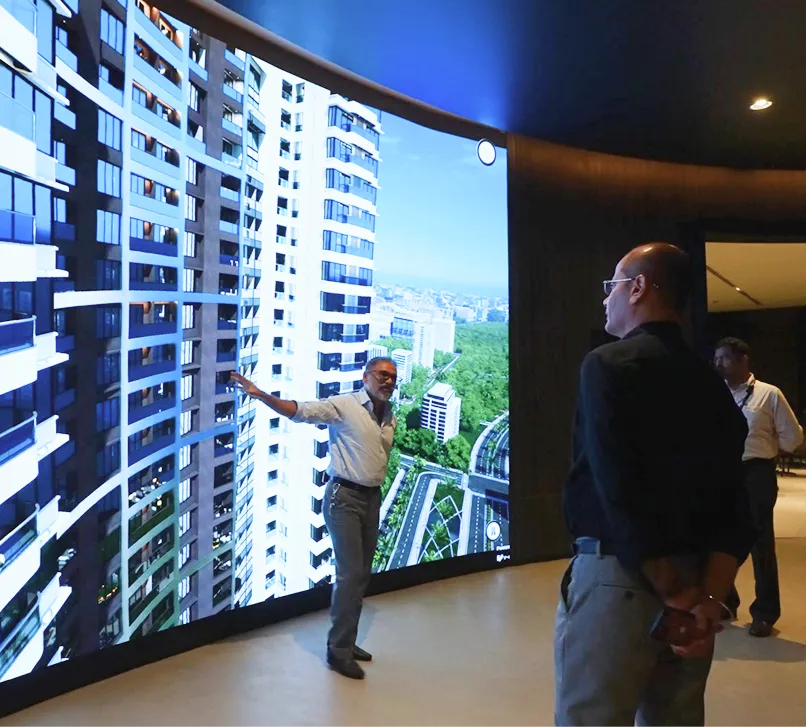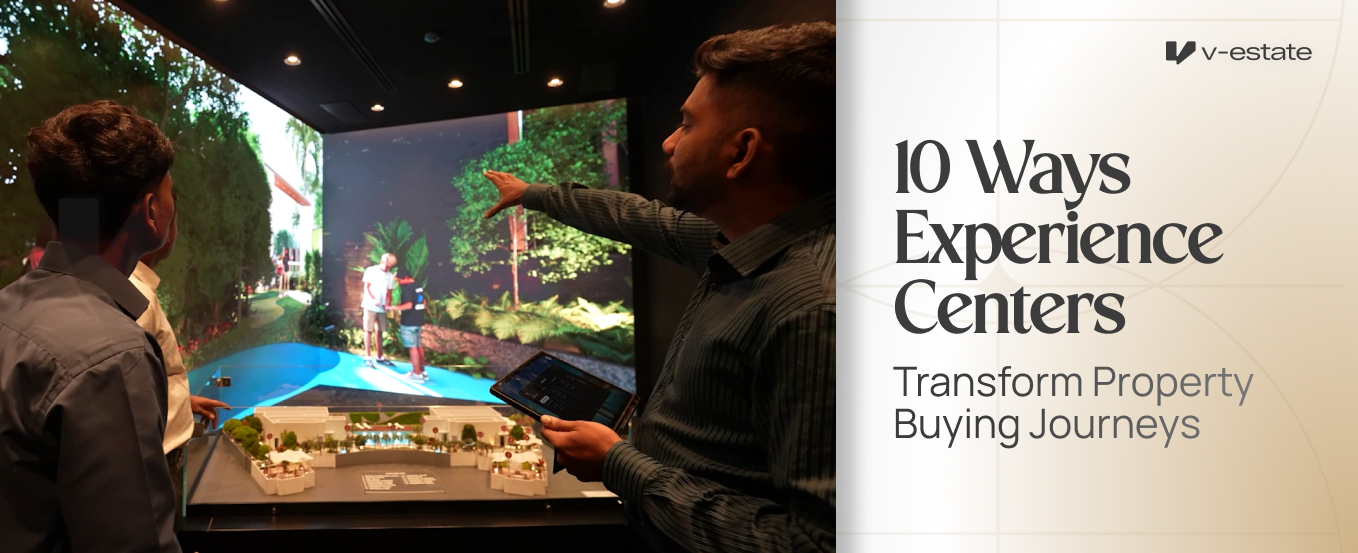
Buyers do not walk into a site office ready to decide. They walk in carrying doubt. Unfinished floors, empty shells, and printed brochures do not remove that doubt. They add to it.
Experience centers change that dynamic completely. Not as a showpiece — as a functional sales tool that moves buyers from consideration to commitment faster, more reliably, and without price pressure.
Here is exactly how.
1. Photorealistic Property Visualisation Replaces Guesswork
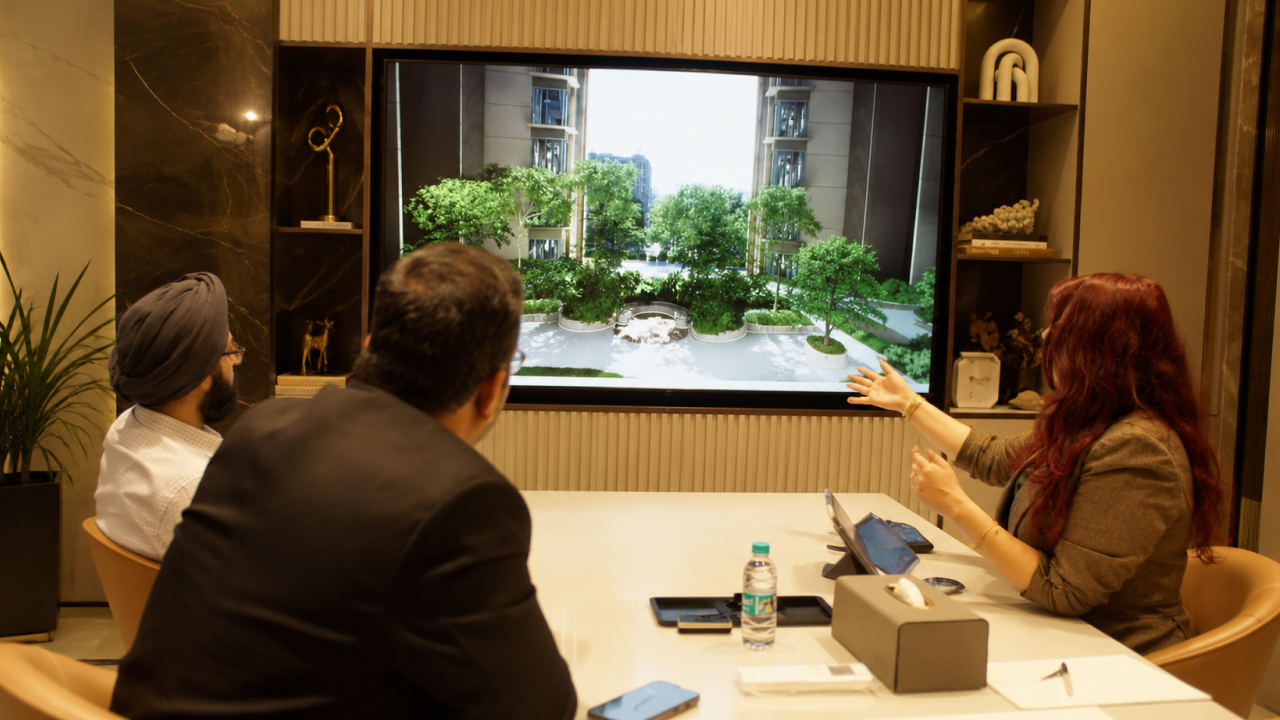
Buyers cannot mentally construct a finished home from a floor plan. Most people simply do not think spatially at that level.
A photorealistic 3D virtual show flat removes the guesswork entirely. Every surface, proportion, finish, and spatial relationship is visible — exactly as it will be on possession day. Buyers stop imagining. They start experiencing.
That shift from imagination to experience is where trust begins.
2. Dynamic Lighting Simulation Answers Unasked Questions
Every buyer thinks about light. Almost none of them ask about it directly.
Will the bedroom feel dark in the morning? Does the living room get afternoon sun? What does the balcony look like at dusk?
Dynamic lighting and weather controls answer these questions before they become objections. Buyers see the property across different times of day and across seasons — in one sitting, inside the experience center.
3. Real-Time Unit Customisation Creates Mental Ownership
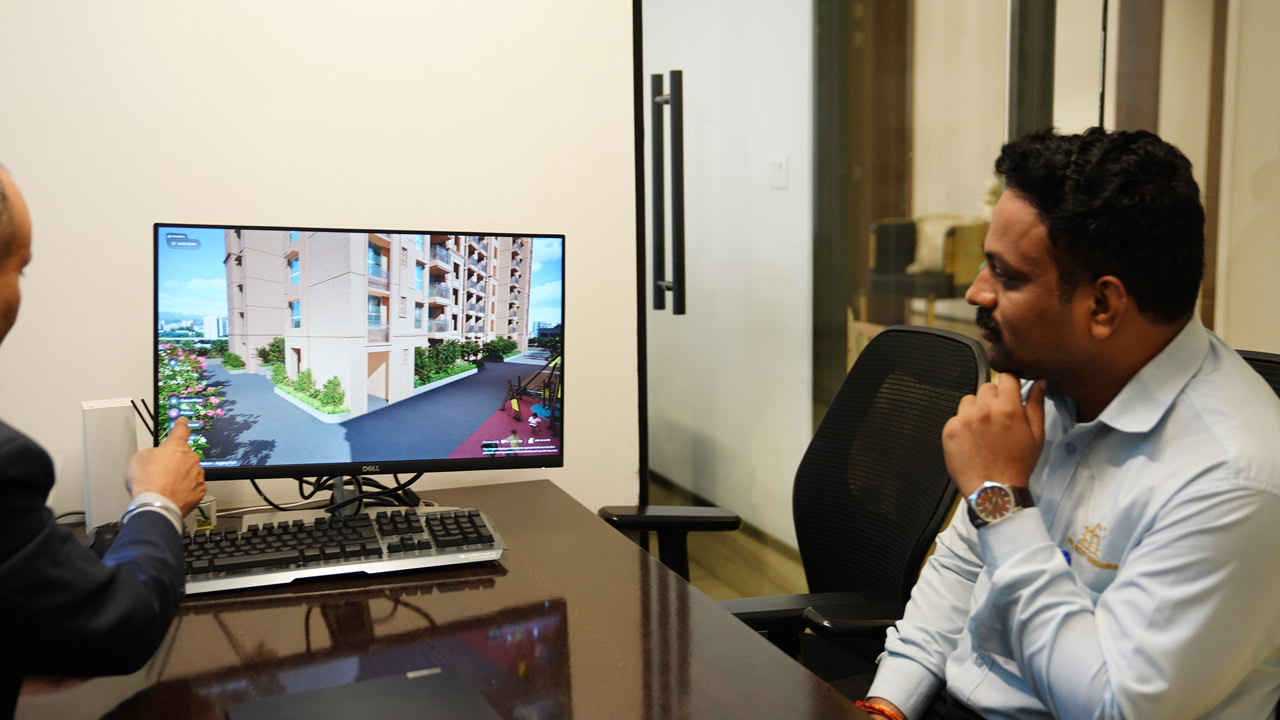
Buyers commit faster when they feel the property is already theirs.
Real-time customisation — wall finishes, flooring options, furniture placement, fixture selection — lets buyers build their version of the home during the sales conversation. This is not a gimmick. It is a psychological conversion lever.
Mental ownership precedes financial commitment. Every developer should be creating it deliberately.
4. Window View Simulation Addresses the Biggest Under-Construction Objection

Under-construction buyers are asked to pay for something they cannot see. The view from a specific unit — on a specific floor — is one of the most emotionally significant factors in a purchase decision.
Experience centers simulate the exact window view for each unit. Not a generic landscape. The actual view from that flat, at that elevation, facing that direction. This single feature removes one of the most common reasons buyers delay decisions.
5. Amenity Showcase Connects Lifestyle to Price Justification
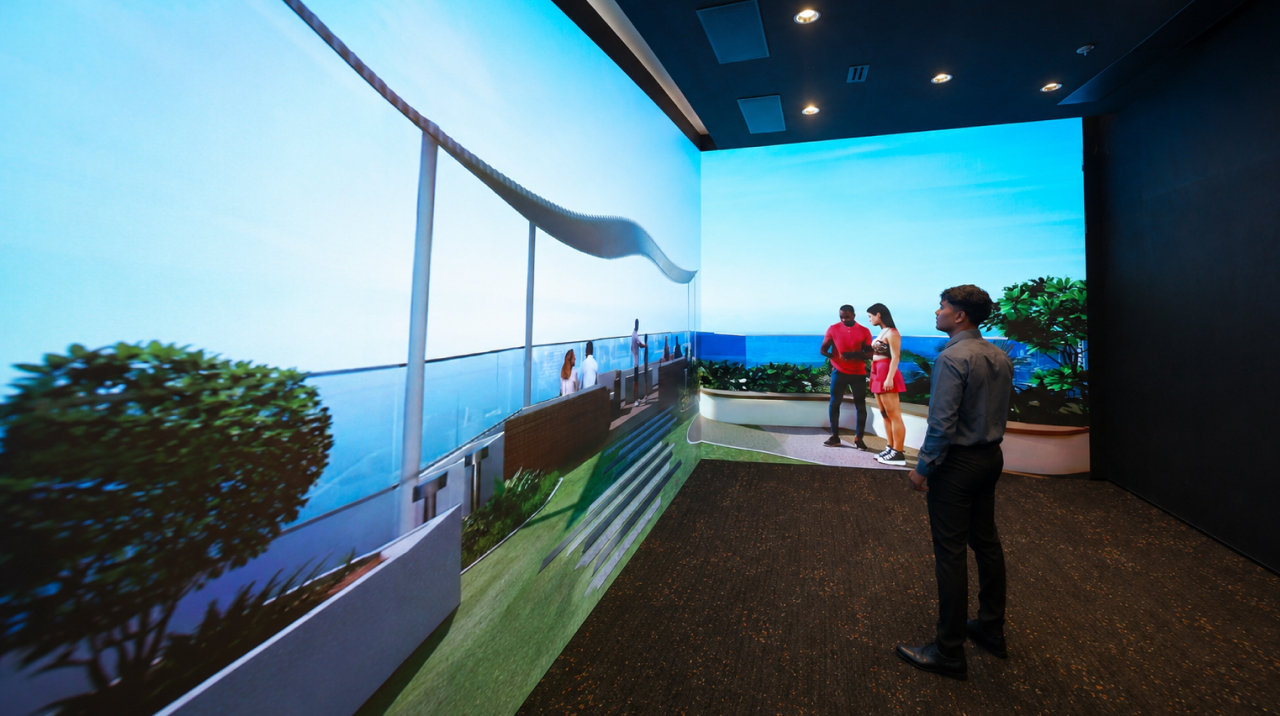
Buyers are not just buying square footage. They are buying a lifestyle. Clubhouses, pools, co-working spaces, and landscaped zones need to feel real — not diagrammatic.
An immersive amenity showcase inside the experience center makes the full lifestyle proposition tangible. Buyers walk through amenity spaces virtually before the foundation is complete. That experience justifies premium pricing far more effectively than a brochure ever can.
6. Neighbourhood Connectivity Mapping Removes Location Anxiety
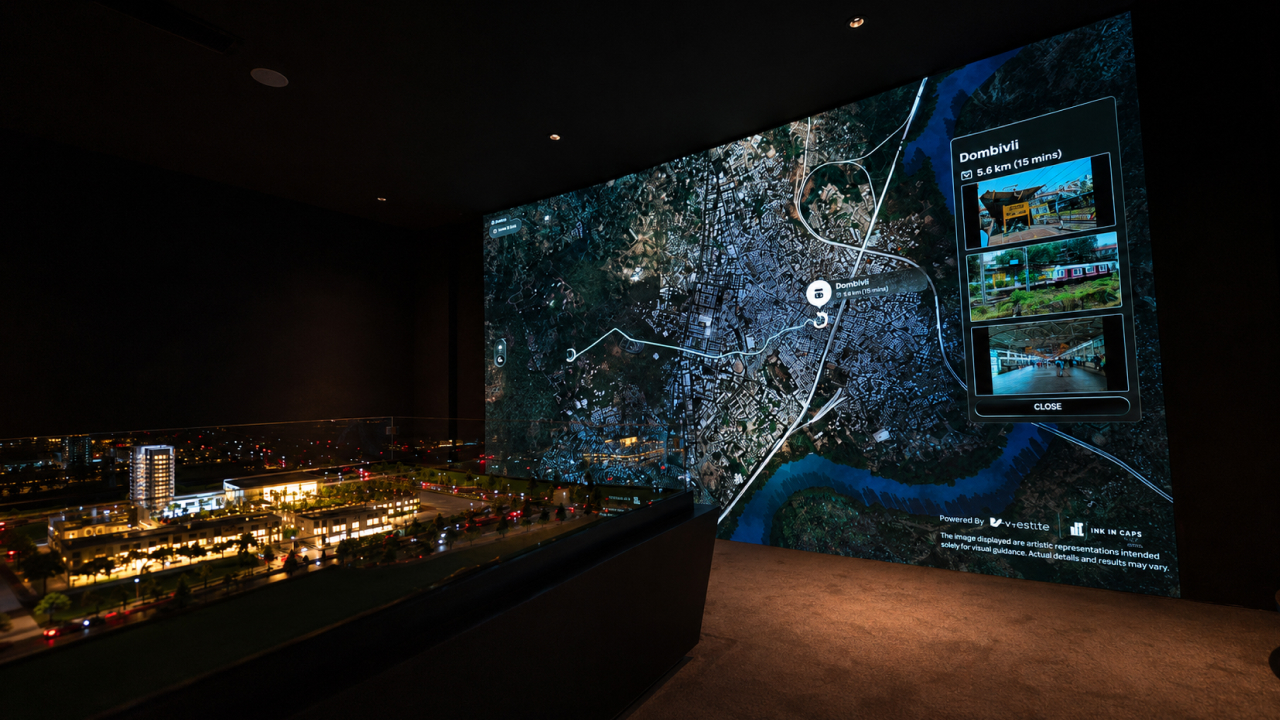
Location objections are common, especially for projects on city peripheries or in emerging micro-markets. Buyers worry about schools, hospitals, transit, and daily convenience.
V-estate maps current and upcoming neighbourhood infrastructure — roads, metro lines, commercial zones, institutions — giving buyers a complete picture of the location's present and future. Transparency here reads as developer confidence. And developer confidence closes deals.
7. Offline Immersive Environment Controls the Sales Conversation
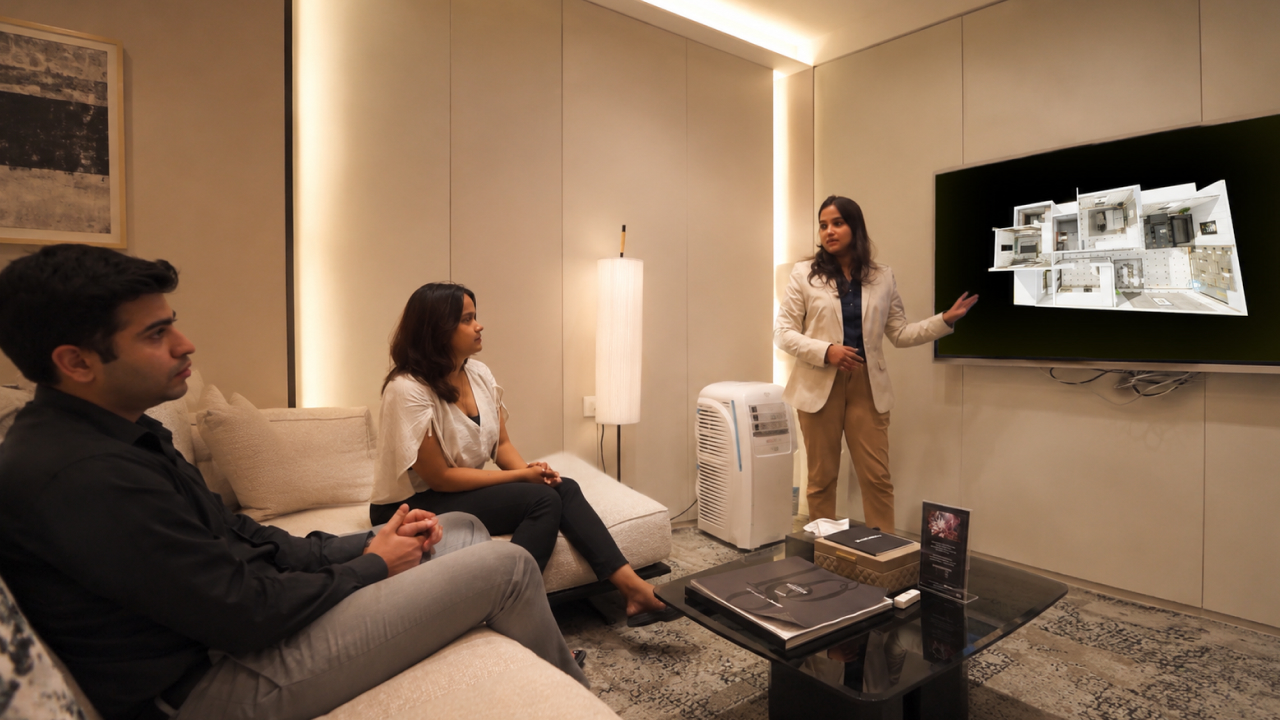
Online property tours have their place. But the experience center is a controlled, curated offline environment — and that control matters.
There are no distractions. No browser tabs. No competing listings. The buyer's entire attention is on your product, guided by your sales team, inside an environment designed to present your project at its best.
This is not a passive viewing experience. It is an active, guided decision-making journey.
8. Reduced Revisit Dependency Shortens the Sales Cycle
One of the most expensive parts of the property sales cycle is the multi-visit buyer — the person who comes back three, four, five times before deciding.
When buyers experience the full product in a single immersive session, they leave with significantly less unresolved doubt. Fewer questions mean fewer return visits. Fewer return visits mean a shorter cycle and a lower cost per acquisition.
9. Sales Team Effectiveness Increases Measurably
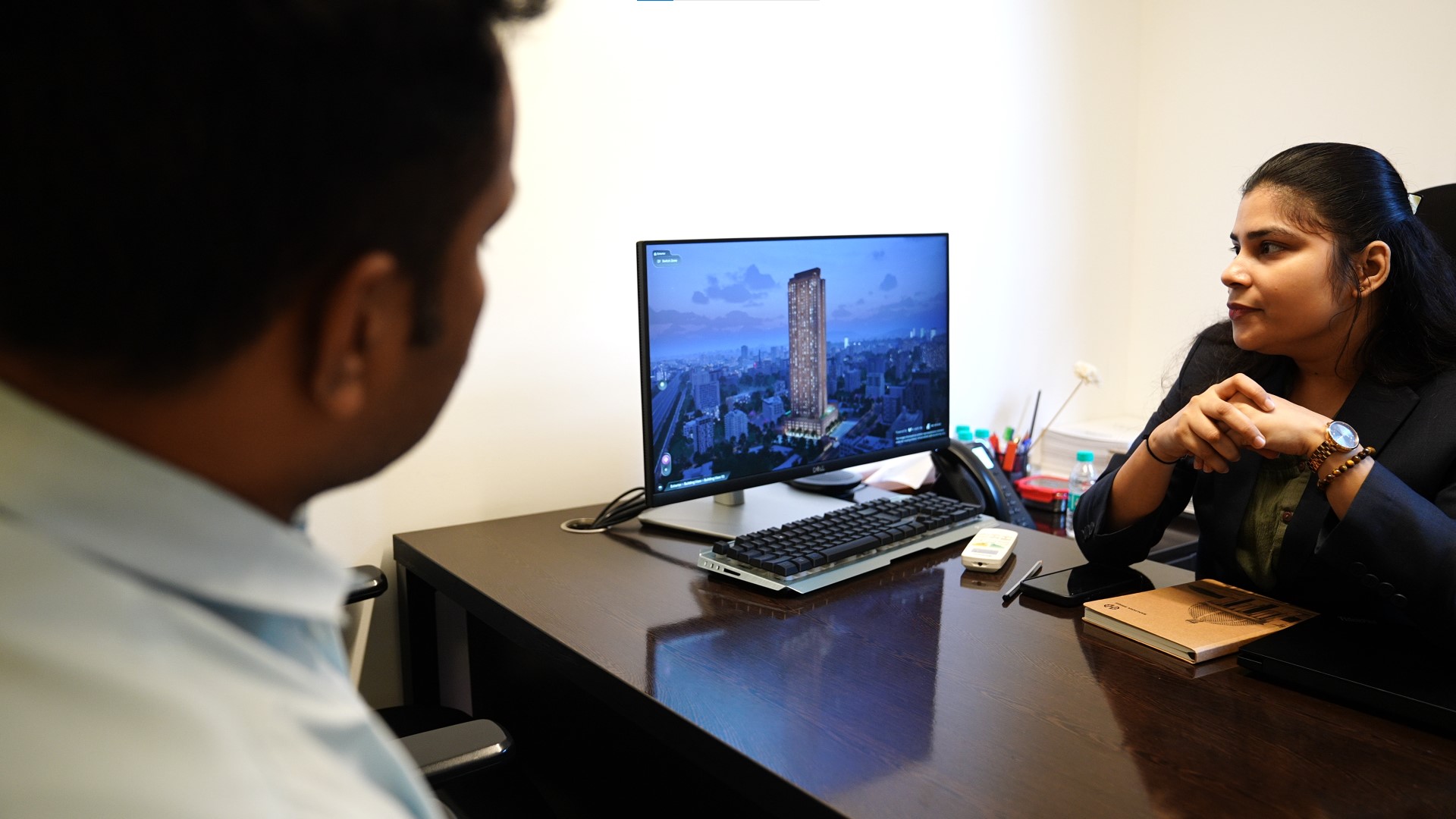
A sales team presenting a brochure is managing information. A sales team guiding a buyer through an immersive experience is facilitating a decision.
The nature of the sales conversation changes inside an experience center. Buyers engage differently. They ask fewer basic questions and more commitment-level questions. Your team spends less time explaining and more time closing.
The experience center does not replace your sales team. It elevates what they can do.
10. Premium Brand Perception Reduces Price Sensitivity
Buyers who walk through a high-quality experience center associate that quality with the developer brand. The investment in the experience signals confidence in the product.
That perception shift is commercial. Buyers who feel they are dealing with a credible, serious developer are less likely to demand discounts, more likely to refer others, and more likely to close without extended negotiation.
Brand perception built through experience is the most durable competitive advantage in real estate sales.
.jpeg)