Under-construction sales is the hardest category in real estate. Buyers are asked to pay significant sums for something that does not yet exist. No finished walls. No actual view. No way to stand in the space and feel whether it is right.
The risk is real and buyers know it. Developer defaults, delayed possession, and the gap between promised and delivered quality are documented industry realities. Every buyer walking into your site office is carrying this awareness.
The question is not whether buyers have hesitation. They do. The question is what you put in front of them that resolves it.
The Core Challenge of Under-Construction Conversions
Under-construction projects fail to convert for a predictable set of reasons:
Buyers cannot visualise the finished product accurately.
Buyers cannot assess whether the location will deliver the promised lifestyle.
Buyers cannot verify that the developer's quality claims are credible.
A brochure addresses none of these. A floor plan addresses the first one partially. A site visit to an active construction zone actively reinforces doubt rather than resolving it.
The sales environment for under-construction projects needs to do heavy lifting that most developers are not currently asking it to do.
Photorealistic Visualisation as a Trust Mechanism
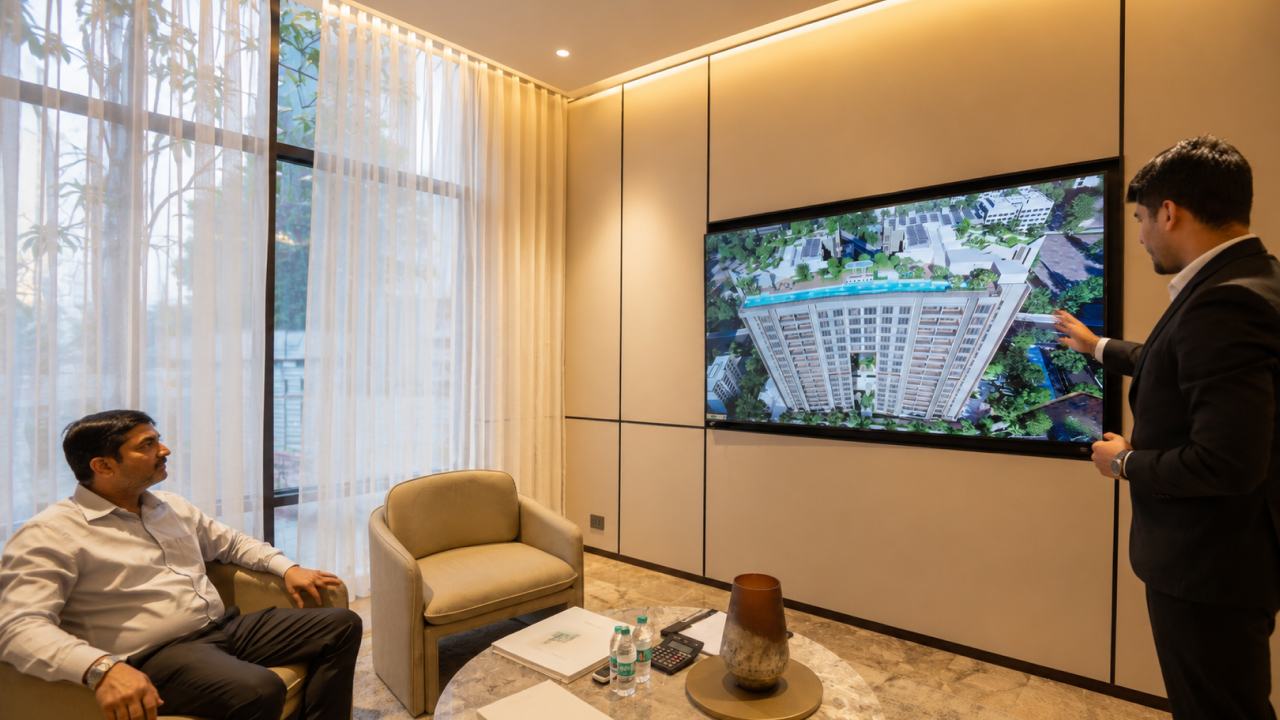
The first job of an experience center for under-construction sales is replacing uncertainty with clarity.
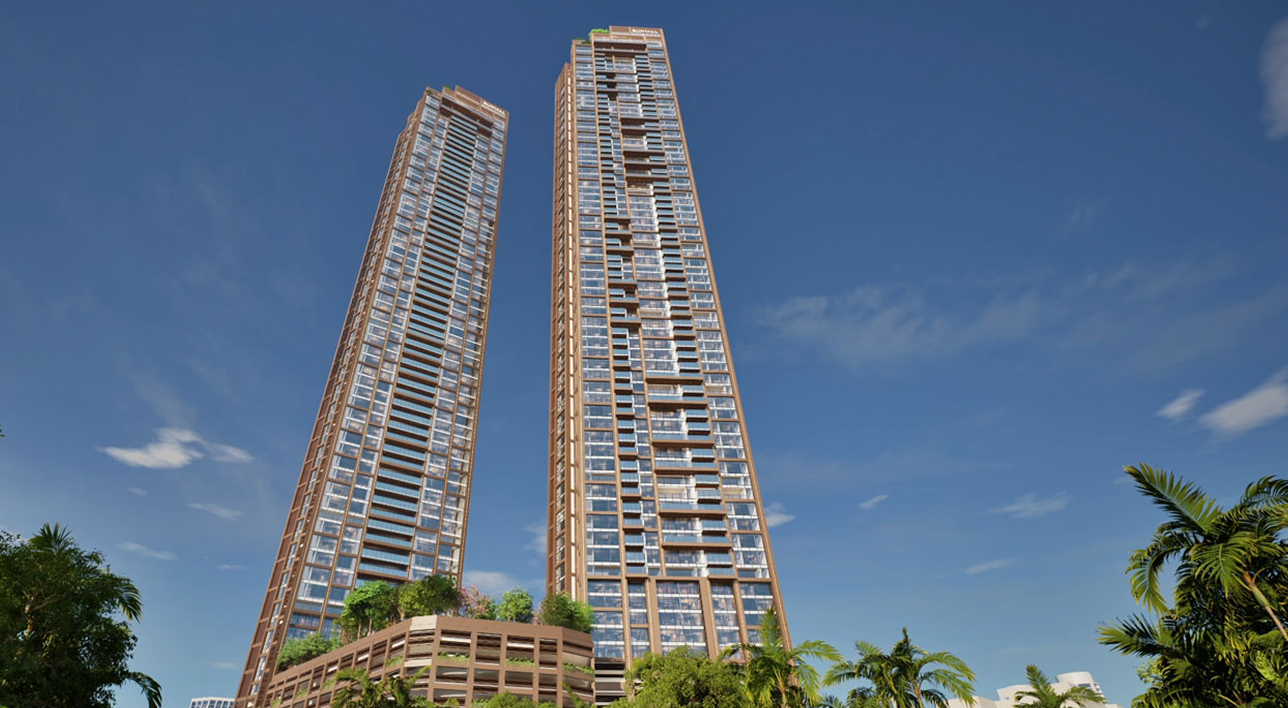
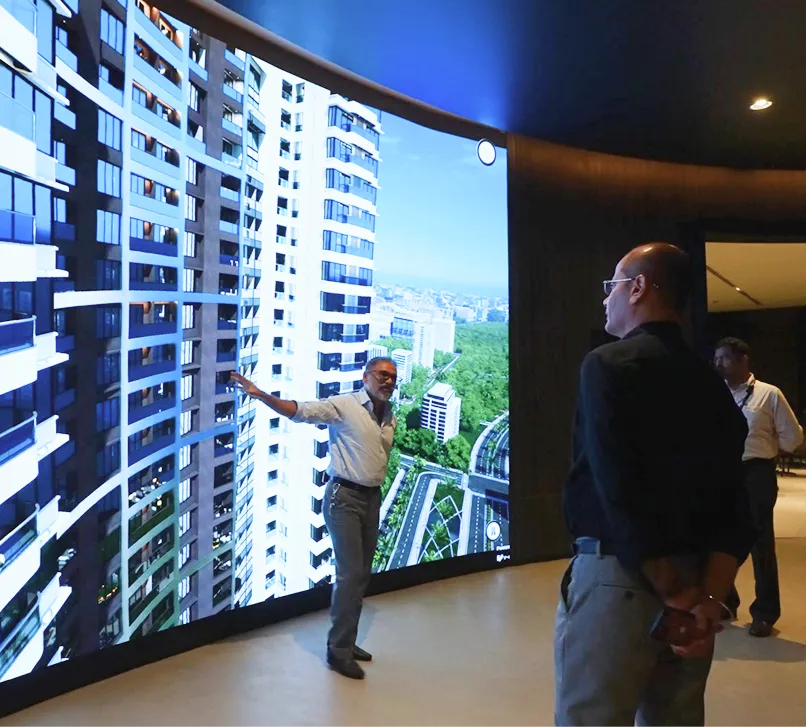
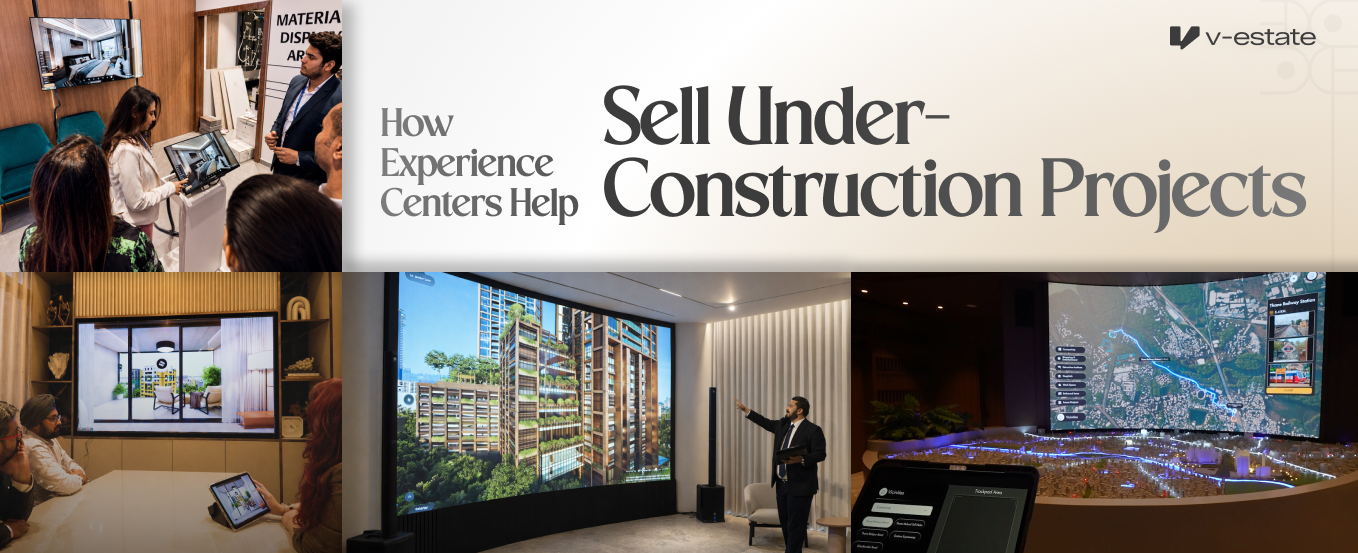
Photorealistic 3D virtual show flats present the finished property with a level of accuracy that goes far beyond rendered images. Buyers do not see a marketing visual. They experience a navigable, spatially accurate representation of the finished unit — complete with material finishes, natural light behaviour, and spatial proportions.
This is not decoration. It is evidence. And evidence is what under-construction buyers need before they will commit.
Unit-Specific Presentation for Under-Construction Inventory
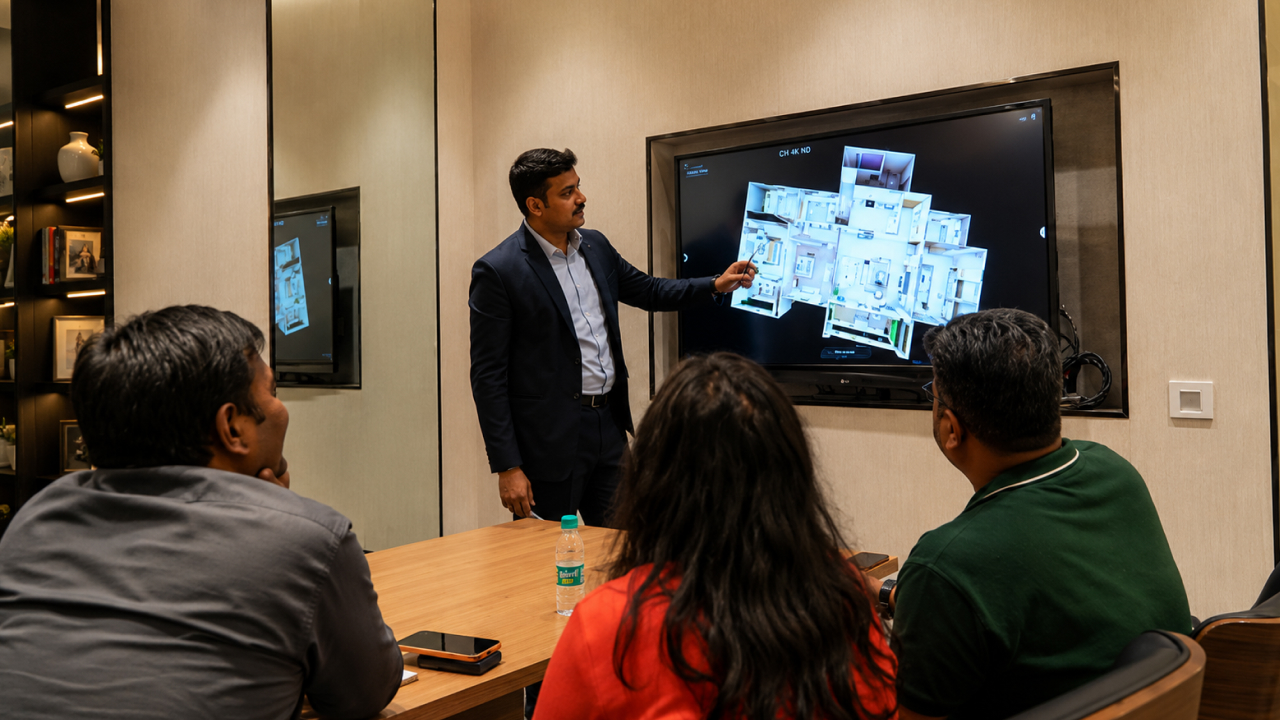
One of the most damaging limitations in under-construction sales is the inability to show specific units. A buyer interested in a corner unit on the 15th floor gets shown a sample flat that is neither a corner unit nor on the 15th floor.
The gap between what they are considering and what they can see is a conversion killer.
V-estate eliminates this gap. Every unit in the project can be presented with unit-specific accuracy — correct floor, correct facing, correct view, correct proportions. Buyers experience the exact unit they are evaluating, not a generic approximation.
This specificity is what converts browsers into buyers in the under-construction segment.
View Simulation for Elevated and Facing-Specific Units
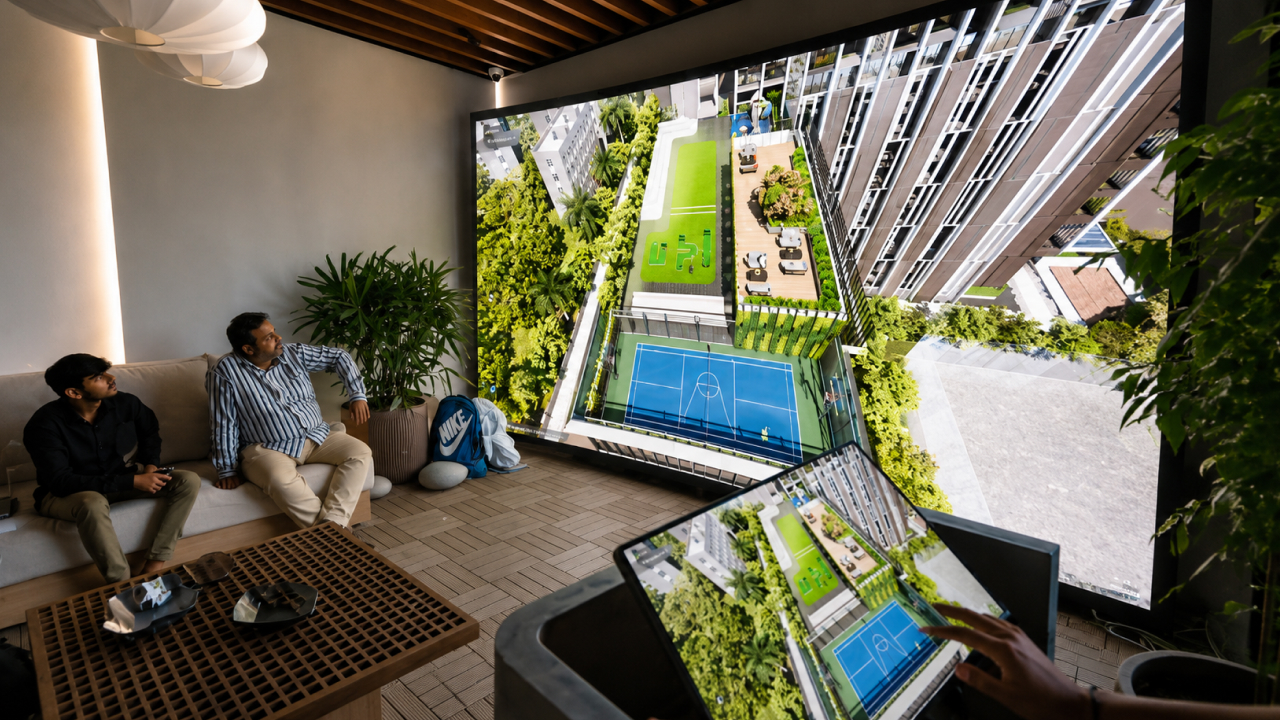
View is one of the strongest emotional drivers in under-construction sales. Buyers pay premiums for views. They also walk away when they cannot verify what they are paying for.
Dynamic window view simulation — showing the actual view from a specific unit at a specific elevation — is among the most conversion-critical features in an under-construction experience center.
A buyer who can see exactly what their morning coffee view will look like, from their specific floor, in their specific unit, has answered the question that most commonly delays commitment.
Neighbourhood Mapping for Location Confidence
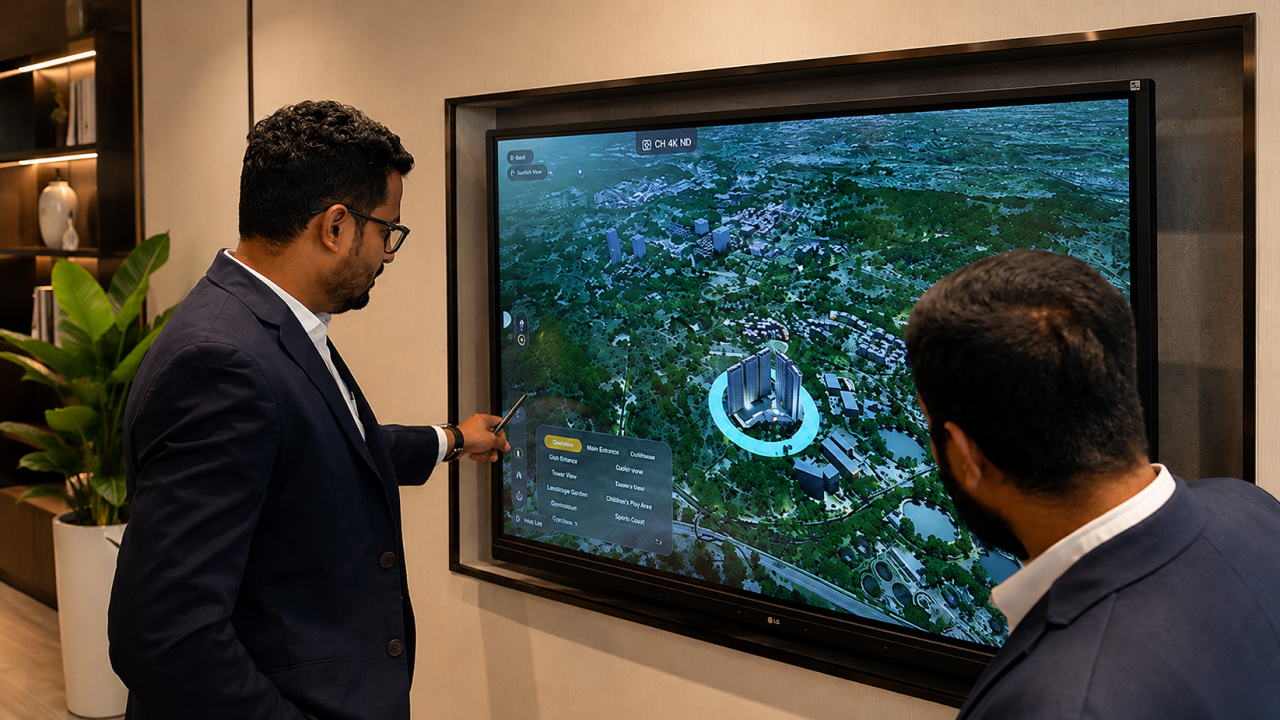
Under-construction projects in emerging micro-markets face an additional challenge: the location is often not yet complete. Roads under construction, metro lines announced but not built, commercial zones in early development.
Buyers are being asked to trust a future that has not arrived.
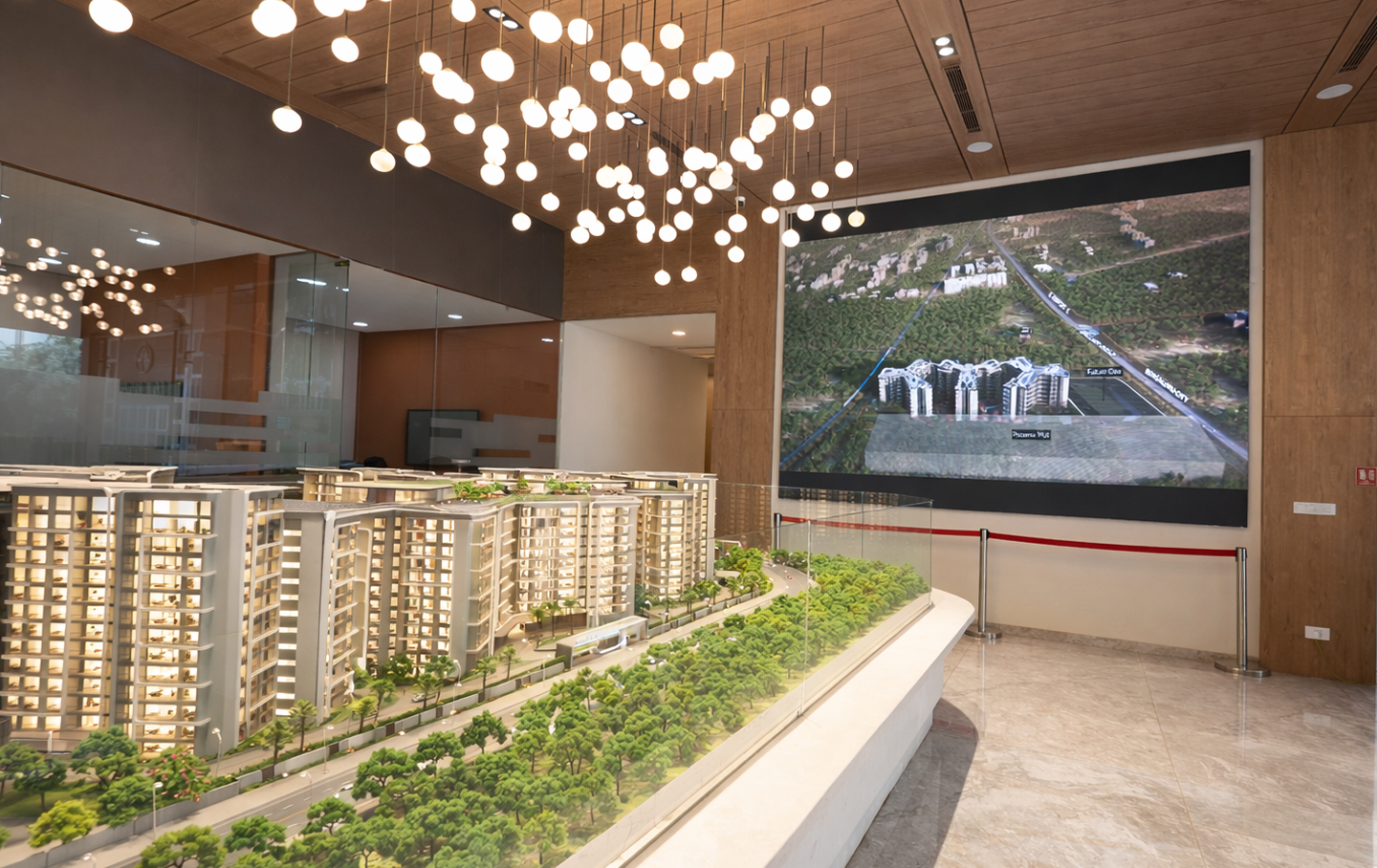
V-estate's neighbourhood mapping presents both current infrastructure and upcoming development — schools, hospitals, transit nodes, commercial zones, green spaces — giving buyers a complete picture of where the location is now and where it is heading.
This transparency does not expose vulnerability. It demonstrates developer depth. Developers who can speak fluently about their project's surrounding ecosystem signal serious credibility.
Handling the Possession Timeline Objection
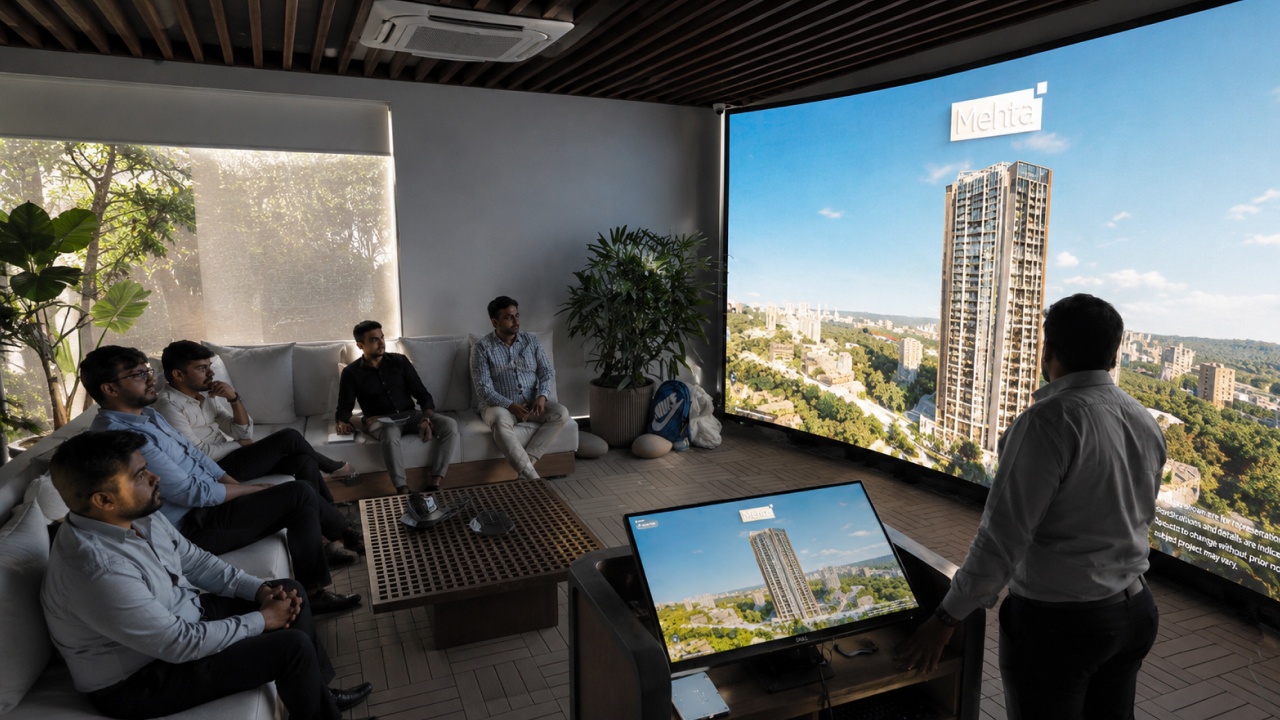
The most common under-construction objection is not price — it is timeline. What if possession is delayed? How do I know construction is on track?
Experience centers that integrate project progress visibility — construction milestones, RERA compliance, phase timelines — address this objection directly and transparently.
Buyers who see a developer treating transparency as a selling tool rather than a liability respond to that signal. It changes the nature of the trust relationship before any price discussion begins.
Conversion Outcomes in Under-Construction Projects
Developers who invest in immersive experience centers for under-construction projects report consistent commercial outcomes:
Shorter decision timelines — buyers leave with fewer unresolved questions.
Lower discount dependency — when the product is fully experienced, price becomes less central to the objection.
Stronger referral rates — buyers who had a premium pre-sale experience refer differently than buyers who signed based on a floor plan.
.jpg)