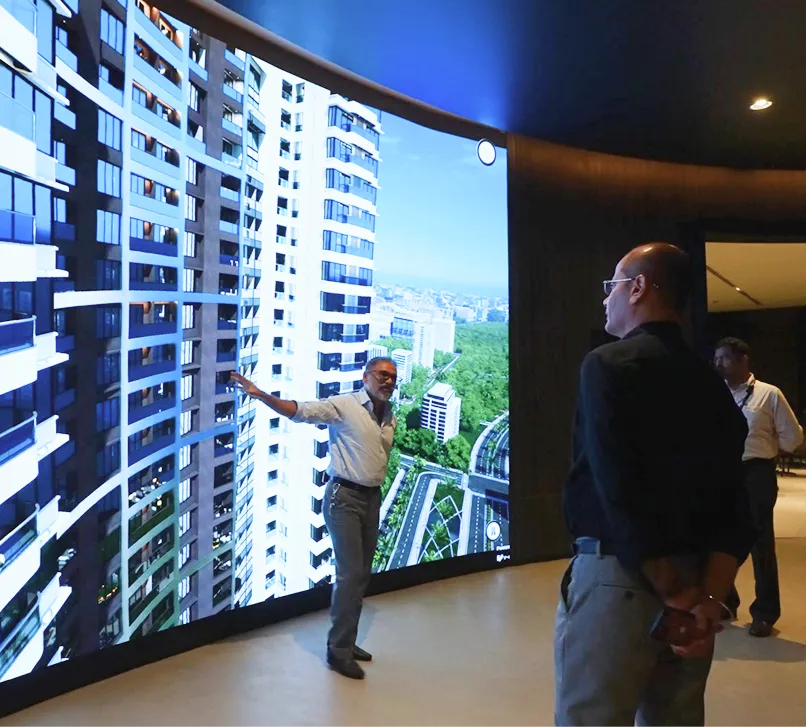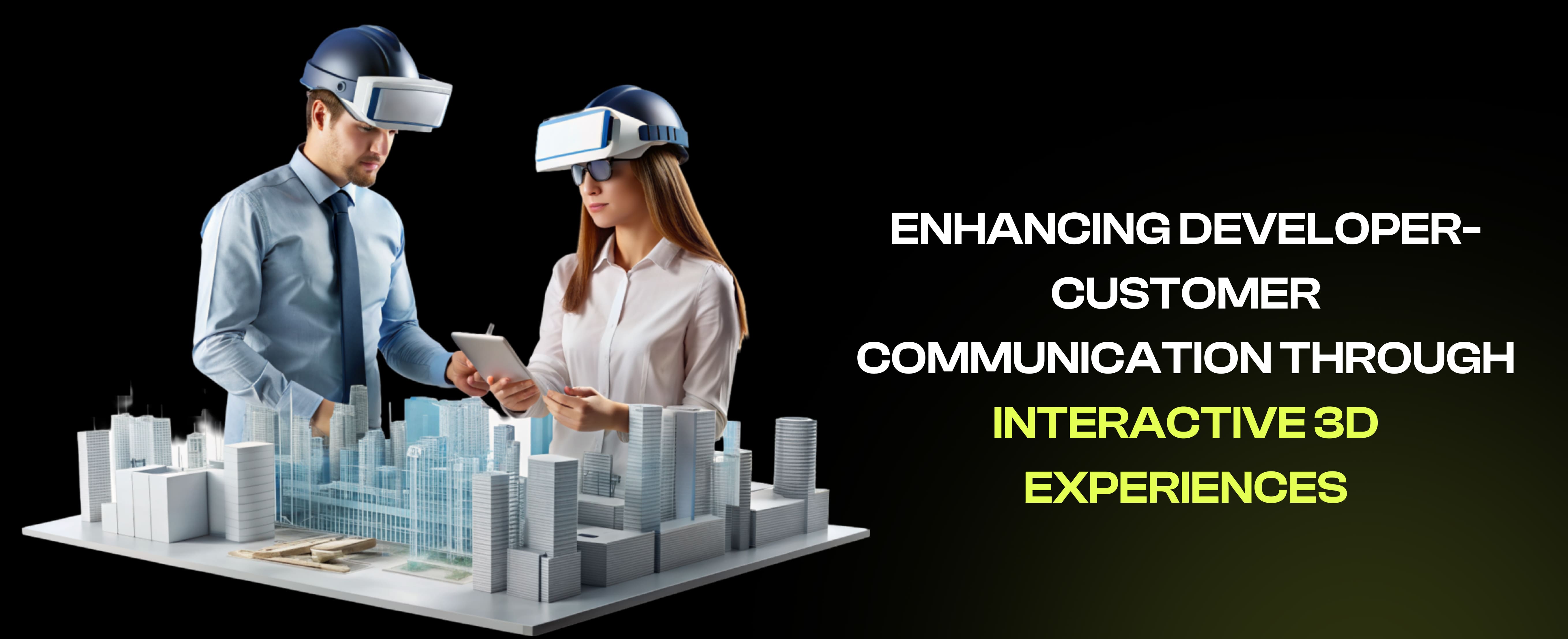
Real estate marketing is transforming with the advent of Interactive 3D Experiences, transforming from static images to immersive, visually engaging experiences for potential clients, with V-estate leading this technological revolution.
What are Interactive 3D Experiences?
Interactive 3D experiences are a sophisticated blend of virtual reality (VR), augmented reality (AR), and advanced 3D modeling. These experiences allow potential customers to explore properties as though they are physically present. Imagine walking through the halls of a future home, feeling the layout of the space, customizing interiors, and even adjusting the lighting to get a true sense of the environment. All of this is now possible with V-estate’s immersive platform.
Why Developer-Customer Communication Needs a Makeover
The traditional real estate communication model has long been a source of frustration for both developers and customers. Developers often struggle to accurately convey the vision of a property, while customers may have difficulty visualizing the finished product based on simple floor plans or photographs. Interactive 3D experiences effectively bridge this communication gap by offering an intuitive, realistic, and detailed view of properties.
Through immersive tours, potential buyers can experience a property from the comfort of their homes. They no longer have to imagine how the kitchen might look or whether the living room is spacious enough. Instead, they can walk through the house in real-time, interact with the surroundings, and see every detail of the design. This not only reduces ambiguity but also fosters a stronger emotional connection with the property.
V-estate’s Comprehensive Virtual Property Tour
V-estate takes the concept of interactive 3D experiences to the next level by providing a comprehensive virtual property tour that extends beyond the property itself. With V-estate, your customers can:
Explore the property in 3D: The immersive virtual tour allows customers to navigate through every room, explore layout options, and view the space from multiple angles.
Showcase amenities and nearby facilities: Not only can users explore the property, but V-estate also showcases the surrounding amenities. Whether it's nearby schools, parks, shopping centers, or upcoming developments, V-estate helps customers understand the full range of conveniences and lifestyle opportunities available.
Customize interiors in real-time: One of the most exciting features of V-estate is the ability to customize the property’s interior. Potential buyers can experiment with different wall paints, furniture arrangements, and decor elements. They can virtually design their future home to their taste, making the experience personal and engaging.
Dynamic lighting and weather controls: V-estate platform goes beyond simple virtual tours by offering dynamic lighting and weather control options. Customers can see how the property will look at different times of the day, or even how it might feel in varying weather conditions. This provides an unparalleled level of detail, helping customers make well-informed decisions.
The Benefits of Enhanced Communication Through 3D Experiences
Improved Lead Conversion: One of the key advantages of enhancing communication through interactive 3D experiences is the potential to significantly increase lead conversions. Customers who can fully visualize and interact with a property are more likely to be engaged and motivated to take the next step. By giving them a complete picture of what the property offers, V-estate empowers buyers to make confident purchasing decisions, which ultimately leads to higher conversion rates.
Customer Retention: Beyond initial lead generation, customer retention is also greatly improved. By providing potential buyers with a memorable and interactive experience, developers foster a deeper connection to the property. Even if a customer doesn’t make an immediate purchase, the immersive nature of the experience ensures that the property remains top-of-mind. This emotional connection increases the likelihood of return visits and eventual purchases.
Time and Cost Efficiency: Interactive 3D experiences offer time and cost efficiencies for both developers and buyers. For developers, virtual tours reduce the need for physical showings, saving time and resources. On the buyer side, the convenience of touring a property from anywhere means fewer wasted trips to unsuitable properties, making the buying process faster and more efficient.
Increased Customer Satisfaction: Providing potential buyers with a fully immersive experience not only enhances their understanding of the property but also improves their overall satisfaction. Buyers feel more empowered when they can explore, customize, and engage with a property on their terms. This satisfaction translates into higher sales and long-term customer loyalty.
Boosting Sales with Immersive 3D Technology
The impact of immersive 3D technology on real estate sales is undeniable. By incorporating these experiences into the marketing and sales process, developers can:
Showcase future developments: Properties that are still in the planning or construction phase can be challenging to market. However, with V-estate interactive 3D platform, developers can offer potential buyers a realistic preview of what’s to come, complete with customizable features and detailed visuals.
Capture a wider audience: Virtual tours remove geographical barriers. Buyers from across the globe can explore properties without the need for travel, expanding the potential customer base.
Enhance brand reputation: Utilizing cutting-edge technology in property marketing demonstrates that a developer is forward-thinking and innovative. This not only attracts tech-savvy buyers but also enhances the developer’s reputation within the market.
The Future of Real Estate Marketing
As the demand for interactive, immersive experiences continues to grow, the future of real estate marketing will undoubtedly revolve around these technologies. V-estate’s platform represents a step into this future, providing developers with the tools they need to stay competitive and relevant in an increasingly digital market.
Incorporating interactive 3D experiences into real estate marketing strategies is not just a trend—it’s a necessity for developers who want to maintain strong communication with their customers, boost sales, and enhance customer satisfaction. As the technology continues to evolve, we can expect these experiences to become even more realistic, engaging, and accessible, reshaping the way properties are marketed and sold.
%20(1).jpg)