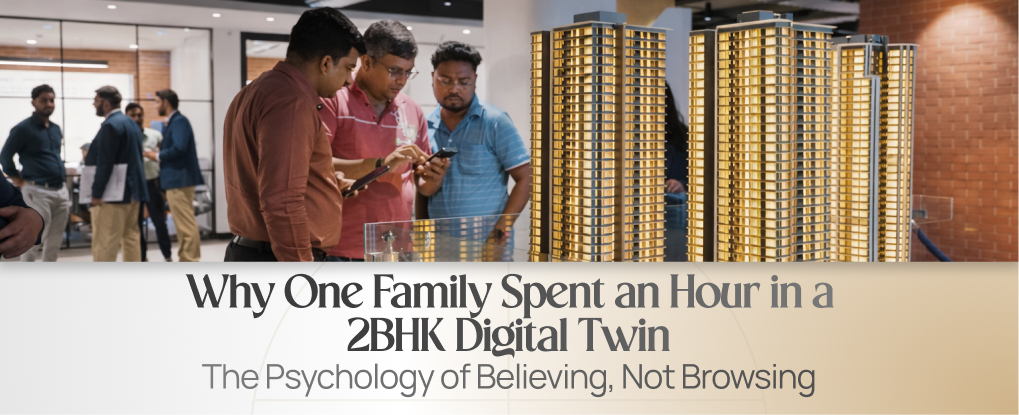
Most sales galleries are built for browsing. A buyer walks through, glances at a scale model, flips through a brochure, and leaves within fifteen minutes. Browsing is passive. It doesn't require commitment, and it rarely produces conviction.
At a Runwal Realty experience center powered by V-Estate, one family broke that pattern entirely. They spent over an hour inside a single 2BHK digital twin — not because they were undecided, but because, in the words of Runwal Realty's Director of Retail, the tool made it so real they could see themselves living there.
That single visit captures something important about how buyers actually make high-ticket purchase decisions, and why the technology inside a sales center matters far more than most developers assume.
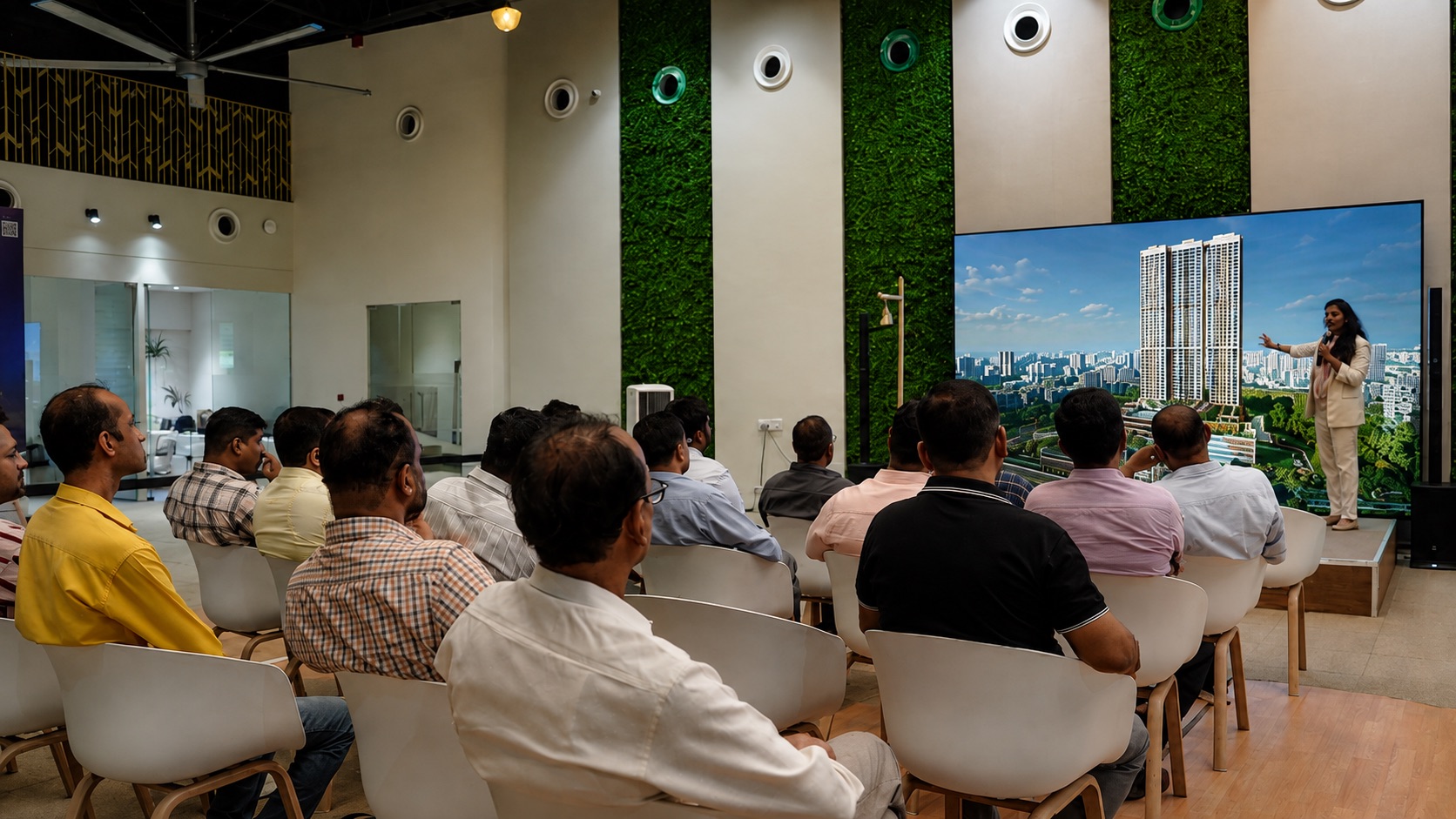
Browsing versus believing
There is a meaningful psychological difference between showing a buyer information and letting a buyer experience a space.
Browsing is informational. A floor plan tells a buyer the dimensions of a room. A brochure tells them the specifications of the flooring. This information is necessary, but it does not create emotional investment.
Believing is experiential. When a buyer can stand inside a digital twin of their exact unit, adjust the time of day to see how morning light falls across the living room, and check the direction of sunrise from the balcony, they stop processing information and start rehearsing ownership.
Sales psychologists sometimes call this "mental ownership" — the moment a prospective buyer begins imagining their own furniture, their own routines, their own life inside a space that technically isn't theirs yet. Once mental ownership sets in, the sales conversation changes. The buyer is no longer asking "should I buy this," but "how do I make this work."
What made the Runwal visit different
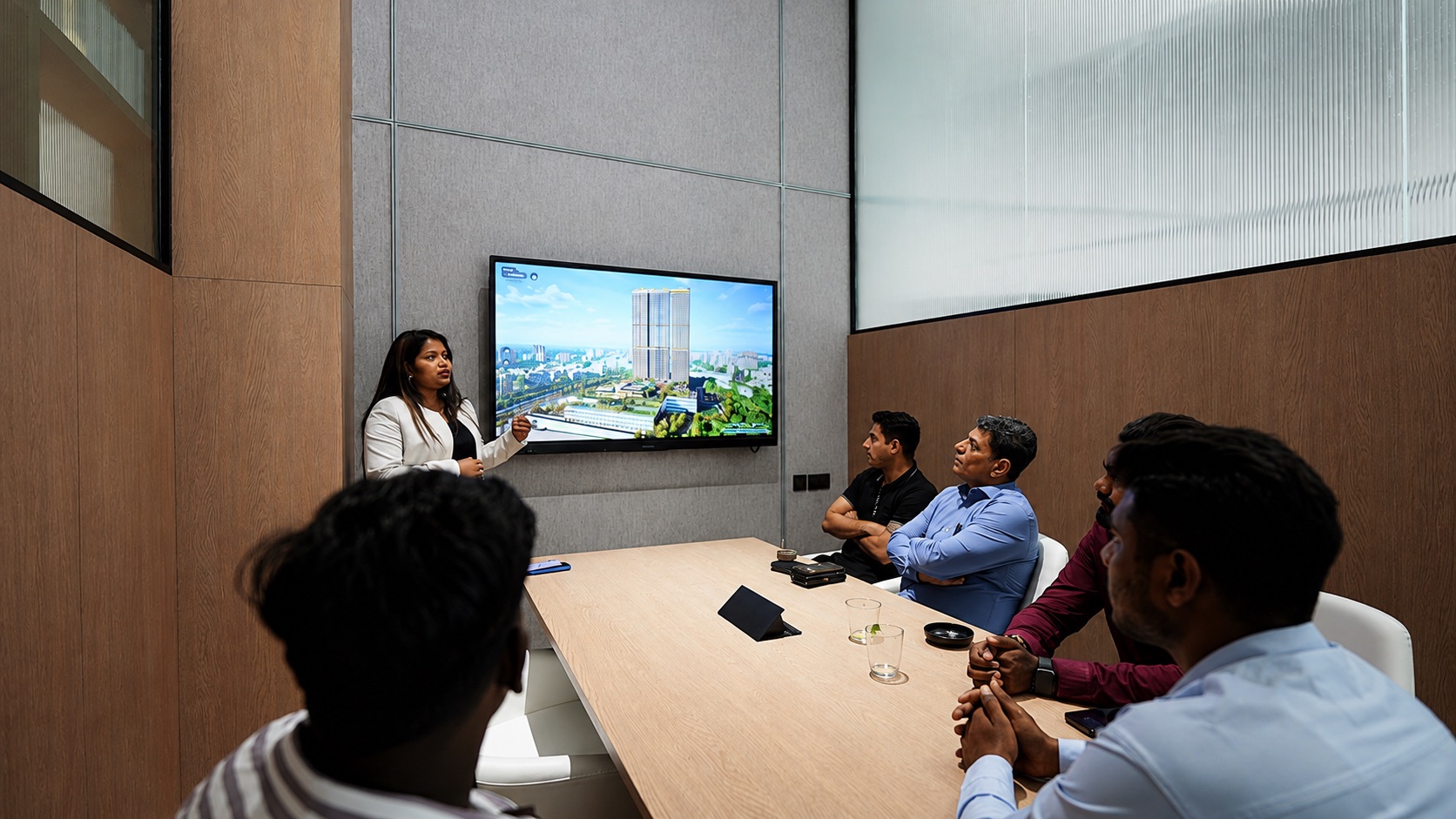
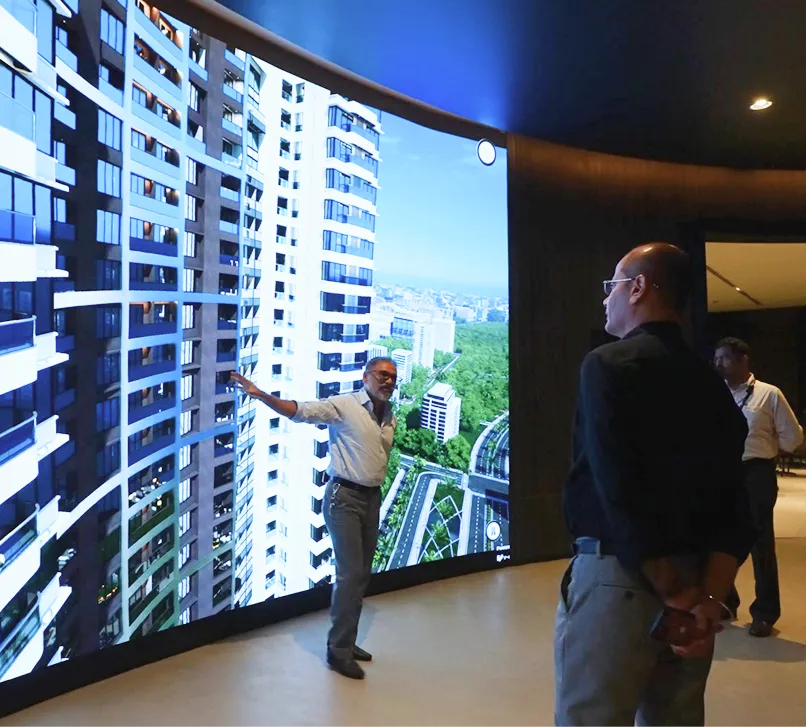
The family didn't spend an hour looking at a static rendering. They spent an hour inside an interactive, navigable digital twin — the same category of technology V-Estate has deployed across 53+ experience centers, built on 1:1 photorealistic detail, real-time lighting simulation, and unit-specific visualisation.
Every detail they could check in person, they could check inside the twin: sunrise direction, wind flow, marble textures, bathroom finishes. According to Runwal's own account, this wasn't a family browsing options. It was a family testing whether a specific life fit inside a specific unit — and the tool let them test it in granular detail, at their own pace, without a sales executive rushing them along.
Why this matters for developer ROI
An hour-long visit is not, on its own, a sales metric. But it is a strong leading indicator. Buyers who engage deeply with a unit-specific visualisation tool are demonstrating exactly the kind of behaviour that precedes a booking: repeated detail-checking, family discussion in front of the display, and requests to "see it again" from a different angle.
This is the underlying logic behind why developers like Godrej Properties, Rustomjee, and L&T Realty have moved toward immersive, in-centre visualisation tools rather than relying on static galleries. As Godrej's Senior Manager of Brand Marketing put it, the shift is about helping sales teams communicate lifestyle value far more effectively on site — not just showing a flat, but letting a buyer feel what living in it would be like.
Designing for conviction, not just footfall
The lesson for developers is not "install more screens." It's that the quality of the experience — how granular, how personal, how navigable the visualisation is — determines whether a visit produces browsing or belief.
A generic walkthrough video produces browsing. A unit-specific, buyer-controlled digital twin, where the family can choose their own floor, their own light direction, their own vantage point, produces belief. That difference is the entire value proposition of an in-centre PropTech investment.
If you want your sales center to produce belief, not just footfall, book a demo with V-Estate to see how a unit-specific digital twin could change your buyer conversations.