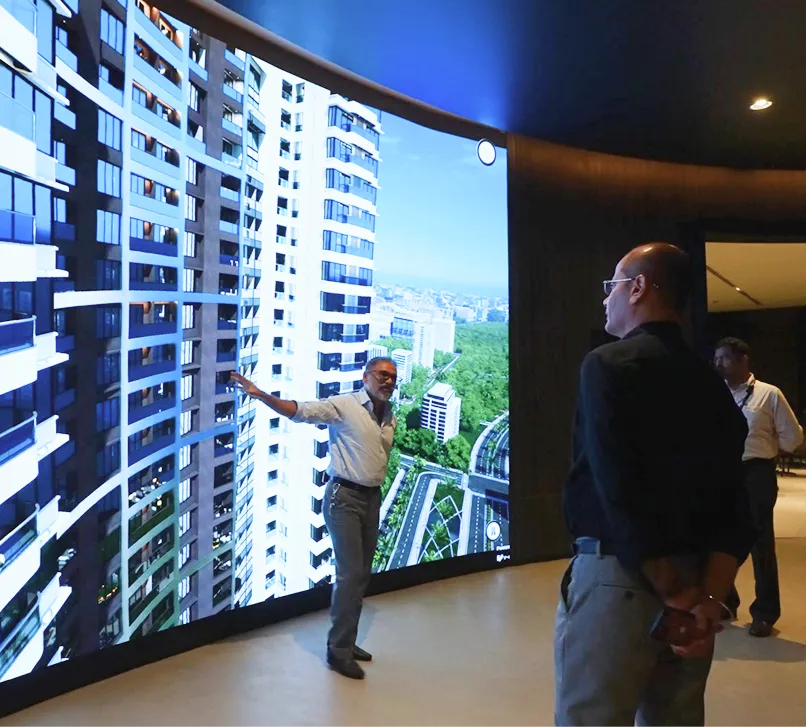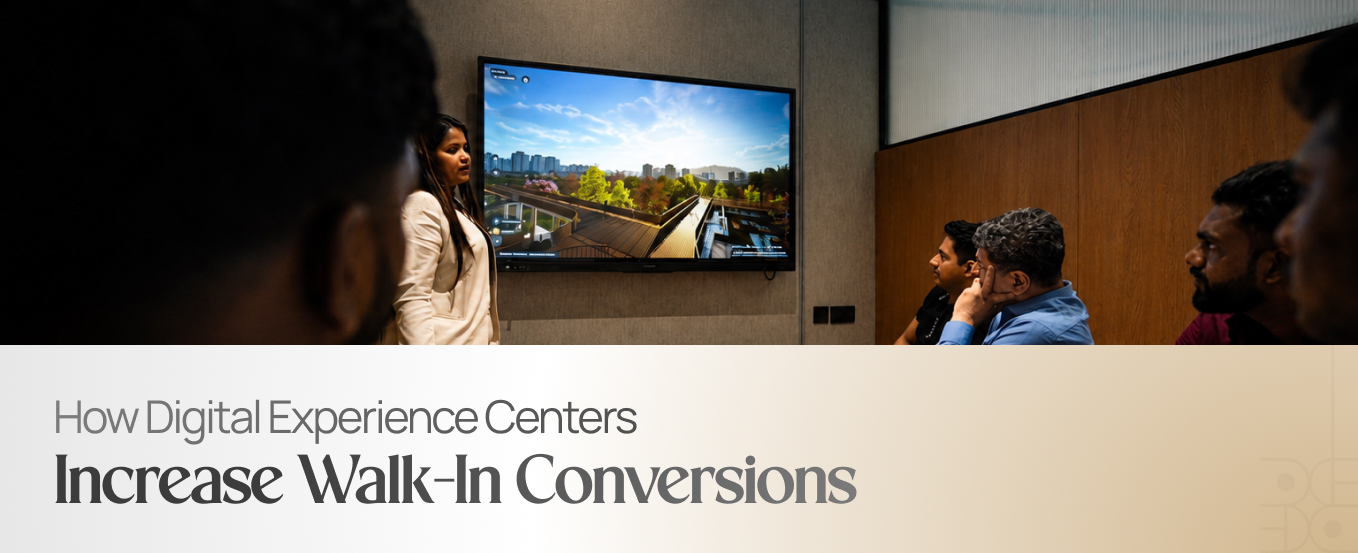
A walk-in that doesn't convert is not a failed lead. It's a failed experience. Most real estate developers measure success by footfall, not by how well that footfall was converted. The gap between visits and closures usually comes down to what the buyer actually experienced inside the sales office — not their intent to buy.
This is where digital experience centers change the outcome.
The Limitation of Traditional Sample Flats
Sample flats are static by design. A buyer walks through one unit type, on one floor, with one fixed view. If their actual unit differs — different floor, different orientation, different finish — they're left guessing.
Sales teams then rely on verbal explanations. "Your floor will get more light." "Your view will be different, but similar." These explanations rarely land with the same confidence as seeing the real thing. This gap is one of the leading reasons walk-ins leave without booking, even when genuinely interested.
What a Digital Experience Center Actually Solves
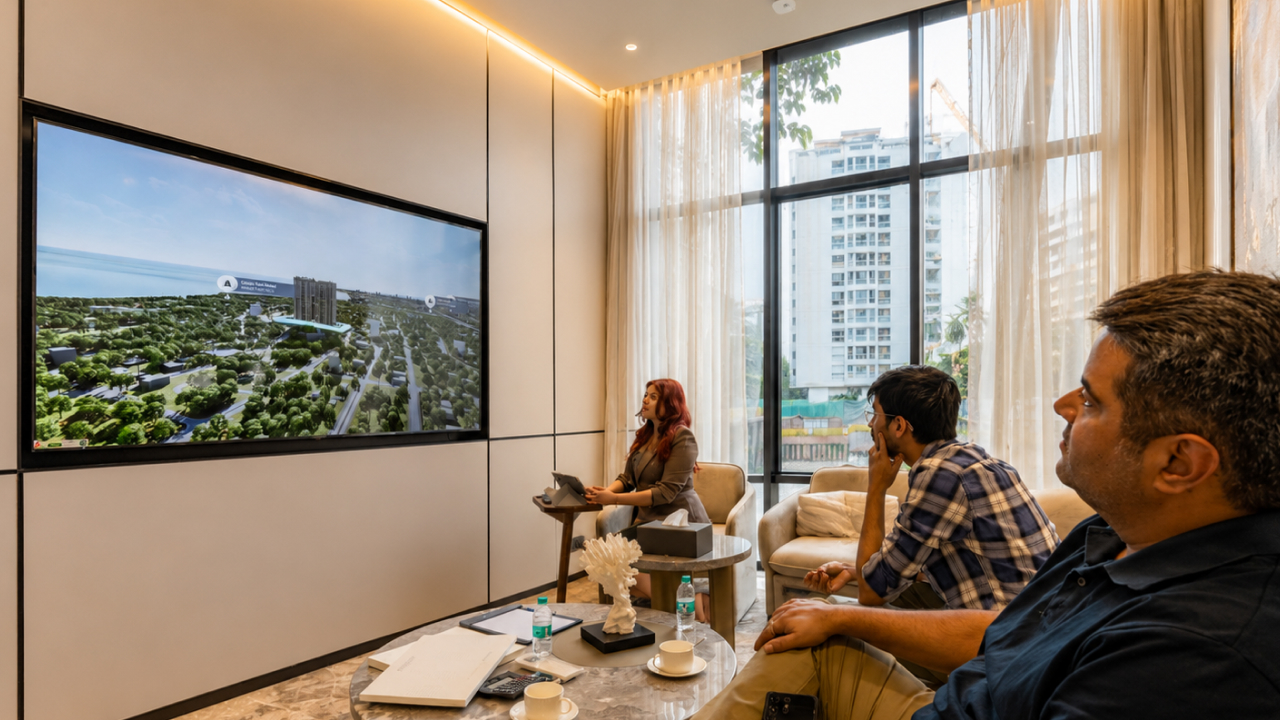
A digital experience center replaces guesswork with a guided, visual journey. Instead of one static sample flat, buyers see:
Unit-specific 3D visualization matching their exact floor and layout, not a generic representative unit.
Real window views — what they'll actually see from their balcony or bedroom, based on their specific unit's orientation.
Live customization options — paint colors, furniture placement, and interior finishes shown in real time, adjusted based on buyer preference.
Full amenity and township context — not just the unit in isolation, but the surrounding project, connectivity, and lifestyle offerings around it.
This turns a passive walkthrough into an active decision-making session, where the buyer is participating rather than simply observing.
Why This Increases Conversion, Specifically
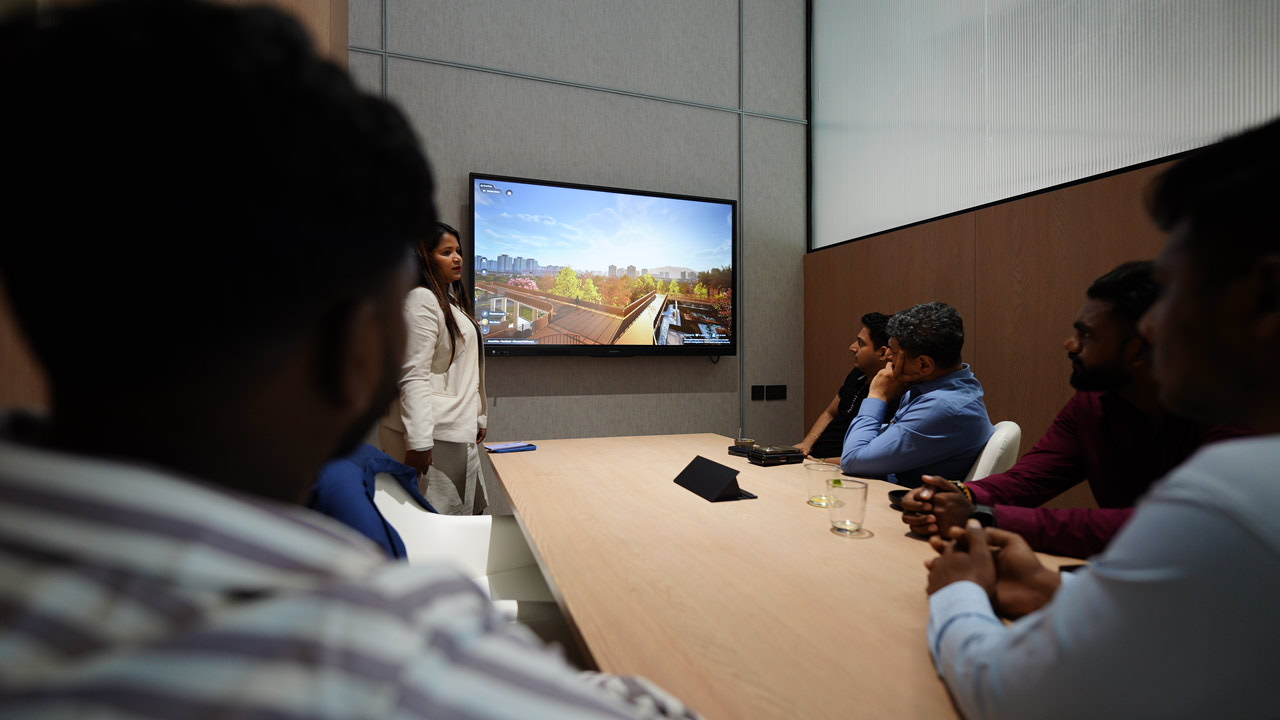
Conversion improves for three concrete reasons.
First, engagement time increases. Buyers spend longer inside an interactive session than a static walkthrough, and longer engagement consistently correlates with more questions asked — which gives sales teams more openings to close.
Second, objections get resolved on the spot. A buyer worried about natural light, noise, or view can see the answer immediately, instead of leaving the centre with an unresolved doubt that quietly kills the deal later.
Third, mental ownership builds during the visit itself. When someone chooses their own wall color and furniture inside a virtual unit, they've mentally moved in before signing anything. This emotional shift is difficult to create with a brochure or a static sample flat.
Reducing Cost Per Acquisition
Experience centers also cut cost per acquisition in a measurable way. Fewer repeat site visits are needed, since the first visit answers most of the buyer's questions directly. Sales teams close in fewer touchpoints overall, which reduces the marketing and sales spend required per unit sold — a metric every developer is tracking closely in a competitive market.
Supporting Sales Teams, Not Replacing Them
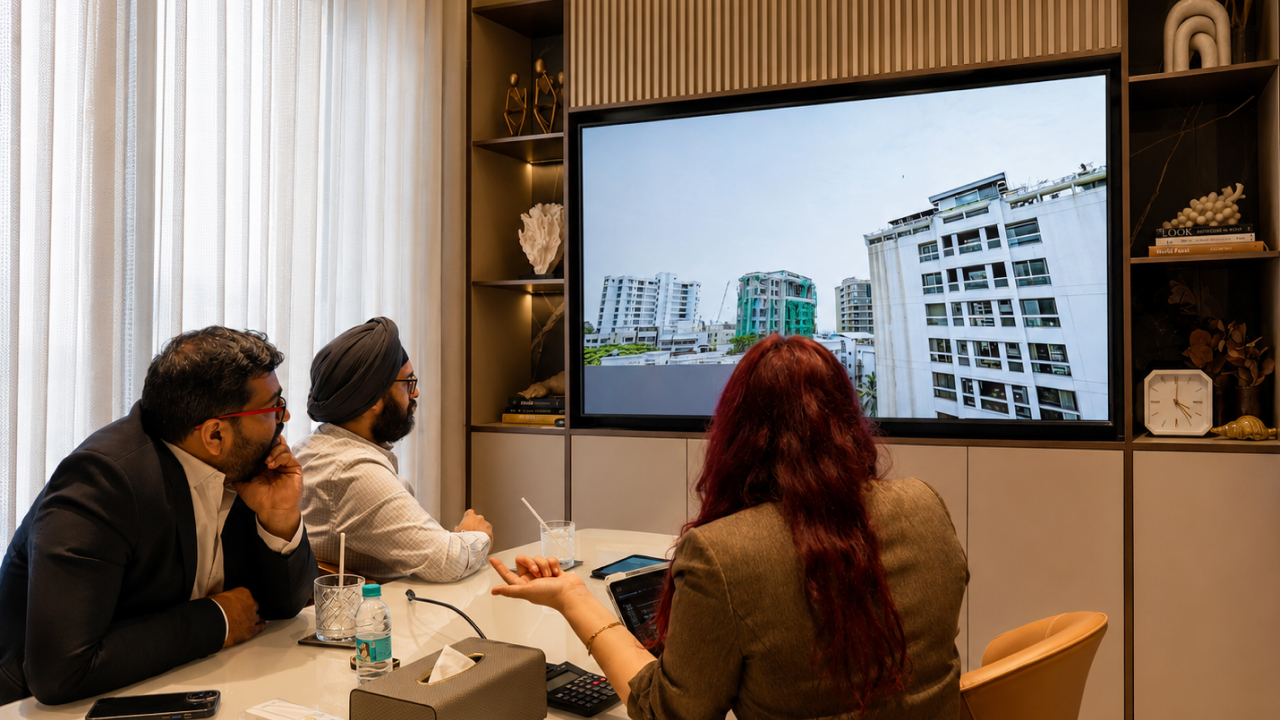
A well-designed experience center strengthens the sales executive's role rather than reducing it. The executive guides the session, reads buyer reactions in real time, and adjusts the walkthrough based on what the buyer responds to. The technology provides the visual proof; the executive provides the judgment and relationship.
Built for the Sales Office, Not the Web
It's worth being precise here: effective experience center technology is built for in-person, in-centre use, guided by a sales executive inside the sales office. It is not a self-serve website or app. The guided, offline format preserves the trust and human touch that high-value real estate decisions still require, while giving that human conversation a far stronger visual foundation.
Looking to convert more of your walk-ins into bookings? V-estate is an offline, in-centre interactive sales tool built to give every walk-in a unit-specific, guided visual experience — not a generic sample flat tour. Connect with our team to see it in action inside your sales office.

.jpg)