.jpg)
The Real Problem Is Not Design. It’s Decision Friction.
In premium residential real estate, the average buyer today spends 3–5 visits before committing, while developers invest ₹3–₹7 crore per project on sales galleries that are meant to accelerate this decision.
Yet paradoxically, most sales galleries increase friction.
Internal audits across large residential portfolios show:
Buyer engagement peaks at 18–22 minutes
More than 60% of questions post-booking relate to views, layouts, and amenities already “shown” in the gallery
Sales cycles stretch 20–30% longer when buyers rely on imagination rather than verification
The issue is not lack of emotion. It is lack of precision.
This is where next-generation experience centers in India, powered by interactive proptech, are quietly redefining how emotional resonance is built without overpromising, and without inflating future expectations
Why Most Sales Galleries Fail at the CXO Level
Traditional sales galleries are built to impress, not to inform.
They rely on:
Idealised sample flats
Generic 3D renders disconnected from unit realities
Verbal persuasion filling gaps that visuals cannot
From a leadership standpoint, this creates three systemic risks:
Non-standardised sales narratives Every sales executive sells a slightly different story.
Delayed buyer conviction Buyers feel excitement, not certainty.
Expectation mismatch at possession The single biggest driver of long-term brand erosion.
What leadership teams often miss is that emotional resonance built on ambiguity is fragile. It converts bookings, but it does not sustain trust.
Emotional Resonance That Converts Is Built on Verification
Real emotional resonance in real estate does not come from aspiration. It comes from recognition.
Buyers respond most strongly when they can:
See their exact unit, not a representative one
Understand true sightlines, scale, and orientation
Verify amenities, not imagine them
This is why experiential technology in real estate is shifting from being a marketing enhancement to a sales infrastructure layer.
At V-Estate, experience centres are designed not as showrooms, but as decision environments.
From Sales Gallery to High-Fidelity Experience Centre
A modern experience centre integrates physical, digital, and data-driven layers into a single, structured journey:
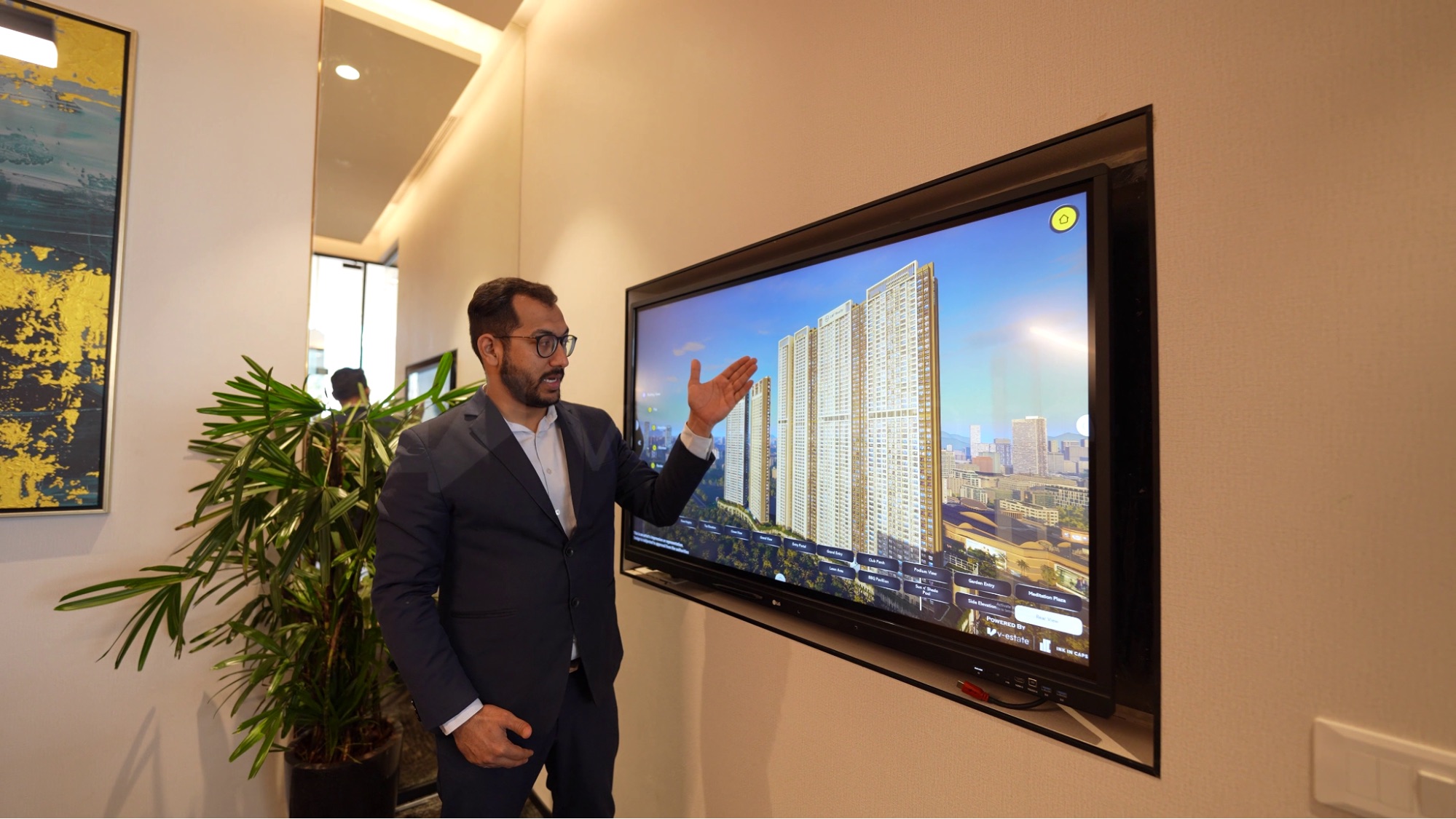
Interactive property walkthroughs instead of static displays
Real-time 3D renders replacing brochure imagination
Unit-level transparency replacing generic storytelling
The objective is simple:
Reduce explanation. Increase clarity. Compress decision time.
Case Study Insight 1: Suraj Park View, Dadar
Using Cultural Context + Interactive Visualization to Build Early Conviction
Suraj Tower was positioned in one of Mumbai’s most emotionally layered micro-markets—Dadar—where buyers evaluate not just homes, but legacy, views, and neighbourhood identity.
Experience Centre Architecture
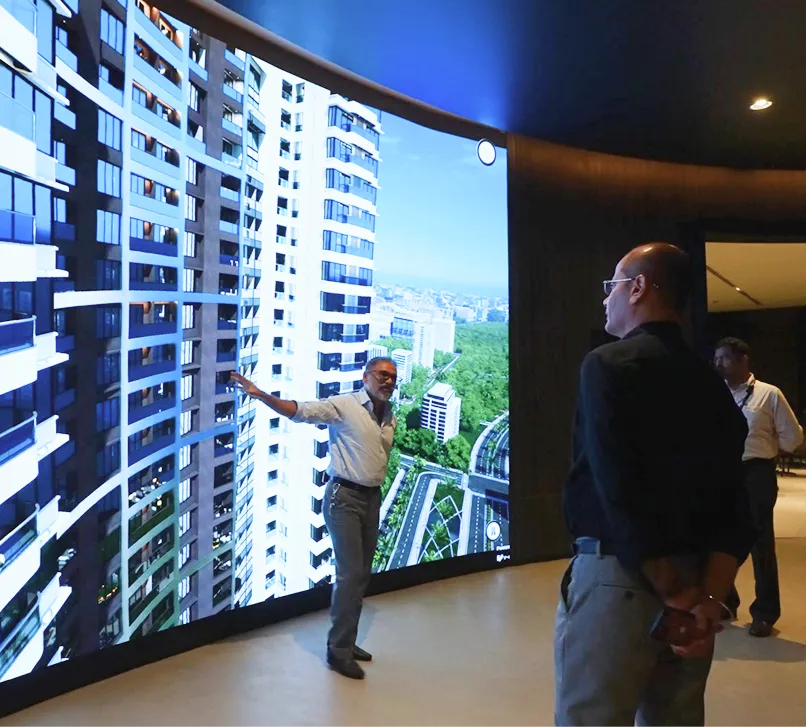
Interactive screens showcased actual unit views of Shivaji Park and the Arabian Sea
Buyers explored layouts, interiors, exteriors, and vicinity before construction
Lifestyle storytelling was anchored in Dadar’s cultural duality, not abstract luxury
Strategic Impact
Early engagement began pre-launch
Compact 1 & 2 BHK homes were perceived as aspirational, not compromised
Buyer conversations shifted from “will it feel premium?” to “which unit works best?”
This is emotional resonance built on clarity, not exaggeration.
Case Study Insight 2: Rustomjee Bay-View, Matunga
How Interactive Experience Centres Re-engineered Sales Velocity
Rustomjee faced a classic scale challenge: high daily footfalls, limited physical inventory, and the need to standardise the buyer journey.
Experience Centre Architecture
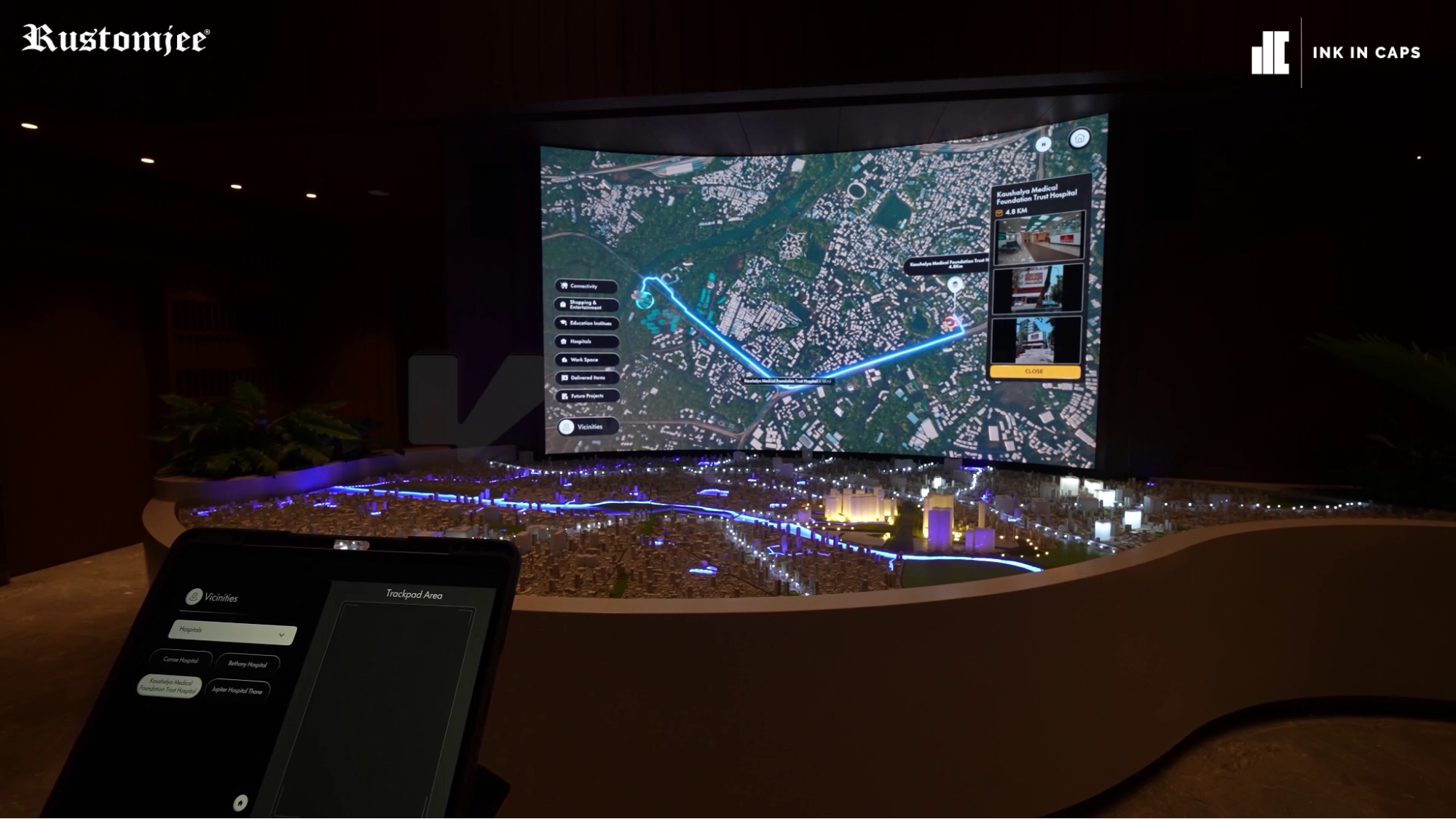
The sales journey was divided into four technology-driven zones, combining:
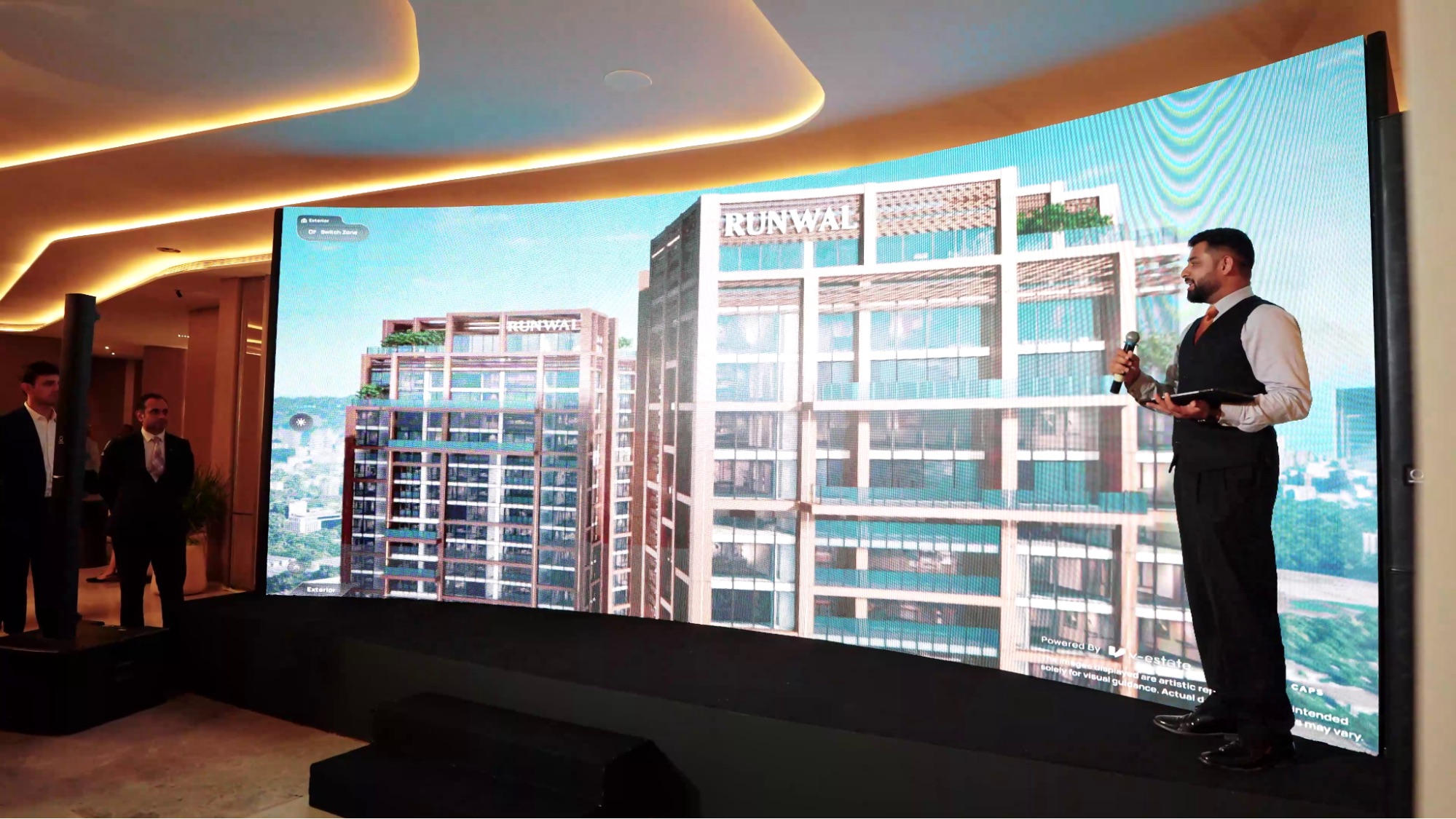
Curved LED panels + IoT-linked scale models
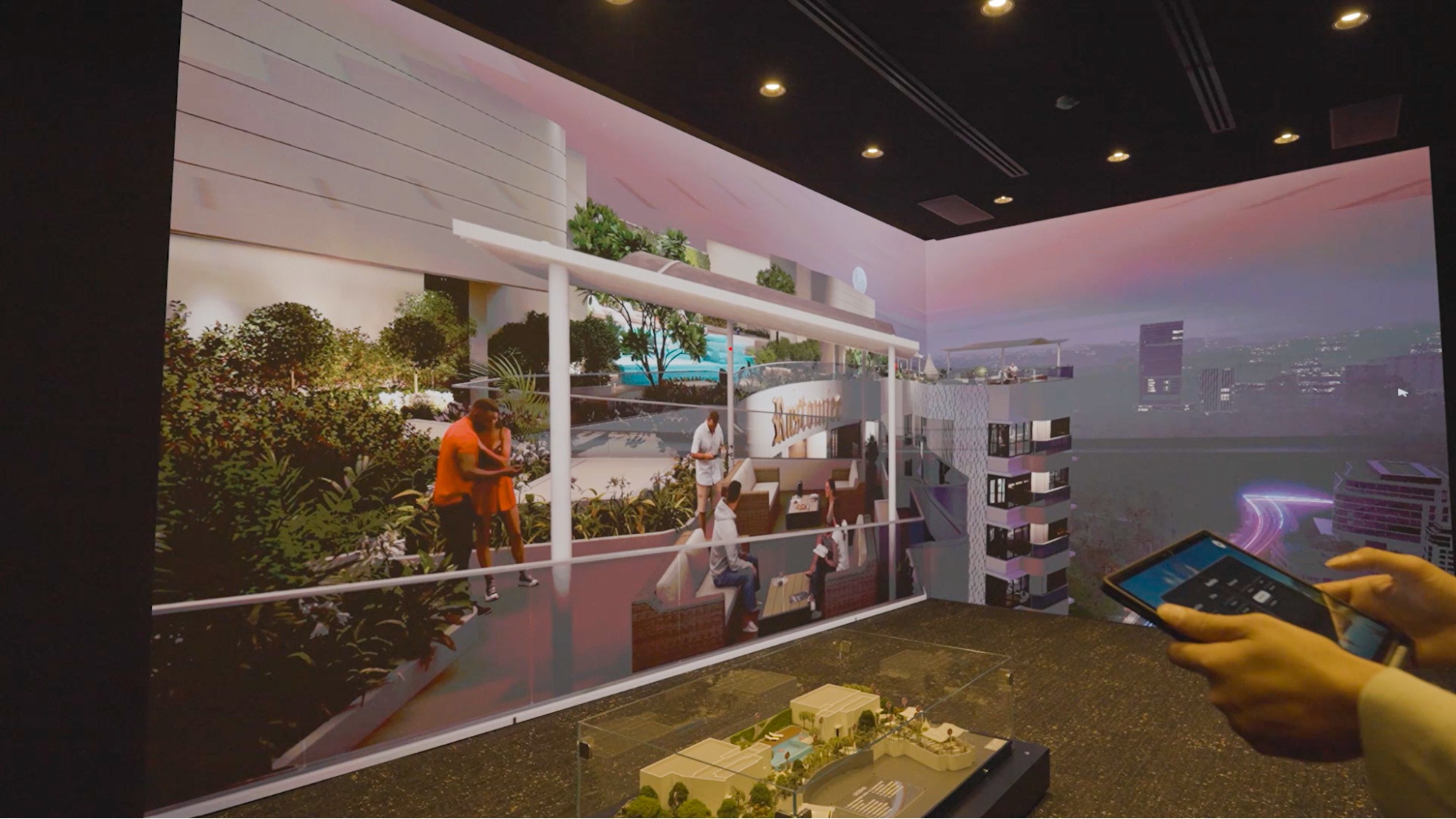
1:1 amenity walkthroughs
Window-view simulations across time-of-day
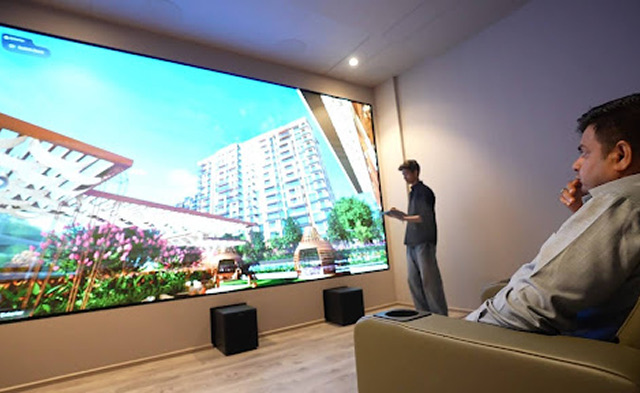
Smart discussion rooms powered by real-time rendering
Strategic Impact
700+ demos in the first month
Average engagement time increased from 20 minutes to 50+ minutes
100% of 4BHK inventory sold using a single physical sample flat
75% reduction in printed collateral
Renders reused across print and digital marketing
From a CXO lens, the biggest win was not engagement—it was predictability. Every buyer saw the same story, the same data, the same reality.
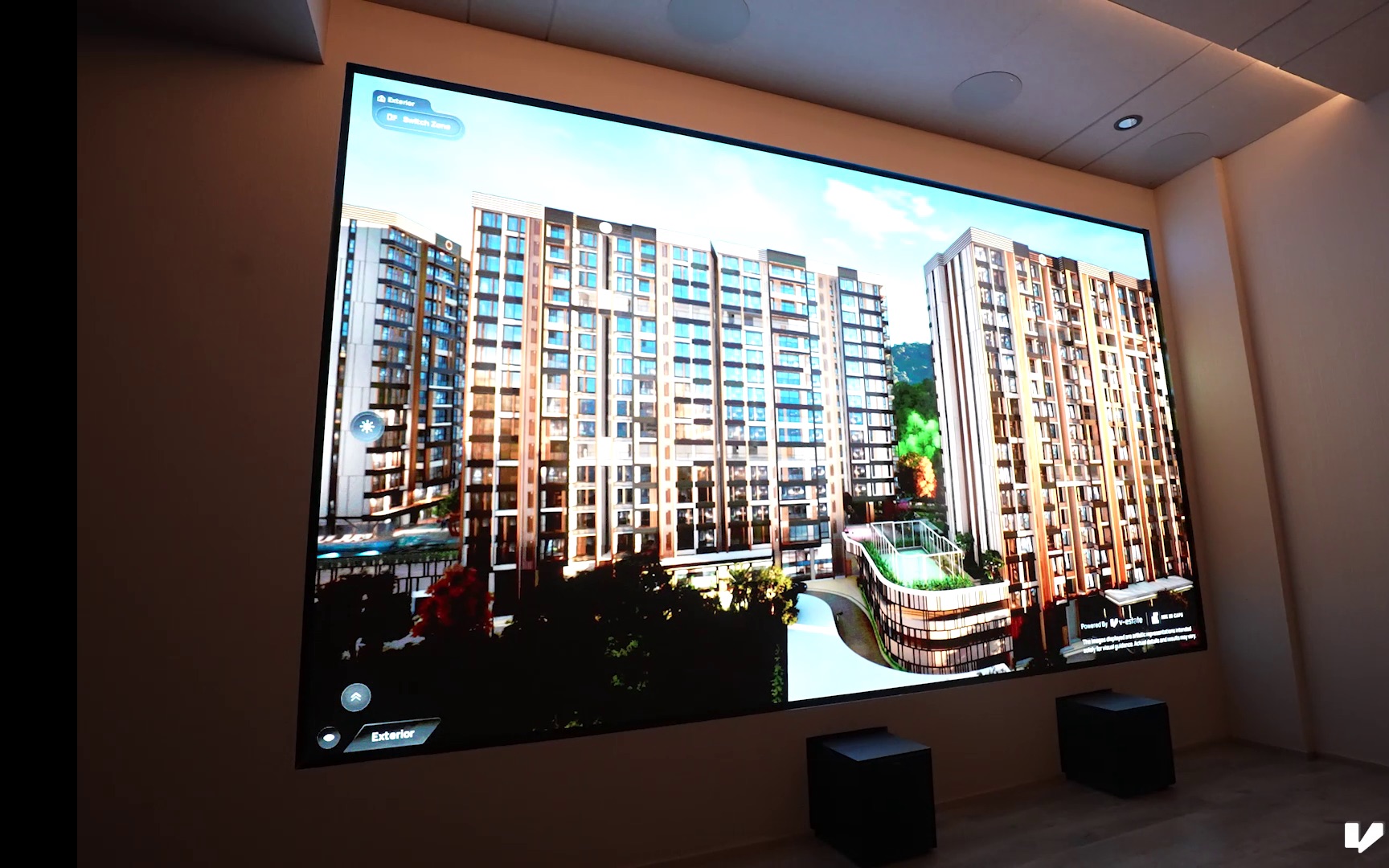
Case Study Insight 3: Nahar, Chandivali Valley
Standardising Trust in a Complex Masterplan
Chandivali Valley’s biggest strength—its terrain, forest integration, and scale—was also its hardest story to tell.
Static media failed. Experience Centre Architecture
A 13.5 ft LED-powered digital twin became the first interaction for 100% of visitors
Buyers explored architecture, forest proximity, podium levels, and sightlines in real time
The journey moved from digital → physical model → sample flat → closing room
Strategic Impact
First-mover advantage in the Chandivali micro-market
Shorter sales cycles due to reduced ambiguity
Zero narrative deviation across sales teams
High buyer confidence before price discussions even began
This is interactive proptech operating as a trust engine, not a visual layer.
What High-Performance Experience Centres Actually Deliver
Across projects, high-fidelity experience centres consistently drive:
2–2.5× increase in engagement time
Faster buyer decision-making
Lower post-booking clarification calls
Reduced dependency on verbal persuasion
Stronger alignment between promise and delivery
Most importantly, they turn sales galleries into repeatable systems, not one-time spectacles.
The Visual Honesty Test for Leadership Teams
Before approving your next sales gallery, ask:
Can a buyer verify their exact unit without imagination?
Are views, amenities, and layouts shown at true scale?
Does the experience reduce explanation—or increase it?
Would the gallery still work with minimal sales intervention?
If the answer is yes, you are building resonance without risk.
Closing Perspective
In today’s real estate market, emotional resonance is not about making buyers feel more. It is about helping them understand better.
Experience centres powered by interactive property walkthroughs, real-time 3D renders, and proptech software do exactly that—compress uncertainty, standardise trust, and protect brand equity long after possession.
That is not marketing. That is leadership-level sales strategy.
If you are rethinking how your sales gallery influences buyer confidence and not just footfall, it may be time to look beyond presentation and focus on precision.
At V-Estate, we work with developers to design high fidelity experience centres that help buyers see clearly, decide faster, and arrive at possession without surprises. If your next project demands clarity over theatre, this is a conversation worth starting.