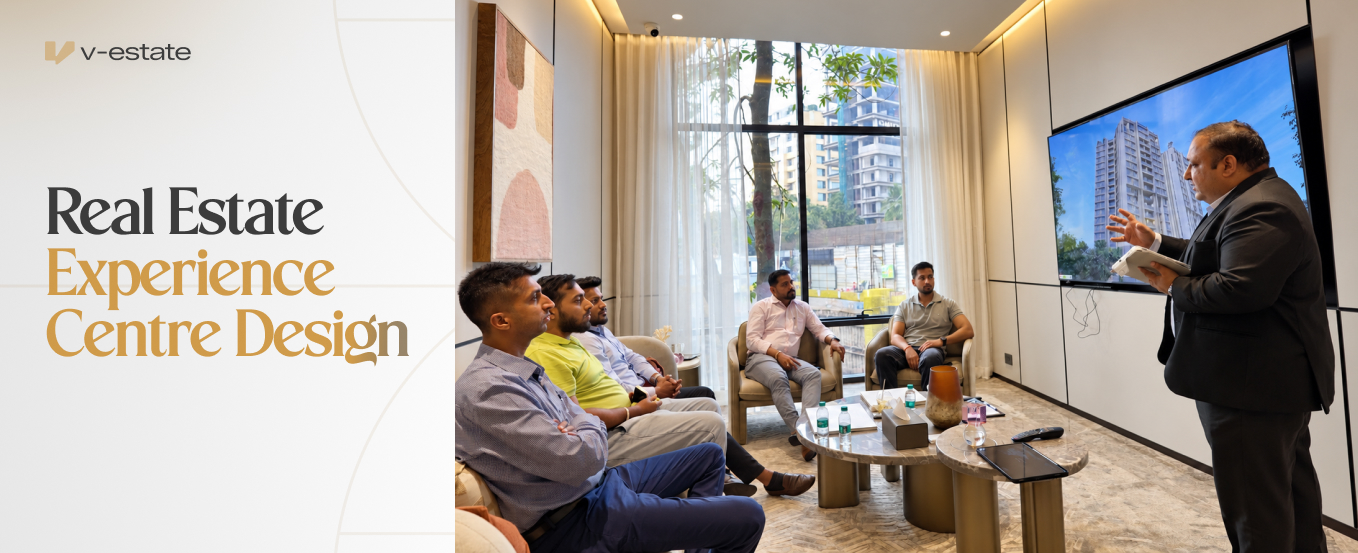
Selling a premium development or a large under-construction township requires more than a standard sales office. When buyers evaluate complex real estate projects, static floor plans, brochures, and physical sample flats often leave critical questions unanswered. Buyers want to know: Which tower has the best view? What will the surroundings look like? How far are key locations? What does the apartment look like with different configurations? What amenities are available? What will the property look like at different times of the day? How does the apartment, tower, and larger development connect?
How should a real estate developer design an experience centre that helps buyers understand and evaluate a property? The answer is to map the physical space and digital interactions directly to the buyer's journey, creating a guided environment where interactive visualisations, space planning, and sales consultations work together to answer customer questions clearly.
What Is a Real Estate Experience Centre?
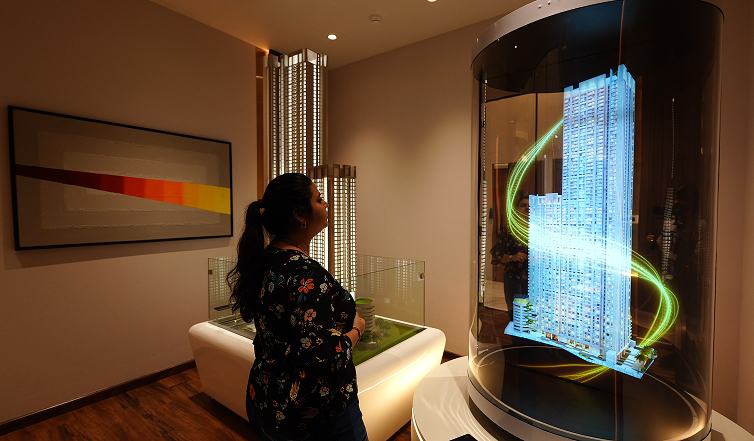
A real estate experience centre is a purpose-built sales environment where prospective buyers can interactively explore a property, its location, and its lifestyle ecosystem.
Unlike a traditional sales office that relies on static marketing collateral, or a sample flat that demonstrates only a single specific layout, an experience centre uses a combination of physical zones and interactive technology to provide a comprehensive understanding of an entire project, even before construction is complete.
Start With the Buyer Journey, Not the Technology
The most effective experience centres are designed around the questions buyers ask during the sales process. Rather than starting with hardware, developers should structure the space to support a logical customer journey: Attract → Understand → Explore → Compare → Personalise → Decide.
- Attract: Initial project introduction and brand positioning upon entry.
- Understand: Grasping the scale, location, masterplan, and connectivity.
- Explore: Navigating specific towers, amenities, and floor plans.
- Compare: Evaluating different apartment layouts side-by-side.
- Personalise: Testing interior configurations, views, and lighting.
- Decide: Detailed pricing and configuration discussions in a dedicated consultation area.
Key Zones in a Real Estate Experience Centre
An experience centre should be divided into distinct functional areas that support the sales conversation. Depending on the project scale, developers can incorporate specific zones:
- Project introduction zone: A reception area for welcoming guests and setting the brand context.
- Location and connectivity zone: Displays highlighting neighborhood infrastructure, roads, and transit.
- Masterplan / township zone: A macro-view area for understanding the full scope of the development.
- Tower and building exploration zone: Focused sections for selecting specific buildings within a project.
- Apartment / floor-plan zone: Areas dedicated to reviewing unit layouts and dimensions.
- Amenities zone: Visual showcases of clubhouses, pools, and recreational spaces.
- Interior customisation zone: Interactive areas for modifying finishes and furniture layouts.
- View / surroundings zone: Digital vantage points demonstrating actual window or balcony views.
- Pricing or configuration discussion zone: Semi-private spaces for financial discussions.
- Sales consultation area: Comfortable seating where salespeople can finalize the details and close the deal.
Using Technology to Improve Property Visualisation
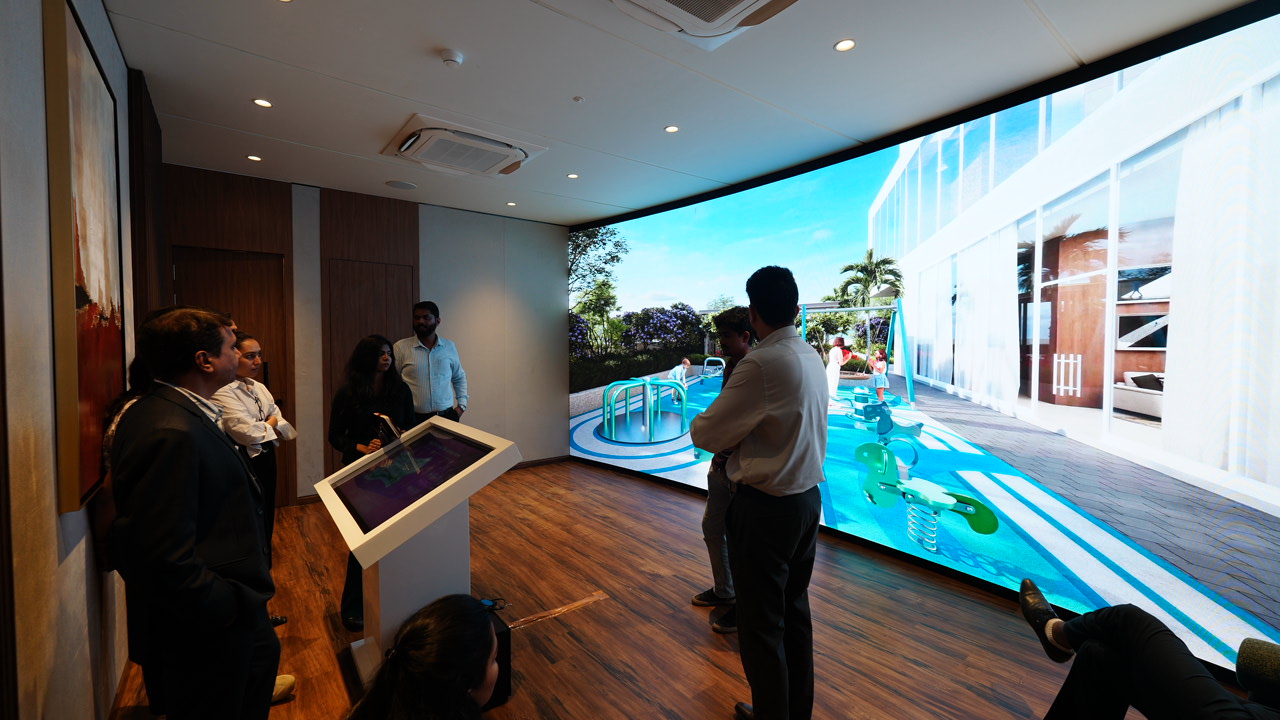
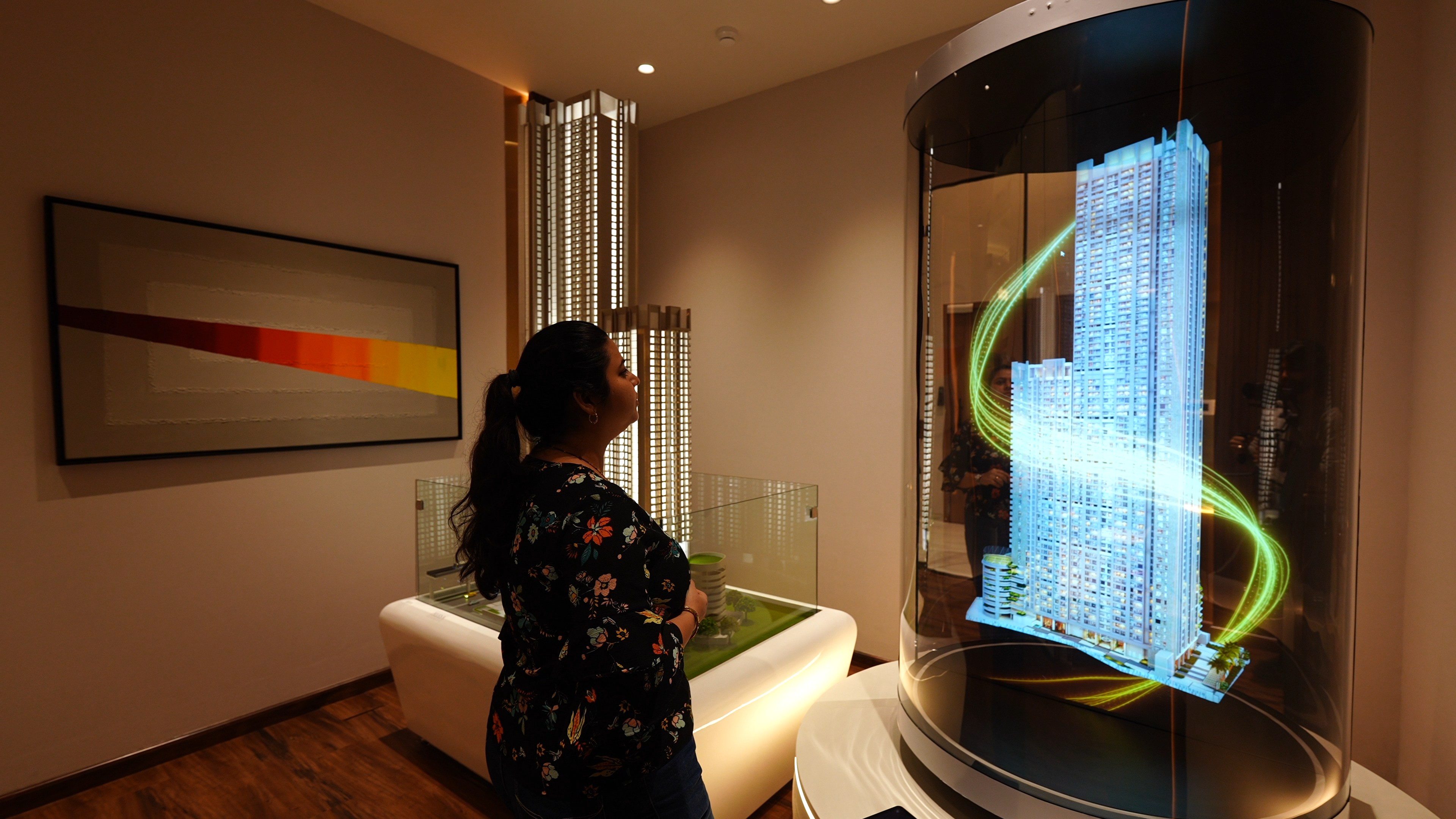
Technology adds value when it directly solves a customer problem. When buyers struggle to understand spatial relationships, a Real Estate Digital Twin bridges the gap.
For example, if a buyer asks how far their specific tower is from the main clubhouse, an interactive 3D project model allows them to navigate the space digitally. The experience provides immediate clarity, and the sales value is a faster, more confident decision.
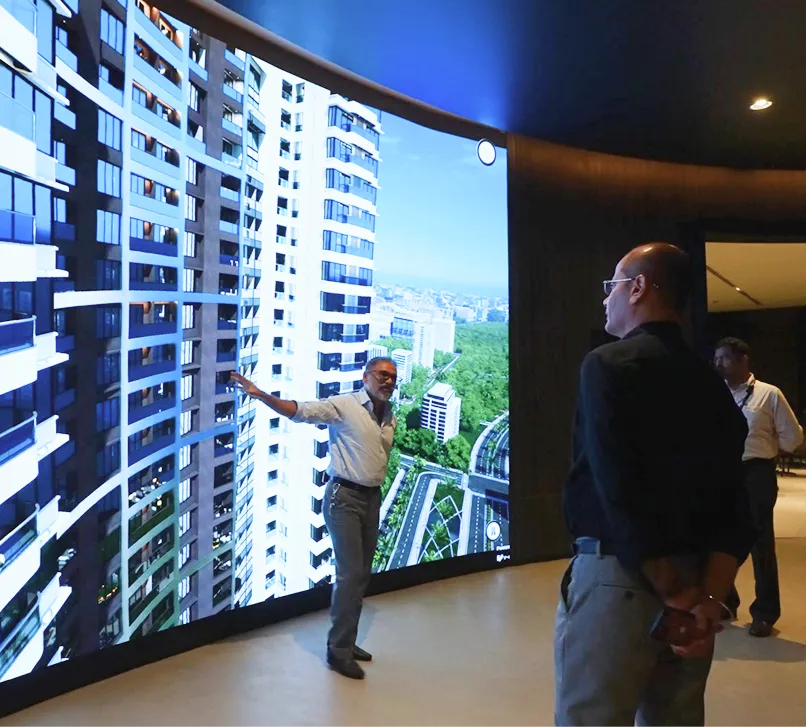
Using large-format LED displays paired with remote control interfaces allows the sales team to guide the narrative while keeping the buyer engaged. Interactive kiosks and AR applications can further clarify complex architecture, shifting the conversation from abstract concepts to clear visual facts.
Helping Buyers Explore Apartments and Configurations
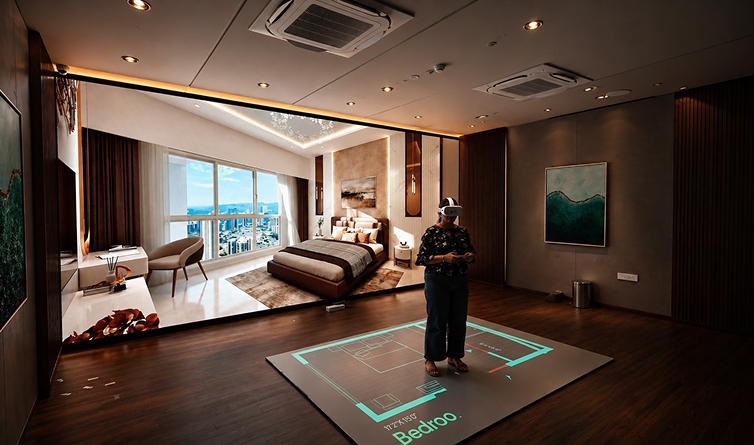
At the apartment level, an experience centre must allow buyers to move beyond static floor plans. Using interactive displays, buyers can view different floor plans, explore specific layouts, and compare options without shuffling through paperwork.
Advanced systems allow users to change furniture configurations to see how a space functions for their family. Buyers can view different rooms, understand specific window views from their exact floor, and observe different lighting conditions to see how sunlight enters the living room in the morning versus the late afternoon.
Showing Location, Connectivity and Surroundings
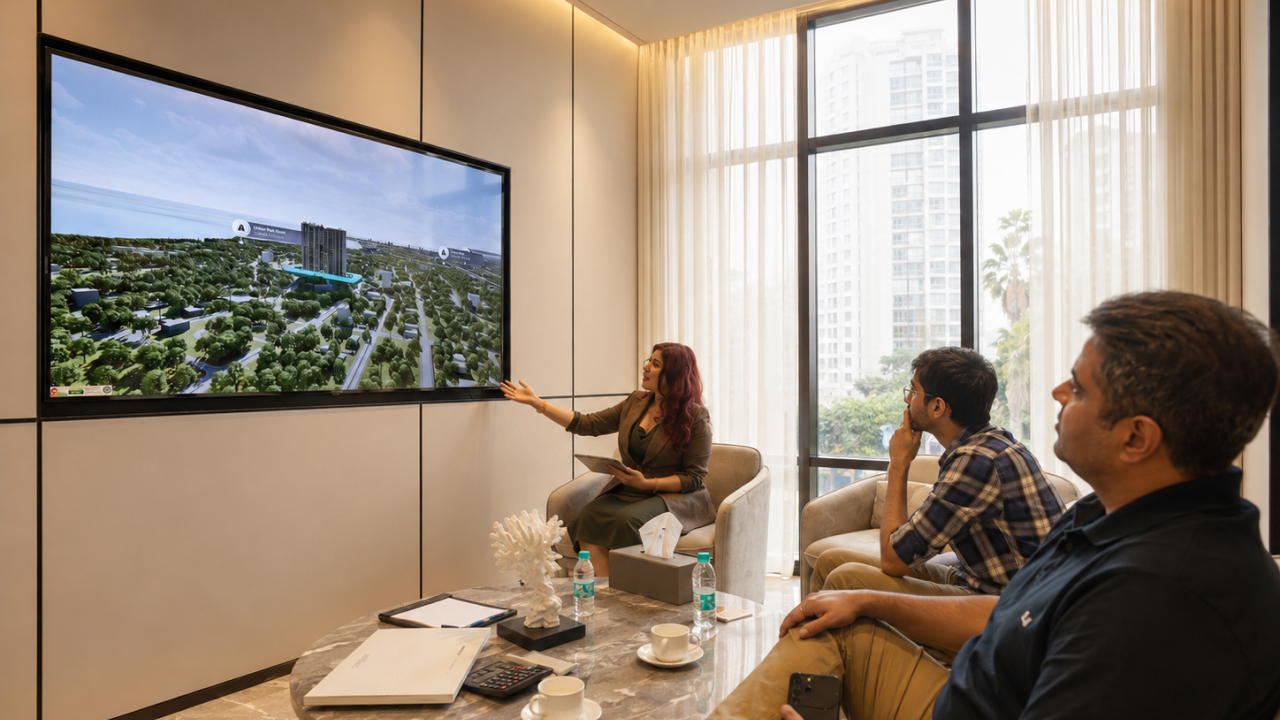
A property's value is heavily tied to its location. Integrating location and vicinity visualisation helps sales teams answer practical buyer questions instantly.
Using interactive screens, a salesperson can display the property's proximity to roads, airports, schools, hospitals, offices, retail centres, and public transport. Instead of switching between generic mapping apps on a phone, the sales team can toggle visual layers to show future infrastructure projects and nearby landmarks directly within the main presentation.
Designing for Large Township and Multi-Tower Projects
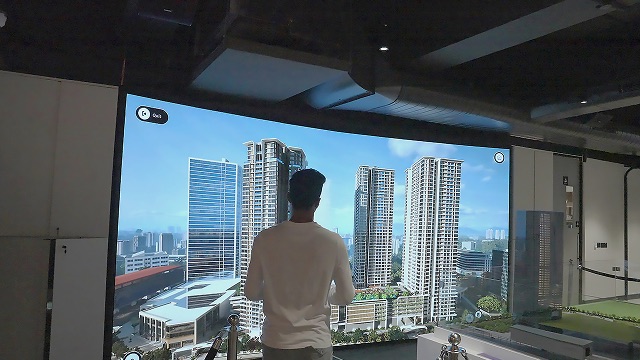
Communicating the scale of large township projects is a distinct challenge. Buyers often struggle to map out multiple towers, varying configurations, vast landscapes, commercial zones, and future development phases.
An interactive experience centre solves this by allowing buyers to navigate intuitively. The sales team can start at the macro level—showing the township's masterplan, arterial roads, and open spaces. From there, they can zoom into a selected tower, choose a specific floor, explore the apartment layout, check the balcony view, and step back out to review the clubhouse amenities.
Personalisation Makes the Sales Experience More Relevant
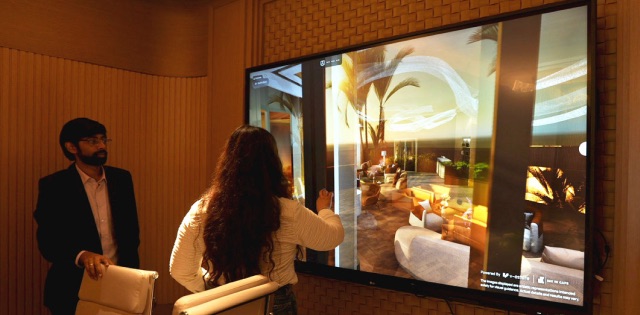
Different buyers prioritize different information, and the sales experience should adapt accordingly. Interactive property exploration allows the sales team to tailor presentations instantly.
A family-focused buyer can be guided through schools, safety features, and open spaces. An investor's presentation can focus on location, connectivity, and commercial development plans. Premium buyers might spend their time evaluating high-floor views, customisation options, and exclusive amenities, while end-users focus on daily commute logistics and sunlight. Personalising the flow keeps the buyer focused on what matters to them.
Connecting the Experience Centre With the Sales Team
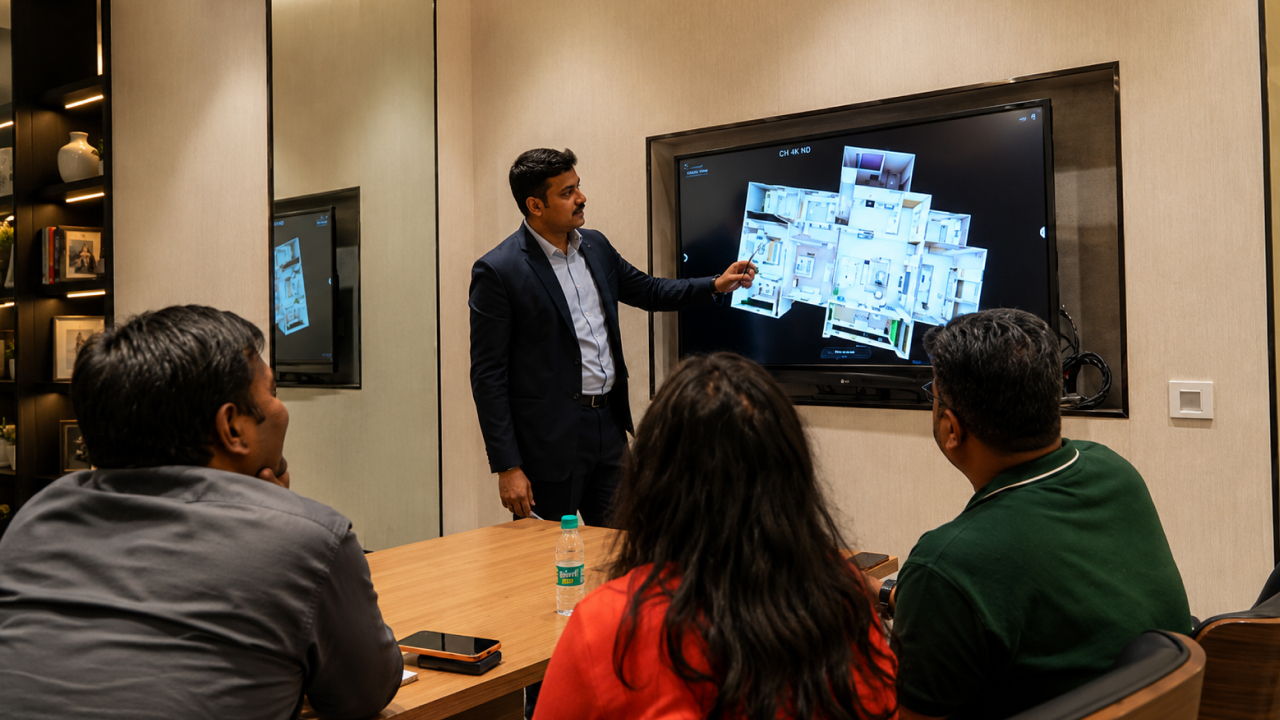
An experience centre is a tool for the sales team, not a standalone technology installation. It should support guided demonstrations and provide quick access to project information without breaking eye contact or conversation flow.
When a customer explores a specific apartment configuration, the system should enable seamless lead capture and demo tracking. Salespeople can instantly send digital brochures, selected floor plans, and follow-up information directly to the customer's phone based on what they reviewed together, ensuring a highly relevant post-visit follow-up.
How to Choose the Right Technology for an Experience Centre
Developers should design the experience first and select the technology second. Avoid adopting expensive hardware simply because it looks impressive.
Practical decision criteria should dictate technology choices. Consider the project size and property complexity; a multi-tower development requires robust interactive masterplans, while a boutique luxury project may benefit more from highly detailed interior customisation displays. Evaluate the target audience, physical space, content requirements, budget, and maintenance needs. Ensure the chosen IoT Integration in Experience Centres or software platform is scalable as new project phases launch.
Measuring the Performance of a Real Estate Experience Centre
To ensure the space delivers a return on investment, developers must measure its performance using clear indicators. Key metrics include the number of customer interactions, the most-used project features, and frequently explored towers or configurations.
By tracking the time spent on key sections, demo requests, and customer feedback, developers can understand what drives buyer interest. Monitoring sales-team usage and the volume of qualified enquiries helps management refine sales pitches and improve the overall customer experience over time.
How V-estate Supports Real Estate Experience Centres
V-estate supports real estate developers by providing the technology layer required to build interactive property experiences. Through 3D project visualisation and digital twins, V-estate helps turn complex architectural data into an interactive sales environment.
The platform enables apartment customisation, amenities exploration, and dynamic weather and lighting visualisation. With capabilities for location mapping, interactive displays, and remote customer control, the V-estate Experience Centre solution helps developers clearly present property details and support the sales team in converting leads.