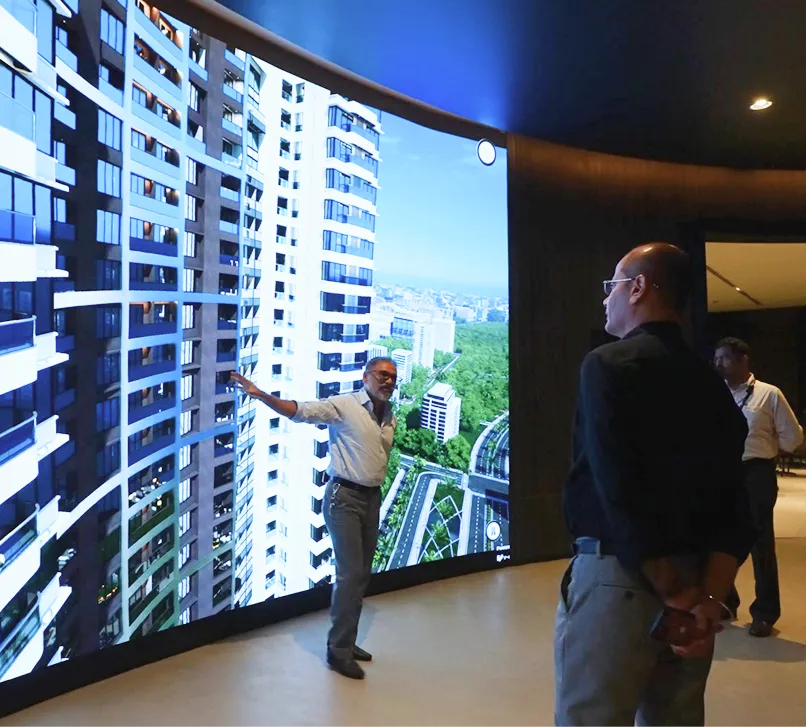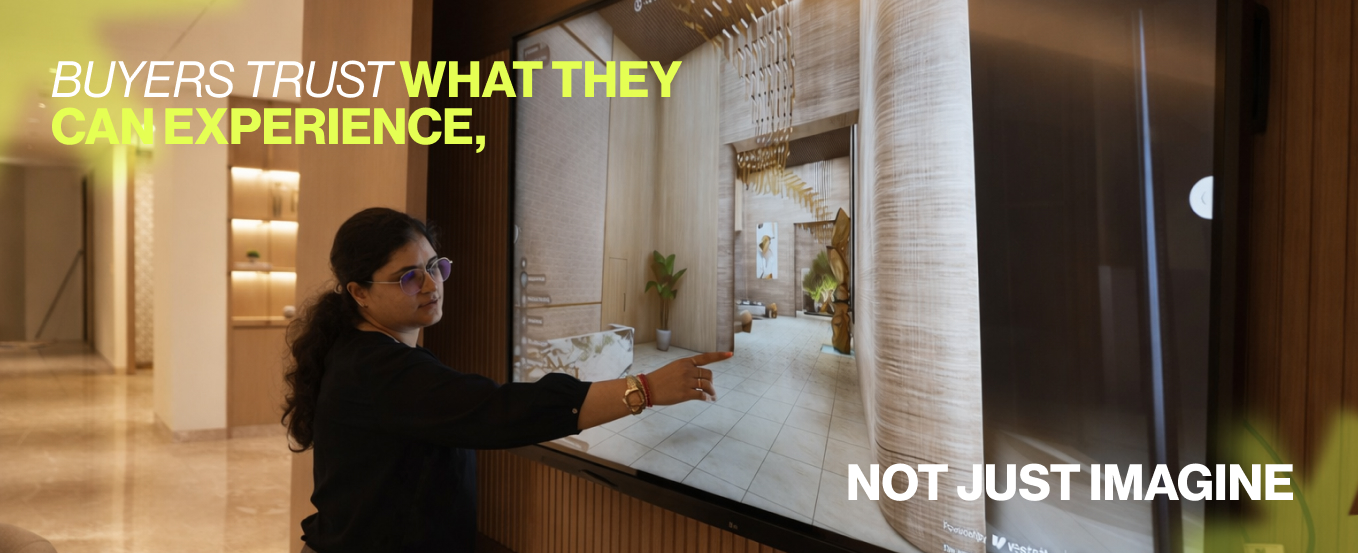
There is a phrase that has guided retail marketing for decades: Don't tell me, show me.
In real estate, we have been telling for far too long.
We describe views. We narrate lifestyles. We present renders that look beautiful in isolation but tell the buyer very little about what it actually feels like to be inside the space, to wake up there, to live there.
And then we wonder why buyers hesitate.
Trust in a property purchase is built through experience, not information. The developer who understands this — and acts on it — is the one who closes faster, converts higher, and builds a reputation that compounds over years.
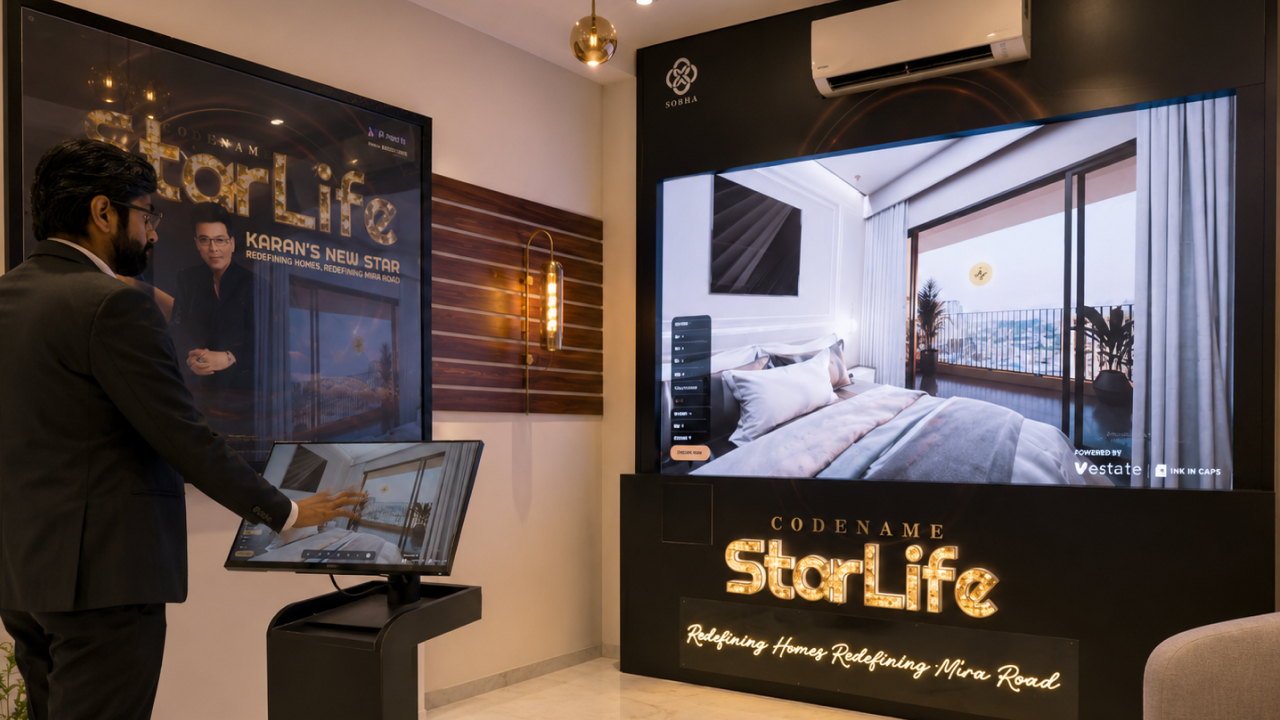
Interactive touchable screen with large led display
Real estate is one of the few industries where buyers are routinely asked to commit large sums of money to something they cannot directly experience before purchase.
This creates a structural trust deficit.
Buyers arrive at every sales interaction with a layer of scepticism baked in. They have heard stories. They have seen cases where the delivered property looked nothing like the render. They have experienced the gap between the promise and the reality.
The burden of trust-building falls entirely on the developer and the sales experience. And that burden cannot be met with more information — more brochure pages, more specification sheets, more slide presentations.
It can only be met with experience.
Experience vs. Imagination: Why the Gap Matters
When you ask a buyer to imagine something, you are outsourcing the most important part of the sales process to them.
You have no control over what they imagine. You cannot control the quality of the mental picture they construct. You cannot ensure they imagine the space at its best, with the right light, with the right feel.
But when you give a buyer a rich, photorealistic, immersive experience of the space they are considering — you take back control of that narrative. You show them exactly what you want them to see, exactly how you want them to see it.
This is not manipulation. This is clarity. And clarity is the foundation of trust.
JP Infra and the Power of Experiential Selling
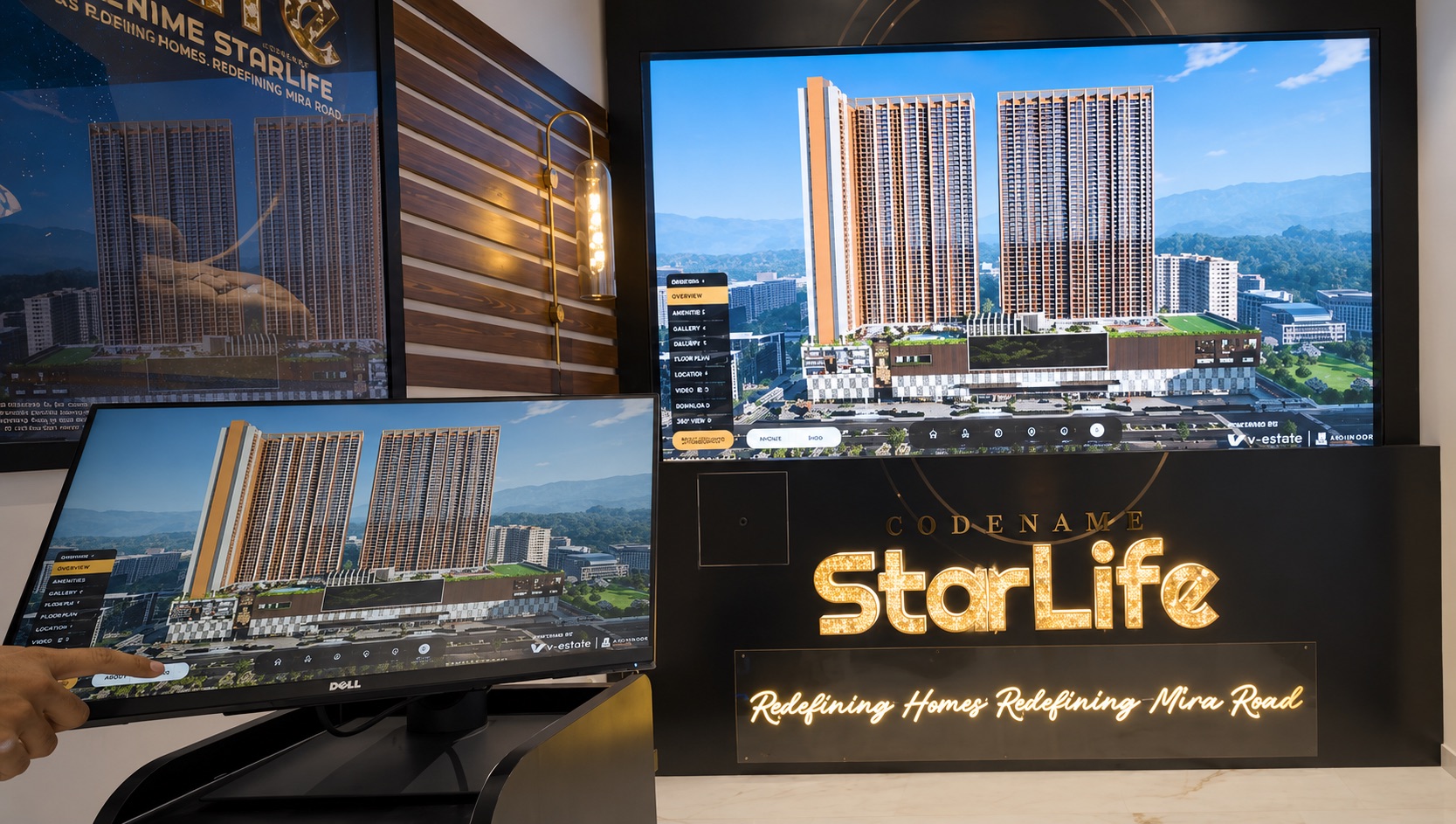
JP Infra, one of India's recognised real estate players, deployed V-estate's immersive interactive sales tool across their sales experience. The feedback from their leadership was telling.
Deepak Nair, Head of Marketing at JP Infra, described V-estate as immersive in its entire approach — one that gives customers a far better understanding of how they will actually use and enjoy each amenity.
Prashant Bharti, Senior Manager of Digital Marketing at JP Infra, called it one of the best solutions he had come across, noting direct feedback from his sales team that the tool was driving stronger conversions.
What JP Infra experienced was the shift from a trust deficit to a trust surplus.
When buyers could walk through the virtual show flat, explore the amenity spaces, see the landscaping, understand the view from their specific floor — they stopped questioning and started deciding. The experience replaced scepticism with conviction.
What an Immersive Property Experience Delivers That Static Tools Cannot
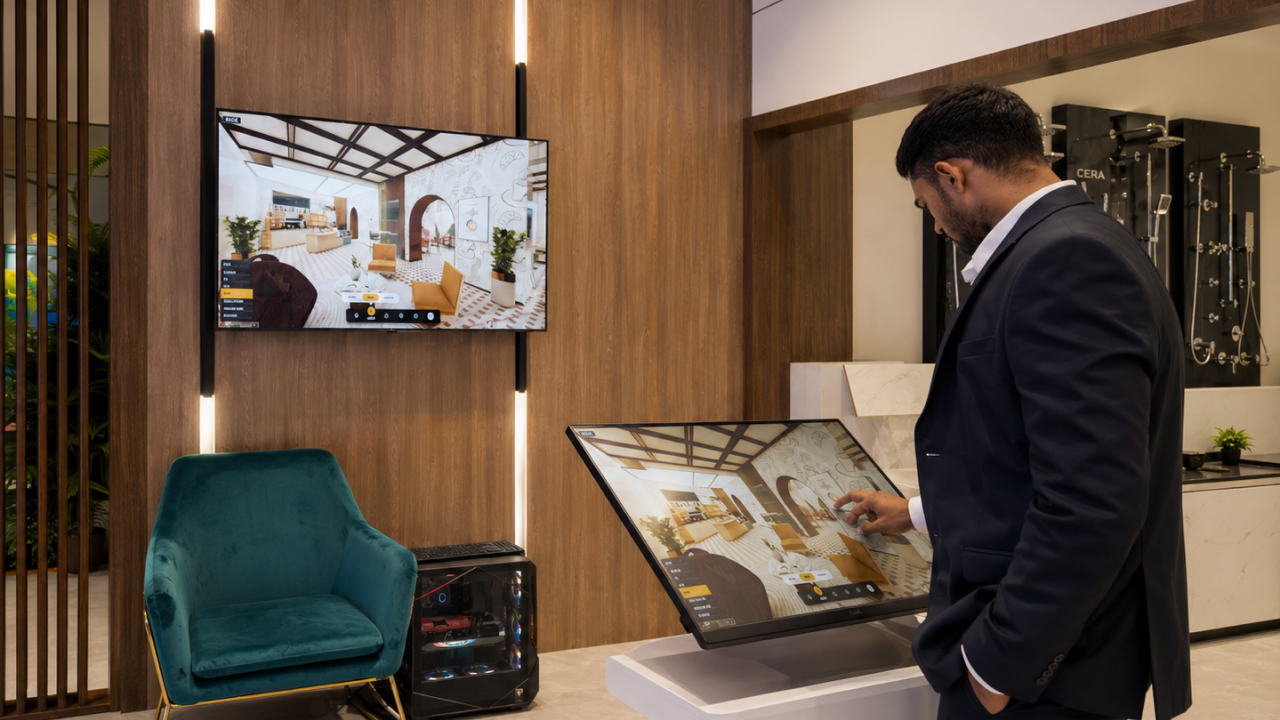
The gap between a brochure and an immersive 3D property walkthrough is not just aesthetic. It is neurological.
The human brain processes immersive spatial experiences fundamentally differently from two-dimensional images. When you are inside a space — even a virtual representation of one — your brain activates the same proprioceptive and emotional circuits it would in a real environment.
This means the emotional connection formed during a V-estate walkthrough is not a shallow, surface-level impression. It is a deep, felt conviction that this space is real, liveable, and desirable.
Key experiential elements V-estate delivers:
Photorealistic 3D Virtual Show Flats — not generic renders, but accurate, unit-specific representations with the correct views, correct light angles, and correct spatial proportions. A buyer on the 14th floor sees a 14th-floor view, not a stock image.
Dynamic Lighting and Weather Controls — buyers see the space across different times of day and across weather conditions. This transparency builds trust because it shows honesty, not just the best-case scenario.
Amenity Showcase with Vicinity Mapping — nearby schools, hospitals, transit, retail, and upcoming infrastructure projects are shown in context. The buyer does not just understand the unit — they understand the life they are buying into.
Interior Customisation — wall colours, furniture configurations, flooring. The buyer begins to personalise, and personalisation creates ownership psychology before a rupee has changed hands.
The Role of Offline Immersive Activation in Trust Building
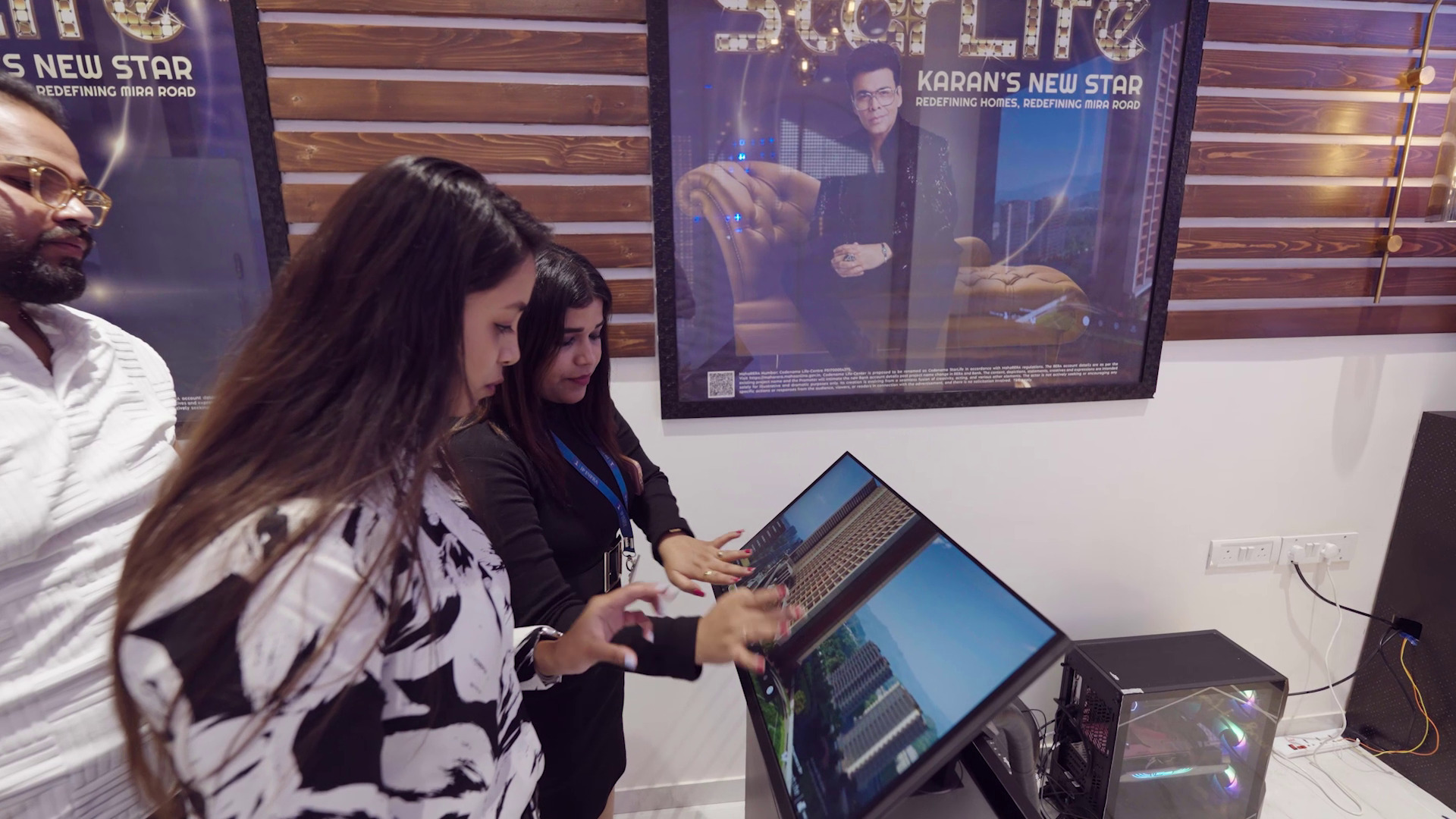
There is a common misconception that digital and immersive property tools are online experiences — things buyers interact with on a website or an app.
V-estate operates differently, and this distinction is critically important.
V-estate is an offline activation tool. It is designed to be experienced in person — at experience centres, at sales offices, at trade shows, at curated buyer events. The hardware, the screen sizes, the interactivity — all of it is calibrated for an in-person, guided experience.
This matters for trust because in-person experience carries a completely different psychological weight than something viewed on a laptop screen at home. The buyer is present. They are engaged. A sales executive is alongside them, reading their reactions, answering questions in real time, guiding the narrative.
The technology amplifies the human sales interaction — it does not replace it.
From Scepticism to Conviction: The Experience-First Approach
Developers who adopt an experience-first approach to sales are not just selling faster. They are building a different kind of buyer relationship.
When the purchase decision is made from a place of genuine conviction — from having experienced the space, understood the amenities, personalised the interior, and felt confident about the neighbourhood — the buyer becomes an advocate.
They tell their colleagues. They bring their family back. They post about the experience. Word-of-mouth from a buyer who felt genuinely impressed by the sales experience is the most valuable marketing asset a developer can generate.
The investment in immersive property experience technology is not just a sales efficiency play. It is a brand-building play.
Trust is the most durable competitive advantage in real estate. And trust is built by giving buyers an experience they cannot forget.
Ready to shift from imagination to experience? Explore V-estate to see the difference for yourself.
.jpeg)