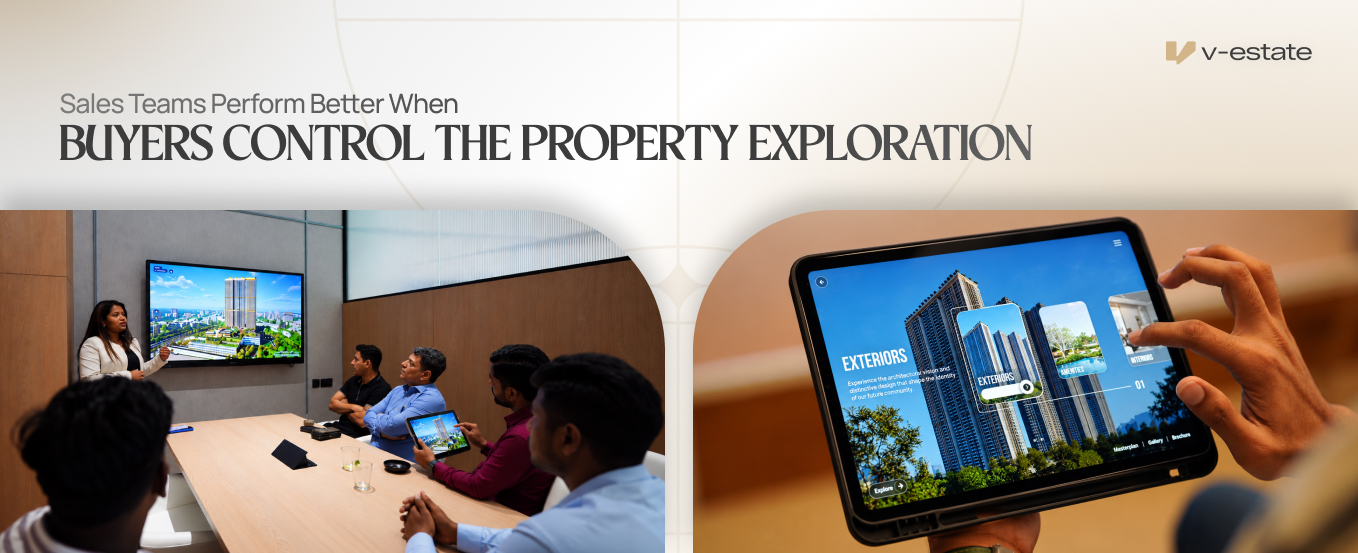
Real estate sales have traditionally followed a familiar structure. The sales consultant leads the conversation, walks the buyer through the project, answers questions, shows the brochure or walkthrough, and eventually moves the discussion towards a purchase decision.
But the way buyers evaluate high-value purchases is changing.
Today’s property buyer does not simply want more information. They want to understand what matters to them, in the order that makes sense to them, and at their own pace.
This is where buyer-controlled property exploration in real estate becomes strategically important.
Instead of following a fixed sales pitch, buyers can explore the development themselves. They can move from the master plan to an apartment, explore an amenity, check a view, understand connectivity, or look at future development, then return to the areas they want to examine more closely.
The sales consultant still plays a critical role. The difference is that technology gives the buyer more control over the exploration process.
From Guided Presentation to Interactive Buyer Exploration
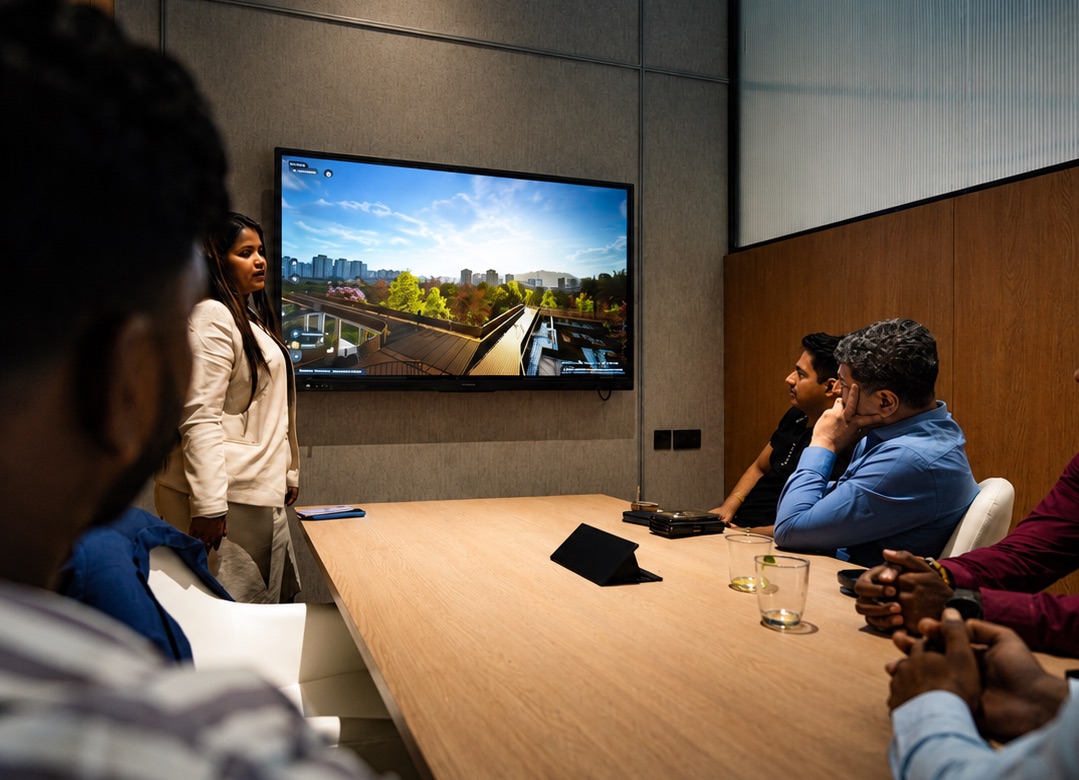
Traditional property presentations usually follow a predetermined sequence:
Project overview.Location.Architecture.Amenities.Apartment.Pricing.
The problem is that buyers do not necessarily evaluate a property in the same order.
One buyer may want to understand the master plan first. Another may care most about amenities. Someone else may want to know about views, connectivity, or future development before even looking closely at the apartment.
A self-guided 3D property tour gives the experience enough flexibility to accommodate these different priorities.
Rather than taking every prospect through the same presentation, interactive technology lets buyers explore the project around their own interests.
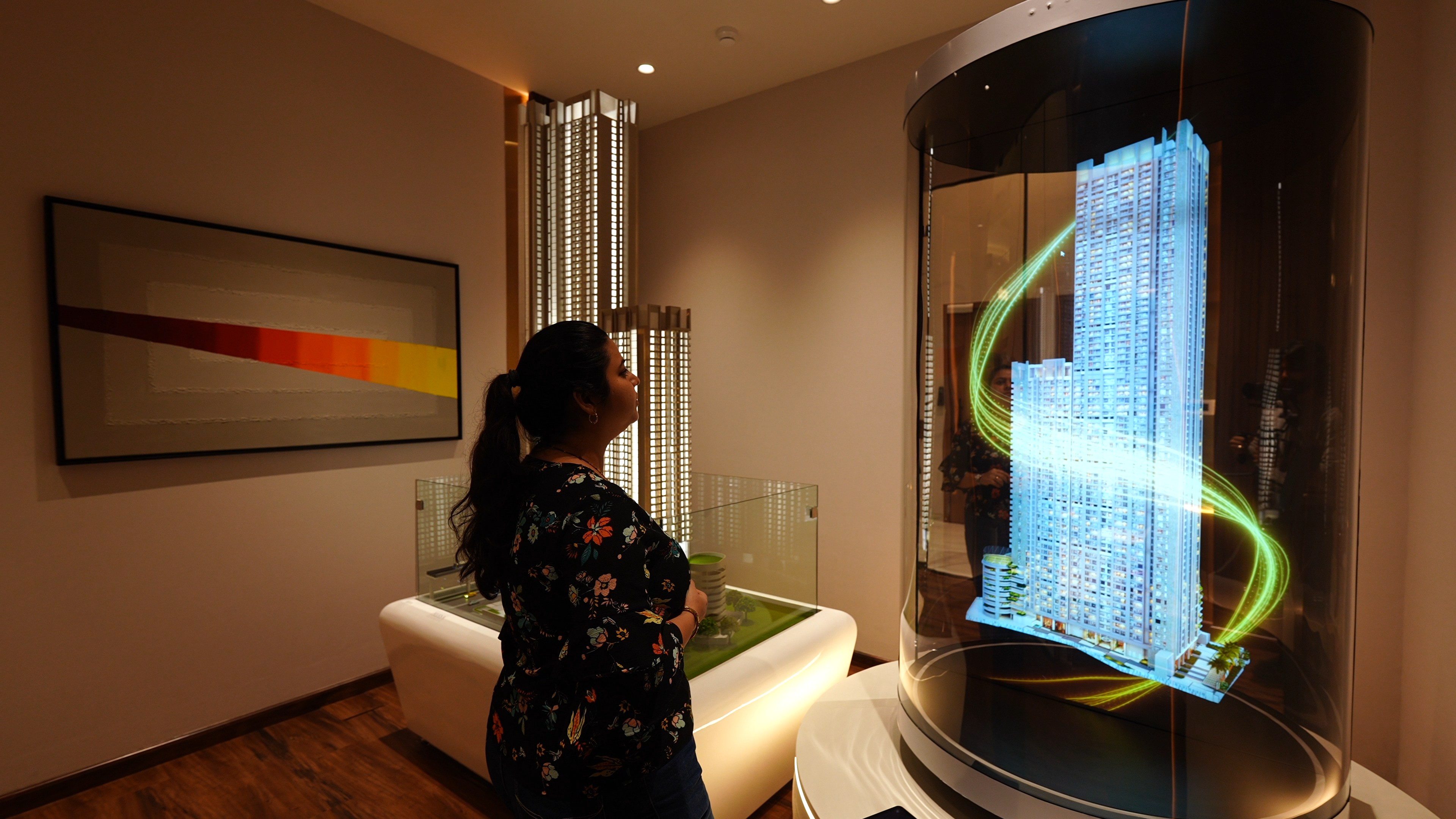
That changes the role of the sales gallery. It becomes less of a presentation space and more of an environment where buyers can actively explore the product.
What Buyer-Controlled Exploration Enables
A well-designed interactive property experience can allow buyers to:
- Navigate the project master plan independently
- Explore individual towers and configurations
- Move through amenities in real time
- Understand apartment views and orientations
- Explore surrounding infrastructure and connectivity
- Compare different development phases
- Revisit areas they want to understand better
- Move between a broad township view and detailed apartment-level information
- Bring the sales consultant into the conversation when they need deeper clarification
The result is interactive buyer exploration that brings together self-discovery and expert consultation.
Why Buyer Control Matters in High-Value Real Estate
Buying real estate involves evaluating a lot more than the apartment itself.
Buyers are considering the development, neighborhood, accessibility, amenities, views, future potential, and the lifestyle the project offers. For a large township, the number of factors can become even greater.
A fixed presentation can communicate all of this information. A buyer-controlled experience gives prospects the opportunity to investigate it for themselves.
That difference matters.
When buyers actively navigate a property experience, they begin building their own understanding of the development rather than simply following the narrative presented to them.
For developers and CMOs, this can create several advantages:
1. Higher Relevance
The experience can adapt to what an individual buyer actually wants to know instead of relying on one generic sales narrative.
2. Greater Information Depth
Interactive environments allow consultants to move from a high-level project overview into detailed exploration without switching between multiple tools or presentation formats.
3. More Meaningful Conversations
As buyers explore different parts of the project, their questions tend to become more specific. This gives consultants a better sense of what is influencing the buyer’s decision.
4. Stronger Product Understanding
Large developments can be difficult to communicate through static plans alone. Interactive 3D environments help buyers understand scale, spatial relationships, and how different parts of the project connect.
5. More Flexible Sales Journeys
The same technology can support a first-time presentation, a detailed consultation, a channel partner briefing, or a repeat visit focused on a very specific buyer requirement.
The Rise of Proptech Self-Service Sales Galleries
This shift is also changing the role of technology within experience centers.
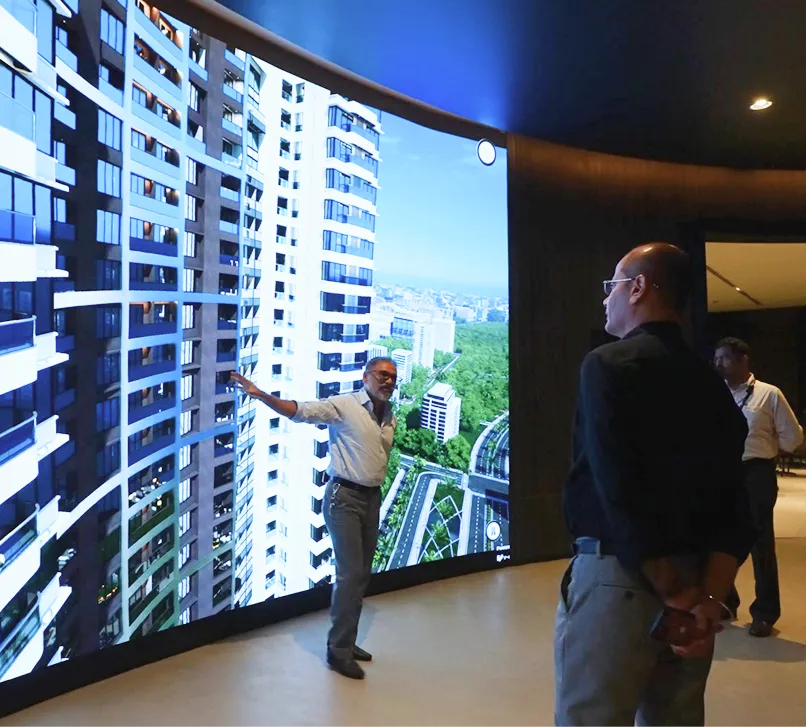
A proptech self-service sales gallery does not mean taking the sales consultant out of the picture. It means giving buyers more control over how they interact with the project before and during the consultation.
Technology becomes an extension of the sales team.
A buyer can explore the master plan independently. The consultant can step in to explain a particular tower. The buyer can return to the amenities. The consultant can demonstrate a specific view. The conversation can then move to connectivity, future development, or any other aspect the buyer wants to understand.
It creates a hybrid model:
Self-discovery + guided expertise + interactive visualization.
For developers managing large townships or multi-phase developments, this can be particularly useful because there is a significant amount of information to communicate.
Runwal One demonstrates how this model can work at scale.
Runwal One: Immersive 3D Property Tour
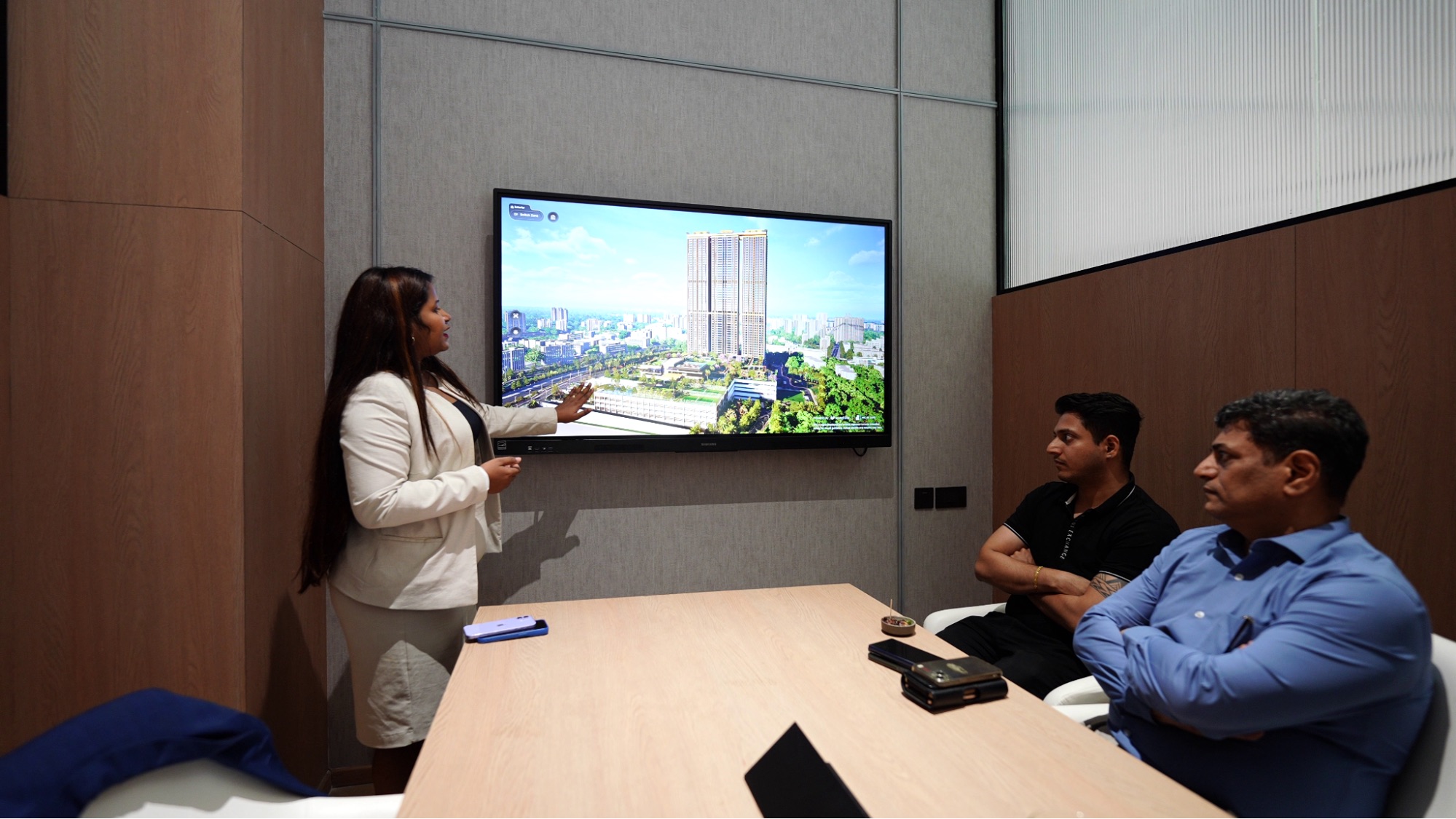
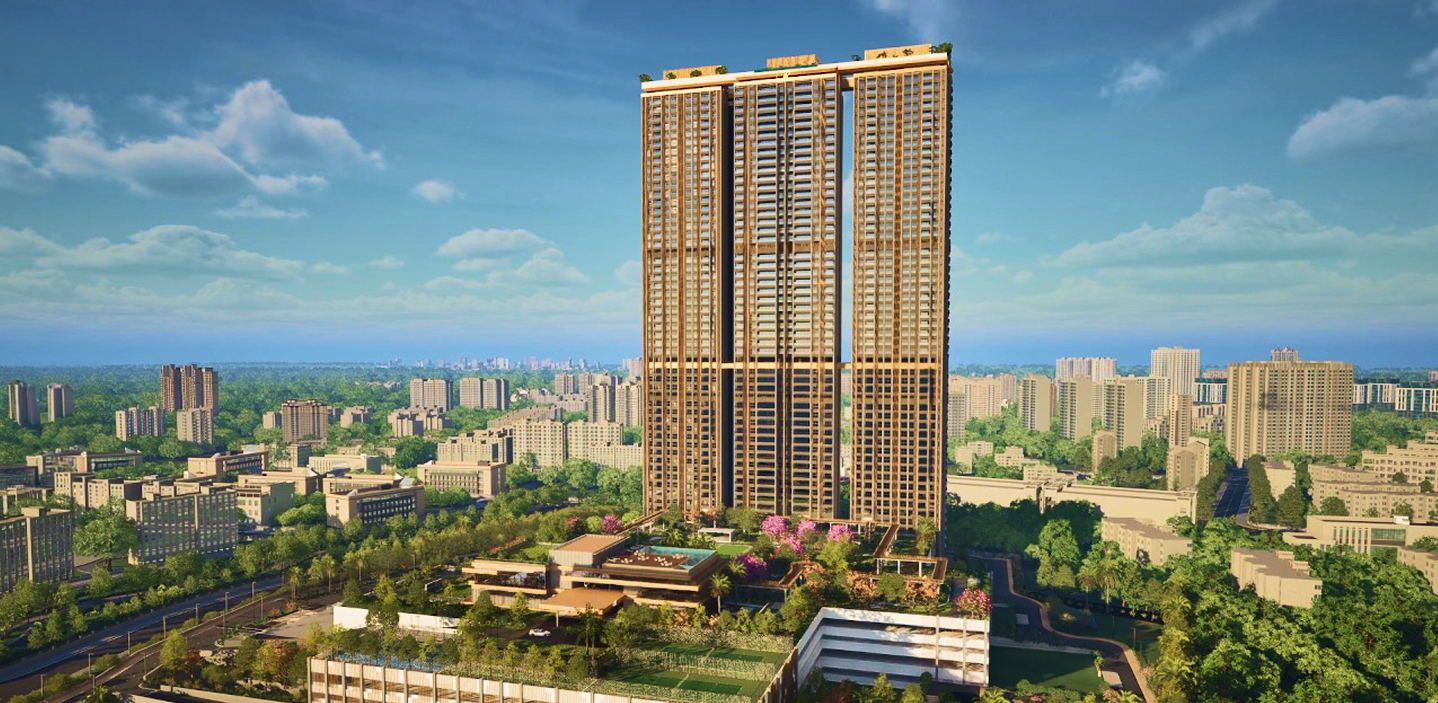
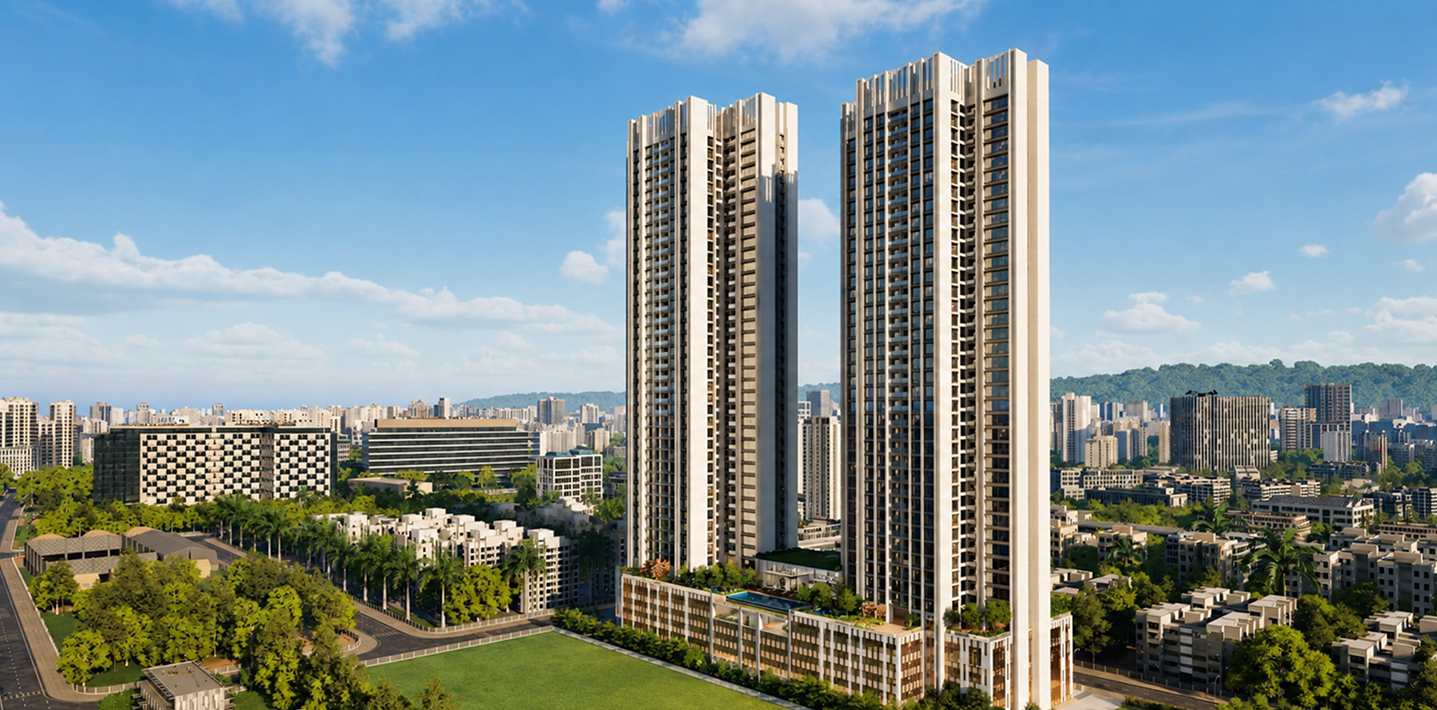
Runwal Realty partnered with V-Estate to create an immersive visualization ecosystem for Runwal One, Thane, a 21-acre integrated township combining residential and commercial development.
The challenge was to communicate a large and evolving project without making the sales experience feel like a long, fixed presentation.
The experience needed to bring together the township’s scale, architectural identity, premium lifestyle offering, connectivity, future development, and more than 50 lifestyle amenities. At the same time, sales teams needed enough flexibility to tailor the experience for different buyers and channel partners.
The objective was to move beyond static brochures, basic walkthroughs, and physical scale models towards an interactive sales ecosystem that could communicate the complete vision of a multi-phase township.
Building a Digital Twin Buyers Could Explore
V-Estate developed a photorealistic digital twin of Runwal One, allowing buyers to explore the township, future developments, and surrounding infrastructure in real time.
The experience also included a 5 km interactive vicinity map, covering metro connectivity, Eastern Express Highway access, healthcare, education, retail, commercial hubs, and existing Runwal developments.
Surrounding infrastructure, flyovers, landmarks, and environmental elements were recreated to give buyers a clearer understanding of how the project sits within its real-world context.
For a large integrated township, this context is critical.
Buyers are not only evaluating an apartment. They are considering the larger ecosystem around it.
The interactive experience allowed them to see the relationship between the residential development, the wider township, surrounding infrastructure, and future phases in one environment.
Making Future Development Interactive
One of the more difficult aspects of selling a multi-phase township is showing buyers what exists today while also communicating what will come next.
V-Estate addressed this through a custom dynamic tower visibility system.
Sales teams could switch between launched and future phases while maintaining the overall township master plan.
Instead of moving between separate presentations or visual assets, consultants could demonstrate the development journey within the same interactive environment.
For buyers, this made it easier to understand the township as an evolving development rather than a collection of disconnected phases.
Exploring More Than 50 Lifestyle Touchpoints
The experience went beyond architecture and infrastructure.
Runwal One’s lifestyle proposition was brought into a real-time interactive environment featuring 50+ premium amenities, landscaped open spaces, wellness zones, podium amenities, recreational facilities, and panoramic views of Sanjay Gandhi National Park.
Buyers could navigate these spaces in real time and spend more time on the areas that were relevant to them.
An amenity did not have to appear simply because it was next in the presentation. A buyer could choose where to go next, return to a space they had already seen, or explore another part of the development entirely.
This is where customer-led real estate purchasing becomes more tangible.
The buyer is no longer simply watching a presentation. They are actively exploring the product.
Designed for Multiple Simultaneous Buyer Journeys
The interactive ecosystem was deployed across three dedicated sales cabins, powered by four NVIDIA GeForce RTX 5090 workstations.
This allowed multiple consultants to conduct high-fidelity presentations simultaneously while navigating architecture, the master plan, amenities, connectivity, and future developments in real time.
The setup supported both personalization and operational scale.
Consultants could adapt the experience to the individual buyer without compromising visual quality or performance.
The same technology ecosystem could therefore accommodate different buyer journeys, rather than forcing every prospect through an identical sequence.
From Presentation to Participation
Runwal One illustrates a broader shift in how interactive technology can be used in real estate sales.
The value of the technology is not simply in making a project look impressive. It is in giving buyers a more active role in understanding the project.
With V-Estate, Runwal One moved from static presentations to an immersive decision-making environment. The experience operated for 10+ hours daily with zero downtime during customer presentations, while the Dynamic Tower Visibility System allowed multiple development phases to be visualized within one interactive environment.
The buyer journey became more exploratory, while the sales team gained more flexibility to tailor each conversation.
What This Means for Real Estate Sales
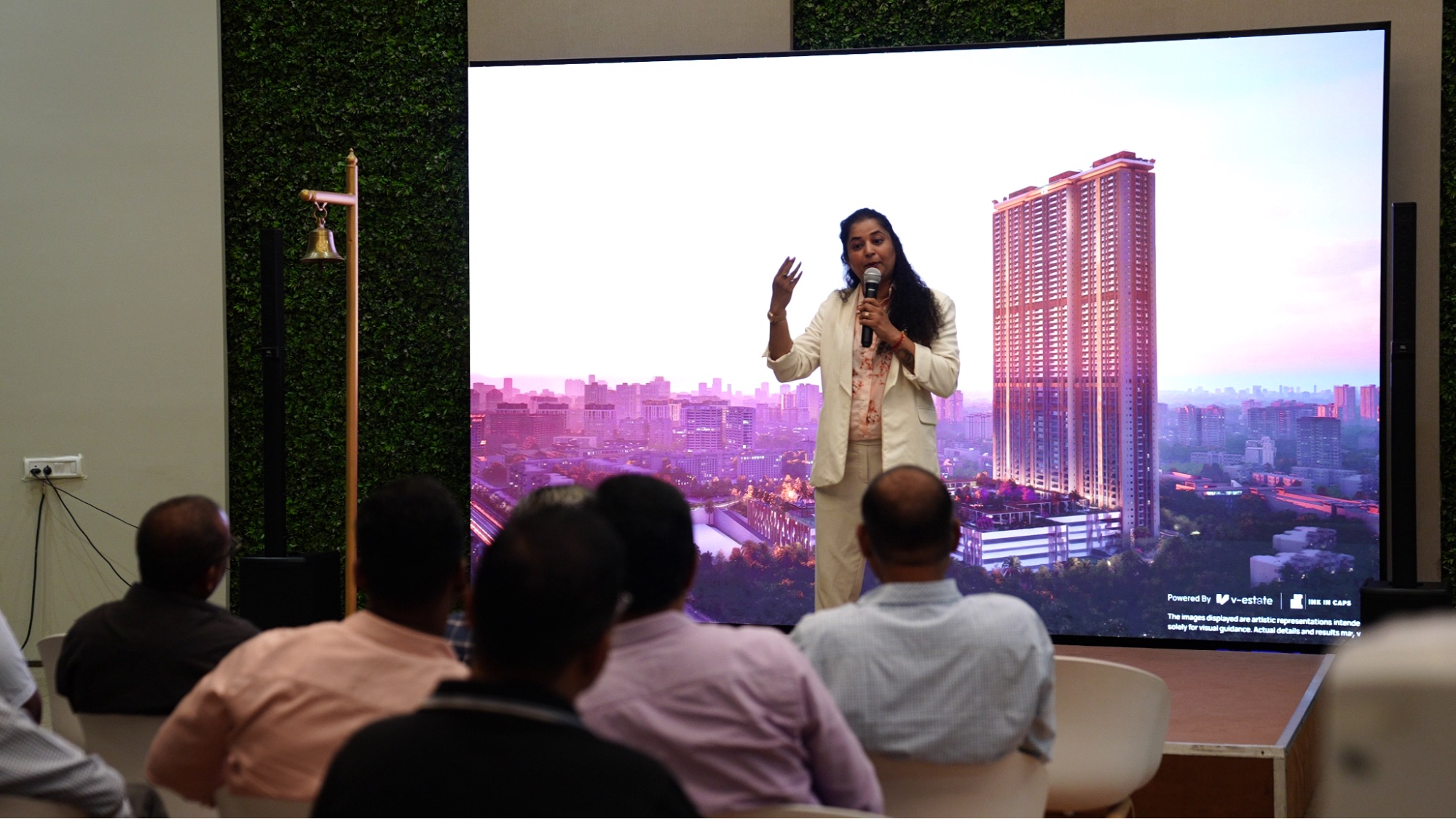
The next generation of experience-led real estate sales is likely to bring buyer autonomy and sales expertise closer together.
Developers can use interactive environments to let buyers explore the project, identify what matters to them, and then bring the sales consultant into the conversation for deeper discussions.
For CMOs, this creates an opportunity to build sales experiences that are more relevant, measurable, and differentiated.
For sales teams, it provides a flexible consultation platform instead of a rigid presentation format.
And for buyers, it gives them more control over how they understand a high-value purchase.
Ultimately, buyer-controlled property exploration in real estate is about giving prospects the freedom to investigate a property before they are asked to decide.
The technology does not replace the sales conversation.
It gives that conversation more context.
When buyers can see, explore, compare, and revisit the elements that matter most to them, the journey from initial interest to conviction becomes more interactive, more relevant, and more personal.
Give Buyers More Control. Build Stronger Conviction.
Transform your sales gallery into an interactive environment where buyers can explore, understand, and experience your project on their own terms.
Book a demo and discover how V-Estate can transform your property sales experience.