Premium real estate buyers don't lack interest, they lack certainty.
Brochures show aspirations, sample flats show constraints, and renderings show possibilities, but none of them answer the questions buyers actually ask: What will I see from my window? Does this layout work for my furniture? How does sunlight move through these rooms?
Rustomjee's Bay View experience centre addressed this directly, and the result wasn't about technology but about control.
The Clarity Problem in Premium Sales
Buyers for high-value properties carry specific doubts that make them visit multiple times, compare options across projects, and delay commitments because key details remain unresolved.
The common friction points:
Spatial ambiguity where floor plans don't translate to lived experience View uncertainty where buyers can't validate actual sightlines from their unit Finish anxiety where material samples don't show how choices combine in context Amenity disconnect where proximity and accessibility aren't immediately clear
These gaps extend sales cycles, create repeat visits, and reduce conversion confidence.
Most developers respond with more materials, better brochures, and upgraded sample flats, which help but don't close the clarity gap.
Physical Activation That Transfers Control
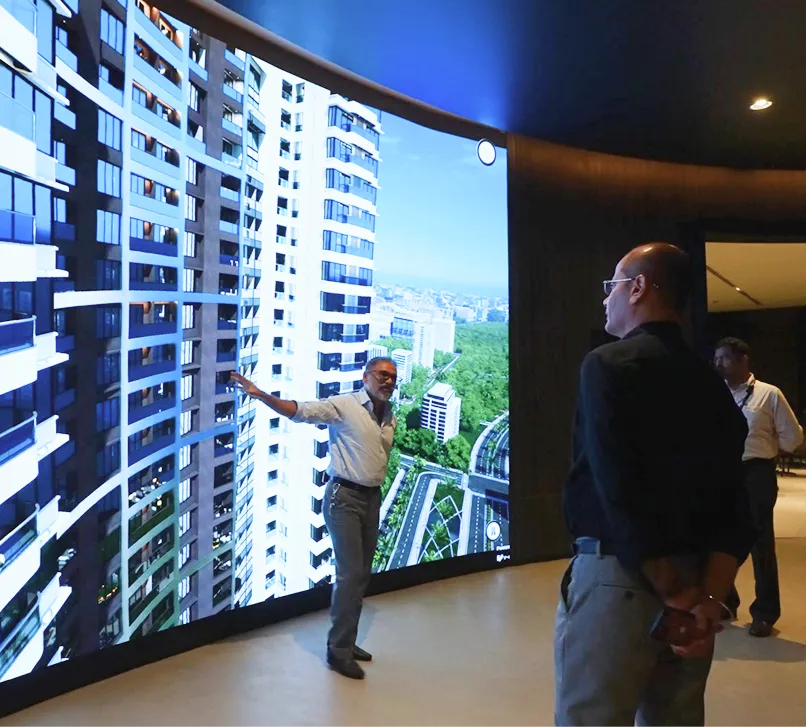
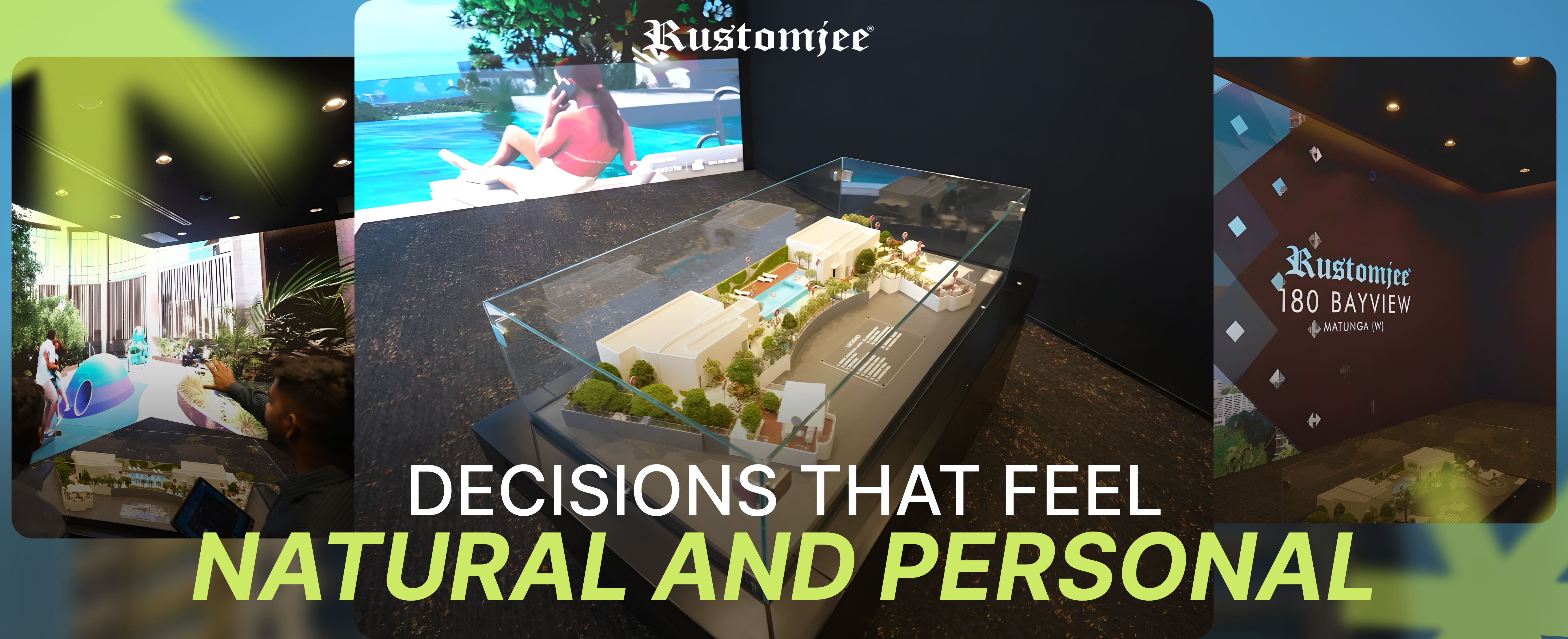
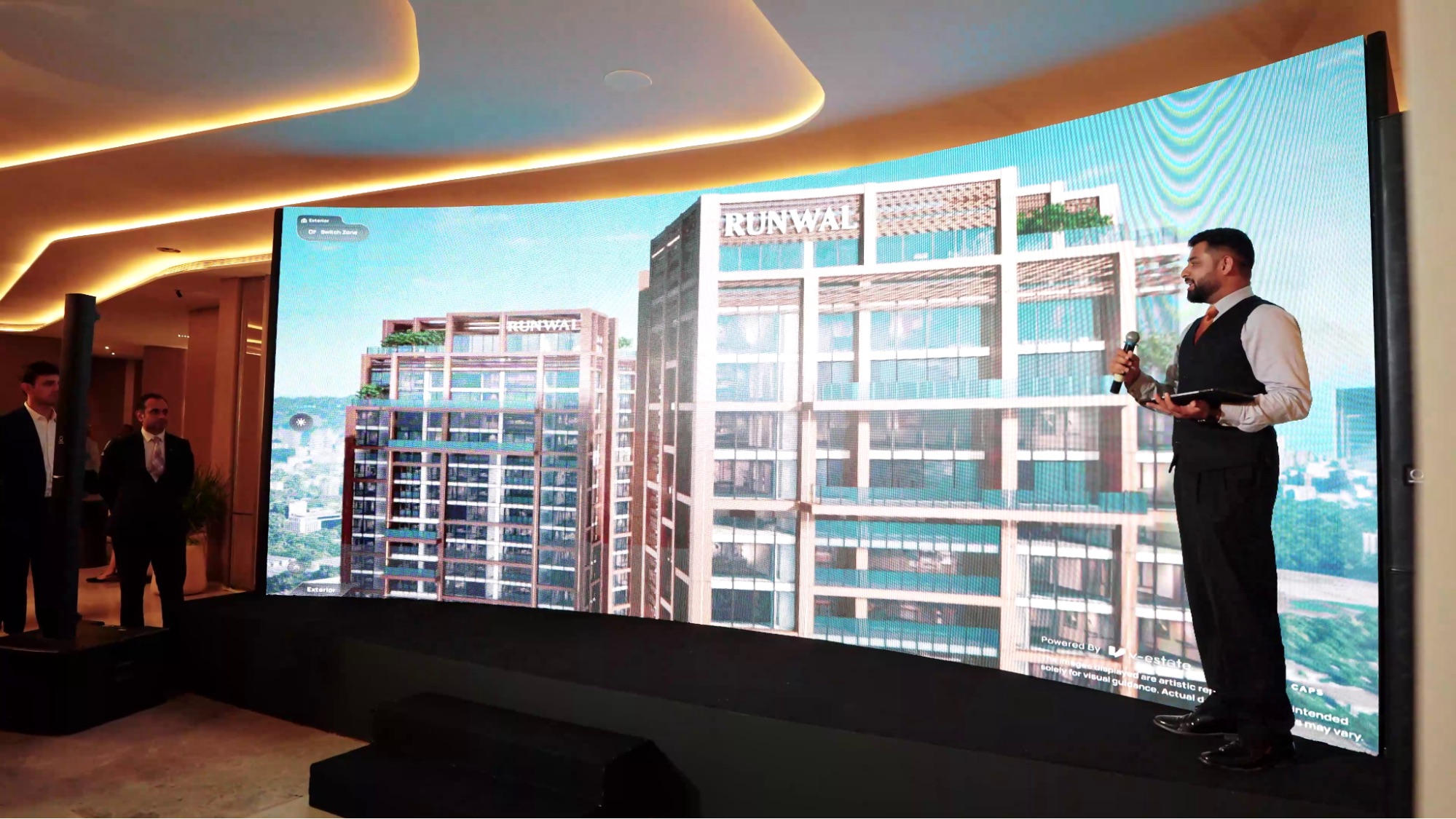
Bay View's experience centre functions as a decision environment rather than a presentation space, structured across four zones where each zone answers one question layer.
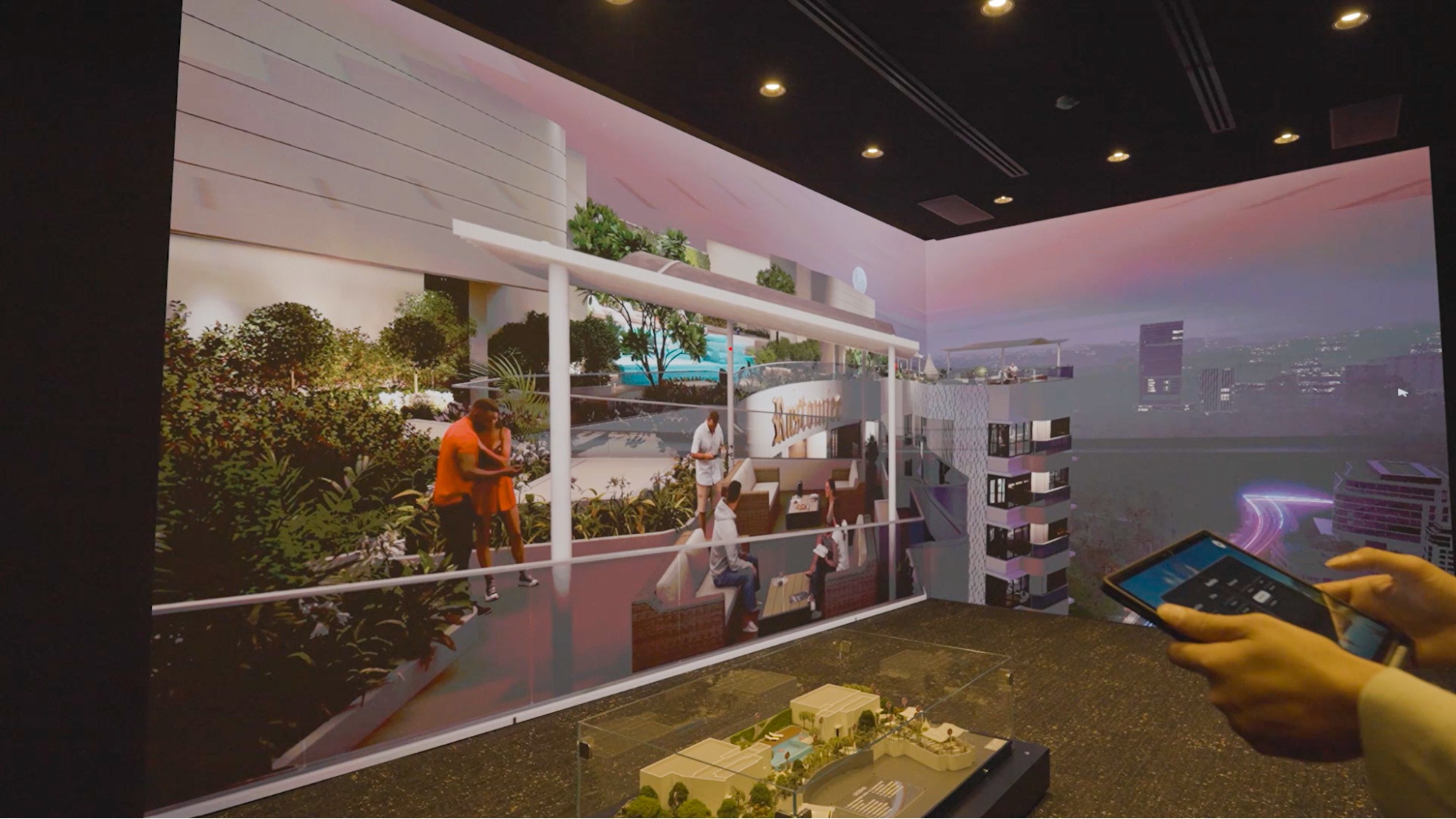
Zone 1: Project orientation provides site context, tower positioning, and neighbourhood connectivity Zone 2: View validation shows accurate window sightlines, landmark visibility, and sun angles Zone 3: Layout exploration reveals spatial flow, room proportions, and furniture placement testing Zone 4: Finish customisation enables paint options, flooring choices, and upholstery combinations
The sequence is deliberate as buyers move from macro to micro, from location to personalisation, and from broad appeal to precise fit.
This isn't a digital twin accessible from home but an in-centre activation where buyers interact with visualisations directly while sales teams guide and buyers control the inputs.
Features That Eliminate Guesswork
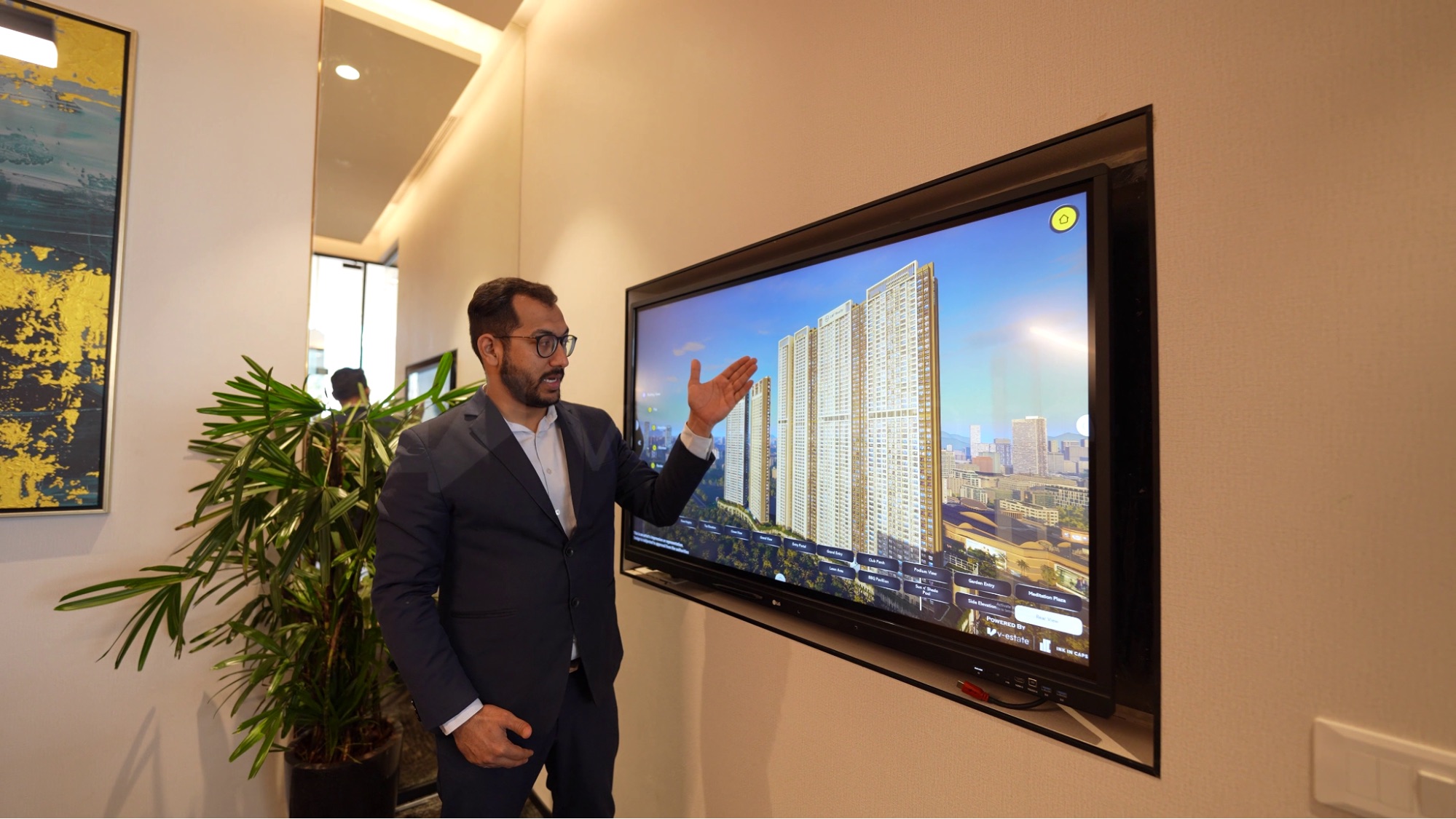
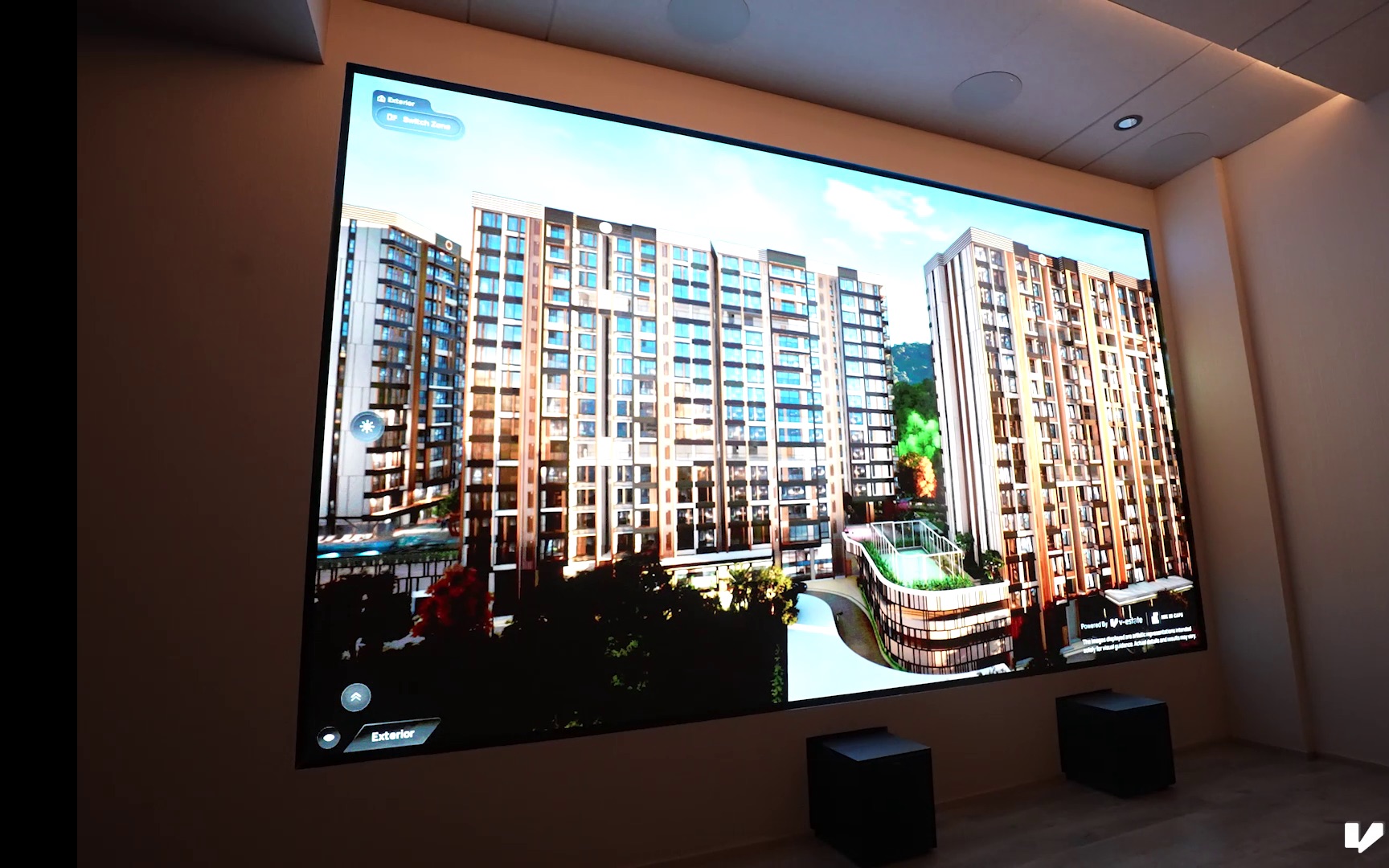
Photorealistic 3D show flats display material texture, finish quality, and furniture scale accurately so buyers see proportional representation rather than stylised renderings.
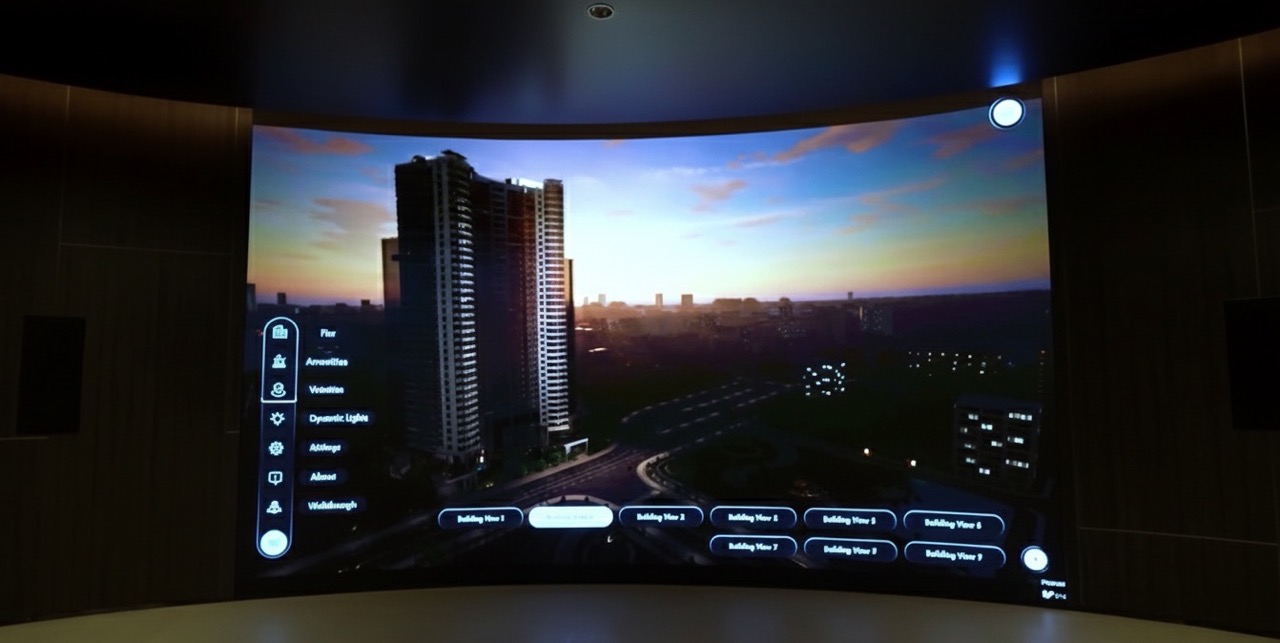
True window views show exactly what the external sightline will be with no approximations, which means the view from a 12th-floor east-facing unit is distinct from a 15th-floor southeast unit and buyers see both.
Dynamic lighting and weather controls let buyers test their unit at 7 AM, 3 PM, and sunset during both monsoon and summer, which removes temporal assumptions.
Finish and furniture toggles enable real-time customisation where buyers switch wall colors, try sofa configurations, and compare tile options so decisions become visual rather than abstract.
Amenity mapping with connectivity context displays schools, metro stations, hospitals, and upcoming infrastructure so buyers validate convenience claims immediately.
Each feature serves a single purpose, which is to answer a question that would otherwise require follow-up or remain unresolved.
Sales Outcomes That Matter
Extended, focused visits happened as buyers spent significantly longer in-centre, not browsing but exploring with intent where engagement translated to clarity rather than confusion.
Reduced repeat visits and no-shows occurred because when primary doubts are resolved during the first visit, follow-up requests drop and walk-ins convert more predictably.
Improved conversion clarity resulted as visualisation removed subjective interpretation, product features became indisputable, and close rates improved.
Actionable buyer data emerged through interaction patterns that revealed preferences including which views were toggled most, which finishes were tested longest, and which times-of-day mattered, so sales teams used this to prioritise follow-ups and refine offers.
These aren't soft metrics but map directly to cycle time, lead quality, and inventory velocity.
Implementation Considerations for Developers
Design the physical sequence intentionally where each zone should answer one buyer question, avoiding complexity because short, repeated loops work better than long linear paths.
Prioritise accuracy over polish by ensuring window angles match reality, sun paths are correct, and nearby landmarks are positioned accurately, because a single error destroys credibility.
Limit customisation to purchasable options by showing finishes buyers can actually select, since too many choices create decision paralysis rather than empowerment.
Redefine the sales role so sales teams interpret insights rather than operate interfaces, as their job is to translate interest into commitment instead of demonstrating software.
Measure and use interaction data by tracking which views, finishes, and scenarios are explored most, then using that intelligence for pricing decisions, inventory planning, and future marketing focus.
Relevance for Future Launches
This model scales across premium developments and is most effective when the product differentiates on view quality, layout flexibility, or finish customisation.
Urban launches benefit especially because dense contexts make external visibility critical and buyers need proof of what they'll see rather than promises.
Projects near metro stations, waterfronts, or parks gain immediate value from connectivity mapping and view validation.
Key Takeaways
In-centre control shifts buyer behaviour as physical activation drives commitment faster than remote engagement.
Single-visit clarity reduces friction where buyers leave with decisions or clear next steps rather than more questions.
Visual validation lowers post-sale anxiety as customisation removes surprises and buyers own their choices before signing.
Interaction data improves inventory strategy where usage patterns refine pricing, marketing focus, and product positioning.
If your next launch depends on view clarity, finish selection, or spatial confidence, consider a compact experience centre by starting with a pilot zone that tests window view validation and one customisation path, then measure visitor time, interaction depth, and conversion impact to scale based on results rather than assumptions.