You have invested in the site visit. The team is briefed. The location is good. The project is strong.
And the buyer leaves saying, "We'll think about it."
This is happening at scale across the real estate industry. Site visits are generating foot traffic and consuming significant sales team bandwidth — but they are converting at rates far below their potential.
The reason is not the price. It is not the location. In many cases, it is not even the sales pitch.
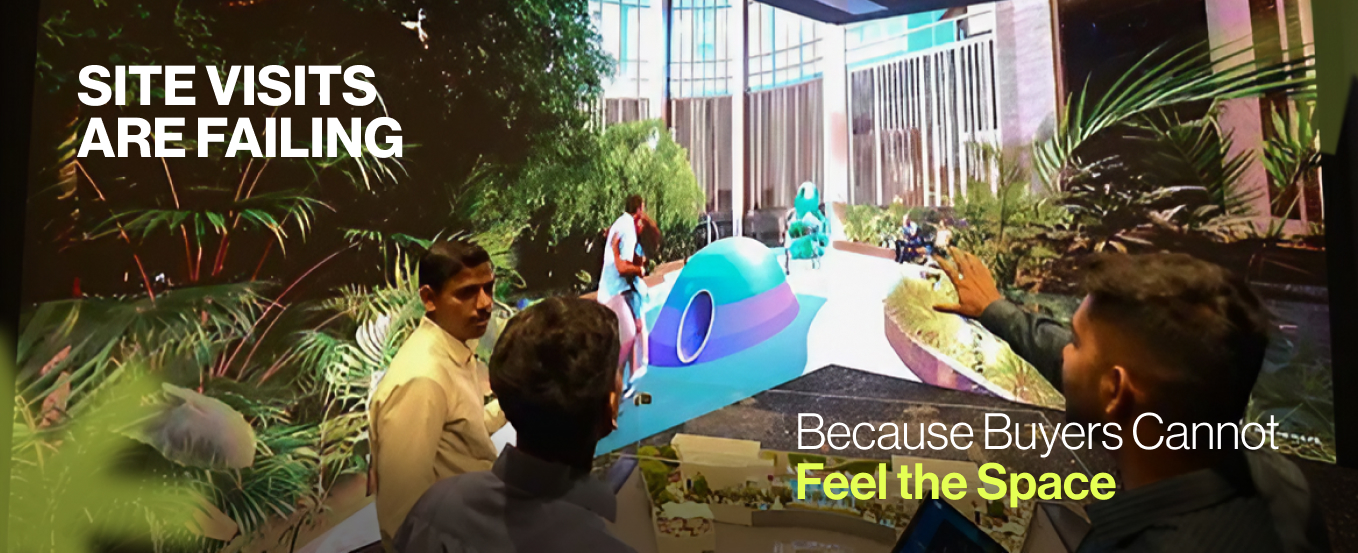
The reason is that buyers cannot feel the space — and without feeling the space, they cannot commit.
The Fundamental Problem With Under-Construction Site Visits
A site visit to an under-construction property is, from a buyer's perspective, a profoundly unsatisfying experience.
They see concrete. They see scaffolding. They see workers, machinery, dust. They hear the sounds of construction.
The sales executive points to a partially completed slab and says: "This will be your living room." They gesture toward a gap in the structure: "This will be your view."
The buyer nods. They try. They really do.
But the human brain is not designed to extrapolate a finished, furnished, light-filled home from an unfinished concrete shell. The emotional circuitry that responds to "home" — warmth, safety, belonging, beauty — simply does not activate in a construction site.
No amount of sales skill can bridge that gap. It is a neurological and experiential problem, not a persuasion problem.
What the Buyer Is Trying to Understand That the Site Visit Cannot Tell Them
The buyer's core purchase questions are deceptively simple:
Will I be happy here? Will I feel good in this space every morning? Will this home be worth what I am paying and what I am committing to?
A site visit answers none of these questions. It shows them the structural bones of the development and leaves everything else to imagination.
Specifically, the site visit fails to answer:
What will the view actually look like? Not the artist impression — the real view, from the real floor they are buying on, through the real window placement.
How will light move through the space? Is the master bedroom bright in the morning? Is the living room warm in the afternoon? Does the kitchen feel cramped after dark?
How will the space feel when furnished? A 900 sq. ft. flat looks very different as an empty shell than it will when furnished with their actual furniture, in their actual style.
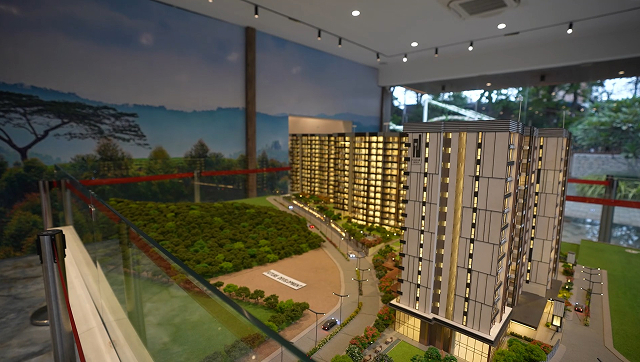
What will the amenities actually be like? The scale model shows the pool on the masterplan. But what is it like to actually be at that pool, in that development, surrounded by those landscaped gardens?
These questions are unanswerable at a site visit. And unanswered questions are the enemy of purchase conviction.
How Nahar Group Closed the Gap Between Site Visit and Purchase Decision
'
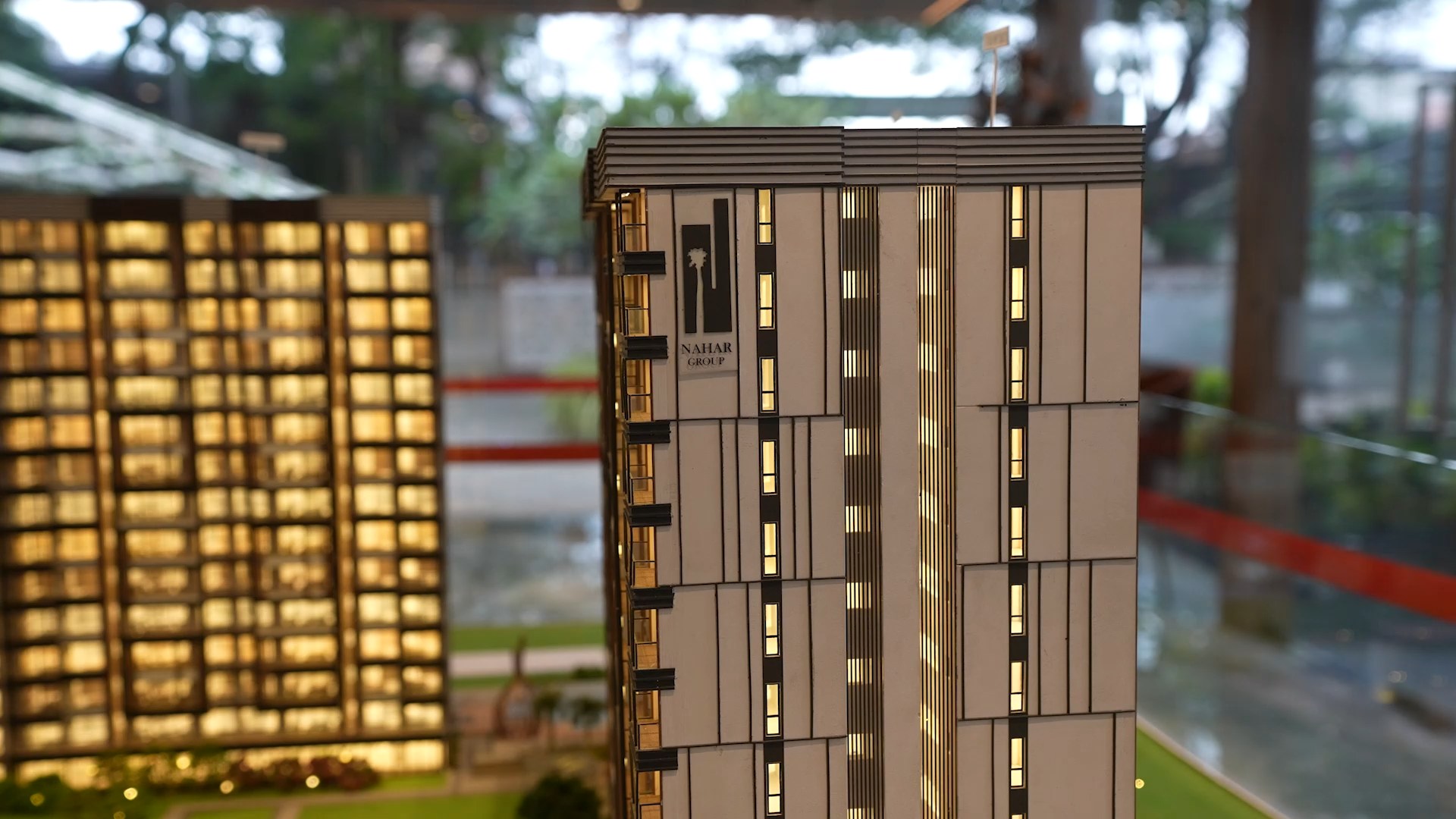
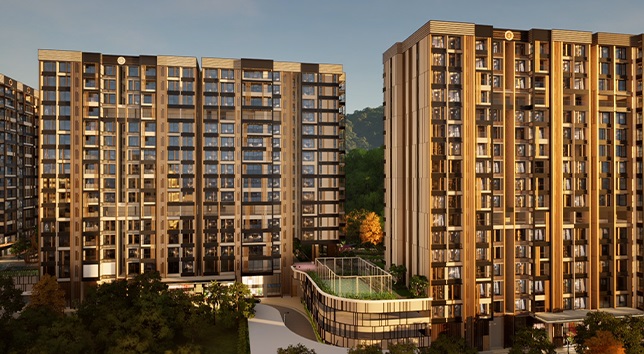
Nahar Group, one of Mumbai's most established real estate developers with decades of residential development experience, faced a challenge that is universal across the industry — buyers visiting under-construction sites were walking away without committing, despite strong interest in the project.
The problem was not the product. Nahar's projects are known for quality, planning, and lifestyle-oriented design. The problem was the experience gap: buyers could see the bones of the development but could not feel the finished home. The construction site environment actively worked against the emotional conviction needed to close.
V-estate's immersive sales tool was brought in as a purposeful bridge between the site visit and the purchase decision.
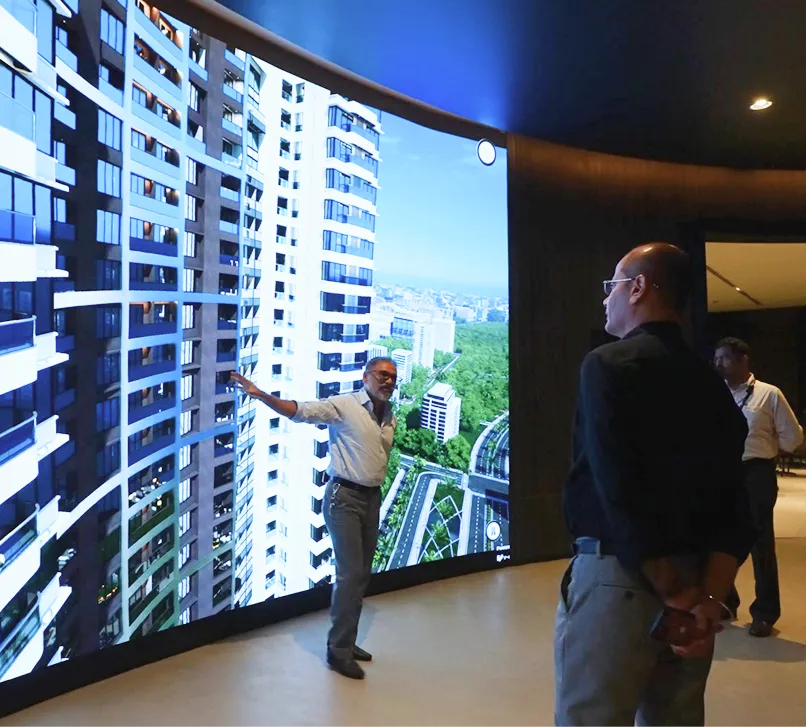
Rather than allowing the raw construction environment to be the buyer's dominant impression, the sales team at Nahar used V-estate to walk buyers through a photorealistic, fully finished representation of their specific unit — complete with accurate views from their floor, dynamic lighting across different times of day, and the full amenity experience rendered in vivid detail.
The site visit showed buyers what was being built. V-estate showed them what they were buying. Together, the two experiences eliminated the imagination gap entirely.
Buyers stopped leaving with "we'll think about it" and started leaving with questions about documentation. The site visit became the opening act. V-estate's immersive experience became the close.
The Solution: Replacing Imagination With Experience Before the Visit
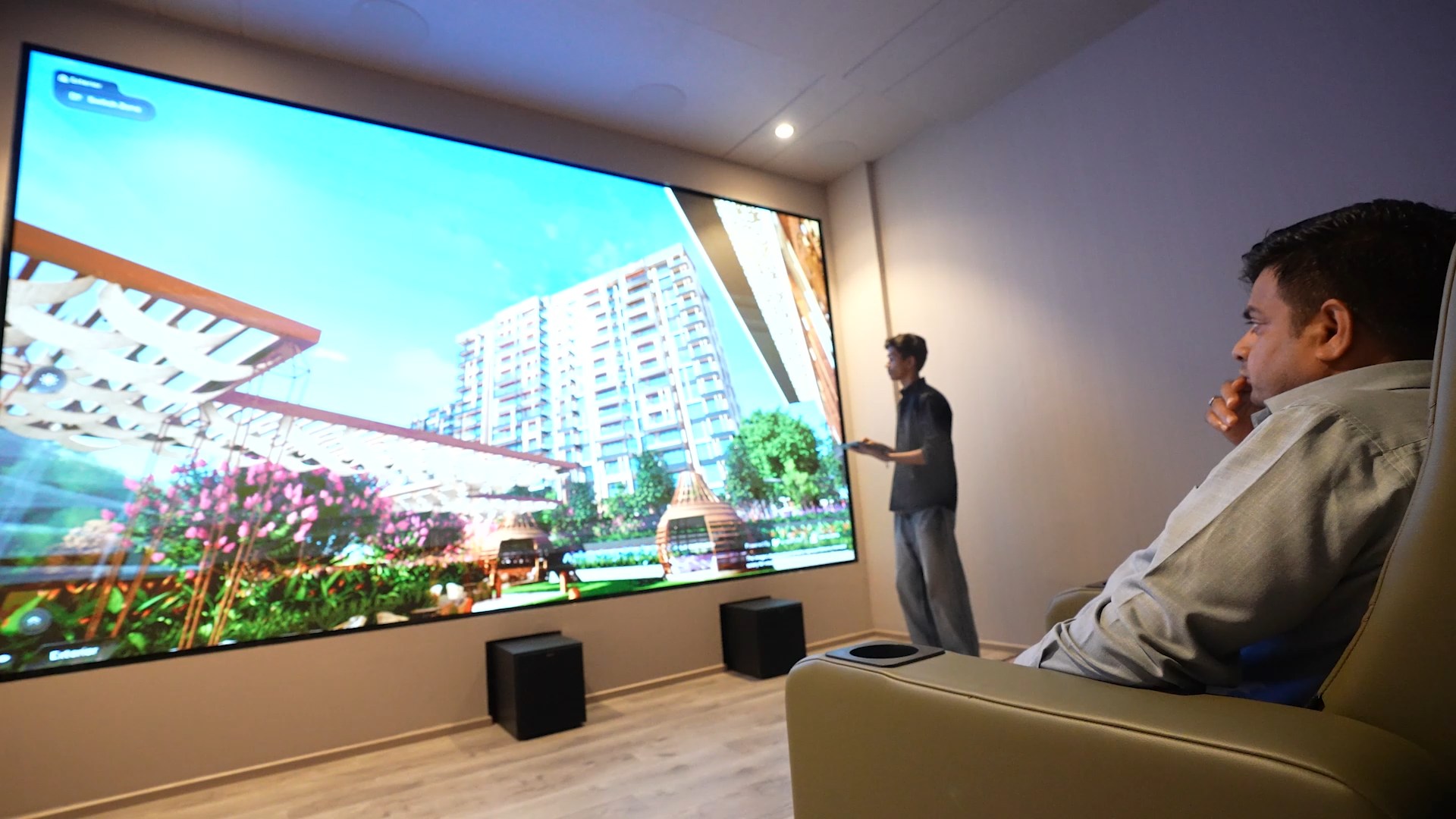
The most effective intervention is not to make site visits better. It is to ensure that buyers arrive at the site visit — or at the post-visit follow-up — already having felt the finished space.
When a buyer has walked through a photorealistic, interactive representation of their specific unit before or alongside the site visit, the role of the site visit changes entirely. It is no longer the primary emotional experience. It is a validation of the emotional experience already formed.
The buyer walks the site not trying to imagine — but looking for confirmation of what they have already seen and felt. They are looking for evidence that the construction quality matches the visualization. They are noting that the floor area matches what the walkthrough showed them. They are oriented, confident, and looking for reasons to proceed.
This is a completely different buyer psychology. And it converts at a completely different rate.
How V-estate Transforms the Post-Site-Visit Experience
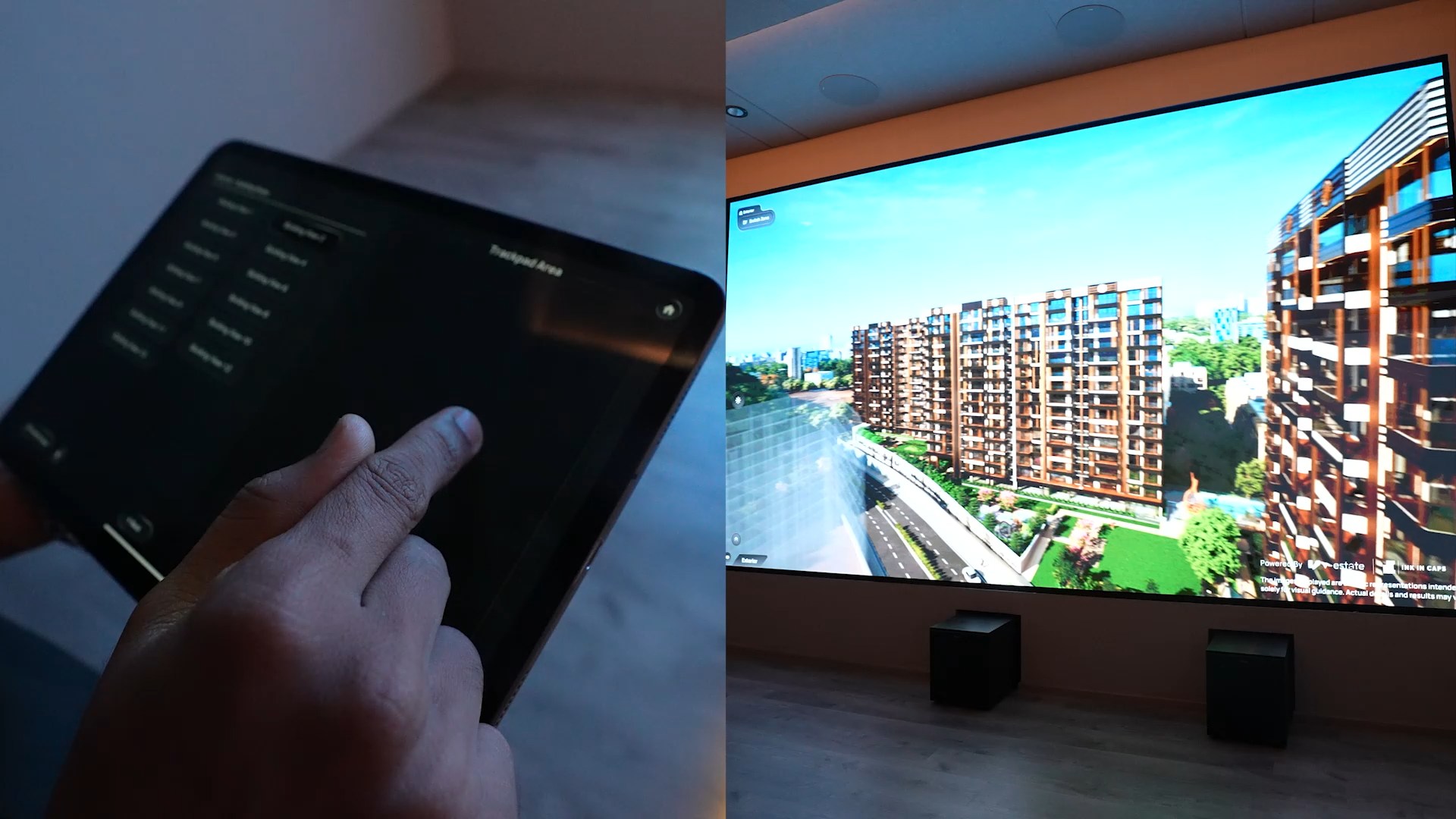
The sales cycle's most vulnerable moment is the gap between the site visit and the follow-up call.
In that gap, the buyer's emotional enthusiasm cools. The concrete and scaffolding images dominate their memory. The uncertainty returns. Competing projects — which may have better physical show flats or more polished experience centres — begin to look more appealing.
V-estate's immersive activation closes that gap by ensuring the buyer carries a vivid, emotional, personalised memory of the finished property.
When a buyer has spent 45 minutes inside a V-estate experience — walking their unit, exploring the amenities, customising their interior, standing at their window and watching the light shift from morning to evening — that experience becomes the dominant memory. Not the construction site.
The follow-up call is no longer a recovery exercise. It is a closing conversation.
The Amenity Experience: What Site Visits Always Underdelivers
There is a secondary failure in the traditional site visit that is less discussed but equally significant.
Amenities are among the most powerful purchase motivators in modern residential real estate. A rooftop pool, a landscaped garden, a well-designed clubhouse — these are not luxuries. For many buyers, they are the deciding factor.
But at a site visit, amenities are almost always invisible. They exist as excavated pits, framed structures, or simply as notations on a masterplan.
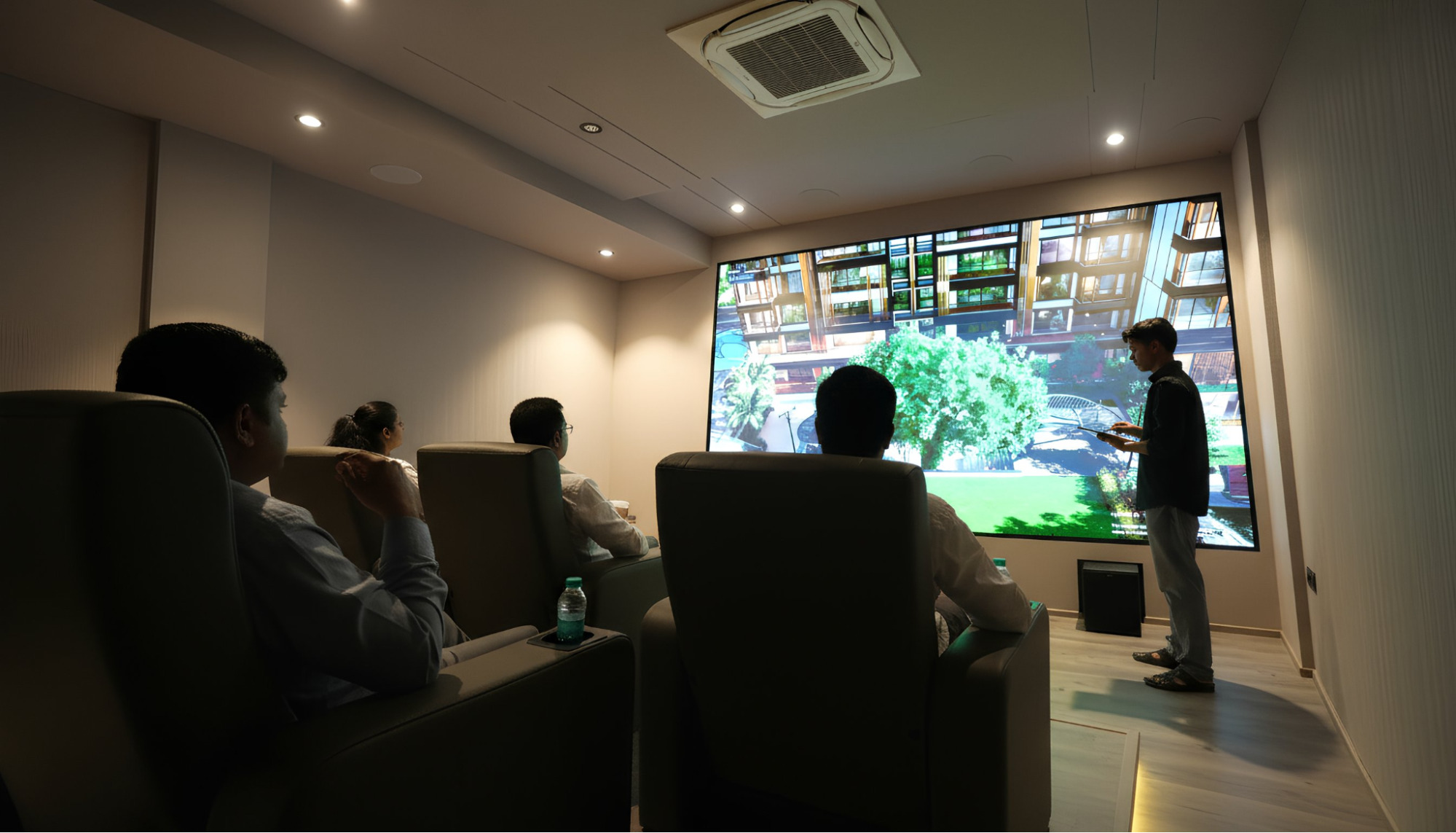
V-estate's amenity showcase gives buyers a full experiential preview of every amenity space — including the view from the rooftop, the atmosphere of the clubhouse, the quality of the landscaping. Buyers do not just know there is a gym. They have been inside it. They do not just know there is a terrace garden. They have walked through it.
This matters enormously for the purchase decision — particularly for buyer segments where lifestyle amenities are a primary motivation.
The Developers Who Get This Right Are Winning
The shift toward immersive, experiential pre-purchase engagement is not a marginal improvement. It is a transformation.
Developers who have integrated V-estate's interactive sales tool into their process — whether at dedicated experience centres, at sales offices, at roadshows, or at buyer events — are reporting shorter sales cycles, stronger conversion rates, and meaningfully higher buyer satisfaction.
The site visit is not going away. Physical presence at a project will always matter. But the site visit alone will never be enough — not while buyers are trying to feel a finished home inside an unfinished building.
The solution is not to make buyers better at imagining. The solution is to make imagination unnecessary.
Give your buyers the experience they need to decide with confidence. Make the site visit the conclusion of an emotional journey, not the beginning of a confusing one.
Stop asking buyers to imagine the space. Show it to them.
Find out how V-estate eliminates the site visit experience gap at V-Estate — and book a demo to see what your buyers should be seeing.
.jpg)