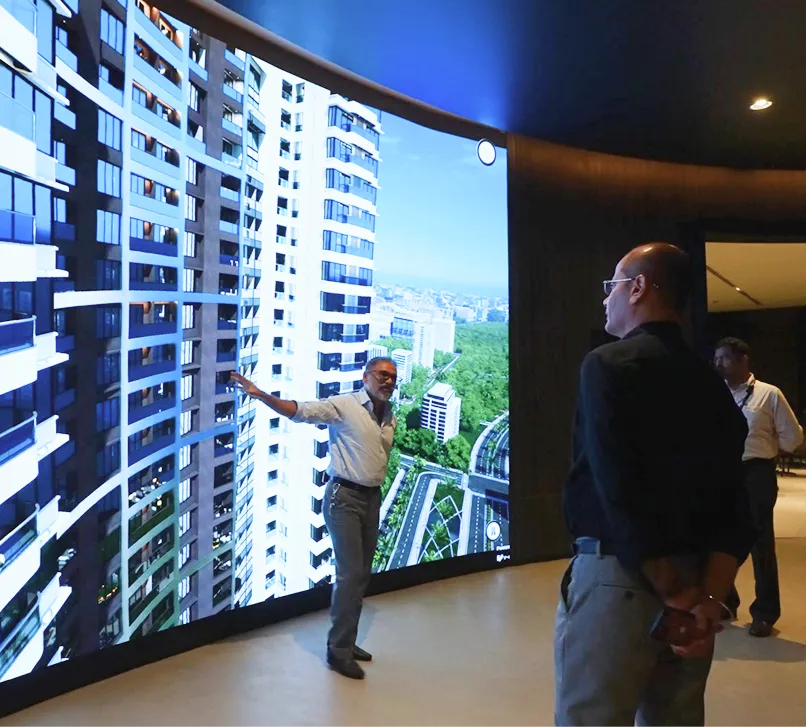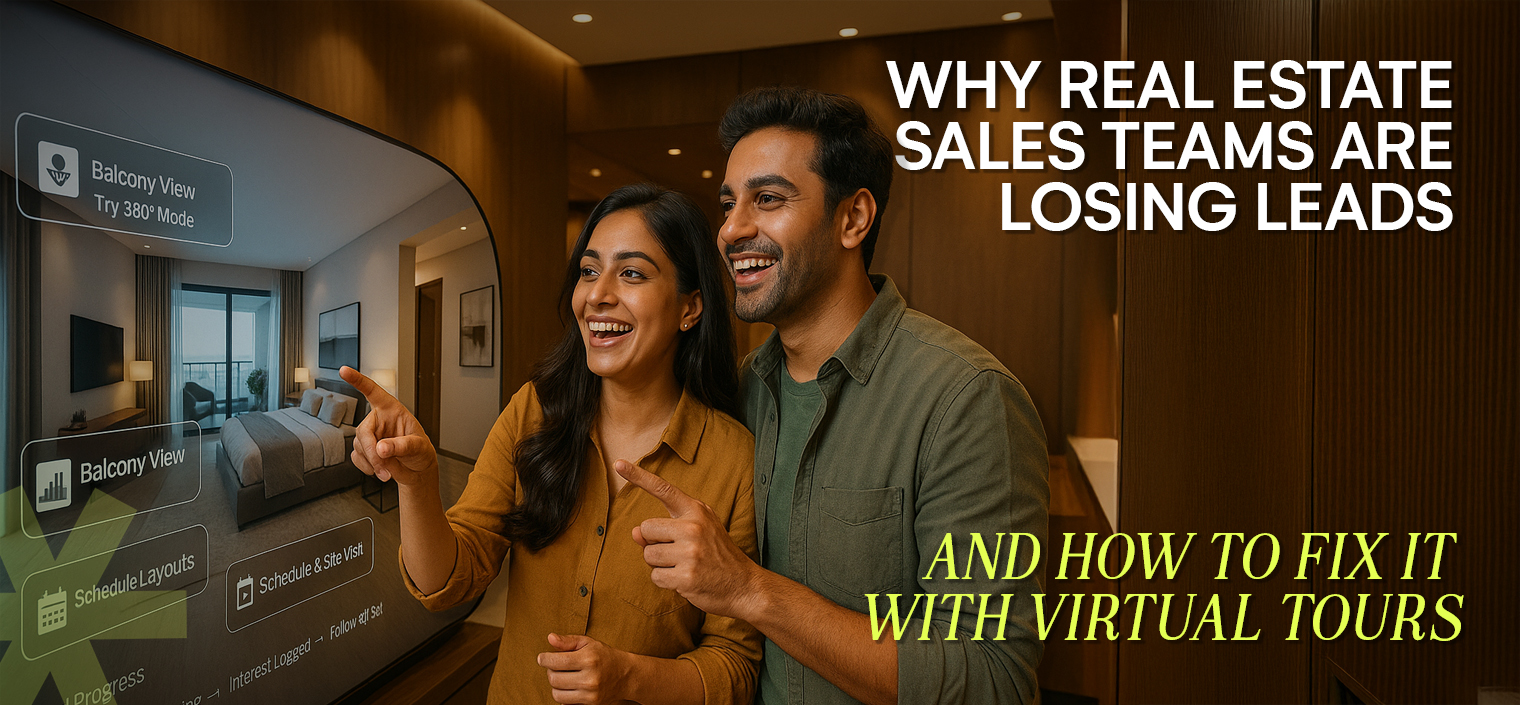
Real estate sales teams are not losing leads because buyers lack intent. They are losing them because buyers lack context. Enquiries come in strong, site visits happen, presentations are delivered, yet conversions stall.
The reason is simple: buyers are still being asked to imagine too much. When location advantages, amenities, connectivity, and lifestyle are explained verbally or through static visuals, confidence breaks down. What starts as interest slowly turns into hesitation, and hesitation quietly kills deals.
This problem becomes sharper in dense, competitive micro-markets like Thane, where multiple projects compete on similar pricing and promises. Buyers want to clearly understand what makes one project better than the other, not in theory, but in lived reality. Virtual tours, when designed as sales tools and not visual gimmicks, directly solve this gap by turning explanation into experience.
Where Leads Are Actually Dropping Off
Most lead leakage happens after the first meaningful interaction. Buyers have seen the brochure, heard the pitch, and even walked through a sample flat. What they still lack is clarity on three critical aspects.
How the project is positioned within its larger 20–25 km catchment
How amenities are distributed and accessed across the development
How their daily life will realistically function from that location
Sales teams end up revisiting these questions repeatedly, stretching conversations across multiple follow-ups. The issue is not sales effort. It is the limitation of static tools in explaining dynamic environments.
Why Traditional Sales Tools Fail in Location-Led Projects
Projects where location is a key differentiator demand contextual storytelling. Maps, brochures, and verbal explanations fragment this narrative.
Static tools fail because:
They cannot show real-world distance, time, and movement
They isolate amenities instead of showing them as part of daily life
They force buyers to mentally connect multiple data points
In competitive regions, this lack of clarity leads buyers to postpone decisions or compare endlessly.
How Virtual Tours Fix the Confidence Gap
Virtual tours change the nature of sales conversations. Instead of convincing buyers why a location or lifestyle works, sales teams can show it unfolding in real time.
Buyers move through the project digitally, explore surroundings, understand commute paths, and visualize amenities in context. Questions shift from basic clarifications to intent-driven discussions, which is where conversions accelerate.
This is exactly the transformation delivered by V-Estate for Rustomjee at their Thane project, Verdant Vista.
Case Study: Rustomjee Verdant Vista, Thane
The Objective
Rustomjee’s mandate was clear. They wanted an immersive, tech-forward experience that could clearly communicate two things:
The strategic location benefits of Verdant Vista within Thane’s larger ecosystem
The scale and diversity of 75+ amenities spread across the residential development
The goal was not to decorate the sales gallery, but to strengthen buyer understanding and improve conversion velocity.
The Solution: One Integrated Virtual Sales Ecosystem
V-Estate designed a virtual experience anchored by a central hero interaction, supported by a powerful interactive software layer that became the backbone of sales conversations.
Key Experience Layers Delivered
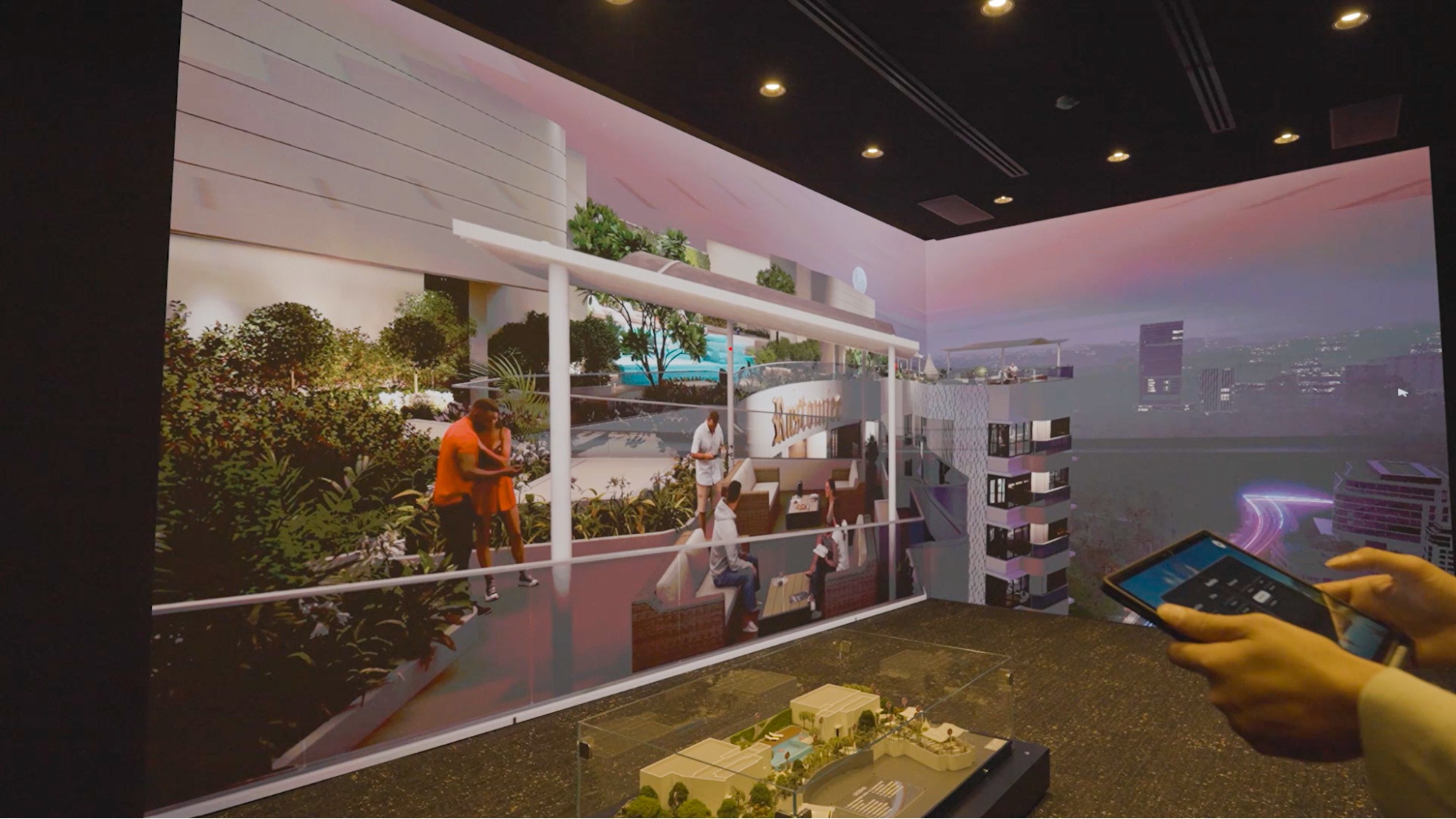
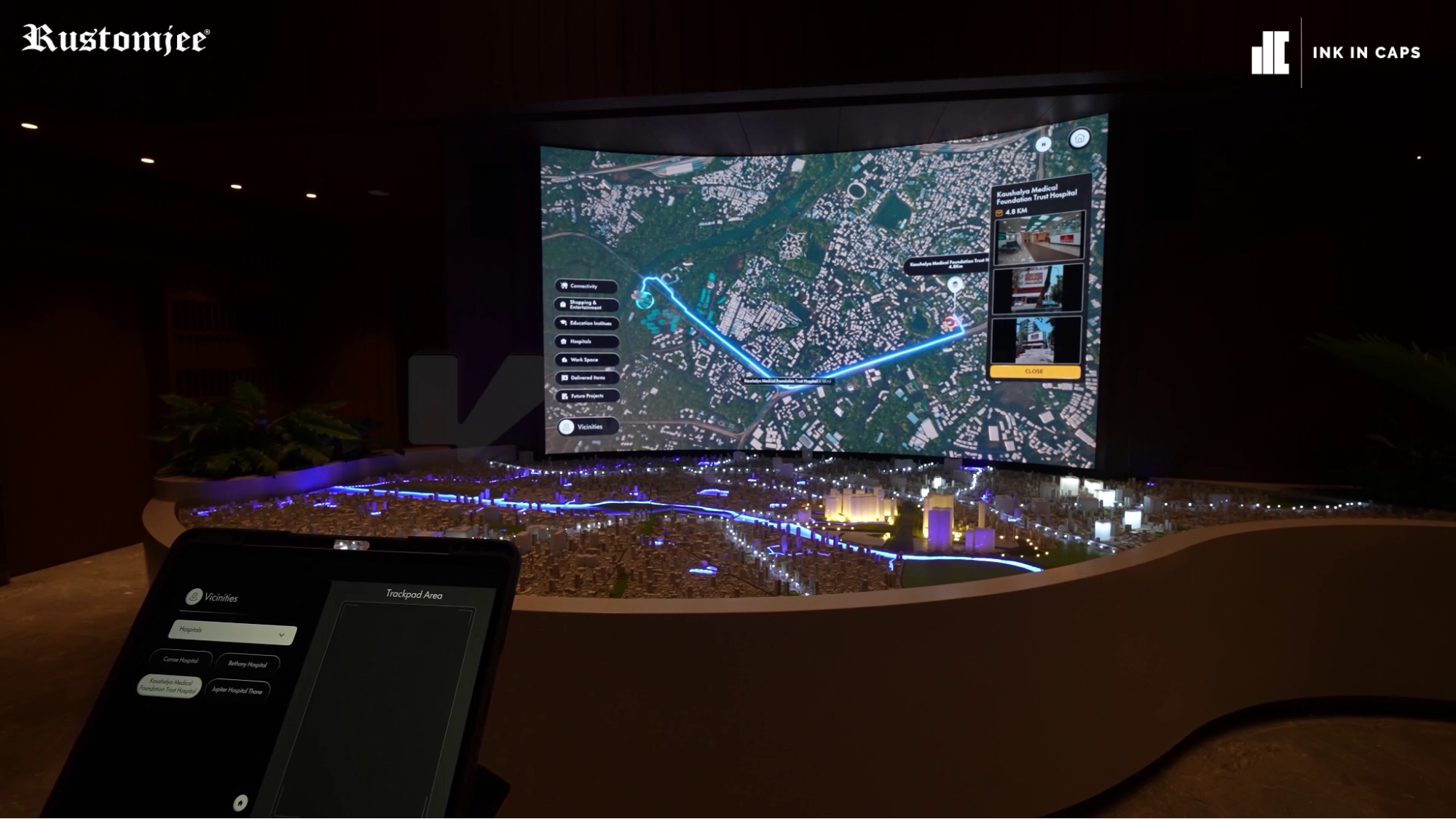
Vicinity scale model with IoT integration
Interactive real-time sales tool
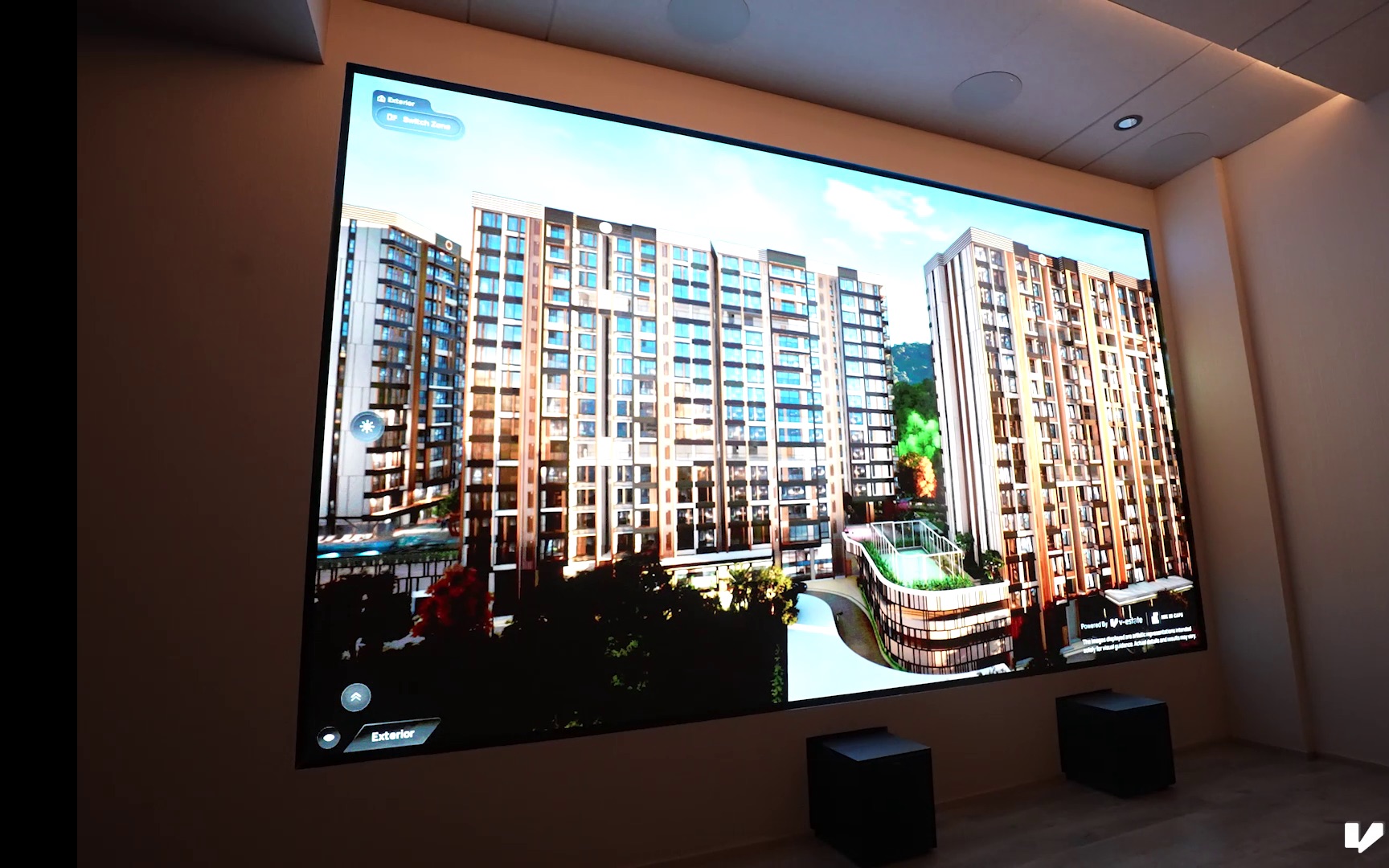
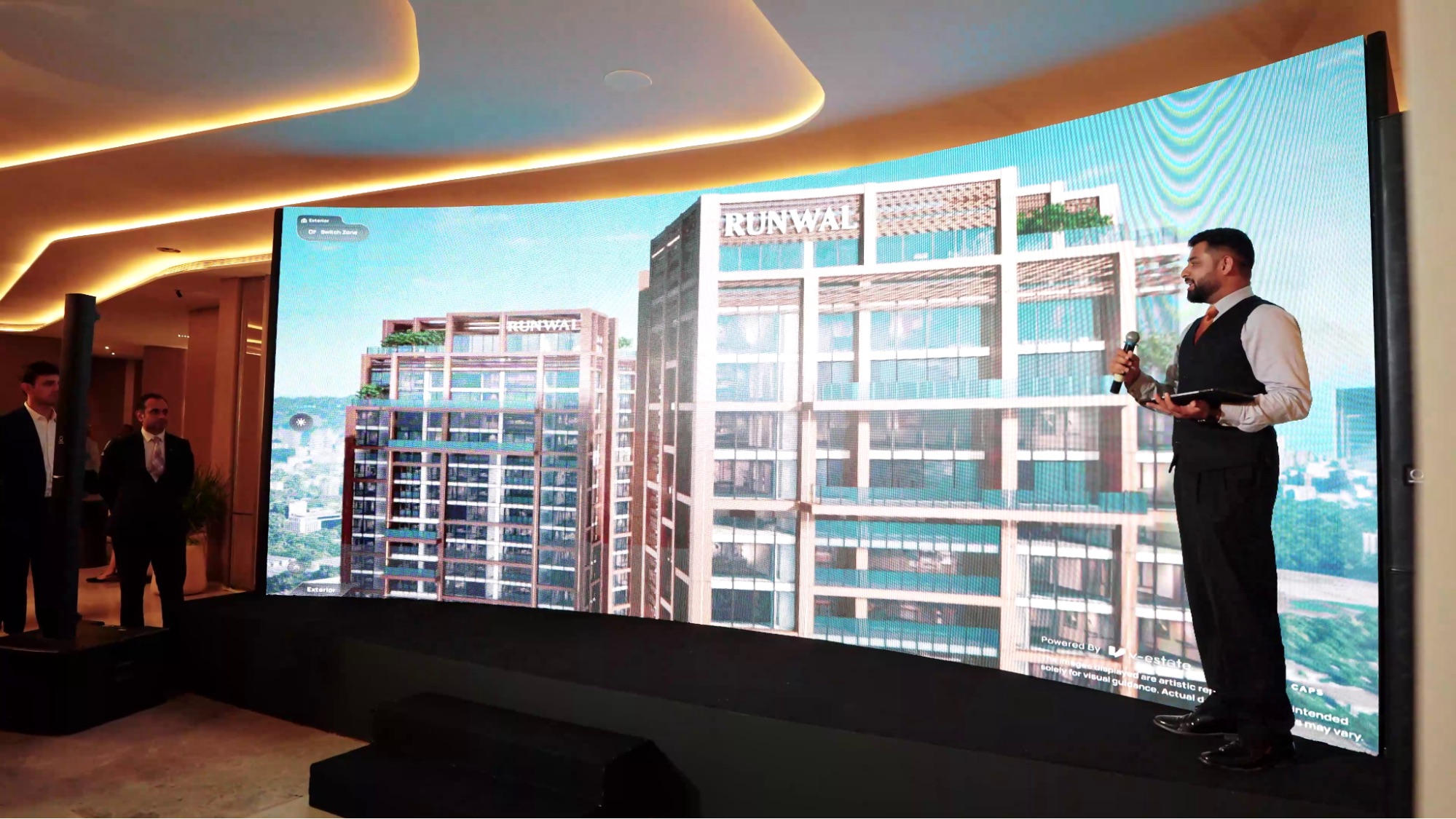
Exterior visualizations of launched towers
Interior unit walkthroughs with window-specific views
Each layer served a specific role in answering buyer questions quickly and clearly.
Vicinity Scale Model with IoT Integration
This zone showcased a 25 km catchment area around the project, highlighting:
Educational institutions
Corporate hubs
Entertainment destinations
Highways and arterial roads
Railway stations and transit routes
The experience was precise and interactive, allowing buyers to immediately understand how Verdant Vista connects to the city.
Technical Implementation
Physical scale model integrated with a 16 ft x 8 ft curved LED panel (PP2.0)
Fully controlled via an 11-inch iPad Pro
Real-time animated commute paths displaying distance and travel time
Dynamic map visuals that responded instantly to user selections
This eliminated guesswork around location advantages and commute feasibility.
Interactive Real-Time Sales Tool
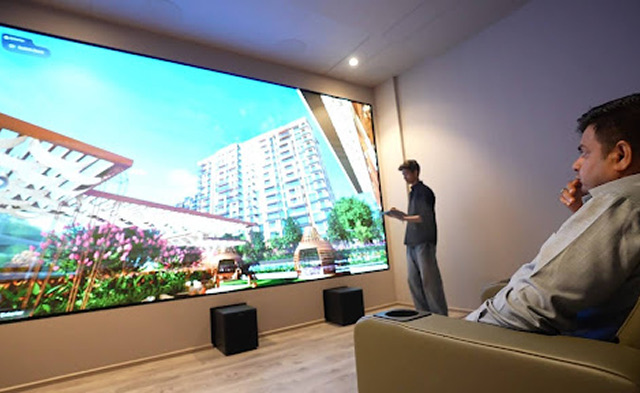
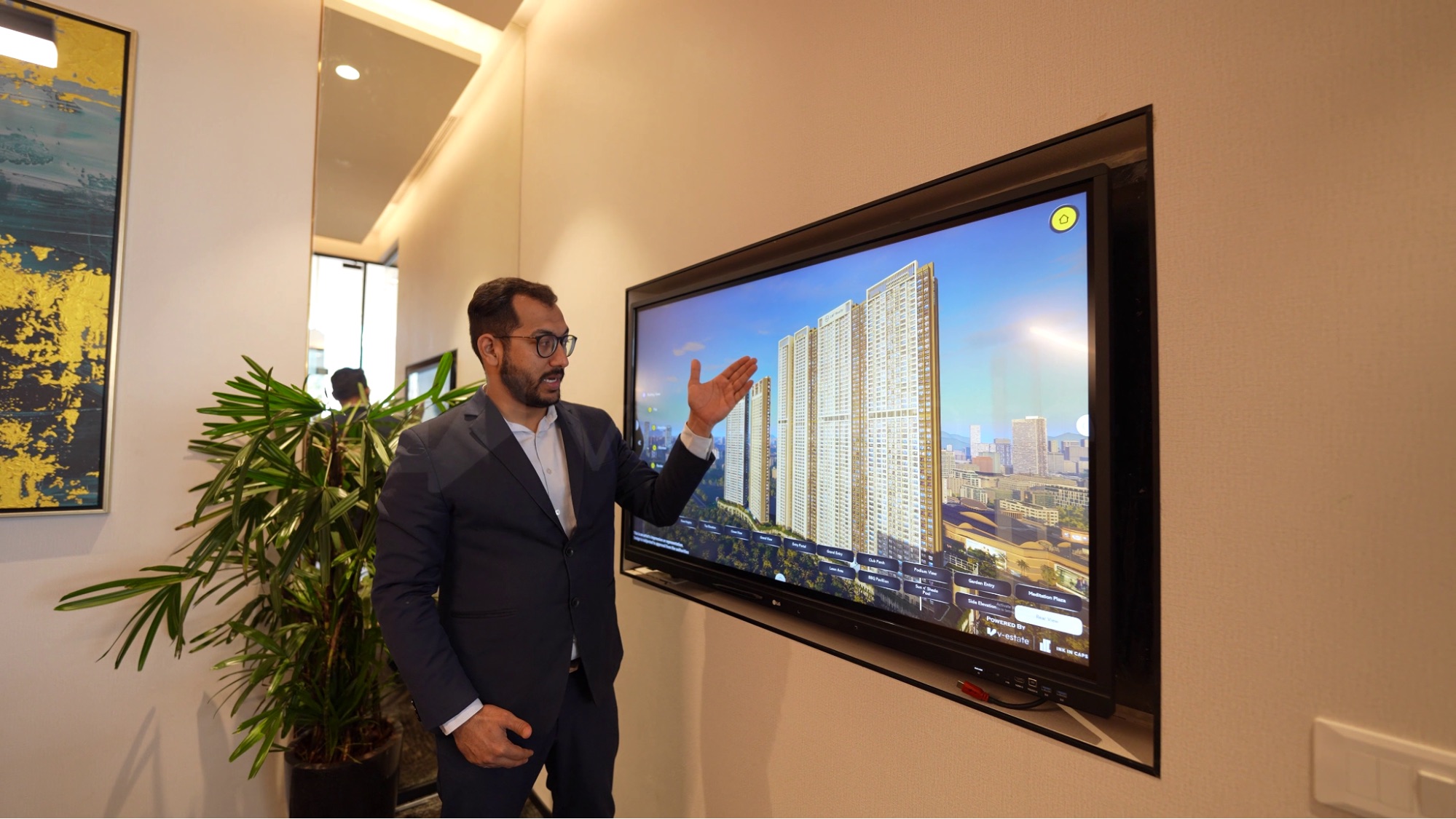
To support deeper, consultative discussions, V-Estate built a real-time digital replica of the project.
Buyers could freely navigate through:
Project layout and zoning
Key architectural elements
Lifestyle and amenity clusters
This freedom of exploration increased engagement and strengthened buying intent.
Technical Implementation
55-inch touchscreen display
High-performance workstation rendering 4K real-time digital twins
Touch and iPad-based controls for sales executives
The result was a smooth, sales-friendly interface that teams could use confidently every day.
Exterior Visualizations That Clarified Scale
The exterior environment focused on landscaping and architectural realism for the two launched towers. Buyers could navigate the open spaces and understand scale, proportions, and spatial flow, something static renders often fail to convey.
Interior Unit Walkthroughs That Influenced Decisions
Three detailed interior units were created, allowing buyers to:
Experience full apartment layouts
See window-specific views from their chosen units
Understand light, openness, and orientation
This helped buyers move from preference to decision faster.
Amenity Mapping and Lifestyle Visualization
One of the strongest conversion drivers was amenity comprehension.
Buyers could visually experience amenities spread from ground level to rooftop, understanding how lifestyle elements were distributed across the project. The same 25 km vicinity data was mirrored on-screen, with illuminated touchpoints on the scale model and animated routes showing how easily residents could access key destinations.
This connected lifestyle promise directly with daily reality.
Results That Moved the Needle
The Verdant Vista experience became one of the earliest tech-led launches of its kind in the region and a core part of Rustomjee’s sales strategy.
30% increase in conversion ratio
Faster client closures driven by higher confidence
Improved quality of sales conversations
Strong recall value in a highly competitive micro-market
The sales team actively adopted the platform as a daily selling tool, not a showcase asset.
The Real Fix Is Better Conversations, Not More Leads
Most sales teams respond to lead drop-offs by generating more enquiries. The more effective fix is improving how each conversation performs.
Virtual tours, when designed as structured sales platforms, reduce ambiguity, surface intent earlier, and help buyers decide with clarity. That is where real conversion gains come from.
If your sales team is still explaining instead of guiding, it may be time to rethink the tools behind your funnel. Let’s talk. Reach out to V-Estate and explore how immersive, interactive virtual tours can help your buyers understand faster and close with confidence.