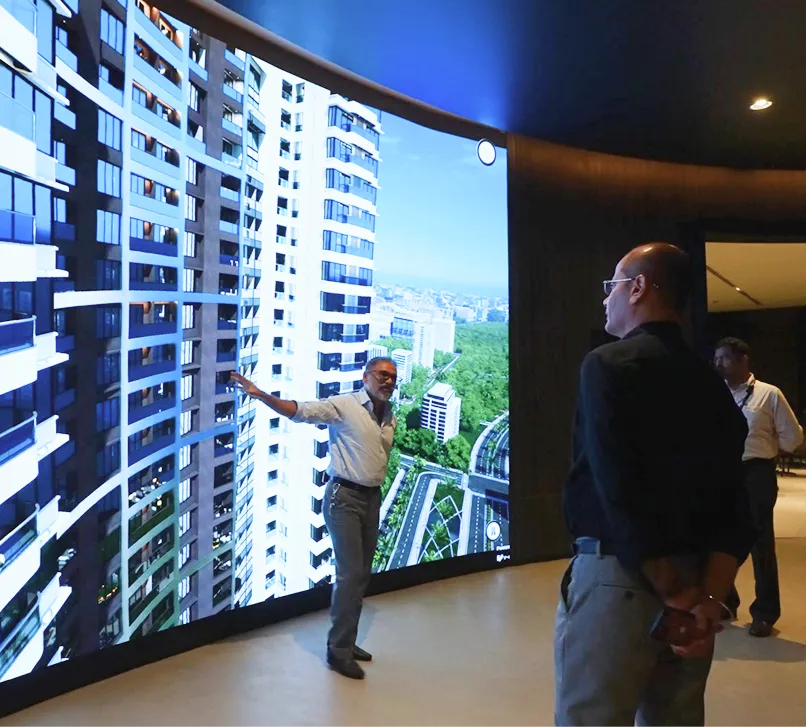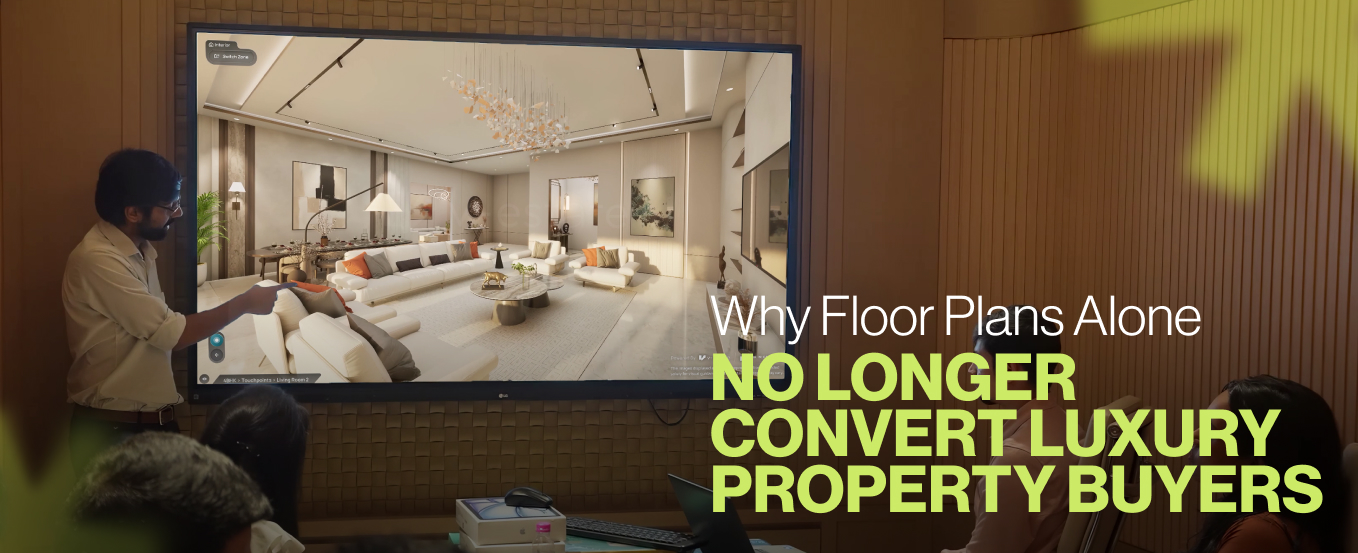
Luxury property buyers are a specific kind of buyer.
They are not buying square footage. They are buying a way of living. The morning light in the master suite. The sight line from the kitchen to where the children play. The feeling of the double-height living room when you walk in after a long day.
A floor plan communicates none of this.
It shows walls and doors. It gives dimensions. It tells you where the bathroom is. That is it.
And in the luxury segment, where buyers are spending three, five, ten crores or more on a home, "where the bathroom is" is not the information that moves them.
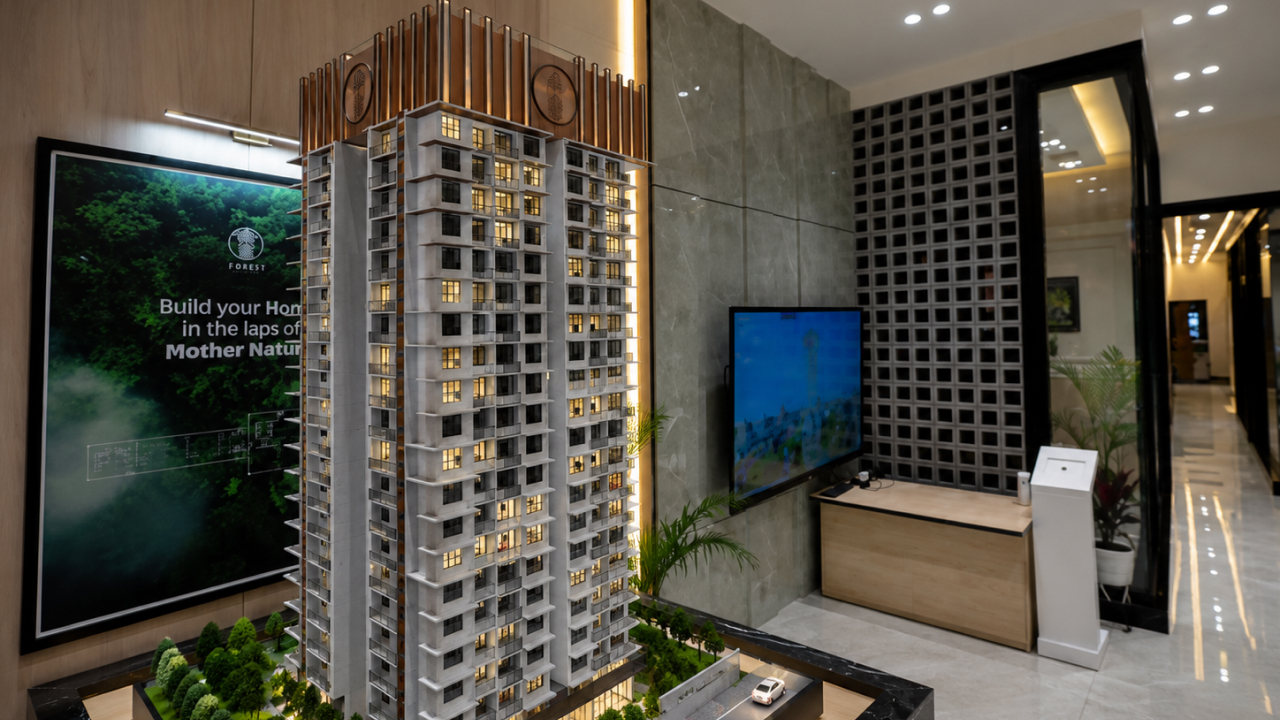
What Luxury Buyers Are Actually Evaluating
The luxury buyer conducts a layered evaluation that most developers underestimate.
On the surface, they are asking practical questions. Layout, location, price per sq ft, amenities.
But underneath, they are answering a more personal question: does this property reflect who I am and how I want to live?
That question cannot be answered by a floor plan. It can barely be answered by a physical model flat — which often represents a generic configuration that may not match the specific unit the buyer is considering.
It can only be answered by experiencing the specific property in a way that feels real.
Suraj Estate and the Luxury Buyer Challenge
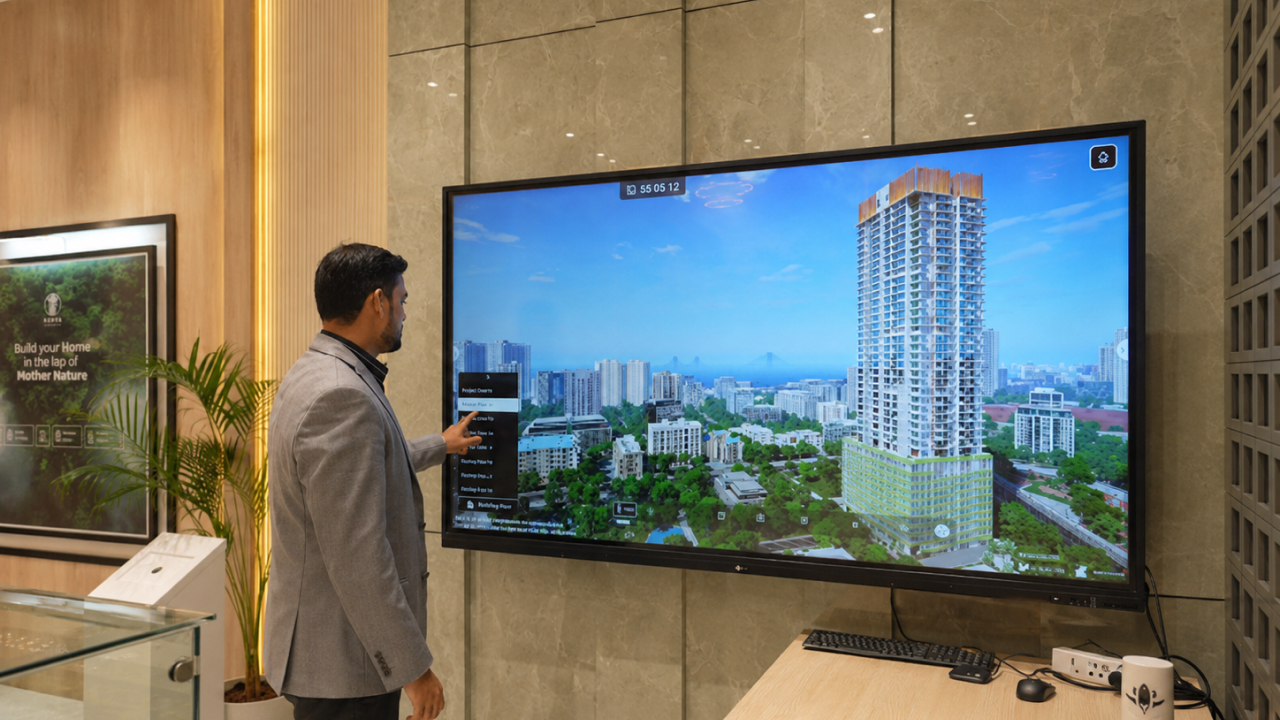
Suraj Estate, a developer known for crafting premium residential developments in Mumbai's most sought-after micro-markets, understood that their luxury inventory demanded a presentation experience as refined as the product itself.
Their buyers were discerning. Many had evaluated properties across multiple cities and internationally. They walked in with benchmarks. They expected to be impressed — not informed.
A floor plan, however detailed, was never going to meet that expectation.
By integrating V-estate's photorealistic 3D virtual show flat experience, Suraj Estate transformed how their sales team engaged with luxury buyers. Every prospective buyer could walk through a lifelike, unit-specific representation of the home they were considering. They could see the actual view from their exact floor. They could customise wall finishes, flooring, and furniture configurations and watch the changes render instantly in front of them.
This shifted the entire sales conversation from "let me show you the floor plan" to "let me show you your home." And in the luxury segment, that distinction is everything.
Why Photorealistic Visualization Works Specifically in Luxury Sales
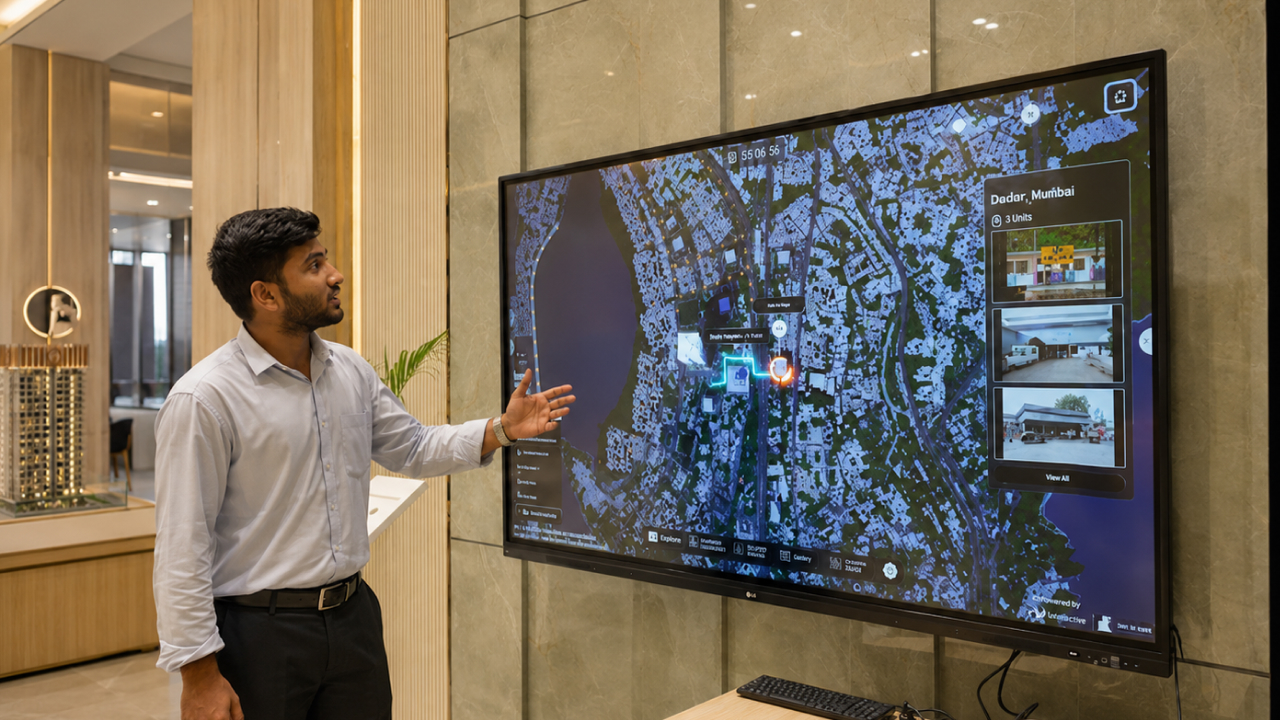
In the luxury segment, the product is always more than the product.
A luxury watch is not just a timekeeping device. A luxury car is not just transportation. A luxury home is not just a place to live. These products carry meaning. They represent taste, status, success, and identity.
Marketing luxury products means making the buyer feel the meaning before they own the product.
Photorealistic 3D visualization does this with unmatched precision. The attention to detail — correct material textures, accurate light behaviour, realistic spatial proportions — communicates quality. The buyer registers the premium experience subconsciously. The property feels like it belongs to them already.
This emotional ownership is what separates a buyer who signs from a buyer who continues to "think about it."
The Customisation Layer That Luxury Buyers Expect
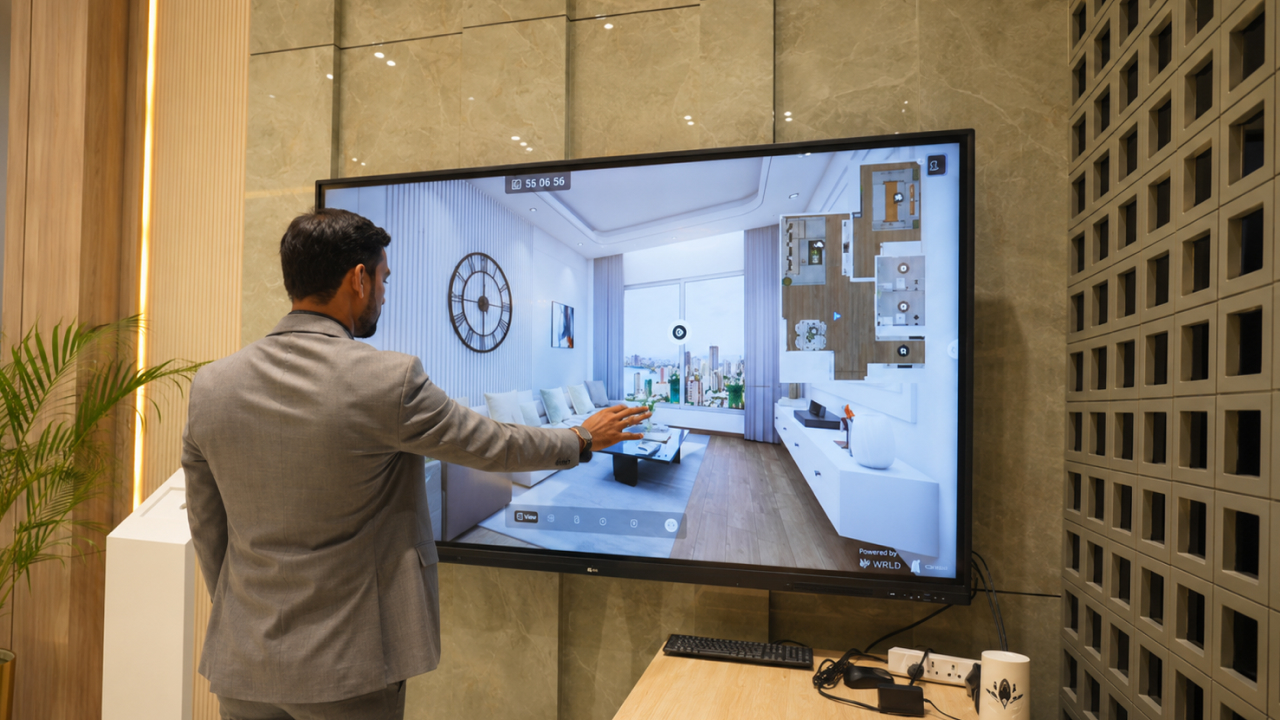
V-estate goes beyond visualization into personalisation.
Buyers can choose their wall finish. Select their flooring material. Try different sofa configurations. Check how the space looks with different levels of natural light at different times of day.
This is not a minor feature. In the luxury segment, personalisation is the expectation. Buyers at this price point do not want to fit themselves into a developer's vision. They want the developer to fit the property to their vision.
When you give them that ability — interactively, in real time, during the sales conversation — you are not just showing them a home. You are letting them design their home. And people do not walk away from a home they have designed.
The Window View That Closes the Deal
V-estate's window view feature is particularly powerful in the luxury segment.
Buyers can see the exact view outside their specific unit — from their specific floor — at any time of day or year. This is an irreplaceable feature for high-rise luxury properties where the view is often the primary driver of unit premium.
When a buyer stands in the virtual master bedroom and looks out the window at the