%20(1).jpg)
In today’s real estate market, sales velocity begins long before construction starts.
Developers are expected to launch earlier, sell faster, and build buyer confidence at scale, often when the site is still vacant land. At the same time, buyers are more cautious, more informed, and far less willing to commit based on drawings or promises alone.
This gap between early-stage selling and high buyer expectations is exactly why experience centers have become critical infrastructure rather than optional sales assets.
When Market Pressure Meets Buyer Skepticism
This reality became especially clear during Rustomjee’s Dombivli launch.
The project entered a price-sensitive, high-activity micro-market with three competing launches running simultaneously. While the positioning was affordable housing, the brand needed to maintain its premium perception. At launch, there was no physical construction on site, only vacant land.
At the same time, expected footfall was high, reaching 190–210 families per day during peak periods.
The challenges were layered:
Buyers needed clarity and trust before committing
Static plans could not explain views, surroundings, or amenity placement
Sales teams had to handle high volumes without slowing conversations
Repeated explanations increased friction and delayed decisions
The solution needed to scale and remain reusable for future projects
Relying on traditional sales offices would have stretched decision cycles and weakened differentiation.
To address this, Rustomjee partnered with V-Estate to redesign the entire sales environment.
The goal was simple: replace explanation with experience, and speculation with certainty.
Experience Centers as a High-Performance Sales Engine
V-Estate approached the experience center not as a showcase, but as a high-capacity operational system designed to handle volume, maintain consistency, and accelerate decisions.
The center was engineered to:
Support 190–210 families daily without congestion
Communicate project value clearly before construction
Enable faster approvals and buyer confidence
Maintain premium brand positioning in an affordable segment
Create a reusable framework for future developments
Every element was designed around clarity, speed, and scale.
Immersive Visualization Built on Real Context
At the core of the experience center was a high-fidelity digital environment built using Unreal Engine 5.4 with a Procedural Content Generation framework.
The project site was located in a green zone with minimal surrounding geometry. To recreate a realistic setting:
Millions of trees and foliage instances were procedurally generated
Landscapes were rendered at scale without performance degradation
Stable frame rates of 30–35 FPS were maintained under continuous load
This allowed buyers to understand the actual land shape, surroundings, and environmental context, something that traditional renders cannot deliver.
The environment was optimized for 24/7 operation, ensuring zero performance drop even during extended sales hours.
A Structured Experience Center Journey Designed for Scale
The experience center followed a clearly defined, step-by-step journey that prevented crowding while maintaining momentum.
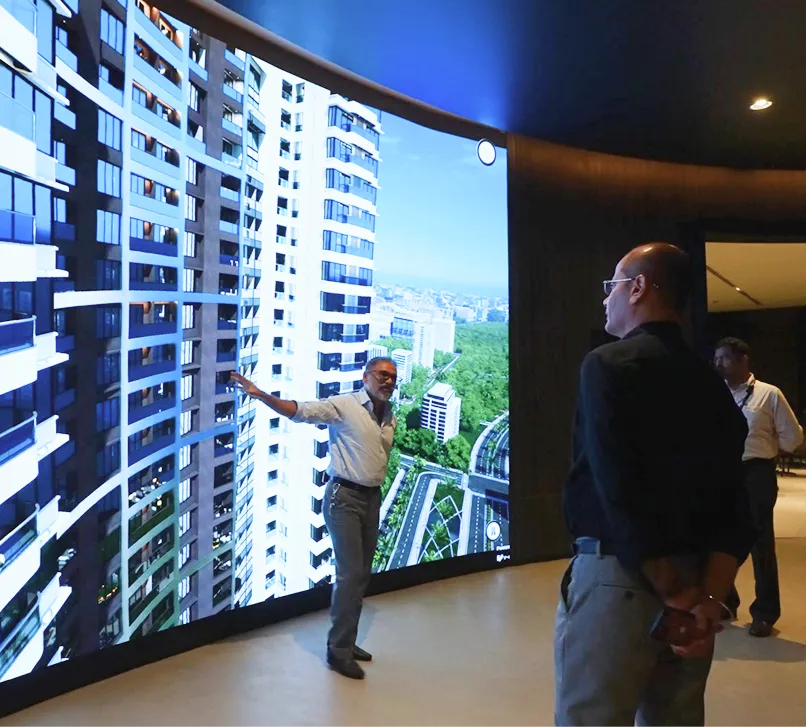
AV Theatre: Storytelling and Location Context
The journey began with a five-minute cinematic film.
Two minutes focused on transport connectivity and location advantages
Three minutes covered project vision, planning logic, and lifestyle intent
By establishing context upfront, buyers entered discussions informed and aligned. Sales teams spent less time explaining fundamentals and more time addressing intent-driven questions.
IoT-Enabled Interactive Scale Model for Spatial Clarity
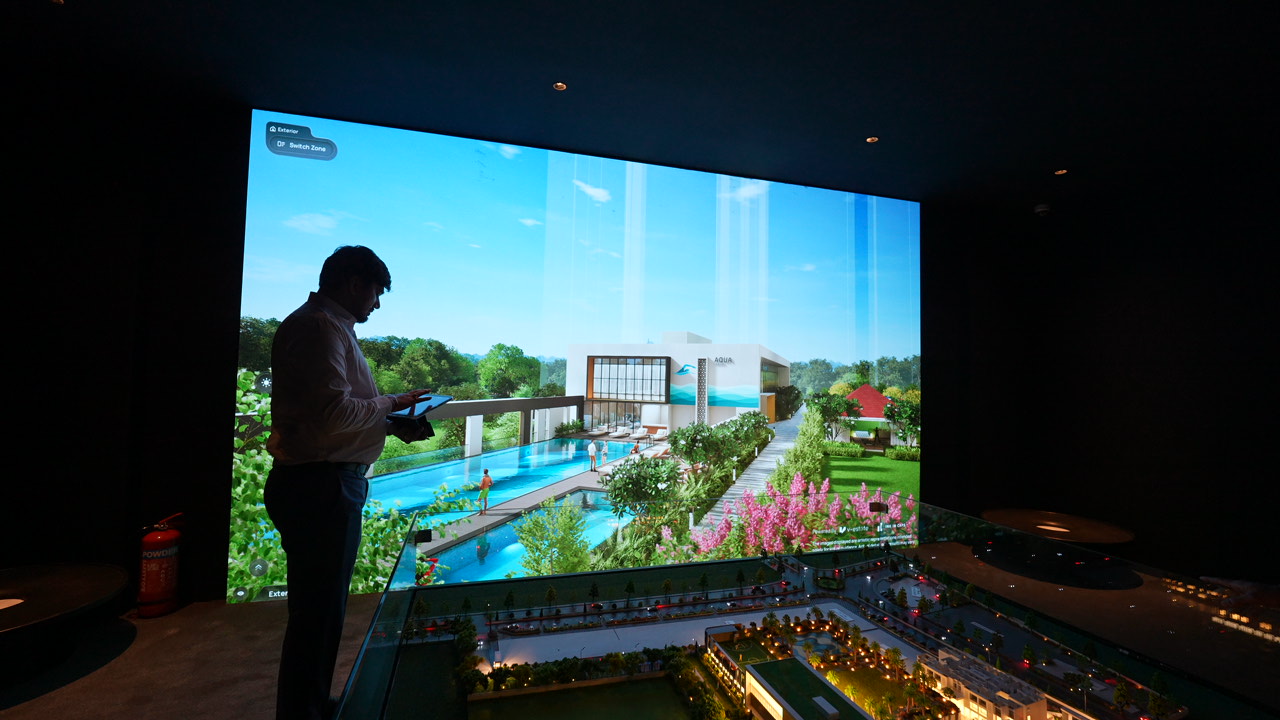
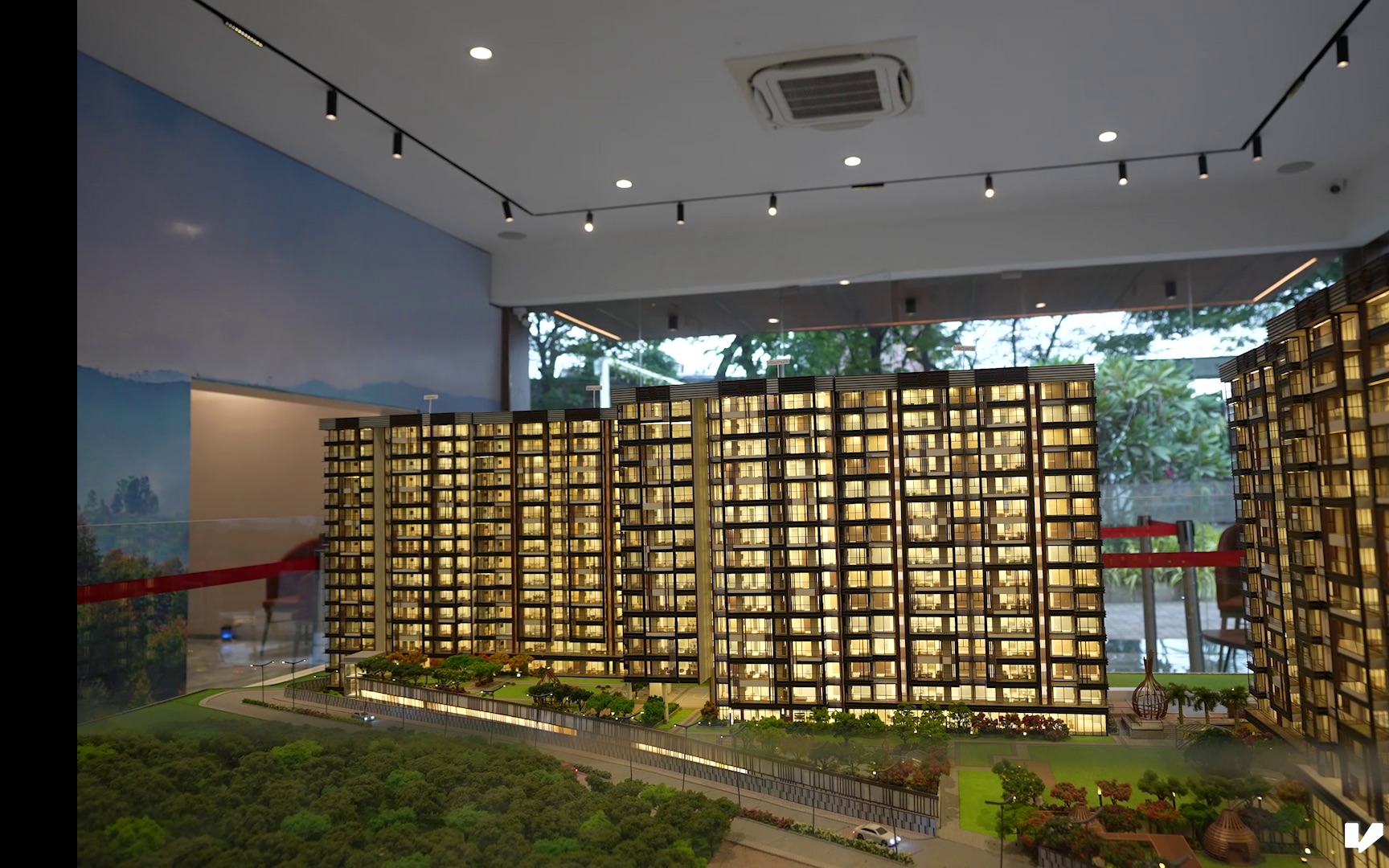
An IoT-enabled LED scale model replaced static masterplans.
28 interactive touchpoints
iPad-controlled interface
Selecting an amenity instantly highlighted it on both the model and large screens
Buyers could immediately understand distances, placement, and relationships between amenities, reducing confusion and shortening decision cycles.
Sample Flat with Real Window Views
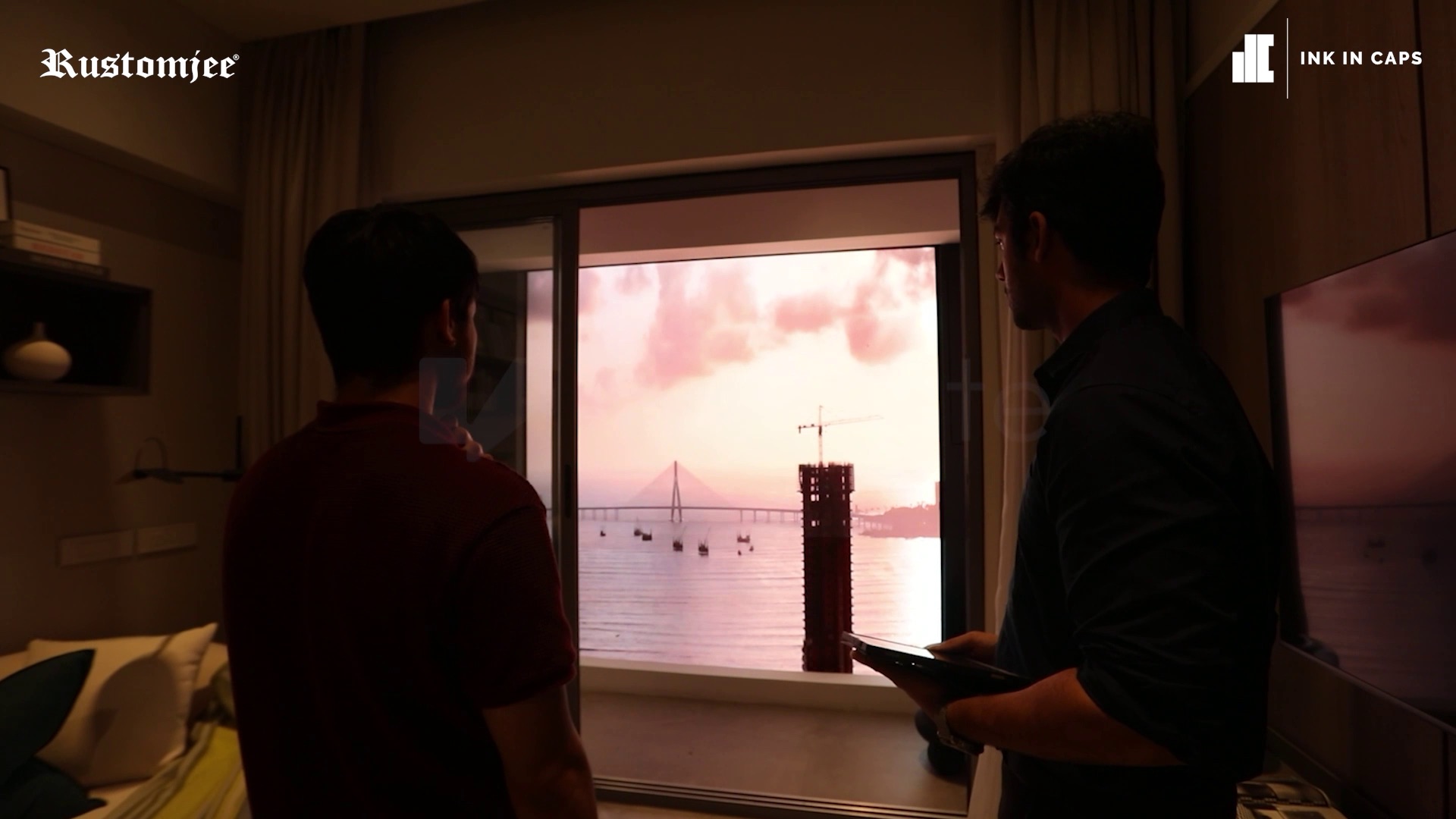
A fully built sample flat was paired with window displays mapped to 360° drone footage.
Instead of imagining future views, buyers saw exactly what they would see from their living room or balcony after completion. This transparency aligned expectations early and reduced post-booking objections.
Discussion Rooms Designed for Conversion at Volume
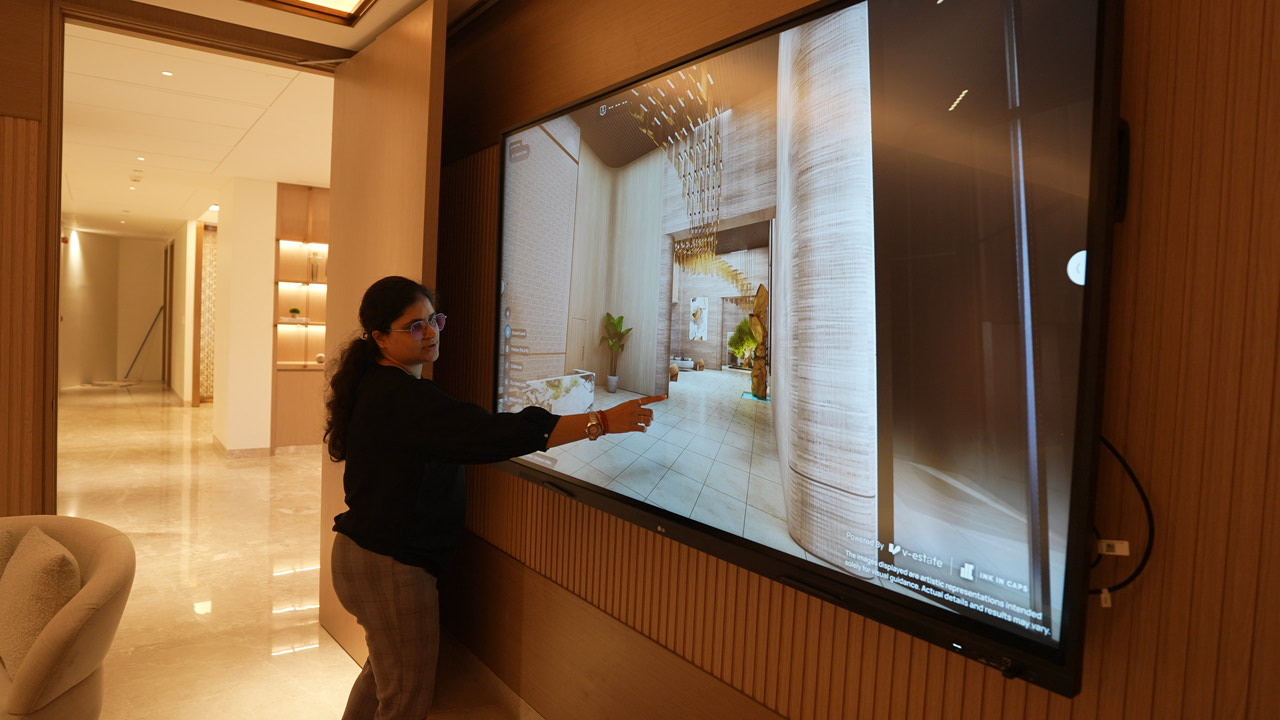
The final stage consisted of 10 parallel discussion rooms, each equipped with 65-inch screens and virtual tour software.
Sales teams could clearly explain:
Tower positioning
Hallways and circulation
Podiums and amenities
Balcony orientation and views
The layout supported approximately 30 families per hour, enabling smooth handling of 190–210 families per day without delays or overcrowding.
Technology Architecture Built for Reliability and Continuity
Beyond visuals, the system was engineered for operational stability.
Key components included:
Optimized runtime for continuous high-load usage
Procedural spline systems for roads and lighting infrastructure
Custom tools for unconventional large-format displays
Redundant dual-server architecture with seamless failover
Rapid infrastructure recovery during unexpected site changes
The experience center operated for over six months with zero downtime, ensuring uninterrupted sales activity throughout peak launch periods.
Sales Enablement and Operational Efficiency
The experience center was designed to empower sales teams, not complicate workflows.
25+ sales staff trained in phased rollouts
Training covered system usage, iPad controls, problem-solving, and story-driven walkthroughs
Automated monitoring and remote diagnostics reduced on-site manpower requirements
This ensured consistent experience quality regardless of footfall volume.
Measurable Business Outcomes from the Experience Center
The impact of the experience center extended across sales, operations, and scalability:
High visitor throughput without queue delays
Faster buyer decision-making due to real-time visualization
Reduced repeat visits for clarification
Strong buyer trust despite absence of physical construction
Reusable software and deployment framework for future projects
The experience center became a long-term asset rather than a one-time installation.
Why Experience Centers Make Strategic Sense for Developers
For developers, experience centers directly influence core performance metrics:
Faster inventory absorption
Shorter sales cycles
Lower dependence on speculative marketing
Stronger brand differentiation
Scalable launch infrastructure across multiple projects
When designed correctly, they reduce friction across sales, marketing, and execution while improving predictability.
Conclusion
Experience centers are no longer about showcasing ambition. They are about enabling execution.
In a market where buyers demand transparency and developers need speed, experience centers allow projects to sell earlier, communicate better, and operate at scale, even before construction begins.
The Rustomjee Dombivli implementation demonstrates how immersive technology, structured journeys, and resilient systems can transform a sales office into a high-performance engine.
If you are planning an upcoming launch and want to understand how an experience center could be tailored for your project, let’s connect. We would be happy to walk you through live demo and explore how this framework can support your development goals.