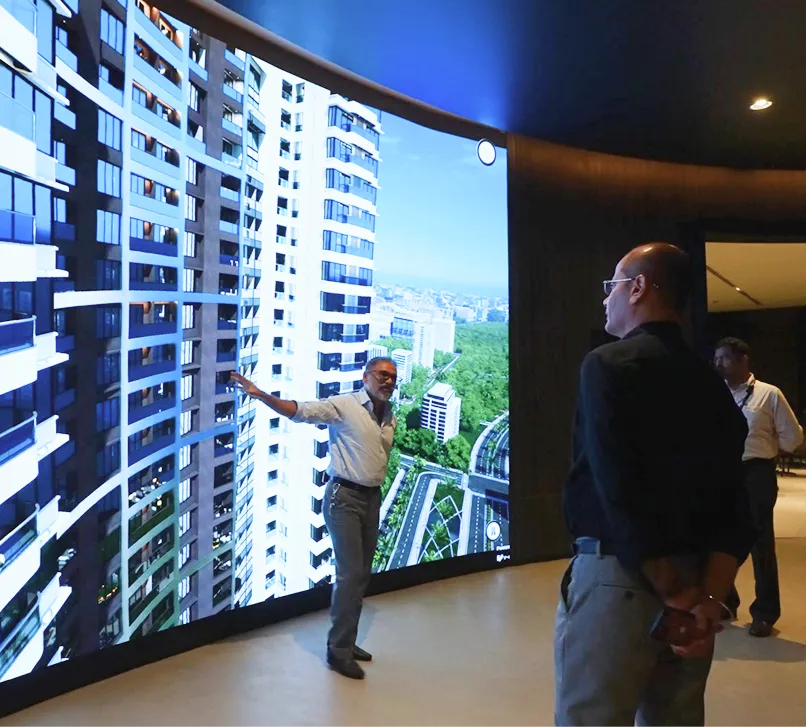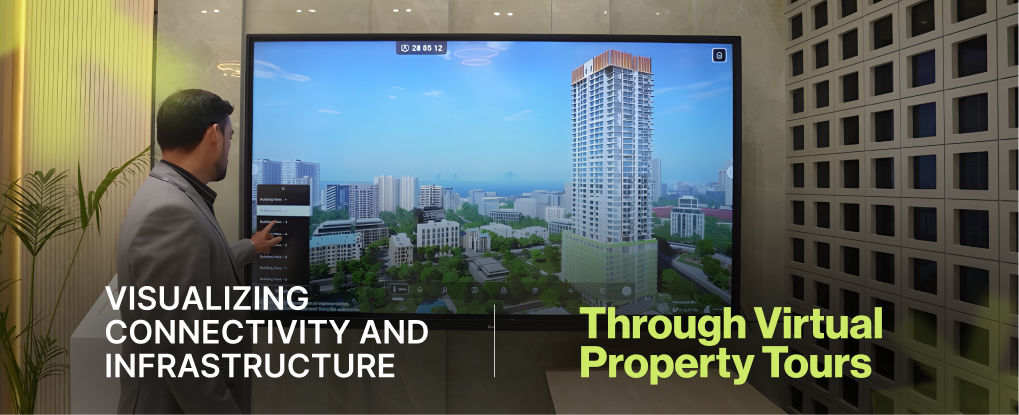
Buyers don't just purchase square footage. They purchase proximity to transport hubs, schools, hospitals, and commercial zones. Context determines value. Yet most developers still rely on static brochures and site visits to communicate connectivity. This gap extends sales cycles and weakens lead quality.
Interactive 3D show flats combined with offline experience-centre setups solve this. They map infrastructure layers directly into the property visualization. Prospects see travel times, amenity clusters, and future developments without leaving the sales room.
Buyers Need Infrastructure Context, Not Just Floor Plans
Purchase decisions hinge on daily convenience. Distance to metro stations matters more than marble flooring. Upcoming expressway access matters more than ceiling height.
Traditional marketing materials fail to convey this. Masterplans show abstract lines. Brochures list distances in kilometers. Prospects cannot translate these into lived experience. They imagine commute times incorrectly. They underestimate future infrastructure impact.
This creates friction. Multiple site visits become necessary. Questions remain unanswered. Confidence drops. Sales timelines stretch.
Photorealistic 3D Virtual Tours With Infrastructure Mapping
Photorealistic virtual property tours eliminate guesswork. They embed connectivity data directly into the walkthrough experience.
Prospects navigate the unit, step onto the balcony, and see the exact metro station visible from that vantage point. They toggle to a vicinity view. Transit nodes, schools, hospitals, and planned highway extensions appear as labeled overlays. Travel time estimates display in real-time.
This is not conceptual. Digital twins replicate actual site conditions. Day-to-night lighting cycles show morning sun angles and evening street illumination. Seasonal weather variations demonstrate monsoon visibility and summer heat reflection.
Buyers understand what living there actually means. They assess commute feasibility. They evaluate school pickup routes. They gauge convenience for aging parents.
Offline Activation Delivers Control and Consistency
Online virtual tours depend on bandwidth, device capability, and user patience. Sales teams lose control over pacing and messaging.
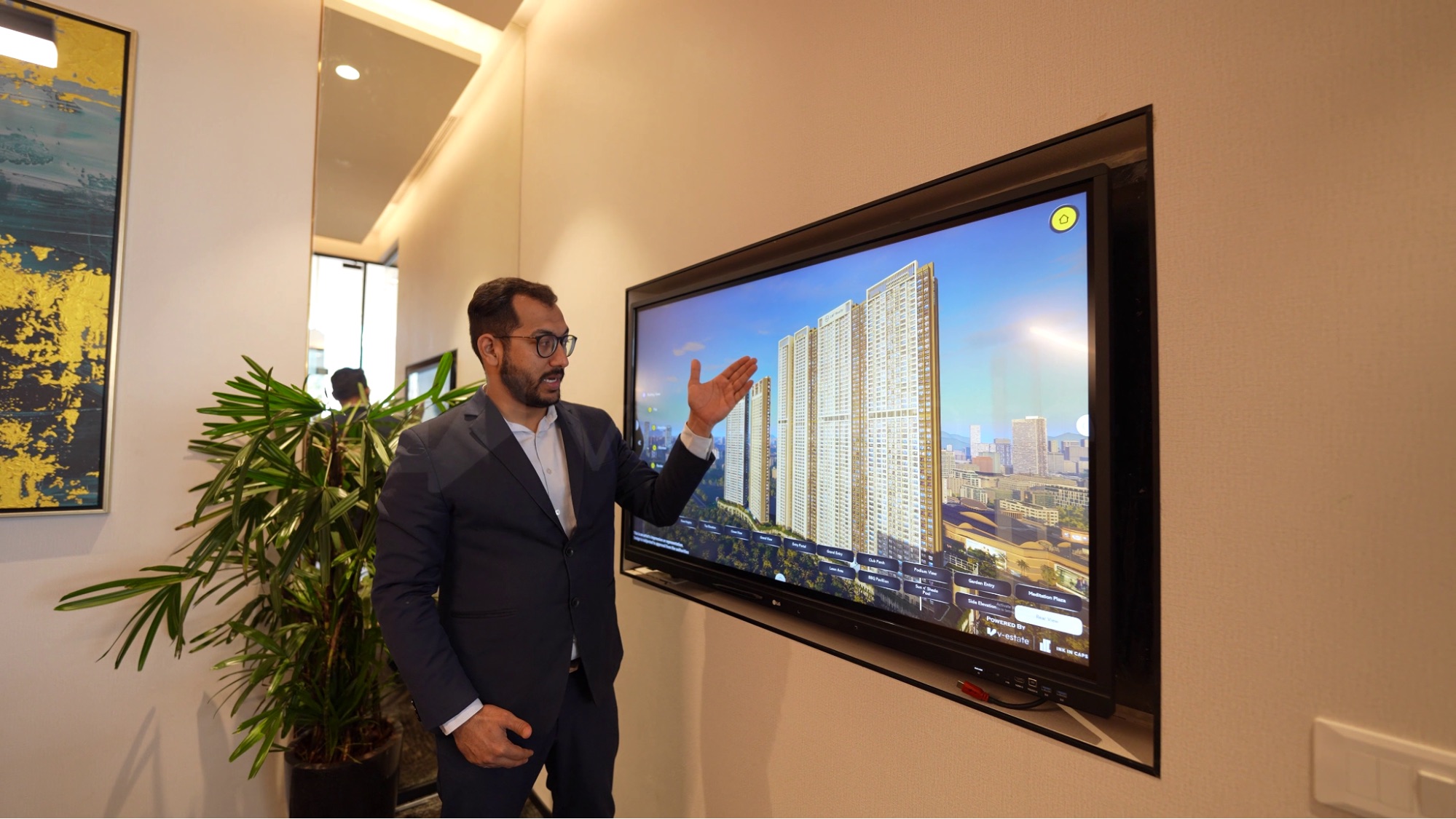
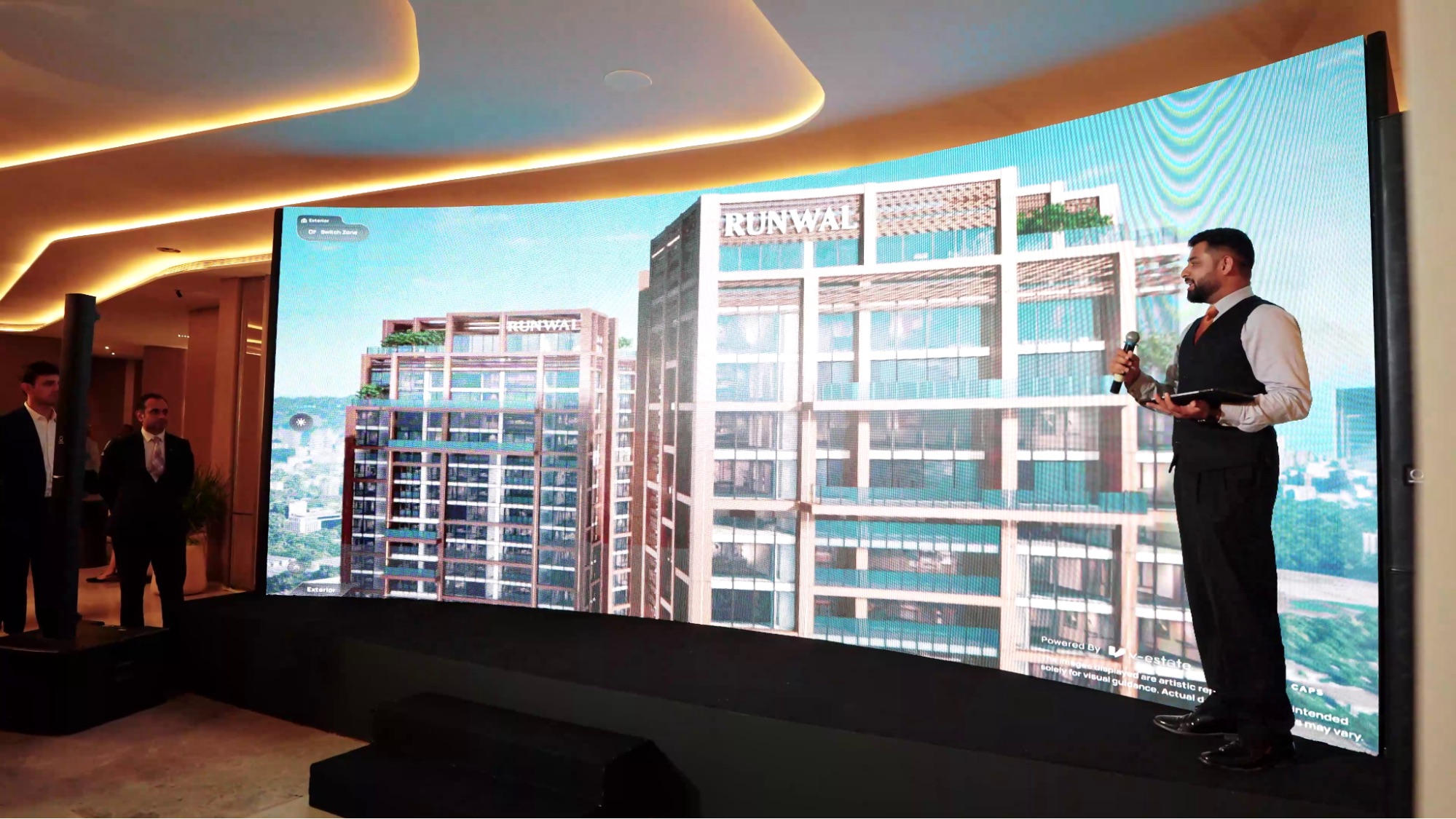
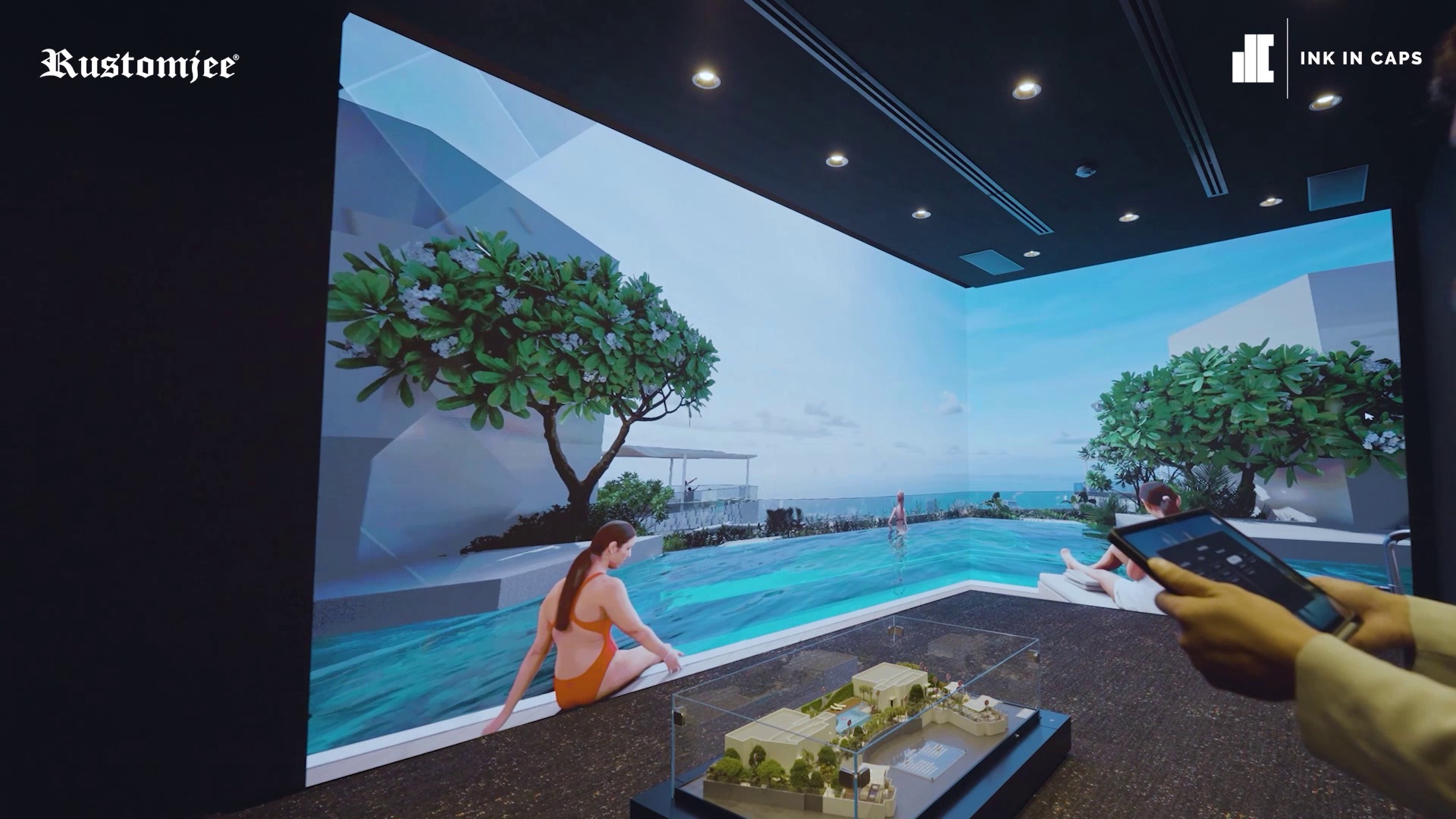
Offline activation changes this dynamic. Experience centres deploy large-format interactive displays, guided kiosks, and touch-enabled walls. Sales representatives control navigation. They highlight specific infrastructure connections aligned with buyer priorities.
Network dependency vanishes. Load times disappear. Visual fidelity remains consistent. The prospect focuses entirely on the property and its context, not on buffering screens.
Physical presence in a controlled environment also builds trust. Prospects perceive the technology as professional infrastructure, not a marketing gimmick.
Essential Features for Real Estate Sales Teams
Vicinity Visualization
Clear overlays show current and upcoming infrastructure. Metro lines, bus rapid transit corridors, arterial roads, and expressway interchanges appear with accurate positioning. Planned schools, hospitals, and commercial hubs display with tentative timelines.
This removes ambiguity. Buyers see exactly what connectivity exists today and what arrives in three years.
Amenity Showcase in 360°
Shared facilities—clubhouses, gyms, pools, landscaped gardens—require immersive visualization. 360° walkthroughs let prospects explore these spaces as if physically present.
This shifts conversations from price negotiations to lifestyle value. Buyers start imagining usage, not calculating cost per square foot.
Customization at Point of Sale
Prospects toggle finishes, furniture layouts, and window views in real-time. They test color schemes. They swap sofa sets. They check sight lines from different seating positions.
This personalization accelerates emotional connection. Buyers start treating the unit as their own before purchase formalities begin.
Performance Standards
Smooth 60 FPS walkthroughs prevent motion discomfort. Consistent lighting replicates natural perception. Instant transitions between day, evening, and night modes maintain immersion.
Technical flaws break credibility. Performance must be flawless.
Physical Activation Infrastructure
Large-format displays, interactive projection walls, and guided kiosks recreate the sense of place inside the sales environment. Prospects walk through multiple units and vicinity layers without leaving the centre.
This setup also supports group presentations. Multiple stakeholders—spouses, parents, financial advisors—engage simultaneously.
Measurable Impact on Sales and Marketing KPIs
Shorter Sales Cycles
When buyers understand connectivity immediately, decision-making accelerates. Uncertainty dissolves. Follow-up queries reduce. Testimonials report measurable cycle reduction, with some developers observing 30% faster closures after deploying immersive setups.
Higher Lead Quality
Prospects who engage with infrastructure-focused virtual tours convert at higher rates. They arrive with realistic expectations. They understand commute realities. Cancellations drop because surprises disappear.
Reduced Operational Costs
Repeat site visits decline sharply. Travel allowances for prospects reduce. Sales teams spend less time arranging logistics and more time closing deals.
Stronger Marketing ROI
Assets created for offline activation videos, renders, annotated flythroughs scale across digital channels. Website embeds, social media posts, and email campaigns all draw from the same high-fidelity source material.
Practical Implementation Steps
Audit existing assets. Collect masterplans, CAD files, locality maps, and infrastructure timelines. Identify gaps in current marketing collateral.
Define key connections. Pin the five most relevant infrastructure points—metro stations, arterial roads, schools, hospitals, planned projects. Prioritize what buyers ask about most frequently.
Deploy offline activation first. Install experience-centre screens and interactive kiosks where your sales process is strongest. Train representatives on navigation controls and infrastructure talking points.
Add customization controls. Enable finish selection, furniture swaps, lighting adjustments, and weather scenarios. Let prospects personalize the visualization to test their preferences.
Track engagement metrics. Monitor which features prospects spend the most time on. Identify navigation patterns. Use this data to refine follow-up conversations and adjust marketing emphasis.
Next Step for Real Estate Developers
If your objective is to demonstrate connectivity and reduce sales friction, deploy an infrastructure-focused virtual tour in your experience centre.
Start with one demo that maps two real transport nodes and three local amenities. Use it in every sales presentation. Distribute screen recordings for digital follow-up.
Schedule a walkthrough with your sales and planning leads. Request a demo showing vicinity overlays, day-to-night lighting, and full experience-centre setup. This becomes a repeatable asset that shortens your sales funnel and clarifies infrastructure value to every prospect.