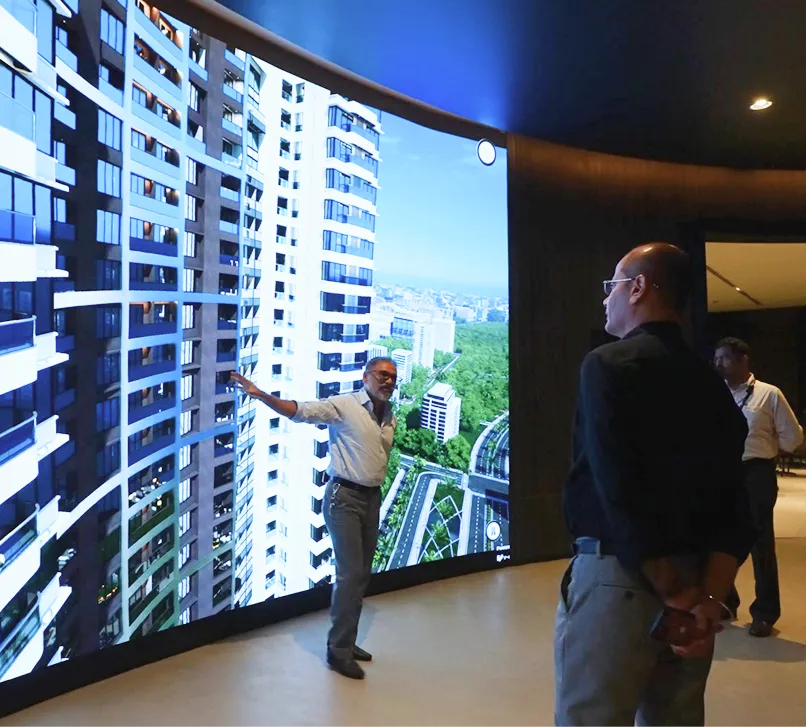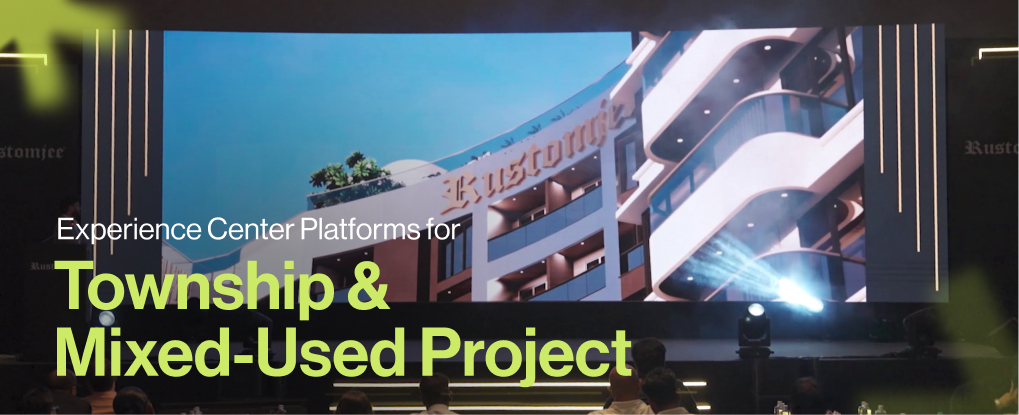
Township and mixed-use projects lose buyers in complexity. Multiple phases. Retail and residential adjacencies. Future amenities. Masterplan phasing. Traditional brochures and site visits can't deliver the spatial clarity buyers need to commit. That friction costs time and conversions.
Experience centers solve that. They compress multiple site visits into one immersive session. They show scale, sightlines, amenity proximity, and phasing—all factual, all navigable. Buyers leave with answers, not confusion.
Sales Complexity in Township Marketing
Mixed-use projects bundle too much information.
Residential towers. Commercial plots. Retail corridors. Schools. Clubhouses. Future metro connectivity. Buyers can't process it all from PDFs or floor plans.
Decision friction follows.
Buyers struggle to understand view corridors from upper floors. They can't visualize walking distance to amenities. They don't see how future phases affect their plot. Questions multiply. Site visits repeat. Sales cycles stretch.
Lead quality drops.
Marketing brings volume. But most leads aren't sales-ready. They're confused. They need clarity before they commit capital.
Offline Activation as a Decision Tool
Experience centers deliver immersive property visualization in a physical sales hub.
Not online tours. Not PDFs sent via email. A structured, offline activation where buyers control the experience under guided conditions.
V-estate enables this.
It's a real-estate interactive sales tool built for township and mixed-use sales. Photorealistic 3D show flats. Amenity mapping. Dynamic lighting. Finish customization. Weather toggles. All integrated into one platform.
Buyers explore units, change finishes, check morning and evening light, and map amenity proximity—without leaving the sales office.
Control shifts to the buyer.
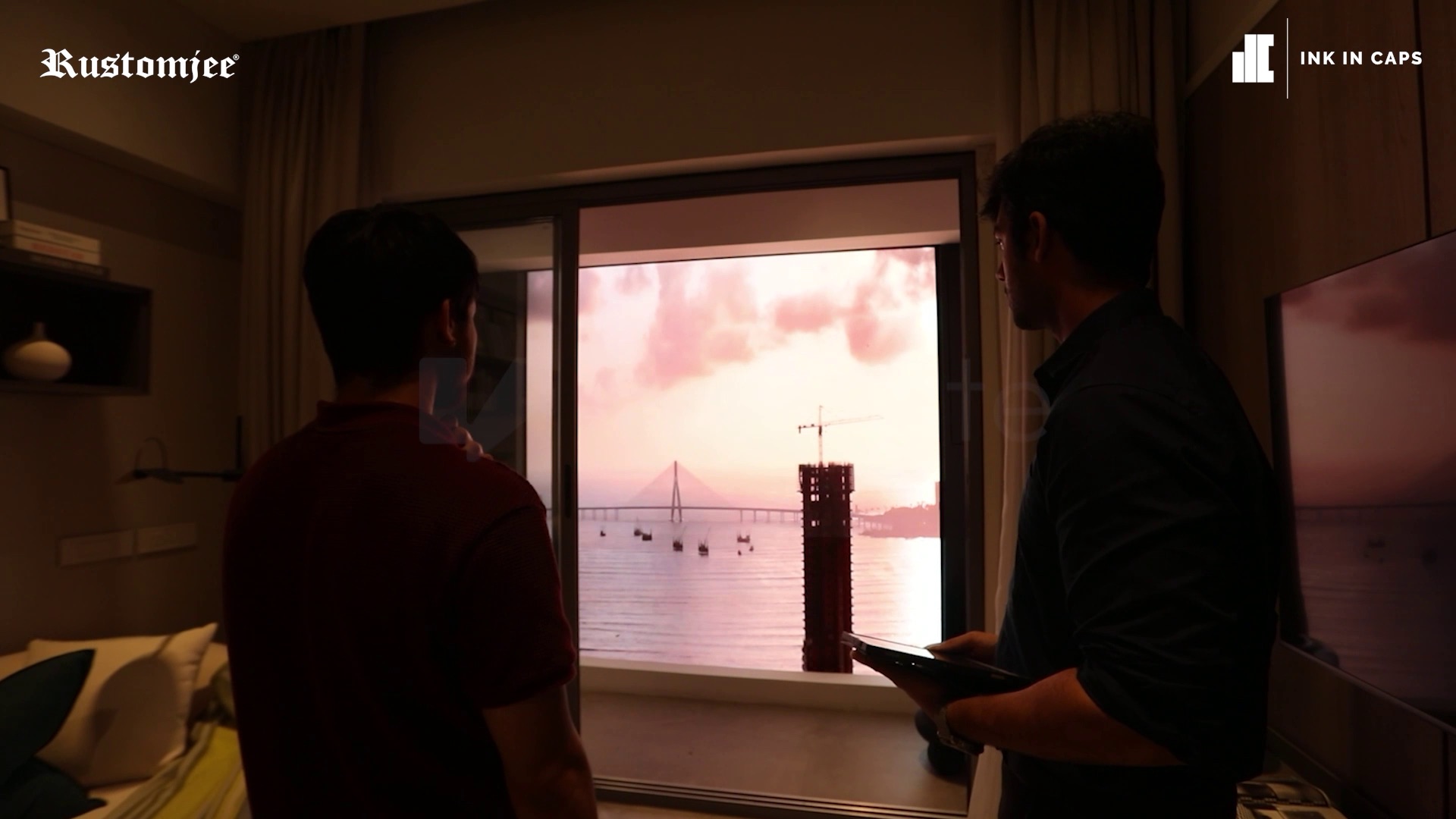
They select units. Swap furniture. Adjust paint. View window sightlines from the sofa. Check sunset angles in monsoon versus winter. The experience is factual. The visualization does the persuasion.
.jpg)
Core Features That Reduce Buyer Hesitation
Photorealistic 3D Show Flats
Accurate materials. Real window views.
Not artistic renders. Photorealistic models show what buyers will actually see from their balcony. Neighboring buildings. Tree lines. Road networks.
Customizable Interiors
Reduce doubt with options.
Buyers swap wall colors, flooring, and furniture sets. They see their choices in context. That removes post-booking regrets.
Dynamic Lighting and Weather Controls
Show real conditions.
Morning light in the bedroom. Evening glow in the living room. Monsoon cloud cover versus winter sun. Buyers see seasonal and time-of-day variations before they commit.
Amenity and Connectivity Mapping
Visualize proximity.
Current clubhouses. Upcoming metro stations. Schools. Parks. Retail corridors. Walking and drive-time overlays show real accessibility. Future projects appear on the same map. Buyers understand the ecosystem.
Guided Narrative Modules
Task-focused walkthroughs.
Family buyers need school proximity and playgrounds. Investors need rental yields and connectivity. Retailers need footfall projections. Each persona gets a targeted demo—3 to 5 minutes for quick scans, 10 to 15 minutes for deep dives.
Analytics Integration
Track engagement.
Which units attract the most views? Which amenities get explored? Which finishes get selected? Feed that data into CRM. Sales teams follow up with precision.
.png)
Operational Impact on Sales Performance
Higher lead quality.
Buyers who attend the experience center arrive informed. They've already explored units and amenities. Conversations start further down the funnel.
Shorter sales cycles.
Visual clarity reduces negotiation rounds. Fewer objections about views, finishes, or amenity distance. Decisions happen faster.
Lower cost per sale.
Physical show flats are expensive. Constant updates to models and staging add cost. V-estate reduces dependency on physical units. One digital platform serves multiple configurations.
Improved buyer confidence.
Clear sightlines and accurate amenity context reduce post-sale complaints. Buyers know what they're getting. That improves retention and referrals.
Consistent messaging.
Every visitor sees the same factual presentation. No sales script variance. No feature misrepresentation. One source of truth across the team.
.jpg)
Measurement Framework for Continuous Improvement
Track these KPIs:
Lead-to-site conversion rate. Percentage of leads who visit the experience center.
Demo-to-deal conversion. Deals closed after the in-center session.
Average sales cycle length. Time from first contact to booking.
Customer satisfaction. Short post-demo survey. Net sentiment score.
Engagement metrics. Most-viewed units. Most-explored amenities. Feature selection patterns.
Use this data to refine content. Prioritize high-interest units. Adjust demo flows. Remove low-engagement modules.
Implementation Path for Marketing Heads
Start focused.
Don't try to visualize the entire masterplan on day one. Pick 2 to 3 high-demand unit types. Add one amenity module. Build from there.
Define buyer personas.
Family buyers. Investors. Retailers. Each needs different information. Create targeted demo flows for each.
Integrate with CRM.
Capture demo choices automatically. Track which units each prospect explored. Feed that into follow-up workflows.
Train sales teams.
The experience center is a decision tool, not a sales script. Teach teams to guide buyers through the platform. Let the visualization answer objections.
Pilot and measure.
Run a 6 to 8 week pilot. Measure demo-to-deal conversion. Adjust visuals and flows based on engagement data.
Relevance to Township and Mixed-Use Projects
Scale becomes interpretable.
Large layouts and phasing timelines are hard to communicate in 2D. 3D visualization shows spatial relationships clearly. Buyers understand adjacencies. They see buffer zones. They grasp future expansion plans.
Amenity ecosystems gain credibility.
Residents and retailers see proximity impact. Footfall projections become visual. Connectivity claims become verifiable.
Future phases reduce objections.
Show upcoming roads. Mark future metro stations. Display planned commercial zones. Buyers see the full picture. That reduces skepticism about developer promises.
Practical Next Step
Pilot an offline experience center at your highest-traffic sales hub.
Start with your best-selling unit types. Add amenity and connectivity modules. Measure demo-to-deal conversion. Refine based on buyer engagement data.
The goal is clear: Reduce buyer friction. Increase decision certainty. Shorten the sales cycle.
V-estate delivers that. Photorealistic visualization. Customization controls. Amenity mapping. Analytics. All in one offline activation platform built for township and mixed-use sales.
Keep the content factual. Let the platform show what the project offers. Buyers will decide.