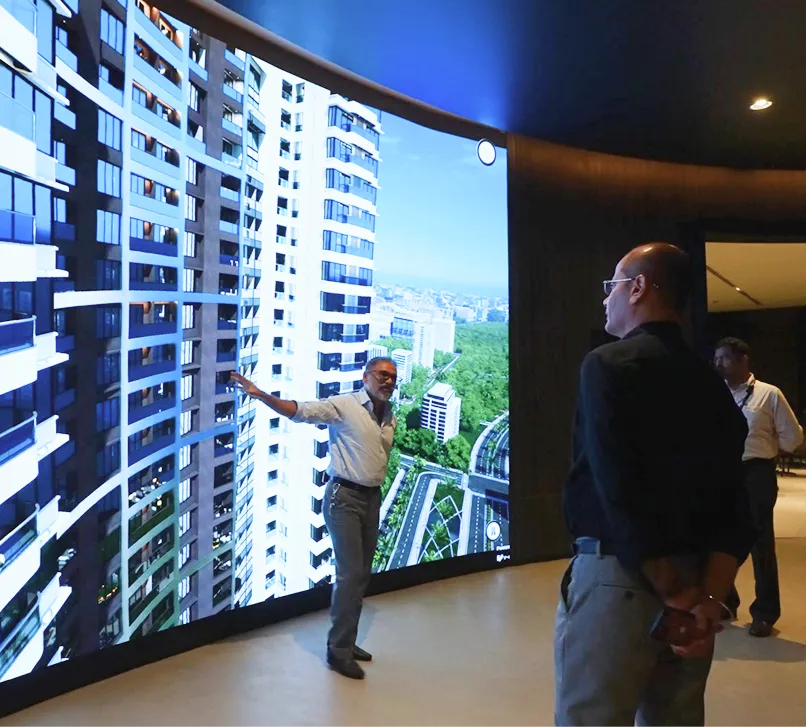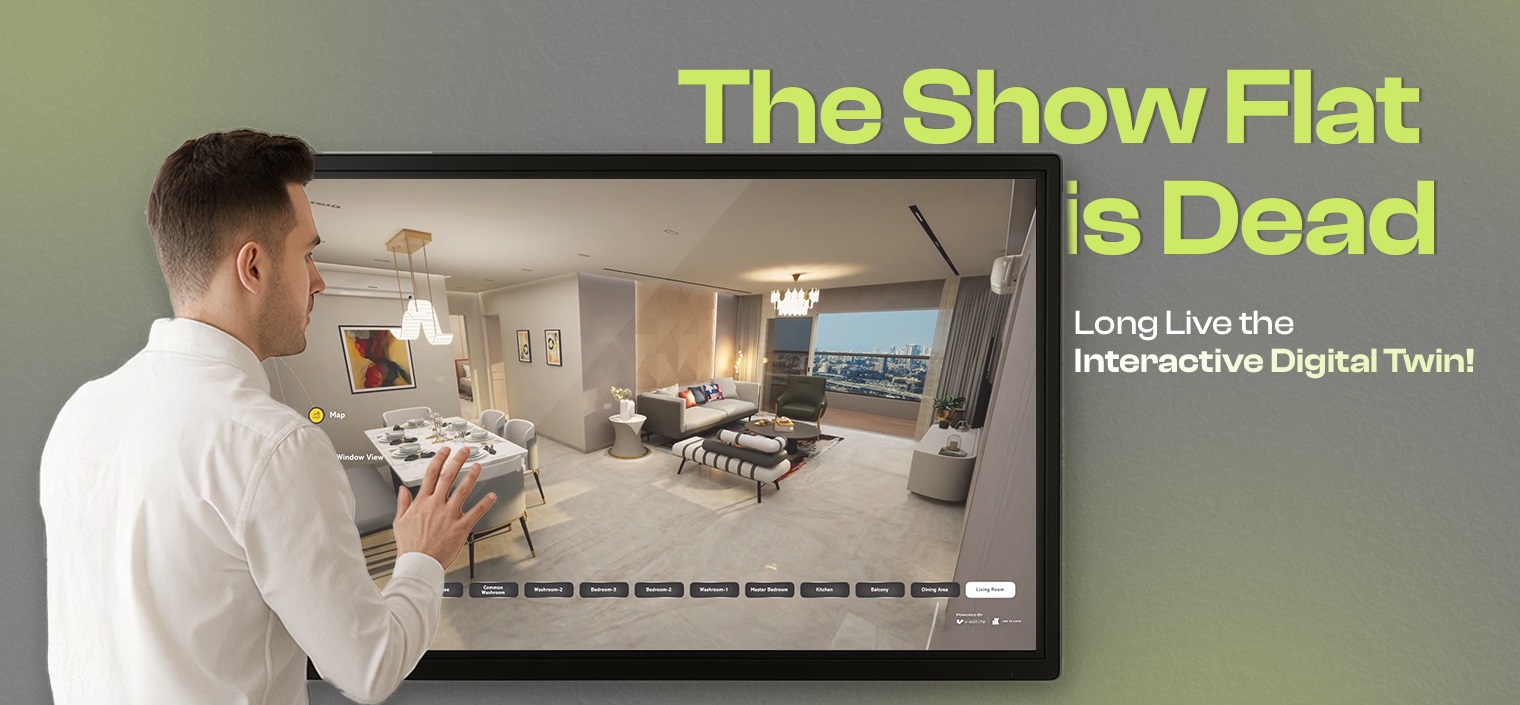
Gone are the days when potential buyers had to trek across town to view a meticulously staged show flat, only to struggle imagining their own furniture and lifestyle within those walls. Today's real estate landscape is witnessing a revolutionary shift that's transforming how developers connect with buyers and how buyers experience their future homes.
The Traditional Show Flat: A Dying Breed
For decades, physical show flats have been the industry standard. Developers would invest substantial resources into building and furnishing these model units, creating picturesque spaces designed to trigger emotional connections with potential buyers. While effective to some degree, this approach came with significant drawbacks:
Enormous costs for construction, interior design, and ongoing maintenance
Geographic limitations requiring interested buyers to be physically present
Inflexibility in demonstrating alternative layouts, finishes, or customizations
Static representations that can't adapt to individual buyer preferences
These limitations have become increasingly problematic in our digital-first world where consumers expect personalization, convenience, and immersive experiences.
The Interactive Digital Twin
The concept of a digital twin—a virtual representation of physical spaces—has revolutionized industries from manufacturing to healthcare. Now, it's transforming real estate development by offering dynamic, customizable property visualizations that go far beyond what any physical show flat could achieve.
Unlike traditional 3D renderings or virtual tours, interactive digital twins create living, breathing virtual environments that potential buyers can explore and manipulate according to their preferences. These sophisticated digital replicas provide:
Photorealistic visualization showing every detail from lighting effects to window views
Real-time customization allowing buyers to experiment with different layouts, finishes, and furnishings
Environmental simulations demonstrating how spaces look at different times of day or seasons
Contextual understanding mapping neighborhood amenities and future developments
Why Developers Are Embracing the Change
Forward-thinking developers are rapidly adopting digital twin technology for compelling business reasons:
Cost Efficiency: The investment in digital twin technology typically costs far less than building, maintaining, and eventually demolishing physical show flats—especially for multi-unit developments.
Global Reach: Digital twins remove geographic barriers, allowing potential buyers worldwide to experience properties without travel.
Enhanced Decision-Making: By providing comprehensive information and visualization, digital twins help buyers make more confident decisions, reducing sales cycles.
Sustainability: Eliminating the need for physical show flats reduces construction waste and environmental impact.
The Buyer Experience Revolution
For today's buyers, the interactive digital twin transforms the property search from a stressful guessing game into an engaging, confidence-building experience. Potential homeowners can:
Virtually walk through spaces at their convenience, exploring every room and angle
See exactly how natural light enters at different times of day
Experiment with various interior design options before making decisions
Understand the neighborhood context, including amenities and future developments
Customize experiences to their specific lifestyle needs
Looking Ahead: The Future of Property Visualization
As technology continues advancing, we can expect interactive digital twins to become even more sophisticated. Integration with AI, IoT sensors, and augmented reality will create increasingly personalized experiences that blur the line between digital and physical spaces.
The ultimate goal? Creating transparent, informative buying experiences that eliminate uncertainty and help people find homes that truly match their needs and aspirations.
While physical properties will always constitute the final product, the way we visualize, experience, and sell those properties has fundamentally changed. The show flat is indeed dead—and in its place stands a more accessible, sustainable, and customer-centric approach to property development.