Property listings rarely fail because of lack of interest. They fail because buyers cannot see clearly enough to decide.
In competitive micro-markets, most projects offer similar amenities, comparable pricing, and overlapping location advantages. What separates high-conversion developments from slow-moving inventory is not promotion, but how clearly the project is understood in a single visit.
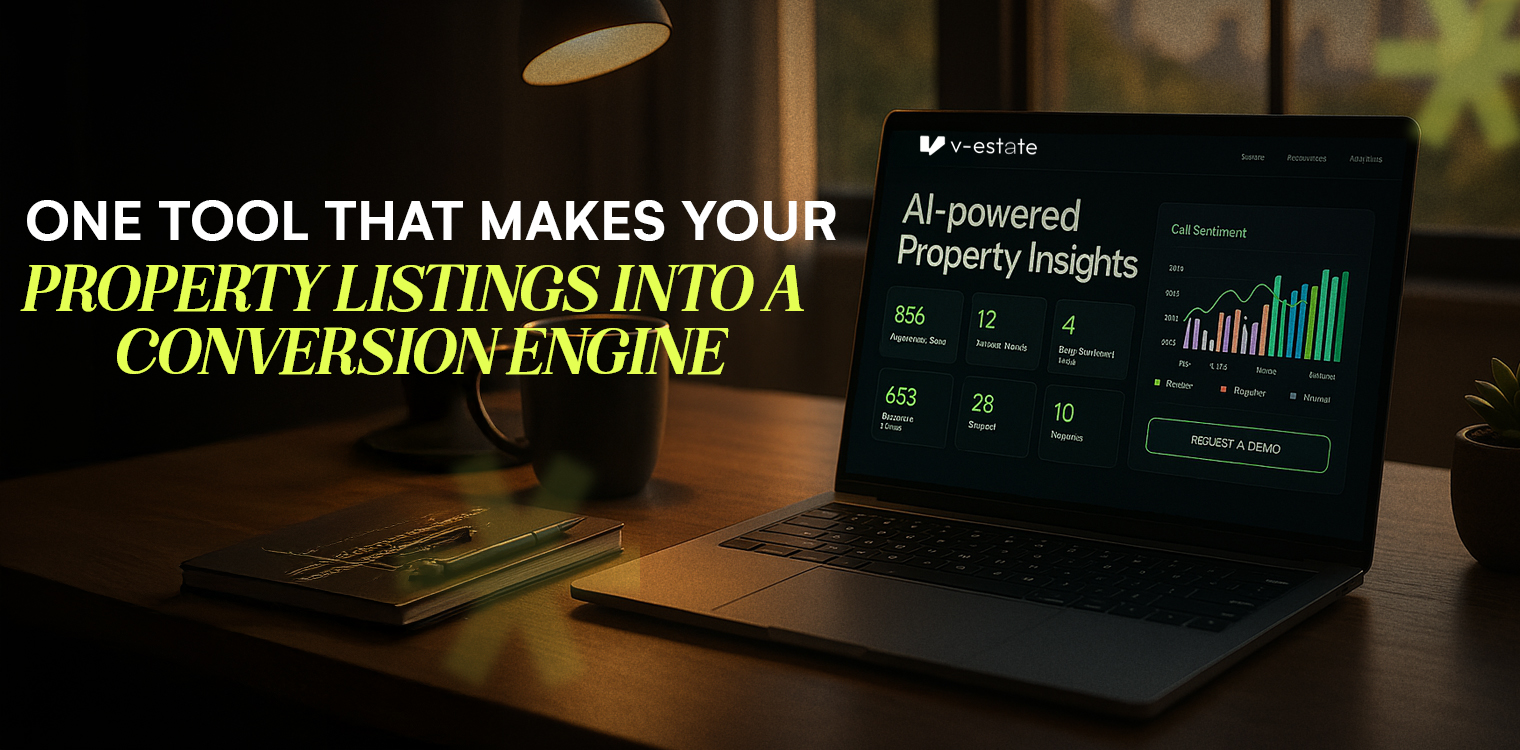
This is where one tool has quietly become a conversion engine for leading developers: an immersive, integrated sales experience platform that combines physical interaction with real-time spatial visualization.
A strong example of this approach in action is the deployment created for Adani Realty’s Thane development, Codename LIT, executed by V-Estate.
Why Most Property Listings Don’t Convert Fast Enough
Even with strong branding and aggressive marketing, sales teams often face the same friction points:
Buyers struggle to imagine the completed development
Mixed-use masterplans are difficult to explain through drawings
Infrastructure and vicinity benefits remain abstract
Too many follow-up visits are required to resolve doubts
Sales conversations remain surface-level instead of decisive
At Codename LIT, these challenges were amplified.
The site was a former ACC Cement factory, with legacy structures limiting buyer imagination. The masterplan was complex. Competition from established brands was intense. Buyers demanded technical clarity early, including infrastructure, services, and unit-level details.
Static tools were not enough.
Turning the sales journey with V-Estate’s Interactive Sales Tool
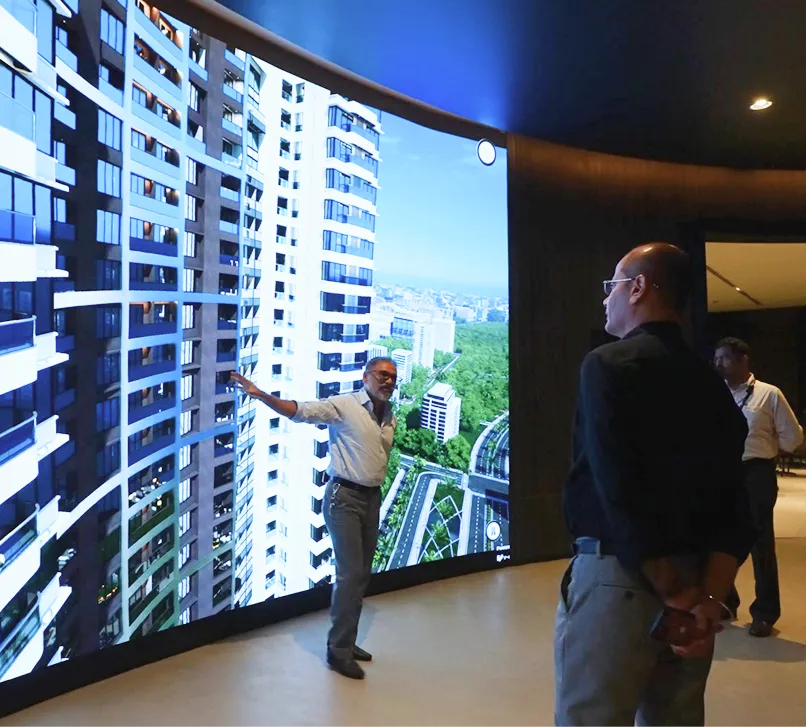
Instead of relying on brochures and slide decks, the Adani Realty team deployed a single immersive platform that became central to every sales conversation.
The objective was clear:
Enable confident visualization of the completed development
Improve the depth and quality of buyer conversations
Resolve most doubts in one meeting
Equip sales teams with a reliable, intuitive tool
Differentiate the project through experience, not promotion
The result was not a display system. It was a conversion infrastructure embedded directly into the sales journey.
What This “One Tool” Actually Consists Of
The platform combined physical interaction, real-time visualization, and structured sales flow into one unified system.
Core Components
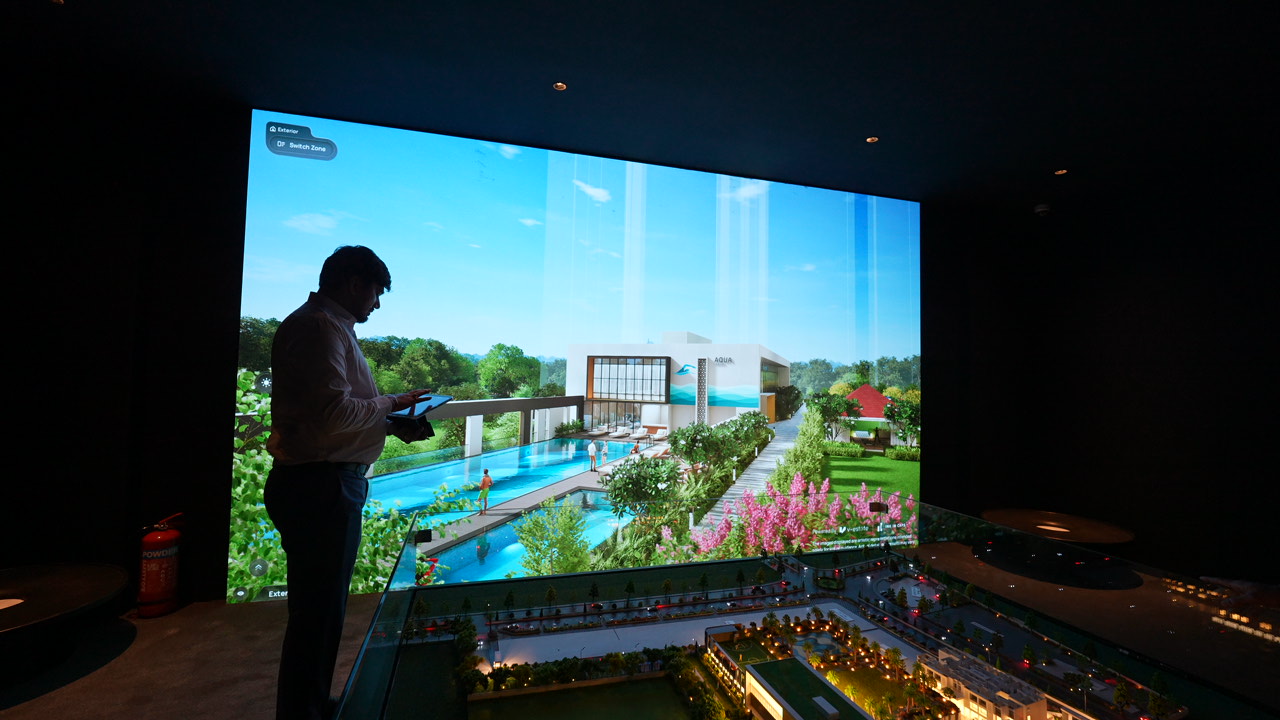
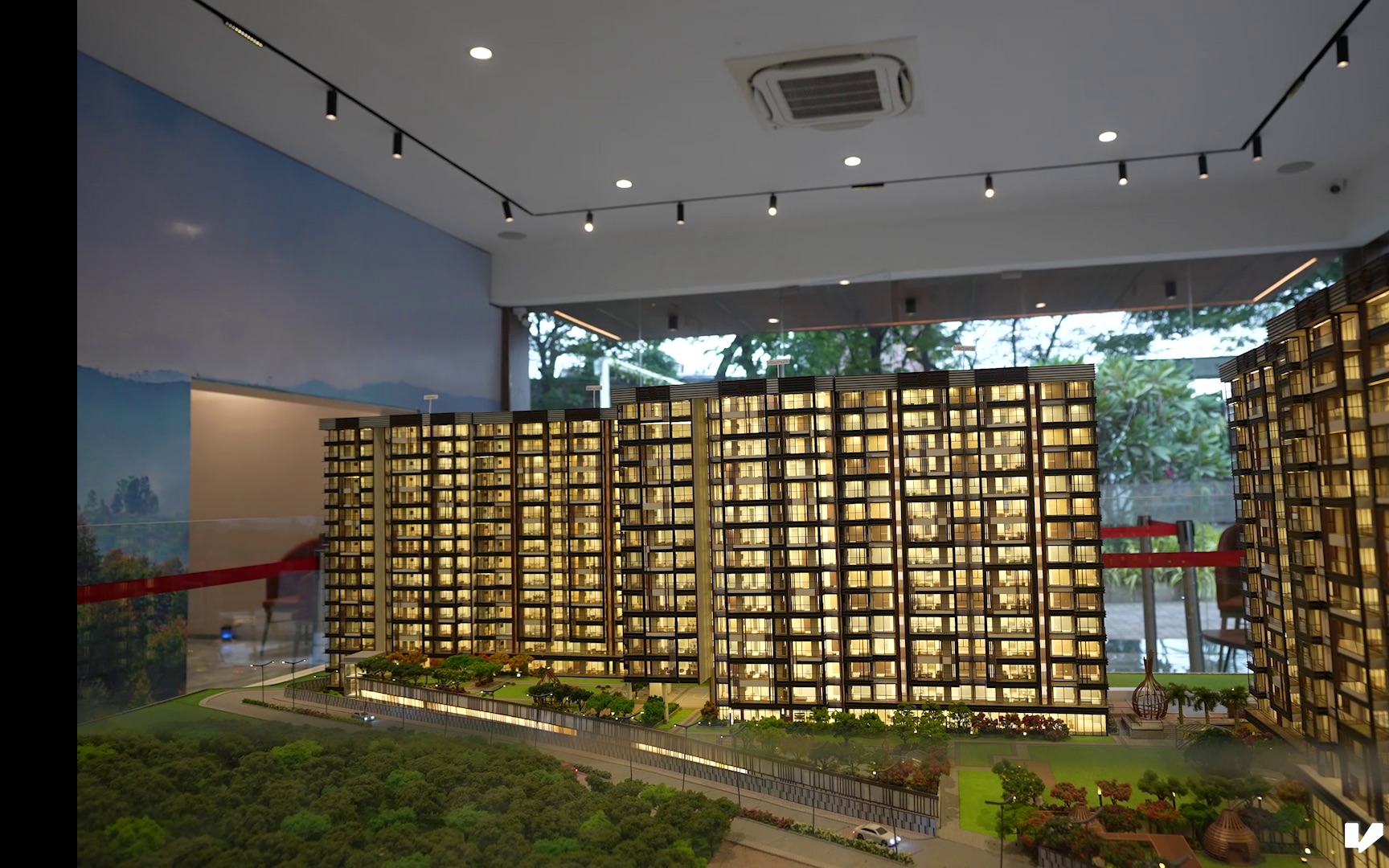
IoT-enabled physical scale model with 38 addressable touchpoints
Real-time Unreal Engine 5.2 environment optimized for 4K displays
iPad-based control interface for sales executives
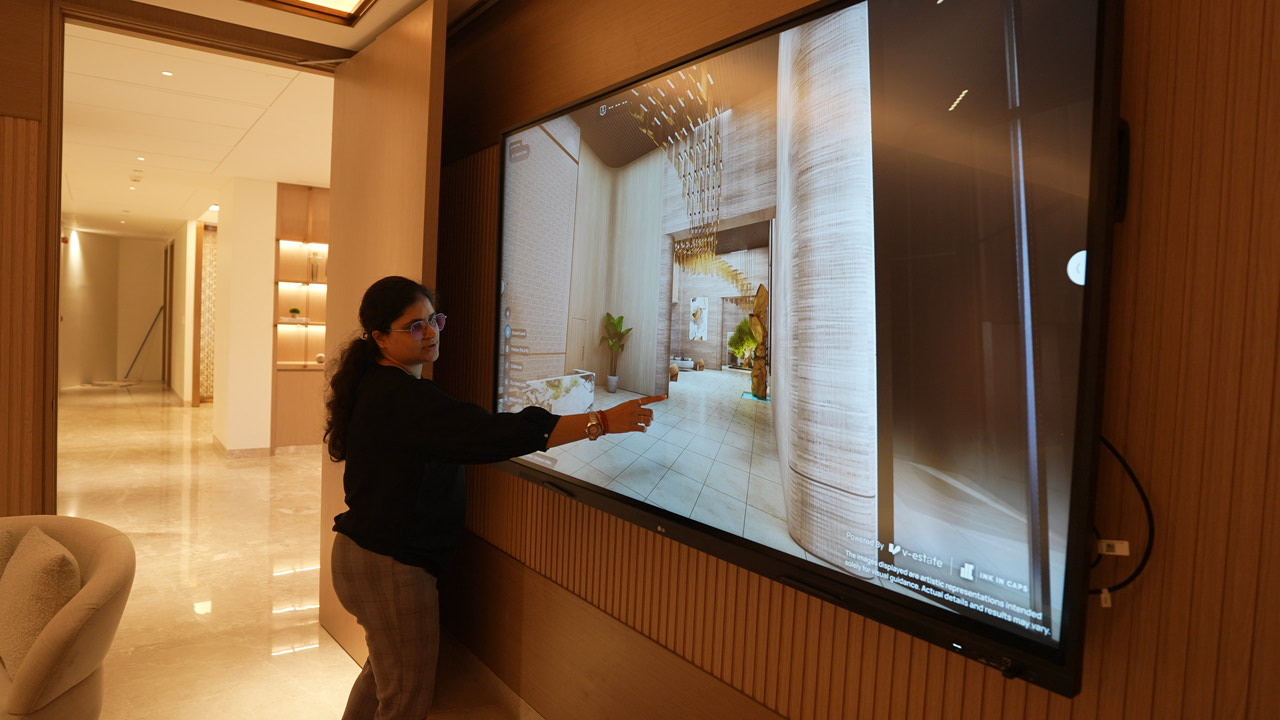
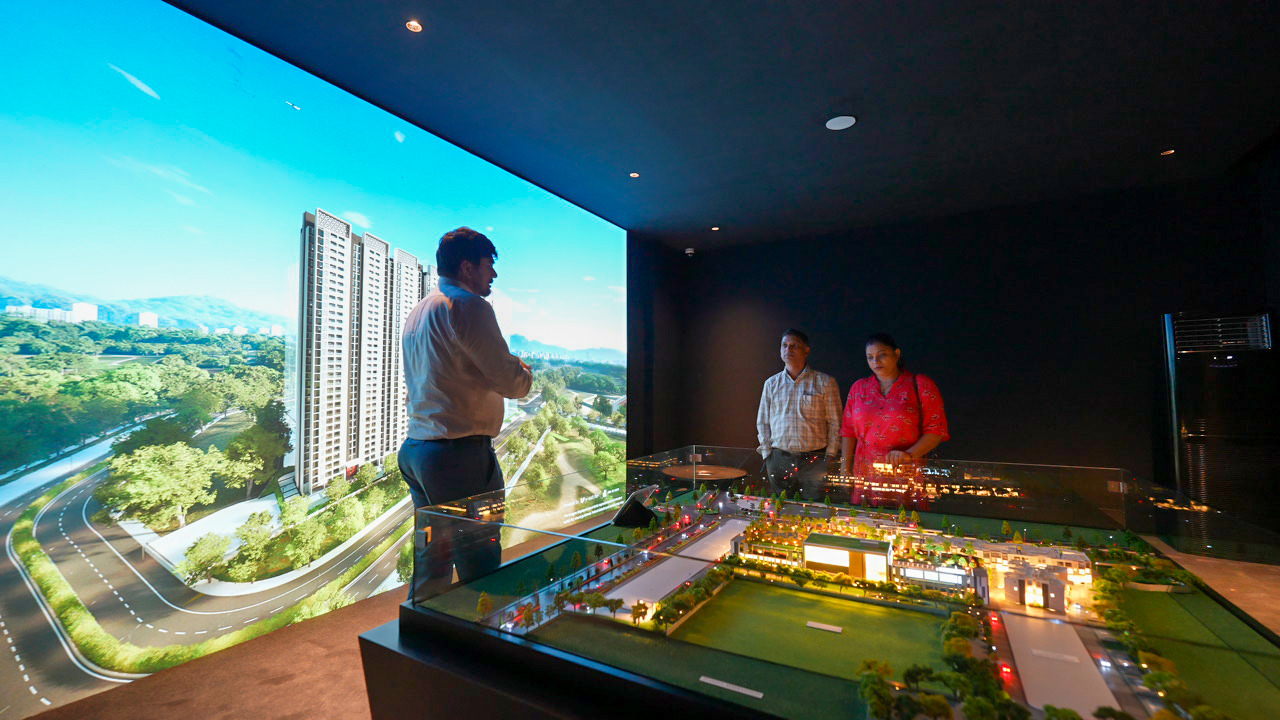
Curved LED visualization wall and discussion-room displays
This was not an optional showcase. The system was embedded into the sales floor layout and used in every customer interaction.
How the Sales Experience Was Engineered to Convert
The effectiveness of the tool came from how it was used, not just how it looked.
A Structured, Repeatable Sales Flow
Every buyer moved through a clearly defined journey:
Registration and hospitality
Dedicated sales executive assigned
Interactive walkthrough using the IoT scale model
Physical sample flat visit
Private discussion-room session to resolve final queries and close
Two operating modes ensured flexibility without chaos:
Launch mode: 10-minute high-level walkthroughs for large crowds
Consultative mode: 40–50 minute deep-dive discussions post-launch
This structure ensured consistent storytelling while allowing conversations to go deeper when intent was high.
Why Real-Time Visualization Changed Buyer Behaviour
The immersive environment was built using Unreal Engine 5.2, with custom tooling to handle complexity without performance loss.
Infrastructure and Vicinity Visualization
Procedural modeling tools accurately represented surrounding infrastructure such as:
Metro lines
Flyovers and bridges
Key connectivity corridors
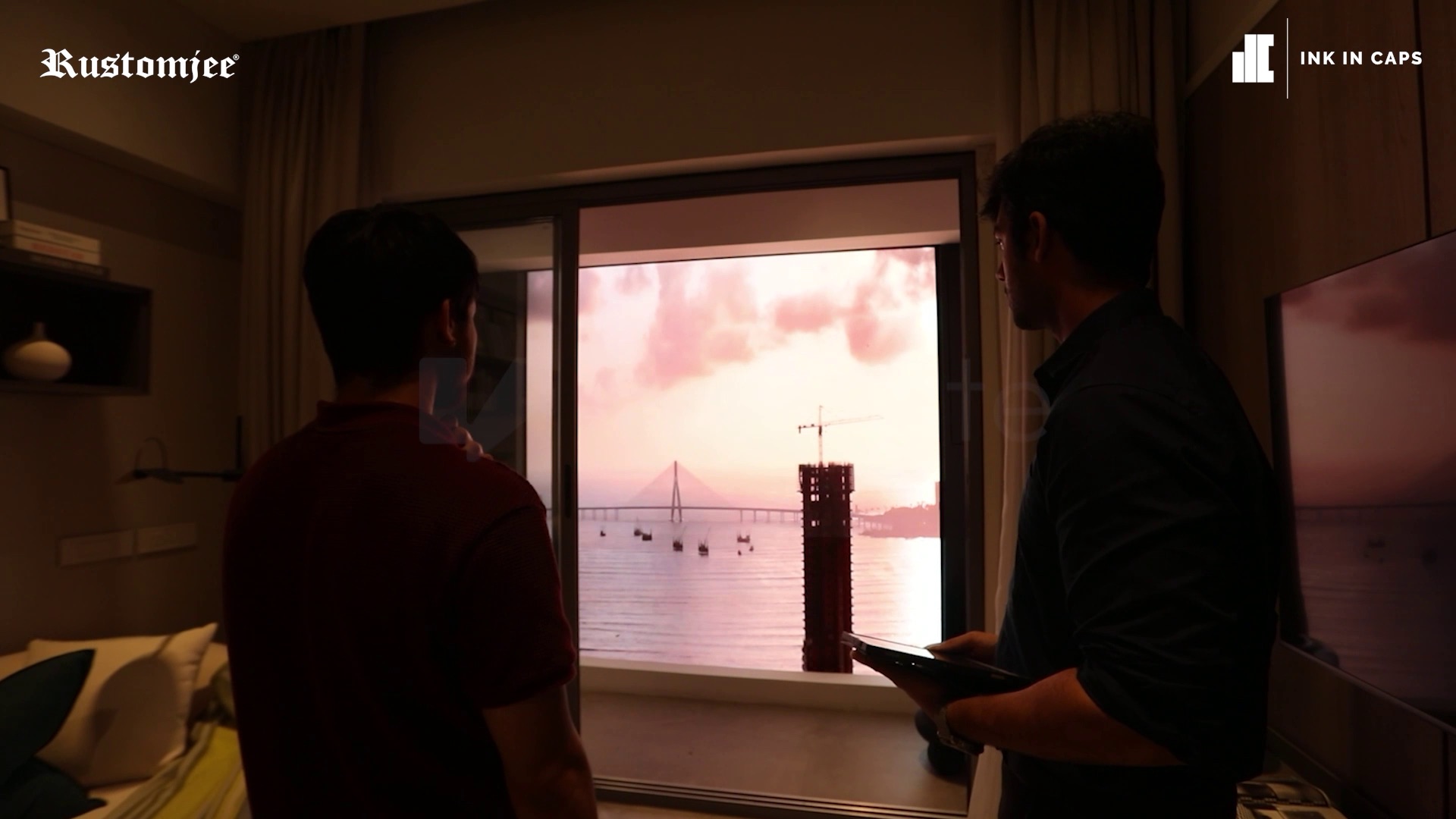
Animated metro movement reinforced realism and helped buyers understand commute value instantly.
Interior and Exterior Depth Without Performance Trade-Offs
To handle towers with nearly 60% glass façades, a parallax interior system simulated depth and interior lighting without heavy geometry. Buyers perceived realism, while the system maintained smooth performance.
Optimized for Continuous Sales Use
Nanite-based asset optimization
Controlled texture resolution
Balanced shader complexity
Curated foliage for natural landscapes
The result was a stable, high-fidelity environment that sales teams could rely on all day, every day.
Physical and Digital Synchronization That Reduced Explanation Time
One of the most impactful elements was physical–digital synchronization.
When a buyer selected a tower, unit, or amenity in the digital environment:
The corresponding section lit up on the physical scale model
Visuals updated instantly on the large displays
This eliminated back-and-forth explanations and significantly improved spatial comprehension, especially for a complex mixed-use masterplan.
Buyers didn’t just hear explanations. They saw cause and effect in real time.
Reliability That Sales Teams Could Trust
For a tool to drive conversions, it must work flawlessly during peak sales periods.
At Codename LIT, the deployment included:
Three months of continuous on-site technical support post-launch
Zero downtime during the critical launch phase
Bi-weekly system health checks
Complete training and adoption across all sales executives
This reliability ensured that the platform became a trusted daily sales tool, not a risky dependency.
What Changed on the Sales Floor
The impact of the platform was immediately visible.
Average engagement time increased from 20 minutes to 40–50 minutes
Buyers asked advanced, technical questions, indicating higher confidence
Many closures happened in a single meeting due to reduced ambiguity
100% adoption of the interactive tool by 15 sales executives
The marketing team received an internal innovation award nomination
Most importantly, conversations shifted from persuasion to confirmation.
Why This Tool Works as a Conversion Engine
This approach succeeds because it aligns three critical elements:
Clarity: Buyers see the complete picture early
Consistency: Every sales executive presents the same story
Confidence: Reduced ambiguity leads to faster decisions
Instead of pushing listings harder, the tool allows the project to explain itself clearly.