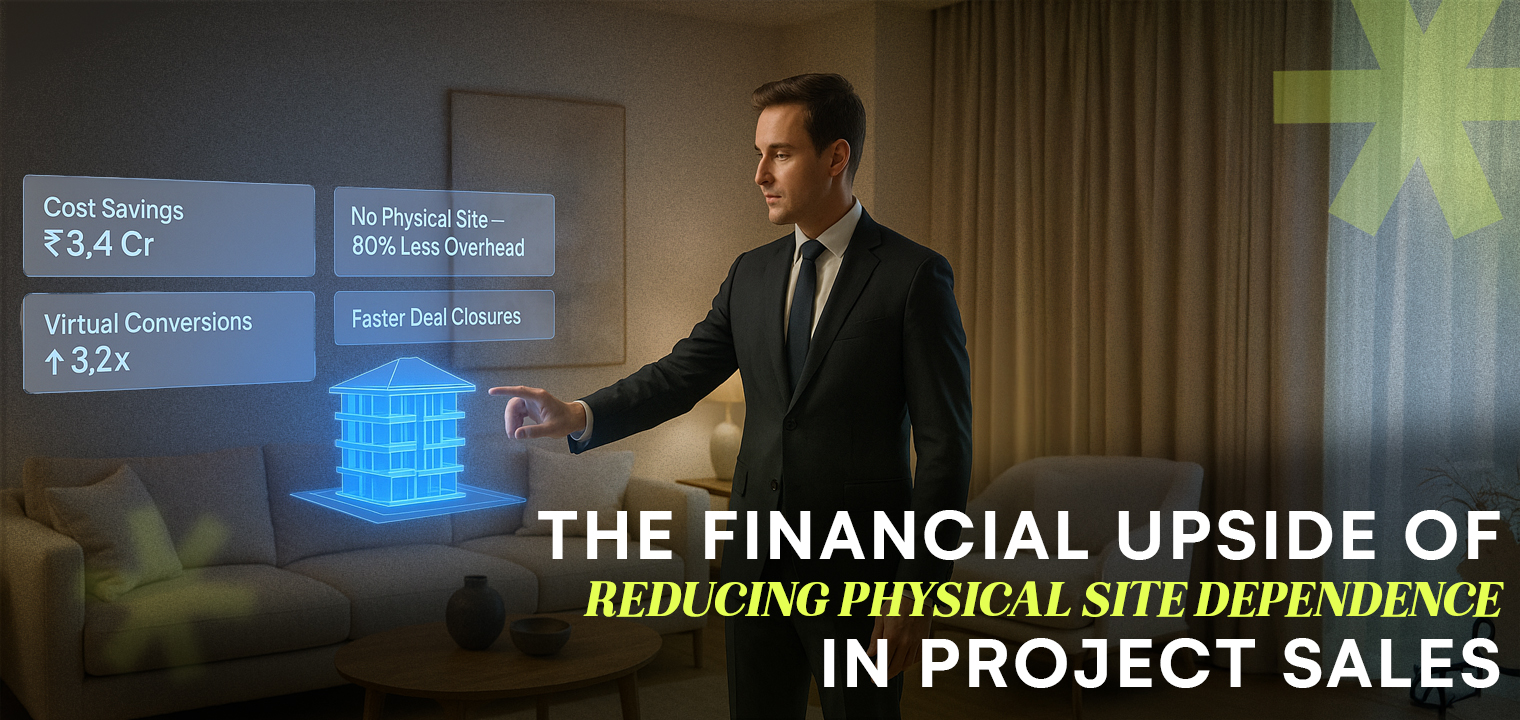
Real estate developers face mounting pressure to optimize costs while maintaining competitive sales performance. Traditional project sales models that rely heavily on physical showrooms, on-site demonstrations, and face-to-face meetings are increasingly challenging to sustain. The financial burden of maintaining multiple physical locations, coupled with evolving buyer expectations, creates a compelling case for reducing physical site dependence.
The shift toward digital-first sales approaches isn't just about keeping up with technology trends—it's about unlocking significant financial advantages that directly impact your bottom line. Developers who embrace this transformation are discovering substantial cost reductions, improved sales efficiency, and more predictable revenue streams.
Travel expenses present another significant drain on resources. Sales teams frequently travel between project sites, client meetings, and corporate offices. These travel costs include transportation, accommodation, meals, and the opportunity cost of time spent traveling rather than selling. Industry data suggests that sales professionals spend up to 30% of their time on travel-related activities.
Labor allocation inefficiencies further compound these challenges. Physical sales models often require dedicated staff at each location, creating redundancies and limiting flexibility in resource deployment. When sales activity fluctuates between projects, developers struggle to optimize staffing levels without compromising service quality.
Accelerating Sales Velocity Through Digital Transformation
Digital sales processes eliminate traditional bottlenecks that slow down deal progression. The typical real estate sales cycle involves multiple in-person meetings, site visits, and coordination challenges that extend timelines unnecessarily. By reducing dependence on physical interactions, developers can compress sales cycles significantly.
Remote presentations and virtual property tours allow prospects to engage with projects on their schedule, eliminating the back-and-forth coordination required for physical meetings. Advanced interactive platforms enable buyers to take complete control of their property exploration experience, customizing visualizations to match their lifestyle preferences and getting comprehensive views of amenities, connectivity, and neighborhood facilities. This flexibility often leads to faster decision-making, as buyers can review properties multiple times without scheduling constraints.
Sales team productivity increases dramatically when travel time is eliminated. Representatives can conduct more client interactions per day, follow up on leads more quickly, and manage larger prospect pipelines. This enhanced capacity translates directly into increased revenue potential without proportional increases in staffing costs.
Conversion rates often improve when buyers have unlimited access to property information and immersive visualizations. Traditional physical tours are limited by scheduling constraints and may not showcase properties in optimal conditions. Modern interactive sales tools allow buyers to explore properties repeatedly, customize their viewing experience down to the last detail, and even visualize how their coffee break would look from their future window. This level of personalization and control over the property exploration process leads to more confident purchasing decisions.
Creating Predictable Revenue Streams
Project-based sales models create inherent revenue volatility that complicates financial planning and cash flow management. Traditional approaches often result in feast-or-famine cycles where sales revenues fluctuate dramatically between quarters.
Digital sales platforms enable developers to implement recurring revenue elements that stabilize income streams. Service contracts, ongoing consultation services, and post-sale support create consistent monthly revenues that complement project sales. These recurring elements help smooth out the natural peaks and valleys of project completions.
Customer lifetime value increases significantly when digital relationships extend beyond the initial sale. Buyers who engage through digital platforms are more likely to consider future projects, refer other buyers, and participate in upgrade opportunities. This extended relationship creates multiple revenue touchpoints that traditional one-time sales models miss.
Data collection capabilities inherent in digital sales processes provide insights that improve future project planning and marketing efficiency. Understanding buyer preferences, engagement patterns, and decision-making timelines helps developers optimize pricing strategies and resource allocation.
Real-World Financial Impact
Industry examples demonstrate the substantial financial benefits of reducing physical site dependence. Retail giants like IKEA transformed their business models by shifting from showroom-dependent sales to digital-first approaches. Their online sales revenue grew from 7% to 31% of total revenue within three years, demonstrating the revenue potential of digital transformation.
Home improvement retailers have seen similar results. Companies that invested heavily in digital sales capabilities during market disruptions not only maintained revenue levels but often exceeded previous performance. The ability to continue sales operations without physical limitations proved crucial for maintaining market position.
Real estate developers who implemented virtual tour technologies report sales cycle reductions of 20-40% compared to traditional methods. These efficiency gains translate directly into cost savings and increased revenue capacity. When deals close faster, sales teams can handle more opportunities, and cash flow improves through accelerated payment schedules.
Strategic Implementation Considerations
Successfully reducing physical site dependence requires careful planning and execution. The transition shouldn't eliminate all physical interactions but rather optimize when and how they occur. High-value prospects might still benefit from physical experiences, but the bulk of sales activities can shift to digital channels.
Technology investment becomes crucial for success. Interactive sales tools that offer photorealistic 3D virtual showflats create immersive experiences that often exceed physical tours in detail and convenience. Buyers can explore properties with complete control, customizing everything from wall colors to furniture placement while experiencing realistic lighting conditions throughout different times of day and seasons. The initial technology investment typically pays for itself within 12-18 months through reduced operational costs and improved sales efficiency.
Staff training and change management ensure smooth transitions. Sales teams accustomed to physical interactions need support in developing digital sales skills. However, most professionals quickly embrace the efficiency gains and improved work-life balance that digital approaches provide.
Long-Term Competitive Advantages
Organizations that reduce physical site dependence position themselves for sustained competitive advantages. They can respond more quickly to market changes, expand into new geographic markets without physical infrastructure investments, and scale operations more efficiently.
The ability to serve clients regardless of location opens new market opportunities that were previously cost-prohibitive. Developers can market projects to international buyers, relocating professionals, and investment clients without the expense of establishing physical presence in each target market.
Market downturns affect digitally-enabled organizations less severely than those dependent on physical infrastructure. When economic conditions tighten, the flexibility to reduce costs quickly while maintaining sales capabilities provides crucial advantages.
The financial upside of reducing physical site dependence extends beyond immediate cost savings. It creates operational flexibility, improves sales efficiency, stabilizes revenue streams, and positions developers for sustainable long-term growth. In an increasingly competitive market, these advantages often determine which organizations thrive and which struggle to maintain profitability.