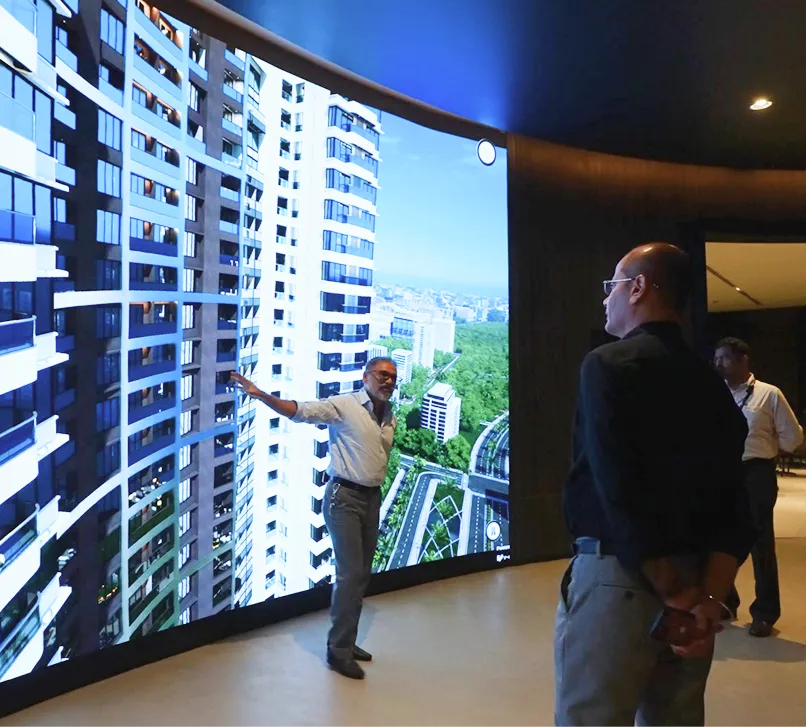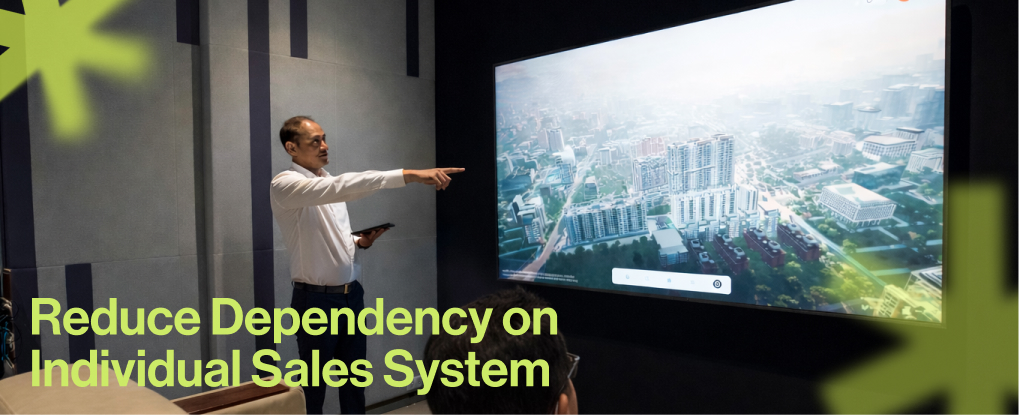
Sales centers lose deals when buyer experiences vary by salesperson. One agent highlights amenities, another focuses on layouts, a third emphasizes ROI. Buyers walking through the same project get three different stories. This inconsistency creates doubt, delays decisions, and drives prospects to competitors who offer clarity.
Real estate developers cannot afford outcomes tied to individual performance. Markets move too fast. Projects scale too quickly. Training cycles are too long to perfect every team member's pitch before launch.
The cost of inconsistent buyer engagement
Sales quality drops when it depends on who shows up that day. Senior agents deliver polished walkthroughs. New hires stumble through feature lists. Weekend staff rush through demos to manage walk-in volume.
Buyers notice these gaps. They ask different questions and receive conflicting answers. Trust erodes. Site revisits increase because clarity was missing in the first interaction.
Training fixes this temporarily. But turnover resets progress. Star performers leave. Their replacements need months to reach the same level. Meanwhile, conversion rates fluctuate based on roster changes rather than market demand.
Developers absorb this volatility as operational cost. Missed bookings. Extended sales cycles. Marketing spends wasted on leads that received substandard demos.
Centralized buyer engagement through interactive activation
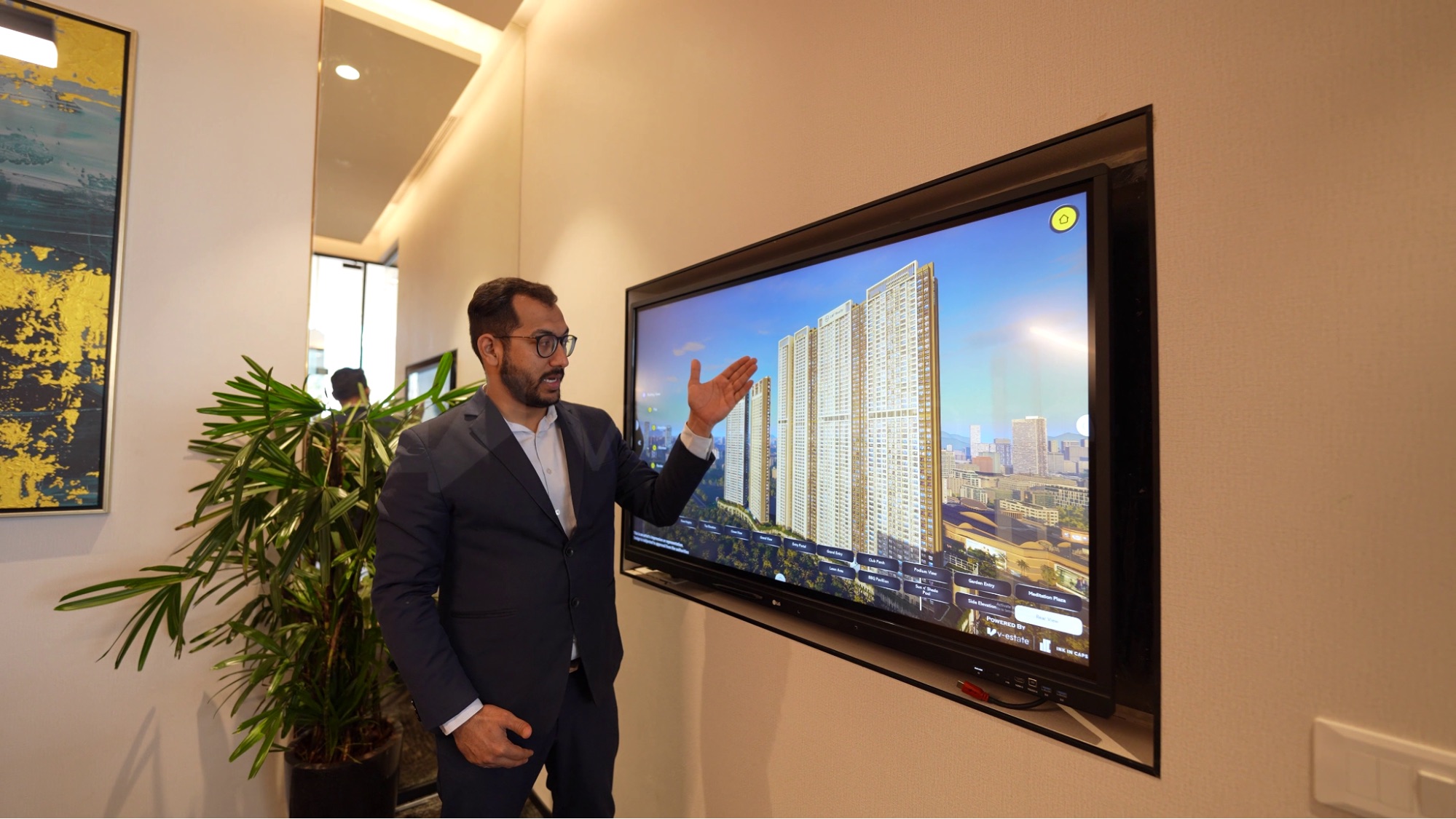
A standardized activation removes human variance from product presentation. Deploy a controlled environment at every sales center where buyers interact with the project directly. This shifts the experience from personality-driven to product-driven.
V-estate operates as an offline interactive sales tool installed on-site. Buyers explore properties through photorealistic 3D virtual show flats without waiting for an agent to narrate features. They control the tour. They choose which spaces to view, which finishes to test, which amenities to examine.
Every buyer sees identical content. Same visuals. Same information hierarchy. Same level of detail. This creates predictable engagement regardless of staff availability or experience level.
Sales teams guide rather than perform. They answer questions, process preferences, and close transactions. The heavy lifting of demonstration happens through the activation itself.
Standardization across teams and touchpoints
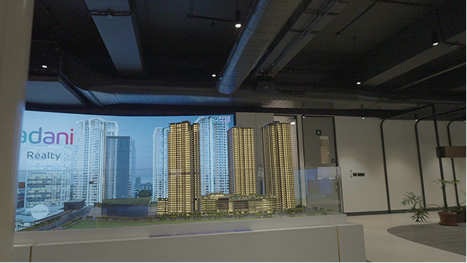
Uniformity starts with content. V-estate delivers photorealistic 3D environments that capture architecture, finishes, sightlines, and spatial relationships. Buyers see how morning light enters through bedroom windows. They understand balcony views before construction completes.
The amenity showcase maps nearby schools, transport hubs, shopping districts, and upcoming infrastructure. Buyers evaluate lifestyle context without leaving the sales center.
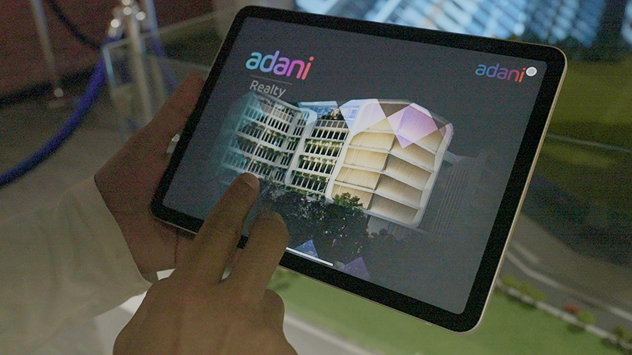
Customization happens in real time. Buyers test paint colors, flooring materials, furniture layouts. They switch between lighting conditions to see spaces at dawn, midday, and evening. Weather controls demonstrate how monsoon light differs from summer brightness.
This level of interaction was previously reserved for ultra-luxury segments with dedicated design consultants. V-estate makes it standard across projects and price points.
Marketing and sales alignment improves. The same 3D assets used in activation appear in brochures, websites, and ad campaigns. Buyers encounter visual continuity from first digital touchpoint to final site visit. Confusion drops. Confidence builds.
Reduced training overhead and performance dependency
New hires become productive faster. They learn to operate the activation system, explain configuration options, and capture buyer preferences. They do not need to memorize scripts, master architectural details, or develop presentation charisma before generating results.
Onboarding shrinks from weeks to days. Performance consistency arrives immediately rather than gradually.
Star seller dependency disappears. Projects no longer rely on one or two top performers to drive conversions. The activation carries the presentation load. Every team member delivers the same high-fidelity experience.
This protects margins when senior staff leave or when scaling requires rapid hiring. Quality stays constant across expansion.
Operational efficiency gains
Buyers make decisions faster when they explore autonomously. They spend less time waiting for explanations and more time evaluating options that matter to them. Sessions compress from 45-minute guided tours to 20-minute focused interactions.
Qualified leads increase because buyers self-filter. Those who complete full customization sessions signal genuine interest. Sales teams prioritize follow-up accordingly.
Site revisits decline. Buyers leave with clarity about layouts, finishes, views, and pricing. Questions get answered during the initial session rather than requiring callbacks or return visits.
This accelerates sales cycles and reduces cost per conversion. Fewer touchpoints. Less staff time per deal. Higher throughput per sales center.
Data capture and performance measurement
Offline activation generates session data without privacy concerns. Track which units buyers view longest. Record finish combinations they test. Identify amenities that drive engagement.
Feed this into CRM systems to improve targeting and follow-up. Marketing teams see which features resonate. Product teams validate design decisions. Sales leaders identify coaching opportunities based on handover quality rather than demo delivery.
Attribution becomes measurable. Compare demo-to-booking ratios across centers. Benchmark session length against conversion rates. Test messaging variations through content updates rather than retraining staff.
This creates a feedback loop that improves outcomes continuously.
Implementation checklist
Define two KPIs before deployment. Example: demo-to-site-visit ratio and average session completion time.
Install hardware suited to sales center layout. Touch screens, VR headsets, or projection systems depending on space and traffic.
Prepare photorealistic 3D content covering show flats, amenities, and surrounding infrastructure.
Enable configurator functionality for finishes, furniture, lighting, and weather conditions.
Integrate session capture with existing CRM workflows.
Train staff on system operation and preference handover protocols.
Pilot at one location. Validate metrics. Scale based on proven impact.
Practical application
Standardized demos reduce variance in buyer experience. They make sales performance measurable independent of individual talent. They shift conversations from descriptive to transactional faster.
V-estate provides the offline interactive activation real estate developers need to eliminate dependency on individual sales styles. Photorealistic 3D virtual show flats, interactive configurators, dynamic lighting and weather controls, amenity mapping, and session data capture combine into a single system designed for in-person sales environments.
Evaluate a proof-of-concept at your next project launch. Test two KPIs over 60 days. Confirm whether standardized activation improves training efficiency and conversion consistency before committing to full deployment.