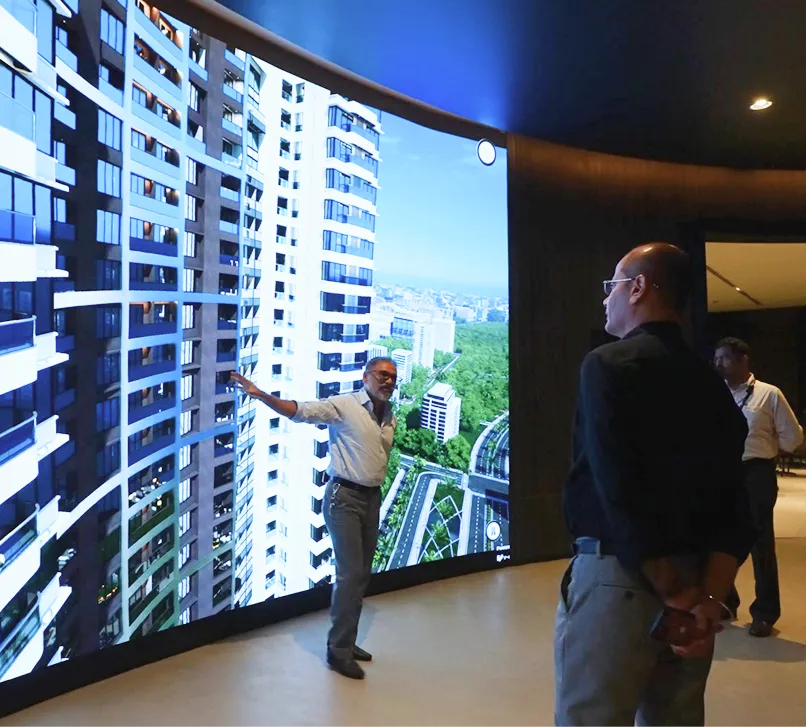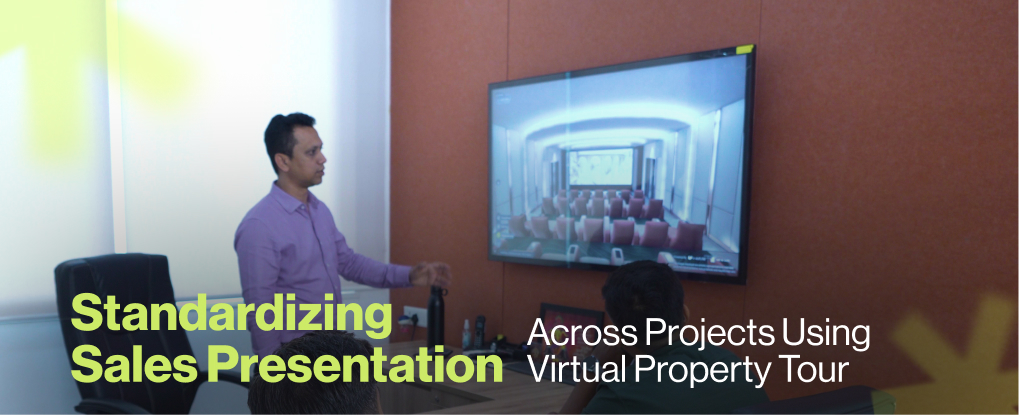
Sales teams across multiple projects often struggle with inconsistent presentation materials. Different slides, varied scripts, and mixed visual standards create confusion for buyers and slow down conversions. Standardizing your sales approach with virtual property tours eliminates this gap.
The Sales Presentation Problem in Real Estate
Most developers operate multiple projects simultaneously. Each project gets its own sales deck. This creates operational chaos.
Sales staff memorize different formats for different locations. Buyers visit multiple showrooms and notice the inconsistency. Trust drops when presentations feel improvised.
Training new salespeople becomes expensive. Teams waste time creating custom materials for every launch. Manual effort doesn't scale.
Business Impact of Inconsistent Presentations
Lower conversion rates. Prospects compare experiences across projects and walk away when presentations feel unprofessional.
Higher training costs. Sales teams learn multiple formats instead of one repeatable system.
Weak brand perception. Variable presentations signal disorganization to high-value buyers.
Limited growth capacity. Manual creation bottlenecks prevent rapid launches.
Longer sales cycles. Buyers need multiple visits to clarify information that should have been clear upfront.
The Standardized Virtual Tour Framework
Adopt one repeatable presentation template across all projects. Use photorealistic 3D show flats and amenity mapping as the foundation.
The framework stays project-agnostic but data-driven. Core narrative remains consistent. Factual differences like unit size, finishing options, and pricing update automatically.
Fixed presentation modules:
Property entrance and lobby
Living areas and layouts
Bedroom configurations
Amenity showcase
Connectivity and location mapping
Customization options
Pricing snapshot
Uniform navigation controls. Every tour follows the same flow. Sales staff explain properties the same way every time.
Data layer integration. Live inventory, specifications, and pricing feed directly into the tour.
Visual standards. Camera angles, lighting, and labeling remain consistent across projects.
Controlled interactivity. Buyers customize paint, furniture, and lighting. Core property features stay locked.
Features That Reduce Buyer Friction
Photorealistic 3D show flats. Buyers see accurate representations of delivered units. No surprises during handover.
Amenity and locality maps. Current and upcoming infrastructure appears as interactive layers. Buyers understand connectivity and lifestyle value.
Dynamic lighting and weather controls. Prospects view properties at morning, afternoon, and evening light. Weather simulation shows seasonal conditions.
Customization tools. Simple toggles let buyers test finishes and furniture layouts. Decisions happen faster.
Exportable sales packets. Automated PDF generation provides instant follow-up materials. Buyers leave with everything they need.
Offline activation compatibility. Tours run in showroom kiosks and sales centers without internet dependency. V-estate operates entirely offline, eliminating connectivity risks during buyer interactions.
Value for Marketing Heads and Developers
Faster salesperson onboarding. One template shortens training from weeks to days.
Better lead qualification. Standard content allows consistent scoring criteria.
Consistent brand message. Cohesive visuals and language strengthen credibility across developments.
Comparable performance tracking. Same assets enable accurate metric comparison between projects.
Controlled marketing spend. Fewer bespoke presentations reduce creative agency costs.
Implementation Steps for Developers
Audit current materials. Collect the top 10 presentations used across projects. Identify common modules and redundant content.
Define core modules. Lock mandatory sections. Mark optional sections for project-specific details.
Set visual standards. Document camera angles, resolution requirements, and annotation rules.
Build the tour template. Integrate 3D show flats, maps, and controls into V-estate. Connect data feeds.
Run a pilot project. Deploy the template in one sales center for 30–60 days. Record metrics.
Train sales staff. Deliver short microlearning sessions tied to the template. Test comprehension.
Measure and refine. Track conversion lift, average sales cycle duration, and buyer satisfaction scores.
Operational Requirements
Data synchronization. Connect V-estate to live inventory and pricing systems. Updates should propagate automatically.
Fallback content. Prepare offline assets for showrooms with unreliable connectivity. V-estate's offline activation ensures uninterrupted buyer experiences.
Version control. Maintain one source of truth for all text and images. Eliminate duplicate materials.
Analytics integration. Capture heatmaps, time spent per module, and interaction rates. Use data to refine the template.
Regulatory compliance. Ensure marketing claims match RERA disclosures and statutory requirements.
Metrics That Demonstrate Impact
Lead-to-visit ratio. Compare before and after standardization. Track improvement.
Conversion rate per qualified lead. Higher consistency typically improves close rates.
Average time-to-close. Standard assets reduce buyer decision time.
Per-unit marketing cost. Custom content expenses should decrease.
Sales training hours. Measure reduced onboarding time for new hires.
Real Improvement Examples
Standardized tours eliminate repetitive asset creation. Sales teams respond faster to buyer queries. Cross-selling between projects becomes simpler. Marketing runs consistent A/B tests across developments. Predictable buyer experiences generate predictable results.
Continuous Improvement Process
Run monthly template reviews. Update content when local regulations or finish options change. Use analytics to remove low-engagement modules. Integrate successful sales scripts into the core template. Refinement never stops.
Start With a Low-Risk Pilot
Select one upcoming launch. Deploy the standardized V-estate tour in your sales center for 60 days. Track the five metrics listed above. If conversion rises and time-to-close falls, scale the template across all projects.
Immediate action steps: Audit existing materials this week. Select three presentation modules to standardize. Schedule a 30-day pilot with your sales and digital teams.
Standardize core modules. Keep visuals consistent. Enable offline activation. Measure impact. These steps create a repeatable system that reduces cost, improves conversions, and gives sales teams clear, usable assets across every development.