Every developer who has sold a family-centric residential project knows the struggle: buyers don’t buy square feet — they buy comfort, trust, and everyday experience.
Families want to imagine what life will actually feel like in their new home — the morning light across the balcony, kids running safely within view, parents sipping tea in a quiet garden corner, and neighbors becoming an extended family.
The challenge is, these emotional and functional layers are difficult to communicate through brochures, plans, or even show flats. That’s where the conversation around technology becomes meaningful — not as a gimmick, but as a bridge between architectural intent and customer imagination.
From Visualization to Experience
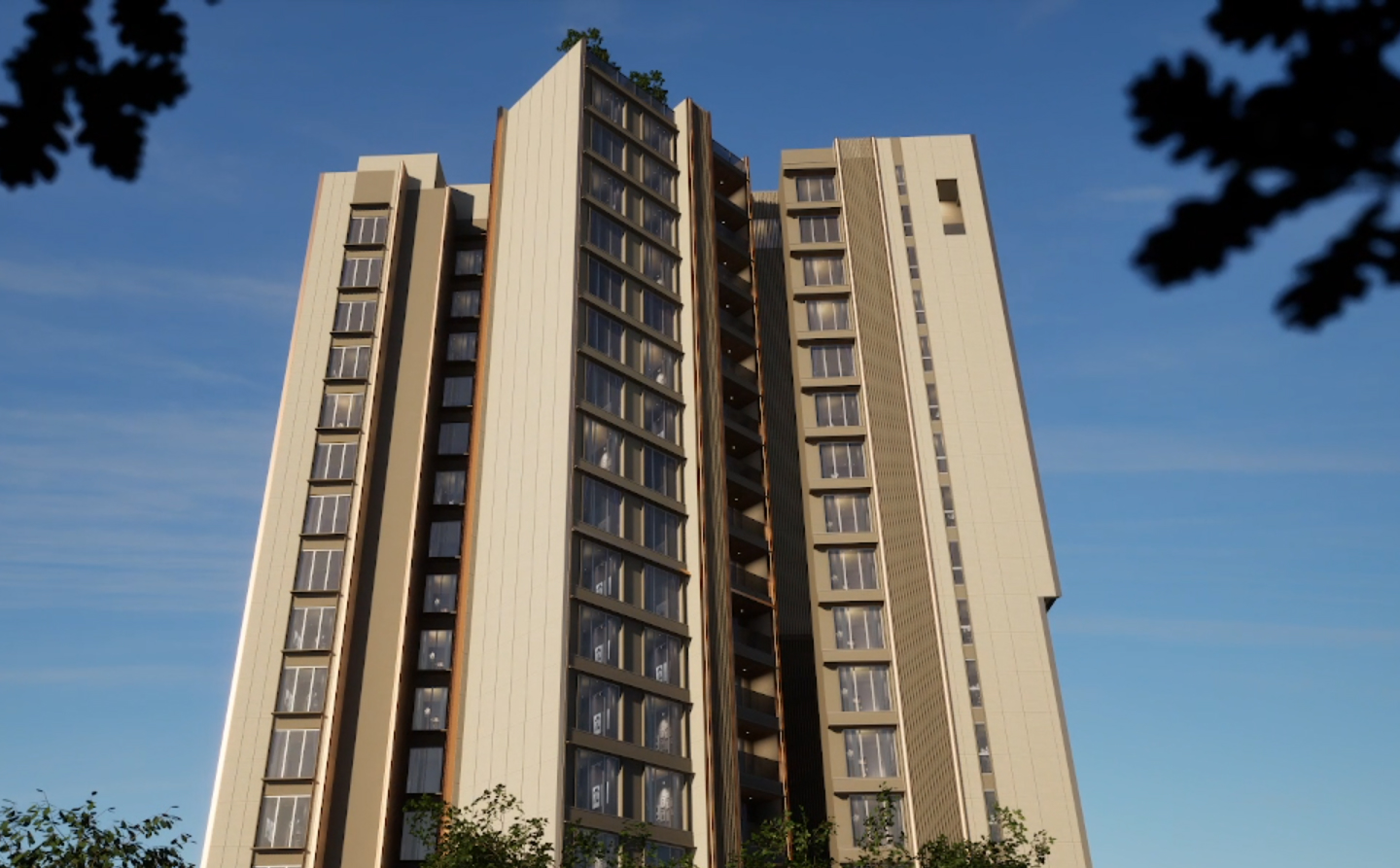
At Rustomjee Verdant Vistas in Thane, the presentation of family-oriented amenities wasn’t left to chance. Instead of static renders or physical mockups, the developer introduced a fully immersive walkthrough built on V-estate’s technology framework.
Here, a buyer doesn’t need to imagine — they can explore. They can walk through landscaped gardens, observe how natural light fills the living room, see where their children would play, and understand how community zones connect seamlessly across the property.
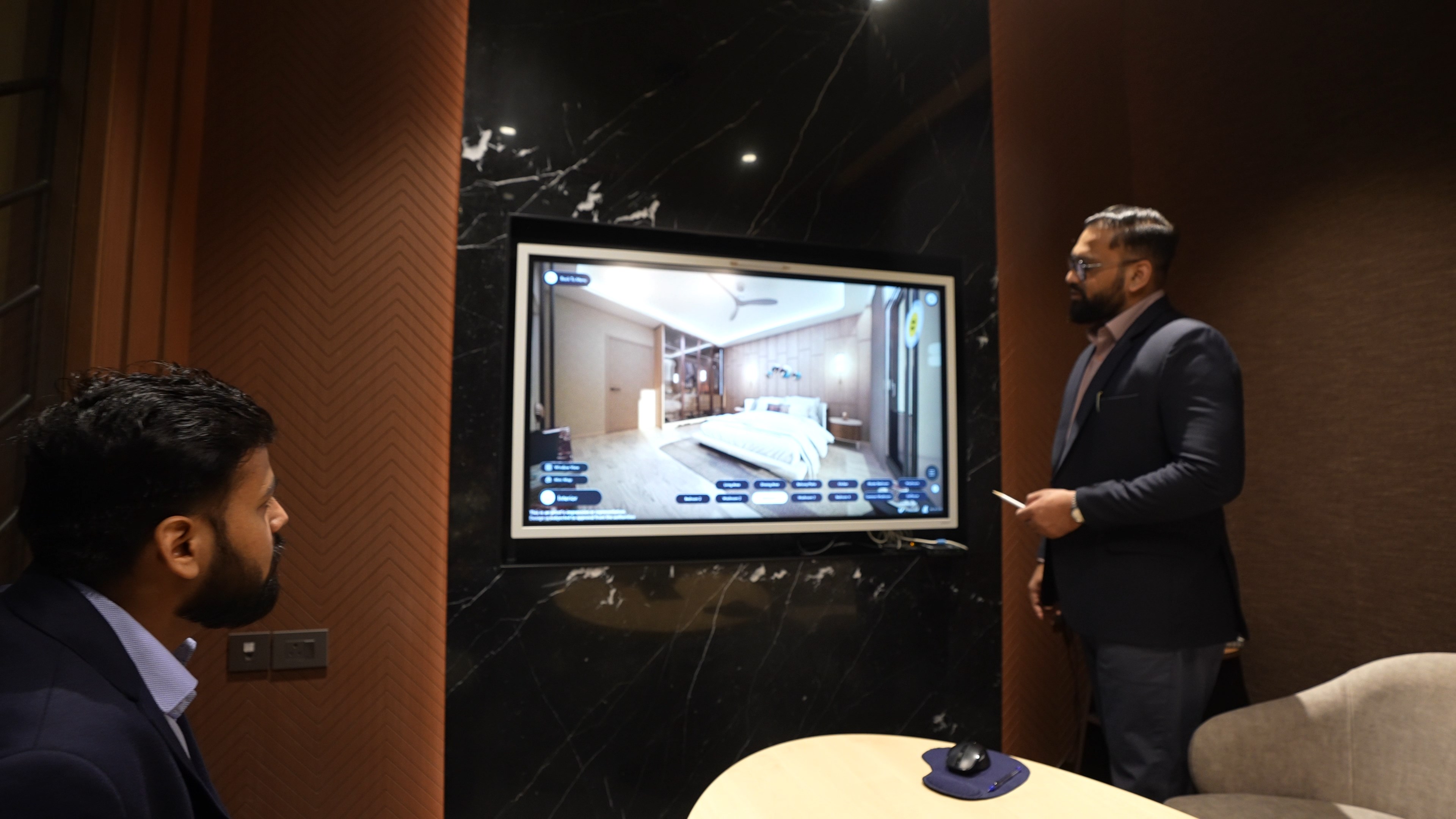
This shift — from visualization to real-time experience — changes how families perceive value. It helps developers demonstrate their design empathy, rather than just describe it.
Why “Family-Oriented” Needs a Spatial Story
For years, developers have used the phrase family-oriented amenities in marketing. But the phrase loses meaning when buyers can’t visualize how those amenities fit into everyday life.
What makes amenities family-friendly isn’t just what they are — it’s where they are, how they connect, and how they feel in use. An open lawn becomes meaningful when parents can watch their children from a shaded bench nearby. A club area becomes valuable when it’s not just a gym, but a community space that feels alive during evenings.
By using immersive walkthroughs, developers can show these spatial relationships precisely. Buyers can understand how design supports lifestyle, how safety integrates with openness, and how every corner of the project contributes to daily living.
It’s storytelling through space — not slides.
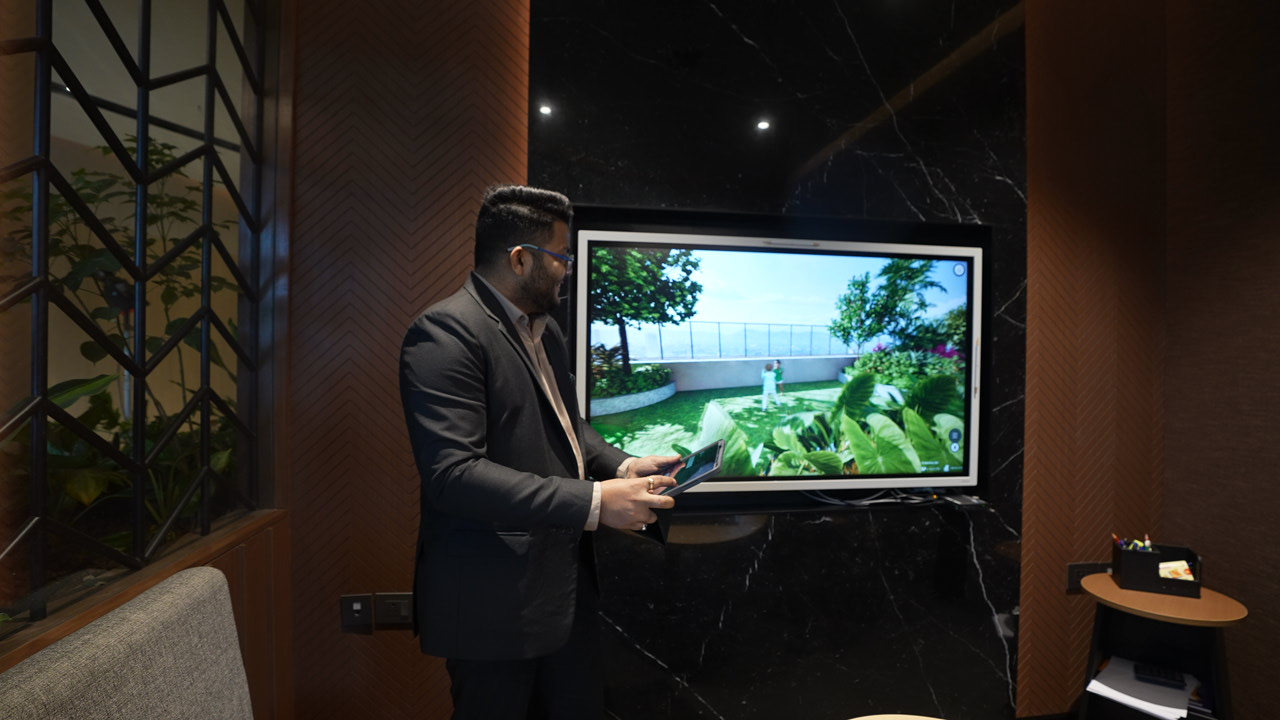
V-estate’s Role: Enabling the Developer’s Vision
V-estate isn’t just a visualization tool — it’s an extension of a developer’s intent. At Verdant Vistas, the walkthrough demonstrates how technology can preserve the emotion of design, not replace it.
Through V-estate’s framework, developers can:
Show amenities in their true context — Families see how play areas, clubhouses, and walkways are positioned, ensuring comfort and safety.
Offer control to the viewer — Buyers can adjust lighting, view time-of-day transitions, and explore layouts at their own pace.
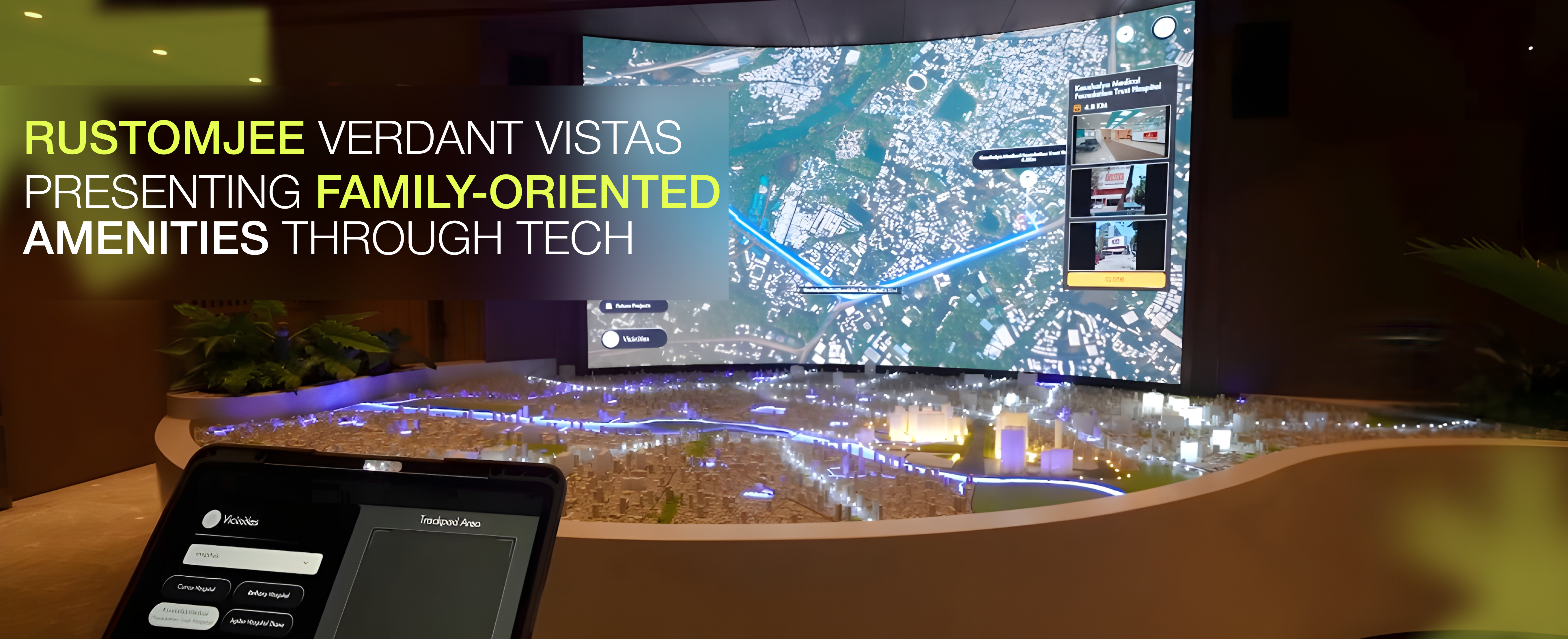
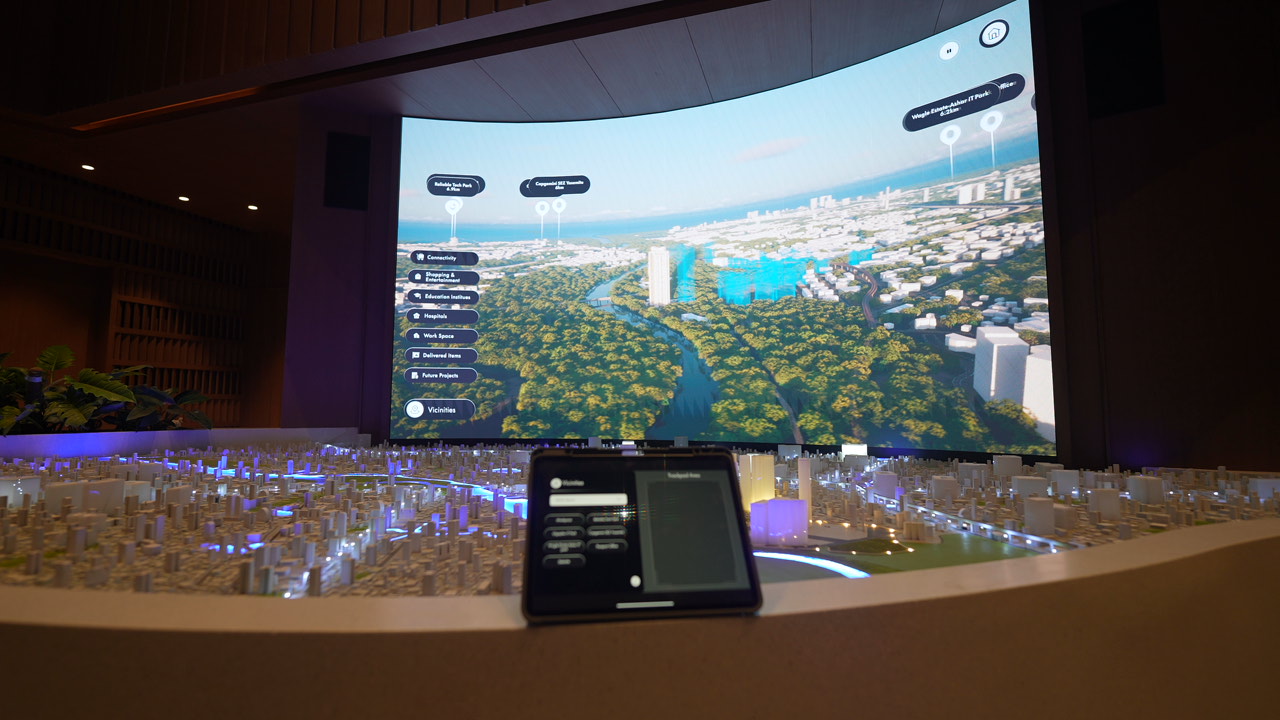
Integrate neighborhood mapping — Display nearby schools, connectivity routes, and lifestyle touchpoints that influence real decisions.
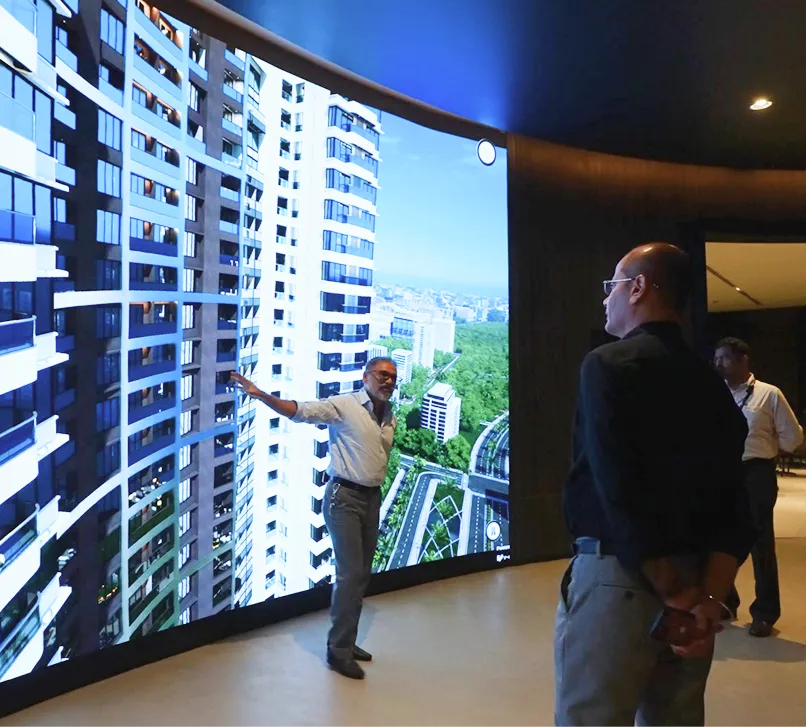
Enhance offline activations — Sales teams can deploy this same walkthrough in physical centers, enabling tactile engagement through VR or large-screen experiences.
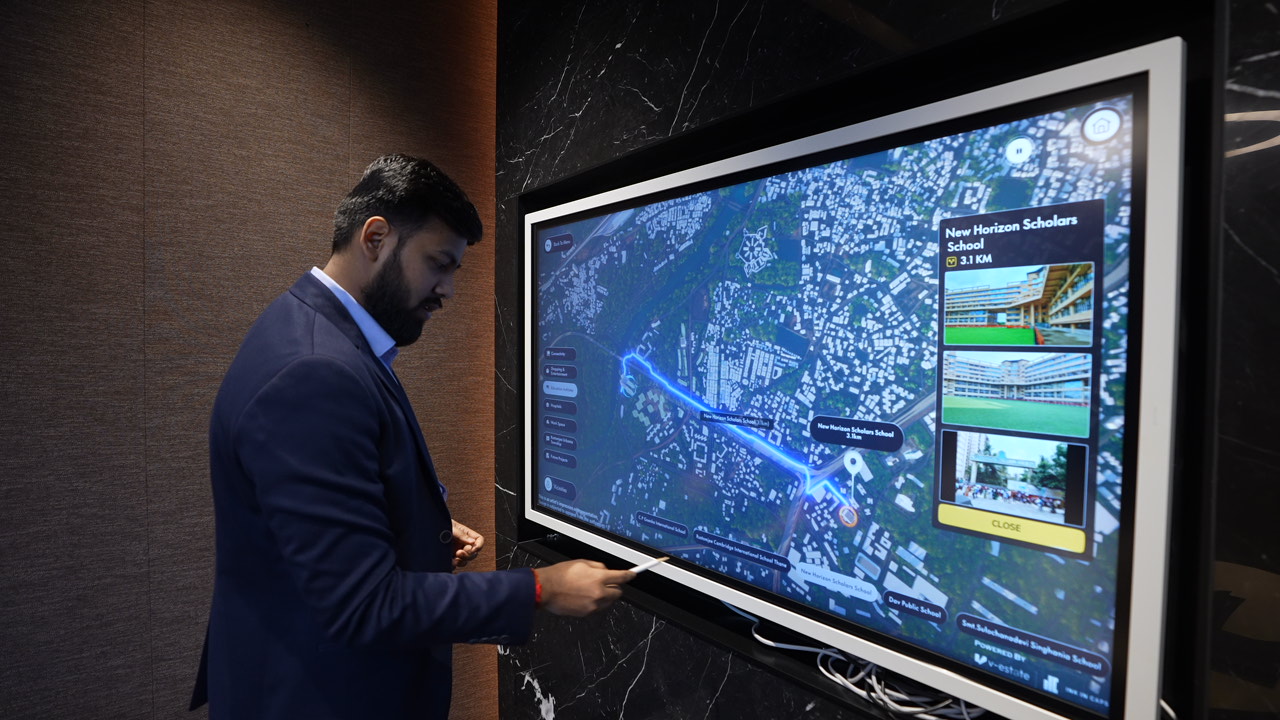
This hybrid offline-digital activation helps buyers and developers engage at a deeper level. It transforms a presentation into a conversation.
From Sales Collateral to Sales Intelligence
For marketing and sales heads, the difference is measurable. Immersive walkthroughs don’t just beautify a pitch — they redefine engagement metrics.
When buyers spend more time exploring, they generate behavioral insights: which rooms attract attention, which layouts prompt hesitation, and which amenities convert curiosity into confidence.
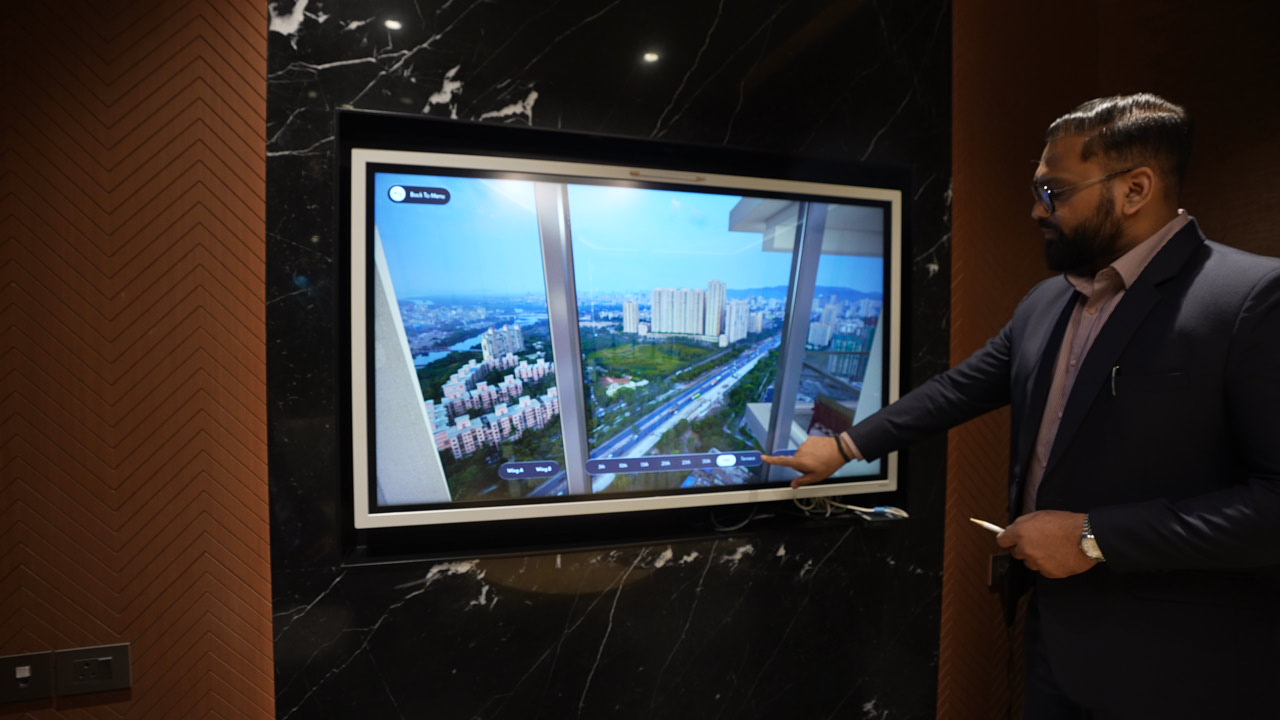
This data becomes a silent feedback loop for developers — a way to refine design and marketing before large-scale rollouts. Instead of guessing what buyers value most, the experience itself reveals the answer.
That’s the difference between traditional sales and experience-driven sales.
Offline Activation That Builds Credibility
Developers know that major real estate decisions still close offline. Family discussions, trust-building, and final negotiations happen face-to-face.
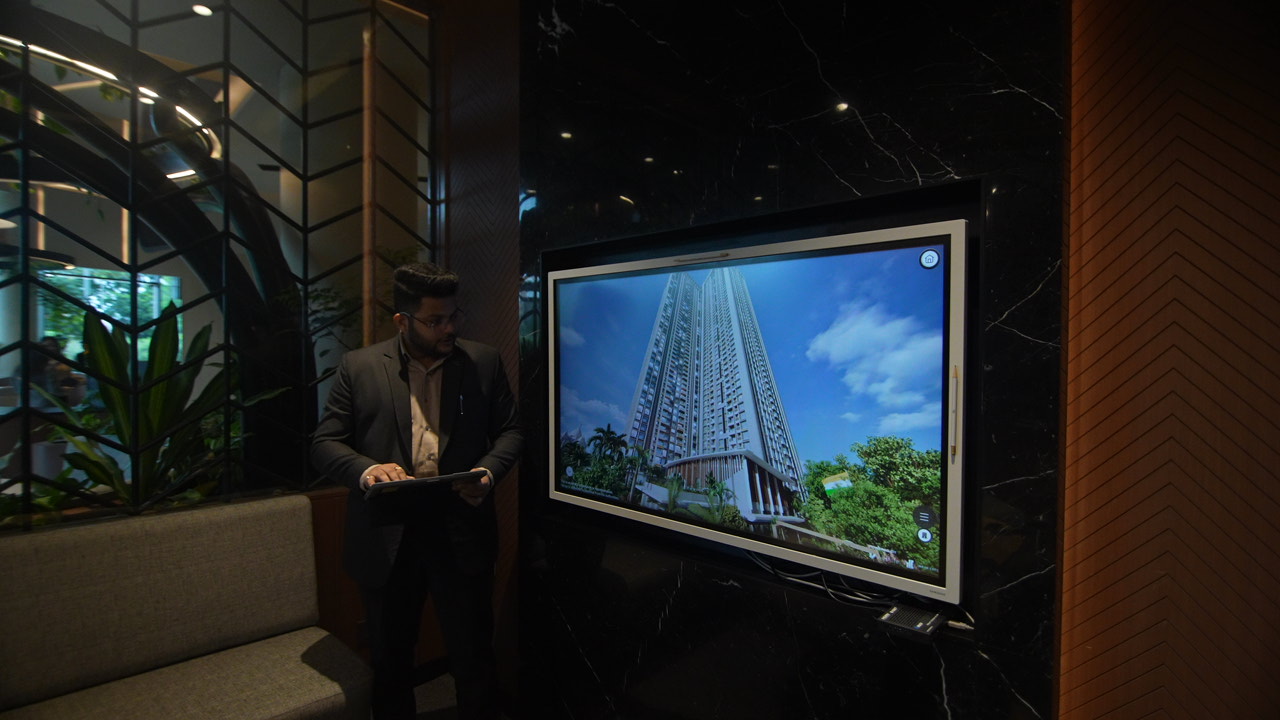
V-estate’s immersive setup integrates perfectly within these offline activations — whether it’s a sales lounge, a real estate expo, or a developer’s experience center.
Instead of a salesperson flipping through printed renders, the walkthrough becomes the centerpiece of the conversation. Buyers explore the property themselves — guided, not lectured. That autonomy strengthens trust and creates ownership of choice.
For marketing teams, it elevates brand perception. For developers, it shortens decision cycles and reduces dependency on traditional physical mockups.
Design Communication That Builds Confidence
In real estate, clarity is confidence. A large part of customer hesitation stems from uncertainty — “What will the view actually look like?” “Is this much space enough for my family’s needs?” “Will the children’s play area really be safe?”
Immersive walkthroughs directly address these doubts. They convert questions into visual answers. Developers can showcase how architectural intent meets user comfort — sunlight, ventilation, spatial flow, visibility — all visible, all tangible.
For marketing and design teams, this becomes a way to validate their narrative with experience. You’re no longer telling buyers to trust your brochure — you’re letting them see for themselves.
Why Marketing Heads Should Pay Attention
It streamlines storytelling. Complex projects with layered amenities often overwhelm buyers. An immersive walkthrough simplifies the narrative and keeps engagement natural.
It enhances brand credibility. Demonstrating transparency through visualization makes your brand look confident — not defensive. It says, “We have nothing to hide.”
It integrates into existing workflows. You don’t have to rebuild your sales pipeline. Walkthroughs plug into offline activations, digital campaigns, and CRM tracking systems.
It future-proofs your marketing. Projects can evolve — new towers, new amenities, new phases. Walkthrough content can update seamlessly, maintaining brand consistency across years.
For Developers: A Strategic Advantage
Developers spend years designing projects that balance density, comfort, and community. But the nuance of those design decisions often gets lost between architectural drawings and final sales pitches.
Immersive walkthroughs give back control over how those nuances are communicated. They ensure the buyer experiences the project as the architect intended — with proportions, light, and atmosphere intact.
This makes every design choice defensible and every amenity purposeful. Instead of explaining the “why,” you simply let the space speak for itself.
.jpeg)
%20(1).jpg)