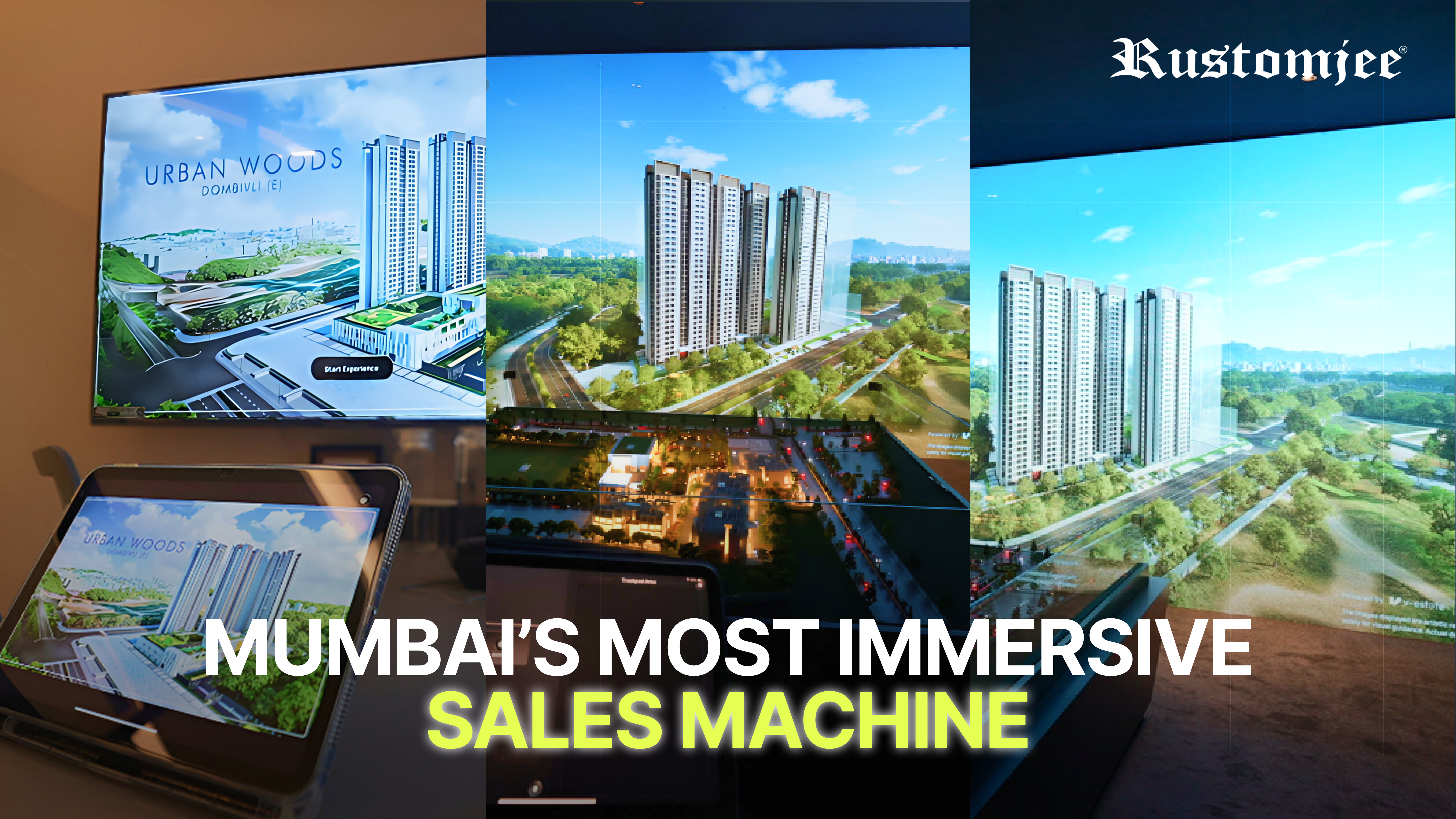
The silence of a construction site is the loudest objection a salesperson ever faces.
When you stand on a massive parcel of flat land in Dombivali, staring at nothing but dust, open sky, and potential, the word "Luxury" feels like a stretch. It requires a leap of faith. But in the cutthroat real estate market of Mumbai’s outskirts, asking a customer to "imagine" is a risk you cannot afford to take. Imagination is subjective; sales require certainty.
This is the story of how Rustomjee, a brand synonymous with premium living, tackled one of their most ambitious affordable housing projects to date: Urban Woods. They didn't just need a sales office; they needed a conviction machine. They needed a system capable of processing a tsunami of footfall while delivering a personalized, high-fidelity vision of a future that didn't exist yet.
They were not just competing with the market; they were competing with the noise. With three other major developers launching massive projects right next door, Rustomjee needed to stop the customer in their tracks.
Here is how we helped them build a digital fortress using Unreal Engine 5.4, IoT integrations, and a battle-hardened sales strategy that turned a flat field into a living, breathing community before the first brick was laid.
The Battlefield: The "Empty Field" Conundrum
To understand the magnitude of the solution, you must first understand the ferocity of the problem.
Dombivali is an up-and-coming micro-market. It is volume-driven. Unlike South Mumbai, where a sales gallery might see five high-net-worth individuals a day who sip espresso and chat for hours, this project was anticipating a flood. We were looking at 190 to 200 families walking through the doors every single day.
The challenge wasn't just "how do we show the apartment?" The challenge was logistical and psychological.
Logistically: How do you manage the flow of 30 families every hour without making them feel like cattle herded through a gate?
Psychologically: How do you give each of those 200 families a premium "Rustomjee experience" when your sales team is stretched thin across 25 executives?
If the experience center became a bottleneck, sales would bleed. If the tech glitched, the brand promise of "reliability" would shatter before the customer even signed a form. We needed a system that was robust, stunning, and, most importantly, fast.
The Strategic Flow: Orchestrating the River of People
We stopped looking at this as a software project and started looking at it as experience architecture. To handle the volume, we had to curate the movement of people. We designed a linear journey—a river of experience—that moved customers from "Curiosity" to "Conviction" in exactly seven to eight minutes before they even sat across from a sales manager.
This wasn't random; it was calculated. Every minute was designed to answer a question the customer hadn't asked yet.
1. The Emotional Anchor: The AV Room
The moment a family walks in, they aren't bombarded with floor plans or pricing sheets. They are seated in a dedicated theater. Here, we deployed a six-minute visual narrative.
Two minutes on the Location Story: Why Dombivali? Why now? We visually mapped the connectivity to the Nashik Highway, the Mumbai Express, and the railway station. We didn't just say it was "connected"; we showed the arteries of the city flowing into their future home.
Three minutes on the Product Walkthrough: A cinematic flythrough of the township.
This serves a dual purpose. Emotionally, it sets the stage. Logistically, it acts as a holding area, allowing the sales team to prep for the next batch while the current batch is captivated. It creates a rhythm to the chaos.
2. The Phygital Bridge: IoT Scale Models
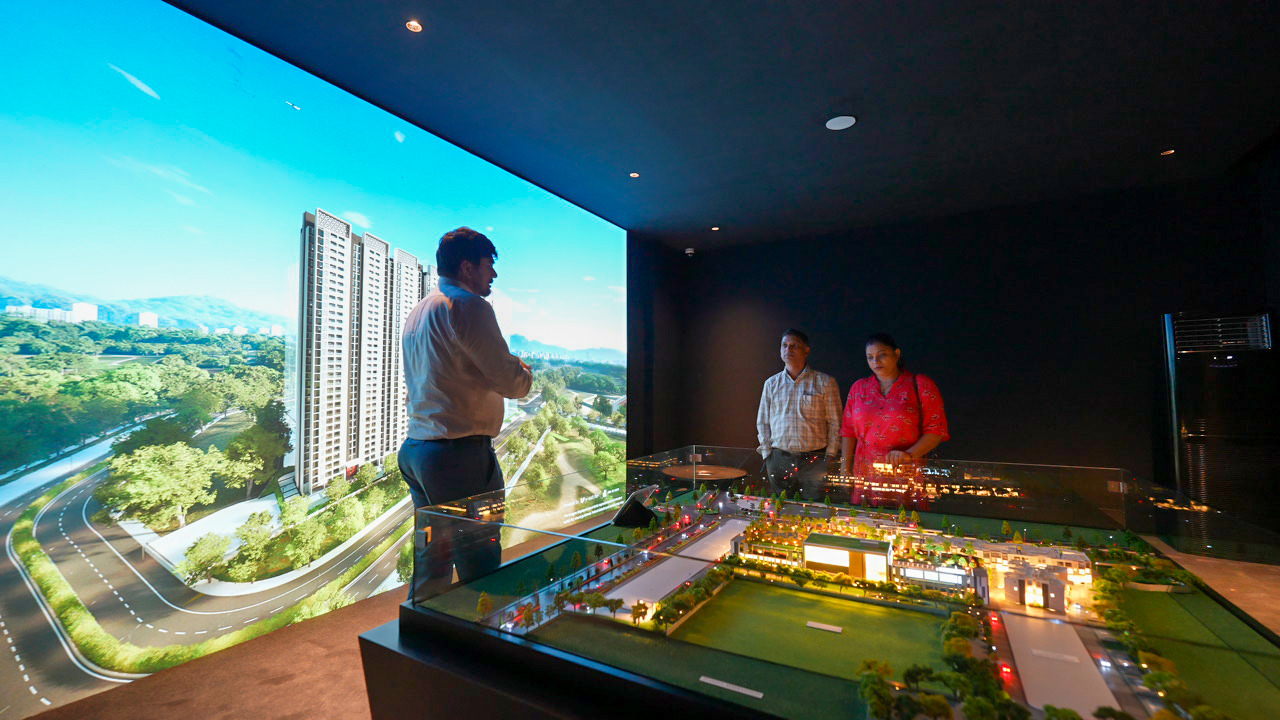
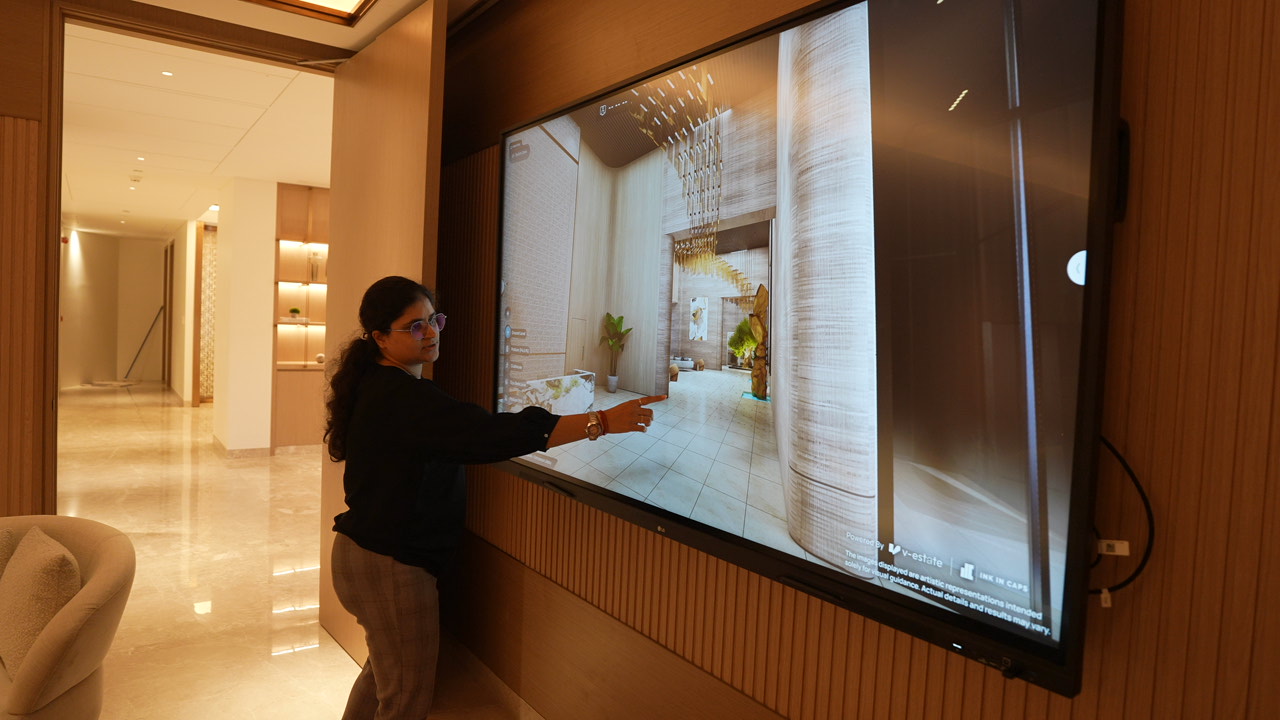
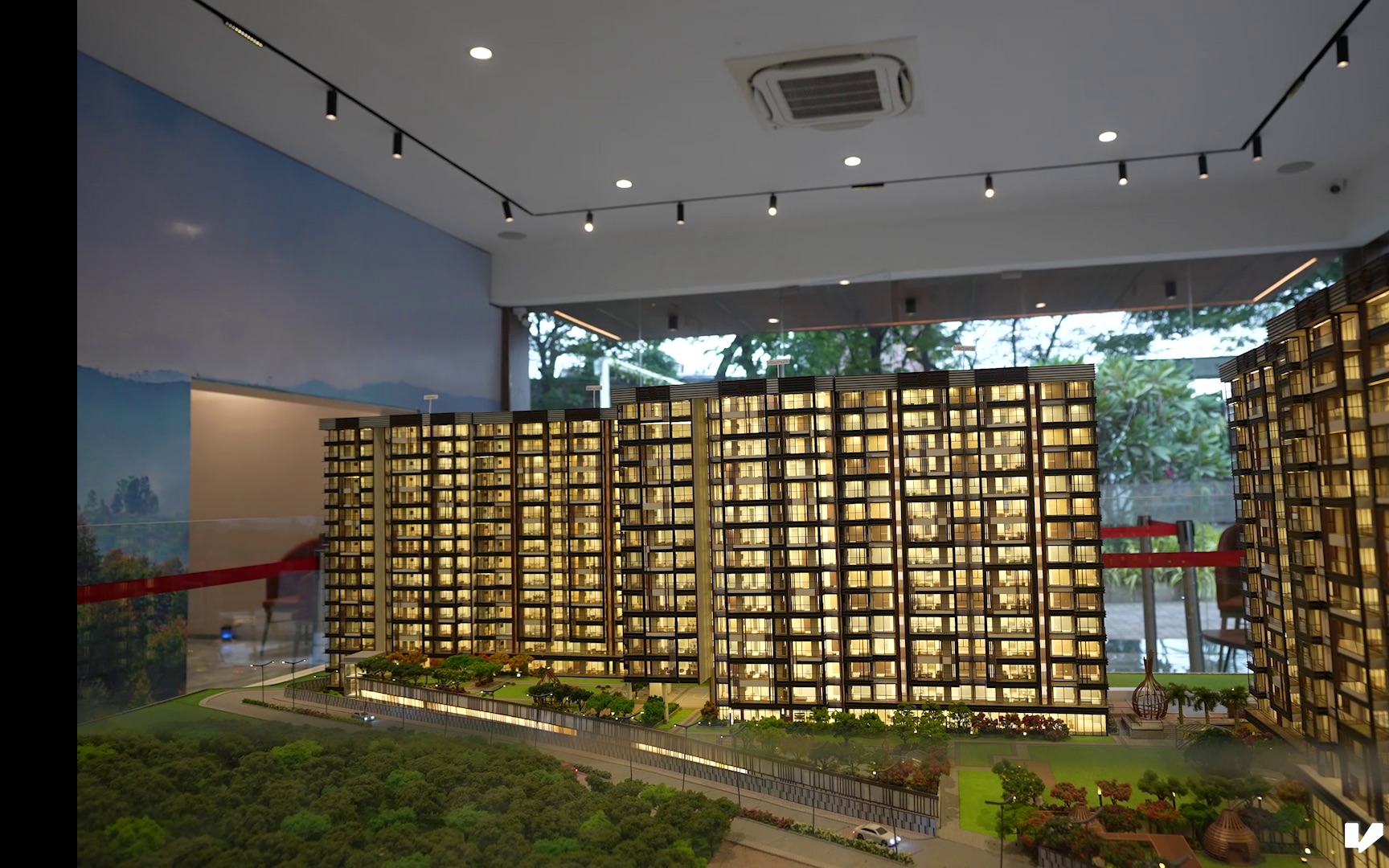
This is where the magic happens. Real estate has always relied on scale models—those plastic miniatures that gather dust. We turned ours into an active sales agent.
We integrated our core software with the physical podium-level scale model using IoT (Internet of Things) triggers. This wasn't a static piece of plastic; it was alive.
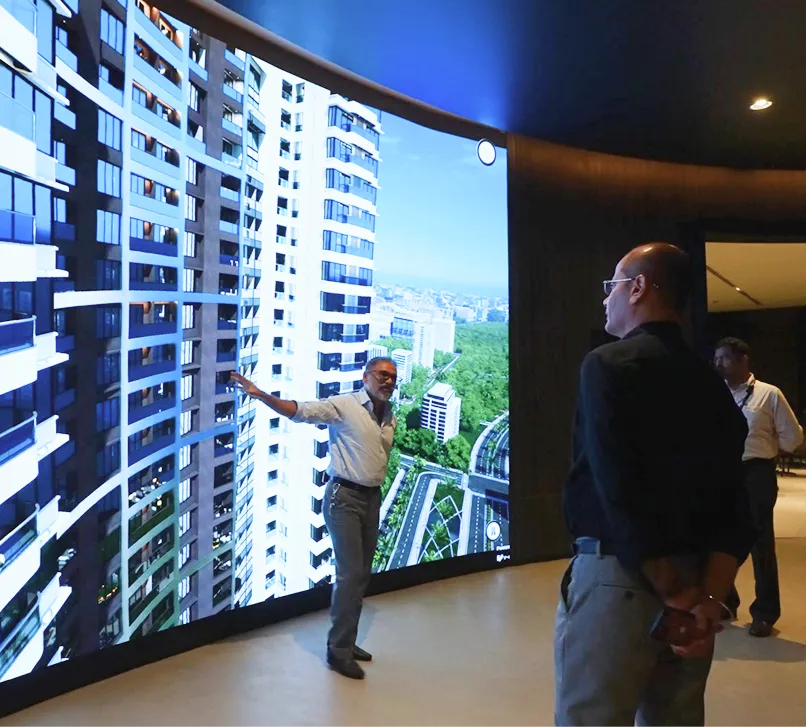
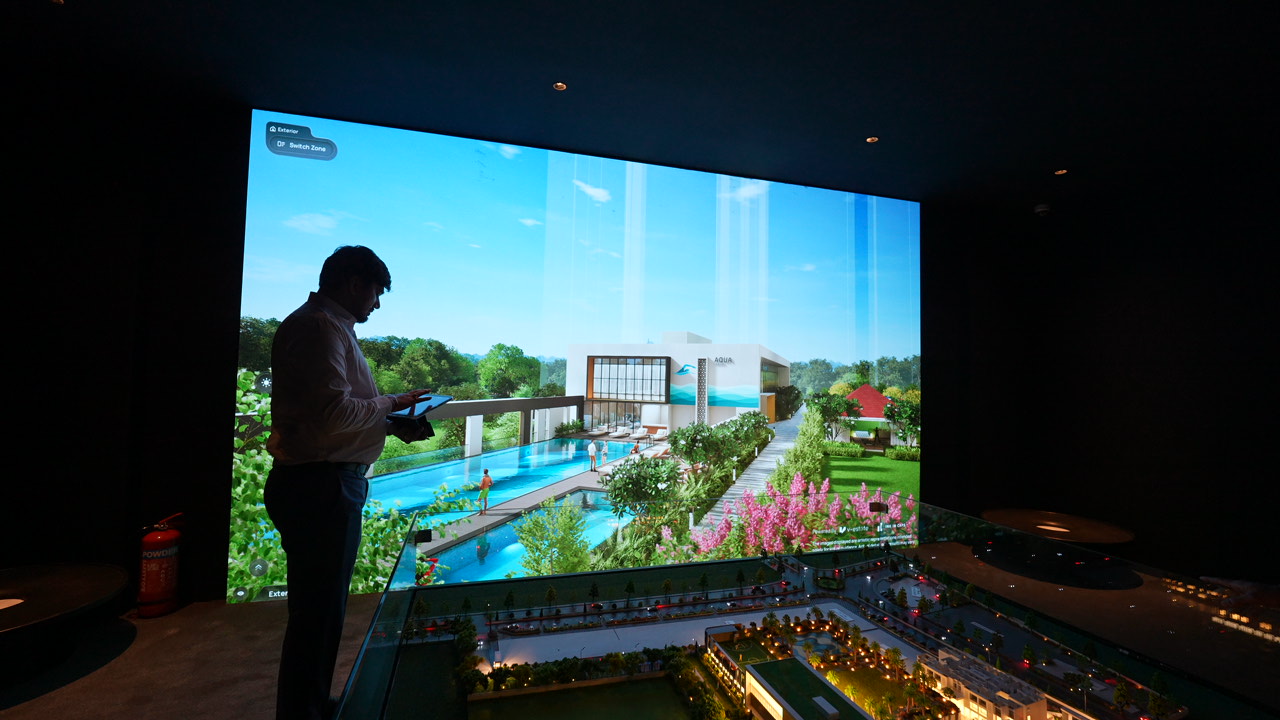
When a customer asks about the swimming pool, the sales executive doesn't point with a laser pointer. They tap "Amenities" on their iPad. Instantly, the pool lights up on the physical model while the screen above displays a high-definition, photo-realistic render of the pool deck.
This synchronization between the physical and digital bridges the gap between reality and the screen. It validates what the customer is seeing. It tells them, "This isn't just a video game; this is a plan."
3. The Trust Builder: Window Views
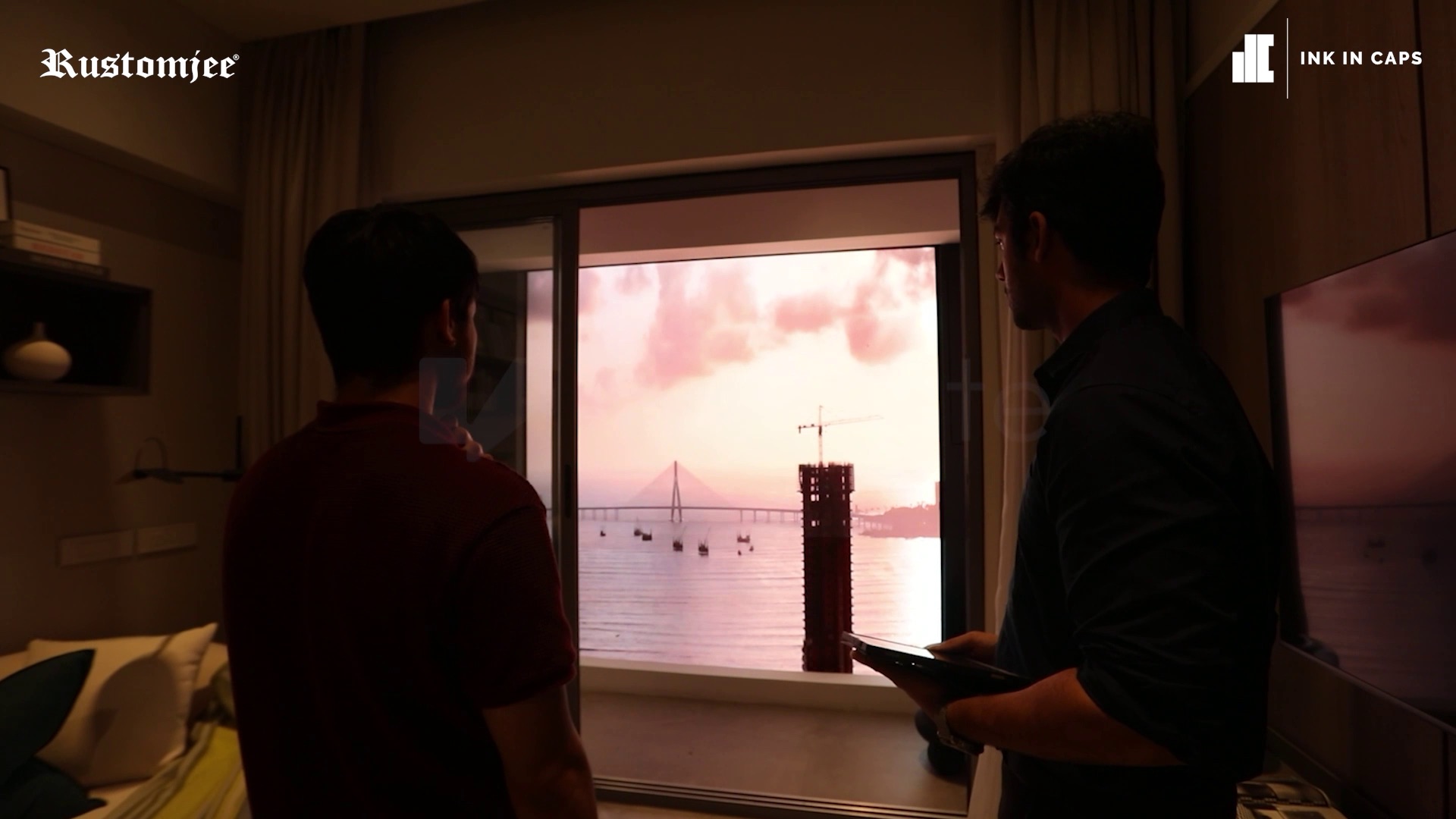
The biggest objection in pre-sales is uncertainty. "What will I actually see from my balcony? Will I stare at a slum? A wall? Or the sunset?" We didn't want the sales team to answer with "Trust us." We wanted them to answer with data.
We conducted extensive 360-degree drone shoots at the exact GPS coordinates and heights of the future towers. Inside the sample flat, we integrated a Window View Module. A customer interested in the 15th floor of Tower B could look at a screen and see the actual view—sunrise, sunset, or city lights. We eliminated the guesswork. We sold the view before the window existed.
Under the Hood: Pushing Unreal Engine 5.4 to the Edge
To make this experience seamless, the backend had to be a beast. We utilized Unreal Engine 5.4, the latest standard in real-time 3D creation. But "using" the engine isn't enough; you have to master it.
The "Urban Woods" Challenge
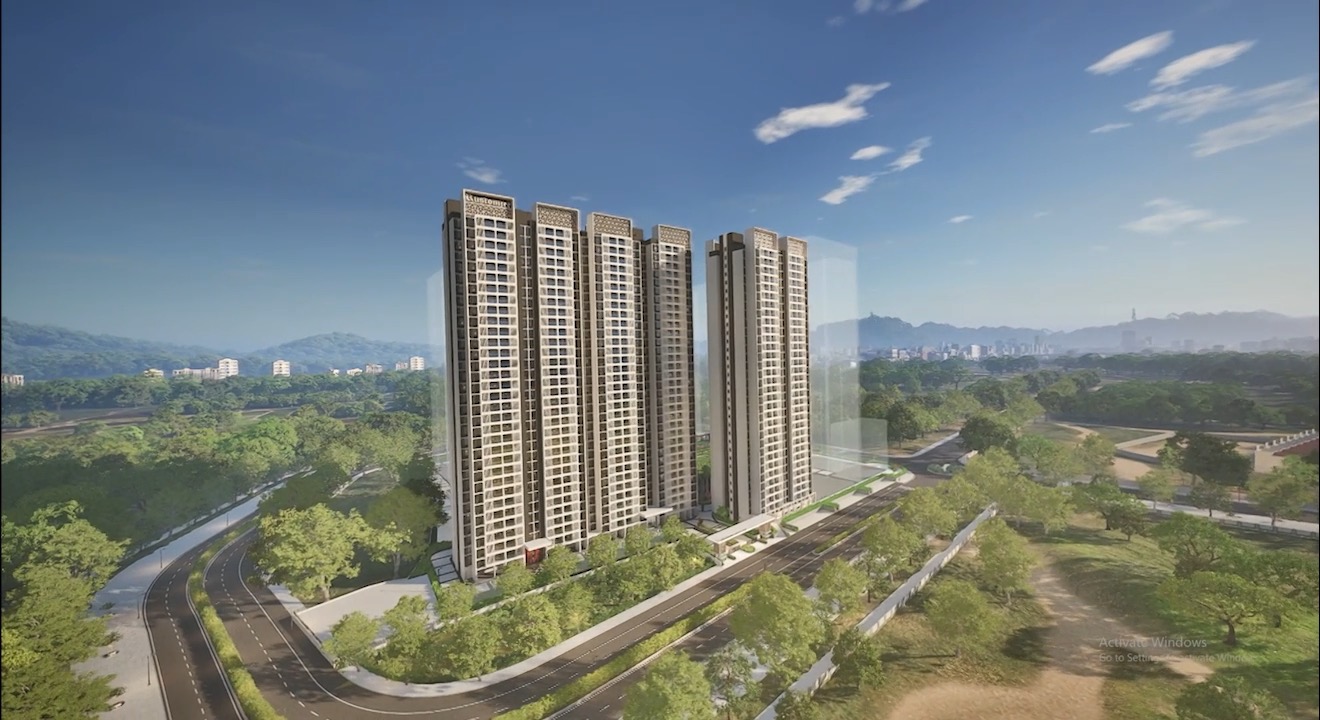
The project is named "Urban Woods" for a reason. The USP is greenery—a forest in the city. This created a massive technical headache. Dombivali is remote. The road networks and surrounding topography weren't readily available in standard 3D asset libraries. Our visualization team had to essentially paint the landscape by hand.
Using Google GIS data as a base, we sculpted the mountains, the terrain, and the surrounding foliage. But painting a landscape is memory-intensive. It eats up processing power. We needed density. We needed a forest. We needed millions of leaves moving in the wind without crashing the computer.
The Innovation: Procedural Content Generation (PCG)
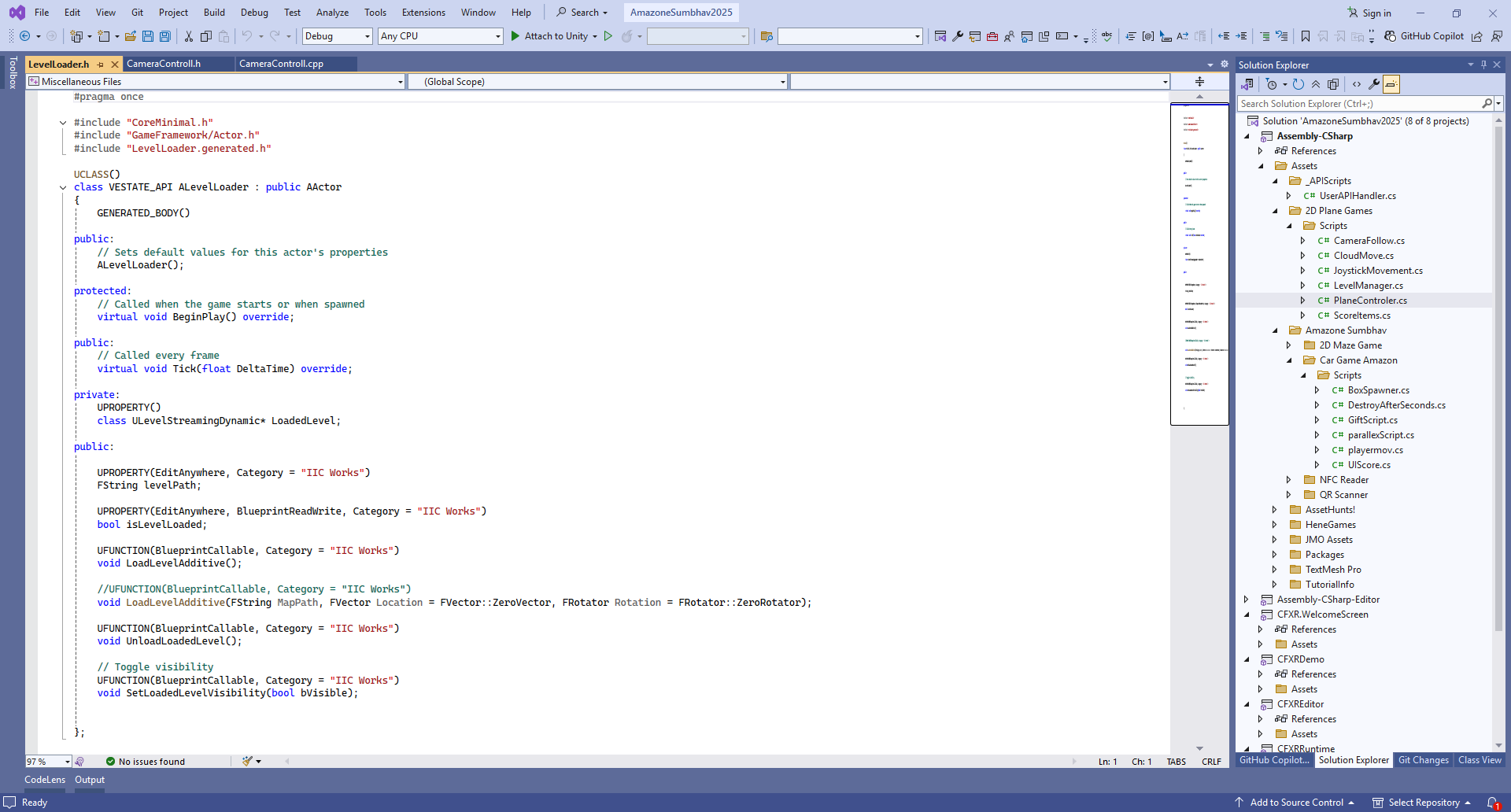
In previous years, placing trees was a manual, painstaking process. Artists placed them one by one, painting textures. For this project, we innovated. We used Procedural Content Generation (PCG) scripts within Unreal Engine 5.4.
Instead of planting trees, we drew splines (mathematical curves) across the terrain. The software then intelligently populated these zones with grass, shrubs, and trees—millions of them—following the rules of nature we set.
The Result: We achieved a cinematic look with dense foliage on the podiums and mountains.
The Optimization: Despite having millions of unique assets, the PCG tool allowed us to maintain a high frame rate (30-35 FPS). This ensured that when a sales executive spun the camera model on a 65-inch 4K screen, it didn't stutter. It glided.
Lighting the Void
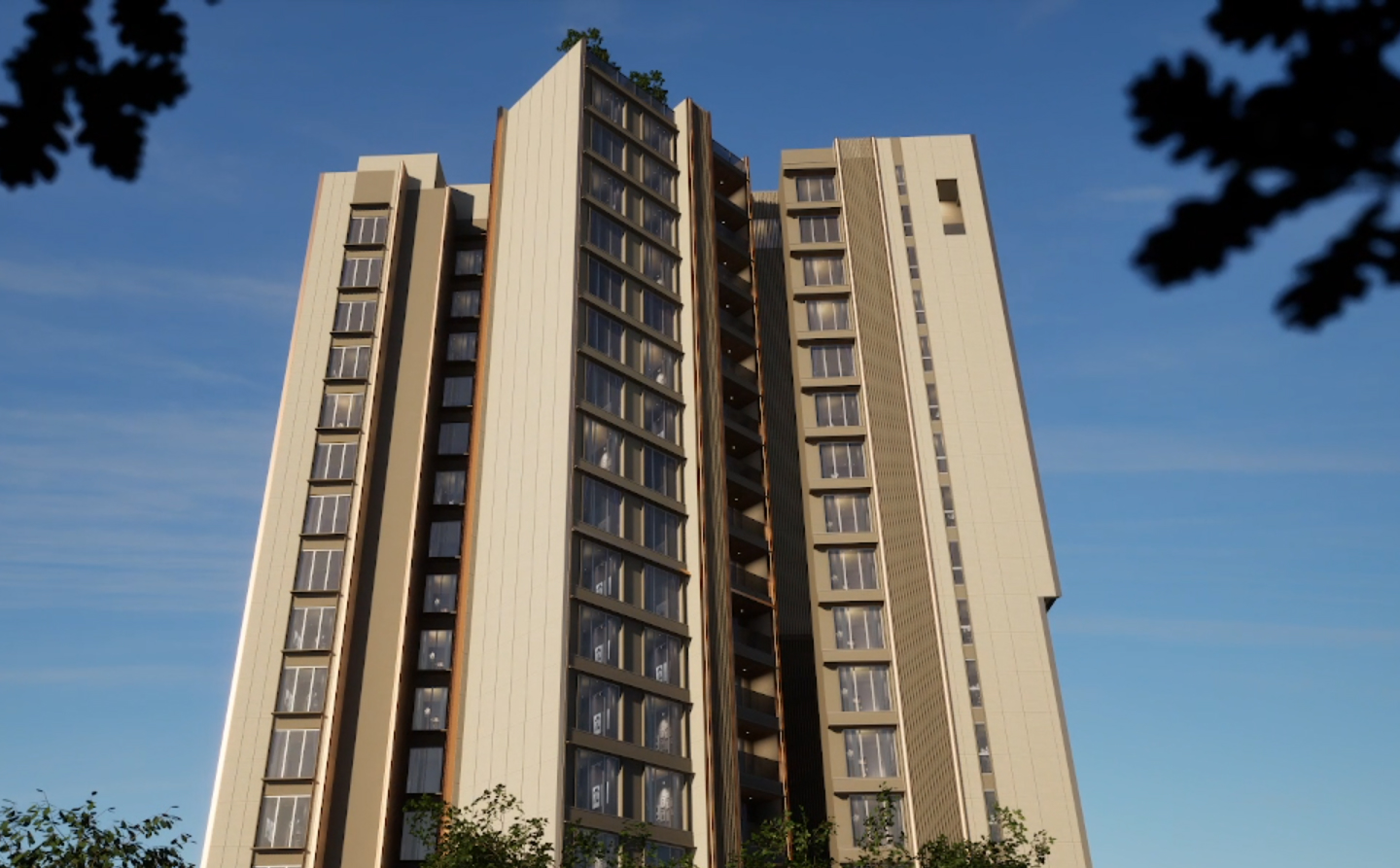
Because the building stands somewhat alone in the current landscape, lighting was tricky. There were no neighboring skyscrapers to bounce light off. We used Lumen, Unreal's dynamic global illumination system, to simulate realistic sun paths. We developed custom spline tools to generate city lights and street lamps instantly, making the night view look alive rather than like a dark void.
The Deployment: Friction, Firefighting, and "The Pivot"
Designing in a studio is one thing; deploying on a construction site is another. The launch timeline was aggressive: three days for on-site setup and calibration.
The reality of site work is chaotic. It is messy. During setup, we walked in to find that the sales office floor plan had been altered without us knowing. The server room—the heart of our operation—had been moved.
The catastrophic realization? The Cat6 LAN cables required to connect the iPads in the 10 discussion rooms to the main servers hadn't been laid out according to the new plan. We had ten discussion rooms, each needing a connection to the central server to fetch the heavy high-fidelity models. Without those cables, we had dead screens. We had a Ferrari with no fuel line.
This is where vendor resilience comes in. We didn't wait for the client to fix it. We didn't file a complaint. We pivoted.
We re-routed the architecture entirely. We identified a secondary server location, pivoted the cabling strategy, and troubleshooted the connections room by room, crawling under tables and re-crimping wires. We moved from "Plan A" to "Survival Mode" instantly. By the time the doors opened for the launch, every single iPad controlled its designated screen flawlessly. The client never saw the panic; they only saw the polish.
The Human Impact: Changing the Sales Conversation
Technology is useless if the sales team hates it. The ultimate test of this project was adoption.
Rustomjee has a rotating sales force. Executives move from high-end South Bombay projects to mass-market townships. They need a tool that is intuitive, or they will ignore it. We trained 25 sales executives on the system. The feedback was immediate. The tool became a crutch they leaned on.
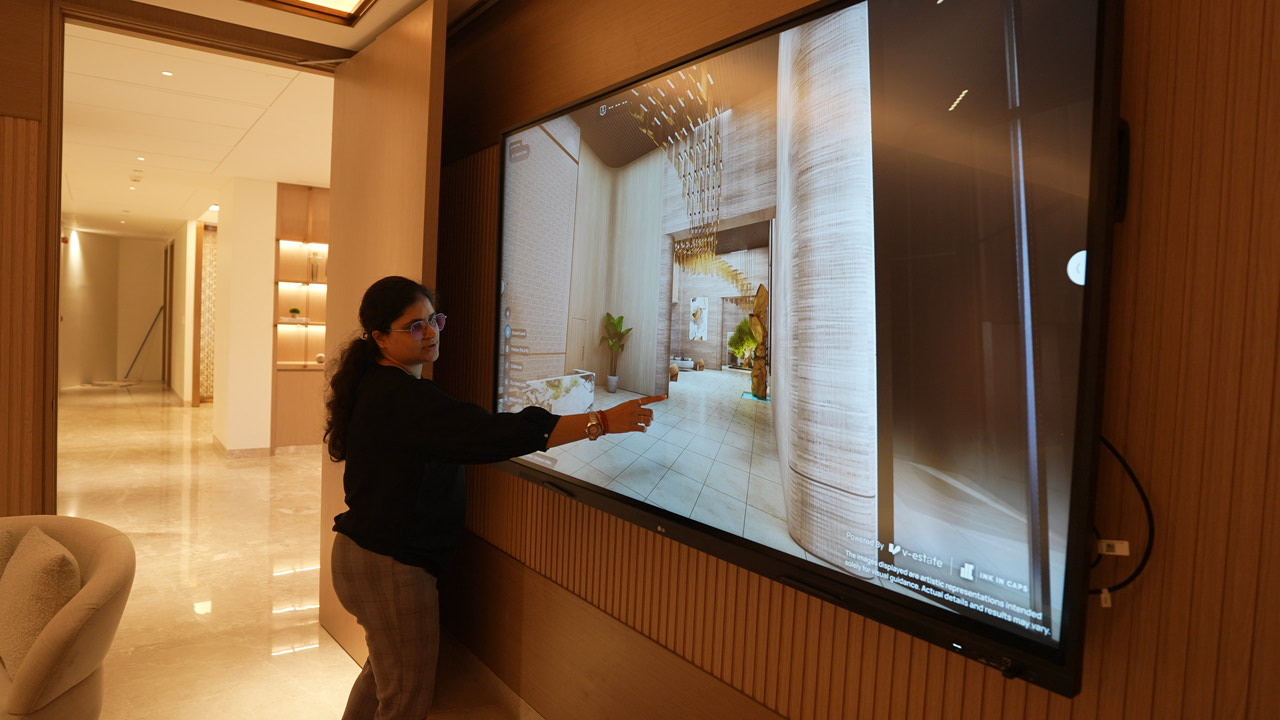
In the discussion rooms, the conversation shifted. Instead of flipping through a paper brochure that gets thrown in the trash, the executive could control the conversation visually.
Customer: "Is the gym crowded?"
Executive: (Taps iPad) "Let me show you the size of the lawn right next to it."
The screen dominates the room. It keeps the customer’s eyes up, engaged, and off their phone. With 10 rooms running simultaneously, the system handled the load of 30 families per hour without a single crash reported during the launch window.
Conclusion: Value through Immersion
The Rustomjee Dombivali project proved that "Affordable Housing" does not mean "Cheap Experience." In fact, it requires more effort to sell because the volume is higher and the competition is fiercer.
By investing in a high-fidelity digital twin, Rustomjee didn't just sell apartments; they sold certainty. They allowed a family to stand on a flat piece of land and see their future home, their view, and their lifestyle.
In a market where everyone is shouting for attention, the winner isn't the one who shouts the loudest. It’s the one who makes the customer see.
This is the new standard. If you are still selling off plans and paper, you aren't just behind the curve; you are invisible.
Book a Demo with Vestate
.jpg)