Introduction
In the competitive real estate development sector, sales and marketing expenditures are frequently scrutinized for efficiency. Traditionally, property developers viewed architectural visualization—such as renders, brochures, and scale models—as a sunk marketing cost necessary to attract site visitors.
Today, executive decision-makers recognize that visualization must perform as an active sales enablement tool with a measurable Return on Investment (ROI). Increasing land costs, rising construction materials, and longer holding periods mean developers can no longer afford sluggish sales cycles or inefficient customer acquisition strategies.
When evaluating PropTech investments, developers must look beyond aesthetics and analyze hard financial metrics: Customer Acquisition Cost (CAC), capital expenditure on sample flats, sales cycle velocity, and conversion rates.
By implementing offline interactive 3D visualization within physical sales galleries, developers transform property presentation from a passive display into a financial conversion engine. This approach directly reduces overhead, accelerates off-plan revenue realization, and optimizes sales margins.
Deconstructing the Economics of Off-Plan Customer Acquisition
To understand the ROI of interactive sales technologies, developers must evaluate where money is lost during conventional sales operations. Generating a qualified walk-in lead is only the first expense in a lengthy acquisition process.
Marketing Cost Per Lead vs. True Customer Acquisition Cost
Real estate marketing teams spend substantial capital on digital advertising, outdoor media, and channel partner commissions to drive traffic to a sales office. However, Cost Per Lead (CPL) is a surface metric; the critical figure is Customer Acquisition Cost (CAC).
- High Drop-Off Rates: In traditional sales offices, a large percentage of walk-in prospects leave without committing due to spatial confusion or unanswered questions.
- Repeated Site Visits: When buyers cannot visualize a floor plan, they require multiple follow-up meetings, consuming valuable sales team hours.
- Prolonged Decision Periods: Every day a unit remains unsold adds to the developer's interest burden and construction holding costs.
The Hidden Expense of Unclosed Site Visits
A sales gallery is a high-cost operational environment. When sales executives spend two hours guiding a client through static paper floor plans only to end with a polite dismissal, that meeting represents a direct financial loss. Improving the first-visit conversion rate by even a few percentage points dramatically reduces the blended CAC across an entire development.
Core Financial Metrics That Justify PropTech Investment
Investing in an interactive offline sales platform generates measurable financial returns by eliminating redundant capital expenditures and shortening the sales cycle.
Reducing Capital Expenditure on Physical Show Flats
Building physical sample flats is one of the largest upfront marketing expenses a developer faces. A single high-end physical show flat requires interior design fees, structural framing, luxury materials, furnishings, and ongoing maintenance.
- Multi-Unit Layout Constraints: Most projects feature multiple configurations, but budget constraints often limit developers to building only one physical sample flat.
- Digital Scalability: An offline 3D visualization platform showcases every layout, floor plate, and orientation in photorealistic detail at a fraction of physical construction costs.
Accelerating Sales Velocity and Lowering Holding Costs
The most powerful ROI driver in real estate development is time. Accelerating sales velocity reduces construction loan interest and unlocks project cash flows earlier.
- Instant Visual Clarity: By answering spatial and environmental questions during the first office visit, interactive walkthroughs reduce buyer hesitation.
- Shortened Sales Cycles: Closing a buyer in two meetings instead of five significantly reduces the average sales cycle duration across the inventory.
How Real-Time Customization Protects Developer Profit Margins

In a slower market, developers are often pressured to offer price discounts to close hesitant buyers. Interactive customization provides a powerful, margin-protecting alternative to discounting.
Value Creation Over Unnecessary Price Discounting
When a buyer hesitates on an off-plan unit, the root cause is often design rigidity—they dislike the default flooring or cannot visualize their preferred color scheme.
- Live Modification: Offline systems allow sales executives to change wall paint, flooring textures, and kitchen finishes in real time during the sales pitch.
- Emotional Ownership: Customizing a virtual home builds psychological attachment, making buyers significantly less sensitive to minor price differentials.
Upselling Premium Material Finishes During Client Meetings
Developers can showcase higher-tier material specifications within the 3D walkthrough, driving ancillary revenue without physical inventory changes. When buyers visually experience premium marble flooring or upgraded kitchen cabinetry in real time, they are more likely to select higher-margin upgrade packages during contract execution
Why Dedicated Offline Infrastructure Outperforms Web Portals
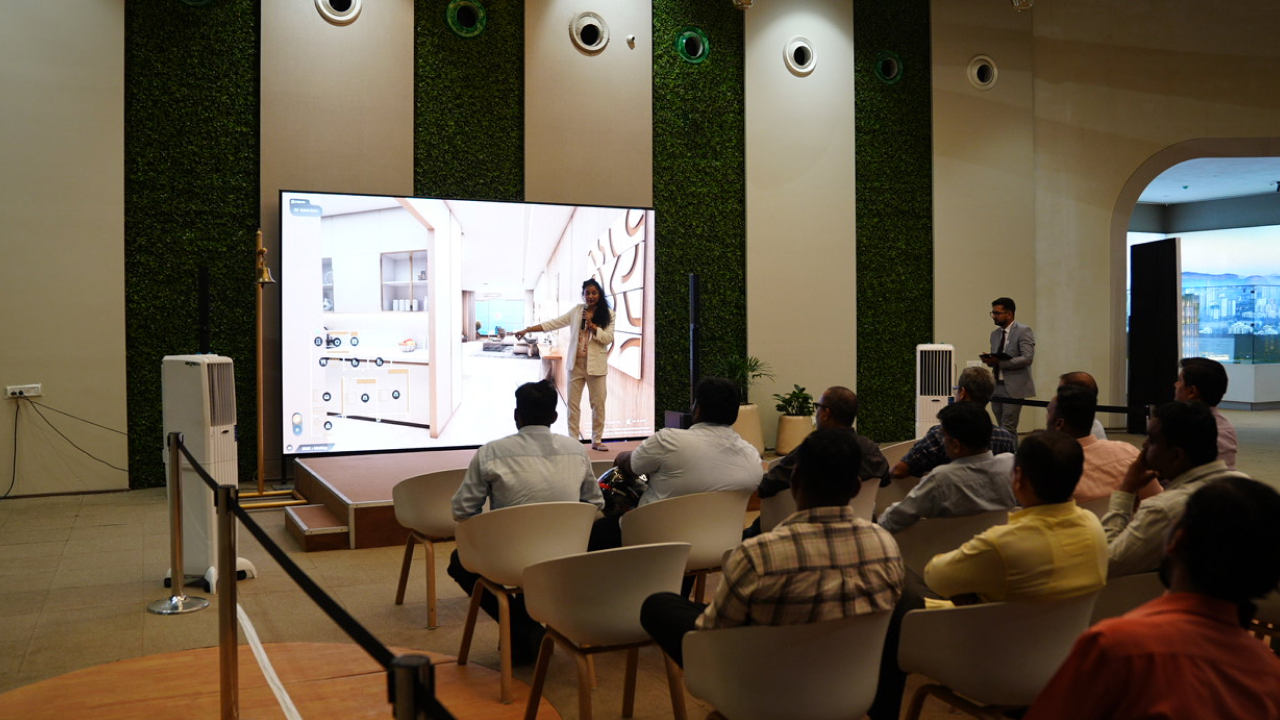
When evaluating PropTech visualization tools, developers must distinguish between online web tours and dedicated offline sales activation platforms. For high-stakes sales office environments, offline infrastructure delivers superior reliability and ROI.
- System Reliability: Offline platforms operate independently of internet connectivity, guaranteeing zero latency and 100% uptime during critical investor meetings.
- Visual Fidelity: Local hardware rendering delivers uncompressed, photorealistic 3D graphics that outperform compressed web browser tours.
- Sales Executive Control: Offline platforms are structured specifically as consultative presentation tools rather than passive, self-guided browsing portals.
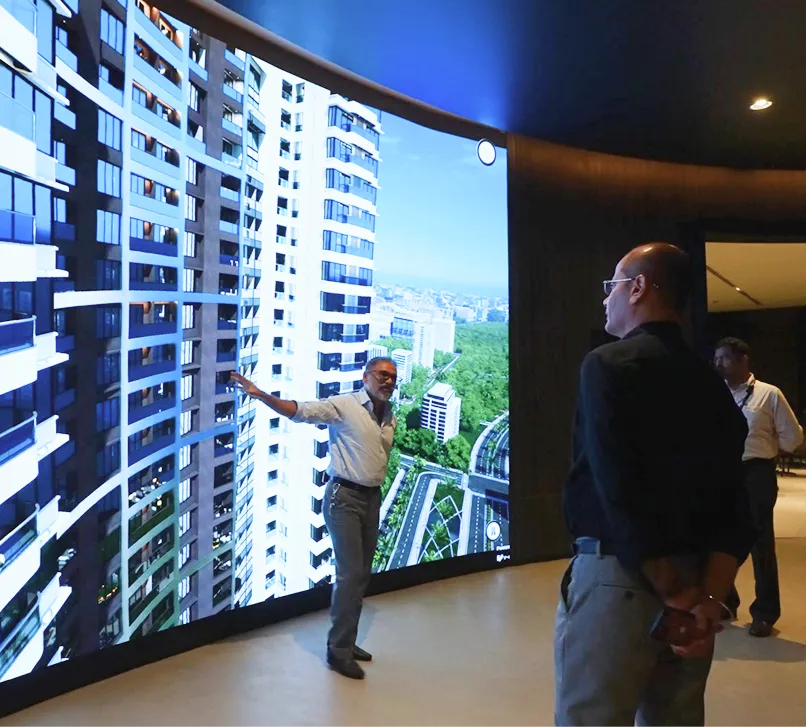
- Hardware Integration: Dedicated systems optimize large-format touchscreens, video walls, and interactive presentation tables inside sales galleries.
Maximizing Developer ROI with V-Estate
A practical example of an ROI-focused solution is V-Estate. Built specifically for property developers and builders, V-Estate is an offline interactive real estate sales solution engineered to maximize sales efficiency and lower acquisition costs.
V-Estate is not an online property portal or a web-based virtual tour. It is designed specifically for offline activation in sales experience centers, builder offices, project launch events, property exhibitions, and investor presentations.
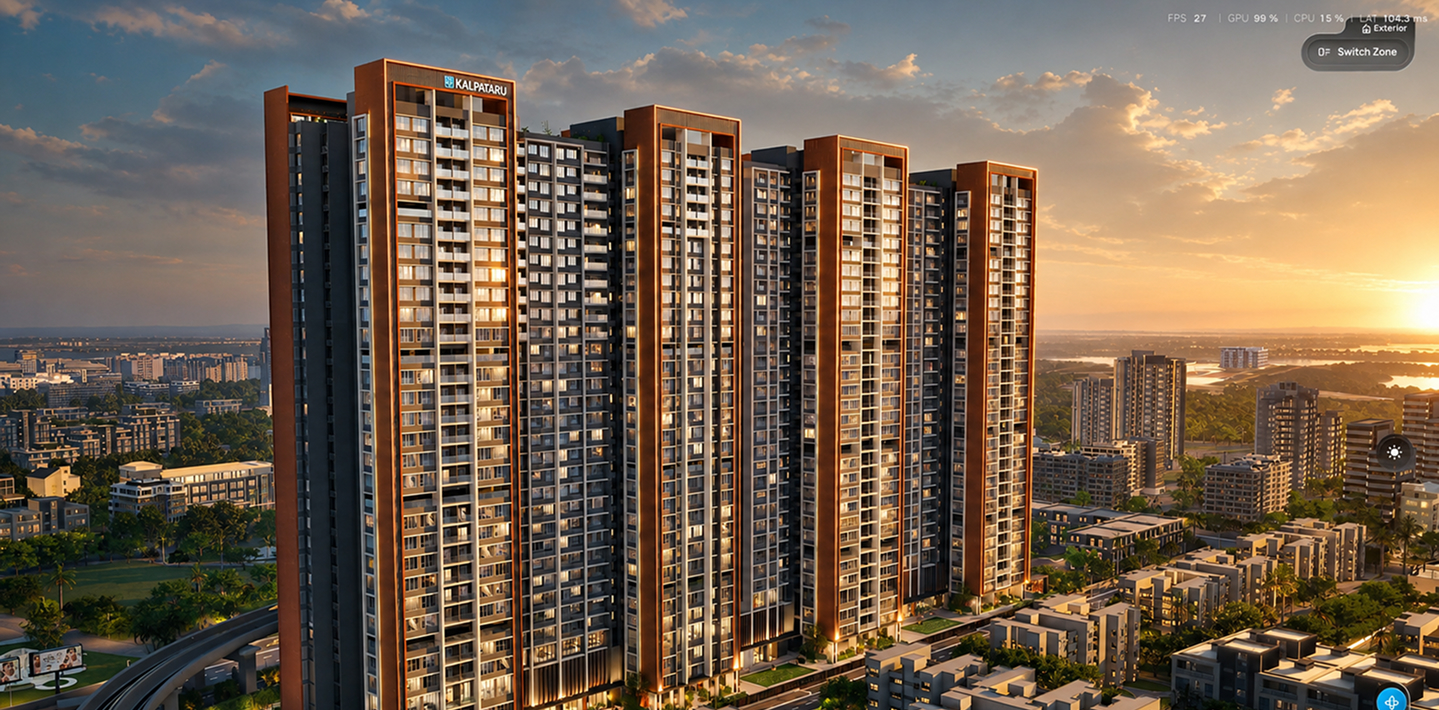
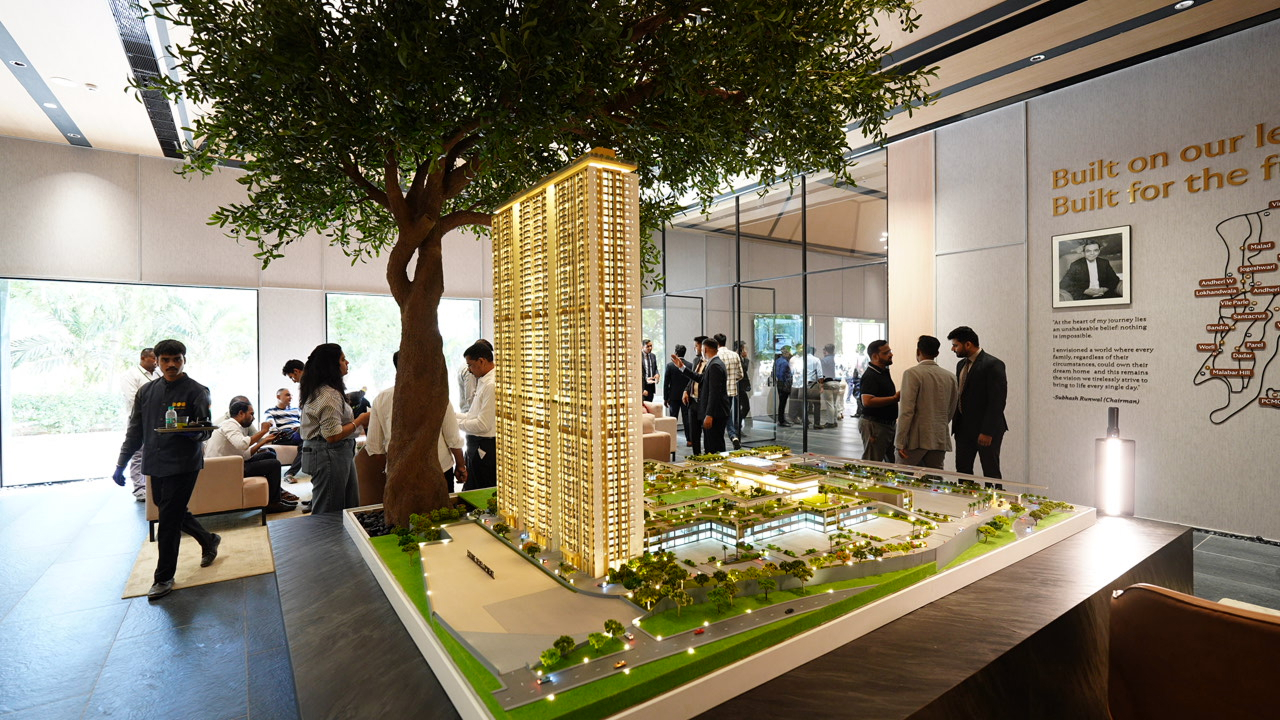
By consolidating photorealistic 3D virtual show flats, an amenity showcase, vicinity mapping, and infrastructure visualization into a single offline interface, V-Estate reduces marketing capital expenditure. Features like interior customization, wall paint customization, furniture customization, and realistic window views eliminate the need for redundant physical show apartments and acrylic scale models.
Developers utilizing V-Estate experience shortened sales cycles, higher lead conversion rates, better customer engagement, and improved customer satisfaction. This operational efficiency translates directly into lower customer acquisition costs and a stronger return on PropTech investment.
Conclusion
In modern real estate development, sales gallery technology can no longer be evaluated as a passive promotional expense. To maintain profitability, developers must adopt sales enablement solutions that deliver a clear, measurable Return on Investment.
Traditional printed collateral, rigid scale models, and costly physical sample flats introduce operational waste and extend the sales cycle. By implementing interactive, offline 3D visualization systems, developers streamline customer acquisition, eliminate redundant capital expenditures, and protect profit margins.
Investing in a resilient offline platform like V-Estate empowers sales teams to present off-plan properties with complete transparency and real-time customization. Developers looking to optimize marketing efficiency and accelerate revenue realization should make interactive offline visualization a core pillar of their sales strategy.
.jpg)