Have you ever walked away from a property purchase because you just couldn't visualize yourself living there? Or postponed making a decision because driving to multiple properties across town felt overwhelming? You're not alone. This hesitation is one of the biggest challenges facing real estate developers today.
The Visualization Gap in Property Buying
The traditional property buying journey is filled with uncertainties. Buyers struggle to truly envision spaces from static images or floor plans. They wonder: "Will my furniture fit in this living room?" "How will natural light change throughout the day?" "What's the actual view from the bedroom window?" These unanswered questions create a psychological barrier that delays decisions or kills deals entirely.
Why Traditional Solutions Fall Short
Property brochures and standard photos simply don't provide the sensory experience needed to create emotional connection. Even in-person viewings have limitations – buyers often can't see properties at different times of day, with different furniture arrangements, or with their preferred design choices. For off-plan properties, the visualization challenge becomes even greater.
The Immersive Revolution
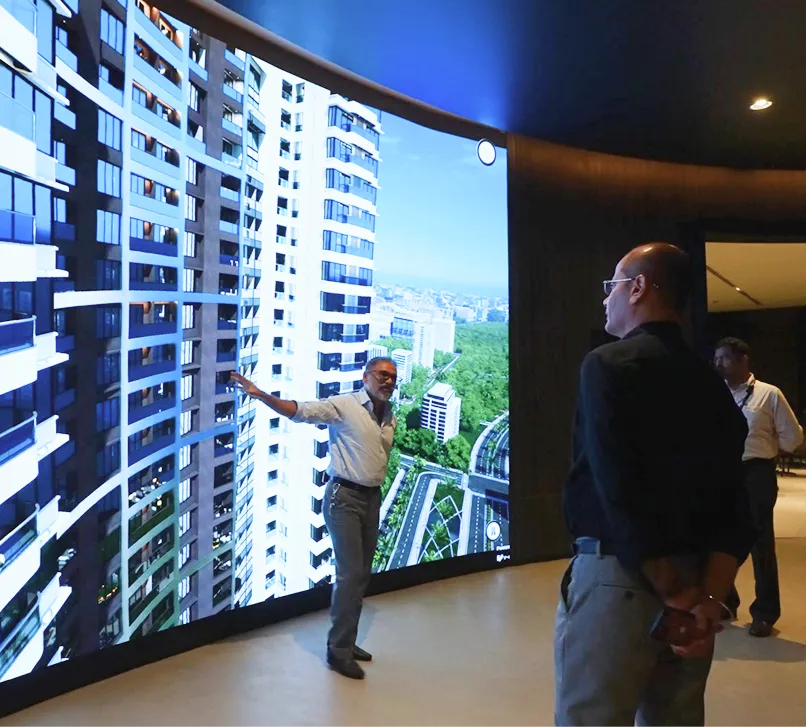
This is where hyper-realistic virtual showcases are transforming the buying experience. These advanced digital experiences create an emotional bridge between potential buyers and properties that might exist only on paper.
When buyers can virtually "walk through" a property, their brains process the experience remarkably similarly to a physical visit. This neurological response dramatically reduces skepticism and hesitation that typically accompanies major purchase decisions.
Creating Emotional Connection Before Construction
The psychology behind buyer decisions is fascinating. Research shows that emotional engagement is crucial for purchase commitment. High-quality virtual showcases foster a genuine sense of ownership and attachment before the actual purchase, making buyers significantly more likely to commit.
One developer reported: "After implementing virtual reality tours, we saw buyers forming emotional connections to properties they hadn't even physically visited. They would talk about 'their kitchen' or 'their view' – using possessive language that indicated psychological ownership."
Empowering Confident Decision-Making
Today's buyers expect transparency and control. Interactive virtual environments allow them to explore every feature, try different configurations, and customize options in real time. This level of engagement transforms hesitant prospects into confident buyers.
The ability to visualize different layouts, finishes, or furniture arrangements empowers buyers to make choices aligned with their preferences. This autonomy addresses one of the fundamental psychological needs in any significant purchase decision – the need for control and certainty.
Accelerating the Sales Timeline
Time is money in real estate development. Virtual showcases dramatically streamline the decision-making process by allowing buyers to evaluate multiple options efficiently. Industry data reveals that listings with immersive virtual tours receive up to 40% more engagement and 75% higher inquiry rates.
More impressively, some development projects have reported selling 60% of units before breaking ground after implementing comprehensive virtual experiences. This acceleration of the sales cycle translates directly to improved cash flow and reduced carrying costs.
Standing Out in a Competitive Market
In today's saturated real estate market, differentiation is crucial. Developers who embrace hyper-realistic virtual showcases position themselves as innovative and customer-centric, naturally attracting tech-savvy buyers and enhancing their overall brand perception.
These technologies allow buyers to interact with properties in dynamic, lifelike scenarios that traditional media simply cannot match. The result? A memorable experience that stays with potential buyers long after they've closed their laptops or removed their VR headsets.
Conclusion: The Future of Property Buying
The evidence is clear: hyper-realistic virtual showcases address the psychological barriers causing buyer hesitation. By making experiences more tangible, emotional, and informative, these technologies foster trust, accelerate decisions, and ultimately drive higher conversion rates.
The question for real estate developers isn't whether to adopt these technologies, but how quickly they can implement them before competitors do. In a market where buyer experience increasingly determines success, those who remove hesitation through immersive visualization will consistently outperform those relying on traditional methods.
.jpeg)
%20(1).jpg)