You built the finest project in the city. The address is prestigious, the architect is world-renowned, the finishes are impeccable, and the amenities rival five-star hotels. The listing went live, the photography was stunning, and the traffic started flowing in. But then something unexpected happened — the site visits didn't follow. Luxury buyers were landing on your property page, reading every specification, viewing every photo, and then quietly disappearing without a single inquiry. Not to a cheaper project. Not to a competitor with a better location. Just gone.
And the hardest part was knowing that your product was genuinely exceptional. The problem wasn't the project. It wasn't the price. It wasn't even the marketing. The problem was something far more subtle — luxury buyers couldn't feel the confidence they needed to commit to a visit, because no amount of photography can show someone how it truly feels to live in a space. That gap, between what your project offers and what a buyer can experience from a screen, is quietly draining hundreds of crores from luxury projects across India every single month.
The Luxury Buyer Paradox That Virtual Experience Centers Finally Solve
Luxury buyers are not like standard buyers. They have more options, more money, and more time to research — which means they are also far more hesitant. A ₹3 crore apartment is not an impulse purchase. It is a 25-year decision made by discerning buyers who have already shortlisted 30 to 40 projects across multiple cities before they ever reach yours.
Standard marketing approaches that convert mid-segment buyers fail spectacularly with luxury buyers — because luxury buyers don't just want information. They want to experience confidence before committing their time to a visit. And most luxury projects, despite their exceptional product quality, are failing to deliver that confidence through traditional marketing alone. Virtual experience centers exist precisely to close that gap.
The Confidence Gap That Virtual Experience Centers Are Built to Fix
Here is what happens with traditional luxury project marketing. Beautiful photography — check. Prestigious location — check. Premium finishes — check. High price point — check. And the buyer's response? "This looks nice. Let me consider it." And then nothing happens.
The reason is simple. Seeing photos of a luxury apartment is not the same as experiencing what luxury feels like in that specific space. Luxury buyers ask fundamentally different questions than standard buyers:
Will this space impress my family when they visit?
How will natural light work across different seasons?
Does this layout genuinely suit my lifestyle?
Can I visualize my specific furniture in these rooms?
What is the actual experience of living here day to day?
Static photos and floor plans cannot answer these questions. That is the confidence gap. And until virtual experience centers entered the picture, luxury developers had no real way to bridge it.
What Virtual Experience Centers Actually Deliver for Luxury Buyers
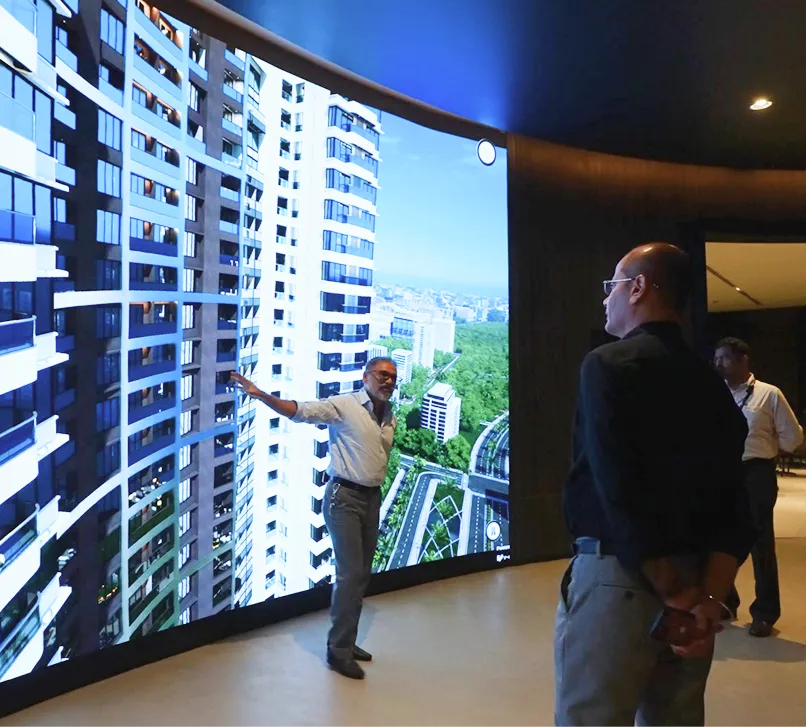
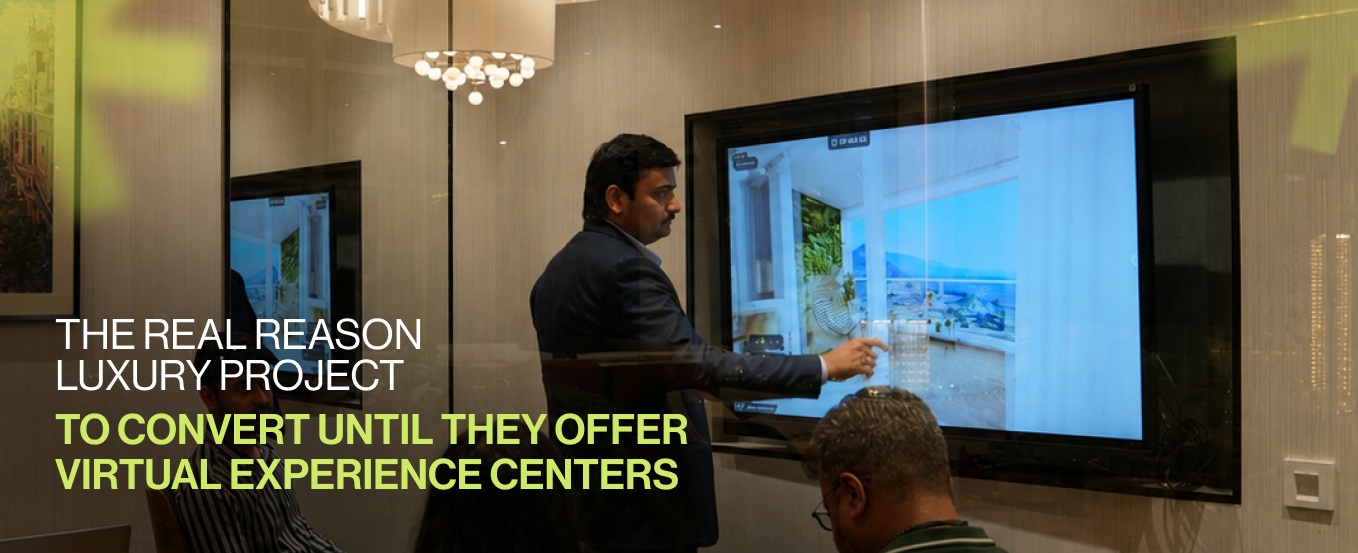
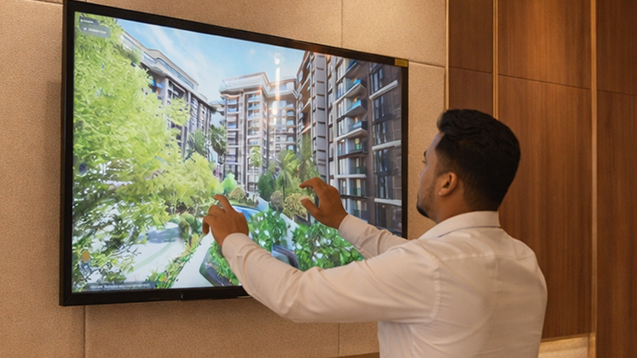
Virtual experience centers represent a fundamental shift in how luxury projects present themselves to the market. Instead of requiring buyers to imagine luxury, virtual experience centers let them experience it — on their own time, at their own pace, from wherever they are in the world.
For luxury projects, a well-built virtual exprience center includes:
Hyper-realistic 3D models with material-level precision
Multiple unit types allowing buyers to explore different layouts side by side
Customizable finishes showing exactly how preferred materials look in the actual space
Lighting variations across seasons and times of day
Neighborhood integration showing connectivity and lifestyle context
Detailed specification viewers accessible directly within the immersive experience
The difference between a standard 3D tour and a virtual experience center is not visual quality. It is purpose. Virtual experience centers are built specifically for luxury buyers' information needs — not to impress with flashiness, but to deliver confidence through detail.
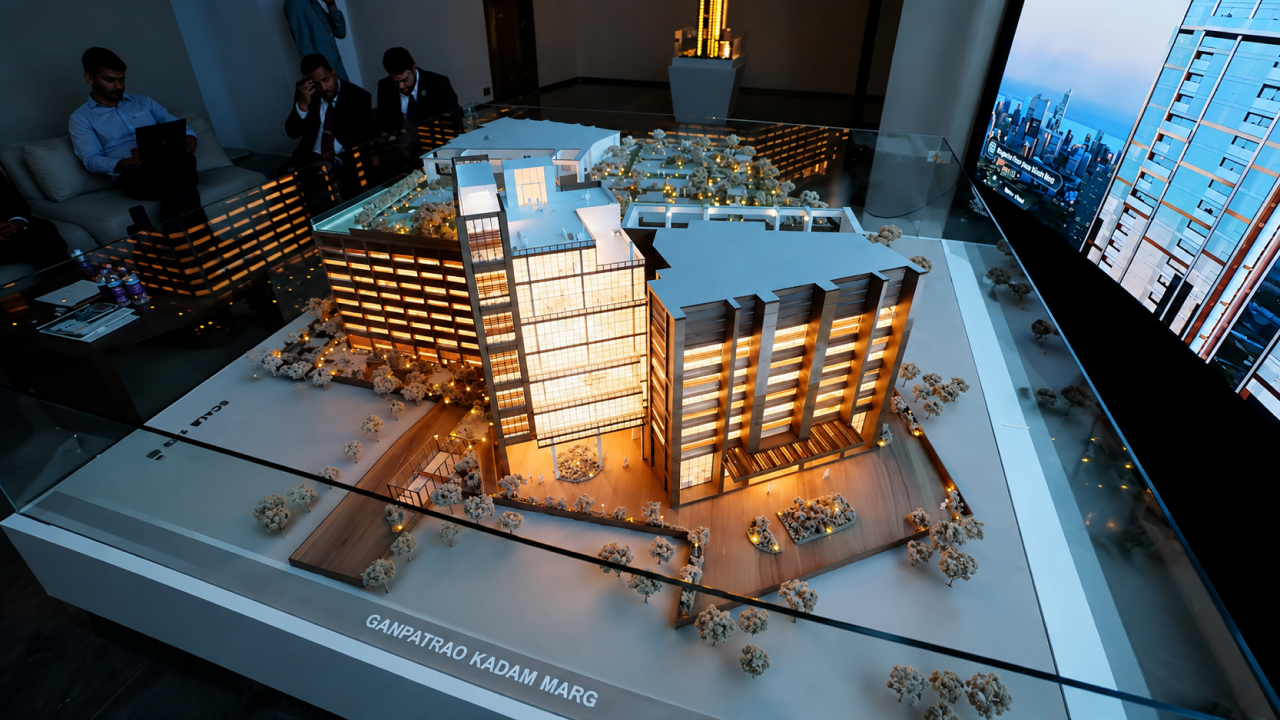
The L&T Case Study: How Virtual Experience Centers Took Conversions From 4% to 19%
L&T's flagship luxury project in a competitive metro faced a problem that seemed impossible given its fundamentals. The project sat in a top 2% location, was designed by a world-renowned architect, was priced at ₹4.5 crore per unit, and offered world-class amenities. Yet site visit conversions were sitting at just 4% — a number that made no sense for a project of this caliber.
The marketing team investigated and found something critical. Luxury buyers were visiting the website, reading every specification, viewing every photo — and then disappearing. They were thorough researchers but non-committal visitors. The team's hypothesis was precise: luxury buyers need more than information. They need confidence that this project is worth their time. And static content simply could not deliver that confidence.
L&T's solution was to build a virtual experience center specifically designed around luxury buyer psychology. The implementation was sophisticated:
Photogrammetry of completed luxury units ensuring pixel-perfect accuracy
Multiple finishes visualization letting buyers see their preferred materials in real context
A lighting engine showing how natural light changes throughout the day and across seasons
Detailed material libraries with actual specifications buyers could study in depth
Virtual walkthroughs with narration explaining the design intent behind every decision
Neighborhood 360° views showing accessibility and lifestyle integration
A comparison tool letting buyers evaluate different unit types against each other
Within 8 weeks of launch, the results surpassed every expectation:
Site visit conversions jumped from 4% to 19%
Buyer confidence scores increased by 340%, measured through post-visit surveys
Average time spent inside the virtual experience center reached 23 minutes
Close rate among virtual experience center viewers hit 51%
But the number that changed everything wasn't in the conversion data. It was in the quality of conversations happening at site visits. Buyers who had experienced the virtual experience center arrived with specific questions about finishes and customization, a clear understanding of which unit type matched their needs, and a high probability of moving directly to negotiation. The sales team stopped selling the project and started discussing how to make it personally perfect for each buyer. That is a completely different conversation — and infinitely more effective.
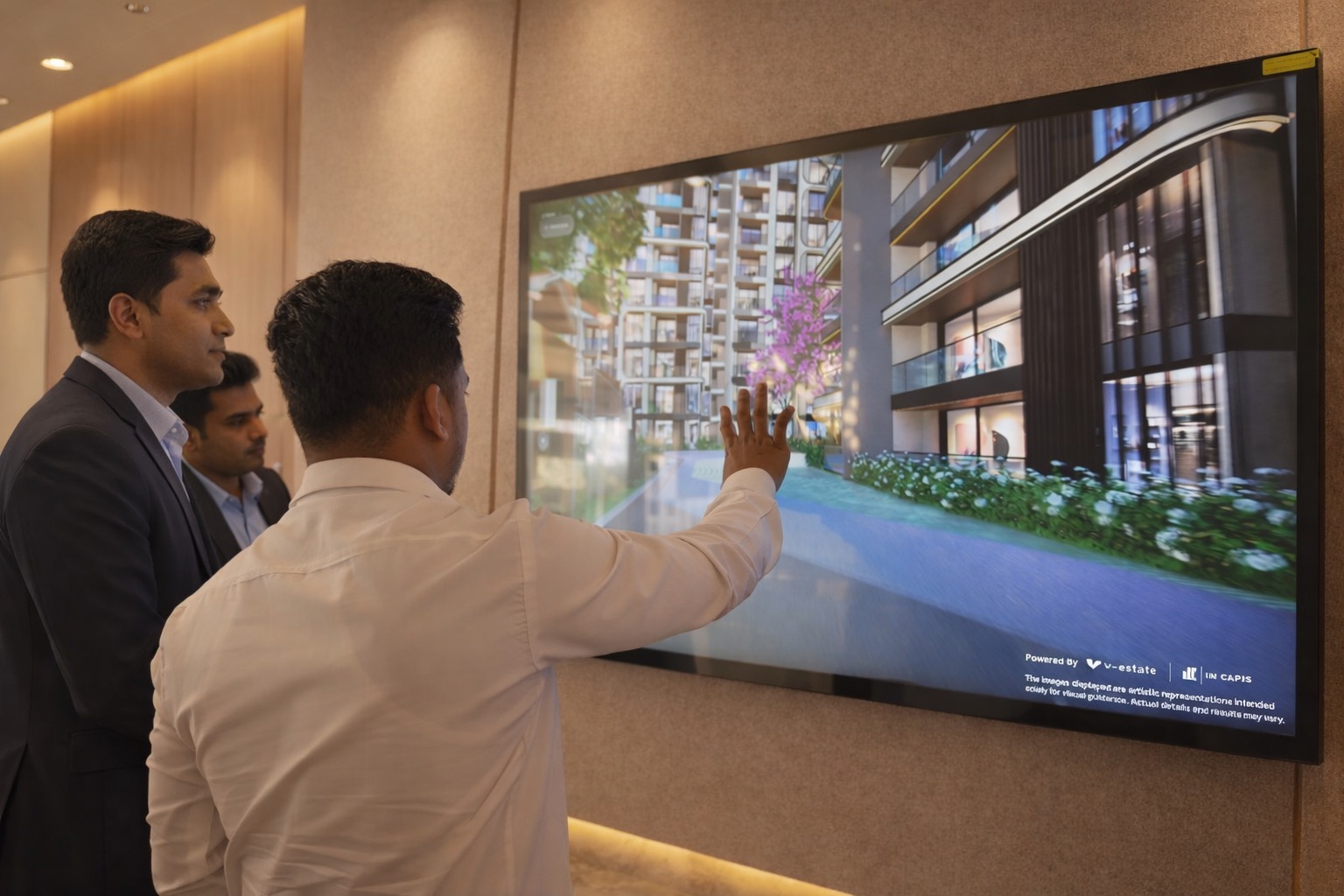
Why Virtual Experience Centers Convert Luxury Buyers When Nothing Else Does
The psychology is straightforward but consistently overlooked. Luxury buyers have purchasing power but not unlimited time. They are not going to visit projects that might not match their expectations. Every site visit is a significant commitment of time and energy for someone managing a demanding professional and personal life.
When a virtual experience center shows them exactly how the space will feel, precisely how materials work in different light conditions, and specifically how the layout aligns with their lifestyle — they move from hesitation to confidence. The virtual experience center answers the one implicit question every luxury buyer is silently asking: is this worth 30 minutes of my time? When the answer is visually and experientially clear, luxury buyers commit.
The Business Case for Virtual Experience Centers in Plain Numbers
For premium project marketing heads, the numbers from L&T's implementation tell the full story.
Before virtual experience centers:
Monthly website visitors: 2,800
Site visit conversion: 4% — 112 visits
Close rate: 8% — 9 units closed monthly
After virtual experience centers:
Monthly website visitors: 2,800 — unchanged
Site visit conversion: 19% — 532 visits
Close rate: 51% — 271 units closed monthly
That is 262 additional units closed every month. At an average unit price of ₹4.5 crore, that translates to over ₹1,179 crores in additional annual revenue. The investment in the virtual experience center was ₹18 lakhs. The payback period was 4.5 days.
The ROI in the luxury segment is particularly staggering for three reasons — unit prices are higher so each conversion is worth dramatically more, the conversion improvement is more dramatic because virtual experience centers align perfectly with luxury buyer psychology, and sales cycles shorten because confident buyers move faster and with fewer objections.
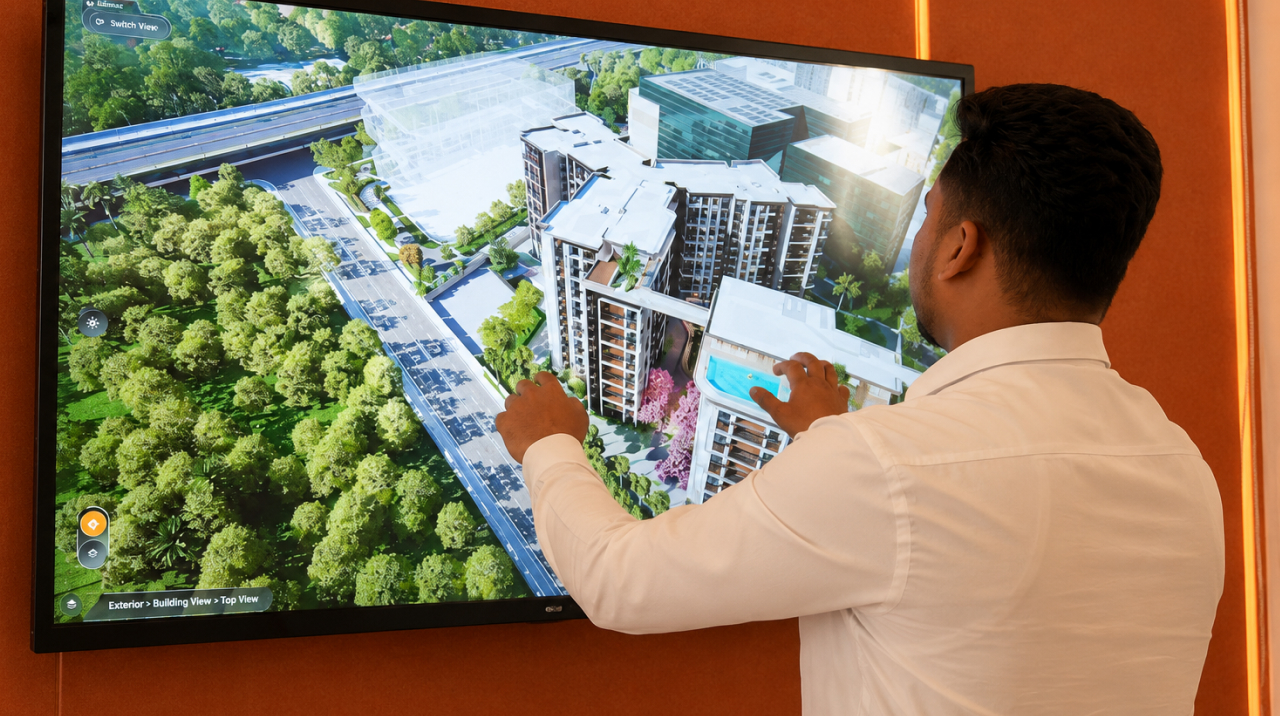
The Gap Between Luxury Positioning and Luxury Experience That Virtual Experience Centers Close
Most luxury projects position themselves as premium through lifestyle photography, architectural hero shots, technical specifications, and prestige branding. These tools create awareness. They do not create confidence. And for luxury buyers, confidence is the only currency that converts.
Luxury buyers' actual needs are specific:
Confidence in their decision before committing time to a visit
Specification clarity around materials, finishes, and build quality
Spatial understanding of how they will actually live in the space
Lifestyle alignment — does this match how I want to live?
Only virtual experience centers address all four of these needs simultaneously. Everything else in the luxury marketing toolkit addresses one or two at most. That is why projects with virtual experience centers are not just converting better — they are converting the right buyers, faster, with fewer objections, and at higher close rates.
How Virtual Experience Centers Fit Into Your Existing Sales Process
The most common concern from marketing leaders considering virtual experience centers is whether implementation will disrupt their existing workflows. It will not.
Virtual experience centers integrate cleanly into existing marketing infrastructure:
Website-embedded viewers that require no new platform or website rebuild
Mobile-responsive design that works seamlessly across all devices
Full analytics integration that tracks exactly how buyers engage with the experience
CRM connection that feeds qualified leads automatically into existing systems
Minimal sales process changes — the technology supports current workflows, not replaces them
L&T's implementation took six weeks from discovery to launch. Most luxury projects see similar timelines. The sales team requires no retraining. The buyer journey requires no redesign. The virtual experience center simply sits within the existing property page and does the confidence-building work that static content cannot.